The Real Cause of Back Pain and What Actually Works
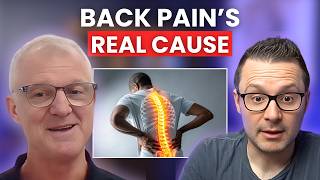
Anthony Bush argues that sitting too much and moving too little drive rising back pain disability. The fix: frequent daily movement plus two weekly strength sessions. He prescribes six specific exercises and warns against increasing load more than 10-20% per week.
Chapters
If you've ever experienced back pain, you'll know just how awful it is. And if you've never experienced that, it's likely coming your way at some point in your life. The statistics will show that today's special guest is world leading backs fix expert Anthony Bush. Trust me, you want to listen to this one. If you've set goals in the past and you haven't quite followed through on them, I've got something for you. First, I want to ship you a free copy of my Habits of High Performers book. To get that free copy, all you've got to do is sign up for our 2026 goal setting worksh. The link is in the show notes. Please come and join me and I'll help you with an exact structure on how to set up a year that you're super proud of with the exact same blueprint that my one to one clients use. I'll see you there. Anthony, a huge welcome to the Lead On Purpose podcast.
Thanks, Jamie. I'm really happy to be here. I've been following you and as you know, we've had a bit of dialogue. We live not far from each other. I'm really looking forward to this. It's going to be a great show.
Oh, me too. So it's interesting, your name has come up in multiple different circles saying, james, you've got to have Anthony on the show. And interesting. You know, I've seen your book, the Back Fix. I was like, well, actually I've had some back issues in my time. My partner Caroline has some issues with her back often. I was like, yeah, I definitely think so. So I'm glad. This is long overdue and I really want to just kind of get the ball rolling for a bit just so that the person listening can go, aha, yeah, this one's for me. So when you look at back pain, so people go, oh yeah, a few people might get it now and then, but actually when you look at the research, back pain disability has risen by something like 50% in the last 30 years to become the number one disability, like the world's number one disability. Why is that happening?
Yeah, look, great question. Stop the press. You know, everybody gets back pain. 80% of us have got to get it at some stage. At any point in time. A quarter of the population have got it. Look, some people think back pain started 3 million years ago when we got off our knuckles, and it wasn't that, but it did start then. In the preceding millions of years, our brain tripled in size and with that we've done some pretty nifty things. The agricultural revolution came along and instead of moving for three to six hours, hunt together and to get our food, you know, we now drive down to the supermarket, we slay our food from the supermarket market aisle, we drag it across the checkout counter and dump it into our car and then drive home again. You know, we're missing three to six hours of movement that we used to get each day. And then along came the industrial revolution, you know, with, with these, you know, really narrow skill sets now which we either we're either sitting all day or we're doing highly repetitive movements all day. And if you went to a zoo and, and you looked at an animal that was just sitting, staring into space all day or doing this highly repetitive, stressed looking movement all day, you would think it's sick. And that's one of the reasons, you know, chronic pain now is one in five people. And in a large percentage of that is because we're just not moving. We've invented these really amazing things like you know, the Apollo spacecraft and toasters and Velcro, but two of those things or three of those things, the seat, the wheel and the smartphone have really sucked our movement out of our life. And we are an animal and we are just not moving like an animal anymore.
Yeah, it's quite interesting. So over the years I've started to get interested about how much or how little I move. And there were times when I think on average I was doing about 1100 steps in a day. Right. Horrific. And I didn't even realize it. So I went from being a young kid who was never home out on the streets in Northern Ireland playing from dawn till dusk to this. Somebody in the 25, 26 year old getting 1100 steps a day, sitting on my ass for hours and hours. Now I'm being productive, like I'm working, but I'm not moving my body. So how long does it take of compounding that kind of behavior before we actually start to feel a few of the aches and pins?
Yeah. So we call it the silent assassin. You know, 40 years of sitting in a seat comes and wallops you in your 60s, 70s. For most people in their 70s, you know, we're supposed to be moving somewhere around 150 to 300 minutes of moderate intensity exercise a week. You know, half an hour to an hour a day, which includes two strengthening sessions a week. But one of the studies, it's not so much the volume, it's a two part algorithm. And part of that algorithm is how long we sit for, in time and duration without moving. And there was a really neat study done on wearables that went over about seven years, large population sample. And they found that the people who are sitting less than six hours volume a day and moving in periods of about an hour, they have a 40% all cause mortality risk reduction. And you know, if you're talking about the four horsemen, you know, Peter Tiller, the outlive, you know, the four horsemen, heart attack, stroke, cancer, neurological conditions like dementia, a 40% all cause mortality reduction in those. So it's the people that move more often that do really well, not just the volume. So if you, we know that people that sit for six hours a day get back pain. And most people in an office job, if you, if you put in, add in driving backwards and forwards to work, you know that six or seven hours sitting at work, two or three hours in the evening, Netflix or catching up on more work, you know, obvious 16 hour awake day. Some of these people are sitting 12 hours a day or some, quite a lot of US are sitting 12 hours a day. That's double what we know gives people back pain.
Wow. I mean often the response that is, yeah, but that's just how we are nowadays. Yeah, that's just how my life is. But an example this morning, so I drove into school. So it's 30 minutes each way. So there's an hour. Then I had about 40 minutes before I had a client, a phone call. So Caroline has a walking like a treadmill under her desk. So I just jumped on that 30, 40 minutes and then had my call, then had about an hour before I was catching up with you. And I have a keynote I'm presenting later in the week and I've got some slides to do. So naturally I would sit where I'm sitting right now and do the slides. I thought, what will Anthony say if I do that as I get on the treadmill and move? So we've got another 30, 40 minutes. Not a lot, but, you know, another couple thousand steps. So what should we be doing to interrupt the sitting behavior? What are the tiny things we can do to make a big difference?
Yeah, look, I think that whole micro exercising thing is really important. You know, from that study, the movement study done over seven years. You know, one of the researchers said, you know, you can't offset 10 hours of sitting with one hour of exercise, which is what most of us are doing. You know, most of us are going to the gym, getting our exercise on and then sitting for the rest of the day. And they said you just can't do that. So you've got to be doing these micro exercises like you, you just get up for a walk, go to the second cafe for your coffee, go for a walk around the block at lunchtime, you know, do some squats at afternoon tea, do a plank, get the rest of the office into it, you know, make, make it a, you know, something that they should, you should all be doing 10 squats and a one minute plank or something like that at afternoon tea, you know, just add in these bits of exercise. It's really, really important.
We see it in countries like Japan, you know, they often have traditions in the corporate world where they have movement integrated into their office culture. Now, I think in New Zealand here, or when I'm traveling in Aussie, people would think you're wacky and weird. Are you serious? We're going to sit here at this office, we're going to do all these things together? Well, actually, yeah, there's something to it. So I think there's a mindset shift that needs to happen for people to embrace that. What do you think?
Yeah, I think that's right. And the biomechanists say, look, we should be trying to walk an hour and a half a day. And I remember Talking to Stu McGill, one of the top biomechanists from Canada, Prof. Stu McGill, and I said, an hour and a half. How are people going to get that, Stuart? He goes, well, get up in the morning, go for 20 minutes, you know, go to the second cafe at morning tea, go for lunch, 20 minutes at lunch, go for 20 minutes, there's an hour, you know, so we should be walking. You know, the three things that define us as a human animal, you know, our opposable thumbs, our intelligence and walking. And yet we're really just not walking. So we've got to be doing, we've got to be doing a lot of walking and we've got to be adding in a couple of strengthening sessions a week. The research is really clear on that. And we're losing strength at a rate of about 1% per annum from the age of 30. So, you know, by the time we're hitting 70, we could be down 40% on our strength, which is a big.
Issue in terms of fall, risk of falling, etc. And breaking. And we know that when people fall and break, their lifespan is pretty short thereafter.
Yeah, yeah. Look, the main thing is that strong muscles equals strong joints and strong joints don't fatigue as quickly and they don't get as sore. And we've Got and our muscle is doing all sorts of things. You know, it's when we're working our muscle muscle, it's improving our insulin sensitivity, it's regulating our hormones. You know, it's the biggest organ in the body. You know, we drape muscle over our skeleton and that is our human form and we're just not paying enough attention to it. We need to be doing two. According to the research, the people who do better in terms of health and wellness, they're doing this half an hour to an hour a day, moving in bits and pieces a lot during the day and they're doing two strengthening sessions a week to keep their muscle bulk. It's like saving for retirement. If you look, this was a big study, they did a study over 19 years and they looked at grip strength. Now grip strength is a really good proxy for all over body strength because presumably you've got to pick things up or push them until you get strong in your grip. And they put grip strength against all cause mortality. And they looked at below 60 and over 60 and they said, well look, if we look at the strongest third of people in the age group and the weakest third of people in the age group and we compare those and put it against all cause mortality. So the four horsemen, you know, heart attack, stroke, cancer, neurological conditions like dementia, doesn't make any difference below the age of 60. As soon as you click over 60, those in the strongest third of the age group compared to those in the weakest third have a 54% all cause mortality risk reduction. So over the age of 60, strength equals survivability.
That's amazing. So we start that strength conditioning and training today. We don't wait to 60. If somebody's 60 and they're listening, great start today. But if you're younger than 60, get at it right away.
Yeah, that's right. Yeah. We're losing strength at about 1% per annum from the age of just before 30.
So I've lost almost 10%.
Yeah, yeah, that's right. And it's going to accelerate if you're sitting, if you're, if you're in a sitting job, isn't it all day as opposed to a builder, you know, and you can see builders, they're stronger, aren't they?
Yes, they are.
So yeah, we've got to start that straight away. But you can change your strength right through the age range. So you know, you should be doing that in your 60s and we're doing falls prevention classes in your 60s and 70s to get that strength back so if you send astronauts up to space, you know, NASA says in those five to 10 day trips, they, they come down, they've lost 25% of their strength and that's 25 years of strength in a five to 10 day mission. So they've got them up there trying to do load bearing exercise and as soon as they come back down, they're on alter g treadmills trying to reintroduce load and get that load back into them.
Unreal. So this is a high priority. It's interesting. I'm learning more and more about protein and the importance of protein for muscle development, but also, also for prevention of future issues. And we had Bill Gifford, who's Dr. Peter Atta's co author, we had him on the show a while ago, we got chatting about that. But you said something unique that they haven't said before, which I really like. It's this idea of we've got the skeleton but then we drip the muscle over it. So that really defines us. So when you talk about conditioning that muscle, what do those two sessions a week need to look like? Is that body weight exercises? Is that heavy weights? What do you think?
Yeah, yeah, that's right. And you don't have to go to the gym. You can do calisthenics, you know, like a plank is holding your body against gravity, a side plank is holding your body against gravity. And in the book you would have seen, you know, my, my 92 year old ski racing father, you know, doing these planks at 92. And, and, but that is, and I get people in their 70s and 80s and I say, look, show me your plank. And they sort of look at me and then they go, well, you know how old I am, don't you? And you go, yep. But gravity doesn't care, you know, because we hit eventually, you know, hopefully in our 90s we hit the disability threshold and that's when we don't have the strength to get up and down off the floor, in and out of the bath, you know, in and out of bed for some people. Even in and out of a chair for some people. Now the people that put that, that strengthen twice a week with some squats and some. We've got six really simple exercises in the book.
Please tell me, what are they?
We call the big six. So squats and lunges for your legs, you know, for your trunk strength, plank, side plank, some modified, what we call the modified McGill Crunch and a thing called the bird dog, you know, and you do those a couple of times a week. That's keeping your strength up. So that's good. Capacity and strength, strength building. But you know that right away.
Can I jump in for a second and say that? That is almost a relief to hear that because there's going to be many people going, I don't like the gym, I don't like the smell of it. I don't like people looking at me. It's going to be friction for me to even get there. I get the membership and I quit. And I don't. You can do this at home, like for me, I'm traveling, I can do this in a hotel room.
Yep, absolutely. Yeah, yeah. You don't have to go into a sweaty gym. You've just got to be able to make those muscles, put them under duress and make them work hard. They've got a fatigue and it's got to be hard work. You know, nothing was, you know, no pain, no gain, nothing was gained without a bit of hard work. And we're just, you know, we're just sitting here staring into space and we're just losing capacity. And then we have this. I get a call on a Monday morning and you know, Anthony, I've just helped somebody shift house and my back's gone out. And you go, well, no, look, your back hasn't gone out. But you do what lifting do you normally do in your. In your week? And you've just been lifting closets and beds and in and out all day and that's you just over your capacity. And we've got to maintain some capacity. So I think we've got to be doing some walking, we've got to be doing some calisthenics and we've got to be moving often during the day. And the research is really clear that that's not just good for our body, that's really important for our brain.
Yeah, absolutely. And when we say we're out walking, we're doing our movement. This idea of running, you know, I get told, James, you've got to be running, you've got to be doing it, you've got to be in long distance running. The more research I do, actually walking is better for you. You burn more calories walking. When you take the length across a day. What do you recommend in terms of running versus walking? What should we be doing?
It's a really good question. Look, running is just a higher intensity version of walking, isn't it? And if you're lean and you're light and you've been running you consistently, then running's fine for you. Or you've got some capacity and you can build on that, then that's fine. I think what you're asking is this great question that Prof. Tim Gabbit has been looking at. He's an Australian researcher and he said, look, all of us have a capacity this week to do work, to handle load, which is a reflection. Our weekly capacity to do work is a reflection of the average rolling average of the last four weeks. That's our capacity. And if this week is more than 20% on that, normal joints get sore. So you sit on a desk all week and then you go and, you know, weed, eat the side of a hill, you know, with a whipper snipper, you know, and you're rotating and you're under load and you do that for three hours, you're going to be really sore, but you haven't damaged anything, you're just going to be sore because you're under capacity. So we want to be mindful when we're starting exercise that we're just increasing at sort of 10 to 20% per week. So really light and you can do anything, James, you can do any sport you like. Just start off really small increments. It's all about pacing. So if you want to run, you can absolutely run. But you know, it might be, it might look like, you know, your half hour to 40 minute walk might look like jogging the odd lamp post, you know, that that's starting off at 10%. You know, during a half hour to 40 minute walk, you might jog three lamp posts during that walk a couple of times a week and then you build up at 10 to 20% per week and you won't have any trouble. But that's not what we do. You know, people go, New Year's resolution. I'm going to start running three times a week for 20 minutes and a couple of weeks later that's somehow morphed into 45 minutes. You know, you're 300% over and about four weeks to six weeks in, you get your Achilles tendinitis or, you know, your knee starts getting sore.
That's me, 100% done it so many times. And it's interesting, human nature is to push quicker and get the end result quicker. So what you're saying is we need to be patient, go up in 10 to 20% increments gradually. Does BMI play a role in people who want to run in terms of. If people have a large bmi, should they be more considerate about long distance running?
Yeah. So it's joint loading, isn't it, it's, it's, it's, it's all just think, think back to joint loading. And, and I think if you're heavier, you've just. Your ramp has got to be so much slower, doesn't it? You know, you get into walking before you're running. So if you're, if you're heavy and you want to start running, you can run, but you've just got to do a lot of walking. You know, you should be doing lots, lots of walking. At least. You know, this, this sort of trying to get this hour to hour and a half of walking, which, you know, for most people is a bit unattainable, but that's what we should be trying for. Get walking before you're running and then you can start your walk jogging.
Yeah, that's brilliant. Good advice. So let's talk about what's happening in the back pain industry. Do you think, you know, based on what researchers say and how you feel, do you think that the back pain industry is doing a good job at actually treating chronic back pain?
It's really interesting. So people have back pain, which, as we know, if you're sitting for six hours a day, you get back pain. That's what the research shows. And most of us are sitting for double that. So back pain is kind of a symptom for many of us, it's a symptom of our modern lifestyle. And yet when we get back pain and it lasts for more than six to 12 weeks, we think there's some pathology and we go in and we ask for an mri, and that MRI will often show things. And I think you said your wife Caroline had back pain and she had an MRI and it showed that she was fine and then her back pain disappeared.
100%.
Yeah. But the opposite to that is that people get an mri and what it shows us is it shows all our splendid imperfections and it shows things and it shows lots of things. Disc tears, you know, annular facet, sort of what they call degeneration. Just, it just shows wear and tear like wrinkles. The trouble is, people see these big MRI reports with lots of long words in them, and the longer the report, the more scary it is. And people look at that and they go, oh, I'm stuffed. My back. The societal beliefs around back pain are that, you know, back pain means pathology, and you shouldn't load it and you shouldn't bend and. And that starts people on a trajectory of treatments, which treatments don't fix anything. They just ameliorate pain. And I think we probably don't understand that in society there's this big industry providing pain relief but not fixing anything. And so when we go to different practitioners and our back pain doesn't get better, we think we're stuffed. When actually treatments aren't going to fix us. Often it's a lack of movement. Movement is medicine for many of us, well paced movement is the way out of back pain. Just incidentally, they did a great study on MRI reports and harking back to Caroline and one group they said look, here's, here's the table of what's normal in your age group, like bloods, you know, like here's the range of your blood glucose. This is the end. And you, yes, there's lots of things on your report, lots of words, there's. But you said what sit well within this range so you're fine. So that was one group. The other group, they just handed them the MRI report and said this, your MRI report, just go and get some treatments. And they followed those two groups and they completely diverged. The group that was patted on the back and said this is normal. Like Caroline, this is normal. They did really, really well. But the group that wasn't told these were normal incidental findings, you know, just, you know, sort of normal variations, their pain increased, their mental and physical health decreased and their self efficacy decreased. So you know, we have a very, we have a very poor understanding of back pain in the society and the societal beliefs of back pain that you have back pain, it's pathology and that's not true 95 to 99% of the time. Yeah. So we triage people when they come in and we go, you know, do you have cancer? Do you have a fracture, do you have a big disc protrusion causing loss of bowel or bladder control and weakness in your foot. And if you don't, then you're in this very large group we call non specific low back pain. So treatments don't really change the long term trajectory of back pain. Getting on and moving in a well paced way and having a positive mindset and having a helpful clinician that can guide you through that, that works really well. And the researchers, those people do twice as well as the people that you know, that don't know those facts.
Amazing. And you said something I think we should underline a little bit as movement as medicine. And I think for a lot of us, we think of medicine is, you know, from the doctor, it's in pill form, you can get surgery and there's post surgery medicine, but actually you're saying it's much more simpler than that. We can do a lot of good in the short term and long term by simply moving.
Yeah, yeah, look, Melanie Challenger, I love her quote. She said the world is now populated by an animal that doesn't think it's an animal. And that's so true. You know, we hop in our cars, we think we've got really busy, stressful days, and yet we're going from the car to the supermarket to the, to the office, back to the, Back to home, and we're just not moving enough. And so for a lot of us, you know, and as I said, chronic pain is one in five. And, you know, Yuval Harari, you know, this book Sapiens, the Jewish anthropologist, that fantastic book, Sapiens, you know, he said, you know, we're just, we've become a society with, you know, that we can click a mouse and Uber Eats delivers our food and we can get solutions to everything with a click of a mouse. And he said, you know, we may well suffer pain more than our ancestors ever did because of our expectations of ease. And he's right. Here we are. Chronic pain one and one in five.
It's so interesting. Arthur C. Brooks also mentioned in his research that happiness. So that mental experience and emotional experience of happiness, it's found in the pursuit of satisfaction. He says when you're pursuing something that brings satisfaction, there's a sense of mental and emotional joy or happiness. And we don't get any satisfaction from doing easy things. We don't get any satisfaction from taking the elevator. We get it from taking the stairs in every sense of the word. Finding your food, growing your food, chopping up your food. You know, all the simple stuff you and I would try to do more often, it's not found in downloading an app, getting food delivered to you, cycling when people are taking Ubers instead of cycling. So what can we do to shift the mindset? Because I think it's something you're going deep on in your book. And of course, for people listening right now, the backfix.com, you've got to go there right now. There's a link in the show Notes to get the book or on Amazon. But what can we do to start shifting the mental side of it? Because we're talking about the physical and the physical sounds really achievable, but if the mindset doesn't support that, people are not going to go and do the physical. What can we change upstairs? Yeah. Yeah.
Can I tell you a couple of really neat stories that Explains this. This was in the British Medical Journal and it was a builder who jumped down off a retaining wall and landed on a plank with a 6 inch nail upturned on it and it went straight through his worker's boot, through his forefoot. And he was big, burly builder, he was in extreme pain and his mates grabbed him, chopped the bit of wood off at either side of his foot and carried him into A and E. And he was in a lot of pain. He wouldn't let the triage nurses cut his boot off, so they had to get the anesthetist to anesthetize him. And when they cut his boot off, they found that the nail had passed perfectly through his first. Between his first and second toe through the. It hadn't even broken the skin. And this is written up in the British Medical Journal. And yet he suffered extreme pain. And what happened was. And what does happen is that our brain, all pain is controlled by our brain. It's the context meter. And it had looked down and seen extreme, what it thought was extreme tissue damage. And at the same time a whole lot of information had been coming up the leg going, we've got this ballistic pressure, we've got a whole lot of sensation down here. And his eyes have looked down and gone, yep, I can confirm that we can see the tissue damage and that had set off the full, full air raid siren of pain with no tissue damage. And. And so our brain, it leads the show. And. And there's a. There's another sort of opposite but equal story again written up in, I think the BMJ of, of another builder who was working above his head with one of those ballistic nail guns and he was up a. Upper ladder, holding on to some guttering and working above his head and. And he just slipped and the nail gun hit him in the side of the head and he went, oh, hell, that's. I feel a bit concussed. Kept working all day and they wrote this up. He dropped his daughters off to dance that night and then woke up the next morning and said to his wife, you know, I feel a bit. Still a bit off. And on the second day of not going to work, his boss said, look, you need to go and get a med cert. So he trundled into AE and lo and behold, there was a three and a half, was it 35 mil nail had got from this ramjet gun had gone into his brain, but no pain because his brain hadn't seen it. So there's the opposite to the foot example, extreme tissue damage with no pain. And then there's, you know, there's Richie McCoy, you know, our double world champion captain, rugby player of the All Blacks, a beloved New Zealander who in the, in the 2011 World cup semi final against Australia, he had had a stress fracture on his foot earlier in the year and he had what's called a medullary nail put, put along that to strengthen it. And he felt it break in the final 15 minutes of the semi final against Australia. And he played on and when the whistle went, obviously he limped off and he talked to the doctor and the doctor said, well, look, let's get an X ray. And he said, no, because I know that if you see that fracture, you're gonna have to pull me off. And so Richie McCor played the final against France, which very hard game, and they won just at the end. And, and I talked to Richie about that. I said, oh God, that must have been painful. And, and he goes, no, I didn't, I didn't feel a thing until the whistle blew. I couldn't put my foot down. And, you know, with the weight of a rugby mad nation on his shoulders, there was more important things for his brain to do. And there's one pain psychologist said, you know, our brain doesn't suffer as much pain when it's, when it's directed elsewhere. And so, you know, this is the, you know, your whole podcast, we mesh really, really well because the brain leads the body, James, doesn't it, 100%.
And where your focus goes, your energy flows, and what you're saying about Richie and even the guy with the nail in his head, you know, if your focus is not going to that pain source and your energy is flowing somewhere else more positively, then you don't feel that pain. So what separates the grits from people that are maybe not so great at doing that? Have you came across any tools that can help people to refocus or place their focus in a more positive area? Yeah.
So, you know, when we're talking about that, you're talking about leading me into mindfulness rather brilliantly. And I had that described to me as, you know, we've got these billions of bits of information coming into us, into our brain all the time. You know, the photons coming in from the corner of the room and bouncing off the table and sound coming in and our joint angles and speeds as we go to pick up a coffee cup, you know, there's just these billions of bits of information coming in. And so we don't go mad, we only concentrate on One subset of that at a time, which is like a flashlight, isn't it? It's our attention. So wherever we shine the flashlight, that's where our attention goes. And so whatever we're concentrating on back pain, that back pain is worse. But if we're out laughing with friends or James is telling a funny story, we're not feeling pain because our attention is diverted. In my understanding, and we've written about this in the book, is that mindfulness is just paying attention to your attention and diverting it somewhere elsewhere to make yourself comfortable. And, and there's a lot, as we know, there's lots of different ways of doing that, but the brain controls the body. And, and so if you can control the brain, you can control the body and you can control pain by diverting your attention elsewhere and engaging it in something else, which is, you know, non judgmental shifting of your attention, but paying attention to your attention. And, and you know, one of the best ways of being mindful is movement, exercise. You know, when you're out exercising your attention. You know, I've got this great picture of a happy dog running on the beach in Sumner and that's mindfulness to me. You know, it's panting and it's got the wind coming in and it's by the sea and it's just thinking about everything else, you know, that it's being in the moment. It's not worrying about the school or the kids or you know, your mother in law staying or mortgage or any of those things. It's just in the moment and movement. You know, if we can get out, if we're unhappy and our life is not doing well and we're really stressed and we're in a lot of pain, movement, gentle, well paced movement is the way out of that. It's really. Wendy Suzuki, the neuroscientist, she said exercise is the most transformative thing you can do for your brain.
I have to agree. And I mean I'm a very, my disposition very positive and happy and excited about everything around me. But you know, in the last probably two or three years there's been one, two, maybe even three days in total where I felt low, like quite low. And I don't like it. I'm not used to it. I'm used to feeling very like everything's going in a positive direction. So I said to Caroline, it was just around the book launch, there was a lot going on and I was on planes, trains and automobiles and the emails were going nuts. I just felt really overwhelmed, bit low. And she Said, go on the treadmill. Like, I know it's dark outside, you probably don't want to go for a walk right now, but why don't you jump on the treadmill? 20 minutes. So I went on and 35 minutes passed and I was listening to a piece of music and I came off and I was like, God, I feel great. It shifted like that. Walking, that was it. Walking at quite a pace, but still walking, that was it. So you're absolutely spot on. And read another piece of research around bdnf, this brain derived nootropic factor where it only gets released when you do physical exercise. And it's one of those things, one of those chemicals that makes us feel great and is really good for the brain. But people are looking for injections and tablet versions of bdnf. You can't get it. You've got to move your body. So Suzuki is absolutely spot on.
Yeah. And you know our happy hormones that, you know, neuroadrenaline, you know, we're flooded with those happy hormones when we exercise and we oxygenate our brain. You get off the treadmill. They did just a neat study looking at people over time and they were sitting for more than an hour and then they just asked them some general questions. They were looking at creativity and in the longer you sit, the more mistakes you make and the more backspaces you do and the slower you are at what you're doing. And then they checked that against the same people, but they just chucked them on the treadmill for a couple of minutes and then got them off. And your creativity and your speed and your reaction time is just so much greater. So if you've got that mental block, get out and go for a walk around the block or do some squats and come back down. You don't need to go and get a coffee and a sugary treat. You just need to do some micro exercise and that just boosts everything that revs your engine and that gets you going again.
Interesting because that's the easy option is to go for caffeine. Right. So I've went off caffeine because it doesn't work well for me. I kind of feel jittery. So I drink decaf or peppermint tea. But for me it's like actually I feel more caffeinated if I've moved my body. So If I've done 10 sets of stairs or you know, 40 push ups, 40 squats, 40 second wall set, I feel pretty caffeinated after that. But caffeine itself I don't feel good. So why do we end up going for the easy option? Is that just a inbuilt human trait? Like, at least?
Yeah, I think that's easy. That's the inbuilt human trait. Look, if you're talking about back pain, it's really interesting because people come in, we talk about the patho anatomical model. People come in and they go, I've had back pain for six months. It's not going away. Please tell me what part of my body is causing that pain and why. And we go, what the researchers have said. Now if you chase that and MRI and try to tell people what structure it is that's causing the pain, you completely miss the big picture of upstreamism, of going, well, actually focusing in on the MRI is not going to fix your back pain. If you zoom out and look at the big picture and go, how happy are you? How's your general health? How much exercise are you getting during the day, how well you're eating, how stressed and rundown are you? You know, if you look at that big picture stuff, that's where the answer lies, you know, upstream, that's where the answer lies. And so for a lot of us, our chronic pain is a symptom of our modern lifestyle and it's caused, as I heard you saying on one of your podcasts, you know, standing. Standing in line, you know, at a supermarket with a couple minutes, your hand immediately goes to your cell phone. And that just sucks time and space out of you. You know, where we used to be doing something, either being mindful and thinking about something else or walking around our cell phone just makes us stop in space and time and it just drags us. We're just, we're an analog creature struggling in a digital age, you know, and those cell phones are sucking the movement out of us and it's making us psychologically giving us psychological pain and it's giving us physical pain.
Isn't it interesting? It's the common sense. What you're saying is common sense, but it's not common practice. Like, put your phone down, engage with humans, look at the world around you, Be in nature, move your body, consume things that make you feel good. But actually we're now in a world where it's like fast paced, there's news Everywhere, TikTok every five seconds, our heads are down, probably not that great for our spine. So our. I think there's a big shift coming and it's not going to be comfortable, it's going to be highly uncomfortable, but it's going to take leadership, it's going to take people like yourself, giving people the facts, the research and the tools to go. You need to change. Otherwise there's a price to pay. And that price is chronic pain.
Yeah. And we talk about, you know, rather than this, just if you look at a jigsaw puzzle, you know, everybody goes. That's the best way of explaining it. Everybody goes, look, my pain, my psychological suffering and my pain, physical and psychological pain, it all sits in that one square. There's some genetic or pathoanatomical problem in that one square there. And we go, no, no, zoom back and that is just one. One square of the total jigsaw. Zoom back and look at all the other things in your life, how much you're sitting all day or your highly repetitive activities and all these. And we call that the biopsychosocial model. Looking at your whole lived experience and going, actually, your back pain, if you're talking about back pain, but we could be talking about any joint that doesn't sit outside your life. You know, you can't put your spine in a vacuum. It sits at the center of your life and what you do. And if you're not paying attention to all of those things, you can't inject that square or treat it, give it multiple treatments that won't make any difference if you're just not looking at the big picture and the whole thing.
I love that. Bring it into an example from my own life. So mid-20s, we're going to Glasgow, Scotland, for the World Pipe Band Championships. It's an annual event and we'll go there from Vancouver some years, or from Christchurch other years. But almost every year on the week of the World Championships, I'd have like, my back just go, pop. And then get up in the middle of the night to go to the toilet and go, oh, my God. Just getting out of bed, it's gone. Like, I can't breathe. I certainly couldn't wear a drum. You have to kind of put them on a harness. And I'm freaking out. So if I go back now with what you've just said to me and think about my lifestyle. So I was teaching drums on average eight hours, nine hours a day, sitting down on a regular old chair. I then in the evenings would be playing drums most evenings for two to three hours with a drum on a harness, standing still, stagnant. Then I was running a retail business, sitting at a computer into the wee hours of the evening doing no exercise, drinking a ton of caffeine, drinking A ton of alcohol. And now that you explain that, I was like, well, of course, of course I would have a back issue. That's probably upstairs as well, the stress of the event coming up. So there's probably a lifestyle component and a mindset component. That's what I'm feeling.
Yeah, look, it's like tuning a four way radio, isn't it? You know, you've got to have enough movement, you've got to have enough sleep, you've got to eat well and you've got to have good social connection. If you get those, if you manage to chew, dial in all those four things you do really, really well. But you know, stress is a really big musculoskeletal wind up. It gives. We talk about stress on our heart and we've talked about that for years, you know, the effect of stress on our heart. But you know, as I said, our body is, our body is dry, skeleton is draped in muscle and you know, it's fight, flight or freeze. So if we're really stressed or anxious or depressed or run down and we can't fight and we can't run away, so fight or flight, then we freeze up. And our big compressive muscles, the big paraspinals, they're massive compressors and they just tighten up, they just freeze. And that adds load. So if you're, you know, and that's what happens to somebody that go, oh, you know, like, you know, just before my competition with all, all this extra load and psychological load and extra practices and then it just, my muscles just tightened up and it's like a vice. And that's where people get a lot of their pain is, you know, so it's fight, flight or freeze.
That makes total sense. And the more I think about the brain, it's interesting working with professional athletes. And of course you work with the New Zealand Olympic team, you're the physiotherapist there, so you'll totally get it. Working with these professional athletes, they're very focused on the physical component of the game. And I try to convince them, look, guys, your physical component is actually dictated by the mind. What's happening upstairs, it fully dictates what happens downstairs. So what happens is they start to realize, okay, at professional sporting levels, everyone's fit, everyone's strong, all your competitors, you're all pretty damn similar. The actual edge is the mental and emotional edge. And to me that's where it gets fun. If people actually engage in that, some of them are too cool to do it, some of them think it's boring and a waste of time. They want to get to the gym or under the field. What's been your experience with helping people unlock the mindset and emotional component of performance?
Yeah. At the Winter Olympics at Torino. The Olympics are the biggest circuit circus on earth. And, and it really puts athletes, if they, if they haven't done the prep, the media really put athletes off their game. You know, it's. And they've been to lots of competitions, but just nothing so crazy. And it's, you know, we were sitting in the center stadium, you know, hundreds of athletes in the center stadium with the diocese above us, and there's a Ferrari doing burnouts, a racing Ferrari, Formula One racing Ferrari doing formula burnouts above us. And I thought, hell, now, if that, if that tires catch, it's going to kill a whole lot of Olympic athletes. But that's just one tiny thing, you know, just these great, just this amazing stress. We had a brilliant sports psychologist with us on that team K, Prof. Ken Hodge from Otago University. And I loved his take on it. He said, you know, you've got to have. He calls it the three bones of mental toughness. You know, he goes, you've got it. You've got to have your wishbone. You know, that's, that's, you've got to have your purpose, you know, that's lead on purpose. You've got to, you know, where do you want to get? Are you, are you aiming for top 10? Or, you know, where do you want to go? You've, you've got to have a purpose. That's your wishbone. And he goes, but adversity doesn't differentiate, you know, everybody's going to get hit with something. You're going to get pushed over, you're going to fall over, something's going to happen. You know, your taxi's not going to turn up on the way to the event, he goes, or during the event, something bad happens. And he goes, and that's when you've got to lean in. That's your spine, you know, that's your backbone, you know, and adversity. We've all got to lean into that. We've got to put one step and get ourselves up and put one foot in front of the other. And then. And he said, and then you've got to think big picture, you know, you've got to think Funny bone, the third one. You've got to put it in context, you know, you would have seen in my book that fantastic meme of the Milky Way of the galaxy, you know, and There's a, there's a line with an arrow, you know, pointing to some.in the galaxy and it goes, this is you crying in the shower before work, you know. He goes, you've just, you've got to put it in perspective, you know, this is, this, yes, this is really important. This is the Olympics. But you've got the rest of your life, you know, to, to, to. And so I think those three bones of mental toughness, you know, they're brilliant. The wishbone, the backbone and the funny bone, you know, and, you know, and I like, and I love that last one, the, the funny bone. The big picture stuff. Get the big picture, you know, put it in perspective. And a lot of the time we're just getting wound down into the stresses of our lives and when, you know, we're, we're just not, we're just not just taking a deep breath and looking at the big picture. Yeah.
And it is, as you say, look at that. I call it playing the long game. Like, if more of us played the long game, we'd be way less stressed about the minutiae and get on with it. But most people are focused on what's right in front of them, the stress, all the. What's most imminent getting thrown at them and they just can't think. Long game. And so then it puts the stress on the body and the mind. Ken Hodge said it was.
Yeah, Prof. Ken Hodge, yeah. I don't know whether he's at Editage University anymore, but look, it was just, it was just really good because Olympics, you know, it's the highest of highs and the lowest of lows. It's, you know, it's, it's, it's really fantastic for some, devastating for others, of course, you know, biggest circus on the earth.
I can only imagine. I wrote down something earlier and I wanted to check in with you about, about Sir Astley Cooper's Thatcher's hip and what's that all about?
Yeah, so I think the other thing that we've forgotten, you know, with this, this ability in our modern age to be able to find, find answers to a click on the Internet, I think what we've forgotten is, as I said before, we're an animal, but we're also a self healing animal. And you can't buy anything that will fix you, that will speed up the rate of healing. You can ameliorate pain with all these treatments and make yourself feel a bit better, but that won't last in 1820, I want to say 1867, I think the King to the surgeons. Sir Astley Cooper, who was the godfather of modern orthopedics. He was doing a treatise on dislocations and he came across. It was a thatcher who'd fallen off a roof and dislocated his hip at the age of 16. And there's no social welfare, you don't get paid if you don't turn up to work. So three days later, he's hungry, he's up on sticks and, and he's back at work thatching, you know. And how much pain would that have been with the head of his femur grinding into his groin with this dislocated hip? And the village record said that he, you know, had this sort of lurching gait for the rest of his life, but no pain. After sort of a year or so, he had no pain. And it said he even went to a village wedding sort of 40 miles away, lurched all the way there, you know, came back again. Doesn't say how he died, but Sirsley Cooper dissected his hip and there's a fantastic etching of it and we put it in the book. And you can see I've read the description of when he was doing the dissection. He said, I found the old, withered, unused hip socket, but above that I found a whole new hip socket with this massive ligamentous support around it. Amazing movement, range of movement, and I had to apply significant force to dislocate it. And when I did, there was this smoothest, porcelain, beautiful new hip socket in there. So, you know, what you take away from that is that our body is just repairing itself all the time. And, you know, if he hadn't moved, that wouldn't have stimulated the growth in the tissue, you know, and so we're morphing and changing. We're plastic, you know, we're changing all the time and the cells are repairing us all the time. And so what you take away from that is movement is the active ingredient in actually making us better. And we've just got to be actively patient because things will come right over time. I think that's a fantastic sort of example of our self healing. We are a self healing animal and things will come right over time. And 1 to 5% of us, we've got some medical problem, but statistically we're going to be fine.
It's unreal. And it's interesting because often when I've had back pain or friends or clients, it's straight to chiropractic or whatever it might be. And that's the answer. And that's the be all, end all. We've got to do that for the rest of our lives. What you're saying is actually there's room for different modalities to help us when required, but actually the biggest help is self help.
Yeah, that's right. You're your own best treatment. The best bit of equipment you own is your body. You just need to use it more often, often in a well paced way. And you're your own best therapist. The best person to help you is you, you know, get a bit of coaching from someone else. But, but movement, movement's the medicine. Lying down and having treatments will give you a little bit of pain relief but it's not, it's not healing anything. You're self healing over time. So really, you know, you just, just in a well paced way, just, just get moving again.
It's amazing. And question that some people might be asking beds, soft beds, firm beds, pillows, any thoughts on that in terms of how it impacts our back?
Yeah, look, I think there's a whole range of everything and everybody has their opinions on that. I often think people are getting, when they're getting pain at night, during the day our brain is engaged in everything we're doing during the day and so when you're in bed at night there's not so much to think about and that's when the underlying pain shows. So. And people go, oh, it must be my beard. But you go, no, it's your lifestyle during the day. How's your lifestyle during the day looking? Are you getting enough exercise? You know, you're highly stressed, Are you run down? How's your general health? How's your sleep and your food and your social relationships and you know, all of those things because the pain is a symptom of your lifestyle and you might be noticing it in bed, but it's just because your brain's not otherwise occupied. So do you need a new bed? Well, you can try but often that doesn't make any difference. And that also is the same, you know, people go, what posture should I be in at my desk? You know, should I be sitting up straight and what chair should I be getting? You know, and I go, well, the best posture is the next posture. You know, movement is medicine. So it doesn't. Slouching is absolutely fine. You don't have to sit up straight, but it's just six hours of slouching is going to be sore.
Yes.
You know, so get an up, down desk and you know, stand for an hour, sit for an hour. Stand for an hour, sit for an hour, go for a walk, do some micro exercise. You know, movement is medicine and joints don't like point loading in one position for a long period of time. So if you, if you buy yourself a stand up desk tomorrow and stand all day, you'll get pain from standing. But if you stand and sit and stand and sit and keep changing. Because joints, we know two things about joints, they like to be taken through the range, movement, you know, semi regularly and they like to be strong. And so I occasionally get people who with back pain and we do see a bit of this, people think that bending is bad for backs and that slouching is bad for backs and that is not true. Slouching and relaxing is great and bending is great. And so some people, they get back pain and they think they shouldn't bend and they think they should stay upright all the time and they actually get sore from not bending and slouching. You know, we could occasionally get those people. So it doesn't matter what chair, whether you've got a knee chair or, you know, everybody will have an opinion or a Swiss ball or, you know, you'll start slouching on any chair. So just move, get up and walk around.
Well, even you and I in this last bit of time together, we've been moving, we've been doing different things with our arms and our bum and leaning forward, leaning back and so just keep it simple, stop complicating it.
Yeah, yeah, we're an animal. Just keep moving. I just think we just, you know, as I said, you know, the animals, the world is populated by an animal that doesn't think it's an animal, you know, and we're an analogy creature struggling in a digital age. We're getting sucked into being stationary, looking at screens all day. And we used to walk for three to six hours, hunter gathering. And we're just not doing that anymore because of the agricultural revolution. We're just not, you know, looking for our own food. And because the industrial revolution and divisional labor, we've got these narrowed skill sets where we're just doing one thing repetitively instead of being jack of all trades and moving around all the time. And that's causing us not just physical pain, but psychological pain.
Yeah, I can see it. It's interesting what I hear when you say this as well. We've got to participate in our own rescue. It's like there's not going to be a quick fix to this. There's not going to be a tablet for this. There's not going to be some app. It's actually move your body, do what you've been doing for millennia, but do more of it, make time for it, prioritize it for the employers listening right now, or if you've got a large team or a small team, make space to allow people to move and encourage them to move. And know that productivity, you mentioned it earlier, productivity, effectiveness, the quality of their work will increase if they do it more often, not decrease.
Yeah, that's right.
Yeah.
So they're not taking time out of the day, they're actually improving their productivity. Yeah, that's right. And if we could just get a cultural change, which is pretty tough in offices, to make it okay for Jill to go and do some squats and lunges and get up and peep about, start laughing at her, that would be great. We'd all start wearing stretch fabrics to work and, you know, but, you know, I think these apps are sort of, they're telling us to, you know, not sit, but we've got to, we've just got to be getting more of this micro exercise. I think, during the day.
One thing that's came up to me that I do a lot that I haven't brought up with you is I often will move and click and kind of with my back and my hips and any, any advice on that? Good, bad or ugly?
Yeah, look, that's fine. I mean, it's just, it's just your body going, I'm starting to get point loaded. I'm, you know, I'm starting to get a bit sore. I've got to move and, and you're just doing a quick movement and, and that might be fine, but actually you probably need a bit more movement than just that couple of seconds.
Yes.
You know, it's, it's, it's, you're just doing. Whether it clicks or not, you're still, you're just doing a movement, you know, you're just changing the position of the joint for a little while. So, yeah, yeah, I think it's just moving in a well paced way. And when you start, you know, just start slowly at 10 to 20%. That's the mistake. The devil's in the dosage. That's the mistake people make. They just, they're weekend warriors and they just go too hard, too fast and they get sore. And, you know, bending and moving and loading sore joints is not bad for us. It's actually, it's actually good for us.
Yeah, absolutely.
So, yeah, yeah, our backs are very strong, robust bits of equipment and they can Be really sore and we can wrench them, but they're not. That's not a pathology. That's just a bit wrenched and a bit sore and that'll settle down, keep moving.
Good advice. And also it makes us settle a couple of, couple of things to wrap up. But one is if an individual wants to buy the book, please do it right now. The link is in the show notes or go to Amazon and get it there. If a team leader or a business owner wants to get their team to be more productive, to get more out of their team, to have less people leaving, people taking less sick days, get a bunch of these books, give it to them, read one chapter at a time as a team. Talk about it on a weekly basis across a quarter of the year. You'll have read the book and you'll have much healthier staff. And then go ahead.
Sorry, Anthony, it's just going to add into that. It was interesting because I started talking about, we were talking about this before, but I wrote the book going, well, back pain is the largest disability in the world. I'll knock this out in three months. Three years later, I'd morphed into all this neuroscience and just found this. So the book started out about back pain, but really it's about how to move and live and handle stress and adversity. And it's really morphed, but it's got all those other factors in it. But it started out with back pain, but it's definitely morphed into neuroscience. But it's very movement orientated.
I love it. And those things are just so intertwined and they complement each other and they depend on each other. Right now I've got one last question for you, Anthony, and I ask this of all my guests. And I want you just to imagine for a moment that you and I are going to go further into the future than you could ever imagine. It's the very last day, you're highly aware, it's the last day here on earth and someone very young that you love dearly comes into the room and says, anthony, how do I go about leading my life on purpose? What might you say to them?
Look, a couple of things come to mind there. I love Einstein's quote. He goes, nothing happens until something moves. And to keep your balance, you must keep moving. Those are Einstein quotes. I love them. You know, the three bones that Ken Hodge three bones. You know, adversity doesn't differentiate. We are all going to get hit by things in our lives and pick yourself up and put one foot in front of the other. And when you're having your worst day, the day when you can't get out of bed and your spouse has left you or you've lost your job, get out of bed, get outside, put one foot in front of the other and you will feel better mentally and physically. Just get moving and that will sort it out. And the science supports that. Your body is the best piece of equipment you have. You just need to move it, use it more often. You are your own best therapy. Movement is medicine.
Anthony, that's beautiful. Honestly, it's incredible. The way you're able to distill a powerful message is profound. And I need to hear this message more than anyone. And I know that Caroline, who'll be sitting listening to this and editing this, she'll be going, yes, James, you do need to get up and get away from that computer. And when you're traveling, make sure you walk around the airport lots instead of waiting in some lounge drinking tea, you know, get up and move. So this is excellent. I deeply appreciate you, deeply appreciate your work, your book, which I highly encourage everyone to go and get a copy of. And we'll be sure to let our newsletter readers know that as well, where they can go and get it. Anthony, I look forward to going for a walk with you up in the hills over the summer, but thanks a million for being here today.
Oh, Jamie, it's been a pleasure to be on the show. I look forward to that coffee. Thanks very much.
Thanks a million.









