The Real Reason You Delay Important Things with Dr Christine Li
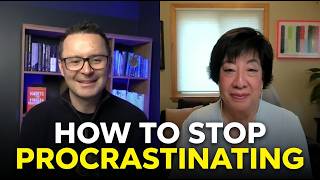
Dr. Christine Li explains procrastination as a conscious choice to delay, rooted in fear and anxiety that fragments your sense of self. She offers the SMACK framework (Simplicity, Mindfulness, Anxiety reduction, Communication, Kindness to self) and the "main path" concept: align your actions with what feels fun and expansive, not competing priorities that dilute your focus.
Chapters
Today's special guest is Christine Lee, and we're going to talk about procrastination. If you suffer from it, which if you're human, you probably do, then you're going to love this. She's a world-leading procrastination expert. Christine, a huge welcome to the Habits of High Performers podcast. How are you doing?
I'm doing really well. Thank you, James. How are you doing?
Really good. Now, I just chatted to you before we hit record. I believe you are just north of one of the most incredible cities on the planet, New York.
Yes, I am. I am in the suburbs and we're at a point where we're just bordering maybe a little bit of country as well. So, it's a beautiful place to be. But I know you live in a beautiful place as well in New Zealand. So, we both are lucky people. Yes.
I agree. I'm so glad that we get a chance to connect. I mean, you're one of the world's leading procrastination experts and coaches. And procrastination, People might go, "Oh, it's just a thing," but actually, it's the one thing that stops us from doing what we know we need to do. It's the one thing that holds us back from writing that book that we've been talking about for 30 years. It's the one thing that stops us from getting out and doing the yard work that keeps our yard looking the way that makes us feel good, or as simple as cleaning our desk, cleaning our house, and then we feel crappy because the place around us is chaos. Can I start with a very simple question that's maybe obvious, but what is your definition of procrastination?
My definition is simple too. It's really when we are deciding not to do something that could otherwise be done. That is really simply something that could be handled in the moment and we decide to put it to another time or day. And More recently, I've really gotten into thinking about time as a concept and that really the time that we have is the moment now, the moment that you and I are talking on the screen together, and that's it. And when we use that as a framework, it feels to me at least much more costly to say, I'm going to choose another cabinet to put my goal activity and progress in. I'm gonna not only think about it in this present moment, my actual life, but I'm also gonna take up the future time that I don't have yet and will be my present time when I'm in there. And it just feels like when I explain that to people I'm working with, they all of a sudden have a slightly more significant view into what they're doing that there are costs. There are real costs. We all know, we're all old enough to know that there are just the day-to-day kinds of costs to procrastination. But that energetic, what am I doing with my moment, I think isn't something that is often spoken about because procrastination is so widespread, so easy to come by, so innocently. In the picture so often when we're facing daunting events or challenges or just something new. We can procrastinate just about anything. I'm a great— I have great skills in that department myself.
Likewise.
What are some of those costs? Some of the costs, as you mentioned, are a little bit of just groundedness, right? If you see your desk is just never settling down, really, I do believe there's a part of you that isn't settling down because our environment— and this is all relatively new to me, by the way— our environment is really something that should be supporting us at a very high level. Because if we're wanting to aim high with our creativity or with our productivity or even with just our daily output, it would make sense that everything around us should be set up like our animals that we were talking about, that they need to be— they can't be crazy and chaotic because then we immediately intersect. It's not even intersection. It's like our energies are connected already. And I think that is where we can really take a deeper look at what am I doing when I decide I'm going to continue to procrastinate, right? The instinct itself, let's say it's harm— harmless, the instinct, the thought. But to do it one day and then to have it take another day and another day. I think that's where we're talking real cost, where you're really losing track of the path that you're on. You're, you're separated from time itself. And I think it's kind of how I've been taught about how to teach about addictions. When you're caught or locked in an addiction with a substance, then Developmentally, you're frozen in that phase because of the trap of the substance use, because your attention is focused there and not on your physical health, your career, your relationships, your expansion. You're, you're focused on this other area, and we can just call it another path. And it's okay to choose other paths. Every once in a while, but we want to always know what is our main path and we want to be clear about what we want to see on that path. It should— I don't think that it should be wildly accidental because we have this beautiful gift of being able to say, oh, I have wishes, oh, I have desires, oh, I have lots of things I'm intending to do, even though I may never get to fulfill them. I have a lot of intentions. And I think procrastination, the big cost is that we don't get to play in on that path, that main path as much or as fully. And maybe we can have an exchange and you can share with me your thoughts on what happens when we don't show up to our main event, our main path, and we're not in our full self, we're not fully present.
Hey, James here. I wanted to take a quick moment to let you know about something. Look, I get asked to deliver keynotes and workshops for teams and companies all over the world, from London to Antarctica, from America to Australasia, from armies to small businesses to large corporates to sports teams. But I go in and deliver keynotes around the mindset of high performers, around the habits of high performers, about how we navigate change. If you would like me to come and speak to your team or speak at your conference or deliver a bespoke workshop, please get in touch with my team. Caroline@jjloughlin.com will be able to help. I'll also make sure that we put that in the show notes. Yeah, it's interesting. I look back and my definition of high performance is consistently exceeding norms whilst maintaining healthy relationships and wellbeing. And I look back at the time when arguably people might have said, James, that was your highest performing moment in life. And I was a 7-time world champion, I was a 10-time national champion, and people could go, yeah, that's a very high performer. However, I was constantly in the future, constantly thinking about performance and competing and winning. And I was numbing myself with alcohol. I was celebrating with alcohol, socializing with it. My marriage ended in divorce. I just can't say that that was high performance. And certainly, I think there were elements of my life that it was like, "I'll do that tomorrow. I'll do that on the weekend." and the weekend or tomorrow never really came. So for me, that's not a thing I want to repeat in the future. And to me, that's the ultimate cost. So would you say that procrastination did play a part in that deterioration of my ability to live life?
I would say it's a part of time. It's a part of all of our stories because all of our stories include lots of meaningful choices. And we may not know they're so meaningful at the moment that we're making those choices. So it might have been stepping into that particular venue or meeting up with that particular person. And it's a winding path. And you have been a high performer even with those things that were on the inside, right? The internal levels. And I think what's fascinating about the work that we do is that we get to look at both. We get to look at what are the results and the outcomes, the mistakes, the failures, the challenges, but also what are those things springing from? And we want to make sure that the internal apparatus, the internal energy, the motivations are as healthy. I mean, healthy is now taking on lots of meanings between us. But we want to make sure that We're just carrying ourselves with love. I mean, that's the simplest way to put it, is that if we could be our best and if we could give ourselves the best start, what would that look like? And how close are we to behaving like that and living like that and dreaming like that? Because, right, none of us have all of it together at this moment. None of us do, truly.
Totally.
And I think the work is endless, right? And But it's also so beautiful when you get to be on the path of just say, let's fill this main path with all the beautiful things. I don't know why I'm crying now, but it's meaningful work. It really is.
Of course. I mean, it's life-changing work. And I think of the individual that's listening right now and they might go, how do I know if I'm procrastinating? What are some of the signs or ideas that would come up for them and go, actually, I am procrastinating?
I'm gonna kind of take the easy way out on this answer because I like to say that we all know when we're procrastinating and when we're not. And it can be a super fine line, but there's a part of us that just knows that, okay, it's a little bit more about fear than it is about anything else. Or, oh yeah, I'm just, you know, kind of futzing about, um, which which, you know, it's, I guess maybe an American term, but it's just saying, I'm going to just sit in my anxiety for a moment or two more before going forward. And I think we really know, we know so much from an intuitive level when you allow yourself to trust that radar. I think that could be really helpful in the recovery from chronic procrastination to say, oh, I'm feeling these urges, I'm feeling these twinges of fear, but I also know that I am trying to be more centered. I'm trying to be less fearful. So let me see if I can recorrect, reconnect with that main path energy and say, you know what, I'm gonna be okay. Oftentimes that's all that's needed is that clarity that, oh, this isn't a really dangerous situation that I'm in. It's okay to be afraid. It's okay to be careful. But again, I want to move forward. That's a big deal, right? To always be saying, I know where I want my nose pointed and I don't want it to be going in the other direction. I know that I see procrastination as moving in the exact opposite direction of where I want to be headed.
Beautiful. And what about this main path concept? I love, but what about the person that goes, "I think I've got 12 main paths and I jump on each one when I feel like I can." Is there a true north star, a true main path that we should be taking or that we know we should be taking?
You might be better at answering that question since you're multi-talented like that. I say that wherever you're having— one of my mentors taught me this, and when she said it, I said, what? She said, there are two things that the universe goes by, and they are— the principles are fun and expansion. So if you are having fun and if it is helping you to expand, then it must be that you're on the right path. And I, again, I just said, What? And I was very new to her kind of thinking and this kind of thinking back then. But then I could not argue that line of thinking from that point on. I just kept saying it over and over again, right? If it feels good in your chest, that's really meaningful. Um, I have another coach who says, you know, if you're feeling icky about something, it's, it's just great information. That doesn't mean that you're so bad, and some of us are really inclined to go there. It just means it's not right for you. And so maybe you're a 12-path kind of person, but there are 2 or 3 that really light you up and really make you jump for joy and be really thrilled to be you. And maybe, so maybe 12 can be maybe too much to handle. Maybe we're talking nerve, then you have to decide, can my nervous system handle? Can my level of focus stay at a very high level if I have 12? And if it's yes, great. And if it's putting a little stress on your system, maybe, maybe recalibrate.
Yeah, that's beautiful. It's interesting, the word fun. I think of that as an acronym to fully utilize now. And it sits within that idea of being present, being on one path, not being future-focused or past-focused. I really like it and use it.
I love that. I love that.
Yeah, simple little acronym, right?
I love it. It's simple but really, really deep. Really, really deep.
Well, that's right. You could sit and think about that a lot and go, "Oh, okay, when I fully utilize now, I'm actually having fun." And you talked about this idea of when you're doing something that brings you joy and lights you up and you are growing and expanding, it makes me think of Mihaly Csikszentmihalyi, who really dedicated his life to flow and wrote the amazing book, Flow. And I guess the idea of flow is doing one thing, one specific thing, and focusing all your energy on it. And lastly, it should be at the edge of your comfort zone or your skill level. So, what you've described really actually ties in with what Mihaly said about flow.
Yes, yes. That edge piece is really, I think, something that it's a privilege to be able to get into situations that challenge that comfort area, your prior path, right? And where you were able to push yourself to just prior. And I think that's where we need new sources of energy. We are energy, we're made of energy and we create energy and we require, I believe, new sources to keep us fresh, to keep us curious, to keep us enlivened. And yeah, I love the fun.
I agree.
I'm still stuck on that. Could you answer the question about the 12 avenues? And is there a North Star from your own experience?
Yes. Often with clients, I'll ask, the first question I always start with is, what do you really want? And most people start with, um. When people start with um or ah, I'll say, okay, we'll connect next week. Let's just pause now. Let's not worry about any more of this coaching session. I want you to go away and really think about what you actually really deeply want in life. Maybe in your career, whatever area you want to focus on. Because when we're radically clear on what we want, it's much easier to move towards it. But when we don't know what we want, we tend to say yes to all the shiny objects and all the opportunities and all the calls that come in, we'll take them. So, I think taking your time to slow down and get really clear on what matters most in life. So, I would say it's not an instant thing. It's not something that most people can do on the fly. It takes deep introspection, heightened self-awareness. For me, I do it through meditation. Others, it might be long walks in nature, or a great coach will help you unlock. So it's a real combination. But for those that are listening now, thinking about, okay, I know I procrastinate. In fact, I can think of 5 things I procrastinated on. What are some tools? Once they're aware of it, what are some tools for them to actually move forward and deal with this?
I have an acronym that I just resurrected just in mini preparation for our conversation. I haven't mentioned it in a while and I call it SMACK, S-M-A-C-K. It came to me many years ago while I was driving a minivan in New York. And if I may, I'll just describe the tools that are in SMACK.
Yes, please.
S stands for simplicity. So I think if you're caught in something in that phase where you just can't move, you might feel overwhelmed by all the things, and we've all been there, so it's okay. Uh, the easiest thing to do is to say, let me just simplify something. And it might be just spending a little bit of time decluttering and clearing your desk so that you can focus. It might be taking a walk. It might be saying, Okay, what is really important to me here? What, what should I be focusing on? Those are all versions of simplifying your circumstances. And I think when, when the body knows, oh, there's only that to deal with, we can, we can then engage, right, with action. Mindfulness is the letter M. And for me, it's as simple as just bring yourself to this moment. And that's how I define it for this acronym. It's It's that we're not worried about what just happened, the thing that is in the past or what happened long ago that is affecting our present. And we're not projecting our worries or our pessimism onto our future either. We're just saying, okay, what needs to happen here or what doesn't need to happen here, right? What can we clear out is also a way of being mindful. That connects with A, which is anxiety reduction. And when it comes down to it, procrastination is from fear. So let's look at what is the fear? Is it meaningful? Is it irrational? Is it completely imaginary? Is it just you haven't eaten? You haven't eaten and you just feel fried from the thing you just experienced. is it something bigger than that? We, we need to look at these things because again, if it's really chronic, we wanna look at maybe the roots are really deep. Um, so that's anxiety. And then C is a beautiful one, and that is communication.
Mm-hmm.
My personal story is that I learned to cope with things by just shutting my voice down. Um, that, that was me for so much of my life, and you can tell that I've pretty much overcome that barrier, which I would highly recommend for anyone who feels like your voice is a limitation or something that reveals your anxiety or doesn't show up for you when you need it to. I would say invest in a voice coach because that can be so freeing. Our voice is such a tool for success and life. Forget success. It's just you know, your everyday buying groceries, you need to communicate oftentimes. So invest in your voice, truly. So for me, communication and procrastination means timely communication. It means honest and open communication. It means telling people if you're falling behind or can't do what you've promised, it's really all going to be okay. And I've seen from being a psychologist that We all just like the truth, you know, just like we know when we're procrastinating, we know when we're being told the truth. So get practiced at speaking truthfully and you're going to see that your efforts are, are kind of more like ninja effort. So they, they will go really well when your communication is really carrying your, your meaning through to the other people that you want to work with. K is the the cream of the crop, and that is kindness to self. If you're yelling at yourself, it's kind of like all bets are off because you can't even trust yourself. You're fighting with yourself. So how are we gonna bet on you as someone who can really do this and hold this and be present and be aware in the moment? So you use one of these tools and improve a little bit, you're gonna probably take the edge off the procrastination. Urge, and I hope that for everyone who's listening.
That's amazing. I love the tool. Very easy to remember as well because you've given us the SMAC acronym. I deeply appreciate that. And it's interesting, the procrastination side of my life, I wonder from a neurological standpoint, am I building a procrastination muscle? It's like every time I procrastinate, is that developing a habit, like a trigger loop almost, where if I procrastinate on— an example would be slides, so PowerPoint slides. So I'm speaking often on stages and I have to do slides and it's generally quite unique that I'm speaking to different audiences. Could be real estate, it could be wealth, it could be agri, all different things. And the one thing I procrastinate on is sitting down and designing the PowerPoint slides. I struggle to do it and I wonder if I started to develop a habit of that. Do you have any thoughts on that in terms of your dealings with procrastination?
I would say what I hear so far is that the habit is of not liking the slides. So, if you could break that, it might be just the behavior of creating the slides. And it might just be like, it feels to me that what's coming to mind is like a, It's like the entry fence. You feel like there's a fence between you and the enjoyment of the creation of the slides, right? And it could be, it might never be. We can allow for that possibility. But let's say, huh, what if we just knocked down the fence and said, oh, this is a flow area all of a sudden. I'm gonna try that, right? Instead of thinking, all the other times that were difficult. And I, I know that that has— I think writing has become much easier for me, um, since 5th grade when I was taught. It was— I think I did fine academically until 5th grade English when the teacher taught how to write using an outline, and all of a sudden we had Roman numerals, and I just could not comprehend what was going on. I just— didn't make sense. I felt like I had no way of connecting to this way of writing. It didn't seem obvious or natural. I've never been an outline-based writer, even since 5th grade. And so it really is like, don't let all the past experiences shape what the next PowerPoint slide could be, what the next experience could be. And really, you know, you know this as well, like everything is a habit and they're supporting us very well, actually. And we can tweak any ones that we want. And it doesn't have to be a heavy lift, right? You're already doing the heavy lifting by doing the unique lectures and doing the unique Contributions. And let's make the slides slide in as a really easy lift for you, right? The slides are just making you better. Yeah, let's do it.
I honestly love that you said something about flow as well. Like, how about let them be flow? And that's actually pretty cool because when I look at flow, it's like you do one thing, do my slides. Often when I'm doing slides, I'm like, "Oh, did my phone just go off? Is that a text message?" Or, "Oh, I should just check what's happening on the global political landscape." So, Do one thing, just the slides. And it should be at the edge of my comfort zone. So maybe I go, what could I do with this slide to make it even more creative, even more unique? And so all of a sudden, I'm deeply entrenched and focused in it. So that's a bit of an unlock for me. So thank you, Christine.
Another one to add is, what does it need from me? Instead of thinking it's a push for me or something that's going to drain me somehow, It's like if the great slide already existed, what does it need me to add? So, something like that.
I love that. Is there any upside to procrastination?
I don't tend to think of it that way. I tend to think of it as the real thing we want to try to develop the muscle of avoiding. If you're going to avoid something, avoid procrastination because there's just so much to play with in life, right? You don't have to be productive. That doesn't have to be your thing. You could be whatever you want, but procrastination kind of traps you into that anti-zone, the anti-what-you-want zone. So I tend not to think of the good parts of procrastination.
Yeah, I'm with you on that. I don't see any positives. Maybe someone listening might go, oh, well, there's this thing, but I agree. We wanna be moving towards what we want, not pausing and delaying.
Yeah, yeah, agreed.
So what in your life have you procrastinated on most?
Oh, interesting. A couple thoughts. One was clutter, actually. It happens to be the topic that I work with people on a lot recently. And that has been like a bugaboo topic. So it's not by choice necessarily. It just seems to kind of be attracted to me. So that kind of organization and figuring it out finally. And I do think there is more work to be— more internal work for me to do to get to that point where really things are where they should be, where they work well for me, and where I don't feel like my attention is going this way and that way. And that may be reflecting my own focusing issues. But that has been a real bugaboo. And you could say I've delayed in fully fixing that, in saying I've arrived. So that is one thing. And then the other responses that come up for me are, in some ways, maybe things like self-confidence, that in some ways that is always a work in progress, right? Can I be fully me, fully me in public, definitely, and fully me even in private, right? Can I believe in myself fully no matter what? And there may still be some work there to be done as well.
But I think that's beautiful that you share that. And I want to say thank you for sharing that because I think often we do try and put on a performance mask where it's like, you know, when we're in front of others, even close family members, or if it's in front of our peers or on stages, there is like a mask. So it's really cool that you can say, actually, I still want to work on that. And from your work in psychology, if we look at narcissists, maybe they don't have the imposter syndrome that the rest of the world does. So I think it's a very healthy thing to have a level of self-doubt or lacking of self-belief, but not letting it get too intense, not letting it stop us from moving forward or going into our discomfort zone. It's probably a bit of a dance that has to be done.
I don't know. Lately, I've been thinking that we're all made of so many multiple identities and potential identities, including narcissistic identities. And we need all of these pieces. And it's, we feel fragmented when we start to deny connection with a certain type of identity and including the high-performing, the really thriving person that's within you. I feel like there's an 8-year-old rockstar in each of us, right? The 8-year-old who really knew what was going on, who really didn't need anybody's instruction, who just already had the gifts that they came to the planet with. And I just am, I'm just playing around with all of these different philosophies and ways of thinking about being. And I've just been having a lot of fun in recent weeks and years, just learning from people, meeting new people, and connecting with different energies within myself as well.
That's amazing. Thank you for sharing that. And also just thinking about your mornings. So is there anything in the morning in terms of a morning routine or habits when you wake up that can help combat procrastination?
The number one, one that I would recommend is figure out how to wake calmly. And that may not be— I just peeked into your recent episode with Hal Elrod, and I know of his beautiful work. And there are all these actions that we can take, of course. And my morning routine is flowy and fun and light, but definitely on purpose. But the one thing that I know I do these days is that I wake with a feeling of calm and peace. And I can't tell you how many decades in my life that I did not go to sleep in that way and I did not wake up in that way. So that's a really important and meaningful transition. To look at.
That's amazing. And if I get really specific, do you wake up when you wake up, or do you have an alarm that goes off to wake you up?
I am very lucky to not have to have an alarm to wake me up. And yeah, I do think, again, privilege, but also work, right? Work to be able to structure your sleep-wake habits to make sure that that works out, and also, career and work and schedule issues as well. So no, I don't use an alarm clock. I long ago did, and I was very much a snooze button kind of person. And that, you know, that's not comfortable. Even when you're thinking you're enjoying it and benefiting it, it's really just— it's like a tug of war. It's not really a way to set the stage for the day. And maybe the one thing that really helped me to figure that out was hearing on a yoga video, a young man say the way you start your day is the way the rest of your day goes. And it just seemed to really make sense, even though I was not living that way. I wasn't living by that doctrine back then. And it really, you know, I don't worry about how much time my morning routine takes because I know it's an investment and I know it needs to happen. I need to set myself up well in order to do well. It really works like that for me.
I'm with you. And what are some of those things in your routine that help?
During the day?
If you have a morning routine, is there any specific things that you do that really set you up?
I do a bit of tidying because clutter is a thing. So, I have very much downscaled the stress that tidying has used to cause me. So it's a little bit of a pleasure to see things flow back where they might need to be, get some laundry in. So it is self-care, some version of self-care. I have in the past year and a half become a mini journaler. I've never been a journaler prior. I do feel it's a beautiful— I'm, I'm like a crafty type of girl, so I feel it's a blend of reflection, but also some stickers and sketching and to-do listing. Journaling can be anything. And it really has been this little memento piece area, fun area, place to dump the garbage area. It's really been lovely. So that's a new habit of mine. And occasionally, it makes it into my morning.
[Speaker:MARK] Good. I love journaling. I'm such a fan. On the flight on the way back home this morning, journaling and just, it's a joy, it's a privilege to get to journal.
It is, it is. And it's so easy. It's easy when you let it be easy. It's a simple way into yourself, into those inner levels. Yeah.
100% agree. And Christine, just before, I've got one very important last question. But before I do that, if people want to connect with you, follow you, engage, where's the best place for them to do that?
Thank you so much, James. And this has been lovely. So thank you, thank you for this experience.
Thank you.
I have a podcast, so I would love to mention that. It's called Make Time for Sick Success. And I would love everyone to just take a peek and take a listen there. I have a resource, uh, it's a free download about clutter, and I would say it's probably useful for people even if you don't have physical clutter because it really gets you to look at what are you working with. So I'm gonna, if you don't mind, I'll share the link.
Absolutely.
It's maketimeforsuccesspodcast.com/clutter.
We'll put that in the show notes as well, that exact link, so people can click on it and go straight to it.
Thanks. I'll repeat it if you don't mind again. maketimeforsuccesspodcast.com/clutter.
Awesome. Thank you so much. We'll put a link to the podcast itself as well so people can go and check it out. Thank you so much. I've really loved our conversation. And I've got one last question, though. So for a moment, if we pretend that we'll fast forward many years into the future and you're highly aware that it's your last day on Earth and someone who you love dearly, maybe a young human, comes in and goes, Christine, how do I lead my life on purpose? What might you say to them?
Oh, you've just zinged my energy and heart in so many different directions. Leading your life on purpose. I would say figure out how to practice trusting yourself at a deeper level. So there's always a level deeper when it comes to these things. And I think there's no end because we are infinite beings. So when you need to go in a direction and you want to achieve, root. I just came from a yoga class yesterday. She kept saying, "Root to rise." And when you think about these phrases, they're all meaningful in yoga, right? Root, just know where you are so that you know where you will go. And I think that would be what I would say.
That's so powerful. Thank you. I deeply appreciate you sharing that. And I know that there's listeners right now that just needed to hear that. I want to wish you nothing but the best on your mission to help the world rid itself of procrastination and give people the tools, and particularly that one today, SMAC. I'll be writing that one down and using it myself. So thank you so much, Christine.
Oh, thank you, James. You've been a love to get to know and a wonderful host to me. Thank you for inviting me here. And everyone who's listening to us, you've got this. You've got the heart, you've got the skills. You've got the time.
That's beautiful. Thank you, Christine. We'll chat soon.
Okay, thanks, James.
Bye, everyone.









