The Relentless Habits That Made Hamish Kerr an Olympic Champion
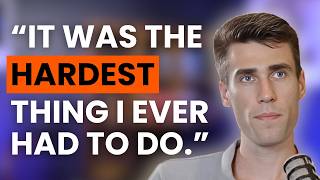
Hamish Kerr, who won gold in men's high jump at the Olympics, talks with James Laughlin about the habits and mindset that got him there. He covers mental and physical preparation, how he manages pressure, and why trust in his team mattered most.
It's not every day that you get to sit down with a Flying Kiwi. That's right. Hamish Kerr is in the house and today we're going to sit down and chat with a gold medal winning Olympian. Hamish won the men's high jump at the Paris Olympics. So sit back and enjoy the show. Hamish, a huge welcome to the Lead on Purpose podcast.
Thanks for having me, mate. I'm looking forward to it.
I'm so glad to sit down with you. It's been a long time in the making. You're a busy fella. I'm all over the place with flights, so I'm glad that we can lock this in.
Yeah, it's taken a couple of options, but we've definitely got here, so looking forward to it.
Thanks for your flexibility and understanding. I want to talk about so many things with you and the fact that many will know you as the Flying Kiwi, the gold medalist from the Olympics last year, first ever medal for New Zealand in that field. Unbelievable. Incredible. And to be gold. So I want to talk about your habits, I want to talk about structure, I want to talk about where you're headed next. But probably a good starting point is. Let's just hone in right on the Olympics. You're there. It's the final day of the Olympics, I believe.
Final day, yeah. Best to last.
I love that. Yeah, the cream of the crop at the very end. How are you feeling walking in? Because I really, I want to get a feel for the emotions as you're preparing that day and on the field itself.
Yeah, I mean, I suppose the Olympics for me was, was actually two days. So there's the qualifying round which happened two days beforehand, and then there was obviously the final which was on the last day. And the emotions of those two days were very different. I, I was, was pretty, pretty nervous. There was a lot of expectation on me going into that qualifying round. And in the past, especially at world outdoor champs, which I'd done three of, I hadn't actually gotten through that qualifying round. It was sort of a bit of a bogey, so to speak, for me. So I, yeah, I was pretty stressed going into that, uh, and had my ups and downs through that competition and, and ultimately, you know, through, through my mental skills and, and through all the preparation, we'd done well, I'd done personally, but also the team had done, uh, we, we got through that. And then I suppose that just gave me the freedom ultimately to go into that last day and, and feel like I was just excited and ready to go. Uh, Yeah, I, I have fond memories of, of the warmup track, uh, which was. It's always a fun place to be. Uh, I love the warm up track before a, before any sports event, to be honest. I mean, you know, anytime I go and see some sport I always get it early to watch warm ups and, and see what other athletes doing because that's something that's really fascinating to me. And you know, at that warm up track there was, you know, there was guys who had started running, you know, jogging and doing movement two hours before the competition and, and you know, then there was guys who are, you know, trying to jump as high as possible, you know, before the comp. And then, and then I was kind of parked up on my, my physio bed reading my book and, and also at the same time watching Lydia Ko as she was kind of completing her final round in the golf to obviously win the gold. So yeah, I think for me in that moment and a lot of the key moments I've had in my career, it was about enjoying that moment and, and being, you know, I want to say present. Obviously I was reading my book, but I was still kind of involved in that, that whole situation and, and it was about just enjoying that time with my coach and realizing that, you know, all the work we'd done led to that. And so it was about just going out there and enjoying the next few hours and I definitely enjoyed it.
I love it. Yeah. Did we all.
Yeah.
So going back to qualifying, I'm going a bit of a detail. So you felt this stress, this kind of like idea that I've almost like Ireland in the, you know, the quarterfinals of the Rugby World cup, like. Yeah, I can't get through it. How did you push through the stress? What did you do to manage that?
Yeah, all the All Blacks, you know, for a number of real cups there. Yeah, I mean I think it's. Yeah, I mean there's been a number of reasons why I haven't succeeded in those qualifying rounds in the past and, and I actually changed coaches just before the start. Well at the end of 2023, so just before my start of my campaign through to Paris. And one of the big reasons for that was, was having that ultimate trust and that relationship of that coach was, was probably not quite where we needed it to be. And so we worked really hard on the expectations around who am I as a person, as an athlete, as a, you know, as a, as a role player within my team. And then also what responsibilities does my coach have? And so yeah, going into that qualifying, there was definitely a lot of PTSD around what had happened. But then it was the ability in those tough moments, which ultimately I did have some really tough moments. I had a third attempt at 2:20, which if I hadn't gotten that, it probably would've been the end of everything. Um, I, I don't think I'd be continuing to jump, given how well we'd structured that season and, and, and how we ultimately failed if, if we'd done that. But it was the ability to, to trust in my coach and almost put all of my feelings aside and just pick up on his. And, and really understand that. That in that moment, it wasn't about me. It was about what he wanted me to do and what sort of advice he was giving me to allow myself to get through that.
Incredible. Hey, James. Here. I wanted to take a quick moment to let you know about something. Look, I get asked to deliver keynotes and workshops for teams and companies all over the world, from London to Antarctica, from America to Australasia, from armies to small businesses to large corporates to sports teams. But I go in and deliver keynotes around the mindset of high performers, around the habits of high performers, about how we navigate change. If would like me to come and speak to your team or speak at your conference or deliver a bespoke workshop, please get in touch with my team. Carolinejlochlan.com will be able to help. I'll also make sure that we put that in the show. Notes. I love this idea of trust. And often when I'm working with teams, where there's high trust, there's high performance.
Absolutely.
And the opposite, where there's low trust, there's generally pretty low performance.
Yeah. Well, in the past, I mean, obviously the competition arena. So for me, the high jump fan, it can be quite a lonely place. And especially when you don't feel like things are going well. Often as an individual athlete, for me, my gut feeling is how do I fix the situation? What do I do to jump better ultimately? And it's kind of changed now. And I've sort of realized that a lot of the time in those moments, because it's such an emotional place, there's just too much stimulus for me to be able to make one of those really good snap decisions. And so having the trust to have a coach there with me who's, who's in the stand so I can go and talk to him at any time, to be able to make those decisions for me and realize that those decisions are actually what's Best for my ability is pretty scary. It definitely took a while to kind of really commit to that, that model of working. But yeah, I think ultimately it just provides me with so much simplicity and enjoyment and ability to just get as good a competition as I can out of every competition.
Incredible. And I want to talk a bit more about team in a minute because it fascinates me when people see individual, you know, athletes or individuals doing their thing and go, what's an individual sport? Yeah, it's really not when people are at the best, they've got a team.
Yeah.
So we'll jump into that in a minute, but let's get to the day of the final. Yeah, you have this sense of flow, you know, you look quite at ease. Some of your competitors, as you say, have been there for hours.
Yeah.
Pushing themselves and trying to get their PBS right before they do it. Yeah. What led you to being in a state where you could read a book, check in on Lydia Ko's performance? What created that for you?
I think for me, first and foremost, I'd gotten into a really nice habit of winning this year. So in the past when we do one day meetings, which is almost always what happens. So no qualifying rounds. It's always so a diamond league or a world indoors. It's just 12, 8 to 12 guys all there just for one competition. And so I'd gotten very good at that method of thinking. I had, I won World Indoors last year. I won a bunch of diamond leagues and I, I understood the energy flow that, that happens through those comps. In the past when you're fighting for, for sixth, seventh, eighth place. Your best jumps have to be in the first 30 to 40 minutes of the competition. Whereas if you're later on in the competition, I fighting for the win. Your best jumps have to be at the end of the competition, which can be two to three hours long. And so it's actually a real mindset shift going from trying to come top eight to actually trying to win. And with that comes so much physiological load and almost fitness and well, psychological fitness as well. But that for me was one of those big reasons why I was just so relaxed and so chill in that warm up field. Because I realized that yes, I needed to get my body online and everything started to work. But ultimately it was going to have to stay in that space for another three and a half, four hours because you know, it's three hours of competition but there's also an hour of call room beforehand. And so yeah, it's quite fascinating having the trust to Know that I can then go out there, the competition will start and then I can start building into my process. Whereas I think a lot of those boys probably didn't have that trust and so thought that they needed to go into core room feeling good rather than trusting. You know, we come back to that word, trusting that it's all going to work out. But there's also a huge component of trying to maintain as much energy as possible so that in three, four hours time, when I draw on it, it's there.
Yeah, yeah. And I don't think again, we appreciate as viewers just the stamina that you need to do what you do. And yeah, we don't see you running a marathon, but actually when you look at four and a half hours of time, yeah, that's pretty intense.
Oh, the neuro stimulus is huge. I mean, I, I remember in the qualifying round and this was one of the mistakes I made is I didn't trust and so did push myself hard and warm up. And I looked down at my, my watch, which has my heart rate on it, and it was about 145 beats per minute. And that was an hour before the comp was supposed to start.
Wow.
And so for me, I'm going, that's not good. But at the same time, I mean that's, that's, you know, not to that level. I mean, I. Through the competition, which was again, three hours long, but, but ultimately, yeah, it's, it's trying to, trying to be aware of, of how much you're burning, even though physically you're not really pushing yourself hard.
And I think this point of being in a final is a big mental game. And the self talk that goes on, even if you're in a team sport, there's a lot of self talk that happens and unfolds. What was going through your mind in those final kind of 90 minutes of the final?
It came back to the learnings we'd made through the year. I think that was one of the great things was each competition we did, there was a really high standard put on each of those comps. So throughout the season you kind of get into better and better physical shape. So ultimately not all your superpowers or all your tools are available every given to comp. And so in the past, what I'd sort of taken that as was that I actually didn't need to do well at each comp. Whereas this year, last year, one of the big kind of focuses was what tools do you have available each comp and how do you get the most out of those tools. And so there was an expectation that even when I was in really heavy training, if I turned up to a comp, I would absolutely nail all the things I could now. So whether it be my preparation, whether it be my sleep the night before, my nutrition, you know, pre, during and post comp, my focus, each jump, there was a real high intent as to what I was trying to achieve out of those jumps. No lazy jumps, no kind of opportunities where we could get something, but we. We didn't because I didn't fully commit to it. And so in those last 90 minutes, there were a number of kind of learnings that had occurred through that process, which were going through my head. And, you know, the. The. Probably the big ones for me, which ultimately helped me and those final moments was in Glasgow. So at World Indoors, where I won my first ever global medal. So I jumped 236 to get gold there. I actually won the comp at 232. And so I was. I was world champion, like, and that was the first time I'd ever had that. That label put on me. And instead of me going, I'm world champion, I've done enough. I'm gonna, you know, cut the comp and go home, I knew that I was actually there to jump high. And so I put the bar up to 236 and had two pretty average attempts at it. And it's quite funny, I fired up my squad or my group, team, group WhatsApp afterwards. And, you know, all the people back home watching, you know, my physio and my strength conditioning coach and stuff, they were kind of riding like, oh, he's just put the bar up to 236 to just kind of essentially do a victory lap. You know, he probably won't clear it, but he's just going to enjoy the moment of. Of being the number one. And, and for me, I knew that that wasn't what I was there for. I was. I was there to jump to 36. And so in that last jump, I was able to compose myself enough to. To clear that. And yeah, on paper, doesn't look like something that's super exciting, but for me, the amount of mental strength that took to continue to push when I already knew that I didn't need to, was. Was pretty powerful. And so that. That moment, and coupled with another moment where at Monaco Diamond League, Shelby McEwen, who people may know is the guy who came second at the Olympics, he was actually beating me through the entire competition. And the reason he was beating me was Because I had a few sort of bad misses at the start and the total number of misses in a competition count. And so even though we were clearing the heights at the same time, he had least misses on his cards, so he was winning. And it came down to one jump at 233, which would have been an equal outdoor best for me. I had one final jump to beat him, and I knew what I was there for. I dug deep and I ended up clearing it and pipping him that last jump. And so you know those two examples of. Of times within that last 12 months of when I had kind of done what I needed to do, but then realized that there was a little bit more to come was. Was definitely what I was thinking about in those last 90 minutes.
Unreal. That like, edge that you've given yourself by just stretching, getting uncomfortable. Almost.
Yeah. And it's just. It's almost just been. Been relentless. It's. It's like how, how hard can I push myself? And then when I feel like I've pushed myself as far as I can go, how much further can I go again? And I think that's something that I've really fallen in love with and, and is sort of something I'm kind of getting a little obsessed about now is almost. It's great to compare myself to all these other jumpers and all these other guys who are on tour and starting to get more and more wins, but it's like that doesn't matter because I'm not finished. I still feel like there's more to give. And so it's about how I can push that.
I love it. It's like self focus to the point where it's not about beating others, it's about beating self.
Yeah, well, I mean, that was the thing was last year was probably the first time I really had disconnected from the outcome of placement or of placing within a comp. And that reason was, is because purely the outcome for me was whether I'd done good enough. And so it was funny because in me doing good enough for me, suddenly I was winning.
Yeah. And it all adds up when you start focusing like that.
Yeah. Yeah, definitely.
And if we hone in a little bit on that relentlessness, is that a learned muscle that you've built or is that something that comes from environment as a kid?
I think it's a bit of both. I think, like, for me, I've always tried to find the path of least resistance, and I think that that's a great strength of mine. I can cut through a lot of unnecessary stuff at times. But I think at the same time, it's important to recognize when you actually do need all that stuff around it. Uh, and so, yeah, I think, I think that I've always been relentless in my drive to pursue my goals and achieve my goals, but at times I probably haven't trusted the people around me to understand enough truly what I need to do to achieve those goals. It's sort of been a little bit. Been relentless towards climbing the biggest mountain, but understanding that in doing that, you actually have to be relentless at the foothills. And so I think that's probably where my mindset has changed and my understanding of what it means to be relentless has changed over the years.
That's so beautifully put. I like how you distill that around when you're at the foothills. It's not time to muck around. It's like, get the foundations right, work hard.
Yeah, yeah, Genuinely, you know, like getting to that top of the mountain. We hear it so often, you know. You know, getting to the top of the mountain is the journey that you find, you know, as you climb it. But truly, like, buying into that and understanding that that's really a worthwhile thing to be thinking about is definitely something else.
Now, arguably, an Everest for any athlete would be to win the Olympic gold. So, like, you reach that, right? You're there, like, just before you reach it. That's generally the death zone. So if we think of Everest, people will climb Everest and they get into the death zone.
Absolutely.
They die. And in athletic terms, I mean, you know, you choke.
Yeah.
So was there a moment in the final? You're like, God, it's so close, but no cigar just yet. Was there a little, like, inkling of self doubt or had you worked so strongly on the mental side of it?
No, I would have said that that came in qualifying. So in my third attempt at 220, that was when I had that, that, that moment of, of. Of doubt, for sure. So I suppose the context behind that. My first attempt at 220 was. Was just a bad jump. You know, things happen. I was probably not, you know, quite fully kind of mentally switched on. I was trying to hurry through the competition as well. I was sort of just trying to get out of there. I wanted to just, just, just have that qualifying over with and then just get into the final second jump. I actually buckled through the start of my curve, so. Which is part of my run up. And that was just terror. I, I didn't have a process. I wasn't grounding to anything. I was too aware of the situation and what potentially could happen if I didn't clear that bar. So there was terror. I essentially just couldn't execute. And then between then and that final jump, I came back to my process, came back to my breathing, came back to the trust that I had in Jimmy and him telling me what I needed to do, and scraped over my third attempt at 220. And looking back on it, I think that that was the moment that I won the games, because that was the moment that I had to go so much deeper than any of the other boys. Most other boys just cruised through qualifying like, you know, they're all kind of like, oh, what was that, Hamish? Like, you're fine now, but, like, what was that? And I think that they probably didn't realize how deep I had to go to get out of that. I mean, it was the hardest thing I ever had to do. You know, you're faced with essentially the best career or the best year you've had in your career, and then understanding that the biggest comp, which you've got a real potential of winning, you've just completely failed it. I mean, I would have come probably 25th, 26th in that comp if I hadn't got that 220. And so in doing that, that was what gave me the belief in my trust and my process and all the kind of work we'd done over the year. And so that was a big tick. It was like, sweet. We've done that. We've got it out of the way, and now any other jump is easy. And that was something I really channeled in that final. Shelby McEwen, who we. We ultimately jumped off together. He didn't miss a bar in the entire competition, be it qualifying or final, until. Until two heights before the jump off. I had, you know, two misses early on in qualifying. I. I had a third attempt halfway through the final as well. And. And so I'd kind of got to that point and I was just. I was bloodstained and battled, hardened, and he was kind of. He'd sort of just got him through pretty scot free. And so I was like, this is an opportunity now to really just push it to him.
There's a real mental game against your competitor as well, in terms of how you're performing, how they're performing. There's a mental edge that you're starting to develop.
Yeah, I think there is. And I think that it's just that expectation I've got of myself and understanding of what I need to do to win. I see it quite often with my competitors. You know, they'll go into a competition and they'll be talking about, you know, oh, my shoes don't feel good today or, you know, my coach isn't here and oh, there's all these things that I don't know. I've been training well, but I just don't understand why I can't. You know, there's all these words that kind of come through and all this language that comes through not in everyone, but, you know, in a lot of them, which I kind of go, well, that's an opportunity to try and fix something and understand how you can adapt your process. And so that's why we've been really forensic over the last few years, is trying to close those gaps. And yeah, it makes me feel good because I'm in a position now where I go into a comp and I hear those things and to me that just shows you how prepared. And so, yeah, for me, it's just a great opportunity to just push my mental edge as hard as possible.
I love it. You're deeply curious. You've got this curious mindset. Something goes wrong. Cool. What can we learn?
Yeah, 100%. And I think that's one of my big strengths as well, is like I've always, I've been a real optimist. You know, I always see opportunity and failure and failure. And I think that's something that I've had since I was a child. Yeah. I look back on, on all the failures I've had, be it, you know, thinking I was going to win school, cross country and ultimately not and, you know, thinking I'd get a certain result in a test or thinking I was a shoe in for a certain role at school and not getting it. And I think for me, those are, those are the memories I look back on fondly. More so than the ones because those are the memories that. Well, those are the moments that actually kickstarted change and made me develop who I am as a person.
Yeah. And I think what I hear from that is those failures ultimately served as a muscle for building resilience.
Yeah.
And you wouldn't be where you were if you didn't lose out. And cross country.
I love failing. It's. I don't know, I mean, as a high jumper, we fail all the time.
You should be an entrepreneur, like a tech entrepreneur or something.
Yeah, it's just. Yeah, I mean, I. Yeah, like I said, like, as for, for as high jump, you know, it's very obvious when you fail, the mark comes down. But I think it's deeper than that. It's. It's sort of this obsession of. Of understanding why. Why I failed and how can I get better from that.
Beautiful. And we'll unpack that in a minute, but let's get even closer now. So you realize you've made the jump, you've got over. You land. What's going through your head at this point?
Look, it's weird. Like, I think in that moment, it felt very real for the first time. So, you know, you always have this dream, whatever it may be, and for me, that was. Was winning the Olympics and. And I never really thought that dream was possible until. Until I landed on the mat and the bar was still up and I was. And, yeah, I. I can't hear anything in that moment, like, even thinking back on it. It's. It's purely a visual memory. There's no. There's nothing else attached to it, just because of. Of the emotion that's going through me. But, yeah, I think. I mean, a lot of it was relief at that point. You know, the competition had been going on for so long. I was hungry, I was, you know, I was ready to get home and sort of just be with my friends and family. And at the same time, yeah, it just. It was just the. The end of. Of what was such an amazing journey. And. And so I suppose from that, I mean, you know, there was probably a little bit of emptiness as well in that moment. It was sort of one of those things where you think you're going to clear the bar to win the Olympics and it's going to be, you know, your life's just going to change. And sure it does, but at the same time, in that specific moment, it's just another high jump. So, yeah, I think that kind of. It was very powerful understanding that what I'd done got me to there and that kind of full circle. It kind of completed that loop of understanding that the dream of who I wanted to be and what I wanted to become was just a product of everything that I'd done before then. Rather than needing to be anyone else and kind of evolving into this person, it was just. Yeah, it was just the simplicity of being, like, cool. I just did that.
Unreal. I love that. I love that humility aspect of what you do as well. Chatting with a friend who was in the NZ SAS and humor and humility is like their motto, and so you really embody that. I can see your cheekiness, I can see humility, but obviously you've got the confidence, you know, just like the SAS did it get the job done.
Relentless.
Yeah. 100%.
Yeah.
And it's interesting you mentioned the word emptiness minute ago. So I remember at the World Championships competing, whether I'd lost or I'd won within about six hours of the event being over that, we called it the post world depression. Deep, like sadness, this event that you'd built so much up to. Emotional.
Yeah.
Depths of sadness. Did you feel any of that after the Olympics?
Yeah, I. One of the. One of the sort of things that I always think about in terms of that post depression or, you know, post. Post Games blues, whatever you want to call it, a moment that is incredibly powerful for me, not just at the Olympics, but at most comps I do, is you always have this moment where you go out, you compete, you're in front of this crowd for two to three hours. Whether you win, you lose, whatever happens, you're out there and it's just stimulating. There's noise, there's things going on all over the place, and then you finish. And there'll always be an empty corridor. You go off, you do your media, There'll be a point where you then suddenly have to walk through under a stadium, or there's always that empty corridor. And that's kind of the moment that you suddenly stop and realize what had happened. And it's pretty scary, you know, whether you win or lose, like you said, you never truly understand your emotional state and where you are until you sit in that corridor. And so I think for me, thinking back on all the. The competitions I've done over my career, those empty corridor moments are. Are pretty powerful places. And, yeah, there wasn't really an empty corridor moment at Paris because I essentially was just getting chaperoned everywhere. Well, not immediately, probably. Actually, the first empty corridor moment I had was when I actually left the village about 48 hours later and was sitting on a train to cruise down in Nice to catch up with my. My family, who had gone the day before. And it's sort of in that moment when. When you just sit there with your thoughts, it's a pretty powerful place. And I think that that's probably something that a lot of athletes and a lot of people don't. Don't allow themselves to have those empty corridor moments. I think that it's easy to take something and take a stimulus or an event that you've had and just kind of push on with it. And so for me, it's been really important of sitting in the empty corridor for as long as possible or as long as I need before coming out of it again.
I love it. I think I really agree with this and can relate to this. I remember, you know, after a world championship, just getting ready for the next thing. What's next? Let's go counting down to the next worlds or the next nationals or.
Yeah.
And then as I got older, I started to reflect on Lexi. I'm like constantly just never ending on adrenaline. And so those empty corridors, I mean, I journal a lot.
Yeah.
And so I create an empty corridor as often as I can. What do you do in your empty corridor moments? Do you ask questions? Do you let things bubble up?
I think, yeah, I definitely sit with things and I spend a lot of time just thinking and trying to understand. I don't journal. I constantly debate with Quinny about whether I should be writing this stuff down. And ultimately that's just not the way that I work. But, yeah, I mean, I'm very lucky. Like, often my coach and my girlfriend are with me. And so it's around that conversation and sort of trying to. Trying to put my thoughts into words for them and trying to get them to kind of understand where I'm sitting. But yeah, I mean, this year the empty corridor was three months long. You know, I didn't get out of it until probably November, December. And so, yeah, it's a space for me just to be curious and to try and question within myself what's happened, why did it happen, how did it happen? And how can we then at some point start trying to apply that to the next thing? But I think that that's probably, again, something that it's easy to jump towards. How does it implicate my future? And so I always try and bring it back to, well, what actually occurred. And if I can really well understand what happened, then I can apply it at some point. That's not an empty corridor for me. It's like the empty corridor is what's just happened. And then I step out of the corridor and then try and build something from it and find meaning from it.
Powerful. And this three month empty corridor period, Hamish walking into that corridor versus Hamish walking out, what changed?
I think we were very stuck on trying to win the Olympics. Rightfully so, of course. And so when that occurs or when you have something very close minded like that, it's around. How can we cut out all the noise and cut out all the curiosity and just sit on one path? And so that was something that we signed off on in November, so to speak with the team. It Was like, this is the approach we're taking. There is going to be an opportunity at some point to be a little bit more curious than that. But for now it's appropriate that we just move forward with this one technical model and this one physical kind of program. And so, yeah, that three months was trying to kind of get myself out of that mindset of being very, very focused. It was exhausting. I mean, it was amazing. It was so fun. And I loved being so single minded like that and I obviously got a huge amount of success from it, but it was so exhausting. And I think probably one of the big kind of things deep down, which I felt through that period was I don't think I can do this for four more years. I can't be single minded like this for four more years. It's just going to destroy me. And so it took a long time for me to realize that I actually didn't have to work that way. And it took time talking to the team and reviewing with them. And I think one of the key moments for me was we sat down on my review with my team and some of the people in my support team recognized the fact that it was exhausting and that it wouldn't be happening again until the next games. And so I think that was a huge moment of relief for me. So, yeah, I think going back to your original question, it was about changing my mindset from one thing to then, what matters now. And how do we obviously look towards something that's in four years time, but at the same time find meaning and try and really understand how I can kind of add to my quiver, so to speak, of, of athletic success while also being really open and curious around it.
Beautiful.
Yeah.
I think there's a danger when we get so like monomaniacally focused on one thing.
Yeah.
For too long.
Yeah.
We can lose a lot of our zest and a lot of our skill set.
Yeah, for sure.
So really interesting that you've done that. And I guess this ability to go, okay, it's in four years time, I'll hunker down again. When I talk to athletes and anyone that's world class at what they do, you know, vision precedes victory. They always know.
Yeah.
With clarity what success looks like. So for you, that was Olympic gold. So coming off the back of that, what's the next thing that you're moving towards from here?
Well, I suppose the next Everest, so to speak, is defending my gold and jumping Olympic record. And the reason I say Olympic record, it's not Something that often people chase. Often people chasing world records. But for me, the Olympic record is currently 239, so I'd have to jump 240, which is quite a. That's quite a milestone, so to speak. I mean, it's the height of a ceiling. So generally stud height in a house is 2.4, so that's quite a cool kind of number to work towards. But also I think that jumping Olympic record. So to jump an Olympic record, that's the highest that anyone's ever jumped at the Olympics, and that represents something that I think is well within my strengths, is being able to take a date four years in the future and structure a program around how to achieve at that date. Yeah, a world record is obviously amazing. I mean, world record is always going to be the greatest thing you can do. But the cynic in me goes, that's the greatest you can do. And you can do it any day of the week. It doesn't matter whether it's tomorrow, whether it's in four years time. You kind of just prep up for something and then it happens. Whereas if I jumped the highest that any high jump has ever done at the date that everyone knows it matters, that's much more powerful for me.
Why is that important to you?
I think it plays in my strengths. My strengths. I mean, obviously I've got a huge level of physicality and my physical strength's massive, but at the same time, it's trying to understand how I can structure my training and my team and all the kind of inputs I have, I suppose, to create an exciting output for me. And an exciting output for me is an exciting competition and a moment where I'm performing in a way that is exciting to people watching. And there's no better example of that than the Olympics. And so for me, doing the Olympic record indicates that the Olympics is the most important competition, because it is. And, yeah, how do I structure myself around? Trying to be the best for that.
Makes me want to get some tickets for la, you know, I want to be there to witness this.
Good.
That's so good. And it reminds me, I guess, for the listener as well, like, whatever you do, take a big. Take a big swing. Don't be afraid to take risks. And Steve Hanson, when he took over the All Blacks, was asked, well, what are you going to do now? They've just won the world championships. And he goes, that's easy. We're going to become the most dominant team of all time. So he said, a new Everest, and you're setting a very Clear one for yourself.
Yeah. And I think it's interesting because I've obviously set that Everest and we haven't picked the path to the top yet. And I think that that's where we're sort of trying to be curious and get excited around is. Yeah, that's the goal. And realistically there's a number of ways we can get there. And so for the next sort of year to two years, it's around exploring those paths, kind of going up a few dead ends every so often and just being okay with that. But then ultimately knowing that we're going to understand myself better and, and what I need to do better, that then ultimately when we do kind of hone back in, it's, it's going to be better than it was before.
I love it. This idea of high performers, they have habits and I believe, you know, the habits of high performers are very definitive. One of those habits is making sure you're surrounding yourself with incredible people. And we talked earlier and I want to get into the depths of it now. This is an individual sport where you're out there. However, to be the best at it, to be the greatest, you can't be a lone wolf. You have to have a team.
Yeah.
Tell me about your team and how that's structured. Who's on the team? What's the roles?
Yeah, so my current team, I have myself, I have my coach Jimmy. I have a strength conditioning coach, Simeon. Physio, Tamsin, mental skills, Queenie, nutritionist, Rebecca, life advisor, Anna. I've got an agent and then I suppose within that as well, I've got my, my partner Maddie and I'm hoping I haven't missed anyone, but. Oh, and then like technical analysis, there's a guy called Matt. So yeah, it's, it's quite a big team. And I suppose where I came from in my sport it was very much an individual sport. And then, and then as I got a little better, I got a coach and then it's, it's a two way relationship. You know, I've got, it's a one way relationship. At the start your coach is telling you what to do and then you kind of get good enough that then you start questioning him and sort of trying to answer or you know, trying to understand why you're doing things and then you progress again and then you start sort of having a physio and a strength coach and having all these people who then start kind of adding to that, that recipe. And yeah, it's sort of, for me it's evolved over the years, it was, it kind of got to a point a couple of years ago where there were. There were almost too many cooks and they were all feeding me ingredients and then I was sort of trying to balance them and mix them all in and do all these things. And so that was when I restructured essentially and got a new coach in place and he kind of then became the cook. And so the way I sort of like to explain it is that I'm kind of the chairman of the board. I have the strategic overview, I'm ensuring that compliance is occurring. I'm ensuring that, you know, I am asking questions of the organization around what are they doing day to day. But then once I've signed off on those, you know, those decisions, so to speak, I then step down right to the bottom. And then my CEO, who is my coach, Jimmy, then he makes the decisions with the rest of the team being essentially the C suite. So.
Incredible.
Yeah. So it's quite interesting, but I think for me it's recognizing that I'm really good at high jump. But I've got all these people who are world renowned in their fields. So I mean, how am I supposed to stay awake at night worrying about whether my physio is doing a good job, like who she is? It's just around giving her the freedom to do what she needs to do rather than me go to her and say, this is what I want you to do. And I think that was happening quite a lot, especially early in my career. As you build those people around, it's. You're trying to ask what you know or you're trying to give them what you think you need. And so now it's very much collaborative in terms of they can all debate and they can try and, you know, come up with the best recipe, but at the end of the day, so long as I've signed off on that and feel like they're going in the right direction, I'm pretty happy with whatever they do. And it just means that I sit there each day and just worry about high jump.
How good is that?
Oh, it's great. I mean, I feel like my life is, especially the last probably 12 months, it's been the most simple it's ever been within that performance space. I don't, I quite honestly don't think about high jump that often. I do when I'm at training and in all the things that I'm doing to recover, bar, in terms of the actual technical nitty gritties of what I'm trying to achieve with my Training? Yeah, I don't really think about a huge amount.
Was there a time where it was all you thought about?
Yep.
Assumed you.
Yeah. I mean, my. My physio, who I've been working with for. For a long time now, she used to be able to tell when I'm thinking about training. And because my body would start patterning a certain way. High jump is very. It's very single directional. So essentially I run in, I turn left, and then I take off. And so there's a lot of kind of this movement. And so I'd start walking like this and she would kind of be like, okay, Hamish, like, you need to just chill out a lot. And so a lot of what she used to do was. Was around bringing my neural system down and trying to just bring myself back to. To sort of a nice neutral state that then we can build up from, whereas that doesn't really happen anymore. It's. It's much more around. Yeah, she's just helping me deal with, you know, all the things that happen as you get slightly older.
100. Yeah. The body starts to slow down and tell you.
Yeah. Hasn't quite yet, but. Yeah, it's, it's. It'. It's not as young as it once was.
I love it. Now the area I geek out on is the mind. And high performers have a way to perform when it matters most.
Yeah.
So Quinny, obviously, both of us know Quinny very well, you even more intimately than I do. So what are some of the skills that you've worked on with him that have been really valuable when it matters most?
I mean, I can't. You can't really go past mindfulness. I think that for me, that's almost the kind of pinnacle of what I do, especially within a competition setting. It's really trying to be present and non judgmental with my current situation. The non judgment part has been the hardest part for me as a high performer. I'm constantly judging myself. And so Quinny's been really good at reminding myself that things happen just as they are and to really just try and key into that. So, yeah, I use mindfulness a lot when I'm competing. The way that I do that is between jumps. So I'll do my jump, I'll go talk to my coach, and I'll debrief how the jump went. I'll then go sit down and then think about it for a little bit, just to try and understand where it sits with me. I then take my shoes off and then I start breathing. And so my breathing is my mindfulness. And once I've done a bit of kind of deep breathing and trying to just clear my mind as much as possible, get the last jump out of me, I then open my eyes and then often we'll just start looking into the crowd and trying to find people wearing funny outfits and, you know, seeing if I can see my friends or my family or whatever it is. And so it's about letting your mind wander intentionally. And then as. As you know, within a certain time frame, whether it be three or four jumps before I'm next up, then I start sort of keying back into it, start thinking about those cues that we talked about again, and then going from there. So, yeah, I think. I think for me it's a. It's a real game within competition around how can I stay engaged to a point that I need? I. I am, I am at 100% when I'm jumping, but I don't burn myself out. And so it's. It's engaging, intentionally disengaging at times when I don't need to do that. So, yeah, it's sort of a bit of a weird way of using it.
You're managing your arousal state and going, I need to be on at that point. And right now I don't need to be on. So I can actually be fully off.
So how can I be fully off? Not just half off, like, you know, sit down and then start thinking about jump. It's like, no, like, I'm fully off now. And so, yeah, that's been quite an interesting one. And then. And then the thing that we are actually starting to use a lot more in the last few years is visualization. And that's just because jumping is very taxing on the body. The level of force that is put through your joints when you take off, it's about 10 times your body weight. And so we actually can't do a lot of jumping each week. A heavy jump week for me would be probably 20 jumps.
Wow.
And so it's really understanding how can we get those technical gains without physically jumping. And so mindfulness for me is a really. Well, sorry. Visualization is a really good way of doing that. And so we've got a couple of techniques that we use. We're starting to play around with VR a bit. Just around how can I put myself into situations that have occurred, but then also how can we get 360footage of the stadiums that I'll be competing in coming up and start doing my visualization around those places as well? And that's been quite fascinating. It's pretty crazy how doing a number of really high intensity jumps in your mind actually taxes your body. There's a. There's a real effect there.
So that's incredible. I'm really glad that you're sharing that because I know that some sports psychologists are now saying, no, no, no, stop with the visualization. And I'm like, well, but it really helped me. So as a drummer, it's, you know, we've got about seven and a half thousand notes that you play in about a five minute period of time.
For sure.
They've got to be perfect. And there's a panel of judges.
Yeah.
And I'll get RSI and my fingers will start bleeding. And like, I can't keep practicing 12 hours a day. So I'd lie down in my bed for go to sleep and visualize every note. And I'd get halfway through. God, I made a mistake back to the start. And by the time I actually got on the drum the next day, it felt so much more relaxed. I felt like I'd put the reps in.
Yeah.
But I hadn't physically.
Yeah.
And Dr. James Doty, he wrote into the Magic Shop. So he's a brain surgeon and also a brain scientist. And he just is so convinced by how the brain works and how his own works that visualization is a real thing. It has real results. So what does that look like for you? So, you know, are you closing your eyes? Take me through what a visualization of a jump might feel like or look like or what you're seeing.
So we do it a lot in, like within a training. And so I will do, I will do a jump. Like I will physically jump. We will then review that jump. And then, and then I'll do a visualized jump. And so what I'll do is I'll stand at the top of my mark, which is where I start my run up. Then I close my eyes, deep breathing, bring myself into. It's generally first person. I will physically do the jump and then I'll open my eyes, walk off my mark. I haven't moved, obviously. And then, and then I will debrief that jump with my coach as well. And so I'll be telling him what I was feeling, what actually occurred in my mind, which is great because sometimes I could just make stuff up. You know, he's not, he's not, he's not giving me any feedback. But yeah. And then, and then we do another jump. And it's quite, quite fascinating sometimes or quite often the Difference between the jump, the visualized jump, and then the next jump. Very different in terms of just the speed of technical change that we can make by doing those jumps. And then obviously. So first person, for me is about the feeling, which a lot of the time I'm chasing my coach is the one who tells me what it looks like. Um, so he's sort of the real guy, I'm the field guy. But then, yeah, at times as well, I'll do a third person just at various points on, you know, the perspective, depending on. On if we're. We're sort of specifically looking at anything.
So you're, like, dissociating there, like almost like a CCTV camera looking down at yourself doing the performance.
Yeah, I mean, I think, you know, like, I wouldn't say I'm an expert in this area, but I believe the suggestion is. Is that if you do it first person is much more motive. It can, you know, it's. How do you visualize how you're feeling through something? Whereas if you're wanting to change things, technically, the suggestion that if you do it third person, that will actually change your positions. And it's quite interesting. I read something one time that said that the Western cultures more often than not, will visualize in first person. So if you tell someone in a Western culture, hey, can you visualize yourself doing xyz? They will more often than not do it first person. Whereas if you ask, like, Asian cultures, they'll much more do it third person. Imagine, I think, you know, in terms of just the cultural perspectives that those people have. It's.
It's.
It's quite a. Yeah, it's a very fascinating field.
It's incredible.
Yeah.
Yeah. There's a book, it was initially called the Inner Game of Golf, and it was Timothy galway, written probably 30 years ago, and then he wrote one called the Inner Game of Music. And so I started fanaticizing about this. And visualization is essentially the core principle of everything. And I see it in sport, I see it in business. I see it, you know, when people are doing deals.
Yeah.
Like, if you can visualize what you want, the chances of you performing are much higher.
Yeah, 100%. Yeah. I mean, if you've done. In your mind, you've done it right.
100%. And what about when you're keyed up, you're overstimulated? Do you have any anchoring processes or any little things that, you know, NLP or anything that you. Any process you've used to bring yourself down again?
No, I mean, like, probably breathing breathworks. The main one and the easy one for me, which I use a lot is. Is exhaling slower than I'm inhaling just to bring my heart rate down. So I'll use that a lot in comp. I don't have a lot of time often, and so it's just trying to find little things that work for me. And so that's a big one that I'll use within comp. Just. Yeah. Sort of three counts in, five counts out.
Yeah. And your heart rate goes down, your blood pressure drops.
Yeah, yeah. So, yeah, that's probably the easiest one.
It's brilliant. And you don't journal, but you verbally journal, it sounds like with others, with people you trust.
Yeah, yeah. And. And I think that if is, you know, like, I. I do write down kind of key thoughts that I'm having, but I think that's the thing is I am always thinking very critically and especially within what we're doing within training. That's all captured really, really well through my training program that I think that any sort of additional thoughts that I'm having, it's often, you know, trying to verbalize those to the team as quickly as possible and then debriefing on them. So it sort of adds into the whole review process.
Amazing. It's really robust. And I' athletes, tennis, golf, others which are all individual, not listen to their teams, not trust their teams, and it's quite ugly to watch, actually.
Yeah. Yeah. And it's like speaking from experience, it's. It's not fun either. You know, I've been in positions in my career where I don't trust those people. And. Yeah, your sense of self worth and your sense of belief in your process is pretty low. Yeah. So it's, It's. It's hard as well, because often it takes hard conversations to get out of that. And, you know, a lot of the time we. We like being comfortable rather than feel like we want to really push ourselves on. But, yeah, I know that in reflection, all the times that I have had those hard conversations, ultimately it's been really worthwhile.
How do you do that? Because many of us struggle with candidness and confrontation. What gets you just to get started and have the conversation?
I think for me, having a really clear idea of where I want to get to is really helpful. And so if I know what mountain I'm trying to climb and I realize that my path is maybe straying from that, that's a really easy anchor point for me to be able to have that conversation. Look, this is currently where I'm trying to get to. I don't think that what is happening right now could potentially get me there. But I think something that I'm starting to learn as I get older and as I sort of do more of the stuff, it's the power of the question as well. And you know, the people that I work with, I'm, I'm lucky that they're all very smart and they are very, you know, aware of situations as well. So often if I'm feeling this way, they're not feeling this way as well. And I think that, you know, the power of you feeling lonely about your situation, it's actually probably not the case. You know, if I'm having issues with, be it coaching or, or you know, whatever it may be, often that they've already picked up on it. And so asking those questions around, hey, like what do you think about this? Do you think we're going the right direction and, and trying to understand this, their perspective, it usually draws it out pretty quickly.
You definitely sound like the chairman of a board, you know, being curious, asking them what do you think questions. I love that.
Yeah, yeah. But then also, you know, having a, like I'm very self driven as well, so I think that's for me as well. It's like I'm often going into those conversations with a high level of personal judgment, like I've already made my decision. It's just trying to sort of ask the question that makes them understand my decision as well.
And that makes sense 100%. And this goal that you've got for LA, have you written that down? Has that been noted somewhere?
You know what, I actually don't think it has. I wrote all my goals down. I actually, I put them all on a piece of like a piece of tape on my wall. But I've just moved house so I haven't actually brought it with me. But yeah, it's, it's something that I will definitely be doing.
So writing something down, getting clear on it is super important.
Yeah, yeah, I think it's, it's super important that it's written down so that my team know about it. It' super important in the sense of me waking up every morning and seeing it. I think that I inherently do that anyway. I'm always waking up just excited to get into, into the day and understanding. But I mean, like I said earlier, being the chairman, you know, I'm only the chairman for two months a year. And so being able to have that really high level thinking, write those Goals down, then give them to the CEO and then I actually don't have any ownership over them because in order to do my job best, I need to come back here and just be working in the trenches. Yeah.
Sweep the sheds and get in amongst it.
Yeah.
Do you believe you can win another gold L. A?
100%. Yeah.
I love that. I see the conviction and I think that the people who are at the top of their game, there's no. There's a. Hell, yes, I can do it.
Yeah.
Awesome. And, you know, between now and then, obviously, lots to do, lots of exciting opportunities. One of those things I think about in professional sport, and you would have been, you know, at a point, not a professional, is this idea of juggling the sport, the team, and then the financial side of it. So being a professional, you've got requirements and sponsorships and so forth. How does that all work and how do you manage that?
Yeah, well, I mean, it's. Especially as an individual sport and being a track and field athlete, it's. It's quite unique. We. We juggle a number of income streams. You know, we're not in a situation like a. Like a. A team sport athlete without mostly getting paid from their team. We. We are essentially just contractors. So we can kind of take our skills where we want, you know, commercial skills, like athletic skills, whatever they may be. So for me, how that currently works is I have a professional contract with Puma, So Puma is my. My main sponsor. That's a global kind of deal. So that's. That's essentially a performance deal. They want me to win and be wearing their shoes, and for them, that's how they get their benefit from me. And then I also. So that's one kind of income stream that comes through to me. Then I have my government funding, which is what enables me to get to those mates and then therefore inspire the nation to want to get out there and be active and healthy and live sort of worthwhile lives. And so that's again, another kind of thing that I'm juggling my requirements around. How much am I giving back to the country while knowing that the bulk of my money comes from offshore? It's sort of. How does that kind of all tie in together? And then obviously any other kind of commercial deals that I have in New Zealand. So, you know, at the moment that's a little bit light, just coming off a big cycle, but, you know, it's around how can I give value to those people as well? And then finally, I also do a lot of speaking and Sort of stuff outside of my sport as well, when I'm in New Zealand and have time to do it. So, yeah, that's kind of again, a final. I wouldn't say it's a, it's a big part of what I juggle, but I think fundamentally where I've come from in sport is I've always had to juggle all those inputs to get the right outputs. Be it, you know, my team, what comps I want to do, you know, how am I going to fund this next tour? And so coming into a position in my life where there's probably a few more inflows than there was and slightly less outflows, it just scales and I feel like it's more probably now a matter of where my energy is rather than anything else. And so it's trying to understand how I use my energy and my time as a currency rather than the need to go out there and get 10, 20k so that I can get to Europe. Each year it's more around how do I use my energy to, when I get to Europe still, you know, prepare and be able to develop myself as best as possible.
Keeping the man thing the main thing.
Yeah, yeah. And it's, it's, you know, at times it isn't the main thing and that's okay. You know, when I'm, when I'm back in New Zealand, kind of November, December, oftentimes now there's no competitions. I'm, I'm kind of an early phase of training. High jump is very far from my mind. That is when I'm doing a lot of my events and trying to get around the community as much as possible. But yeah, it's understanding that if I can do that there, then that enables me to, when we come to this time of year, do very little.
It's amazing. And for those that are listening, a couple of things. One, if you'd like to sponsor Himesh at scale, get in touch with him. I'll put his details below in the show notes. And two, if you'd like Himesh to come and do a keynote for your company organization, I'll put the details below. They can get in touch with your agent. Awesome. Couple other things. So when we're performing at that level, sustaining that energy takes its toll. What do you do for energy management? Do you have any strategies around nutrition, sleep, etc?
Yeah, I, I'm very, very strict with my sleep. I, I love my, I love sleeping. Being a, being an athlete, it's, it's a good thing to, to love, but no I'm very strict. 10 to 7:30 every, every night is my sleep time and so that's pretty key. My meal times as well are very structured. So you know, 7:30 I wake up, that's, you know, my breakfast time is between 7:45 and 8:15 every morning. It doesn't matter where I am in the world. My lunch is kind of just whenever I finish training and then dinner is six o' clock and trying to get that done as routinely as possible. But it's also tough for me because I suppose like why I got into sport was that I love the outdoors. And so for me, you know, my, my time and, and when I really feel like I'm getting my energy back is when I'm out in the outdoors moving and, and using my body and, and, and sort of being present in that space. And unfortunately I can't do as much of that as I want given that I am trying to recover physically a lot of the times. So yeah, it's a constant battle between me and my coach around how much can I do outside of training. I, I love golf and I love cycling and so those are two things that in an ideal world I would probably do both of those every day. And, and in the real world I can do them far, you know, far less than that. But, but yeah, it's, it's trying to understand as well, you know, what the.
What the cost is there and sleep for a second. Do you measure it any hygiene metrics around a garment or an aura or anything like that?
Garment and aura.
There you go.
Yeah, so I. Aura I've had for probably about three or four years now. Um, I swear by it. I reckon it's, it's an awesome tool for recovery particularly. I don't use it for tracking any, any workouts or anything. Uh, but yeah, in terms of my recovery metrics, it's really interesting. Uh, and then my Garmin is kind of just my backup. Uh, so I just use that just in case anything goes wrong. But yeah, it's for me, like my sleep, if anyone knows aura data, it's, you know, it's essentially percentage of, it's a percentage. Um, so a hundred being the top and I think my average sleep's like 92.
That's mind blowing.
Yeah. Wow. If it's, if it's lower than about 85 for like maybe two or three days in a row, I'm like, I need to, whatever I'm doing, like, needs to change.
Geez, that's amazing. I mean, if I get into the 80s I'm, like, stoked.
Look, I'm fully realistic that this is the only time in my life that I'll probably be up at that level. I think, you know, as I get older and, and kids and. And life gets. Gets, you know, in the way, I'm definitely not going to be at that level.
But, yeah, trust me, I've had 20s.
Yeah.
When a Finn gets up in the middle of the night, you know, as a young kid, it's like, oh, this is chaos.
Yeah, I think I got 20 when I had Covid. That was about the. The worst I got.
Not good. And I look at you from a perspective, and many listeners will be in this perspective where they work in, you know, small, medium and large businesses. I look at you and I'm like, okay, I could take Heish and park him literally anywhere in any business. And your skill set is incredibly transferable. And people are like, oh, he's a high jumper. I was like, no, no, no. His skill set is incredible across the board. And I look at your life post sport, because every athlete I meet that's currently at the top, I remind them that will end at some point, of course. Yeah, sadly. What's next? So have you started putting your mind to where you might take Hamish post jumping?
Yes and no. I mean, I. Coming from a sport which from the outset, doesn't obvious, like, doesn't have an obvious professional pathway, it was something that, for me, I was always cognizant of. Like, I always knew that this wasn't going to be in my life. And so I. I studied, I did agricultural commerce with an economics major at Massey University. So that was kind of my life before I actually fully committed to sport. And now it's about staying in sport for as long as possible, because I don't know what I want to do, you know, otherwise. But at the same time, I'm sort of trying to build my skills and understand how sport fits in with all that. So, you know, I've just come off doing a little governance course a couple days ago up in Wellington and trying to understand, you know, how businesses work and how essentially my skills can complement them, because I think that's something that fundamentally from sport. I'm just really interested in getting better. I'm really interested in how I can tweak all these things that I have available to me to make what's essentially just a better product. And so it's something that's really fascinating, in my opinion. That's obviously high jump for now, because it's something that I'M good at and I have the opportunity and the resource around me to be able to do that. But I wouldn't necessarily suggest that that's going to be the only thing I want to really get super invested in and really start tinkering around with. So, yeah, I think there's definitely some opportunity. I've kind of got a few contacts that I'm trying to sort of leverage a wee bit around getting into a few businesses and trying to understand how they work and how I can add my value too. But yeah, always open to more opportunities, for sure.
Brilliant. You heard it here first, folks. If you want Amos to come in and have a chat and see where his skill set might be able to challenge your business and support your business, then get in touch.
Yeah, I love it. I can help you guys rise the bar.
I like that. I've said that one a few times before. I love it. Well, I think that's, it's so true that there's going to be people listening going, oh, I would love your mindset, I would love your skill set, I'd love your discipline in my team or organization. And you can verbalize it in a really unique way that nobody else can.
Yeah, yeah, I know. I mean, look, I mean, like I said when I was at this governance course, I thought it was quite, quite eye opening how none of the content that we covered and none of the discussions that we were having around people's experience within boards, board situations and directorship situations, there was nothing there that I didn't understand why I didn't connect with at some level. And so I think it's quite fascinating understanding that. I suppose for me there's probably a level of humility like I am very good at what I do. I probably disconnect that from being an Olympic champion at times a little bit. And so I actually find it really fascinating going into businesses and having chats and not just businesses, but just a lot of kiwis and having chats with people and trying to understand what gets them going and how talented they are within their stuff. And so I suppose it's quite funny, like a lot of the conversations I've had post games with some pretty crazy people just within their own rights. It's almost made me walk away feeling quite humbled and inspired by, by what's out there. So, yeah, I think I'm a, I'm a piece of the cog, but I think there's just so many people out there as well who's just super, super fascinating.
Well, you're Going to meet lots more in the future years. Hopefully you've got an incredible pathway ahead. It's amazing. I want to be mindful of your time, but also I want to ask you the all important question, and that is, if we were to fast forward many, many years into the future and you were to know that it was your very last day here on Earth, someone very young comes into the room, says Hamish, how do I go about leading my life on purpose? What would you say to them?
I think it's all about seeking discomfort. It's something that I've. I've probably realized that I've wanted to shy away from at times, but whether it's my character or just the positions I've been in, I haven't been able to. And so I think that for me, where I've got to is taking those opportunities that at face value, when someone asks you, it kind of makes your stomach turn a wee bit, but realizing that that's actually where you get your growth. So, yeah, take those discomfort opportunities as much as possible, and if they lead to failures, then that's learnings and you'll just be better for it.
So powerful. Thanks for sharing that.
It's all good.
I've got a request right after, well, maybe not right after, but within a few weeks after winning the gold at la, I'd like to invite you back in the studio. You up for that?
Yeah, absolutely.
Bring the medal.
Yes.
I'm so excited for you and I really do appreciate how you showed up. Everything that you gave today, you're an open book and I think for others out there that want to learn from you, you truly want to give. And so if there are high performers who have teams and organizations that they want to get in touch for you to be keynoting or supporting, then I imagine you're the guy that's going to be open to that. So thanks for all that you do and I wish you nothing but the best.
Awesome. Thanks, H, mate.
Cheers, Hamish.









