The SECRETS behind the ALL BLACKS with Darren Shand
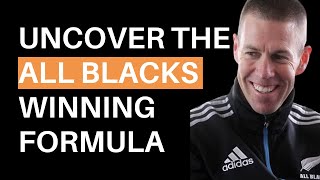
Darren Shand spent 20 years building the All Blacks' high-performance culture. He explains how the team uses five core principles, creates belonging through Te Ao Māori and Pacifica connection, and treats the haka as spiritual custodianship rather than spectacle. The secret: simplify complexity, define roles clearly, and put people first.
Chapters
This team is the most successful team in sports history. High performance is about human performance. 20 years with the All Blacks, five years with the Crusaders in Canterbury, and, yeah, it's been a pretty awesome journey. Punch above our weight like Kiwis do. Sounds like a bit of a crazy idea. Rugby's not really my passion. I used to really get really anxious. Our role is really to remove all the distractions. What are we aiming for if the All Blacks don't have a home? Very quickly learnt that the power of many was far more valuable than one. I was really scared of him. If you're not ahead of the game, you very quickly get caught. If you can make the complex so simple, then you're successful. Top secret. Top secret.
Darren, I just want to say a huge welcome to the Lead On Purpose podcast.
You're welcome. Great to be here.
Oh, so good. And I know that you've got so much on your plate. You're so focused on some incredible things right now, so I'm honored to have a bit of space and time to sit and chat. Now I want to rewind the clock a little bit. It's 2005. I'm sitting in Northern Ireland on the bottom step in my house, and the phone rings and says, james, we're ringing from Christchurch, New Zealand. We've got an organization here who want to become the first world champions in pipe band drumming, and we'd love you to come and help us set up a program. And first things first, I thought I said, dad, dad, where's New Zealand? He's like, oh. All I could think of was the All Blacks, John Olumu and the Fern, the Silver Fernand. Those three things came to mind. And right away it was a. I'm curious, I'm interested. I thought, you know, epitome of high performance and excellence. I'm going to learn something there. So at 18, 19, it was a get me on a plane and let's travel 12,000 miles. And now for me to sit here with you, who's been part of the all blacks now for 20 years. What an honor.
So thank you.
I'd love to know about what got you in there and got you started.
Yeah. 2005, I was into my second year and we were playing the British and Irish Lions, actually. And that was one of the special, special memories. But, yeah, my start. You know, the funny thing, James, like, rugby, not really my passion. And, you know, I hope fans don't take that the wrong way, because doesn't mean you can't be the best, you know, and my role is not the game, it's everything outside the game. And so, well, I know the game and I love the game. It's not something I'd do in my spare time, but I love being part of success. I love being part of team. I think my whole ethos is around what can I do to help the team, be a better team or a great team. So, yeah, I guess university. Ended up working in adventure tourism for quite a while in the outdoors. Whitewater rafting, skiing, those types of things. Things. Met a guy in Queenstown at that time called A.J. hackett, who was the sort of founder of Bungee. And he bungee jumping. He said to me, do you want to come and work for me? And I was like, oh, no. It sounds like a bit of a crazy idea.
Literally. But yeah, about a year later, I decided to go and work there and the only job he had available was driving the bus to the bridge.
I love it.
So I jumped and had my bus license. So then ended up working on the bridge and then eventually ended up in a management role in sort of the marketing and sales area. And yeah, I kind of got to a point where I was like, well, what next? You know, like, I sort of broken out from being a worker and I was now having a little bit of a feel for what leadership was like and managing people and things. But I just wanted more. And I thought quite hard about going to uni and doing a master's in business. Actually went through the process of applying to get into an MBA program, got accepted.
At the same time I got accepted, applied for a job in rugby.
With the Canterbury Rugby Union in Christchurch and in a sponsorship role. And I got that. So I rang the Prof. And said, what do you think? He said, take the job. So, yeah, thanks. Thanks, Prof. For the good advice. As much I would have loved to have gone through that process of an MBA. I've had 25 years in rugby. Rich, rough experience, Rich with every day is a professional development opportunity. You live in a fishbowl world, particularly with the All Blacks. You know, every little thing you do is examined and scrutinised. And there's a high degree of expectation, there's high degree of scrutiny, there's high pressure, and you learn a lot about yourself, firstly, you learn a lot about others and how they behave and act under those sort of conditions. So. And you do it on the world stage. So it's an awesome. Yeah, I'm very, very grateful for the time I've had here. It would never have been anything I imagined or dreamed of or, you know, would have chosen as a path I would have gone down. You know, I probably could have seen myself probably sort of, you know, being a gray ski instructor at Coronet Peak still, you know, because I loved it. It was a passion for me. But, you know, here I am, 20 years, 20 years with the All Blacks, five years with the Crusaders in Canterbury, and yeah, it's been a pretty awesome journey.
Phenomenal. And when you started in with the All Blacks, what was your role then and what has it evolved to become?
Yeah. So in 2004, Graeme Henry was appointed the coach, Sir Graham, as he is now. And on the back of the 2003 World cup where New Zealand, I think, got knocked out in the semi finals, the board and the chair decided that they really wanted to because the game had got more and more professional. I really felt beside the coach, they needed some other leadership that led a whole lot of the off field stuff. And so I technically started as a general manager and with the coach reporting to me anyway, I sat down with Graham. I wasn't really comfortable with that. He was old enough to be my father, he's a former school headmaster. I was really scared of him. But we just sat down and we just agreed, you know, he said, look, I just want to coach rugby here and I want you to sort out everything else. I said, that's fine, I'll do that. And that's kind of how we operated. And very quickly, I was fortunate that Graham brought on some people better than him, brought some other coaches in that were as blessed as equal and you could technically say maybe even better coaches. I thought that was pretty, pretty brave, you know, courageous. Very courageous for a leader to do that. And so we had Wayne Smith, Steve Hanson, Graham Henry, Gilbert, Anoka joined us at that point. So we had this team of people and I very quickly learned that the power of many was far more.
More valuable than one, you know. Yes. Graham had to make decisions about performance. That's his role. But we shared it, you know, and there was a sort of shared responsibility shared with the team in mind, shared with the legacy in mind, shared with performance in mind. And it just carried on. It's always been the way I've known it there. It's always been about a group of people working together, bringing the players with us, lining them up with our vision, getting them to buy into that vision, and then in the end they deliver it. So that's kind of been the path here. I felt a little bit of an imposter at the start you know, I was very green. And to go really from a sort of club level to an international level was quite a big step. The All Blacks don't have a home, so we live on the road. So that comes with a huge operational requirement.
So like the Rugby park, for example, that's Canterbury's home. And you've got this base and you can put up things that make you feel like you belong.
That's right, yeah. That must be such a challenge. We have to do that everywhere we go. And we're a team that likes to do that every week. For every place we go, we want to do that because we get energy from going to new places. We don't want to be in one place all the time. We like different. We like to be able to just get out of the hotel, go for a coffee, but then not have to travel two hours to a training field, you know, so just the complexity of putting that together has been a big part of it all. But I think we used the narrative, you know, how do we build home on the road? And that's. That's what we aim to do. That's incredible. So, yeah, it's certainly different. And, you know, you've got a management group of 20 plus living all over New Zealand, trying to work as a team for six months of the year, together on the road for six months of the year. So it's not like just pop down the office and talk to the coach, you know, it's like a zoom call or it's a meeting in Auckland for everybody or whatever it is. So quite a different method of being together.
Significant challenges, I imagine, and having systems and processes that allow you to do that in a really cohesive way, you know, so in the initial stages, say 20 years ago or 18 years ago compared to now, what systems and processes have you implemented that allow you to smoothly operate?
Look, I think there's trust probably sits at the base of it all, and there has to be a high degree of trust because you. I love the analogy in sport that we all have a jersey to wear. Like, well, every team has a number, you know, and every player has a number. And so it's the same for us as staff, you know, we've all got a number, we've all got a role. First thing, just know the role, do your role. Everyone else knows your role, and so they let you do your role. And we hold each other to account for that, you know, so that becomes a. That becomes a really, really important aspect of when it's. When it's like that. I think technology's helped us a lot. You know, you think of zoom and meetings and all those sorts of things. Cloud based, if I think in the operational space now, where we have a checklist that sits in the cloud and every operator that works with us has access to it, so we don't have to chase people, they just go to the central hub, give us everything, the information we need to be able to stay in a hotel, book a bus, whatever it might be. And so that's been phenomenal. Apps now, the way they work and how they can be very. We use an app that was created by an American footballer who played college football. It was the most disorganized team. So he went away and built an app to help sports teams. Amazing. And we found it quite early on and we've kind of stuck with them. It was very American. But they've been very great in allowing us to build something that works for us. So now we have a one stop shop and as operators and leading the operational side, we see our role as not the doers but the enablers. So we just provide the tools. And a coach ring, they say, oh, can you give me his phone? Or I say just go to the app, swipe once into search and there it is and you can ring the person from there. It's like teaching people to be able to have it. And we've got all those tools and I guess our role is really to remove all the distractions and allow performance to be the pinnacle and have all the support necessary to allow those things to happen. And interestingly, I remember we had a chat after the 2007 World cup when we failed and we felt we had too many staff. We had 12. We ended this one with 22. And I'm actually really. Everyone has a role, you know, and we felt 12 was too many because people were trying too hard to put more of themselves into that, you know, when they didn't need to. Whereas now we've got it so refined around role, you know, and if you're number six, just be number six. I don't need you to be number seven and number eight, just do that. And then as leaders, our role is to grow that person. You're like, where are you at right now? I think I still think there's room here, you know, and if we do some more of this, I think we can see some more growth here. And that's what the team needs. You know, we always guiding principle. What's going to make the biggest difference on Saturday? Keep coming back to it.
Incredible. And what it sounds like to me is that you've got the on field which is your players playing the game and then off field you've got management, you've got coaching. Sounds like you guys do equally as much off field in terms of developing accountability, challenging each other. There's so much that's going on off field.
Yeah, well, I think, you know, obviously we've got to get our players and if you think about the culture that we need, what are we aiming for? We're aiming to put a group of people out into a white hot atmosphere where they've got to be totally self reliant, they've got to make great decisions and they've got to do it under pressure. So we've got to build an environment where that's part of every day. Because Saturday doesn't just happen by luck.
Yes, of course.
Saturday happens by what you do Monday to Friday. And so it has to be a purpose and has to be aligned with that, you know, so not only do we need to get the players ready for that, we have to have the staff ready for that as well. So it's important we keep developing, we keep growing, we keep learning. High performance sport is very small margins, you know, very like percentages, small percentages. And if you're not ahead of the game, you very quickly get caught. You know, we've just been a period of two, three years where we've been caught and passed and so we're now we're heading back to the top again rather than, you know, been sitting up there looking at everybody else thinking, oh, how clever are we? But that's happened so fast, you know, and it's very hard to, you know, if I knew the answer to how you see complacency in your environment, you know, it'd be great. But we don't. And we just have to keep learning through, you know, through trial and tribulation. But it's a, yeah, it's a, it's a, it's a really. I think I love some of the former players who, if you take Richie McCaw obviously, you know, amazing captain and, but just incredibly driven by the notion of being not just a good all black, but a great all black and, and that people used to say, why do you keep going? I was like, well I'm not done. Like this is not enough. You know, there's more like, you know, we might have won that. But yeah, I can still see, I can see that and I can see this and I can see this and that, that's always been the driver. You know, there's always something else. You keep finding Everests. You know, it's like you get to.
The top of one.
Yeah.
And then another.
What's the next one?
Yeah.
And that's become. I would say it's probably become a learned behavior in that environment, because that's when you're constantly around that demand to be the best, that it becomes something that just. It's become part of me, you know, like, I just. How can I be a better. How can I be a better leader here? How do I get those people better at so on? And that becomes a personal journey as much as a team journey, too.
Of course.
Yeah.
Because everyone attaches their personal meaning to the team's journey and the team's purpose. And I often think that within any organization, you've got purpose, which really dictates your priorities, and then those priorities will then reflect the performance. So what's the purpose? And if you look at the guiding purpose of what the all Blacks are about over the last few decades, what do you think the overarching purpose has been?
Well, I think probably two things for me. One is there's a really strong connection to the history and the legacy, and there's a real power in that understanding who's been before. Why, what's that cup about? Why do we have these rituals? What did that team do? Why were they successful and using that in a. In a positive way? Not so much a feeling the pressure way. Interesting. When we started, there was a lot of fear in being an all Black because of the expectation. And we said, no, let's turn fear into excitement. And let's say, let's walk towards that. Let's embrace that. Let's learn about it. Let's use that legacy to help us leapfrog. And I've just seen the last three days, actually, this season. We've. We've had five former players of only 10 years ago back in our environment. And, like, unbelievable. The power, the influence, the small conversations, seeing the respect. Like, one of them came to me after the first day. No one will talk to me. I said, yeah, well, you're the goat. Like, you know, like, you're gonna have to probably, you know, knock a few doors down to let. Because they just say they put you right up there, and that's why we want you here, because they want to hear from you, but they just don't know how. So we start it power. And that's amazing. I think the second thing is just realizing that we're part of something way bigger than ourselves, that we represent a little island, two islands in the bottom of the world. We punch above our weight like Kiwis do.
We have a magnificent history across the game.
And I think that's that and the real understanding of who we are as New Zealanders. Connection with Te Ao Mori, a connection with Pacifica.
That'S really important to the group. I love that our players come into our environment and feel that they belong, whether they're from Tonga, Fiji, Samoa, South Auckland, Bluff. Everyone belongs, and all part of it. Interesting. Probably the most powerful thing anyone's ever said to me. We were up at the Treaty House in Waitangi a year ago, and the kamatu out there said to me, he said, you know what? You guys represent what we imagined New Zealand would be like when we signed the treaty.
Wow.
And because.
If people ask your greatest moment, I'll probably say it's my greatest moment in this role. Because it was like, you know, how powerful is that? How great is that? You know, we represent. Represent what New Zealand was, what our forebearers wanted us to be, you know, so. So, yeah, very, very. And the group now is like 60% Mori Pacifica.
Incredible.
So. And they feel at home, you know, it's like their place as much as ours. And we use their cultures to bring life to our culture as well. So it's very. Yeah, I think those things, your legacy and the connection with our country and that real deep understanding, like, there's a reason that we do haka well is because we practice it, we understand it, we really know what it means. We don't do it to frighten the opposition. We do it for ourselves because we're spiritually connected to it. We understand every position that we hold in a haka, the way we do it, it all has meaning, and we understand that. We try and learn more about it all the time so that we have that real connection.
Haka is a huge important aspect of not just the team, but the brand and obviously our country as well. A lot of people from whether they're in Hawaii or in Ireland, they always talk to me about the haka and how inspiring it is. So for the listener or the viewer that's watching right now, they're going, what's the haka about? What is the meaning behind it? How would you frame it?
I think haka is about connection. It's about feeling your brother beside you. It's about preparing. It's about challenge. It's all of those things. It's about remembering those that have been before some of them. You know, there's no. This part of kapau panga, the haka that we designed ourselves. The reason we start on the ground is to connect with those that are in the ground, you know, and it's also quite arrogant to start from the ground when you look at your enemy and you look up at them from below.
So there's a whole lot of that in it.
I think.
There'S also just that.
Notion of just really being connected before a challenge and really knowing that. That whole sense that when we go out and play of, you've got me, I've got you, there's that sense of trust. And we feel that through. Through the process of doing haka. So I think it's, yes, just a real, real connection. And, you know, I guess in the case of Kamati, the ancient hakka, it's honoring, you know, a tradition of a long time. And then with kapau pango, that was our own, and that talks to us and our blackness and the silver fern and the kapau pangau literally means, you know, the surging mass of black. And I think all that adds to it.
It's incredible. Thank you for letting me inside there and understanding that and that sense of blackness. Because often there's connotations of blackness, you know, being darkness, and it's not light. Of course, black is a darker color, but what does it mean in that sense?
I don't know if this thing. We believe we've got black blood. You know, when we put that jersey on, it's like. It's like putting on a Superman cape, you know? Yeah, that's what the players say. Like, they put it on and just watch the rituals of players receiving their jerseys and what it means to them. And, you know, it's more than the fabric, you know, it's. It's something more. I remember Roy Keane, you know, the footballer, he. He came and spoke to us once, and he was talking about he was a Manchester United man through and through, and he got off this, offered this ridiculous money to go and play for Bayern Munich, you know, and he went there and they put the shirt on him, and he just went, nah, it's not right. You know, And I think that's the same, you know, like, it's not red, you know, and it's not. I don't feel like Manchester United. And I think that's the same for our guys, you know, like, there's something, I guess that just goes with the history that's been around the jersey and the success and putting on. It's a statement. When you put it on, it means something. It comes from a strong place. It says, you know, this team is the most successful team in sports history. You know, not rugby team.
Yeah.
But any of all time. And. And that's not a. That's a privilege, you know, and it's like, wow, what an opportunity to add to that. What an opportunity to build more. What's the next challenge? What can we do? What's no one else done? You know, like, that's what I love about it. It's like, well, what's the next again? You know, what's the next Everest? What has no one else done before? What can we pioneer? Like Dave Gallagher in the 1905 team did. Went over there for six months, played, I don't know, 100 games or something. Ridiculous. And had to get on a boat and come home. So you've got all of that rich tapestry that was before us that we're very connected to.
And in terms of. There was the original hacker and you guys have created this new hacker. What informed the creation of that? What depth did you go to, to research and make sure that that really aligned with the player base?
Probably the genesis of the idea was that the players felt that they didn't have real meaning with Kamati, and it had almost become a commercial thing rather than what it was intended for. So first we relearned Kamati.
With a general called Derek Laudelli, who hails from Whangaraap and his hapus, Whangara, which is just north of Gisborne, where the whale rider was actually from. That's where he's from. And Derek is. I call him Royal Maori, you know, because he's from. He's from the mountain. His mountain is Hekurangi, which is the first mountain on the east coast to see the sun. And so that's where he comes from. And he's a very spiritual man and very. He's one. He's probably the best orator in Mori in New Zealand. He's a kava, he does moku. He's a clever man and he's a. His hap have won Tamatateni, which is the kapa haka competition a number of times. So he was the best, you know, like the best get the best, you know?
Yeah, absolutely.
And so, yeah, we just sat around the hotel one night. I think Tanaumanga was a big part of it at that time. He was a captain. And we just said to Jack, we want to design something that talks about us, you know, and I just remember we sat in a room with Graeme Henry and a few others, a few players, and we just came up with this concept and then Derek went away and created something that talked to that. And then Tana was the first Pacific player to lead the haka and he led the first. First time he did it in 2005 in Dunedin. And so that's. And we've kind of kept. That's like our best. We keep that for real big occasions, you know, this year we've bought. We call it. You know, we've got the two brother and sister, you know, Kamati and Kapaupongo. So we alternate sometimes and we're respectful of local Iwi, and Kamati is Ngti Toa and it talks about Te Raupraha and he was a very savage Maori warrior. So the South Island Iwi don't like us doing it down there so much. Because you're thoughtful when you do it. Yeah, you gotta be careful. Yeah. We'd always do it in Wellington because that's where Ngtoa, that's where. Where Karmaty comes from. So. Yeah, that's very cool. And actually probably the thing just in finishing on there, the thing I loved was actually when Derek, when we finished the creation of that and he gifted it to us. And what I learned was actually he gifted something that was way bigger than just the haka, you know, because that was gifting their culture and saying, yeah, it's okay. We're giving you this tao, this treasure for. Please use it, please look after it. To this day, we have a guardianship group that looks after it and responsible for it not becoming a commercial. Like, if we get asked for anything too. No, that's like, this is the team's haka. It's just for matches. It doesn't go anywhere, so we don't let it get used commercially in any way.
It's what it was intended for, you know, so it's. Yeah, it's a special. It's not all of us, but it's a. Again, it's one of those aspects that shapes who we are and helps us be a brotherhood together.
A real spiritual exchange. That was. That he gifted that to you?
Yeah, yeah. No, and I could see the day he did it. You could see it in him, you know, like he was giving something that was pretty remarkable, you know, because when, you know, if you think back to history, they had nothing. You know, they had. They had land. But then, you know, our friends arrived from across the seas and had guns and power and, you know, and they lost it, but they never lost that.
Incredible. And I want to go back a little bit. You said you had two choices. You had the MBA and you had the opportunity to go into professional sport. Now you didn't do the mba, but arguably, you know, when I look at what you've done over 20 years, you've learned probably 10 times as much as you would have in an MBA. No disrespect to an MBA student, but the question that comes from that is what do you think sport can teach business?
A lot.
I opened the can there.
Yeah, well, there's different, you know, because you've always got to bring context to it. And, you know, businesses operate on, you know, six month or 12 month cycles. We operate on seven days and we're judged every seven days and it's basically a win or a loss, it's different. But I think what I've learned most in the performance space is that if you can make the complex simple, then you're successful. And I find incredibly in business, it's a very complicated minefield of process and protocols and procedures. And when we look at our context, putting those players on the field under pressure, having to make great decision, it's got to be instinctive. It operates at a very high pace and, and things happen really quickly. And there's moments that determine outcome. Literally one skill under pressure, failure can determine a match, one decision can determine a match. So setting people up for success in that way has to be simple. And it's a bit like the onion, you just got to keep peeling it back to find the critical. I love the work of Jim Collins when he talks about the critical few over the important many. And that's language we use because we can find the important many strategies we might need. But if we can, then just let the players be armed with a critical few and that's all they have. They enter the field, they're light, they're bright, they're clear, they're not cluttered or heavy or overwhelmed. And they need to, because the game is not. You can't architect the game. It happens. It happens in front of you. You have to see it and you have to react to it.
I think that's been the biggest thing I've noticed. How can you make things simpler? How can you look at people like high performance is about human performance.
So bring the human into the equation. We put the athlete at the top of all of our thinking. Like, how can we get the athlete better? And I think in business we don't because.
We have a lot of vertical power and leadership.
We have shareholders, we have quarterly reporting.
We do. And why. Yeah, what does it do? How does it serve? Does it drive success? And that's the great thing in sport. You can be very innovative. You can do what you like, really. Because as long as you've got the outcome in mind and getting ready for that performance, you have to keep trying things because it moves so fast. And as I said, the margins are so little that you've got to keep searching for those little things. And. Yeah, I think. And so we always ask why, even this year, we've made some changes to a weak structure that's been in place for 15 years. Just because a couple people ask why. Why do we get in the bus and drive 10 minutes when we could just walk out here and do something? Well, we're really scared of security and. But, you know, we're not. We're okay. We're cool. And so that's great because then I've seen that backed up with good performance.
I'm like, that made sense.
Makes sense, you know, And. Whereas why do I have to write this report every month? What's it serving?
You know, so it's challenging, the status quo.
Always.
Yeah. And it sounds like there's a. The belonging piece you talked about is really important because if a player, or in a business case, an employee feels that they belong and they are valued, then they feel safe and confident to speak their mind and to challenge things. So that must be very intentional around. Let's create a space where the rookie has as much of a voice as the goat.
And it never, you know, I guess when you go back probably to the amateur days of rugby, there was a hierarchy. It was actually, you could see it because it was where you sat on the bus. If you're in the back seat, you'd made it. If you're at the front, you hadn't. And we still have the hierarchy on the bus. But if you're a young player coming to our environment, we know we have to have you at the same level when you walk onto the field as the back seat guy, because.
We need 15, we don't need one. And so that become. That become hugely important. And I think that now what I love is that I look at, say we've got three players that play halfback at every training. They help each other get better, even though they're competing for the same jersey. And if it's his turn this week, and it was mine last week, well, my turn to help him this week, you know, and that's. I'm very proud of that. Like, that's something I look at and go, wow, that's. That's world class that people would do that. Because you're removing power. You're just saying what's in the best interest of the team here. How can we get better? And if we help each other get better, actually in coaching others, we get better too.
I go back to Jim Collins and his level five leadership. Great leaders. They want people around them that are better than them, stronger than them, brighter than them, because if they have the right mindset, they'll. They'll elevate themselves too by doing that. So.
That'S been a really noticeable shift. When I first started, it probably wasn't quite as strong as that, but it's definitely become more so as the years have gone by. And we've now had talked about those former players we bought in. One of them that we bought in. Probably not a legend in a lot of people's eyes, didn't play a lot of games, but he went to one World cup and didn't play at all.
Wow.
But he was magnificent, you know, he was a team, team man. He every. The one of the reasons that we're. That we've got good on field is that every Thursday before the match, we, the A team plays the B team, you know, in training. And he led the B team and often they beat the A team, you know, and we always think that the pulse of how we're going, or the thermometer, if you were to run that across our team, if that group that are not playing each week, so 24 to 36 or 33, whatever players we've got, if they're really happy and in a great space, then you can guarantee the environment's humming, you know.
Yeah.
But if they're pulling it down and they're disappointed they're not playing and they're showing that, then that tends to bring everything down. So again, that's become another. We all have a jersey, you know, and there's strategic relevance in the number on the jersey that you wear. You know, the janitor cleaning the floors in the office. That's as important a role as the CEO making a decision about an investment, because we all have a role in it for part of that flywheel or where every spoke matters. One bike, if one spoke goes, a bike doesn't work. I think that's one of the real things that I've learned about sport that sometimes differs in business.
Business gets very autocratic and very structured.
Does it need to be that way though?
It probably does to some degree. I guess it depends on the size. But I think the leaders set the tone and so how leaders act, how they behave. I've done some work recently with a big multinational company and I think they've finally, even though their scale is massive.
It'S become so apparent to them about how people lead and how others see them leading and that really matters. And you can an organisation crying out for their people to be recognised, you know, and I think that's, that's what sport does really well. Because we need, we need to keep our athletes in that mindset of that they are the best, you know, 100%. And so I think if you can build that within an organization, you know, you sometimes get caught up in all the reporting versus actually just get the people happy, get that right and that'll quantumly grow. You know, that might be success now, but what could it be? That's always a challenge.
And I love that you talk about Jim Collins a lot. I really love the flywheel concept of, okay, what are the key ingredients that if you're turning this flywheel in this area, it then knocks onto this one and they turn theirs. So everybody has a key role. If you were to look at say an organization, a business that we're trying to define their flywheel, how many key aspects of a flywheel should they have? 150. Or do we simplify it again like you were talking about? Bring it down to 4 to 10 maybe. Concepts that drive each other.
Yeah, I'm just a total advocate of critical view. Yeah. And.
It just, you know, critical few along with just having great guiding principles that you can like we have to make lots of decisions. And there's literally two guiding principles that I always go to, you know, because I just. They fit what the team ethos is about, you know, and the first is performance is everything on Saturday. So if it's going to impact it in a positive way, okay, let's consider. But if it's not, let's just forget it.
And then I guess around the expectation stuff is like everyone wants the world from us, but we can't. So sometimes we can only offer you Fiji. And again, it takes just very simple guiding principles that just allow that decision making process to be so much easier because it's a collective principles, you know, they represent us. So it's easy to feel like you're making the right decision at the right time, you know, with the right intention. And so I know in any Any sort of case where things are put, like, I know who we are.
Yeah.
Like, I know what we stand for, what we represent. We've defined that. That's very clear to us. If you're an all black, these are the behaviors and so on that we expect of you. And that's the all black way, you know, and that's part of our everyday language, everyday life. We celebrate it, we have a chant for it. Like, we have all these things connected to it. All these rituals and habits are defined in four languages that represent our team. And we, we found those behaviors through looking at all our past and all the players that had gone before and what they represented and synthesized it down to what that meant for us. Is all blacks in this time, incredible. So just again, it's. I don't like to call them values, but it's just. We call it the all black way. The way we are, how we want to be seen. And if you're struggling to understand who you are, we just keep coming back, well, we need to see this, this, this and this. And we just keep referencing it, keep looking at through different lenses so that it keeps alive and it's fresh. And the five of them actually form the five pillars that hold the meeting house of black. Kapau Pangawa, it's the house of black. That's our meeting house. We're traveling around the world. We take our meeting house with us. The five PO P O U PO that hold the meeting house up are these five principles that make up the all black way. And so what are the country. Oh, I can't. Top secret, top secret, top secret. A lot of it's around, you know, how you want to be seen as a person. You know, humility is an important element of that. For, for us, there's a lot around drive and what's needed in terms of performance.
A lot around that ability just to keep going no matter what.
Yes.
A lot around being brave both on and off field. You know, how does that look? So, yeah, a lot of those kind of those principles sort of work together, but it was just a. He was literally asking a group of players back in 2015, who are we? And they couldn't really define it. So we just did this exercise of going to, asking them, okay, well tell me the five or six players that inspired you, then tell me what about them inspired you? And so you just sent up all these words and kept sandbagging them back till we got five. And so that's lived in nearly 10 years now. That's become the Essence of who we are and added to our meeting house.
Incredible.
So yeah, it's very good.
What I love as well, just drawing the connection there is that one infinite loop in Cupertino where Apple has its headquarters. In every single room they have simplify, simplify, simplify. And they are a world class organization. I think we could all agree on that. Whether we like Apple products or not, they're world class and they simplify everything. And that's their mission is how can we simplify our products, our service, our message, our sales, everything. And I hear the same thing coming through so strongly in our conversation today.
Is subtract, subtract, subtract. You know, I think that's kind of what I've heard in business a bit now. So how do we take it away? And it's hard though, you know, like I look at things I do and go, do I need to now? You know, like the longer I learn to lead, the more I learn to leave. Actually I'm asking my team to do that. But do you know why? You know, it becomes part of your, comes part of your day to day routine. I suppose you just keep asking yourself, is that really, how does that fit with that principle? Okay, scrap it. Yeah. And just keep. And I used to really get really anxious about everything being done, you know, and then I actually said, well, what's more important is that the environment really thrives. And if the bus is five minutes late and the environment's really good, people will just adapt and get on with it. But if the environment's terrible, everyone will be blaming and you know, making excuses and, and you don't want that. You want an environment that's above the line, that's people take ownership, take responsibility.
And so I love that about the place that you can just keep driving that incredible.
Look, there's so much more I want to ask you, but I think we'll do that in another episode. I've learned so much about how you think about the structure of what happens organizationally, but there's so many other things I want to ask you. So I just want to say a huge thank you for this first episode. I really appreciate it.
All good.
Thank you.
Hey guys, if you enjoyed the content today, please smash that subscribe button below. And if you want to become part of my community, I've got an amazing free Facebook group. Please come and join us. The link is in the description below. And also if you've got any questions about today's session, I'd love to know. Just comment below. And I'LL be sure to get back to you guys. Have the most amazing day.









