The Truth About Food Addiction & How to Finally Break Free
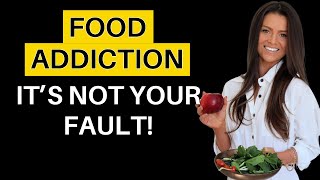
Healthy Emmy explains why packaged foods are engineered to be addictive and shares how to shift toward whole foods. Start by filling half your plate with vegetables, buy foods without ingredient lists, and watch for B12 and vitamin D if you eat plant-forward.
Chapters
The reality is that what is truly healthy is pretty boring. And there aren't these crazy pills and potions and magic bullets.
I just can't figure it out. And I'm stuck. And I have bad habits.
There is so much money put into the marketing, the science behind making sure the food is addictive. So you eat and eat and eat and eat and eat because you're searching for that satisfaction. What is wrong with me? I'm gluttonous. I can't stop with these foods. I'm gross. Why don't I just have discipline and willpower?
I look around me and there's obesity everywhere.
The thing that really made it my life's purpose, my dad was obese. My mom had high cholesterol. I got a new set of parents because they started to pay attention to their health.
My God, you are transforming the world, like, at scale, at global scale.
You can slap keto or paleo or vegan or gluten free. It doesn't really mean that it's healthy.
Oh, my God. But whole foods, so expensive, you'll be.
Shocked at how much lower your grocery bill is when you're not buying things that are in packages. Everything starts to flow a lot better. You start to sleep better, your digestion is better, your skin is better. You can think more clearly. Just eating whole real food is what's going to make us healthiest. There are two things that you definitely want to watch out for that's going to be.
Millions of people. Follow this incredible guest because she is at the forefront of health and. And wellness. That's none other than healthy Emmy. We sat down today to talk about health, how we integrate it, how we do it in a small, sustainable way. And also we got chatting about the interesting viewpoint she has backed with studies on alcohol. You're going to love this one. So please sit back and enjoy the show. A very special thanks to NZ Mortgages for sponsoring this episode of the Lead on Purpose podcast. You can check them out and at nzmortgages.co nz Emmy, a huge welcome to the Lead On Purpose podcast.
Thank you so much for having me. I am so excited to be here.
I'm delighted that you're here because there's one part of our lives that I think we sometimes get too busy to think about, talk about, and even address, and that is our health. And it's what we put in our bodies and it's what we consume from a mental standpoint as well. And my team said to me, james, do you know Healthy Emmy? I was like, I Do know that name? How do I know that? And so I went and checked out what you're doing. I'm like, my God, you are transforming the world, like at scale, at global scale. And I can see why you're taking something that's critically important, that some people might be a little bit like, oh, I'm not excited to do the thing, but you're making it exciting, you're making it engaging, and most importantly, you're keeping it simple. So can I ask what started you on this journey?
Thank you so much for asking. Yes, this is my life's work, really. This is my baby. This is everything to me. I eat, breathe and live wellness. It's so important to me. So I first got into nutrition when I was training for a marathon. I've always been a runner. Running is in my DNA. It's part of who I am. And when I was training for a marathon, I decided it was time to look into nutrition. And so I did a. Exactly that. And you know, I'm, I have an obsessive personality. So when I start to research something, it becomes my personality. And I actually went on a plant based diet overnight. That was about 10 years ago. And I never looked back. I became obsessed with it. And the thing that really made it my life's purpose, I've. I used that term before and I'm using it again, is when I got my parents onto the lifestyle. My parents are in their 60s. My dad was obese. My mom had high cholesterol, and I somehow convinced them to try this out. And that was about eight years ago. My dad is, he is lighter than he was in college, so he is ripped. He looks fantastic. My mom's cholesterol is great. I got a new set of parents because they started to pay attention to their health. And when I saw that happen, I said, okay, there's really something to this. How people can get a new lease on life when they start to treat their bodies with respect. And if I saw it happen with my parents in their 60s, then there's a whole world out here of people who can get a new lease on life if they learn how to pay attention to their bodies. So when I saw it happen with my parents, I really got serious about it and decided to completely change the trajectory of my life and make helping people with their wellness my, my purpose here on Earth.
That's really special. And we need more people like you doing that. Because wherever I am, whether it's here in New Zealand or if I'm in North America working in the uk. I look around me and there's obesity everywhere. There's, you know, people that are stuck, there are people that don't know where to go, that you look in the shopping trolleys and it's full of not food, it's full of rubbish, really processed, ultra processed foods. So I think the work that you're doing is crucial. And for the person that's listening right now going, oh, I heard the word plant based. I'm switching off, I love my meat. I'm just going to say for a second, pause, listen, be challenged and be curious. So my partner is vegan, has been vegan for a long time, I think eight, nine years, maybe coming close to a decade. And I would, I'm what I call plant dominant. So I would say 99.9% of what I do is plant based. But there might be the odd thing where I'm like, yeah, cool, I can have that. Let's go. I have noticed a big change in my health. I've been this way for about five, six years and it's definitely transformed me physically. I feel clearer in thinking I can move better. There's lots of benefits to, I think, plant dominant or plant based life. So let's start with plant based. Why plant based? What have you learned about it? What are the facts?
Yeah, so I, you know, I don't like to go by labels, so I don't encourage people to go on a vegan diet or a gluten free or a keto or any of those labels. You know, we've, we've gotten so far from what our natural state of being is that we've forgotten what real food is. And what I want to encourage people, my clients, anybody that follows me to do is not focus on what they can't have and focus on exclusion. And I can't have animal products or ice cream, whatever it is. Instead, let's focus on all the whole real food that you're going to start eating. So when you look at your plate to put on as many vegetables as you can, to put on as many leafy greens and whole grains, real food that doesn't have ingredients and the other stuff will just kind of crowd out by process of. As you add more onto your plate, there's going to be less room for the other stuff. When you eat this whole real natural food, the food that was intended for us to eat, you know, we are animals and we have a natural diet of our species, you'll start to notice that everything starts to flow a lot better. You start to Sleep better, your digestion's better, your skin is better, you can think more clearly, and it's because you're getting back to your natural state of being as a human. As I said, we've gotten so far from it with the protein shakes and the powders and the on the go and the bars. What our body truly needs is real, whole, natural food and mostly plants.
Makes sense. And for the person that's going, oh, my God, but whole foods, so expensive. Like, what's your answer to them? How can they start small? You know, what's the first step?
It's actually quite the opposite. When you'll. You'll be shocked at how much lower your grocery bill is when you're not buying things that are in packages. The. I don't know if rules the right word. I would guess the guideline or the structure that I traditionally go by is I buy food that doesn't have an ingredients list. So if it does have an ingredient, it's one thing. For example, oatmeal has one ingredient. It's oats. If you buy a bag of rice, there's one ingredient. It's rice. Everything else doesn't have an ingredients list because it's apples and oranges and Brussels sprouts and all that. And you'll be shocked if you fill up your cart with whole, real food as opposed to all the processed foods, especially animal products. Not to hate on animal products, but they're outrageously expensive, especially if you want to get the good stuff, you know, the wild caught or the grass fed or whatever it is. But if you're eating a diet of peasants, which is rice and beans and oatmeal and corn, your grocery bill's actually going to go way down.
So that, like, debunks that myth right away. That's brilliant. I love that. And here's something I want to explore for a second. And I know that from the research I've been doing and how you approach what you do, this is a big component. So let's say I know I've got to eat better. I know the whole foods are going to be great for me, but I just can't figure it out. And I'm stuck. And I have bad habits. How important is the mindset of adjusting to a new lifestyle for wellness?
Yeah, you can't look at the whole staircase. You just have to look at the one step in front of you. And the way that I translate that into my world is to just look at the next meal. So one meal at a time, and thinking about what your next meal is going to be. Look at the plate in front of you, and let's ask ourselves, can we make a quarter of that plate vegetables? That's all I want you to do. And we'll start there, and then we'll grow it a little bit. Maybe next time you'll do a third of your plate vegetables, and maybe you'll even get up to what I suggest, which is to have half of your plate as vegetables. But that's all I want you to do for the next meal and then the next meal after that fourth of your plate vegetables. So on and so forth, and slowly, inch by inch, that. That process of crowding out that I turned about, that I talked about more and more of your plate is going to sl. Slowly become whole foods. But you don't have to overhaul your entire diet right now. You know, there's the Japanese philosophy of kaizen, that small changes, when made consistently, will produce a big impact over time. So if you start with just a quarter of your plate vegetables and you make that a habit, and then you slowly, slowly increase it, you're building up a habit that's going to be. It's. It's going to amaze you how much of an impact that's going to make when it's done consistently in the long term.
Mmm, 100% agree. And let's say there's someone going right now, but you know what? I play rugby or I need to be strong at the gym, and all these vegetables, like, that's rabbit food. I'm not going to make me strong. I've heard all these things before, Emmy. Right, I'm sure you have to. So what's your message to them? Around the protein and around all the good stuff in veg? And can we still be strong?
Yeah. So I visited one of my friends this past weekend who lives in Chicago, and we. To kill some time. The zoo at Chicago is. It's free. So we said, why don't we go walk around and, you know, kill some time there? And we saw gorillas and we saw rhinoceros. We saw these huge animals. And what were they eating? They were eating grass, they were eating bananas, they were eating cardboard. Believe it or not, the strongest animals in the world, the ox, for example, they're herbivores. They only eat plants. The. The question of where. Cows, for example, Cows are eating grass all day. How do they become huge? What do horses eat? They eat hay. You know, these huge, strong animals. Where do these animals get the protein? It doesn't come from thin Air, it comes from what they eat. So when you eat the cow, for example, where is the cow getting its protein? It's getting it from grass. So all we're doing, if you choose to forego the animal products, which again, I, I would never force somebody to do, I think you can still have a tremendously healthy diet with the inclusion of animal products so long as you're eating a lot of whole real foods. But if you do choose to forego the animal products, you're just cutting out the middleman. Because whatever meat you're eating, they're getting there. Those are herbivores that you're eating. You're not eating carnivores. And they're getting protein from plants.
Thank you so much for taking the time to watch Lead on purpose here on YouTube. Look, I'll be honest, I have absolutely no idea, no clue how the algorithm of YouTube works. But what I do know is when one real human hits the subscribe button, it helps other real humans who are interested in this type of content to find it. So please do me a massive favor, hit that subscribe button right now. Let's get back to it. That makes sense. And you've probably watched this documentary some time ago, but the Game Changers documentary, and it was quite mind blowing in a lot of ways. I'm gonna put a link to it for the listeners as well to go and check it out. But that really shifted my thinking when I'm seeing these like well known, influential, strong people, like, I mean, the world's strongest people, and they're vegan or plant based. And the more people I meet, you know, I work with some professional athletes that are huge, I mean all muscle. The number of them that are going plant based is quite mind blowing. So I think people are realizing you can get everything you do need from plants. Are there any things in your experience that we should be conscious of supplementing if we do go full plant based?
Absolutely. There are two things that you definitely want to watch out for that's going to be vitamin B12 and vitamin D. So vitamin B12 is found in if, you know, back in the day, back in our, when we were eating food off the ground and drinking from streams, we had no problem getting B12 because B12 was found in the water, it was found in the soil. But due to modern sanitization, we no longer get that B12 naturally. Okay, so why is it that people that eat animal products get B12? Well, because all of those animals are eating the soil, they're drinking from the streams. So that's why animal products have B12. But if you're not eating animal products, you're not going to get B12. That's, that's why that's the case. Unfortunately, most B12 that you'll find if you just go to the store and look at a B12, it's probably going to have added sugar, it's going to have added oil, it's going to have a bunch of fillers in it. And not to promote myself here, but because that is the case, I did make a clean vitamin B12 supplement that doesn't have any of the gunk and the oil and the fillers and the sugar and all that stuff. So I do have that available for anybody who's interested. And I also am coming out with the vitamin D. Vitamin D you get from the sun. But if you are like me and so fearful of sun damage and I am Irish as well, so the sun and I don't get along too well, I don't get a lot of sun. So my vitamin D, unless I do supplement is going to naturally be pretty low. So those are the two that you want to watch out for. And then females, I always say be cognizant of iron. If you are a female pre menopause losing blood then you may have lower iron levels. So just something to be cognizant of too. But there are plenty of iron rich foods on a plant based diet.
This is gold, like absolute gold. And it's interesting, I obviously me being Irish too, I try and avoid the sun because my skin just gets pink and gets burnt and it's not very pretty. And also it's going to lead to potential cancer. So I do take vitamin D, I do take B12, but you're so right. So a friend of mine, Darren Olean, so he had this program called down to Earth, it was with Zac Efron and essentially they went to the world to figure out what's all the crap that's going into our foods and how can we do it better. And it's quite phenomenal. So I learned from him about all the fillers and all the rubbish that they literally put in these vitamins. Like some of the vitamins, I think Echinacea was one that we chatted about. So you get a pill, about 90 something percent of that pill was filler and of the 10% that was echinacea, it wasn't even high grade or high quality. So I think the quality of the supplements we take is crucial. So I'm also going to Put a link to your supplement in the show notes as well. I think it's brilliant. It's great that you're doing it. And if we're going to buy supplements, let's buy the best. Let's get something that actually gives us what we're paying for.
Yeah. Think about the word supplement. It's supposed to supplement a healthy diet and there's a lot of reliance on supplements to do the job of what food is supposed to do in the first place. But you do want to be cognizant of what your supplements do contain. There's a lot of gummy supplements out there, which, to be transparent, are really just candy. They don't have the potency that we think that they do. So, yeah, to be cognizant of not only the supplements you put in your body, but everything that you put in your body, to read the ingredients lists of these things because they can be marketed beautifully to look like super healthy. You know, there's the health halo. You can slap keto or paleo or vegan or gluten free. It doesn't really mean that it's healthy.
Yeah, 100% agree with that. And I want to come back to that. But you said something about the supplements. They're literally that. So you may. I'm imagining you may have came across Dave Asprey.
Yep.
Right. So I watch and for the listeners, I'll put his link so you can go and check him out. He literally has a bag like this of maybe 30 to 40 supplements he has in the morning and then he has another bag like this of 30 to 50. I think it's more in the evening that he has at night. So close to 180 to 100 supplements a day tablets. I look at that and I'm like, something doesn't feel quite right. That feels like we're trying to replace real food with supplements. What's your thoughts on someone that goes to the extreme with like all, like hundreds of supplements a week? You know?
You know, extremes are easy. They're intriguing. They are. There's a high. People get off of doing these extreme things. The reality is that what is truly healthy is pretty boring. And it's eating whole real foods and there aren't these crazy pills and potions and magic bullets. It's not sexy, but it is the truth that just eating whole real food is what's going to make us healthiest and sleeping and moving our bodies. If we are relying on supplements, though, instead of food, what we are neglecting to see is that Nature has packaged all of these foods so that they synergetically work together to provide us with exactly what we need. To give an example, we take something like sugar. Everybody can agree that, you know, white processed table sugar is, it's not a health promoting thing. Well, where did it come from in the first place? It came from a sugar cane, which also has fiber and it has water and it has nutrients. But we've stripped it of all of that and now we have this powder. We take something like olive oil. It came in an olive and the olive had the fiber and the minerals and the vitamins and the nutrients. So why don't we get the oil when it's inside of the olive with all the other stuff in there? So not extracting from nature all of these vitamins and minerals and nutrients that are already there in the first place. If we just eat the whole real.
Food, it makes sense. It's interesting you talked about the ingredients list. And what I've started noticing and becoming a little more aware of it is that I never see an advert or a billboard for apples, bananas, anything like that. I only see billboards for cereal. I only see billboards for milk, for sugary drinks, for Powder Aid or whatever it might be. I never ever see anyone marketing whole foods. And I guess to me that says a lot. If there's billions of dollars going behind marketing these foods, maybe they're not actually foods at all. Because the fact that we need to market them so heavily would suggest that there's something behind that. You know, we know naturally that we're going to get an apple that's organic. We've got a real whole food, but this cereals and so forth. Like when we look at the ingredients list, what should we be looking for? And go, that's horrific. Like, stay away from that.
You just reminded me of something that I, you know, I don't know the exact details of this, but the tobacco industry, when they sort of broke down because they had to begin putting on their packages, this causes cancer. Everybody that was in the tobacco industry said, well, you know, the jig is up here. And do you know what they did? They went to the food industry. Did you know this? I learned this recently. This was news to me. They went to the food industry, the same people, the same lobbyists, the same campaigns, and they said, well, we made them addicted to tobacco, now let's make them addicted to food. And that's where all of this food addiction was born, in creating these artificial substances that people become addicted to. And there is so much money put into the marketing, the science behind making sure the food is addictive. Doritos, for example, have been tested and tested and tested over again to make it so that there are so many different flavors within the Doritos, and no one flavor overpowers the other so that it acts on something called sensory specific satiety within your brain that makes it so that you never feel satisfied because there's all these different flavors, and you can't. You don't get that hit of one of them. So you eat and eat and eat and eat and eat because you're searching for that satisfaction. And that's just the tip of the iceberg of all the crazy.
All the craziness that goes on behind the scenes to make you addicted to something, just like they did with the tobacco industry.
But, I mean, that's so. It's so true what you've just said. I'm like, I relate to that. If I open a bag of chips, it's like, I can't stop. But I thought if I videoed myself, I'd be disgusted. It's like, just don't stop. And it's like, what's going on? And there are clearly scientifically created substances in there that make me want more. In fact, I've seen something. I was in the US recently, and I read this study, and it was a big court case. And after they broke it down and studied it, it was with Pringles. And so we've all know once you pop, you can't stop. That's the old saying of Pringles. Well, they were taken to court because they said, these are potato chips. It was on the label. It was on the box. Potato chips. Well, they were taken to court because when we go and do the study and look at the chips, there's zero percentage of potato, no potato in that potato chip. They're not potato chips yet. They're selling it as such. It's not food, but again, it's addictive. I don't know about you, if you've ever popped one of those Pringle things, but you just keep going. Let's go.
Oh, yeah, they dissolve right on your tongue.
You know, And I think, too, there's so much guilt and shame wrapped up in what you just said, which is, you can't stop eating them. And it makes people think, what. What is wrong with me? I'm gluttonous. I can't stop with these foods. I'm gross. Why don't I just have discipline and willpower? And it's it's not your fault if you find that you, with these foods, you just can't stop. This is how they're designed to be. We're designed to become addicted to them. It's a, it's a super normal stimulus that these foods give us that humans were never designed to feel. Out in nature, the most calorically dense thing you could ever find was going to be honey. And in order to get the honey you would have to climb up into a bees nest and the honey. So nobody was even getting their hands on honey back in the caveman days. So we were not designed to experience the euphoria that occurs when we eat donuts and cookies and cakes and pastries. So you know, this is, this is how obesity happens and heart attacks and diabetes and all of this because it's a substance that our brains just cannot stop with the dopamine that is released when we eat these foods. So anybody who's listening, if you feel like this is you, it's not your fault as the saying goes. But it is your responsibility to recognize that there is a problem here and learning how to step your way out of it. Like I talked about earlier, starting with just putting fourth of your plate vegetables is a great place to start.
Thank you for saying that as well, that it's not your fault. It's. There's a big system, a big bad kind of movement almost that's way bigger than us, that's way got way more money than us that are driving these foods because they make profits. Right. But they're making off the back of us becoming addicted. And I know what addiction feels like, you know, to chocolate, you know, like my relationship with chocolate is not healthy. And if I have it creep back into my life all of a sudden every day, I want it. So it's better just to not have it. And we need to participate in our own rescue. And that is like we need to take some responsibility and see what we can do. You've worked with thousands and thousands of people to help them achieve the wellness that they want. So what are the components that you see as critical components to us taking control of our health?
Yeah. One of the things that you'll hear me say, I say this to my clients a lot, is that it's not just what we're eating, but it's what's eating us. We've talked about addiction a bit. Addiction is something I've done so much study in because the relationship with, with food that so many people have is a relationship of addiction and Addiction is when we try to fulfill something inward through the use of something outside of ourselves. So food is something that a lot of people turn to to try to fill something inward or as a way to run away from something that's happening inside. What we run from, though, only stays with us longer. So while food is a huge component of what I do with clients, I am a nutritionist. The mindset piece is huge. So I use the two of them hand in hand to not only teach my clients from a logistical perspective, this is how you're supposed to eat, to be healthy, but also what's going on here that caused this relationship with food in the first place. What are we trying to numb out? What are we running from? What's going on in your, in your world that is making the use of this substance something that you need in order to get by every day 100%.
And so for that person, that's like, God, I just, I can't help myself. I don't see a way out. What are some tools or, you know, strategies for them to start From a mindset standpoint, what could they start doing?
Yeah, awareness is the first step. So this might be the first time somebody's even considering, oh my gosh, maybe my relationship with food and the chocolate has nothing to do with the chocolate, but it has everything to do with my relationship or what's happening with my kids or my self identity that I'm struggling with. That could be the first time somebody even recognizes that. And then to start to become aware, next time you do reach for the chocolate, is it because you're genuinely hungry and you need nourishment, or is it because you're looking for a distraction, you're looking for a high, you're lonely. To start to just become aware of it and become aware of it without judgment. That's a big thing that I, that I want to emphasize too. I talked about that a little bit earlier to release any shame and guilt that you might be experiencing for your relationship with food and instead to just become curious and start to notice. Oh, that is interesting. I am reaching for chocolate because I had a really stressful day at work. And this is the one thing that's going to let me disconnect for a second. And then you notice it happens the next day and the day after that. Now you've noticed a pattern and you're starting to travel through the stages of change. Change is not just, I'm one person one day and I'm a new person. The next change is noticing that there's a problem preparing to make a change, then starting to make the change. So if you just start by becoming aware of what your relationship with food is and when food is being used for something outside of just nourishment, that's a great start. And it's a very brave and courageous start.
Absolutely. But manageable. It's a step that we can all do. And I guess for me personally, like, I struggle. I struggle to keep things in my head, particularly like thoughts or, you know, habits, changes or plans I have to get out of my head and onto a page. It's kind of the only way I process and connect with how to move forward. So what role do you feel like journaling plays in this journey?
Oh, my gosh. On average, the thoughts in our head move nine times faster than what we can write. So when I first started to journal, I said, I hate this. I can't get it out fast enough. There's so much going on in my head. Can I just say it? Can I just type it? Why do I have to actually put pen to paper and write it? This takes forever, and there's way too many thoughts. And then I realized, wait a minute. That's the point. The point is to help us slow down, Just focus on one thought at a time and cure the disease that Eckhart Tolle talks about, which is overthinking and having a brain that never stops. So the more resistant you are to journaling, probably the more you actually need to do it. And that's coming from somebody who is always on the go. Very Type A. Every second of my calendar has something on it. The act of slowing down is. It's crucial to our wellness. A quote that I love is when she slowed down, she started to realize how much time she actually had to do everything. So slowing down and putting pen to paper, if you're resistant to it, then that's probably a sign that that's exactly what you need to do tonight.
Great advice. I was so resistant to it. I'm a similar person to you that. Go, go, go. Always moving towards goals. The calendar looks pretty busy all the time, so the thought of, like, oh, I need to take 10 minutes or maybe even an hour to journal. That's not going to happen. But it took me probably three years to actually get a habit of journaling going, and now I'm hooked. I'm addicted to journaling because it gets me out of my head and onto the page. Where can someone start? If you've got a journal prompt or a couple of questions that someone could ask themselves to get that journey underway.
Yeah. So one of the biggest things that I learned in my mindfulness journey very early on, which was a mind blowing moment, is that we are not our thoughts, we are the observer of our thoughts. That was probably said to me a hundred times before it ever made sense to recognize that our thoughts are like clouds that float by and we're just the person that watches the clouds. We are not our thoughts, we're how we respond to them and we look at them and we let them pass by. This was news to me. So I talked about awareness a little bit earlier and becoming aware of our actions. But becoming aware of our thoughts is going to be the key to mental and emotional stability. So when you look at the page in front of you and you're going to do some journaling, a great place to start is to start by picturing like you're in a field and you're seeing clouds float by and those clouds represent your thoughts and what do those clouds say? What thoughts are you having? So when you start journaling, to practice being the observer of your thoughts and noticing what thoughts you're having. And then you can start the work of fact checking your thoughts, choosing what thoughts you want to release, which ones you want to hold on to, rewiring those thoughts. But the journey to mindfulness starts with becoming aware of your thoughts and acting as the observer of your thoughts and learning how to detach from them.
That's such good advice. And I like how you distill it because complexity kills execution. And often I find myself not taking action because the thing's too complex, there's too many steps. You know that new table I got from ikea? God, there's 500 things I've got to do to put it together? I'm not going to do it. But if it's like, hey, here's the three things you've got to do and here's the order. Like, cool, do the first thing and then the second. I like how you distill things. And what I'm hearing more and more with clients, with what I'm speaking on stages and speaking to people afterwards. The one thing people need right now is simplicity, followed by accountability. They want the ability to take action easily, but also they need the people to check in. Whether it's a person checking in, whether it's a notification, a reminder, but they need constant accountability. I think that we're evolving in our needs. So before we went on air, I was like, hey, tell me about your program. But Something even more exciting is happening right now. You have launched Slim. It's your new app. And I'm really excited about that because I think we do need something that's in our fingertips. It's really easy. There's accountability. So I'm going to put a link to your new app, Slim, in the show. Notes and listeners, please go check it out, but let's actually talk about it. Emmy, what's in the app? Who's it for? How can it help them?
Yeah, thank you so much for bringing it up. It's something I'm so, so excited about. The reason why I'm so excited is because the people that I work with, the people that watch my videos and consume my content, are people that genuinely want to be healthy. They want to figure this out, but they're so overwhel. So much conflicting advice out there. This person says this. This person says that they don't have time to do it. They have responsibilities and kids and jobs and it's easier to just throw up your hands and say, screw it, I'll start tomorrow. So what I wanted to create for people was something that completely takes the guesswork out of being healthy and is personalized to the person using it. Because this is not a one size fits all. We all have different lifestyles and needs and goals and what our circumstances are in terms of what foods we have access to, what we're allergic to. Do we have access to a gym. So I created Slim so that the user can go in, they can customize exactly what their goals are, what their age is, what their weight is, if they have access to a gym, what they're allergic to, all of that. And I will deliver to them a personalized customized meal plan and workout plan based on their goals. It tells them it's single serving recipes, so it's so easy to follow. It's step by step. It's not complex. It's not like you have to have access to a Trader Joe's and protein powders and all that crazy stuff. It's real whole food and it'll tell you exactly what to eat, exactly how to work out. And then also, I start your day with a guided meditation with me and an affirmation to take with you for the rest of the day. And then we end our day with a journaling session and I give the user access to me to ask any questions that they have. But it could not be more cut and dry. This is exactly what you need to do so that the person can focus, say, this is my plan. And I'm just going to drown out everything else.
I love it. Literally, you have solved the two problems that I see coming up again and again, which is the simplicity and the accountability. You've got the accountability there because you're checking in morning and night. You've got the simplicity there because here's what you're eating, here's how you do it. And I'm assuming it's for any gender. It's not just for one specific gender.
Yeah, absolutely. And that's something that's taken into account as well when crafting the meal plan. And the workout plan is going to be your gender because that'll have an impact on your metabolism and how quickly you can if you want to grow muscle or how quickly you can lose weight if you want to lose weight. So absolutely. Age is age as well. Any injuries that the person has is also taken into account. So it really is user. The user is the center of the universe.
Incredible. And let's say, like, I'll share. Personally, I really don't like going to gyms. I go in there and the smell of them and just I'm like, nah, I'm out. Like, I gotta go. I don't like it. I would rather here at home in my own space, do some body weights, do some free weights, go for a run in nature. I'd much rather do that stuff. So there's a. The app also account for people like me?
Absolutely, yes. You can customize if you want to do gym workouts or at home workouts. And what's great about the at home workouts too is when you open up slim it, it'll keep your progress so that you can check off. Okay, I've done 10 reps of my calf raises and all right now I gotta go feed the kids lunch. Okay, I'm gonna open up, up slim again. I have five minutes here. I'm going to do 10 more reps of my calf raises and check it off. There's a habit tracker so you can keep track of your workout. If you do need to sort of sprinkle it throughout the day, you could work out in your pajamas if you needed to.
I love it. I love the fact that you can spread it throughout the day because yeah, sometimes I look at my calendar and I'm like, you know what, Emmy? There's no way I'm getting 60 Minute Workout. It's just not happening. But there'll be like a 20 minute little window there, there'll be a 12 minute window there, there'll be a 35 minute window there and I could get the app and go, okay, Slim, let's do this. And I could throughout the day actually achieve what I need to achieve.
And I don't know if you're anything like me, but I am a type A perfectionist. If I'm going to do something, I do it 100%. And that can lead, it can lead to self sabotage because we could say, oh, I don't have 30 minutes so I'm not doing the workout today. When in reality, if you did a two minute workout, that's going to be better than not doing it at all. So with the Slim app and with any endeavor that you're going on with your health, recognize sort of what I was talking about earlier, that these teeny tiny steps are going to have impact and that you do not have to be 100% perfect in order to see results and see progress.
It's incredible. And may I ask, just before I know I'm just mindful of time, but what's your thoughts on alcohol? I mean, I hear people say, you know what, oh, it's good for you. A glass of red wine, great for you. But when I talk to medical professionals and surgeons and cancer specialists, they're like, James, it's all nonsense. Alcohol is not good for the body. What's your stance from a nutritionist standpoint on alcohol?
A quote that I love from the late Dr. John McDougall, God rest his soul, is people love to hear good things about their bad habits. So if you tell somebody, it's a good one, isn't it? If you tell somebody, oh, there's antioxidants in dark chocolate and there's resveratrol in the red wine, which is going to be anti aging. Oh, people love it. Or if you say, oh, you need to distress, go on a vacation, this is great. I can have chocolate, I can have wine. When it comes to something like red wine, for example, the resveratrol is from grapes. So we could eat grapes and get the same effect. And grapes are used to make wine, as we know. But alcohol, it is a poison. You know, the World Health Organization says they cannot recommend any level of alcohol as safe. Like I was talking about earlier, if alcohol. And here's another great quote from Dr. Alan Goldhammer. He goes, if alcohol is your anti cancer plan, I think you're going to want to find a new anti cancer plan. I would never seek out alcohol as something that is health promoting. But like what I was talking about earlier, what I'm really concerned about is what you're doing 95% of the time. So if 95% of the time you're eating real whole foods and then you have a glass of wine on date night, it's not the end of the world. But bottom line, I'm not going to encourage somebody to drink alcohol for any health benefits.
Yeah, great. I honestly love your viewpoint on that. Being Irish, I drank a lot of alcohol. Way too much for way too many years. And then during COVID my partner was like, hey, I'm going to do one year, no beer. Like, one year, no alcohol. That doesn't sound that fun. I was justifying my relationship with alcohol. So next day I got up, I thought, I'll do the same thing. So one year, no beer, no alcohol, and it's been four and a half years now. And honestly, game changer. Absolutely. I feel great. Good for you. One day at a time, right? I mean, thank you.
You took the words out of my mouth. One day at a time. And then before you know it, you. You have four and a half years racked up. And the question is not, well, are you going to never drink again? It's, well, I'm not drinking today, and we'll see what happens tomorrow.
It's that Kaizen thing that you mentioned earlier. That Japanese philosophy of almost like the one percenter mindset, just not today. I'm cool today. I don't need it. So it's interesting. I really appreciate you saying, I would never recommend it for wealth. It's not a wellness option. But if somebody wants to have it, great. Have it in moderation. Do your best. I get it. Now, look, one last question I've got for you, Emmy. I'd like you to pretend that we're fast forwarding really far into the future. You're highly aware that it's your last day here on earth. Someone very young that you love dearly comes into the room and says, emmy, how do I go about leading my life on purpose? What would you say to them?
Oh, my goodness, what a great question.
So I'll tell you what changed the trajectory of my life, and it's totally in line with what you just said.
I pictured my last day on Earth, and I said, do I want to be on my deathbed with the regret that I didn't do what I always wanted to do because I had fear of what other people were going to think about it. And that was what caused me to quit my job as a math teacher and to pursue helping people with their wellness full time. So I can tell you that story. Maybe another time if I come back. But that's how I think you live your life on purpose is when you release the fear of what other people are going to think because you are unwilling to get to the end of your life and think, I didn't do what I wanted to do because I cared about what other people thought.
Wow, Emmy, thank you so much for sharing that. I think there's a listener that really needed to hear that today. And there's an amazing lady called Bronnie Ware. She was a palliative care nurse who wrote a book called the Top five Regrets of the Dying. And what you just said was the number one regret of hundreds of cancer patients on their deathbeds was the number one regret. They were living their life doing things based upon what they thought other people thought they should do. And so they were regretful that they just didn't do things based on what they wanted to do at that time. So I love that you shared that and I love the work you do. It's important work. I'm going to put all of the links to your socials below as well. I'm going to encourage everyone to go and download Slim, get the app, get into it, have fun with it. But you should be proud of what you've done. Thank you so much for creating space today.
Thank you. This was an absolute pleasure and I wish you all the best.
Thank you so much. A very special thanks to NZ Mortgages for sponsoring this episode of the Lead On Purpose podcast. You can check them out at nzmortgages.co nz.









