The Truth Behind the World’s BEST Rugby Team with Sir Steve Hansen
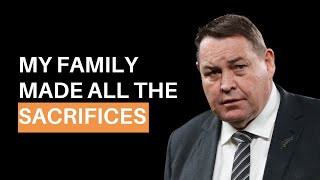
Sir Steve Hansen, who coached the All Blacks to multiple World Cups, talks about building winning teams through self-leadership and clear roles. He shares stories from his time with the All Blacks, including how he handled Dan Carter's injury and the team's lineout problems, and explains why empathy matters as much as performance.
Chapters
Now, we're so fortunate, so lucky to have Sir Steve Hanson come and join us today. And I'm excited to talk about what I geek out on and that is leadership. And I think we can all agree here that Steve is a phenomenal leader, has an incredible track record and looking forward to unpacking that, having a bit of fun. So welcome.
Yeah, thanks very much. Great to be here and good to see everyone enjoying themselves. Hopefully you are after I've finished.
I love it. So, Steve, I thought maybe we could start off by just talking about leadership. So when you think of good leadership, what comes to mind?
I guess the first thing for me about leadership is being able to lead yourself. I think that's where it starts. So for us and any of the teams that I was involved with, I expected everyone to be a leader.
You know, and that looked like being able to organise yourself, being able to prepare well, to be able to just do the things on and off the field that were expected of you. We didn't have a lot of rules in the All Blacks, but we had high expectations and some of them were non negotiable and others were. But once you start to be able to lead yourself, then you can start to think about leading other people. If you've got.
The ability to do that now, not everyone does.
You have to grow that like. One of the greatest leaders we ever had was Richie McCaw, but he also was accused of being one of the worst. You know, we lost the World cup in 2007.
Nothing to do with how he played, but a lot of with how we conducted our preparation for that World cup really. But because we weren't successful, he was seen to be not successful. What came from that adversity was he was determined to be the best he could be. So he grew, he became more demanding.
Leaders set the environment. So if your environment's good, your talent can blossom and grow. If your environment's a little bit stagnant or a bit rotten, people aren't going to grow in it. So I think the key thing is lead yourself.
When you are given the opportunity to lead others, make sure you've got a plan on how do you want to lead.
It sounds pretty simple, but I was in the police force for a number of years and we'd have sergeants. I never went any further than constable, but we had sergeants who were brilliant sergeants. Then they became senior sergeants and they were terrible because they thought they had to be different and what made them great leaders as sergeants was still going to make Them a great leader as a senior sergeant, but they thought they had to be different. So having a plan on how you want to lead. So do you want to be a dictator, do you want to be an empowerer or do you want to be a combination of both?
Have you got flexible thinking? It's not always important that it's your idea. Can you be flexible enough to hear other people's ideas? How good are you at adapting in the moment or adapting to what's happening around you? The conversation you're having often hear people say, oh, you know, I've got an open door policy. And then you speak to the staff and they go, we don't go in there because one person went in and he or she screamed our heads off. So shit, we're not going back there.
So, you know, and reflect on it too. I reckon good leaders will take the time to reflect. How did I go in leading the people I'm trying to lead and when I say, you know, you empower them. Like for me, my job in the All Blacks was pretty simple. I just sort of helicoptered over the top. But we had a whole station of different groups. So we had the players group, which Karen and Richie were the two captains during my time were the main captains. We had a mental skills group which included the medical and so forth and Gilbert and Ocha ran that. We had logistics and commercial, which Darren Shand ran and then we had the coaching team and I wanted Fozzie to run that rather than me run it because I wanted to him to grow a voice and my job was to make him better so he could come over and at some stage maybe take over the team. So in that, my responsibility was to make sure everyone was ticking along quite nicely and not interfere too much. So my plan or my theory was, okay, I don't need to do anything until such time as I can see something that's not going to help the team be better. So everything I worked on was, is this going to make the team better? If you could do something during the week that wasn't having a massive risk or reward for Saturday, then you didn't have to tell me about it. If you were going to try and change something that we'd never done before, which could have a detriment or a positive outcome on Saturday, then I wanted to know about it because I wanted input on that.
I had to know or have enough knowledge about have conversations with all those people. So your leader, your top leader needs to understand the business or the game they're in. As an example, our strength and conditioning guy, a guy called Nick Gill, probably the best I've ever worked with and been lucky enough to work with some good ones. So he was really great. But we had a player called Dan Carter, you might remember him.
He started pulling a calf all the time and we couldn't work out why. So I don't know. A bit of my background is horse racing. I grew up on a farm and my father was a trainer as well as a dairy farmer, so understood the mechanics of horse racing. So biomechanically, Danny's not the greatest. So I knew that from horses if they weren't, they could still run fast if they had bent knees, but they just couldn't do it for a whole lot of years and they couldn't carry extra weight. So I went to Dan, said, when was the last time that you didn't pull your calf? And he goes, oh, Beck and such and such a date. And I said, oh, yeah? What weight were you? And he goes, oh, I was only 93k's and you've all seen him in the jockey ads, he's not carrying any extra. So.
I said, well, what are you now? And he said, oh, I've put a bit more muscle on, I'm 95, so. Oh, yeah. I said, okay. So then I went to Gilly and I said, why don't we take 2k off him and see if he stops pulling his calf?
And we discussed it. So we did. We took the 2k off him. He never pulled his calf again. So that was my job, to have enough knowledge to be able to be a nuisance but also be a help. And, you know, you get a lot of accolades for what we did, but it was a team, you know, total team.
What's the word I'm looking for? A team effort, you know, to get that group of people to play as well as we did. And it's the same in business. You can be the head honk show, but you're not going to be any good if you don't let your other leaders lead and you do what you do well.
Thank you. And in terms of leading self, I firmly believe leading self allows you to lead others. But when you're leading yourself and say in your younger years, so we rewind a few years in your leadership with the leadership hat on, how did you develop yourself? What was personal development, professional development like for you?
Well, lucky enough for me. I've always been reasonable, simple sort of bloke. And I find that the simpler you can give the message the easier it is for people to hear it. And I think, you know, it's the things they want to know is, do you care about them, do you value them, can you help them and can they trust you? So if they know all those things that you'll do that, then they'll take the times when you have to be a disciplinarian. And sometimes we have to, because it's no different than our children. There's no consequences for bad behavior, then the bad behavior is just going to continue.
And so, as I said, we don't have rules, but we have expectations. So when those expectations, expectations are broken, then there's a consequence. However, if, for example, you've got an athlete, and we had one through my time, he was hard work, but we loved him and he knew that we had his back and he allowed us to help him to change and become a better person. We had a theory. If you change the man or change the man, so if you can't change them, out you go. But he changed and we were prepared to give him the time to change. So I think that's something else too. That's your job as the leader, is to say, righto. Have we given this person the best opportunity to be better, or are we just saying, no, you're gone? And I guess sometimes there's times when, yeah, you're gone, but your job is to actually make them better. That's why you've been given the opportunity to lead.
If that makes sense.
Yeah, 100%.
And the vulnerability, I think that's how you get the trust. I didn't ever feel. I probably did when I first started coaching. I felt I had to know everything.
But I didn't. I still don't. But what's better is if you get asked the question, how do I do this? Well, actually, I don't know, but I'll find someone that does and we'll get that sorted. Give me some time. And then it's okay for them to come back sometimes and say, well, yeah, I don't know. We'd often have.
Discussions around role. Like the key thing for us to be able to perform well is everybody knew their role and did their role. So it's quite simple. However, sometimes guys didn't understand their role because we hadn't taught them well enough or they hadn't been brave enough to say, I don't understand. So if you've got people in your organisation who aren't brave enough to say, look, I don't understand what you're asking me, they Just go, oh, yeah, yeah, right, right. Oh. And then they go away and they perform the task terribly. It's because there's a breakdown between you and them and the trust.
Now, if you get to the point where, you know, you spent quite a lot of time teaching that human being how to do the job and they still can't do it well, comes back to what I just said before. If you can't change the man, you change the man. He just may not be the right person for the job, but first and foremost, have a look at, okay, why isn't he or she feeling brave enough to say to me, I don't understand.
And when you get that relationship, then you hum it, because no one's going to go out and make a mistake because they don't know their role.
And Steve, who would you say sets the tone for the culture of the team or organization?
Oh, the head man does. So top down, top down. And like your culture, everyone talks about culture and there's really, it's not that difficult culture. It's either good or it's bad.
So true. It's as simple as that. And when it's good, it's being lived from the top down. When it's bad, the top think the bottom should do it, but they don't care about it. So don't think that you're the boss and people don't see what you're doing. And one of my worst traits is I'm hopeless with timekeeping. Absolutely hopeless. So I could arrive sometimes late. And I knew I'd been late to a couple of meetings and no one had said anything. You know, I'd come in and say, oh, sorry, you know, and it means nothing, you know, because you were late. And so I got Kevin Miyalamu, who was probably the most respected guy on our team, and I said, kevi.
Next meeting. Well, today's meeting, I'm going to come in a bit late and I want you to give me, you know, an absolute bollocking.
And he goes, oh, Steve, I don't think I can do that. And I said, yes, you can. You'll be right.
Anyway, so I come in, I'm about two minutes late. And he didn't hesitate.
But it was brilliant. Like, everybody in the room's ass moved from the back of the chair to the front of their chair, and everyone's on real alert. Jesus, the boss is getting it. And, you know, then my reaction to getting it was, well, you're right, Kivik, you know, I've got to sort my shit Out. And as a result. Okay, well, we didn't have too many people late from then on, and I certainly wasn't.
And you were early today.
Well, I was, yeah.
Love it. And if we could go back to the earlier days of coaching, was there any moments or years or seasons that were particularly memorable because they didn't go well? And you learned a lot from those times.
There's two moments that stand out in my career. One was the second or third year I was coaching, coaching Canterbury. And.
The first year I coached the backs with a guy called Vance Stewart. The second year, Robbie Deans took over the team and he was head coach and wanted to do the backs. So I then had to learn how to be a Ford coach. And I know I looked like a prop, but I played in the backs.
And anyway, I became the Ford coach, so I had to learn a lot about it. And lo and behold, we won the competition the first year Robbie and I were together. And that winning then made me want to win more. Like I'm probably the most competitive person on the planet. I asked the kids. Half our family won't play cards with me because I cheat. They won't play any games. But. Well, I've tried to change, but it's hard.
And I've got an alter ego called Stanley because he comes out.
Anyway, we won't talk about that. But what happened that year is I became outcome focused because I thought it was important that we had to win again, and I treated people poorly because of that.
I lost the care and the value and the empathy side of my coaching.
Luckily enough, I recognised it at the end of the year and sat down with the group and apologised to them and said, look, I've stuffed this year up. And it happened again.
In 2000. When were the Lions here? 2017. I really wanted to beat the Lions, you know, because we were playing what I thought was probably one of the great Lions teams. They had a New Zealand coach coaching them and that, you know, when you're playing against your brother, you always want to beat your brother. And it became quite personal and I allowed again the outcome to affect how I coached. So, same scenario, worked it out. And funnily enough, my wife told me about two thirds into the season, but I didn't listen to her, which was stupid because she's very good. Anyway.
End of the year, had to sit down with the boys again and say, hey, listen, I've stuffed this up.
And look, whilst it was hard to do, it was the right thing to do. And you get the boys back again because they think, geez, we lost Steve there for a year, but he's back. And as I said to you, you'll get them to run through brick walls if they know you care about them, that you love them, that you value them as human beings, and yet they're quite happy to get a growling if they need a growling. But they know that you've got their back. You know, when the proverbial hits the wall, then they'll come with you. So when you're treating them poorly because you're worrying about winning all the time, you know, it's not right. So we sorted that out and we got back on it. And I was just saying before World Cup 2019, everyone tells me we had a poor World cup and I look at them and I really want to show you.
We didn't. What we did do was there was five teams during that period, just before and after the World cup, who were number one in the world. We were one of them and we played the other four and we beat three of them. And we had one bad week in lost England.
So did we have a bad World Cup? No, we didn't. We had a bad week and there's reasons why we had a bad week. You know, in hindsight. Hindsight's a wonderful thing.
However, you know, it's part of the learning process, isn't it? You know, you grow and you get bigger. But I retired, so we didn't get to use that, but the team did. And, you know, like, this is a team that had gone hardly with any adversity through a long period of time.
And I think adversity is necessary because you become a little arrogant, you become complacent, you become.
You know, you're expectant. Oh, that'll happen. We don't have to turn up. And it's only like a. Like I talk about the windows, you clean the windows, but you haven't done the corner bit. So the windows look clean, but they're not. The 5%'s not just been done right. And when you get one on the, you know, on the chin, you get the corners get cleaned.
And there's a thing called inconvenient facts. We had five. I'll talk about the five lanes that we had, but the number three lane was inconvenient facts. And there are things that are happening in your team, in your environment.
That will have an effect on the outcome at some point if you don't address them. But because you're being successful, you're papering over them. No one wants to talk about them. It's the elephant in the room, but no one wants to feed the elephant. And obviously, we are no different to any other team. We had them because when you're successful.
You do get to a point where.
You believe you're going to win, but you forget that you actually have to put the work in to win. And.
That week we didn't get it right.
However, I console myself by saying, well, we got it right a lot of other times, and that's sport. You can't change it, you can learn from it.
Thanks for sharing that. And you and I chatted prior just about decisions. And we have, over the last day and a half, talked about decision making. And I love that you said, hey, it's easy to make decisions when you're sitting on your armchair and there's no pressure. But making good decisions under pressure, that's the true test. How did you approach that?
Well, the first thing I had to work out was what caused pressure for me, what caused pressure for other people in the team, the coaching group, and it's different for all of us.
So once we establish that, well, there is pressure. That's the one constant thing. If you're in the All Blacks, just every day, you know, whether you're walking down the street, whether you're playing a game, people are watching what you're doing. And look, he's not walking very good, is he? What's wrong with him? You know, he scratches his nose when he should be using his right hand instead of his left hand. And then if you're watching, then I did my right hand and then my left hand, so I got them around the wrong way.
But everybody's watching and that's okay, you know, because everybody cares. You want everyone to care about our game because if they don't care, they don't turn up. And you don't have all the things that we have. So they do. But we have to acknowledge to ourselves that that's just constant. So get over it. You know, the sky's blue and the grass is green and you're under pressure. So what? So once you get that it's actually not so heavy, then the next step is right, let's have the awareness of what makes me feel pressure. And then from that step, the next step is, what's my plan? What am I going to put in place when I feel this happening, when I recognise this is happening, bang. I'm going to go to this.
Because if you go like that, without a plan, you'll Never find one again. Give you an example of that. Excuse me, 2007, everyone said, why didn't you go for a drop kick? You know, well, it was the obvious thing to do. But I go back to people and go, well, when was the last time you seen anyone in the All Blacks do a drop goal? And prior to 207, we hadn't done any. So under the most pressure, why would you pull out of your backside something you've never done before? Or should I do a drop goal?
Okay? And by the way, I'll be successful at it.
So you've got to plan for those things. And we would talk a lot about in our preparation, right? This is what we want to happen. But what if this happens? What do we go to then and have a plan for that individually and collectively as a group. So, you know, players, when I say, know your role, do your role, that's all part of it.
Preparing yourself for an event on Saturday, that's the fun part. I'd still be playing at 63. I'd still play rugby on Saturday. Now, if I didn't have to do all the training.
I would because I love the game. But unfortunately, if you don't do all the training, you're going to get smoked. And two things. I'm very competitive. I don't want to get smoked. And also, I'm 63 and I don't want to get hurt.
So I don't play. However, you know, that's just part of the parcel. So, again, it's no different in business. If you're preparing for something that's a big part of the calendar year, then you gotta make sure that you get it all right and don't expect it to just roll down and happen for you.
What in life does that. What happened once, if you're lucky enough to live to 80, it might happen. Once this rolls down, there you go, you can have it. It's a freebie for the rest of it. You just gotta. There's gonna be bumps, road bumps all the time, and gotta be prepared for those things and how you react to those road bumps as a leader. Everyone's looking at you. Oh, he's okay, he's calm, he's cool.
No biggie. We'll just carry on doing what we need to do then and getting people to understand that the difference between fact and feeling is massive.
The bird out there feeling pretty good.
And what I mean by that is.
When things aren't going right, your emotions come on board and you feel all this emotional stuff. That's not actually true.
Because the facts are this is true. And being able to separate those two things allows you to go back to, okay, well as an example, opposition, you've been on attack, they get an intercept try. Scoreboard says it's now 12, three to them and you all behind the goal line. Oh, shit. You know how they've beaten us? Well, actually we've played all the rugby and if we keep doing what we're doing, we're going to get a reward for it. But if we allow ourselves to surrender to that and we start thinking about the scoreboard or how we're emotionally feeling because they've just scored, then we lose our momentum. And I think that's massive, being able to do that.
And you mentioned a minute ago about the non negotiable. So there's not as many rules and you know, some societies and cultures and teams don't do this and we can't do that. You had these non negotiable high expectations. What were they?
Well, to start off, why we didn't have rules is because if you have rules, someone's going to break them and if someone breaks the rules, there's got to be a consequence. So that might mean I can't pick somebody. So I don't have any.
Good thinking. Rules for me are there to guide the brave and inhibit the foolishness.
You know, like I've spent the last couple of years in Japan and work for a company called Toyota and they're very traditional and everything's rules. Their society is rule based, so much so that there's a wee red line that points up the stairs and a green line pointing down and it's doing my. I did my head and I had to tell the bosses that's got to go, you know, like we're big enough and smart enough to work out if someone's coming down the stairs on the left hand side, I've got to go on the other side. Can we do that? Anyway, we have so progress. We've progressed really well.
And the reason why they're coming on board with it as a company is because they're struggling to keep young people generation Zed. Kids don't want to be told what to do. They want to be given the opportunity to work it out for themselves. So they're bright young Japanese kids who once used to always want to go to Toyota, don't want to go there or stay there. So they're slowly changing and.
I'm fortunate enough to have a little bit of communication with their HR department around that. But what was I talking about? Second hand?
There's a non negotiable.
Oh, non negotiable. That's a good question. Yeah, sorry, I'm getting a wee bit old.
For me, the non negotiable things were team first, an individual second. Didn't mean that we didn't care or value or have empathy for the individual. That was far from the truth. We did. But every decision we had to make was about making the team, was about the team. So if this is a decision that is going to make the team better, then we have to make it.
And I always found that great for me as coach because I got really close to players and a lot of people told me you can't get too close to them because you can't sack them when you have to. And I go, well, if I get close to them I then understand them and I can help them be better and I can help them make the team better. But if I've got to sack them, I'll sack them because it's right for the team.
So if you can feel the difference there, that was the one non negotiable. Number two was that we would be aligned as a team.
So.
Everyone would be aligned together. Being given the opportunity to debate, to discuss whatever things we were setting down for our goals, our values, etc, etc and that would start with me and the other coaches, me and the other management, then the management and the leadership group which was 10 senior players and then we would then take it and give the rest of the team the opportunity to discuss it. An example of that was.
Our big audacious goal for when I took over the team, we'd just won the World cup, we were number one in the world. And in my presentation I thought, well, you know, where are you going to take the team? They're going to ask you that, so what are you going to say? And I thought, well, let's be a little bit uncairy like. And we'll say, right, let's be the most dominant team in the history of the game.
Now we don't ever have to answer that. The people out there will answer it if we are and if we're not, well, we'll keep striving to be. So I took that to other coaches and oh yeah, they liked it. And then talked to the management and a couple of people, oh, do you think that's possible? And I don't know, but it's not going to be if we don't try and we had good discussions around it. And I'm trying to simplify it for you so I can get through the story. And then we talked to the leaders, and you could tell the leaders, some of them didn't believe it initially that we could do it, but they were excited by it because all of a sudden we had these conversations starting to ramp up a bit. So they brought onto it and we didn't change it. It just stayed the same wording. And then we took the players and bang, there it was. And we found that to be able to do that, we had to understand a few things about ourselves. And you often hear.
People talk about the legacy of the All Blacks. You know, we sat around the leaders group one day and I said, right, we talk about our legacy and our identity. What is it? And no one could answer it.
You.
Know, And I would challenge you to go back to your company and say, righto, what is our legacy of this company? What's our identity? What are we about?
And can they answer that question? And if they can't, well, I'd suggest you make sure that you do something to change that so they can. What we did, we went and we spoke to all the living All Blacks.
Everybody in the current squad, but all the past living All Blacks that were there and asked them what attributes they thought made a great All Black. And it took some time, but we got some amazing answers. And we split it up into four or five different categories. Won't go into them. But.
They then formed our, okay, that's our identity. So we need people like this.
And that's what we strive to do. And we went through a period where we were dominant. I think.
However.
We didn't win everything. But no sportsperson does like the greatest tennis player in the world. Roger Federer, he doesn't win everything. Muhammad Ali, the greatest boxer of all time, he didn't win every boxing fight. No sports person will ever win everything. That's why it's called sport. That's the beauty about it. However, that's where we got to. So our alignment was really important. The next thing that was non negotiable was that the leaders would drive it. So I wanted the people that were on the park.
They would be the people that would be driving this team. And we would just be at the back. Push, here we push, there we go, nudge. Cause it's their team and I can't come out of the grandstand and play the game. Wasn't good enough anyway to be able to do that. But they're out there, they're in that moment. So they have to drive the week and yeah, so they were non negotiable. After that, everything was negotiable. And there was times when.
It was always about majority. And there was times when I didn't agree with what we were doing, but I disagreed and committed to it because the majority said that's where we want to go. And when we did that, it was really important that the rules were if you disagreed, well, you had to disagree and commit. But if it didn't work, you didn't then get up and do the wee hole and fling, say haha, I told you it wasn't my idea. That was all their idea. No, no, we're all in this together. And the sign of it did work. You couldn't turn around and say, well, you didn't want that idea, it was just, okay, it's worked for us or it hasn't worked for us. And the whole goal of that was to be able to get rid of all the poor ideas and get the good ideas and turn them into great ideas. So everyone. Sometimes we have people chuck stuff in.
Wow, why would you think that? But shit, that's a good idea, we'll add that. And you know, it might have been the physio, it might have been the nutritionist, we didn't care where it came from. Might have been, you know, the guy that had only been two minutes in the team.
Yeah. So robust discussions were really important.
And that's not like an idea meritocracy or like everybody in the room. You've got validity to speak up and be yourself.
I'm pleased you said it last bit, because the first bit I didn't understand.
I told you I was a simple man.
I love it.
Yeah, but no, that's right. I mean.
You just want people to feel like they're part of it. If they feel like they're part of it, they own it. And if they own it, they'll take responsibility for it and then you can fly.
And you mentioned a little bit just around expectations earlier. So when you've got external expectations, whether that's through media, whether that's through New Zealand rugby, when that's on you, when the heat's on you, and we've seen that in recent months where it's just been borderline atrocious, how do you manage that personally? And then how do you carry the team through that when there's all these outward expectations?
Well, you talked earlier about some of the areas I improved on. My media sort of improved a wee bit. I had the attitude That A, I didn't trust them, B, I didn't like them, so that's not a good combo.
And C, my job was to protect the. So when I was assistant coach, I followed the lead from our head coach. And so sometimes you may not have agreed but you've disagreed and committed to that lead. But I just didn't want the media picking on the players, you know, like half the media ain't got no idea about the game anyway and the other half know nothing about it. So really, who are they to be making these big audacious statements about players? And it came to a head.
In 2009.
We couldn't win a line out. We were changing how we were doing our line out. Whenever you change anything, there's always a dip before it gets better. And we had two line out jumpers. We had Jerry Collins, who, magnificent rugby player but didn't care about line out so didn't know the calls. We had Ritchie who couldn't jump at that point and we had Rodney Suarlo who could just jump. So really, if you're the opposition, mark him and mark him. And that's the only two people I can chuck to. When we played South Africa, Hortie's story, they'd beaten us twice already. We'd play them for the third time in Hamilton and they took our first two lines off us and we won the third one. And.
Ma passed the ball to Conrad and De Villiers intercepted it and scored under the post. And Buckeys Botha, who was the lock, and Victor Matfield who was the other lock. They were the two best locks in the world at the time. Buckeys goes past Victor and says, hey Victor, do you think we should let them win? Another line out.
So that's where things were. So they weren't great and.
You know, I was copping it left, right and centre and I don't mind that, like I'd rather they were picking on me than the players. So I didn't care too much about that. But we ended up getting to.
Wellington. We were playing Australia and we'd just changed things up enough to know, okay, we've now got an extra jumper and we're okay. And I didn't say any of this to the media because I thought they can work it out themselves. And I go into the meeting, there's Andrew Saville and Jim Kays too. Jim Caves has just started, he'd been a journalist and he just started doing TV for TV3. And Saville's got a beard and Jim Caves is Just Jim Kays. Anyway, Sev said, oh, you know, what are you doing about the line outs? Have you thought about bringing in so and so and so and so? And we'd brought all those people in and you know, so I said, well, we've done that. I said, so there's no point, keep bringing them in. We just got to, we understand what we've got to do and we just got to get better at it and we've got to be patient until we get good enough. And he goes to me, he says, oh, do you think you can look yourself in the mirror?
And I'm clean shaven. So I go, yes, sir, I look at it every morning when I have a shave. I said, what about yourself?
And then I'd sort of come prepared to be a smart ass. And.
Jack Gibson was a famous league coach and he was dry as shit and I quite liked his humour. And he had once said that, you know, they don't build statues for critics. So I thought, oh, I'll chuck that in today.
So I go, well, you know, look.
Something came up and I said, look, understand people.
Are losing their patience, but I'm just asking them to be patient, you know, because look, at the end of the day, they're not going to build any statues for critics, are they? And Jim Gase couldn't have himself. And he goes, well, do you think they'll build one for you?
So me being me, I go, no, Jim, I don't. And I definitely know they won't be building one for you either.
And I understood that all they were really for me was an opportunity to send them the messages I wanted the fans to hear. To the point where if they ask me a question and I didn't want to answer it, I'd talk about some other stuff that I wanted to talk about. And inherently they're quite lazy, so they'll just write what you tell them. So I just told them what I wanted and a couple of times someone asked me questions and I just blanked them and went straight into some other thing. Like they would have thought, geez, Jesus moron. He didn't even answer the question, what's he going over there? But they wrote it. And after the first I went, oh, we're away here in beauty.
So. But yeah, and look, I tried to be as honest as I could be with them too. And when I couldn't be honest with them, I'd just say, look, I can't tell you, it's not because I don't want to, it's Just out of respect of what we're trying to do, I can't tell you. And then there was other times when I would say, right o well, here's what we're trying to. You write whatever you want, but I want you to be informed. So here's what we're trying to do so you understand what we're trying to do versus what you think we're doing now. Write what you want. And that softened them a lot too because they got to understand the game a bit better of how we were trying to play because I changed and they changed. People often talk about.
Your perception.
And one thing I have learned is that perception is someone's reality. So how someone sees you is how they see you. And if you don't like how they see you, don't ask them to change because they can't. What has to change is you. I can only change your perception of me by me changing the things that I'm doing to make. If you have negative perceptions, then I have to change those myself. I can't ask you to change. Well, why would you change? You know, you're not invested in it. But if I want you to think that I'm a nice man, then I have to act like a nice man. If I act like a weirdo, then you're going to have that perception. I'm not.
By the way, you're a good man.
Well, I'm not sure about good man, but I'm okay.
Steve, I'd love to talk a little bit before we wrap up about being a high performing leader across a long period of time and how that has impacted positively or negatively your family life.
A bit of both really.
From a positive side of things like very proud.
Get to make some good money, I suppose. And off that they get good things, good opportunities to travel and see the world and.
But there's negative things too.
It's interesting as we were chatting today and I think we all feel this as leaders, as parents, as siblings, that when we're committed to our work, that there's big sacrifices that have to be made sometimes. And it's tough. It's really tough.
Yeah, like you just hit it on the head. They make all the sacrifices.
I got to travel the world, stay in five star hotels and when you're the head coach, you get the big rooms, get a lounge, get your drinks.
But there at home, my wife particularly having to do all the hard work, you miss a lot of birthdays, you miss a lot of things that your kids do.
Just lucky, I guess that We're a blended family, so my wife's been great at bringing our Whnau together.
Steve, we talked earlier, and it was beautiful just hearing you talk about your children and what they're doing as adults and how proud you are of what they're doing. So I would say that your career has impacted a lot of what they do. And what are your children up to.
These days.
All the six of them? We're the Brady Bunch.
Oldest daughter Whitney's coaching the Black Ferns. Incredibly proud of her.
She's a teacher.
Real good human being.
Jess. She's an officer in the army. She's a psychologist in the army and is starting to dabble in sports psychology.
Johnce is the next one. He's 24. He's in Brisbane. He went over there wanting to be a professional league player.
Didn't have the talent to do that, but it wasn't for us to say, you don't have the talent. He had to go and work it out himself, and he's worked that out, but he's fallen on his feet. He's a real good people person. He's working in HR for recruiting accountants and having a ball at 24. Brisbane. Life's pretty cool. Funny story about him.
He lives basically on his own. There's him and another bloke and. And we went over there and his mate was away on holiday, and we saw one. We'll come around for a barbie. He said, I don't have a barbecue. And I said, okay, well, we'll sort one out. So we bought him a barbecue because the kids back home get a lot of incidentals, and he's over there on his own. So we bought the barbecue and we put it together. And anyway, so we'll come around Monday night and have a barbie. Yeah, that'd be good. That'd be good. So he said, oh, you reckon you could pick up some meat and a few beers on the way? So not only did we buy the barbecue, we bought all the food. Tash made all the salads and the beer. We bought the beer and he cooked the steak. And then I go to him, well, any chance of getting a beer, mate? He said, oh, you know where the fridge is. And I couldn't help myself. I gave it to him. I said. And I said, you know, like, you're the host. I said, I don't mind paying for everything, but I wouldn't mind you getting off your ass and getting me a beer. Oh, yeah, yeah, yeah. Righto. So he's doing okay. Next one is Riley. She's in her fourth year university, law, so she's flying. Taylor and ollie are both 20, about a month apart.
Tails is down in Dunedin. She's going to save the planet. She's a greenie, could end up in Raglan making coffee. But.
She'S pretty, she's very, very chilled, individual. I love her to bits. And Oles has just left the army. He was a carpenter in the army doing his apprenticeship and he's moved back to Christchurch and taken up his apprenticeship here. So they're all doing well.
And, you know, as I said before, before I got all emotional, they are very tight as a family and Tasha's done a wonderful job blending them. So thank you.
Thank you for sharing that and thank you for sharing your vulnerability. And I think that's really an important thing for us as leaders, is to see iconic leaders that we look up to and aspire to, to be authentic themselves and show that vulnerability. So I really appreciate that, Steve.
Yeah, no problem.
And just one last question before we throw it over to some Q and A. I always ask this at the end of an interview and I want to fast forward now, Steve, this is many, many years into the future. It's your last day on earth.
All right?
You've got five minutes left and you've got a really young person that's in your family and maybe it's a grandchild, four or five years old. And they come up and they ask, Steve or Granddad, how can I lead my life on purpose? What advice would you have?
How can I live my life?
How could they lead their life on purpose?
Well, I think there's a. You talk a little bit about understanding who you are and what your identity is. I think it's one of the problems we have with our young people today.
Our identity is made up of so many different things, yet we focus it on one. I often think of it as an old wooden bridge. You know, okay, at school, I want to be a rugby player and that's all I can think about. And my life is successful if I'm good at it or if I'm unsuccessful. I've been no good at rugby player, yet I'm still a brother, I'm a student, I'm an uncle, I'm a son, blah, blah, blah, blah, blah. So those other planks are really important that we understand what they are and what they mean to us. So getting my advice would be, I'd talk through that process and then the last thing I'd say, well, find a purpose. What's your purpose of being on the planet and we've all got one. Sometimes we don't know what it is, but we've got one. And then go for it, you know? And enjoy every minute that you're breathing because you spend a lot longer being dead than you do living. So don't waste any minute of it.
Thank you, Steve. I just want to say a heartfelt thank you for sharing your wisdom and taking the time to connect with us all today. And just before we do go to Q and A, I think it's time for us to put our hands together versus Steve Hanson.
Hey guys, if you enjoyed the content today, please smash that subscribe button below. And if you want to become part of my community, I've got an amazing free Facebook group. Please come and join us. The link is in the description below. And also, if you've got any questions about today's session, I'd love to know. Just comment below and I'll be sure to get back to you guys. Have the most amazing day.









