Thomas McClary : I Walked Four Blocks to School While Police Stood By
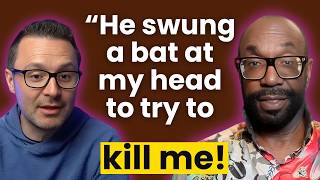
Thomas McClary, founding guitarist of the Commodores, walked to school past police while the KKK threw rocks at him as the first Black student to integrate his Florida school. He formed the band at Tuskegee, recruited Lionel Richie, and wrote hits like "Easy" and "Brick House" before leaving to pursue spirituality and purpose.
Chapters
Today I'm joined by Thomas McClary, founding member of the Commodores. And yes, one of his first band recruits was Lionel Richie. We're going to explore how purpose, music and love shaped his life and legacy through extraordinary adversity. He was the first African American kid to go to an integrated school. His story will blow you away. Enjoy the show. Thomas McClary, a huge welcome to the Lead On Purpose podcast.
Thank you. It's a pleasure to be here, James.
Oh, it's just amazing to sit with you. Never thought in a month of Sundays I would have got to sit down and chat to you. I mean, the Commodores. Who doesn't know the Commodores? And I mean, across seven continents, you guys have been synonymous for decades. So I'd love to chat a little bit about where that began for you. So, you know, what happened in your early years? You know, was music something that naturally came to you? Were you kind of encouraged by parents? I understand that ukulele was kind of one of the first things you started with. Is that right?
That is exactly right. It's funny, my parents were musical. Both of my parents were, and my sisters and brothers all played instruments. And in fact, I was the last of the siblings to pick up an instrument.
Wow.
And it was actually after I saw my sisters, I'm like, wait a minute, I can't let my sisters outdo me here. I love that. So we had a group called the McClary's, you know, and it was a gospel and we grew up in the church. And it was amazing to. When I was, I guess, seven years old, I had this, like a dream that I was going to be performing in front of thousands and thousands of people. And I woke up in the dream and thinking, oh, man, was that a dream or was it? And so I always knew that there was something lurking there that, you know. And of course, I had a situation in my hometown, a small town, Eustis, Florida. It's. It's about 80 miles north of Orlando. And I was the first African American to integrate the public schools.
Wow.
Yeah. And Alabama and Mississippi had gotten mainly all of the national attention for some of the heinous acts that were perpetrated on. On African Americans at that time. But Florida was, was under the radar, but it was really just as bad or worse in some cases.
When you say worse, what, what kind of experience did you actually have?
Excuse me? Well, the night before my first day at school, the Ku Klux Klan burnt across in front of my house and they, they shined their bright lights in the windows. So, obviously I didn't get that much sleep. And in fact, I. The school that I was integrating was four blocks away from my house, and the school that I was attending, the all black school, was about five miles. And so my dad said, thomas, you want me to take you to school? I said, no, Dad. I mean, what are you going to do? Take me every day? No, I'm going to walk to school. It's only, you know, four blocks. As I opened the door, the media was there, the sheriff's department, the police department, the National Guard armory. And as I took my first step, bricks and, you know, oranges. I'm ducking these.
Wow.
As they. They throwing, you know, a couple of them hit me in my back. And. And then I turned around and my dad. I looked around and my. My parents, they was, you know, opening their arms for me to come back, and I. And I said, no, I'm. I'm. I'm. We've got to do this. And of course, the school was on this hill. So as I'm walking up the hill and I'm thinking to myself, okay, phew, I'm almost there. And, you know, obviously, the racial slurs and all, and I finally get to the campus, and no one would go inside. They were all standing outside and for 15 minutes. So finally, the principal, Mr. Weickers, came on the intercom and he says, the PA and he says, okay, everybody get inside. Enough of this. So I'm thinking, oh, man, everybody. That means me, too, of course. So I. I'm walking inside and I'm thinking to myself, the auditorium here. I don't want to sit in the back because that's one of the things we're protesting against. And I don't want to sit in the front because I want to watch my back.
I like your thinking.
So I sat in the middle, and when I sat down, everybody on both sides stood up and said they didn't. They weren't going to sit next to me. Except this one gentleman, Kent Reedy, who to this day, he was. He will always be my hero. He. He said to me, thomas, you don't know me. He says, but. And you don't know the layout of the campus, but if you would just. If you have any questions about anything, in fact, just follow me. In fact, I'm jeopardizing my friendship with my longtime friends to befriend you, but there's something about you is special, and so that's beautiful. Yeah, it was a really, really. That was a. A defined moment for me and of course it, it didn't lighten the load completely, but at least gave me a cushion to know that there was at least one person, you know, that thought maybe I was a good guy.
Hey, James here. I wanted to take a quick moment to let you know about something. Look, I get asked to deliver keynotes and workshops for teams and companies all over the world, from London to Antarctica, from America to Australasia, from armies to small businesses to large corporates, to sports teams. But I go in and deliver keynotes around the mindset of high performers, around the habits of high performers, about how we navigate change. If you would like me to come and speak to your team or speak at your conference or deliver a bespoke work workshop, please get in touch with my team. Carolinejlochlan.com will be able to help. I'll also make sure that we put that in the show notes. Amazing. You can think back and talk about it and still have a bit of joy, you know, reflecting on that. You know, as I think of a young kid walking to a school, things being thrown at them, racial slurs, I feel sad, like it's very awful. I've got a young 9 year old boy and I just can't imagine that. And it's incredible that you can look back and still see some joy in it.
Yes. In fact, had I not had the, the spiritual ground grounding that, you know, my parents, I was a student of Dr. King and I, I knew that love would be the agent that would carry me through this whole situation. And you know, we, we had, it's funny, even my sisters and brothers said, you know, Thomas, I don't know, man, I don't know how you did it, you know, but being intentional and being, having the fortitude of saying, you know, this too shall pass. And if, if, if, if, if, if we can just see the image of God in each of us and honor that image, then that would be a great first step. And so that was my whole concept. It was like I knew that some of these kids, probably in their hearts, didn't really mean some of the mean words they were saying, but because they had been taught to say these things, they were just repeating what they heard, you know, conditioning and. Yes, yes, yeah, absolutely.
And you mentioned Dr. King. So there's two people I've studied for a long time. That's Martin Luther King and Nelson Mandela.
Oh yes.
I find them to be fascinating humans. They're game changers. So what was your experience with Dr. King? Did you ever get to be in proximity of Dr. King.
Well, it's amazing that you would mention that. I. I read a lot about him, but I never really got to meet him personally. But I did meet Dr. Benjamin Hooks. In fact, I worked with the NAACP and Dr. Gibson.
Wow.
We worked with them. And so it was just amazing to be in that close proximity of those two young men. Well, they weren't young at that time, but they were, you know, definitely trailblazers.
That's amazing. As are you, you know, and I think I look at your childhood for a second ago. Wow. I can't imagine it. And yet here you are and you've lived quite the life. So may I ask what role music played in helping you navigate your childhood?
Yes. Well, the first thing that I wanted to do, one of the first things that I did, you know, once I got enrolled in the school, I thought, wow, wouldn't it be neat if I can put a band together and maybe, you know, create a synergy of love and unity, you know. And so there was this gentleman, Pat Riley, who was on the football team, who also was a singer. And so I had a chat with him about it. And so we started a band called the Two Thirds.
I love.
Was three white guys and two black guys. That's so good. That's brilliant. And. And the first song we learned was Satisfaction by the rolling shows.
Unreal.
And it was amazing because, you know, when you think about it, back then, Mute the radio stations played. We had one radio station and they played, you know, all types of music. And, you know, you would have big band, easy listening, country, rock. And then late at night, you would have the blues and gospel. And so I remember staying up, you know, really late because gospel and blues would come on at like 10 o'. Clock. Excuse me. And so my parents would, you know, they were very conscious about my education and they was like, okay, don't stay up too late. Listen to that music. Because. Because, you know, you got to be bright for school in the morning. But that was my early influences, you know, we had. So when you hear songs like, say, A Long and Easy and these songs we listened to Carlsberg, Steele, Nashley Young, you know, some of the harmonies that, that they, you know, these guys were just amazing. But it was a real challenge for me because I always would hear arrangements and want to put my own arrangement to the arrangement.
That creativity was right there within you.
Yes, yes.
That's incredible. Yeah, because I think the sound that you created was so unique. And, you know, my partner Caroline and I were listening to EZ this morning and it was amazing just listening to it this morning. It takes me back to my childhood and listening to my parents listening to it. It's a timeless story sound that you've created, and it will always be timeless. Where, where does that come from? Is that just innate? Is that something that's within?
Well, you know, it's interesting that you would say that because the first two songs that we learned for the freshman talent show was James Brown, Cold Sweat and Wichita Liner. Like Me and Kendall.
Yeah, amazing.
Yeah. And. And so at first the guys was like, why these two songs? You know, but it was intentional again, you know, to. Because I knew that from growing up, all of these songs were on this one radio station. And I always felt like, man, music is music and if you can just present it in a way that people relate to it, now you're starting to penetrate through the hearts and the souls of and the minds of people. And it's like that is the thing that makes a difference in terms of where the song is. A one hit wonder that, you know, is being played for a few days or a few months or a few years versus one that's being covered and played over and over and over and over again.
And you know that word intentional comes up again, right? You're very intentional.
Very intentional. Yeah.
And it's interesting when I think of the word purpose, which obviously this podcast is all about. Another word for purpose is to be intentional. If you do something on purpose, you're doing it intentionally.
That's right, James. And I think there was a purpose for me being the first African American to integrate the school. And I understood my purpose and I knew that even my. I played baseball. And in baseball practice, the first day of practice, the. My team was. Had. Get. Had grasped one of my teammates and they were trying to wrestle him down to the ground. And I turned, I said, hey, what's going on? And so the coach says, well, Thomas, when you had your back turned, this gentleman, Richard measured where your head was and he took a bat and he closed his eyes and he swung to kill you. And just as he swung, you bent down to get your glove. He missed you. And so I. So I grabbed him and I hugged him and I said, come here, Richard. You know, and fast forward in the story 25 years later, I'm at my class reunion and, you know, we're the world renowned Commodore. And so my classmates, you know, invited their kids and their parents and their grandparents to meet me and, you know, sign autographs, take pictures and all. So Richard came up and he Says he was crying, you know, and his wife, he says, thomas, I need you to do me a favor. Said, what is it, Richard? I need you to forgive me for trying to kill you 25 years ago. I said, oh, come here. Richard hugged him again. You know, I said, man, I forgave you that same day. And so this president of our class wanted me to give a five minute speech on what it really was like for me, you know, for real. And so my wife, Beryl, she nudged me. She says, man, do they really know what they've asked you to do?
I bet they don't know what's coming their way, right?
So I said, I want to first of all, thank everybody that threw the rocks at me. I want to thank the guys that burnt my sweater, literally, while I had it on. I want to thank everybody that, you know, all the racist slurs. And I want to thank the coaches that wouldn't let me play the position that I really was most talented in, because had I not gone through those experiences, I would not have had the fortitude to deal in an industry that is probably one of the most tough and, you know, roughest industry you can think of. And it was. It was a part of the fuel that gave me what I needed to be persistent. And so it's a beautiful way to look at it. I'm sorry.
It's a beautiful way to look at it, Thomas. A lot of others might have went the opposite way and got very cynical and maybe even angry. You had a different perspective of the world, and I think that says a lot about your upbringing, how your parents brought you up, the values that they instilled in you.
Thank you.
Says a lot.
Thank you, James. You know, and I took that same attitude when I was pursuing the Commodores. We were fortunate. I was standing in the registration line at Tuskegee as a freshman, and just like I want did with the two thirds, I thought, well, I don't know anybody, and perhaps a way of getting to meet some people, maybe I should be on the talent show. And so the freshman talent show, I learned, was a big deal at Tuskegee every year. You know, I'm like, so I'm standing in the registration line, and I hear this guy whistling a song by Eddie Harris, you know, And I turn, I said, hey, man, are you a musician? Eddie Harris was a famous saxophonist at that time. This guy was very shy, you know. I said, no, not really. I said, well, I'm looking for some musicians to put a band together for the freshman talent show. And we're going to be the black Beatles.
Nice.
He like, oh, gosh, who is this maniac guy? This guy. So he says, well, look, man, you know, with that kind of boldness, I know some musicians here locally, you know, and I live in Tuskegee with my grandmother. And she may not even mind you using her basement to audition the guys. Like, oh, wow, that's a great gesture. Sure enough, I go his grandmother's house and he has these musicians there and I'm starting to audition these guys. And then this guy comes down on the stairway playing the sax. The same song he was whistling.
Wow.
I said, wow. I thought you said you weren't a musician. Ah, play a little bit. Okay. You're in the band. This guy was Lionel Richie.
Wow. That's unbelievable.
Yeah. And so we now we have the band, but we don't have a name. And we were at impasse and nobody would vote on the other guy's suggestion. So I said, okay, we're gonna blindfold myself and open up a dictionary. And the first word I point to is going to be the name of the band, as you do. I love that. And so pointed to commodes like, oh, no, we gotta do a redo. So the second time was Commodore. So that's how we got the name.
I love it. And that was intentional too. You intentionally pointed out the dictionary.
You know, that's. That's exactly right. That's exactly right. And to use the black Beatles as a rally cry, that was intentional. Just like football teams and baseball teams, basketball teams, they get in a huddle and they have. They come up with whatever rally cry that they can use to fire the guys up. This became our slogan, which was intentional because. To elevate the thinking, to elevate the confidence. Because the first performance, everybody except me and the drummer hid behind the curtains because they were stage frightened.
Wow.
Including Lionel Richie.
That's brilliant.
And so it was like getting in their faces and saying, hey, man, the Beatles wouldn't have done that. But it began the journey of having a purpose and saying, I see division. Our music is going to touch lives around the world. And believe it or not, we actually broke the Beatles attendance record in. In the Philippines.
Wow.
With our first gold album.
That's incredible. What year was this?
This is in 1974.
Unbelievable. That's amazing. And it's interesting. You talk about the vision. You had a vision. So I think a lot about radical clarity. The people who I've worked with, who are the world's greatest at what they do, they are so clear in their mind's eye about what success looks like or what they're trying to achieve. So it sounded like you and Lionel Richie and the rest of the Commodores, you were very, very clear on what success looked like.
No question. No question. And we had some challenges. Sure, we had challenges. You know, when you look at. We were all college students, and everybody had summer jobs prior to being part of the Commodores. And the first challenge was to convince everybody to stay together during the summer, that first summer, because, you know, we. We didn't have any hit records or anything. We were playing top 40 music. And so I finally convinced Lionel's grandmother to. To let him go with us. And talking to some of the other guys, his parents, and of course, we thought we had saved enough money to last. We were going to go and take New York by storm. That was that. Hey, we're gonna go in, and the black Beatles are going to invade New York City, okay? So we saved up, you know, a few dollars, and we thought we. It was enough to last a month, we thought. And we had a van, and, well, we got to the New Jersey turnpike, and it cost $4.50 to get into the city. We didn't have it. We ran out of money. The toll booth guy, he looked in. In the. In our van. He says, you know what? I thought you guys was kidding me at first, but when I see all of y' all squished up in there with your luggage and your equipment, if you'd have had some extra money, you would have gotten at least a trailer. So I believe you. I'm gonna let you go. But if you make it big, you better tell the story.
Wow. Here you are telling the story.
Tell the story.
Wow.
Now we're in the city now with no money, right? But I had relatives there. So did Lionel and so did Marlon. But we had promised each other that we weren't going to call our relatives. We were going to make it on our own. And so it's about 9 o' clock at night. We finally get to the city. We're in Harlem. And I said, man, there's the YMCA right across the street. You guys watch the equipment. I'm going to go and talk to the manager, See, can I convince them to let us mop floors, do whatever for room and board. I came back. These guys are looking up at the tall buildings because that's his first time in New York, and all of our equipment got stolen. Just.
Not a good start.
Not a good start. But this is perseverance again, being Intentional and persevering. I said, okay, guys, let me go to the yellow pages here and come to find out. Will Chamber owned a nightclub that was about three blocks from where we were. Said, ah, man, I'm gonna go up and I'm gonna convince whomever it is that I need to talk to that we're the black Beatles and that, You know. So I go up to the this small Spirit Ice, and sure enough, limousines are coming. James Brown, Aretha Franklin, everybody's. This is like their hang spot, after hours spot. And lo and behold, here comes the guy who stole our equipment, trying to sell it. Anybody wants some equipment? Anybody? So I said, man, I said to the guy at the front desk, I said, the door. I said, hey, man, this guy stole my equipment and I'm gonna go and take it. So he grabbed me, he said, come here, kid. I can tell the way you dress you're not from here. Give that guy 50 bucks and he'll give you equipment back. I don't have 50 bucks.
You're broke.
Broke. So finally I started describing the equipment and everything. He said, you know what? All right, kid, I believe it. Here, give this guy 50 bucks. Get out of the way because you're blocking the traffic coming in. So I'm excited. I run back to the guys, hey, man, got equipment back. Say, yeah, but we still broke.
It's not a good start in New York.
That's right. I'm gonna go back and convince this guy. So finally I go back, he sees me coming. He goes, oh, no, not you again. He persistent, having a purpose, no one being intentional. He says, okay, kid, there's a local band in there. When they take a break. This little local band called Cooling the Game. When they take a break, you better be the black Beatles.
Yes, we are.
Yes, we are. So we went in and we played the same two songs we did on the talent show. James Brown happened to have been in the audience, and everybody says, we're not going to do his song, are we? I said, are you kidding me? We're going to do James Brown, Cold Sweat and Wichita Lineman.
Well done.
That's right. So it was like the turning point for us. The guy who worked the door became our manager. He grew up with Suzanne DePass. Barry Gordy was moving Motown from Detroit to Los Angeles. He heard about Suzanne De Pass and the beautiful job she had done there with the discos. It was the beginning of non stop music. Suzanne De Pass was the genius behind that.
Wow.
And he hired her to take over the creative department and her first assignment was Jackson 5. And so she knew of this college group that would be a good influence and to open for the Jackson 5. So for the next two years, we were the opening act for the Jackson 5, which landed our recording contract.
I bet it did. How did it feel that very first time being the opening act for the Jackson 5?
Oh, James, I got to tell you, man, those kids. Michael was a genius. And they. It was. It was phenomenal to see a little kid singing with the conviction of a grown man. And having choreographed the show and they knew exactly the peaks and the lows and how, where the audience would, you know, respond. It was like, just amazing. So every night we would sit there and go, okay, take some notes.
Learn from the back.
Take some notes. That's right. And Michael was really. Michael was really a genius. He was. I never forget the first night. Logistically, they had not anticipated how huge. Because there had never been an African American group to tour nationally and sell out arenas like that. And so they had not anticipated how to get them out of the dressing room, back to the hotel, because they were used to, you know, coming back to the dressing room and whatever. So now all of the fans and everybody is, you know, they can't get out. And security, you know, they're scratching their heads, and everybody's, like, trying to come up with ideas. So for 15 minutes. And so finally, Michael raised his hand. He says, I got an idea. And so Barry Gordy was like, come on, Michael, this is no time for playing now. This is serious. He says, no, I got an idea. So Suzanne said, oh, let him say what he want to say and go ahead so we can, you know, get that behind us. He says, why don't you guys call for a Brinks truck, put the Commodores in the limos as a decoy, let them go this way and put us in a Brink truck, and we go the opposite direction. Oh, wow. Brilliant idea.
Smart little cookie.
Yes. So that's how we got out of that quagmire.
Wow. I mean, people listening to this would just be going well, you know, at a young part of your career, you're sitting with Michael Jackson, Jackson 5, you know, all these incredible individuals around you. How did that impact your psyche, your ego? You know, did that have any impact on how you seen the world?
Well, you know, one of the things that was really important for me was to stay grounded and not to be. To absorb everything that I'm being exposed to, but not to get so hyped up about it that I lose the reality of the fact that, you know, I'm a college student who is trying to, you know, complete his education and just happen to be a musician. But if the industry doesn't, you know, do well by me or whatever, I still got to have something that I got to fall back on, and that is my education. And so. But at the same time, it was an opportunity of life to let whatever genius that I'm around rub off on me, you know, or try to rub off from them, you know?
Absolutely.
And how do you be in that space without irritating people so that they don't want to share? But at the same time, how do you glean and acquire whatever wisdom that you can? So my thing was always. And everybody would say to me all the time, it says, man, you always feel the laughter. And I found that the industry had so much. I mean, because when you look at the lyrics, for instance, on Easy, why would anybody put change on me? I paid my dues to make it. Everybody wants me to be what they want me to be. I'm not happy when I try to fake it. You have your families, you have the record company, you got the agents, you got the promoters, you got lawyers, you got the fans. And if you're not careful, you know, you're being pulled from all of these different places. And if you don't have a sense of a center of who you are and where you're going and your purpose and what is the. The reason why you are here. And you only discover that by spending time spiritually with yourself and. And understanding that in all of this stuff that's going on, you still have a commitment to yourself. And sometimes people confuse that with selfishness and it's it. And there's a difference between self care and selfishness. And so, yes, but you have to replenish yourself. And so that particularly if you're giving and giving and giving and giving and giving and giving. And in this industry, one of the things that was a hallmark for the group was we gave. We would. When we got to cities, we didn't just go from the airport to the hotel, to the arena, back to the hotel, back to the airport, to the next city. No, like, you know, my thing was to the guys. Look, we have to touch the community. So if that means going to a laundromat, a local laundromat, if that meant going to a shopping mall, if that meant going to. Where is it you can meet and talk to people and really get a sense. And that's one of the things that I miss about the industry now is that back in those days, Detroit had its own sound, New Orleans had its own sound, Nashville had its own sound, Chicago had its own sound. And because people were, you know, you could tap into the local sound or the local sense of where people are. And now you have program directors that are programming, you know, several stations. They may have 20 stations that they're programming. So they are programming music that's not necessarily a reflection of the local sound, but what's popular among, you know. And so I think it is very important as you, the bigger you get, the more you have to be conscious of giving and having a sense of. I'm not setting yourself up to fail in ways. Like for instance, some entertainers think that by surrounding themselves with yes. People they are protecting themselves. But then they become isolated as a result, instead of insulating themselves with goodness, they become isolated.
Very scary. And you see it a lot with stars. I mean, I've said some really, really insightful things that got me thinking. So you cannot give what you do not have. So what I'm hearing is you've got to pour into yourself and spend time with self. And for me it's meditation and journaling. I meditate a lot and I journal a lot and that allows me. And I mean, my life's nothing like yours has been, but I spend time with very interesting people and work with people who are running countries and coach people who are the finest at athletes on the planet. And so for me, often my dopamine's high and it's exciting and there's all this celebrity, but I need to go back down to, hey, who am I and what defines me? And being a dad to my 9 year old son and being a partner to Caroline, this is what defines me. And so I use meditation and journaling. I grew up in a country where religion really, it really tore the country apart, Northern Ireland. So for me personally, I don't have a strong faith, but I do have a strong connection to spirituality. And that's.
That'S, that's, that's really all, that's what's important, you know, that's very important. And, and I, I think, excuse me, we have, we have to be careful, you know, how we. Because everybody has their own way of going to that place where you can replenish yourself, you know. Yeah. And to me that's the most important part. And I mean, you know, like you say meditating is, is a form of, of replenishing.
Yeah, absolutely. It's my form of prayer, I guess. You know, it's way of connecting. What was your way of going inwards and focusing and spending time with yourself?
Well, I. Prayer has been, you know, one of the ways. And of course, every time I think about, oh man, creating a. A some sort of sympathy, self pity or sympathy or whatever, I can look around and see others and go, you know what? On second thought, I don't have an issue. I mean, cuz now here we are in the Philippines, right? And our first record, Machine Gun, we didn't know it was going to be just a blockbuster. It became the first album in the history of Motown to go platinum. They had had platinum singles, but not albums. Yes. And so our manager took us up in this village and here these people were living in tree houses and stuff, but they had our music. And it was like, whoa. Guy says, one of the guys from the village, he says, now this family, he says, man, they were making a choice between buying food and the bayou music. They chose your music over buying food. And that just kind of really did something to me that I'll always remember, that I'll never forget. In terms of the sacrifice somebody made for your music versus something that's gonna literally nourish, give them nourishment, you know?
Yeah.
And we were. Ferdinand Marcos was the president at that time. And he sent the military to escort us from our hotel because people were lined up in the streets, hundreds of thousands of people with banners saying, we love you, Commodores, Ambassadors of the truth. Wow. He's like, who are they talking about? And so we got to the Arnada Coliseum. The Beatles had 200 and something thousand prior to us and we had 272,000 fans.
Wow.
And so now it was like, gosh, how do we get back to the hotel now? Because the streets and everything, you know. So like I said, the military had finally come and they excluded us. And when we got to the hotel, this guy was screaming from the balcony of. He says, who are you guys? I'm the greatest. Muhammad Ali.
Wow, that's amazing. What is the chances of you guys being in the Philippines at the same time, right?
He was there for the Thriller, Manila. And. And it was like, wow, man, what a coincidence, you know, What a life.
Pretty well. It's amazing. It's seriously next level. And some of the. You're the lead guitarist. Some of the lyrics you wrote? Some of the lyrics as well.
Some of them, yes.
Yeah. How did it feel? Do you. Do you ever remember a song that you wrote and just seeing the crowd react or sing it back to you? Any Memories of that. Like that.
Oh, yes. In fact, you know, to have people write to us and said, man, we got married to three times a lady and then I got a divorce by say along, You know, excellent hear fans go, man, I. I was diagnosed with cancer and every time I played a song, zoom, it eases the pain or I couldn't stop dancing every time I put Brick House on. And in fact, we were in Canada and one of the promoters there, you know, he says, thomas, could you do me a favor? He says, you know, I know this is maybe asking too much of you because you just finished the concert and all that. He says, but I'm, I'm. I'm Jewish. And when I became a Christian, all my sisters and brothers, they, they haven't spoken to me in nine years. And I have a friend who still has a relationship with my sisters and brothers, and he has offered his home as a place to have an after set. And if you would agree to come, I could hide in the closet and peep out and see my sisters and brothers.
Wow.
I said, oh man, are you kidding me? Count me in. So Barrel, Barrel was with me, Barrel and I, so we go to this house, his friend's house, and I had my acoustic guitar. So I'm playing these songs, you know, easy, different songs. And finally this guy, he peeps out and he sees his sisters and brothers and he just couldn't take it anymore. He just came out of that closet and they saw each other and they hugged and just started crying and like, man, how do we allow nine years not seeing each other? So what am I saying? This has been. Oh, man, just an amazing, amazing journey that has gone down so many different paths in ways that I couldn't even imagine, you know, initially when we started. But bringing people together has been one of the things that has been just amazing to see. And in fact, we were one of the first acts to literally have all different races come together in live settings, you know, in masses, you know, and because James Brown, who was one of the bigger acts at that time, they, they would had predominantly black audiences and for their live, you know, performances, you know, and, and of course, to be an agent of change and to be used in that manner is, it's, it's, it's been an honor.
Yeah. What a game changing position you've been in at a very important time in history. And you know, you, Lionel Richie, the rest of the crew, you've done some incredible things, but at one point you had to make a decision to take a different direction. And leave the band. And how did that come about? What drove that decision?
Well, you know, I was. Let me set the stage for you so you get a great picture of it. I literally recruited each of the guys individually, and William King was. Let's see. I get. What year was this? I think it was 70. 71. Right. Anyway, he decided that he wanted to leave the band to pursue something else. Tennis or, you know, whatever. The band wasn't going anywhere. And, you know, it's. He. He left. And shortly after that, we. We got contract, you know, with the. And we actually recorded Machine Gun. Wow. And he asked if he could come back. Well, some of the guys didn't. It didn't sit well with some of the guys. They were like, you know, you. You should have stuck it out. And, you know, and so it was my vote, was the decisive vote to let him back in.
That's a big, big better responsibility for you.
Yes, yes. And he, unlike some of the other guys, and this is just being honest, was probably the least talented one. You know, he did not play on any of the albums. He. But at the same time, he saw that, oh, man, this is. This is good.
I want to be a part of this.
Right, right. And so we. One of my suggestion was, you know, to try to keep everybody together was to come up with something that might be an incentive, you know, for the people that are not as creative or whatever, but to still feel a part of it. So we came up with what we call the welfare program, which. The welfare programs do not work.
Yeah.
Okay. And that is giving somebody something that they have not earned. And so we implemented that for a minute and saw that it was not helping, and so we withdrew it. And Lionel Rich and I were. We wrote 60% of all the songs that was recorded by the Commodores. And there were opportunities that came along with Kenny Rogers, and so Lylon Richie and I wrote some songs for Kenny Rogers.
How special.
Yes. And then the Endless Love project came along. Lionel Rich and I wrote some songs for the Endless Love soundtrack. And now, believe it or not, the guy who left the band, who was the least talented, who was the least. Who had not played not one instrument on the albums. You know, he. He wants to basically not be a part of the. The synergy, but a part of the problem.
Yes.
And. And so I thought, well, you know what? This is really a situation where it's got to be fun. And Lionel, the record label wanted him to pursue a solo album. And it was. We had been going. Albums, world tour, albums, world Tour albums, world tour, back to back, you know, non stop. And so it was a, it was a time to like, say, okay, maybe we could take a breather and then reconvene and do it, you know, do this some more. Well, William King decided that, you know, he, our manager passed away unfortunately, and we were looking for a new manager and every suggestion, it was just basically, you know, he was trying to find somebody that he can control and, and that he, you know, and it was, the criteria was off. I'm like, wait a minute. It's about finding somebody who's brilliant, that can lead and take us to the next level. Not somebody that you can control. Yeah. And his wife, you know, he thought he and his wife could manage the band, and then he thought he and his friend, PR person could manage a band and he and the Sound and Lights guy could manage the band.
Wow.
And it's just, you know, I said, you know what, I'm gonna take a break and. But I did not leave the corporation. The corporation was the corp. The entity that owned the trademark in the name. And of course. It was, you know, rather than to see the, the whole banner be drugged through the mud. Yeah, you know, I, I stepped aside for a minute because, you know, all the, all way I could envision that banner was at the, you know, level of excellence. Not somebody on stage faking like he's playing the guitar and it's not even plugged in.
It's just not right. No.
You know what I'm saying?
Yeah. I played in a band and I remember some people similar who kind of wanted part of the world championship glory, but they weren't quite the, the right fit. Technically they didn't have the skills, but they wanted to kind of fit in and fake it. And I'm like, I can't be a part of that.
No, no. And, and, and, and Walter Orange said something. He said, you know, William King is still faking the guitar. All these years, he could have learned how to play if he had just said, you know, let me just inst. You know, the guitar is not even plugged in. You know, it's like, like, oh, Jesus. But, you know, I just, I'm from Dr. King, the school of Dr. King. You know, I still love him. And you know, I, I, I, I think that it is imperative that, you know, yet you still love each other. You know, of course. Right.
I get it. We can have differences and we can even dislike one another, but there's still, there can still be love there and appreciation.
Exactly, exactly.
Do you Still.
Oh, yeah. So when people, when they see my show, they go, oh, my God, How. Why? You sound just like the Commodore.
Because I am the Commodores.
I am the Commodore.
I am the number one black Beatles. I actually started it. That's awesome. That's amazing. Thomas, I hope I get to see you live. I'd love to see you live at one point. That'd be awesome.
Oh, yes, yes, yes, yes, yes, you will. In fact, that would be awesome.
I would love it. I've actually got a friend in Hawaii. His name's Andrew Molina. I'm catching up with him today. He's one of High Hawaii's greatest ever ukulele virtuosos. I'd love to see him. And you jam it out. I think that'd be pretty.
Oh, man, I would love that. I would absolutely love that.
I'll connect you guys. He travels all over the US all over the world. So if he's in Florida, you guys are in the same spot. You should connect.
Yes, yes, yes.
That'd be pretty special.
That would be. I would love that. I would absolutely love that.
I'll make that work. Absolutely.
And yes, James, at this stage in.
Your life, what's it about? Because you're. My sense is that you've continually given back and you've continually wanted to help people and connect with people. So what does that stage of your life look like?
It is. It is so much fun. You know, I. Barrel says to me, she goes, thomas, when you. I've watched you over the years. We've been barren now for 32 years. You know, she says, I. I see how you. You change the atmosphere everywhere you go. Even in an elevator. I'm like, I hadn't even thought about that. She goes, she said, most times when you're in an elevator, nobody wants to talk. Everybody's looking down or looking whatever. She says, you always, you know, what is it about people that you just so attracted to? I said, well, you know, you'll be amazed how many people would love to share and be open, but a lot of them just don't know how to initiate it. And once it's initiated, man, it's like you turn down on a water speaker, you know? Yeah, it's like, oh, yeah. You know, and so raising money for different charities, that's a part of that whole thing of seeing underprivileged situations be replenished or see people that didn't have the least hope that they could even dream of, you know, doing certain things. And now they can see possibilities. You Know.
Possibilitarian. I think about this a lot. There's a small amount of possibilitarians in the world now. The people that look through the lands of what's possible, they don't look at what the problems are. They see the problems, but they know possible. And I love that about you, Thomas.
Thank you, James. Yeah. And you're the same way. I can tell.
You know, I love humans.
Yeah. Yes, I can tell.
It's interesting. Like, I love being around people who are smarter than me, quicker than me, more success than me. I like to be the learner at the table.
Yes. And I've always been like that. Even as a kid, my. My parents were telling me, reminding me, you know, man, even when you were used to. Always like to sit around and listen to older people, I said, yes, wisdom. Yell at that wisdom.
What I love, though, you've brought this youthfulness with you. Like, you've got an energy that is youthful and you've got this laugh that's infectious. I imagine that's helped you live a longer, happier life.
Oh, no question, no question. No question about it. You know, I. We've been instrumental in even. It's funny. My friend has this center, he calls it the Love center. And it's a lot of ex prisoners and gang members and that, rehabilitating themselves and trying to get back into society. So he asked if I would come and speak to them, you know, and so I. I had as an opening slogan that I wanted all of them to repeat. And they said, oh, man, what is this? This. What is this slogan that he's gonna, you know, like, okay, guys, you know, calm down. Come. It's nice. I said, now repeat after me. When you speak to each other, you're gonna speak without being offensive. And when you listen, you're going to listen without being defensive.
Beautiful.
And that second one is kind of hard, kind of tough, you know, because a lot of times, even in marriages, you know, people, sometimes they. They want to. They've already thought about what they're gonna say before you complete your sentence, you know, so that means they're not listening.
I find myself in that position before, you know.
Oh, we all have, you know. Yep.
And great advice.
Well, thank you. And that kind of opens. Opens it up, you know, And a lot of times, people need to see that. That you are vulnerable as well. I mean, we. We all are, you know, and even the civil rights workers that I work with, Benjamin Hooks and Dr. Gibson, them. They used to always say, you know, I mean, we're Not Superman, you know, and people need to see that you can be transparent and that, you know, that you can expose yourselves in ways. And sometimes they. They see themselves in you or vice versa. You know, we see ourselves in each other. And I like to think that somewhere along the way that we've had a chance to. Because Bob Marley, his last concert was with the Commodores. And.
Wow.
He was in Madison Square Garden at the. In the dressing room. I'm going to send you. I'm going to send you some of these pictures. Yeah, that's. I'm going to send you some of these.
I would love that, Thomas. I would really love that. Yes.
I'm gonna send you something.
Thank you. Wow.
But here we are in the dress room, and Bob Marley knows this is his last concert. And. Oh, man, Mick Jagger was there, Elton John, Eric Clapton, Stevie Wonder, Michael Jackson, you name it. It was who. Who's who right backstage. And so I'm standing next to Bob, and Lionel was kind of like. Everybody was like. Because they hadn't. They hadn't met him personally, you know, and they was kind of like, I don't know, man. This guy, you know, so everybody. He was kind of standing over there by himself, sort of like. So I went and I embraced him, you know, and. And he was like, man, did you. Did someone. And he was. He was searching for ways to communicate, but he was really trying to say, who. Who made. Who made you come over here? You know, I love it when everybody else is like, ah. Oh, that's. I don't know. He's like. He's got some contagious disease or something, you know.
You went straight in.
Yeah. Yeah. You know, but once he was made to feel comfortable, then everybody else just kind of gathered in and we took this great photograph, which I'm going to send you.
I can't wait to see that. Thanks, Thomas.
Yeah.
That's really special.
Yeah.
May I ask you. Because I spend a lot of time with leaders, leaders of countries, leaders of teams, and I think a lot about leadership. And I think at this stage in the world and humanity, we need empathic, loving leaders more than ever. So your experience. Who is one of the most authentic leaders you ever met?
Jimmy Carter was one. He was, you know, his nickname was the peanut farmer or whatever. Yeah, but. But to. To be President of the United States and have that kind of a power internationally and to still be, like, just so down Earth and, you know, open and see. I mean, we've been. We've been invited to so many heads of states around the world. And to have, you know, the different protocols that you have to go through. You know, I remember we were in Kuala Lumpur and. And the guys were standing there, we was going to meet the heads of states there. And we had been traveling in a lot of different countries, Thailand and different ones, and we hadn't had that much sleep. And so one of the guys was teasing Walter, you know, like, okay, now you remember, we extend the hand. Oh, no, we don't extend the hand. And, oh, no, we do the hit. And he was like, oh, man, come on, guys.
You guys are having way too much fun winding each other up.
Right? Right. That's so good. That's brilliant.
What a life. And yeah, without getting too political, one of the. One of the most influential leaders on the planet at any given time is always the President of the United States of America. We all know that.
Yes.
If you could sit and have a heart to heart with the President of the United States of America, what might you share with him or what might you ask him?
I would first ask him how often. Does he reach out to his high school buddy and does he ever feel a need to come from behind? I know there's security in all of this and I know that, you know, there are certain things that, that you can't do, you know, because security wise. But how many times does he pick up the phone and call one of his buddies from college or high school.
Or, you know, remembering who you are and.
Exactly. Yeah, exactly.
In Ireland, where I grew up, humility is so important. And if you get bigger than your boots, your family would be the first to say, oi. You know, put the boots back.
There you go. There you go. There you go.
I like that.
There you go.
That's amazing. And I think, you know, all leaders, it's a great reminder just to remember where you came from. And look, there's a question I ask, and I ask this of everyone. It's the very last question I always ask, but I'll ask it in just a second. But before I do that, I want to say I've enjoyed this and I feel like I want you to be on the show a lot more because we've got so much more to come.
I want to come to Florida, do it in person.
Yeah.
Yes, yes.
It's amazing. You've got an amazing journey, you've got an amazing way of sharing stories that really help us today and prepare us for the future. And you do that through. Well, you do that through humility and, and humor and authenticity. It's It's a really special gift you've got.
Oh, thank you, James. You know, you have an important role as well, and your podcast does, too. I mean, you'd be amazed the lives that you are touching. And I'm sure, you know, the ratings and some of the, the. The polling doesn't do totally the justice because it goes beyond that. And I know that you're not just doing this to. To be doing something. And it's. When Barrel gave me the background on, on your. Your podcast and, and, you know, you talking about purpose, I said, oh, that's all I need here. Right there.
We got the same language, Thomas. We might have grown up in different places, but we speak the same language.
That's right. That's right.
No, I love it. So, Thomas, one last question for you, and I want you to just pretend for a moment that you and I are going to go forward many, many years into the future, and you're going to be highly aware that it's your last day here on Earth. And someone very young, maybe a great grandchild or someone that's just very young, that you love, they come into the room and they say, thomas, how do I lead my life on purpose? What would you say to them?
Oh, that's a great question. I would tell them to make sure that they do unto others, that they would have someone to do unto them, and that not to have any regrets and to understand that the only way you measure life is through the moments and how you spend those moments and who you touch during those moments and who touches you during those moments and how you impact that those people during those moments is all that you have. You cannot take fame, fortune, none of this with you titles, none of that. So don't have any regrets. But understand it's all about the moments and how you spend them and how that those moments impact you and how you impact that person. Are those persons doing those moments.
That's so beautiful. That's. I feel like I've just over this last hour or so, had one of those moments where I've been fortunate to sit in your company and, and feel that warmth and feel authenticity and experience some of the history that you've navigated. It's. It's been a true Jo. And thank you for sharing that wisdom.
Oh, James, thank you for your time and thank you for your show. And this is only the beginning. We. We. We will be seeing each other again, 100%.
I'm looking forward to it. Thomas, thank you so much.
You're quite welcome. Thank you so much, James.









