Tools that Women Need to Breakthrough with Angel Henry
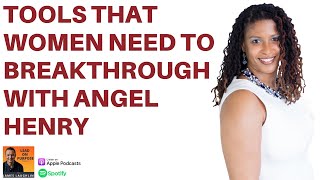
Angel Henry discusses systemic barriers women and underrepresented groups face in tech, from hiring bias to pay gaps. She offers practical tools: an Agile change-management approach, a paper napkin network audit to assess diversity, and strategies for sponsorship and mentoring to build inclusive leadership.
Chapters
Angel, a massive welcome to the Lead On Purpose podcast.
Thank you so much.
I'm so delighted to connect with you. You've got such an incredible message, and I want the masses to hear it. And once, once we get into it, I think it's going to become apparent that, you know what, we have a lot of work to do. Less talking and more work as leaders when it comes to diversity, when it comes to inclusion. So before we do get started, I'd love to ask you, when you think of leadership, what comes to mind?
The image that comes to mind is actually that of an eagle, a bird that's flying pretty high. And they have a vision. They have a viewpoint of the area and where they want to go. And then they have to. They have to fly down and come down and share that vision with others that don't quite have the same perspective. And so if they. When they depart, when they fly away, when they move on in the future, wherever life takes them, that they have left that vision, that perspective with others to carry on.
That's beautiful. I've never heard it described like that. That's so incredible.
I love it.
I can just picture it. It's incredible. And what has shaped you as a leader? What have been some of those pivotal moments in your life and your experience that have shaped you as the leader you are today?
Oh, my goodness. Absolutely. The first person that comes to mind when you ask me that is my grandmother. I am her namesake and her name was Lavora, and my real name is Lavora, but I go by angel. And she helped raise me. And she was from Kentucky in the southern to mid part of the United States. She grew up in Jim Crow, South Kentucky, segregated South, where she had to sit on the back of the bus and drink from different water fountains and use different facilities. That experience of growing up as a little girl as well as the war that she went through.
Really shaped her and.
All of her little things that she says and how her perspective of the world and how she treated people. She ended up being a nurse, and her love for and caring for people just was imparted into me and really helped to shape me in terms of how I treat others. And that servant leadership, which we didn't know the name of it back then, obviously, but now I look back and like, yeah, grandma's the one that taught me how to be a servant leader.
That's incredible. And what I love about that is some people go straight to the big names and the big famous historical people, but actually it's our real True role models. The people who influence us are our parents and grandparents, right?
Absolutely. Absolutely, yes. And I was blessed, too, when I think about my career, because I'm like, I've got 20 years in tech, and I look back over those special folks that were either supervisors or peers of mine that really just maybe saw something in me and pulled it out or helped get me an opportunity or helped advise me and groom me. There's a handful of those people that have left the mark and left their mark to this day. It was so cool. A couple of years ago, this was years after I left this company. I was at a pharmaceutical company, and a lady sat down with me, and as I was talking, she said, you know, you remind me of this lady named Joanne, like how you talk and how you express yourself and even the words that you use. Did you ever work with her? And my face just lit up because I'm like, yes. She was my supervisor for years, and she was the lady who was such a, you know, a pivotal role model for me and helped change the trajectory of my career. And for you to say without knowing that we knew each other, for you to say that I remind you of her was such a compliment.
That's incredible. And it says a lot about Joanne in terms of her leadership influence, that she influenced you in such a powerful way that you walked, talked, and thought like her. It's incredible. Yeah, I love it. Now, let's talk a little bit about that. Say that Jim Crow era and segregation, we now look at this. A lot of people go, okay, well, that was then, but this is now, and we're all good, and everyone's got equal opportunities and the workplace is so diverse and equal. Right. I love that you're laughing your head off right now, because it's the exact opposite. Right. So tell me a little bit about your experience coming through the tech industry as a black female.
Oh, James, we don't have enough time.
Let me share with you the highlights. Okay. So.
It'S so varied and so vast that as I started writing it one night, I couldn't stop. And that's actually what led to the premise of the book, Dense in the Ceiling. Because of all the different experience that I've had, that many were pretty negative and in some cases, a blatant discrimination and very toxic. So overall, when I look back at my career in tech, it truly is. It mimics that of the industrial area that my grandparents went through in the United States. Like I said, my grandmother and my grandfather met in Kentucky, but their families were actually from Deeper in the South. So Georgia and Alabama, prospectively, their families migrated north to the coal mines of Kentucky, to the.
What is it.
The different industrial complexes and factories in the north part of the country. And what they found was two sided coin. One, it opened up opportunity. It allowed for safer areas. The opportunities led to more money, which allowed them to get their first house in their family, allowed them educational opportunities, it opened up social and other economic areas for them to maybe own their own small businesses and things like that. So that was the good part and the not so good part, the part that they really chose not to talk about and to ignore and keep silent or push down were the unfair practices, the inequities in pay, which we absolutely still have. Not just the United States, but worldwide, where you have the same person with very similar experience and background doing the same job, but being paid vastly different. And when I say vastly, people think, when they think the wage gap, they think, oh, well, every white male makes a dollar. Every female makes maybe a percentage of that, maybe 70 cents. But that starts adding up to where it's thousands of dollars difference over time, especially over one's lifetime.
When you think about all the disparities, the blatant racism, the inequities and advancement in the company.
You think, okay, that's the industrial age. That's the 40s, 50s, 60s. That's over. Well, no, James, we just hit the repeat button. We literally have just repeated everything. When it comes, especially in tech and.
The software space, that's where I come from, is mostly software development. And when you really take a step back and look at it, what you see is, is the majority of underrepresented populations. That means lgbtq, that means brown folks, black folks, women. We are traditionally coming in as analysts, associates, entry level workers, right? In droves. So that's where you get all the girls can code and black girls can code and Latinx girls can code, and all these different associations and nonprofits that are really doing their best to try to attract and then bring in women and underrepresented populations. Great. The problem, James, is that these organizations have no clue what to do with us once we get there. I mean, you have to think about it. Those that they're bringing in, and I don't mean to toot my own horn, but we're the cream of the crop. We're the ones that got as in school. We're the ones that were doing extra right? We're the ones that went to grad school at night and worked and sacrificed in order to get the degree or get the technical certification, which did not come easy. Now once we have it, guess what? That just gets us an interview that just gets us looked at because we aren't a part of the fraternities and the golf club associations and some of those informal networks that allow traditional straight white men. That gets them closer to the proximity of power and closer to those that make hiring and promotion decisions. We just don't have that proximity. We have to get in right straight on our own true merit, which is degrees, certification, and varied experiences. Once we get that interview and we get looked at and they hire us and they're like, oh my gosh, yes, he or she is top of the field, but, oh, where have you been all my life? I can't tell you how many times I have heard that in an interview from a white guy. Where have you been? Oh, my goodness. We've been looking for someone just like you. Really? Okay, there's like 10 of me. I mean, but okay, so then I get in and they. No support.
No mentorship.
Oftentimes we are scraping together. If we're. If we're lucky enough to scrape together a budget and a team to enact the ideas and make the changes that we want. That whole pipeline that I just described, it's just chock full of bias. Some of it's conscious, some of it, A very good amount of it is unconscious. Where we make the mistake, where the mistake has been made in the past, I think is there's been too much, a little bit of an over rotation on the focus of the individual hiring manager, the individual person. That person has bias. So let's train the bias out of them. Let's bring in someone to do a keynote or workshop or training. Let's help our people managers attack their personal bias. And then once they do that, then we won't have any issues. Well, that's just one piece of it. The true piece, the real piece, James, is the infrastructure, the processes, the hr, meaning the human resource processes, the financial processes. Those are the true pillars of. When you start to peel back the onion and look at how we attract our talent, how we hire, how we promote, who is a part of the interview panel, if there even is a panel, or if it's just down to one person.
And oh, by the way, how do we retain our employees even if we're not able to give them extra money.
Or a promotion? How are we maintaining them and retaining them during the years that they're enrolled? When you really look at the structures that are in place and the decision making.
Criteria that's in place, that's what's flawed, that's what we need to change. Here's a great example. I just heard this on a panel, literally just a couple of months ago. A top executive was looking through the questions that they asked interviewers as they are seeking to go from maybe director, mid director level to VP level, vice president level. One of the questions on there was, how committed are you to the necessary changes in training and personal advancement that you will have to make in order to succeed as a vice president? How committed? Right? Like, give me a range, give me a number. Right? Like, like. And they're, they're looking for somebody to be all in. So that the answer, the right answer, in case you didn't know, James, is 100%. That's the right answer.
Right.
Unfortunately, what was happening is women who were married and mothers were not answering that question correctly because in their mind they're thinking, well, I'm committed, but not 100%. I don't want to lie and tell them that I can give 100% because I got two kids at home or I have a husband that travels.
You know, I'm 60% all the way there. Right. They were being truthful and that was actually screening them out. And so, long story short, what you had over time is an inequity of men at VP in this company at that level, and women just kind of languishing at that mid director level. They really weren't getting past that point.
And that's such, to me, such a shame for everyone, not just the individuals who miss out, but the company, the people that are the customers of the company. Because when you've got a bunch of the same people, and in this case it's lots of white males, literally, it's an echo chamber. And they can hear each other and they echo back to each other. It's confirmation bias constantly. They can't see blind spots. Diversity is the answer to discovering our blind spots, right?
Yes. Yes. And.
What is a conundrum for us that we really got to try to crack the nut on why this is happening? There's plenty of data, there's plenty of stats, there's plenty of reports. I mean, McKinsey, CTI, lean in Harvard Business Review, the list goes on. It's an Alphabet soup of.
Organizations and companies and Ivy League schools that have done this. And the answer is always the same. More diverse and inclusive environments simply make more money.
What I struggle with, what the assumption that I made going into this, that I was woefully wrong about James is that I assumed, and I think when I look back on it, I was probably told this wrong information, but I assumed that men, and white men in particular.
Were 100% focused on making money. I thought that if you could do something to bring more customers, get more wins, save money for them, whatever it was something to do around something financial, that that was what made them tick. And if you got good at that, then you were golden. And so I couldn't understand why I was saving money or helping to win deals or I'm looking at my counterparts, they're doing the same. Why are we not advancing? And the truth of the matter is.
What makes them tick isn't the financial piece or the money. I have absolutely seen and witnessed with my own eyes. Men step over contracts or not go with working with someone because, James, they weren't comfortable with them. It's actually their comfort level that is really what makes them tick. And so the more comfortable you can make them business professionally, the better off you're going to be. But if you come as a change agent, if you come in the door talking about, I'm here to make change, I'm here to make things better, I'm here to turn this ship around, you actually are just kind of putting something on your forehead to just say, I'm about to make you uncomfortable. And they're going to move away from that. They'll talk a good game, they'll shake their head and they'll say, yes. And organizations and leaders will say, yes, yes, we want that. We want this change. And I'm sure the diversity, equity and inclusion leaders and the HR leaders that are listening to this right now are probably all shaking their head vigorously because they're the ones that have been charged with leading the change. And then they turn back a year or two later and they're so frustrated because they're thinking, well, the board or the C Suite gave me this charge to make the change, but we haven't really seen it statistically significantly move the needle. Why is that? They said they wanted it, but every time I go to ask for money or go to ask for approval for extra headcount or go to actually make a difference and make this real, I get pushback or it becomes less of a priority. Why is that? Even though they're the very ones that asked me to go do this work? Well, it's because it's going to make them uncomfortable. And once they realize that they themselves are going to have to change, then that's where you Start seeing the results.
Yeah, I can totally understand and relate to that. I mean, when you look at the six core human needs, certainty is one of those. And most male high ego leaders, certainty is like one of their key drivers. And when there's anything that presents uncertainty or variety that they don't like, they push back because they want to be, as you say, comfortable. They want to be in control.
Yes.
Yeah, it's interesting.
And it's all an illusion. I mean, we know that, right? We all know that. But it doesn't stop people from striving for it. So I think.
The name of the game that I've come up with, that I've leveraged, that seems to be really working very well, and I'll give you an example of how this can work for your listeners is I'm leveraging.
All of my change management and IT project management background that I've amassed in an area called Agile. Agile for all the techies out there. Yes. They're thinking that's a software development or that's a project management methodology. What is she talking about? Well, when you really break it down after you get through the ceremonies and processes in technical terms, it really is just about a mindset. It really is just about how do we take a big change, a big mammoth change, like culture and changing someone's culture is a mammoth change. If you're talking about an organization that is hundreds or thousands of people that maybe has been around for decades, that culture did not become what it is right now overnight. It's not going to change overnight. When you think about how do I change my culture? Automatically my anxiety's up just saying it. I'm starting to get nervous about where do you start? It's like, oh, no, just take a step back, change your perspective. Instead of trying to do something big, let's just pick one thing. Let's pick one area out of all the things that we can do, pick one. So, for example, let's say we want to pick recruiting. Hey, we need to recruit differently and we need to figure out how we can attract more women or more ethnically diverse or culturally diverse or racially diverse people into our organizations to even apply for the jobs. We're not talking about hiring, we're not talking about changing the interview process. We are just talking about how can we even attract them so that we can have a diverse candidate pool from which we can select from. Okay, well, let's take a step back and think about where are we currently recruiting from. And usually companies have.
Schools, universities, associations that they're comfortable with that they have established a relationship with. Well, we know the types of students that come from these associations or universities. So we like how they shape and groom and mold them. We like what they teach them. They're a perfect fit for our culture and our organization. So let's just keep, let's just keep fishing out of that same pond. Well.
If you keep doing what you've always done, you're going to get what you've always got 100%. So let's do it differently. Let's make connections and associations with different schools and different universities that attract and promote and retain more women or people of color or those that are different from a religion, race or ethnicity standpoint. Let's focus on connecting with them and let's see if we can bring in some of their students to do internships or entry level positions and just try out to see if there may be a match. And if there isn't, right away you don't abandon it. You just iteratively and incrementally tweak it to give them feedback to say, hey, that first group that you bought in, that first five, they were great, but they weren't. What's a great piece of feedback we usually get? They weren't technical enough. We usually get that especially in the technology industry. Right? They just weren't technical enough. What does that even mean? Oh, well, it means that we want them to learn more engineering and processing. We need them to take more classes there. Okay, great. The university would love that feedback. I know because I'm an adjunct at a university here in the States. We love to hear feedback like that from our local employers because now we know exactly what classes to put into the coursework. We know exactly what feedback to give the students to say, hey, you know what, you may want to drop that marketing class and take a to technical class if this is the type of job that you want to get when you graduate. Because this is what employers are looking for. And now the next group of students that come through, they're the ones that maybe have a stronger engineering background or developing or coding background. So now. Oh, now we have the type of profile of student that we like that we need. Great. So that's one little tweak. That's one little thing that you can do that literally just takes a matter of weeks. And then once you bring them in there again, you just tweak after every internship or every summer or every phase that you bring in students. Now that's just one thing. Okay, now we've Done that. Now we've connected with different universities and associations. Now let's start looking at our interview process. Okay. Now we can focus on that. What I find the issue is that organizations and offices, like diversity offices, there's so much work to be done, James, that the. That the initial thought is that we got to boil the ocean. And there's just too many initiatives to focus on. And it's just too much. It's too much for senior leaders to really wrap their hands around and really focus on one change and make a, like I said, a statistically significant difference in one area. And it's a psychological trick. I wish in hindsight that I had majored in psychology, by the way, because all of this is just all. It's just all Psych 101. It's just a trick. Once I had one win, once I did something well, once I got a phenomenal hire from this new organization or university that I did, guess what? I'm going to keep doing it over and over again, of course. And so now we're just leveraging all the good stuff that we've done. And now it's kind of like a little psychology trick to say, hey, that thing worked, so let's just do more of that.
I love that. And it's interesting when I think of the s and P500, so lots of people globally invest because It's a top 500 companies in North America. So it's diverse. It's a great thing to invest in, and it kind of mitigates a lot of risk. So when I think of that, I'm like, well, it must have a very diverse range of CEOs. So I don't know. Do you know? Do you have any input? I love you. You're laughing at me again. You're like, james, that's a crazy question. So how many do you know then of the stats around the diversity? How many black female CEOs do we have in the top 500 companies in America?
Wow. I mean, you were really hitting up my alley here, James. My whole talk. I have a signature talk called Ceiling Shattering Tools for Women. That's my signature talk. And that's what I dive into. And you must have checked this out on YouTube. I don't know how you knew this, but yes. In one of the decks, I have a slide that shows. It's funny, but it's so sad but true. It shows about the late 18, I would say maybe the early 1900s, a group of the US.
Top company leaders. And of course, the picture has all white men and one white female. And she's in the corner holding a tray. So obviously she's the secretary. Right?
Wow.
Fast forward to a picture that I show that is of 2022. And it's a picture and it's a hair, literally a hair more diverse in terms of folks that are from South Asian descent, a few more women.
And when I say women, I mean white women. We've got about 4 to 8% increase there to African American women.
Wow.
Wow.
TIAA and TIAA creft and Walgreens too.
That's mind blowing.
What?
How does that even happen in this day and age?
Exactly.
There are so many variables, but I personally lump them all together in the bias category. It's bias. And so what happens is.
How you have to think about how we define leadership in the corporate and poor for Proctor sector, as well as non for profit athletics, all these associations and industries that are traditionally male dominated and that absolutely includes health care, because I even had the thought again, my grandmother was a nurse. So I'm thinking most females are. Most nurses are female, right? And yes, yes they are. A lot of the techs and the nurses and the support staff in a hospital system are female. But when you start looking at the doctors, when you start looking at chiefs of staff, when you start looking at who's on the board that's making decisions around salary, around promotion, around who gets paid what I had a female doctor tell me that as an OB gyn, she could take out someone's pancreas or kidney and if that someone is a man, she's going to get paid almost twice as much as if that patient was a female. Same organ, same body part being touched, same amount of time, same doctor.
Same degree, same procedure. But if it's a male patient, the reimbursement is going to be more than if it's a female patient. I digress. When we talk about bias in our decision making system, the first thing that we start talking about is leadership and how we define a leader. When you close your eyes back to that first question you asked me, what is it when you think of a leader? Now, I personally happen to think of an animal. I personally think of an eagle or a bird flying high. But that's rare. Unfortunately, when people close their eyes and think of leader, they think of in the U.S. mark Zuckerberg, Jeff Bezos.
Steve Jobs of Apple. Right. In the tech sector that we think of the big guys is what we call them that lead these huge monstrous tech companies like Dell and Microsoft and others.
So that Means, okay, typically we're talking about straight, white, heterosexual, white, Christian or Protestant, maybe Catholic men. Okay, great. So that's now my mental archetyped of leader.
So if someone comes across my, my proverbial table and I'm looking at a resume or I'm interviewing someone via Zoom or you know, Google Meet and I see them and they automatically don't look like who I'm expecting them to be for the role that I'm trying to fit. I just triggered bias, right? Another thing that bias plays in is if you look at leaders, if you look at hr, if you look in marketing, if you look at communications, a lot of those leaders, a lot of those chief heads are female. But those are what organizations consider support roles still. They can have chief in front of them all they want to. They can be VP of whatever. But if it is a quote unquote support role and not a cost center, if, excuse me, if it's a cost center, which means that they are costing the organization money if they're not making money, which means that they're not a leader of product, if they're not the leader of sales, if they're not the leader of making money.
How are they going to get to CEO if they don't own their own budget or what we call P and L profit and loss center, if they don't own that, how are they going to make CEO?
And let's put in one more hoop. Let's put in one more hoop. Let's say you do have, you're lucky enough to be a female and you have run your own P and L. Oh, sorry, Lucy, it wasn't enough. Jim's run a $2 million P&L, yours was only 500,000.
So we're going to go with him because he's managed more money. We're not going to ask if Jim ran that into the ground. We're not going to ask if he started off with a million and just, you know, he grew it to two. Whereas you started off with nothing. Right. And grew it to what you have now. We're not going to ask those hard questions. We're not going to look past any deeper or peel back that onion. We're just going to go with our biased notions and decision making criteria.
It's just mind blowing. And it's interesting, the whole idea of bias. I mean, I understand at a very basic level that we have bias built in to protect us and that's centuries old, but actually we don't need that bias. It's there and we can't remove it, but we can respond. And I think that the bias is a microsecond. When we see someone, instantly we have this judgment, am I safe? And will they attack me? So how can we start to respond to our inbuilt bias in a way that actually gives people a fair opportunity?
Absolutely. So the first thing that I recommend everyone to do. Well, let me back up. So I am blessed and favored to be in this space of linking arms quite literally globally and certainly across the US and Canada with a plethora of other consultants and inclusion experts and folks that have been doing this work for years. Some folks that have just now gotten into this space, but they are phenomenal people and we share information and exercises and background all the time in order to just help move the space. I mean, this is, this is truly a space where people are absolutely.
In it. A good portion of folks that I've met are in it for the right reasons. And so she won't mind if I share this. I tell her I do it all the time. Her name is Amy Wanagar and she's the author of Around Bias. And I think I even have her book up here somewhere on my. Yep, here it is, right there. Higher Beyond Bias.
And she has another book called Network Beyond Bias. And she did this exercise with me. And so now our little group and area, we do it all the time, we call it the paper napkin exercise. All you have to do is just grab literally a little post it note or a piece of paper or even a napkin and just write down the people that are closest to you in your professional network. The criteria, the things that you think about are who's the person who I helped get the job, who I helped recommend for a job, or I maybe made a recommendation for them, or I vouched for them, right? In a job interview, who was the last person that I helped do that? Just write down their name.
Who is the closest customer that I have or client, somebody that I really love and enjoy working with all the time. Just write down their name. Who's my direct supervisor, who's a peer of mine that I love to work with, right? And you're just jot down. And the last person, which is really critical, who's somebody that I mentor, right. Who's somebody that I pour into and share my experiences with and hopes to help them advance in their career? Just jot down their name. And then you look and you think about, is it all male? Are they all female? Are they all the same ethnicity? Do they all have the same background as me, Meaning if I went to four year university and then I did internship and then I got a job in a corporation, do they all have that same kind of story too, for the most part? Or did these people come from a different side of the tracks or poverty or they don't have a four year degree at all and they've never set foot in a college? What's their background? Do I even know what their story is? Or how well do I know these people? Do I even know if they're married and have kids or not or what side of town they live on? How close are these people? How well do I know them and their background and what are the general characteristics of them? Of these people who are in my network that's closest to me?
All it is, James, is that if you see where you're just a little bit heavy on one side and not the other, meaning, oh my gosh, I wrote down all these names and I'm a male and everybody in my close network is male or oh my goodness, I'm Asian. And I realize that everybody in my close network is Asian as well. Oh my gosh. You start to see where you're missing. You maybe have a blind spot in your area and your network and now you get the fun job of filling that. So. So I did this exercise and when I first did it, every single person was female. Every single one. Yes. They may have had different ages, age ranges from young to seasoned professional, but everybody was female. And I'm like, I've got to be intentional about making some closer connections with my male colleagues and male counterparts. And I did just that. But guess what? I was intentional about it. Right? So the next time I had a conversation with a gentleman at work, I actually set up a separate time after our work call to just get to know him. I learned so much. I had no idea how much we had in common. And now fast forward to this day. We are good friends.
It is amazing.
That is what we just. That is all you need, just to be intentional about being open to having a conversation with someone who has a different lived experience than you. Most white men become allies, what I like to call active allies. Right, because it's a controversial term here in the United States, allyship. Like, are you really an ally? Can you call yourself an ally if you're an active ally, you are purposeful and intentional about helping someone that is different than you. And you're doing that on a very active, regular basis. Well, I found the majority of straight white men who are Active allies.
It's because they brought someone that had a different lived experience close to them and sat down and really got to know them.
And.
Again, I have been blessed with just by coincidence. There's a couple of times where I was intentional, but I've actually had more white men intentionally reach out to me to say, hey, let's grab a cup of coffee, let's have a conversation.
And they're just authentic about their story to say, hey, I grew up in the Midwest in the United States and I went to church with white folks, I went to school with white folks. I, I work around mostly white people. I really don't know much about the African American culture. And that's a problem for me. That shouldn't be. That's kind of nuts. So you know, hey, let's just. How did you even get to be here? How are you working at this company? How did you get to be in this space? How did you get to be speaking, you know, on this stage or speaking on this panel? And that's, and that leads obviously to not only a closer connection, but it can lead to my network being shared with their network. And now we have career opportunities. Now we have. And again, it's not just those that quote, unquote, have privilege or lending their privilege to those that don't. No, it's a transfer of privilege because I have privilege too. I have connections too. I know CIOs and CEOs as well, that if you're a consultant, I can get you in front of them and they can, you can, you know, get some business from my network as well. So this is an exchange. And so it's not unequal in any way, shape or form. And I think that's where people have that misnomer. So, so yeah, so I just love that exercise where it brings to, to bear of, hey, I've got some work to do and we all do. And, and now I'm going to be intentional about filling my gaps in my network.
That's so great. I really admire you for that. And I do truly agree that we all have that challenge. I spoke with Nabila Extabalan, so she was at the time, she was the CPO for Walmart Canada. She's a 38 year old Muslim female and just an incredible leader. And she talked about her challenges and struggles as a female leader and now she's the COO of Walmart Canada. But on our call she said, James, tell me about the people you hang out with. Tell me, what car do they drive? What neighborhood do they live in, what are their interests? And I started talking about it. Wow. I literally, for the most part, hung out with a mirror of myself. And so after that, I sat down, I was like, okay, I need to be intentional. I want to be around people that are much older than me, much younger than me, different genders, different ethnic backgrounds. And that's been a big intention this year alone is just making sure I do that. And it's been enlightening, it's been exciting, it's been challenging, and I love it. So to me, that's an ongoing challenge for me is to ensure that I'm not just surrounding myself with people that are going to echo back what I think and feel.
Exactly, exactly. And that. And it happens amongst those of us that are underrepresented in our areas as well. So there's this assumption, I mean, you know, oh, you're African American, you understand the African American experience. But, you know, as I just being a Christian and growing up, that such I was kind of in a bubble and didn't really have a lot of relatives or friends or those that I knew of that were of a different sexual orientation. I just didn't know that space or what challenges or considerations that they dealt with growing up and in their lives now. And so being intentional about sitting down and having real authentic conversations about what are the challenges, what are the great things, that it's not all bad, it's not all negative by any stretch of the. The imagination.
I was joking with my friends and they were like, oh, who'd you have lunch with? And I was like, oh, I had lunch with this male friend of mine. They're like, oh, you had lunch with him during the day? I was like, oh, don't worry about honey. His bag and high heel shoes were better than mine. And it was just such a funny conversation. But that opened up the door because again, my personal network, we just did not have a lot of folks that were of a different sexual orientation than us. And so I am learning so much in terms of just the vocabulary and the difference. I'm learning this while I'm trying to teach as well. This is definitely a whole lift as we climb thing. We all have a ton of work to do and a lot to learn. But my thing is that it can be fun. It doesn't have to be overwhelming. It doesn't have to be this thing. It doesn't have to be the, oh, my God, we're going to training and you got a pit in your stomach. It's like, no, These relationships and connections are phenomenal and it opens up a whole world of possibility when it comes to work, personal. Right. And just, you know, recreation. I mean, it just. And your mind, your mind, your life expands when you think of diversity, inclusion. So I really want to change the way that we look at it and the feeling that you get when you say those words that it's not negative, it's not hand slapping, it's like, no, I get to do this. I get to help other people. I get to have a human and human connection and, oh, by the way, work and make money too.
Joy.
Win, win, win, win.
100%. I 100% agree. And I love your mindset on it. We talked about agile mindset before, but it is a perspective and it is a mindset approach to it. And recently, I believe DEI recently had an addition which is B D E, I B. So diversity, equity, inclusion and belonging. And I just, I think a lot about belonging. I'm an immigrant here in New Zealand, and for a long time I didn't feel like I belonged. And in saying that, you know, I was a white male and I was around many other white males, but yet I still, it took a long time to feel like I belonged. And I chatted with this with Todd Corley recently from Carhartt, and it was around being Othered. And I'd never thought about this term, but I'd actually felt this feeling of I am an Other. Like I'm a strange little Irish guy living in New Zealand 12,000 miles away. So what when you think of being othered or being an other, what comes to mind for you?
Ironically, for me personally, being Othered, the first thing that comes to mind is not my gender or my race or ethnicity, it's my leadership style.
Love it.
So what I have found is that I have traditionally, not by any stretch of the imagination or all of this, but traditionally I have.
Been surrounded from a work perspective around people, men and women who just think a certain way about business and how to get stuff done right, whatever, whether it's the project or the task at hand or how to make more money or how to save money, whatever the case may be, whatever problem it is that, that we're working on, there's very much a system approach. There's very much a. We've always done it this way. So let's just start there. And my leadership style and my approach is very inclusive, which means let's ask the people.
Who we are enacting this change on or who's going to be most Impacted by the change. Let's bring them into the conversation.
Let's not reinvent the wheel. I always love to start with, well, who else has done it? That's where I start. I start with what company, what team, what organization, what person has done this before. Because my grandmother always said, there's nothing new under the sun. So that means that whatever change, whatever it is that we're trying to do, someone somewhere has done it before or. Or tried. So let's start there and get their lessons learned. And we either repeat what they did, hoping to get the same good outcome, or we take their lessons learned and tweak it and use it for our benefit.
I will distinctly remember it was an internship, and when I was given feedback at the end of the internship, the guy I've never. His name was Mike. Mike was telling me that he had a concern that I was trying to take shortcuts and that I wasn't willing to take the time to learn to do things myself. I was always asking other people how to do a task that he had given me to do. And I was crushed. I mean, that was the first piece of constructive feedback I had ever had. Right. I'm a little, you know, intern in university, and I'm probably maybe only two years in. And when he said that, I was thinking, oh, my gosh. And then I sat there and I was struggling thinking, I don't know how to do it any other way. If someone. If you give me a task and I don't know how to do it.
The only thing I can think to do is to ask someone who's done it before.
And try to again repeat it. Try to do the same and learn that way. I was so thankful. This is where advocates and sponsors come into play. I was so thankful. The lady who was representing me in that internship from the company who placed me, she just very politely. She was another African American female. She was a bit older, and she just looked at him with the most confused face, right? And she kind of turned her head to the side, which is where I get that from. Whenever somebody says something stupid, I automatically kind of turned my head to the side, like, did you just say that? And she said very sweetly, she said, well, what's angel supposed to do? Waste company time reinventing the wheel? If you give her a task to do and a senior executive or senior developer or someone else has already done it, why wouldn't she learn from them? Isn't that what you hired her to do?
He was silent, said nothing else.
But I struggled with that. Because that's not the first time. That was not the only time. That was the first time, but that was not the only time that I got feedback like that to say, hey, we just want to see you work a little harder.
That's so interesting. Eh, that. That's their perspective. So fixed.
Wow. And here's something I think about a lot over the last few years. There's been this whole movement around, you know, we stand with black people, and we've seen a lot of tech companies say that, and there's been some things talked about, some, you know, some programs brought on board to try and actually show that we stand with black people. But are we seeing great, massive progress over the last couple of years?
No. And that's not surprising. That was expected. Because for me. And again, I got to quote Grandma on this one. I told you, she's one of my. She instilled this in me. The best predictor of future performance is past performance.
I look back all the way back to back when the United States, the North, won the Civil War against the south, and we were supposed to go through reconstruction and my ancestors were supposed to get 40 acres and a mule. And none of that ever happened.
Not in my family. I think to my knowledge, there has been some families that have long gone back and found that they did get their 40 acre and a mule, but that was very rare. By and large, there were a lot of promises made to indigenous people in our country and to African Americans and to other immigrants and minorities that have come over in terms of what they're due to get and what the powers that be are going to do for them. And it has very rarely come to fruition. Those of us in this space knew that there was a small window of opportunity for us to strike, to get as much as we could in terms of dollars, in terms of making a lasting change, in terms of getting as many brown, black, lgbtq, underrepresented minorities or populations into senior leader positions as we could. But we knew that the talk was the talk. We knew that. I was disappointed that I think I was teaching this back as far back as maybe 2018, if memory serves, where the state of California and the United States had passed a bill or legislative act where it was a requirement that if you were a public traded company in that state, you had to have, and I believe, if memory serves, it was at least two females on your board to at least two. And I.
Disheartened to find out that this past year, I guess they just deemed that as being unconstitutional. They just weren't going to force publicly traded companies to have a certain population on their board. Even though again, back to what we already talked about, James. Even though we know that having a diverse group of leaders, decision makers and change makers advising you from a business perspective absolutely increases revenue time over time, over time. We see those studies, we see those statistics and again, it makes no common sense why that would even be a concern to say, well, yes, if we bring more women in, if we bring more brown and black folks in, we're going to make more money. Yes, let's jump to that. Still no. Back to that. It's not comfortable. Back to that. Old habits and bias that is proving to be the biggest challenge that we have to break through.
Yeah. And it's our kids and our grandkids and the generations after that that they need to experience a different experience. And it starts with us having the uncomfortable conversations, taking the uncomfortable actions. And I guess we need more leaders who, you know, if we take the S&P 500 that we need more of those white male leaders to actually go, hey, I want to get uncomfortable. I want to be really comfortable being uncomfortable and I need to make changes and yeah, it needs to start from the top down.
Yeah. And being, being purposeful about not handing the legacy over to a mini Me. So for those of you that are not in the United States, there's a pretty famous movie back in the day, Austin Powers movie. And there was a villain, an evil villain and he had a little mini Me who was, who is a duplicate of him, only.
A little person who absolutely was just as evil but just as funny. And oh my goodness, we love our mini me's. We love those folks that are clones of us that we can just. The next. Oh, we're going to the next generation. Right. He reminds me so much of me. We went to the same university. We're a part of the same fraternity.
His dad golfs with my brother. Or we're part of the same club. Right. Literally we're a part of the same club. And on surface level there's really nothing wrong with that per se. I mean inherently there's nothing wrong with that to say, hey, there's somebody that looks like you that reminds you of you and you want to help them. Well, there's nothing wrong with that. But the problem is that there's too many of the same kind at the leadership and top executive ranks and decision that have decision making power. That that is not an acceptable practice. Can't allow these individuals to continue to groom more mini Mes. Because again, we will just keep getting what we've always got. If we want to disrupt, if we want to change, if we want to do it differently, we're going to have to be intentional about looking outside of our own personal network, diversifying it and then grooming, sponsoring, hiring, promoting.
Recommending, advising, guiding, all of those things that fall under mentorship and sponsorship. We're going to have to be purposeful about doing that for somebody that doesn't look like us.
Great advice, and I'd like to, just before we wrap up, ask a few more questions if that's all good. I've got one that I'm thinking about here and we fast forward 10 years and you and I reconnect. We're sitting down chatting, and you are so excited about the state of the nation. You're like, james, oh my God. The diversity, the equity, inclusion, it's just, it's the way it should be. I'm so delighted we're here. What would you be seeing around you for you to be able to say that when you look around, what would you see?
Oh, my goodness, James, no one's ever asked me that before. Envisioning a utopia.
I think.
My goodness. I think what I would see, what I would love to help create and foster and bring forth.
Well, number one, let's change the slide. My slide would be different, right? I would be taught. I would be in a job where I get to be a history teacher. That's what myself and my colleagues and those that do this work, we get to say all the great things that we've done and share those lessons learned with the world, right? With. With other countries and entities that are trying to do the same work. And so we would be saying, here's how we've done it. And the first thing is, my slide would be different. I would say, hey, for the last 10 years, I've been looking at the same slide of the leaders of the S and P all looking the same. And now I've got this new slide where everyone is different. There's, you know, people that are neurodivergent on this slide. There's people who are on wheelchairs on this. There's brown folks, black folks, women, you know, folks from different countries. There's. It's. It's truly a melting pot, right? Or cornucopia, whatever analogy you want to give of different people. And as a result, these companies have changed with which have been, you know, melded over into other industries and.
Also especially moved into the education space, right into. Into our Schools. And the. The utopia for me personally would be that my son and daughter. I don't. I won't have to have the conversation with them. I won't have to sit down with my little girl and my little boy and explain to them what they're going to have to do in order to provide, prepare themselves for a world that is not ready to receive them, that does not value them. I won't have to have that conversation, and other parents like me won't have to have that conversation.
That's beautiful. I cannot wait for that day. And as you share that, how will you feel when you can feel like that? What's the feelings that are going to come up?
I will not have to run.
From a life that I don't want right now. James Quite transparently, I seek to escape the world that I live in, because the world I live in is I wake up and have sales calls and conversations with organizations that are struggling, that are seeking to mature their inclusion practices. And I hear time after time, frustrated individuals and leaders that are trying to make change and it's not going anywhere, and they're looking to me to help them make it real, make it stick.
And that's weighty. That's kind of weighty. This is emotional work because I'm dealing with a lot of negative emotion, and I'm dealing with. I'm hearing a ton of stories. I can't tell you how many stories I hear on a daily basis of women or underrepresented folks that have, that have, or currently experiencing some form of discrimination or being in a toxic work environment. And I have to seek to escape that. And I actually have to get better at figuring out ways to do that in a positive way. So at night, I don't carry that to my family or carry that. They know right away. My daughter's an empath, so she knows immediately, immediately if I've had a rough day. I mean, she just walks in the door from school and she's like, oh, Mommy, what happened? You'll just see it on my face. And it's because I had just got off the call with a rough, you know, with a rough call with maybe an African American woman who was. Was passed over for a promotion or who was, who was fired from the, from the company for a minor infraction or for nothing at all. She doesn't know why she was let go. And so she's now coming to me for coaching services on what to do next. After I hear something like that, it takes me back to when it happened to me. And so it's a little bit of like, I guess, like ptsd, right? Where it's like, oh my gosh, I gotta relive the time that that white manager yelled at me when I was eight and a half months pregnant. Or I'm reliving that time when I was passed over for something where I was a shoo in for and they really didn't give me a good explanation for why. Or it took me twice as long to get that promotion to people manager because there were more hoops that I had to jump through. As I hear stories like that of women and minorities on a daily basis, it automatically takes me back to that space and that feeling that it had when it happened to me. And so I don't want to carry that energy into my family when I step outside these doors. But sometimes I do. So I really need to think about. And I encourage other practitioners too, to really think about creating safe space. Creating. You go in and you meditate or you do yoga or what is it, Go light some candles and have a hot cup of tea. Whatever positive thing that you can do to help restore your energy where you don't feel like you have to escape the world that's out there, there and right now. James, I feel like there are many days where I feel like I just want to escape.
Well, I'm looking forward when we can fast forward and the world is different and you've got an incredible movement of people that are moving with you and creating that difference. I look forward to celebrating that with you. And I want to be a part of that journey and support in any way that I can. So I'd like to maybe start by, you know, there's going to be a listener right now that's listening going. How do I connect with Angel? My company or my organization? We need to work with her. We need her to come in and help us. So what's the best way for someone to connect with you?
Absolutely. So I joke and say, I'm on all the Internets, so Facebook, LinkedIn, Twitter, you'll find YouTube, you'll find me everywhere. But I live, which is probably bad, I shouldn't say this. I live on LinkedIn. That is my home, that's my space.
But if, but if you just go to www.angel-henry.com, you'll find me. You can also find me at www.dentsinthecealing.com. that'll take you to my book page, which will still get you to my website. And if you get to those, if you get to the website, you'll be able to pop in your information. We'll send you a little freebie there. And you can also kind of do a contact me to reach out that way. The email address to get directly to my AA is going to be infoengelsspeaking.com and that's two S's in the middle. So that'll get you right into my inbox super fast. Or just reach out to me on LinkedIn. L Angelhenry. And you again. You know you've got the right person because I'll have more initials after my name than in my name.
I did notice that my partner Caroline said, so what does this initial mean? And I was like, I don't know. I'm going to find out. What about this one? I don't know. I'm going to find out. I just love it. You're committed to growth, excellence, education. Like, yeah, more than anybody I've ever met. So it's so cool.
But I'm going to put all those links in the show notes so that people can go. And I know most people are listening on their phone right now. So if you're not driving, just hit the button. Go and buy the book. You got to get the book. You got to understand at a deeper level what angel is doing and her mission that she's on. And angel, just one last question before we wrap up. So if we were to fast forward many, many years into the future, it's your last day on earth. You know it's your last day. In fact, you know it's your last five minutes. And a very, very young person in your family, maybe a grandchild or a great grandchild, comes up to you and asks, what can I do to lead my life on purpose? What advice would you give them?
Follow God. Follow your heart. Don't listen to what man tells you to do.
Don't listen to those outside voices that will distract you from your purpose. Just close your eyes and listen to that still, quiet, small voice that's going to guide you. Because you don't have to be afraid because your gifts will make way for you. Your gifts are something unique that God has given you to fulfill your purpose on this earth. And you absolutely are expected to make a living off of your gifts. So whether that's musical ability, training and teaching, hospitality, whatever gift God has given you, use that to live out your purpose.
That's amazing. That's beautiful. What great advice. Thank you so much. And I'll be sure that to get the team to take that little clip and send it to you so you can keep that for those loved ones in your life. That's beautiful advice.
Thank you. Hard, hard earned because I tell you, the ten years ago angel would have never thought about saying anything like that.
But I have been on a journey for probably the past five plus years now of looking inward and being very introspective and following my heart. And that is, it's all about inclusion. It's all about treating people like humans. And we absolutely can do that in business and make money as well. They are not mutually exclusive. It's not an either or. You can treat people with respect and dignity and, and love them and be human and be vulnerable and be empathetic and still do business and make money and make a profit. It's not an either or proposition.
So got to, got to work to dispel that 100%. I'm on the mission with you and thank you for letting me into your world and for all of the listeners as well. I know that the listener that's listening right now would have just that enjoyed it so much. So deep gratitude.
Thank you. Thank you so much for your platform and for all the work that you do. Really, really love your work and I'm so happy to be part of your network now.
Thank you so much. We will talk soon again. I think this is the first of many conversations.
Awesome.
Thank you. Hey guys, if you enjoyed the content today, please smash that subscribe button below. And if you want to become part of my community, community, I've got an amazing free Facebook group. Please come and join us. The link is in the description below. And also if you've got any questions about today's session, I'd love to know. Just comment below and I'll be sure to get back to you guys. Have the most amazing day.









