Transform Your Life: Mastering the Power of Habits
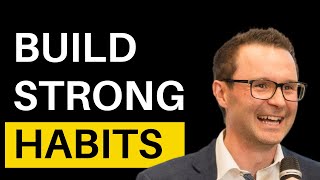
James Laughlin breaks down how habits work: a trigger leads to behavior, which gives you a reward. Research shows it takes about 66 days on average to make a habit automatic. He walks through specific tactics like habit-stacking ("After I do X, I will do Y") and daily tracking to lock them in.
Chapters
You are your habits. Look, it's plain and simple. The things that we do day in, day out are what we are and who we are. That forms our identity. And so I want to challenge you just for a moment to think, what are my habits? And you can't tell me or anybody else that you don't have habits. We all do. Some are good habits, some not so good. So I'm going to delve into it today. We're going to look at one, what is a habit? Two, how long does it actually take to install it? And three, how do we install it? Okay, really, really important that we understand that, because we are what we are, creatures of habit, each and every one of us. And we start to form these habits, often subconsciously, unconsciously. We're not thinking about them, we're just doing them. And I want to just ask you to pause for a moment to think about your habits. Look, I meet people all the time that have great habits, good habits, mediocre habits, and bad habits. Just this past few days, I've been down in Queenstown, one of my favorite places on the planet, to be totally honest. Caroline and I headed down a day early before I head to work. And it's the most incredible place. And as I was looking around, I was looking at habits. And you know what I noticed? There are a lot of unhealthy humans in the world. And I don't mean that to criticize or judge, but just looking around, we love to consume both food, alcohol, cigarettes, vapes.
Our phones, you know, a lot of addiction to phones. It was just interesting. I love to just observe. And I'm seeing a lot of habits that are unconscious habits. People are on their phones, they don't really even know why they're there, but they want to be there. Their mind is saying, grab the phone, check the email, scroll the Instagram, etc. And I got a chance yesterday before we flew out of Queenstown to deliver a workshop for 60 or 70 incredible leaders doing amazing work down in Queenstown. And it was all around personal growth, personal mastery. And one of the things we talked about was actually getting clear on what you want. Do you know what you want? And I'll tell you what, like most of us humans, many of them find it challenging. That's normal. That's very, very normal. But my challenge to you is, do you know what you want? Where are you headed? What's important to you? What actually matters? That's really what I want to just let marinate with you for a little moment as we Start into this, I just want you to think about, do I know where I'm headed? And if I don't, maybe that's something I'll get a journal and talk about and think about over this next couple of days. If you don't know where you're headed, where will you end up? But at least if you have an idea of where you're headed, you've got a good chance of getting there, right? So I'm going to challenge you to take your time, slow down, get clear on what matters most to you. Be purpose driven, be values focused. So important. Now let's get into why. What is a habit? Well, habit is an automated behavior, something that the brain, the neural pathways prioritize as. Oh, that's a priority. It's a thing we do often so they create stronger connections between the neurons. To say that's a high priority task. So I want you to think about that for a second. What's in a habit loop? There's a trigger. There's the actual behavior and then there's the reward. That's the three part process of any habit. For example, a trigger could be you walk into a dark room, never been in there before, there's no windows. The trigger there is, it's dark. I feel maybe unsure, maybe unsafe. I could trip or fall. So that trigger sets off a behavior. Second part of the habit loop, the behavior is you start to scan the wall with your hand to find the light switch and you switch it on, the light goes on and that's your reward. Dopamine is released, going, ha, I feel safe. I can see. I'm not going to trip and fall. There's nobody hiding in the dark corners of the room. That's a very high level, simple version of the habit loop, trigger, behavior, reward. And that reward is crucial. If we do a behavior and there is no reward, we're very much less likely to go and do the behavior again. So that's why many of us have good intentions about doing things, whether it's exercise, eating well, et cetera. But there's not enough of a reward at the end of doing the thing. So therefore, psychologically, and when you look at the chemical side of it, we're not wired to want to go back and do it again. So I want you just to think about the different habits you struggle with or have struggled with and just think about that loop. You have to have a strong trigger. Walking into a dark room that you're not familiar with, that's a very strong trigger. Are your triggers strong? Enough and obvious enough for the behavior to kick in without you having to think about it. You know, a habit is an automated behavior, it's not a forced behavior. Secondly, the University College of London studied how long does it take to install a habit? Now, I don't know about you, but I was told when I was young it was seven days. Some people said 14, 28, 21. I heard all the things right. But University College London went deep with this and they got a large amount of participants and asked them to start practicing a new habit and they tracked them. Now, on average it took 66 days. So that's a couple of months, right? A couple of months to actually get there. And that's on average. Some people took a little longer, some people took a little shorter. What can impact the length? It could be the degree of difficulty, the familiarity with the new behavior, the friction between you and it. But on average, 66 days, it's a lot longer than the 21 days or the 28 days I heard as a kid. So just know that there's this point what they call automaticity and that's the point at which your new habit becomes automatic. You don't need to think about it. That automaticity point is around the 66 day mark. Now what they also distinguished was that there was three segments, the first 2122 days. So let's say the first three weeks was very challenging, almost highly discomfortable. It wasn't fun and people struggled to maintain the new habit. But if they get through the first three weeks, so 2122 days, then the next phase is the messy middle. And they're starting to hit a bit of a stride. But every now and then might be a speed bump. But this messy middle, if you can get through that, you get to this sublime finish at the end. And the last three days is where you're actually starting to feel this is normal. I'm getting better at this. You get into the competence confidence loop, you're getting more competent, the skill set's increasing and therefore your confidence about it is increasing. Your self esteem reflects that. Dopamine is being released because I'm doing the thing and I'm achieving and moving forward. But that takes time. You're fighting the internal system. So it's really important to say, okay, it's going to take at least two months for me to install this. So I want you to think about that. First, know what the habit is, it's a habit loop. Secondly, how long on average does it take to install? And then third, how do we actually do it. Well, look, there's so many different methodologies and way to do it. But the way that I've practiced myself, certainly when I was drumming and working towards those world championship titles, certainly with the athletes that I work with, certainly with the high performers that are busy as heck, who struggle to find the time to do the things they know are good for them. This is the technique that I use. So first get clear on what's the specific behavior. So the actual specificity is important here. So if it's getting fitter, don't just write, I'm going to get fitter. It's going, okay, what are the behaviors that will make me fitter? Okay, so I will go to the gym and I will work out for 45 minutes with a personal trainer, just as an example. But you've got to be hyper specific. Or I will do yoga for 30 minutes prior to going to bed. Or I will write in my journal after I wake in the morning. That's the specificity we're talking about. So first things first, get specific. Second, when will I perform this behavior? So crucial? The best thing to do is habit stack. I hope you've read Atomic Habits by James Clear. If you haven't, please read it. It has sat at the top of the New York Times bestseller list for I don't know how long. It's incredible. Great book, simple to read, really great research in there and tactics. But habits stack. So what are we talking about? Well, you've got existing habits that you do. Brushing your teeth, that's a habit. I hope twice a day minimum. Right? You've got a habit. Eating dinner is a habit. Getting out of bed is a habit. Walking in the door after work, if you work, is a habit. So when you have it stack, it's going, I need a trigger because we talked earlier about having a trigger. So your trigger is your existing habit. So a simple sentence that will help you with this. After I. And then insert your existing habit, I will. And then insert your new habit that you want. So for example, let's say you want to journal more after I wake up. That's something you do every day. And if you don't, then you'll not know about it because, well, you'll be gone. Right. Touch wood. That's many, many, many years into the future. But after I wake up, then insert. I will.
Write in my journal for five minutes. Or make it simpler. After I wake up, I will write three things I'm grateful for in my journal. Very specific. Right? So right away you've created this habit stack. It could be something different after I brush my teeth, because you'll do that every day in the morning or hopefully at night. But after I brush my teeth, I will and in a certain new habit, do 30 push ups, whatever your thing is. Right. So I want you just to consider using that structure next things next. You've got to actually track it, otherwise you don't know whether you're at 6 days, 10 days, 43 days. And what we're trying to build is a real connection between each day. We don't want to have three days on, five days off, four days on, one day off. It's about building it as a daily commitment. That's what a habit is, something we do regularly without thinking about it. We don't think about, oh, should I schedule in brushing my teeth? Hell no. Right. It's just something you do. That's what we're trying to do is build it to the point of automaticity. So you want to make sure you're actually tracking it. Have a simple page or something on your phone where you're just going, day one, tick, day two, tick, day three, tick. And we're trying to push it up consistently, one after the other, stacking them and compounding them for 66 days. At that point, you're pretty, pretty close to being at the point of automaticity. This is a game changer. This is a life changing habit installation method. It's very simple. It certainly has worked for me in terms of some of the awful habits I've had. And I've had many, many awful habits. Lack of exercise, poor eating, too much alcohol, the list goes on. Watching too much Netflix. Of course, I've got lots of bad habits. This has been so helpful in helping me to really lessen and diminish those bad habits and increase the better habits. It's slow going, it's very incremental. But I truly believe in incrementalism. The act of doing tiny things one at a time. It's that one little drip a day. It's sustainable, it's doable, it's achievable. And again, when you look at it from a psychological level, we're more inclined to want to engage in the new thing or the challenging thing. If it's just a small little thing, you know, I want to read more books. Okay, so read three pages before you go to bed. Three pages easy. Of course I could do that. But if it was, hey, read for one hour before you sleep. That's huge. That's a commitment. Indecision, procrastination, avoidance will start to show up, most likely. Look, I hope that this has served you in a positive way and I want you to think about your habits and write down what you feel are empowering and disempowering ones. And then ask yourself, could I use this new information to help me take step number one towards either reducing an old habit or increasing a new one? And We've got some incredible guests over the next few weeks. You're going to absolutely love them. A really wide variety of guests come in lots of different backgrounds, but we've got some amazing messages to share with you over the next few weeks, so stay tuned and thank you for continuing to support the show. And follow. Please do hit the subscribe button if you're on YouTube. Please follow us if you're on Spotify or Apple and share it with a friend if you truly think it would help them too. But for now, please get out there and lead your life on purpose.
Hey guys, if you enjoyed the content today, please smash that subscribe button below. And if you want to become part of my community, I've got an amazing free Facebook group. Please come and join us. The link is in the description below. And also if you've got any questions about today's session, I'd love to know. Just comment below and I'll be sure.
To get back to you guys.
Have the most amazing day.









