Turn Regret Into Power - Daniel Pink Explains How
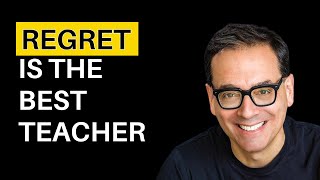
Daniel Pink discusses his book The Power of Regret, breaking down four types of regret from his World Regrets Survey: foundation, boldness, moral, and connection. He explains how to turn regret into useful information through self-compassion, disclosure, and small consistent actions.
Chapters
Dan, a huge welcome to the Lead on Purpose podcast.
I need to make a confession at the outset here.
Well, your book drive came out literally at the perfect time.
The idea that people don't care about money or status or power is nonsense. Of course they do.
Your latest book, the Power of Regret.
When I look back, like many people, I had regrets. It's arguably the most common negative emotion that human beings have. And I discovered that everybody wanted to talk about regrets. I love lacerating self criticism. I'm very good at lacerating self stuff criticism. You're pathetic. You're weak. You're a terrible. Oh my God, I'm the worst person in the world. I'm just a wretched human being. I'm so horrible. We want to essentially look the devil in the eye.
I regretted the lack of probably love that I showed. It was horrible place. I pissed off with myself. I'm against. It's pathetic.
Really plug my ears and say no regrets. Nope, nope, nope, nope, nope.
I imagine someone who writes a book on regret has some motivation to do that because they've got regrets of their own. What are some of those things that come up for you?
For me?
Okay, this guest for me was a pinch me moment. Like what? I get to sit down with Dan and talk. This is amazing. If you don't know who Daniel Pink is, you're about to discover the incredible human that he is. For those that have read his book Drive, you'll know exactly who I'm talking about. In 2009, he published this amazing book on motivation, what motivates us and how to motivate others. And it took off. He's a prolific author, sold millions and millions of copies of his books, is so deeply thought in how he approaches life, how he looks at challenges and situations, you're about to step in to an absolute masterclass. So a couple of things that I really took away from this that I think you will really love. Number one, intrinsic motivation always wins. We will discover what intrinsic versus extrinsic looks like. Number two, make sure you embrace regret. His most recent book is the Power of Regret. He talks about it. In fact, I shared some of my regrets with him. He shared some of his quite powerful. And last but not least, consistency is the key. He talked about how regular effort beats intense bursts. He's the master when it comes to motivation. So please sit back and enjoy the show. This podcast is brought to you by NZ Mortgages, our valued sponsor. You can check them out at nzmortgages Co nz. Dan, a huge welcome to The Lead on Purpose podcast.
James, thanks for having me. Good to be with you.
Oh, it's an absolute joy. Look, I know your time is precious and I want to get right into it because in 2009, I'd came off the back of winning a couple of world championship titles with a team in Canada, and it was my mission to come down here to New Zealand and help a team, build a world class band and drumline. And I knew how to motivate myself. I had no idea how to motivate others. And so your book Drive came out literally at the perfect time. And it helped me understand, well, how do we motivate others? What I loved about it, Dan, was it was simple, straightforward, to the point, no BS in there. So I want to say, first of all, thank you for that.
You're welcome. Thank you for picking up the book now.
Your work's phenomenal. Look, why did you write Drive in the first place?
I wrote it because I was curious about this question of what motivated people particularly at work. Right before that, I'd written another book called A Whole New Mind, about the move away from people relying entirely on logical, linear, sequential, spreadsheet kind of skills toward more artistic, empathic, big picture, symphonic kinds of skills. And in response to that book, several people, some readers said, well, you know, this is great. How do you motivate people to do this kind of work? And I had no idea. So I started looking at the research, and the research said some things that really surprised me, some things that went against my own kind of core beliefs and assumptions about what motivated people at work. And that led me on the path to looking at some of the research on what really motivates people to do great work on the job. And then how can we, you know, turn the dial a little bit in organizations and on teams to harness that deeper motivation that people have, that enduring motivation to do really good work.
And when we talk about enduring motivation, so I think of extrinsic motivation as money, power, fame, that kind of thing that goes a certain way and gets people to do certain things for a certain length of time, perhaps. But the stuff that we're talking about here, I imagine, is the intrinsic motivation.
Yeah, that's a big part of it. And you know, and understanding, first of all, simply understanding the difference between those two is, is important. There's nuance in the research. But let's. At the top level, let's talk about the difference between those two things. It's very straightforward. Extrinsic motivation. You do something because of what's outside of you. You do something because you want to. You want to get something in return. Again, you said it very well. Whether it's money or power or prestige or status or anything like that. And certainly human beings have that motivation. Everybody has that motivation. Intrinsic motivators are when you do something because you like doing it, because it's fun, because it's interesting, because it's meaningful to you, because you enjoy getting better at it, because it contributes to the world. And in my view was essentially this, that we had had a kind of a narrow view of human motivation, that we know that human beings are motivated by biological drives. Obviously, we eat when we're hungry, we drink when we're thirsty, and we know we're motivated by extrinsic things. We were rewarded by. We're motivated by rewards and punishments. In our environment, if you reward behavior, you get more of it. You punish behavior, you get less of it too. But I think we neglected that other drive, that intrinsic drive, which is to do things because they matter, because we like them, because we care. And, and so. And that was, I think, leaving a huge amount of human capacity on the table. What's more, at a very, at a, at a, at a more specific level here, there are certain kinds of motivators.
You know, human. You know, I just, I want to emphasize the nuance here because sometimes the. The findings in these, in this research are distilled too simply. You want to make it as simple as possible without being oversimplified. And the idea that people don't care about money or status or power is nonsense. Of course they do. And the idea that the only motivator that people want at their job is our intrinsic motivators is also nonsense. You have to pay people well. You have to pay people fairly. What it shows, I think the most specific, powerful single finding in all this research is this, that there's a certain kind of motivator, a certain kind of extrinsic motivator that psychologists call controlling contingent motivators. I call them if, then rewards. If you do this, then you get that. If you do this, then you get that. If you do this, you'll get promoted. If you do this, you'll get the bonus. What 60 years of research now tells us is that if, then motivators are pretty effective for simple tasks with short time horizons. If you want people to do something that's relatively straightforward and not for that long and they can see the finish line, they're actually really effective. The problem is, is that for more complex Tasks with longer time horizons, they don't work very well. And, and you know, and we've known this for a long time and yet we keep, we still keep trying to, you know, shovel coal in that furnace, even though it doesn't work very well. And there's a better approach to motivating people for those more complicated, complex, long term tasks. And once we figure that out, I think organizations and teams run better and people are happier and more productive 100%.
What is that other way, the more successful way or.
Well, what you want to do is you want to pay people well and you want to pay people fairly. Okay, you have to pay people. You have to pay people well. I'm a big fan of high base salaries. There's an argument to be made, I think, for complicated creative work, for paying people extremely well, so well that you take the issue of money off the table. Now there's certain, there's certain things where you want to actually, this is, you know, as you can, as your listeners can tell by my accent, you know, I'm an American. And there's a certain American ness to this emphasis on, on the salience of money. Americans in particular have this idea that if we raise the salience of money, we will increase performance. And that's true on some things. There's no question about that. If I wanted to say I had, I just actually did a big mailing of something, I did it, my wife and I did in my house, I did a big mailing of something. And so if I wanted to really. But if I had a group, a team to do this big mailing and I wanted them to do it fast and I wanted to do it well, I should pay them per envelope and I should give them a bonus for every 50th envelope and another bonus if they get it done before a certain deadline. Okay. Because stuffing envelopes, putting crap in envelopes is pretty easy and straightforward, right? Okay. That's going to increase their performance, raising the salience of money. But for other kinds of things, if I want people to come up with a great advertising campaign, if I want, if I'm brainstorming like a new book title, if we are working on a television show and trying to figure, figure out some of the kinks, I don't want people thinking about money. I want people thinking about the work. And the way to get them to think about the work is pay them enough so that they don't, oh, I'm getting paid. Well, I don't, I just want to work. And so once we do that. Okay, so we want to, we want to, we want to. We can raise the salience of money for simple tasks with short time horizons, for longer term tasks with, with that are. With more complicated creative.
Requirements. You just want people thinking about the work. So pay them enough so that the made this point. Pay them enough so they're thinking about the work, not the money. Once you do that, what is very helpful is offering people some autonomy, which is do they have control over what they do, how they do it, when they do it, where they do it. Right. So let's take the example, what did I give of book? Of coming up with a book title or fixing some problems in a television show. You know, I say, okay, here's what. Here, here's what we're going to do, guys. I want you to come up with a better title for my book. I want you to come in to this office at 9:15 in the morning and sit in that chair over there and give me seven ideas by 9:45. That's not autonomy, all right? That's control. So you want to offer some, some autonomy over these kinds of things. That's number one. Number two is a sense of mastery. And mastery is this desire we have. You know this as a musician. Yep.
It feels good to get better at something. It feels good to master a piece that you didn't master before. It feels good to come up to, to deliver.
Even a phrase or let a whole piece of music that, that no one had expected, no one had listened to. So masteries are our desire to get better at stuff, to make progress and things that matter. And then finally is purpose and knowing not only how to do something and doing it well, but also doing it in a way that where it matters, where it's helping somebody else out, it's advancing a larger cause, it has some purpose behind it. And so paying people enough and offering autonomy, mastery and purpose, those are what. I think those are pretty well proven to be the ingredients of enduring motivation for the most sophisticated tasks.
Makes sense. It really does. And I like how you simplify it down to that. And it sounds easy, but it's not. It's kind of. It's challenging to create that in a group environment or in a large organization. But I absolutely agree. I think that sense of mastery, it's a journey, it's never ending. But there's an.
Exactly.
It's not a destination, right?
It is. I mean, I write about that in the book. I mean, and is, you know, you go back to your algebra class, it's an asymptote, which is that you can get closer and closer and closer to it, but you never hit it. And that, and that's what makes, there's something about mastery that is simultaneously frustrating and irresistible. And it's, it's. And those two things are twined together. You can never, you talk to any great athlete, any great musician, they're always moving closer and closer to it, but they're never going to, they're never going to get it. What's more, there's other, there's other research out there about the importance of.
That journey and the journey. If we think about the metaphor that you use of the journey. A journey is about making progress. A journey is about going forward. It's not a backward journey. It's a journey about making progress. And we know that from the work of Teresa Mobile at Harvard Business School that making progress is the single most important day to day motivator on the job.
It's so interesting. I recently was reading Arthur Brooks how to build life you want with Oprah Winfrey and he was talking about happiness and he said happiness comes from being in pursuit of enjoyment, satisfaction or meaning, AKA purpose. And I thought that just makes so much sense. It's not a destination, it's not a new house, it's not a pay rise. It's actually being in pursuit of those meaningful things.
Yeah, yeah.
And people, I think, have an intuitive sense of this.
Particularly people who listen to the show, who are people who have achieved things. And one thing that's interesting is to reflect on how you felt after you achieved a long desired goal. And for many people, the story is essentially the experience is that, oh my God, it felt great, but then the next day.
It was done, you know, and, and so the, and I think that's hard for us to. I think that's hard for us to. I think it's hard for us to fathom. And I think when we look at other people who have achieved things, we tend to think that, oh my God, they must be so, they must be in a state of bliss because they have achieved X, Y or Zed when in fact they're just schmoes like us who like, ah, okay, I got that, but now I gotta do the next thing. I got that, but you know what it's like. And it felt great at the time, but 24 hours later, two days later, whatever. I needed something else to get my engines going. And the engine is really the pursuit. Particularly, particularly the pursuit when you are learning and growing and when you are doing that in the service of something else, as Arthur is saying.
Whether it's meaning, whether it's some kind of broader objective for the world or for your team or for your family, it seems.
To be no different for a great author like yourself. Like, I look behind you for the person that's listening and not viewing. Dan's got a massive collection of books behind him, and I think that that's a sense of mastery in terms of. I'll keep buying books because I want to keep learning and growing and understanding.
Yeah, I guess. Yeah. I mean, I'll keep buying them. I won't read them, but, you know, I'll. You know, it's like the. I think it was George Bernard Shaw who said, famously, I don't know if it's famous, because it might not be George Bernard Shaw, but essentially, like, the books you buy and don't read are who you want to be, and the books you read are who you really are.
That's amazing.
Yeah. So. No, but. But I. I do think that like. Like you. It's a great point, James, about this, the. The pursuit. So this thing about knowledge, it's like no one ever. No one gets to the point where it's like, yeah, I've learned enough. I'm done. I don't have any more to know. I mean, no one would, you know, you never get to that point. And I think that's a great thing. I think it's one of the things that makes life worth living.
I think if we get to that point and we say we get to finish high school, like, oh, I'm done. I'm just done learning. I think there'll be a certain point in our lives where we do regret that decision. So I want to just segue that onto your latest book, the Power of Regret. And I think this is such an important topic. It's a very difficult thing, I feel, to talk about at times. I've only ever read about this once, which was Bronnie Ware, palliative care nurse, studied people on their essentially last days. And it got me thinking about how I live my life. I thought, jesus, I want to live with less regrets. But I'm not going to have no regrets because that's not possible. Like, I have to make choices, and that means I say no to other things. So just to get started, Dan, what's the opposite of regret?
That's an interesting question. The opposite of regret might be rejoicing. It might be satisfaction, it might be relief. I think that's. I think that's what it would be. But you know, regret itself is, is the emotion that we feel. It's a painful emotion, it's an unpleasant emotion. It's a negative emotion that we feel when we look backward and wish we had done something different, wish we hadn't done something, wish we had done something in a different way. But it's a painful emotion that comes when we look backward and wish we had made another choice or taken another path.
There's so many people listening right now going, yep, I can relate, I have regrets. So Dan, what was one?
I hope that everybody. Because almost truly one of the things about this emotion of regret is how incredibly common it is. It is one of the most common emotions that human beings have. It's arguably the most common negative emotion that human beings have. We have, you know, social science, social psychologists figured this out 40 years ago that when you, when you look at people's some interesting research where they looked at people's day to day conversations, transcribed them, then coded them for the emotions that were being expressed. The second most common emotion that people talked about in their daily to day lives was regret. The most common negative emotion was, was regret. We know that.
Literally the only people who do not have there are some people who truly don't have regrets. There are a lot of people who perform, oh I don't have any regrets. Everything happens for a reason. But when you probe them, you realize that they have regrets. But the people who actually don't have regrets, there are some five year olds don't have regress because regret requires, you know, the, what I just said about you. You go backward in time. That ability to time trap, the ability of, of what's called counterfactual thinking where you go back, you imagine yourself back in time, you negate what really happened. You then get back in a time machine and go to the present. But the present is now reconfigured because of that thing that you did in the imagination. That's very sophisticated cognitively. And so you have to be seven or eight in order to do that thing. People sadly with certain kinds of neurodegenerative disorders, Parkinson's, certain kinds of Parkinson's, certain kinds of Huntington, that or certain kinds of brain lesions interfere with that counterfactual thinking. So they don't experience regret and then sociopaths don't, but everybody else does. And so I hope that, that your, that your listeners are.
Do have regrets because if they don't, it means that they're five might have a neurodegenerative disorder or are sociopath yeah, you're right.
Bang on. Let's talk about your regrets. I imagine someone who writes a book on regret has some motivation to do that because they've got regrets of their own. What are some of those things that come up for you? For me?
Oh, yeah. So that's exactly. But the motivation is exactly right, James. I mean, I wrote this book in part because I had regrets of my own, and I, you know, and I had reached a point in my life, a point in my life that. That all of us, I hope, reach where I, you know, all of us will reach where it's. It's jarring, where I realized that I had more of my life behind me than ahead of me. And. And when I look back, like many people, I had regrets about things that I wish I had done or things I wish I hadn't done. And what I discovered is that there was bugging me for a while, and, And I wanted to talk to people about it, but I realized that nobody wanted to talk about regrets because it's such an unpleasant topic. And so I very sheepishly mentioned it to a few people, and I discovered that everybody wanted to talk about regrets. That, you know, that, as you were saying, like, everybody had this on their mind and wanted to talk about it. And so. So for me, not everybody, not every single person, but certainly people in my kind of age. Cohort. Absolutely. And so, so I wrote a book about regret largely because I was dealing with regrets of my own. And so this, this book that I wrote on regret was, you know, I, I would not have written this book in my 30s. I didn't have enough mileage on me. But in my 50s, it felt kind of inevitable that I would write this book.
And do you feel like someone in there, 30s, 40s. It's actually a good thing to start thinking about regrets now before they get to their 50s.
Yes. Yeah. I mean, believe me, people in their 30s and 40s have plenty of. Have plenty of. Have plenty of regrets. And you know what you have to think about. The thing is, when you get past the question is, what do you do? The bigger question about regrets is what do you do with your regrets? Right. And so the older you get, the less time there is to do something about those. So when you're younger, you have, you know, this, this. This seemingly sort of infinite, what seems to be an infinite span of time to deal with these things that you quickly realize is finite rather than infinite. And so.
And so the real question is, what is. Is what do you. What do you do with Your regrets. And here I think we have, we have a big problem where.
We have some people who just say you ignore your regrets, who taken this, this over overly sunny, bizarrely American view that the way to lead a good life is to be positive all the time and never be negative. To which I know that Irish folks don't have that view.
Opposite.
Yeah, so, but, but Americans have told the world, essentially have told the world the way to be, the way to have a good life is to be positive all the time and never be negative and to always look forward and never look back. And that's terrible advice. It really is. It's unscientific advice. What the science tells us is that you want to have more positive emotions than negative emotions. Definitely. But negative emotions serve a function and you want to look forward a lot and you want to be in the present a lot, but sometimes you want to look back because back teaches you something. And so the real question here in regret is what do we do with it? And what we have is we have two bad strategies generally. The first is that people ignore their regrets. They feel that sting of regret. They say, wait a second, I'm supposed to be positive all the time. I don't have any regrets. Everything happens for a reason. So they plug their ears, they don't listen to the regrets, and. And so they ignore them. Other people.
Get swallowed by their regrets. They get captured by their regrets. Regrets. They ruminate on their regrets. That's a bad idea too. What we want to do is we want to essentially look the devil in the eye. We want to confront our regrets, we want to think about our regrets. We want to use our regrets essentially as information, as a signal, as data. And when we do that, once again, going to the science, we have mounds of evidence that it's a very helpful emotion. That if we take that approach, reckoning with our regress, thinking about our regress, it can help us on a whole range of things. The kinds of things that your listeners are interested in can help you become a better negotiator. You put people into a negotiation. I mean, there's a lot of research. You put people into negotiation session, they negotiate, they come out of the negotiation. The researchers say, what do you regret doing or not doing in that negotiation? They invite the negative feeling. You do that next time around. They do better in the negotiation, helps you become a better negotiator, helps you become a better problem solver, can help you find more meaning in life, help you avoid cognitive biases, help you become a better strategist. And so. So the real thing here is, you know, all human beings have regret. And the real question is, what do you do with it? Do you ignore it? No. Do you wallow it? No. Do you use it as information? Yes. And when you do that, it's an incredibly useful emotion.
This is really, really powerful. And if you're okay, I might actually share a couple of regrets that I have so the listener can really kind of get comfortable.
Yeah, lay it on me. And I'm happy to share mine. I realize that I didn't fully answer your question about some of my regrets. I'm happy to talk about. I'm not happy to talk about. I'll let you go first.
What's one of yours?
I have a lot of regrets. It's funny. I mean, I have plenty, but I have a lot of regrets about, or some regrets about kindness. Particularly when I was much younger.
I don't think I was ever a bully, but there were many times in my life, especially when I was much younger, maybe my late teens, early 20s, where I was in situations where people were not being treated well, they were not being treated right, they were not being treated fairly. Now, I wasn't actually mistreating them directly, but.
I was there and I knew it was wrong and I didn't say anything. And that bugs me, even to. It bugs me even talking about it right now. And so, and so, so. So the question then is, then what do I do about that? So what I could do is say, plug my ears and say, no regrets. Nope. Nope, nope, nope, nope. That's a bad idea. I could also say, oh, my God, I'm the worst person in the world. I'm just a wretched human being. I'm so horrible. That's a bad idea, too. Or I can say, wait a second, here are these things. Like, I barely remember what I had for lunch yesterday, but I remember things that happened to me 40 years ago or 30 years ago, and it bothers me. That's a pretty strong signal. It's telling me something. And what it's telling me in a way that I might not realize through other forms of inquiry, is that I value kindness more than I realize. Like, it's important to me to be kind. It's important to me that others are kind. And when I don't do that, I feel crappy. And that's a signal. And, and. And so what, What. So what this has done is that. Is that it's a signal to me saying, wait, this is telling me something. It's telling me That I value kindness. It's also telling me that when I'm in situations like that now, you got to stand up, you got to say something. You got to speak up for people who aren't being spoken up for.
And if you take that approach, you're better off. And so that's a way to use your regret as a force for good.
That's really amazing to hear. What I also hear, and I want to kind of reinforce this for the listener, is that you probably have sat with that kindness, regret, and you probably have hit it for a long time. You've maybe beat yourself up, but you can get to a certain stage in life with this new information around what to do with your regret. And you don't need to carry it like you've always carried it. You can make a change.
Absolutely.
That's amazing.
You should. One should. And you don't have to. You don't have to carry it for. You don't have to carry it. You don't have to carry it for. You don't have to carry it for very long. You know, you can. But. But the point is, is that as I keep coming back to, when you have that pang of regret, which everybody has, when you have that spear hit, you don't ignore it, don't wallow in it. Say, think of it as a knock on the door. It's trying to. It's trying to tell you something. And as I, you know, as I said, or as I said a moment ago, just, you know, look the devil in the eye and say, okay, this is telling me something. And what it's telling me is that I acted wrongly in the past.
But many people act wrongly in the past. Nobody is perfect. No one is. Has this kind of perfect, sanctified life. And this is signaling to me that I need to do better in the future. And that when I do better in the future, I feel better and I do better.
And that's going to be better for all aspects of our health, our relationships.
So a couple of regrets. I'll share. One I have dealt with it. The other I haven't. So I'll start with the one I have dealt with. So rewind. I don't know, almost 10 years I'm in Scotland and there for a world championship, and my mom's there, and mom lives in Ireland. At this time, I was living in New Zealand, and mom and I have had an amazing relationship over the years, but we've also had our challenges right from I was a teenager and this particular moment, mom was quite Heated and then I became quite heated and then she got more heated and then I got more. This went on Dan for about four days. It just, yeah, every time we try to cool it down, something would be said. And I just thought, this is horrible. So I left Scotland, 12,000 miles back to New Zealand, feeling pretty terrible about the situation, feeling like probably I wasn't going to talk to my mum for a little while at least. And a bit of time healed that and we reconnected. But I realized like I regretted the lack of empathy I had. I regretted the lack of kindness I had in response. I regretted the lack of probably love that I showed. It was a horrible place and it took some time to figure it out. I got some therapy which was helpful and I've mended that and healed that. We've had many interactions since and it's never went there ever again. Thank God. That's a regret I had but something I've actually done something about. And that's helpful because I want to love my mom and I want to have great relationships and I want my son to have a great relationship with his grandmother. Does it mean we agree on everything? No, but there's a regret that's more recent and it has been with me for a long time. And the reason I say it's more recent is because I still haven't done anything about it. That is my commitment to vigorous exercise. I am so resistant to doing it consistently and I do it for a little bit. Oh. And then I get a little injury or something. Oh, I better stop for six months. It's just not good enough. So I'm pissed off with myself. It's pathetic really. And I'd like to change that. With your deep insights on motivation and regrets, how could I start navigating this?
Okay, It's a great one, James. So your regret is that you haven't been exercising enough, essentially you haven't been exercising regularly. All right, great. So the way that I think that, the way that the research on this seems to lay out, I think the easy way to distill it is to think about it as a. Dealing with the regret as a three stage process.
And I like to think of it as like inward, outward, forward. All right. The first thing which is, which is clear that you're not doing based on, even on your description of it is.
How you treat yourself. That's the N word. When you like, like I imagine you have some self talk about, about this and give me, give us a sense, can you, if you don't mind like voice. What does your self talk say to you? What. What do you say to yourself because of this regret?
Yeah, there's a word, pathetic comes up.
Yeah, good.
That's the first one that comes to mind. Yeah, the word weak. You're so weak. Like.
Yeah, good. Very good. Yeah. Okay, so here's what the research says on that. Okay, so basically, kind of like the self talk is sort of pretty tough. Lacerating self criticism. What the research tells us is don't do that.
And not because. Not. Not because it's unkind, although it is because it's ineffective. That's the thing. What the research tells us is that lacerating self criticism doesn't improve performance. What improves performance is something else, something that's counterintuitive. And I think that is.
It surprised me how the depth of this research and how. And it's something called self compassion. Self compassion is essentially treating yourself with kindness rather than contempt.
And it doesn't. And here's the thing, it doesn't mean treating yourself better than anybody else, but it doesn't mean treating yourself worse than anybody else. My guess, having known you only for a half an hour, is that.
You would not say to someone close to you who came to you with saying, oh, I'm having trouble exercising, you would say, you're pathetic, you're weak, you're a terrible. You would never say that to someone else, all right? Not a chance. Exactly. So don't say it to yourself, all right? Don't treat yourself better than anybody else. Don't. So treat yourself with kindness rather than contempt. And then. But the other thing about it is also to realize is that. And this is a little bit of sort of tough love here, is that you're not that special. I mean, do you think you're the only one who regrets not exercising? Do you think somehow, like you're singular in that regret? No. So, you know, so. So anyway, that's the N word. So to treat yourself with kindness rather than contempt, that's. That's number one second thing. All right, that's the outward. There is a lot to be said for talking about or even writing about one's regret for a couple of reasons. Number one is that when you. When you talk about a regret, write about a regret. It's a form of disclosure. It's. It's a. You're. It's a lifting of the weight of some kind. I think even more intriguing on that is that when we feel regret, like any emotion, any emotion is by its nature amorphous. You know, an Emotion is not, it's not a, it's not a tree, it's not a scone, it's not an aardvark. All right? It's abstract, it's amorphous. And that's one of the things that makes positive emotions feel so good. It's sort of this warm bath, but it's one of the things that makes negative emotions feel so bad. And so by writing about a regret or talking about your regret, you're taking this thing that's amorphous and you're converting its words. And words are less menacing than this amorphous blob of regret that you have, the amorphous emotion that you have there. So write about it or talk about it.
And then as a, as a way to make sense of it and as a way to lift the burden of it, when you write about it or talk about it, you begin to kind of defang it. You begin to make it more concrete rather than, rather than, rather than amorphous. All right, so that's, that's the, that's the outward. The other one is.
Is forward. Okay, so you have to ask yourself, okay, so you've just, you, you've, you've treated yourself with kindness rather than contempt. You've disclosed it to relieve the burden and to make sense of it. Now what you have to do is you have to go forward, so what are you going to do about it? And so here we have, we confront. It's difficult. We confront something that in the psychological literature known as Solomon's Paradox. Solomon's paradox. I remember King Solomon, the great, benevolent, wise decision maker of the Bible. You know, if it's a famous story where he saves that, you know, he, he saves the, he saves the baby, he mediates a dispute between these two purported mothers and so forth. King Solomon, great decision maker, all right, King Solomon completely mucked up his own life. He was terrible at navigating his own life. All right? He was a, he was a bad husband. He was a terrible father. All right, so this is Solomon's paradox and that we're, we human beings are generally pretty good problem solvers. We just think it's solving our own problems because we're too close to them. And so the final step is something called self distancing where you, you take a step back. And so one of the things that so, and we'll try this right now. One of the things you can do is.
Is suppose that your best friend came to you and said, hey, I'm having trouble exercise. What would you Tell your best friend to do.
So start small. What could you do? Where could you start?
Exactly. So that's what you should tell yourself. All right, so.
Self distancing. So start small. So you're not saying, oh, I'm not exercising enough, therefore tomorrow I'm going to go run, you know, 40K. No, you know what, tomorrow I will go run around the block. I mean that's, you know, and so, and so when we, when we, and so when we.
When we. The problem we have in solving our own problems sometimes is that we come into them as like scuba divers and we want to come into them as oceanographers. You know, we want to come in above like that. And so you have to actually do so. There are a lot of things you can do. So, so, so truly one of the best decision making heuristics I know is when you're stuck. When one is stuck, and I don't mean you, James, are stuck, but when one is stuck is asking, what would you tell your best friend to do? What would I tell my best friend to do? If you want to be the best advice giver in the world, here's what you do. Someone comes to you say, oh James, I don't know what I should do. I don't know. I need your advice, James. I need your, your, your incredible, know how, your years of experience, your incredible insights into leadership and they present the problem. Then you just say, well, what would you tell your best friend to do? And they say, oh, I tell her. And you go just do that. All right, so.
But self distancing is really powerful. I'll give you another couple of another one for leaders that I really like. It's not mine, it's been on for a while. It's from Andy Grove, the former CEO of Intel, who said when he was faced with a tough decision when he was the CEO of Intel, even before he was CEO, but when he was sort of coming up in the ranks at of, of intel and he didn't know what to do, he would ask himself, if I were replaced tomorrow, what would my successor do? And he always knew. And so this process where you treat yourself with kindness rather than contempt, not better than anybody else, but not worse because we know the lacerating. Believe me, I love lacerating self criticism. I'm very good at lacerating self stuff criticism. It's just the research is very clear. It's not effective.
Yeah.
So you can do it, but it's sort of like virtue signaling to yourself about how tough you are. But it doesn't do any good, treat yourself with kindness rather than contempt. Write about it, talk about it, to disclose, to make sense of it, and then extract a lesson from it by taking a step back.
And then also within that lesson, think about what's the next thing I can do. Not figure out everything, but what's the next thing. So you said start small, so start small. Could be, you know, run.
Run around the block tomorrow and run around the block, but the next thing would be run around the block tomorrow. So tomorrow I'm going to run around the block. And another way to do that would be to, you know, lay out your running shoes the night before and maybe get a friend to run with you around the block and then do it the next day and do it the next day and do it the next day and do it the next day. One of the things that I've learned, forgive me for ranting here for a moment, that's good.
And I wish I had learned it when I was much younger, is basically in every realm of life.
Consistency is more effective than intensity. We tend to, you know, and there have been so many times where people, in order to make up for not being consistent in doing a project or in creating something, I had to be intense for a short amount of time and it was miserable. But if you are just consistent, consistency beats intensity. And so that's such good advice. Yeah, it's not mine. It's like, it's, it's pretty. I mean, it's like it's been out there for, it's been out there for a while. I wish I had, I wish I had understood that. But consist, you know this, if you're willing to consistently do mildly hard things over a long haul, you're going to be fine.
That's good advice for me. Right now I'm writing a book and it's, you know, I've got a deadline. It's like, hey, you know, consistency is really what I need. Not these big intense moments.
No, no, no, no, no, no. I wrote my first book 100 years ago in these kinds of heroic bursts, and.
It almost gave me a nervous breakdown. And, and what you do, you know, you know what you want, you want to write a, you want to write a.
A 50,000 word book.
Write 500 words a day every day, which is totally achievable. 500 words. You can do 500 words to do, do it, do it, do it five days a week. I'll give you the weekends out. That's 25. That's 2500 words a week. That's the 10,000 words a month. That's five months. You, and you got it now. Well, what some people do, and I'm pointing the finger at myself, is like, oh, no, I have to write 15,000 words in the next six hours or else I'll have to give back the advance. So don't do that.
Yeah, I'll take that advice.
Consistency beats intensity.
I love it. And in your research, and I know that you did some extensive research and regrets, and you had a lot of feedback from tens of thousands of people around the world around their regrets. Were there any patterns or core regrets that came up?
Yes. So what I did was I created something called the World Regrets Survey, where we asked people around the world to submit a big regret that they had. And we now have a database. Right now we have, we're over 26,000 regrets from people in 134 countries.
And what I found there is that around the world, people seem to have the same four core regrets.
And they were.
And what they were, they're things. They are, I'll tell you very quickly what they are. They're, they're foundation regrets. So sort of like your regret on an exercise, foundation regret is small decisions people made early in life that accumulate to negative consequences later on. So I, I, I didn't exercise or eat right, and now I'm not in good health. Or the bigger one on this was I didn't, I spent too much and saved too little, and now I'm broke. And so foundation regrets are small decisions early that accumulate to bad consequences later on. Second category are what I call boldness regrets, where you're at a juncture in your life and you have a choice. You can play it safe or you can take the chance. And overwhelmingly, people who don't take the chance regret it. Now, some people out of these 26,000 who took a chance and it didn't work out for them, they regretted that. No question about that. There are people like that.
Literally 40, 50 times more people in the other category who didn't take the chance. And, and, and it doesn't matter the realm of life that you're in. I got people who regret not asking people out on dates, people who regret not traveling, regret not speaking up, regret not starting a business, all kinds of things. So.
Boldness regrets are if only I'd taken the chance. Moral regrets are another category where, again, you're at a juncture, you can do the right thing, you can do the wrong thing. When people do the wrong thing, most of us, most of the time regret it. Not every, not every single person, but most of us, like 90 plus percent of us do because most of us are good people and we want to be good people and we feel crappy when we're not good people. So we had a lot of regrets about infidelity. We had a lot of regrets about bullying. And then the final category is our connection regrets, which are about relationships, and not only romantic relationships, but sort of like, you know, if you had become estranged from your mother, for instance, and what you do is that you. Is that people had a relationship that was intact or should have been intact, and it comes apart. Now what's interesting is that the way these relationships come apart is often not very dramatic at all. In many times, the relationship comes apart as kind of like a drift rather than this explosion. And somebody wants to reach out, but they don't because they think it's going to be awkward. They think the other side's not going to care. And so the drift widens even more. And so connection regrets are the fourth category. So what we have here is foundation regrets. If only I'd done the work. Boldness regrets. If only I'd taken the chance. Moral regrets. If only I'd done the right thing. And connection regrets. If only I'd reached out and around the world, whether it's New Zealand or Ireland or Scotland or the United States or Canada or, you know.
You know, we have, we have, we have, we have regrets from. We don't have any from Antarctica, but we have regrets from every other continent, whether it's from, like, West Africa or whether it's from Malaysia or whether it's from Australia, wherever. These seem to be the things that come up over and over, over again in people's lives.
Thanks for sharing that. So it's really good to get that perspective. And Dan, I'm doing a piece of work at Scott Base in Antarctica in February. So if I have a regret down there, I'll submit.
Yeah, fantastic.
I'll submit it.
One question. Actually, I've got two more questions before we wrap up. One is this. Was there a difference between regrets related to gender?
Great question. So I did another piece of research in America, so forgive me for getting the weeds here for a second. So this thing, the World Regret Survey, was a piece of qualitative research where I just invited people to submit their regrets and then analyze those kinds of things. Because it's not a random sample, I can't make credible claims about differences in gender or anything like that. I also did a quantitative survey of The US Population where we asked people another set of questions. And it was a very good survey. And there I did that precisely to look for demographic differences. And what I found in the differences in America between men and women were very small. Women tended to have more regrets about family. Men tend to have more regrets about careers. But the gender differences, all the demographic differences in America were quite small. I was really surprised by that. Whether it's race.
Not many differences in race. All the differences were quite small, not many differences in race. There was a difference in like education level in people's. In people's. But modest. So. But. And also kind of surprising in that people with higher degrees of, with, with more formal education. The more formal education you had, the more likely, slightly more likely you were to have a career regret, which is kind of counterintuitive, but it sort of makes sense because if you have higher education, you probably have more career options, which means you have more options to forego. Maybe that's it. So there weren't the big. There was one big. There was one big demographic difference and it wasn't gender and it wasn't race and it wasn't education. It was age.
And again, I did this very complicated and expensive quantitative survey to find demographic differences and there really weren't that many except for at an age. And it was this. In the architecture of regret, there are two kinds of regrets. There's regrets of action and regrets of inaction. I regret something I did, I regret something I didn't do. People in their 20s tended to have equal numbers of regrets of action and inaction. People in their 30s tended to have more inaction regrets than action regrets. People in their 40s tended to have a lot more inaction regrets over action regrets. People in their 50s and beyond, three to one, four to one inaction regrets. Over time, what people regret are what they didn't do. And that was a very. The age effect on that was massive. It was crazy because I, again, I was looking for all these demographic differences. There were very, very few, but there was one that was huge and it was age. The older you get, the more likely you are to have an inaction regret rather than an action. And the antidote to that, what sticks with people. What sticks with people are what they didn't do. The ant. You want to antidote.
Yeah.
Do stuff. Take your shot. You, you, you're at a juncture and you want to reach out to somebody, reach out. You. If you're not sure whether you should take a chance or not take the chance you're on the edge, take the chance, have a bias for action. You know, you're not sure whether to speak up or not speak up.
I think that's the antidote for those kinds of things.
That's beautiful.
Because when people have an action regret, first of all, there are a couple of coping mechanisms that they can have. Number one is that let's say I had a lot of regrets in this data in the qualitative database about bullying. But I also have people who regretted bullying somebody 30 years ago, but also bullying many people who went back and tried to find online the person whom they bullied to apologize. Okay. So for certain kinds of action regrets, we can make amends. We can restore. We can, you know, so we can extinguish that.
There are other kinds of action regrets that we can find the silver lining on. So we had. There are a decent number of regrets about bad marriages. And so you had people who said, I, oh, I regret marrying that person. But at least I have these two great kids. So you find the silver lining in that. But for inaction regrets.
What do you do? Yeah, you have to basically take. You have to act now before it's too late.
Such great advice. And look. Very last question, Dan. And before I ask you, I just want to encourage the viewer or the listener to look in the show notes because I'm going to put a link to two of your books that I love the most. You've wrote way more than two books, but Drive and the Power of Regret. I'm going to put links in there for anybody that wants to order them, please do. Or go and listen to them on audiobooks. Your work is phenomenal, Dan. I'll put in your social channels as well.
Thanks, I appreciate that.
You're very welcome. So, last question. I want you to imagine that we're going to fast forward many years into the future and you're highly aware that it's your last day here on Earth.
Oh, my God, we're getting serious here.
And someone very young that you love dearly. It might be a grandchild. Great grandchild. Comes into the room and says, dan, how do I lead my life? On purpose? What would you say to them?
You got any ideas on life extension? That's what I would. That's the first thing that I would say to them.
No, how do I lead my life on purpose?
I would say be generous and be true to yourself.
Beautiful.
Is that something that you do for yourself regularly?
I try to be generous and I try to be true to myself. But again, it's like we're talking about before, James with mastery. It's like it's an asymptote. You never.
You're never fully going to get there. It remains an aspiration. The pursuit of that is what really matters.
That's incredible. Dan, I just want to say a huge thanks for the work that you do and taking the time to share that with everyone today and wish you nothing but the best.
Thanks for having me. I've really enjoyed the conversation.
Thanks a million. This podcast is brought to you by NZ Mortgages, our valued sponsor. You can check them out at nzmortgages co nz.









