Two Rules every leader should know with Peter Anderton
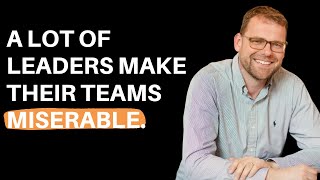
Peter Anderton breaks leadership down to two rules: it's not about you, and you can only control your own behavior. High-performing teams need connection, potential, and reason. Real change happens when leaders shift their own behavior first.
Chapters
Peter, a massive welcome to the Lead On Purpose podcast.
Thank you, James. It's really lovely to be here. I'm absolutely delighted.
So great to connect with you. And I guess you and I like to geek out on a similar thing, and that is leadership. So just to get the ball rolling, when you think of leadership, what comes to mind?
Okay, so the first thing that comes to mind is over complication. I get really frustrated that leadership's become too complicated over the years. And you think of all the research that we've been doing in the last few decades, you'd think we'd have made it clearer, but we've kind of surrounded it in fog. So people feel like you need to have an MBA to understand what leadership is all about. But going beyond where I think we've perhaps gone wrong, if I was going to give a definition, and I guess you speak to 100 different people on leadership, you'll get 100 different definitions, maybe more. I would say leadership is what happens when somebody realizes that their role is more than delivering the result, but it's delivering the team who deliver the results. I think that's when leadership really starts to happen.
I love that. And where in, say, the last decade have you seen that actually been done well, whether that's in a team or a corporate setting, where have you seen that demonstrated really well?
Oh, what a brilliant question.
I would say so. There's actually. I work. I work. One of the things I do, I work as an executive coach. And I've got a range of clients from those who are relatively new to senior leadership positions to some who have been around for some time. One of my clients is the chief exec of an organization with 5 billion turnover.
In revenue. And. And he's a really good example, actually. He's one of those people where he's fascinating to talk to. He's selfless when things go wrong, he's not throwing people under the bus, he's taking the flack. But when things go well, he's sharing the credits. And I think he's been really quite a powerful example from what I've seen. And I've seen him do a lot of stuff in the media, but. And obviously the media isn't great with large corporates. So often you get a tough time. And I've been really impressed with the things that I've seen him say and do. So that's one example I could think of. I think there's a whole range of perspectives you could find yourself turning to and considering at the moment. If you look at the political situation in the uk, you'd probably be talking about the opposite. And I think a lot of politicians are struggling with what the fundamentals of leadership is all about, and they've tripped over rule number one. And we see a lot of that in the UK at the moment. I think that's been a significant challenge for us.
So I could. I could think of great examples, I can think of poor examples. In reality, there is no such thing as the perfect leader. So we're all going to make mistakes. We've all got strengths and weaknesses and I think sometimes we put too much pressure on ourselves to try and be that perfect thing. And here's the ultimate example, or here's this, here's that, here's the other. And. And, you know, if we're not careful, we go back to the kind of stuff that we saw in the 16th century. Thomas Carlyle put forward what at the time was called the Great man theory of leadership. You know, leaders were born and not made. And if we probably turn the clock back, I'm trying to think now, probably about sort of maybe 40, 50 years or so, what started to happen is here's this amazing leader. You need to go and be like that person. And people are all busy trying to copy them. There's a. I remember hearing a lecture from Professor Richard Jolly from the London Business School, and he referred to the Heathrow Airport School of Leadership, where your boss goes on holiday, realizes, or at a conference or something, realizes they're not bought a book, so they go into the bookshop in Heathrow and of course the biggest section is the business section and they have got in the top 10. And there's always some sort of chief exec autobiography or something like that. So they read it, they devour it while they're on holiday and then they come back from holiday and they try and be that person. And of course it's a complete car crash. It's an absolute disaster. And they're really enlightened employees. They sort of learn to buy their boss a novel before they go on holiday. Just don't do it again. We don't want to go down that route. I love it. And we be careful that while there's principles of great leadership, it's not about emulating or trying to be somebody else.
And I love that thought process around leadership. And obviously we chatted before we hit record and just around the passion that you have for what you do and the joy that you get with the work that you do. So where did that journey begin for you in terms of what, working into that leadership sphere. What was the magnet that drew you in?
I would say I could sort of track that right to where my career started. So I'm actually an engineer by training. I'm a chartered engineer.
I did an engineering degree and a master's. And the funny thing is, although you could argue I've moved a long way from engineering, I don't believe I have, because when I'm dealing with organizations, organizations are just another system. And I'm actually trained to be a systems engineer. So the principles that I learned there have actually been a really solid basis as an engineer for what I do with organizations and with teams and with people. So you could argue it goes back a long way. I mean, even as a little kid, I used to take things apart and then try and put them back together again to see how they were. The last bit was never quite so good as the first bit. There was much better at taking them apart and I wasn't putting them back together, but probably the first role I had. After university, I worked for ici, which was once a global black brand, but now, sadly, is. You might just about see the picture on a. On a Dulux tin of paints, but that, that'd be about as far as it goes. And I was brought in as an internal consultant, which, frankly, was a complete joke because I was green and wet behind the ears, straight out of university, knew nothing. And I was brought in to drive improvement projects across a site and run corn full of, you know, big, heavy, smelly chemical factories. All sorts of interesting and dangerous stuff that was going on. And that was being made, I should say not. That was going on. And I. I became responsible for getting results from teams when I had no authority over them whatsoever. None. I was like the extra person that was brought in to help things become better. And it became really quite an important part that I think I learned a lot about leadership at that point, which I didn't actually apply immediately. I made quite a few ups after that, rather than saying, yeah, I mastered it, I got it all sorted, I knew what I was doing, that taught me everything I needed to know. Actually, I learned most of my lessons through a huge up in my career, but at that point, I think learning to influence and to get results when you're not the boss, you know, you don't have any authority, actually helped me no end. And I would say it started there because it was all about helping teams own what they were doing, drive results and bring people together around an overall goal. So I would probably go back that far.
That's superb. And look, your TED Talk, which I'll definitely, I'm going to put a link in the show notes to your TED Talk. It's phenomenal. And I want to just take a moment to talk about your two rules of leadership that every leader should know. So what are the two rules?
So, and this kind of goes back to what we said before. I get really frustrated that we've over complicated leadership. If I talk to 100 different experts on leadership, I get 100 different definitions, probably more. I did actually go through an exercise once, James, where I thought these are all really interesting models. I'm going to take them and I'm going to piece them all together and I'm going to see what I get. And it was a mess, you know, it was like really, really almost like this complex chemical formula, you know, that, that. How do you make sense of that? Yeah, and I, I think it's the engineer in me. I don't believe leadership is easy, but I do believe it is simple. And over time what I've realized is that initially through monumental and reflecting back on the mistakes that I've made and learning from that and building on that is that everything we need to know comes down to two rules. And rule number one of leadership is the starting point. It's the, it's the foundation stone for all things leadership. And unless we get rule number one of leadership, we're never really going to, you know, we might make stuff happen. I'm not suggesting that won't happen. There's leaders we can think of that are making stuff happen. Not in line with perhaps how I would define what leadership is all about. But unless you really get to grips with rule number one, you're never really going to be able to make the kind of difference that you really could make in the world. And rule number one of leadership says it's not about you. You know, there are a lot of leaders and this is where we end up with problems in politics, isn't it? Where actually that rule number one gets misunderstood. I'm sure there are politicians out there, I'm sure there are, who are their focuses on making a difference and are making it happen. But it's very easy for their heads to get turned. And it's more about being popular. It's more about ticking the right boxes and it's more about getting re elected. That's always the dilemma, isn't it? In terms of, in terms of how not a job I would want. So I don't envy them at all in terms of that scenario. But rule number one says it's not about you, it's not about your solutions, it's not about your way of doing things, and it's definitely not about your ego. And when we get our head around that, things can really start to shift. But for a lot of us, we probably all have times. If we look back over our careers, you know that situation where you're thinking, dare I go on holiday because what will I come back to? Or the whole, like, you're busy doing all the emails while you're on holiday because you feel like people can't manage without you, or almost getting to the point you feel like things only work when you're there. What's happened there is you've tripped over rule number one. And rule number one is if you don't get that right, then it kills your team and ultimately it will kill you. The reason I do what I do is because there's a lot of leaders out there making themselves and people around them miserable. And it starts with rule number one. If they haven't got rule number one, then they're scuppered. They're really scattered, and so are those around them.
That's brilliant. How do they get that right? So the leader that's listening right now, whether they're running a team, a family, a sports team, how do they get that rule right?
To some extent, we. We know it intuitively, but we struggle to do it. So if we think back, let's practice. If we just imagine different people that we may have worked for over the years or, or even. Even mentors or, or teachers in any context, for anybody who's listening to this, if you think through, well, what were the kind of things that they actually did?
And when you think, how did you feel? I don't know. If you want to throw any examples, think of, like, the worst boss you ever had. Okay. Are there any examples that might come to mind? What kind of stuff did they do?
Yeah, I can think of one.
No names?
No, no, no. Definitely no names. He operated on his own time scale. He had his own version of time. And so it could show up when he wanted, and then when he did show up, could say, hey, well, this thing that I should take two weeks, I want it done in a day. And yeah, would often create events around his schedule and what made him feel good and look good. Communication was very poor. Often the timing of that communication was. Was typically awful.
Would not have courageous, difficult conversations, but would let things fester. And I could probably Put my hand up and say, hey, there was probably things I needed to be told in terms of Jim, you need to step up. That's not right. But I wasn't told that. And it was left to fester for six or nine months, obviously, at. Away at him. And then it turned into this big conversation that was heated. So, yeah, those are probably some of the things that come to mind from that boss.
And as you sort of think of them and put them together and the kind of examples you're talking about are really common. When we think of the worst boss we've ever had, the question to ask yourself is, when you. When you think of the worst boss you ever had, where is the focus of their attention? Was it on them, on you, or was it on themselves?
100 on themselves.
Okay. So it's really, really clear. So you start to recognize this is all the stuff that's going on. When you flip over to the best boss you've ever had, you start, you know, what. What kind of stuff did they do?
Always they were curious, always asking, you know, what are you doing? What do you. What support do you need right now?
What.
Where are you headed? How can I help get you there? What extra resource do you need? We're very flexible. They were willing to discuss and show compromise and always visionary. Like, where we're headed. Here's where we're headed. Like, are you excited about that? What do we need to do to get you excited about that? What is the personal meaning you can attach to that vision? They always made me feel included in the vision.
I love that. So again, same question. Where's the focus of their attention? Is it on themselves or is it on you?
Yeah, on me.
Okay. And again, what we. What we see there is the golden thread between the best bosses and the worst bosses we've ever had is rule number one. It comes down to that principle. And the thing with leadership is that we. What we need to avoid is thinking. It's a set of tools and techniques. And I'm an engineer. I like a toolbox just as much as anyone. But if we really want to get to grips with leadership, it's not about this technique or that technique. And very often we're waiting for the next new thing to come through, and it will silver bullet that will magically solve all of my leadership problems, and all will be well. What we need to get our heads. What we really need to get our heads around is the fact that what we have to recognize when we. When we look at this, this whole idea of how you know, rule number one is the golden thread that sets the worst bosses we've ever had and the best bosses we've ever had apart is that it's a mindset. Leadership isn't a set of tools and techniques, it's a mindset. And the mindset begins with rule number one. So we've got to step ourselves into that space. We've got to get the concept, if you like, and stop thinking, I've got to learn how do this, I've got to learn how to do that. The best analogy I would give you, it's like your phone. We've got apps on our phone and we've got an operating system, and it doesn't really matter how many apps you load on the phone. If the operating system is not working, then you're done for. And the two rules of leadership are like the operating system of leadership. Of course there are tools and techniques you can add into the picture, but unless you've got these two rules in place, you're never going to cut it. So there's a critical piece to think about in terms of, you know, how do leaders get their heads around it? It's about really immersing yourself in these two rules and constantly bringing any leadership situation back to these two rules and realizing in this scenario, rule number one, in terms of how we deal with others, it's, it's actually, it's really good news for the team because it enables us to empower them and give them opportunities and allow them to shape their own solutions. It's also incredibly good news for us because it's like, oh, my goodness, I don't need to have all of the answers. It's okay not to know. It's okay to actually say, well, what would you do about this particular situation? And to lean on their expertise rather than assuming, oh, my goodness, it's all about me. I need, I need to have the answers. So the more time you spend thinking about rule number one and applying it to any situation in which you find yourself, the more comfortable it becomes. But it is, you're right, it's a constant thing. But I would liken it to the operating system. Bring everything back to these two rules, and then the rest of it kind of falls into place.
And you know what everyone's thinking right now, what's rule number two? Tell us rule number two.
So, so, yeah, this is going to be. A lot of people say, is rule number two. Don't forget rule number one. I'd often be told that one. So, no. So rule number Two is, is different. Rule number two.
When we think about rule number two, what we have to realize is that.
Really we can't change anybody else's behavior. We'd love to be able to as leaders. We'd love to be able to press buttons and get a different response from people and get them to behave in whatever way we would love them to behave. So that's a huge part. Behavioral change is a huge part of what we're about as leaders. But actually it's impossible, I argue with leaders, to say, look, stop putting yourself under pressure, thinking you need to go out there and inspire everybody. That's not your role. But I would argue it is your job to be inspired. And that's where it all begins. And what we recognize with rule number two is you can't change anybody else's behavior. It's just not possible. You can hold a gun to their heads and you might change it temporarily, but it's not really a long term management strategy. And we think we can press all sorts of clever buttons that will magically motivate them. That's nonsense. Because motivation comes from within. It's not an external thing. You can't do it to anybody, so you can't change anybody else's behavior. The only thing that we can actually control is our own behavior. And if we want somebody to behave differently, if we want to create a different environment, if we want there to be a different result, if we want there to be a different response, we have to look in the mirror and we have to say, so how am I going to behave in order to get the response that I want? And of course, does it work every time? No, of course not. You know, the human interactions are complicated, they're messy. But the leader is the one who recognizes, I'm going to stop waiting for everybody else to clear up their act and I'm going to start cleaning up my own act and I'm going to start thinking about how I behave and what I do in order to get the best response from others. So really it's rather like Gandhi, be the change you want to be in. See in the world. If we can take that approach and realize that it starts with our behavior, what rule number two says is, well, it's only about you and it's only about your behavior. There's no good waiting for somebody else to do this, that or the other. Nelson Mandela is a favorite quote of mine. Nelson Mandela said, I could not change others until I changed myself. And that, if you like, is the essence of rule number Two. And some people say, well, you've just massively contradicted yourself, haven't you? Well, it's only about you. Sorry, it's not about you. It's is, you know, it's not about your ideas, your ego, your solutions, but it's only about you is a recognition of all you can focus on is your behavior. And when you get that right, then you start to create the environment that you're actually looking for, that you actually want. Because in reality, and this is a bit of tough love for leaders out there, you know, if you're, if you're a senior leader who hasn't got the team that you want, okay, what we have to recognize is, yes, we've all inherited teams from other people. I get that. But in time, your team become a reflection of you. I genuinely believe in time, every leader gets the team they deserve. And we need to think about what we're doing in order to create the team we want. Which kind of goes back to our earlier definition of, you know, what am I saying leadership is about? It's when somebody realizes more than delivering the result, it's delivering the team who deliver the result. And that starts with you.
That's still powerful. And those two roles, you could look at them as very contradictory, but when you explain it the way you did, it makes total sense. And we can look to great examples of leaders like that. Gandhi and Mandela definitely are two great examples of that.
Really powerful.
I see that you work with a lot of high performing teams, so what would you say is the single biggest predictor of consistently high performing teams?
Well, actually I'm gonna, I'm gonna, I'm gonna steal Gallup's research on this one, if you, if you forgive me. So this isn't, this isn't my own thinking. Single biggest predictor of a consistently high performing team, Gallup, concluded from a number of years of research, is actually the answer to the question at work, do I have the opportunity to do what I do best every day? And, and, and, and really the, the leader is, is like the conductor of the orchestra. And your role is to create the environment where that's actually happening. And of course, if you're the conductor, the last thing you want to do is give the tuber player the piccolo piece or vice versa. You need to understand and know your team and really help them play to their strengths in order to get the best out of them. So there's a huge factor in there. As long as we recognize, of course, that a strength isn't just what you're good at. It's that sweet spot where it's what you're good at and what you love doing. So it actually, you're great at it and it inherently energizes you as well. But I kind of would go a step bigger than that in terms of what it boils down to. I would argue we've got two rules of leadership. There are. I often talk about the three secrets of every high performing team. And the first one I describe as the messy bit in the middle. You know, when you sort of, if I was to say to people, well, let me ask you, let's, let's have a go at this. So if I can put you on the spot. If you were writing a recipe for a high performing team, what sort of stuff do you want to throw in the mix? What sort of ingredients do you need?
So connection's probably the first thing.
Fabulous. Okay. Jackpot. Straight off there. Keep going.
Yeah. And so empathy, you know, real essential understanding and that's probably an offshoot of connection.
And real clarity, you know, clarity of vision. So it gives us direction.
Yeah, absolutely. What else would you add into the picture?
Culture is a big thing and the culture is essentially what is going to allow the thing to thrive or decay.
Keep going.
So of course, leadership itself, if we wanted to thrive, we've got to have leadership. Everything rises and falls on leadership.
Absolutely.
And you could keep going with the list like this. Probably there's something else you throw in the mix which is probably, it's almost a bit too obvious, but you need different skill sets that you need different knowledge, experience. So there's almost a level of. Well, actually I recognize that. I want a team who are connected. We see this with national sports teams. I mean, you're dealing with sports teams on a regular basis. You know, when you get the national sports teams and you've got all these stars that come together, but if they're not actually connected, well, they're consistently beaten by lesser science, aren't they?
That's right.
Henry Ford famously said, get everybody moving forward together and success takes care of itself. And I think so. I would say that the biggie is connection. I refer to it as the messy bit in the middle. It's kind of the bit that makes a team or breaks a team.
The skill set, the knowledge, the experience, the diversity. I would put call it potential. You need a team that's got the potential to be what it can be. And actually you as a leader need to be enabling that potential and making it happen. And then the third One is reason you talk, you know, clarity, vision, direction. I need a reason to get out of bed in the morning. I need to know what it is we're aiming for. So, so in shorthand I talk about CPR for teams, which hopefully isn't necessary under most circumstances. But if you get those three things right in a team, then you've, you've really set that foundation for success. You've got a team that are connected, they're working together. You've got a team who are, have the potential enough fulfilling that potential and you've got a team who are all lined up and pointed in the same direction and it's the right direction to be going in. Those are, those would be the elements I pull together.
I love it. And if there's someone listening right now that is running an organization and feels like there's a little bit of mediocrity creeping in rather than high performance and they were to connect with you and go, look, we need to change something. What kind of systems and processes would you be starting to look at that could help them to kind of turn the tide?
So I might be the wrong person to ask about that because I've got quite strong views that, you know, very often with systems and processes, we bring them into an organization and say, oh, you know, we're implementing a new, you know, ERP system or whatever. Or you know, it's usually software, isn't it, that creates organizational wide change of some sort or we're restructuring and it's going to solve all of our problems and everything's going to be great and all that happens. Take the software example. You end up in this scenario where the whole organization gets engaged around it. There's all sorts of effort and work going into it and it's like, oh, it's going to be amazing, it's going to be fantastic. And in the end it ends up being this last, this last minute scramble. For goodness sake, can we just find a way to get things together so we can keep the business open and the systems all still work? And then somewhere in the dunma distant patch you look back and think, hang on a minute, wasn't it supposed to deliver X, Y and Z? No, I can't remember that bit. But you know, hey, we're still running.
Yeah.
And the thing with systems is that I would argue systems and structures and processes, they can really enable change. So they can be a catalyst. We've got a new structure coming in place, we've got a new process, we've got a new system that's being set up. They can be a catalyst to really, if you like, like a pattern interrupt, getting people to stop and think differently. But the most important thing leaders need to get their heads around is that actually systems, structures and processes don't deliver change. People do. And that comes down to behavior. It probably comes down to two things, actually. It comes down to recognizing that change is an emotional process. And we have to work with that because when people can't work their way through the emotional process, they get stuck and so does the change. But the other part to think about is it's about behaviors. Which really comes back to rule number two, that if you want there to be change, it needs to come through the behaviors that you want to see in the organization. And of course, that starts with you. Obvious point, but what behaviors are you going to actually role model? How are you going to actually behave? What are you going to acknowledge and recognize and reward in the people around you that report into you in order to make sure that, you know, sure that the right people are progressing in the right way for the right reasons and the right behaviors. So you haven't got these company values and all these amazing things we stand for on the wall, but nobody knows really what they are because they're not actually seen in practice. It comes down to creating a shift in, in behavior. And the way to make that happen is it starts with you in terms of the example you're setting. But it also comes down to recognizing that there needs to be a purpose, a course, something that people believe in. You said earlier on about the best boss you ever had. They didn't just have a vision. They helped me. They helped you connect with that vision at a very personal level. So we need to be really clear on what it is we're aiming for. And I. And I don't believe, by the way, that the leader has to be brilliant at creating the vision themselves. I don't believe that needs to be a skill set they have, but there needs to be one. And it needs to be a shared one that people can buy into and see where they're actually going with that. And if you can create that clarity in terms of where you're going and why it matters so we don't get lost in email and stuff and meetings. We're remembering why what we're doing actually matters. And you know, on the other side, you're looking at this in terms of the behaviors that you're driving and the example that's being set, then you can start to piece these two things together. And there's lots of other things in the middle. It's not straightforward, but if you can create that momentum, it starts to create. One of my favorite TED talks, I don't know if you've ever seen it. I'd recommend anybody listen to this podcast to actually watch it. It's Tom Hume, H U L M E and it's called what We Can Learn From Shortcuts. And he literally is talking about shortcuts. You know, where, you know, there's the path, but then you see the track through the grass that's been worn down. Everybody, everybody decides that's where they want to walk. And when it comes to change, we waste a huge amount of effort saying, I want you to walk this way. I want you to make this happen. Now we can define the start and the end point. That's key. So too often, if you want to drive a change, we focus on, here's where we want to get to. Let's put that into our SAT nav, if you like. We don't spend enough time on agreeing where we are now. So if you're using sat, because I'm completely direction challenged, I have to satnav all the time. So if you plug in where you're actually going, if it can't pick a signal and tell you where you are, there's no way you can work out the route. So you need to be clear on where you are. You need to be clear on where you're going. But in terms of the details of the route, we as leaders need to be prepared to let people sort out some of the specifics, rather than saying, okay, here's where we need to end up, and I want you to do it this way and that way and the other way. And here's the Gantt chart. It's all spelled out. You really. We just need your hands and not your brain and your heart. Get on with it and make it happen. And in his TED Talk, he talks about a campus. So I often talk about. I don't think he talks about Michigan State University, but it's an example. I often about talk, I often talk about, which I think was what they did was absolutely genius. They built an entire university campus. And of course they had roads. They had to have roads in place. But they didn't build a single pathway, not one. They just grasped it all over. And then what happened, you know what it's like. Students are late for lectures. They found the shortcuts, the path started to fall. And then what they did after that was just. Was Wonderful. They then built the paths. So smart. It is just. It's just genius. It's absolutely genius. So they built the paths where the shortcuts already were so we can define where we want people to get to, where it needs to be. And of course, we need to share in that. That's not something you're working out in a darkened room. But as long as we're clear and we can create the right environment, we want them to work out a lot of the specifics of the route. Yes, we can support them, yes, we can engage with them. It's not a case of get there. I'll see you next week. When you've worked out what you need to do. Of course it's a collaborative process, but yeah, you create that scenario. And instead of us putting all of this energy and trying to define how people should behave and getting them to walk on the paths, actually all of that energy is naturally flowing towards where it needs to happen and where it needs to go. And if you want to make change easy, okay, that's probably a contradiction in terms. Niche, make change easier, then that would be the kind of direction that I'd be taking. If you want to make.
I really seriously love that. And when I think, when you say that, I think you can define what, and you can define, you know, who's going to do it when we got to get there. But actually the high, the how we get there, you leave that to the people to figure out for themselves and then they can attach personal meaning and inspiration and motivation to that.
Yeah, we see, we get. So obviously I was being unkind to software in terms of promises that were made earlier. Let me perhaps pay them a compliment. You know, the whole principle of Agile came from software. And the idea is it's like, well, okay, define where it is you're wanting to get to. And then it's all about getting better every day. Apply something, try it, fail fast, get to the minimum viable product, try it out, learn from it, give it another go, tweak it, do something else. And of course, the software industry was imploding. I mean, in January 2001, you get this really strange situation where loads of different people from different competing organizations and software all around the world get together for this, like, you know, enclave to work out what we're going to do. Because the whole industry was falling apart because all these projects were massively late. Customers were canceling them left, right and center. And they were like, we need to work out a different way of working. We can't do it. Like this. And the Agile manifesto says stuff like, you know, we've learned to value individuals and interactions over processes and tools, you know, working software over comprehensive documentation, customer collaboration over contract negotiation, responding to change over following a plan. And I think the whole concept of agile, which you hear a lot of in organizations today, is really this idea of we're not going to get it right, but, but we're going to be moving in the right direction and we're going to learn from that and keep that whole process going. A friend of mine there told me, gave me this example. I don't eat in Michelin star restaurants because I'd be too disappointed with the portion size. I wouldn't want to pay the bill either, for that matter. But, but he told me about two Michelin star restaurants in Birmingham not far from me, and this is during lockdown. So. And he said one business was at the point where it was about to close its doors forever. They genuinely thought, this is it, we're done for, it's over. And another business, another Michelin star restaurant that was about to have its best year ever on record in the middle of lockdown. And what the, what the other restaurant had done, the successful restaurant, is they completely shifted to what they were doing. And they actually offered Michelin star meals on wheels. So good, you know, and part of me thinks, well, who would buy that? But clearly people would. Yeah, to start with, you know, to start with, they were giving all sorts of meals away free because they were arriving cold. They weren't arriving in the, in the state you'd expect them to be. There were problems and, and they lost a lot of money. But you know what they learned? They found a way forward. They worked it out. They, they worked out how they could sort out the delivery route and how they could engage with the clients to make it work so that they had a product that was sensible. And there they are on their way to the best year ever compared to the other one that was going nowhere. And I dare say the other one was probably if they put a plan in place, it would have been a detailed plan, that they got it all right before they tried anything. And they'd never really got off to starting blocks because we can be masters at getting ready, can't we? And not really, of course, get to grips with just making it happen and.
Moving forwards, just get started. I love that. That's such a great example. And I guess they were a company of possibilities and they knew what the end destination was in terms of keeping the company afloat. And they didn't care how they got there. And as they were going off track, they were able to bring it back. And that's amazing. Simple, amazing and innovative.
Yeah, absolutely. And they messed up and they messed up a lot, but that's the point. So I think a lot of people, it's partly because we're frightened of failure, isn't it? It was like, well, we need to work out the, the beginning point and the end point. And those are key. Like I said, it's usually the beginning point that's missed. And we've all got a different perspective of where we are now. So you're never going to get alignment if you don't get that right. The beginning at end point. But in terms of working out the route, it's no good. Somebody who, much as they don't want to be in an ivory tower, might actually be in an ivory tower telling everybody else who's walking the path on a day to day basis how they need to do it, that's just stupid. We need to start actually engaging and bringing people on board to make that happen so that they can find that route. And I realize it's messy and I realize there's a mutual relationship in making that work, but that's really where the magic starts to happen.
100% agree and I'm looking forward to sharing your TED talk. I'll make sure and put it in the notes. Because those two roles, I think, yes, they seem simple, but actually they're really powerful. And if people can really use those as a filter to look at their leadership through, I think the big changes can happen in their organization.
Yeah, really. So if you look at everything through those two rules and I'd also say those three secrets of every high performing team, I kind of treat them like three lenses that you can any, any people problem that you have. Look at it through the lens of connection, look at it through the lens of potential, look at it through the lens of reason, and you'll have a really comprehensive approach for what you need to do in order to move that forward. It's interesting to take those three secrets and overlay them on the two rules as well. That gets quite interesting.
I bet. Now tell me this. If we were to fast forward many, many years into the future, it's your last day on earth and someone very near and dear, a young child asks you one question, what would your advice be? This question is, how do I lead my life on purpose? What advice would you give them?
Well, it's interesting because I would argue, you know, leadership it's not about a hat you put on when you come into work. It's not about a job title. It's about who you are. So when I talk about the two rules of leadership.
Really we're kind of talking about the two rules of life.
And the advice I would give would be about rule number one and rule number two. Rule number one, first of all is. Is look beyond yourself.
And. And find meaning in what you can give rather than what you get.
So that. That would be the first thing I look around at people and. And I see, you know, those who are happy are those who are giving. Those who are unhappy, they're only focused on what they're getting. And I think if you're gonna. If you're gonna live a fulfilling life, that's a fundamental part of it. Work out what you can give and have joy in giving that. And focus your attention on what you give rather than what you get. And the second one links to rule number two because it's really about taking responsibility. There's a lot of people out there for whom everything that's wrong with their life is somebody else's fault. And they like to point the finger. They're never wrong. It's always this, it's always that, it's always the other. So what I would say with rule number two is, you know, look in the mirror and recognize, you know, it's about you. And. And if something's wrong, well, what can you do? Now, sometimes it might be living with it. That's the action. But sometimes there's action that you can be taking so that you're not waiting for somebody else to sort it all out, but you're recognizing that this is nobody else's fault. It is what it is. How am I going to move forwards rather than waiting for somebody else to act? So. So I would say it really does fundamentally come down to those two rules, and that's how we take it forward. That would be the advice I would look to give and take and take responsibility.
I love it. And again, really simple, but can be applied in so many areas of life, business, relationships. It's incredible. Well, Peter, I just want to say a massive, massive thank you. And I know there'll be some that want to actually connect in with you. So there's a book you mentioned at the start. There's a book. There are two rules every leader needs to know. So I will make sure and put a link. It's a free book for people to purchase or download. I'll put that in the show. Notes and the inspirometer.com.
So yeah, so the inspirometer.
So that's where, you know, I said if you take the two rules of leadership and you overlay it with connection, potential and reason, you get something really quite interesting. Well, well, if you want to learn more about that, then all you need to do is go to www.theinspirometer.com and there's a series of questions that leaders will find interesting and insightful. And it's based around what happens when you take connection, potential and reason and overlay that on rule number one and then overlay that on rule number two. And the questions are really insightful. But it will also give you a simple little report for some things to think about with some suggestions as to what you might do in order to take that even further forward for you in terms of what's an option. So, yeah, www.theinspirometer.com will give you something interesting to think about.
That's fantastic. Thanks for putting it together. I'll be sure to put it in the show notes. I'm looking forward to connecting with you in person when I'm up in the Northern hemisphere, but for now, continue to do the incredible work that you're doing.
Thank you, James. It's been a pleasure. Thank you so much for having me on the show. I've loved it.
Been a pleasure. Hey guys, if you enjoyed the content today, please smash that subscribe button below. And if you want to become part of my community, I've got an amazing free Facebook group. Please come and join us. The link is in the description below. And also if you've got any questions about today's session, I'd love to know. Just comment below and I'll be sure to get back to you guys. Have the most amazing day.









