Unlocking Disney Leadership Secrets with Sonya Shelton
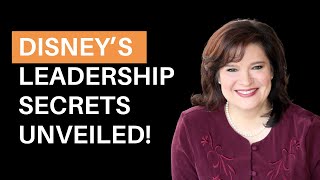
Sonya Shelton, who led teams at Disney, explains her Red Thread Leadership model built on five P's: Purpose, Plan, Processes, Positions, and Passion. She argues that a clear organizational purpose drives creativity and business results, and shares how Walt Disney's perseverance shaped the company's culture.
Questions this video answers
33% (Shelton cites that only 33% of employees are engaged).
She referenced a Dell Technologies claim that by 2030, 85% of the jobs that exist today will no longer exist.
Chapters
Here's this company that's known for its culture, going basically through a divorce. These are very stressful events. We don't always talk about the hard times, how emotional she got and how emotional that made me. They have a bad day at work, they go home. The family feels it, how many times Walt failed along the way. Our country isn't in a great place. It was really toxic, and it was very political. The important thing is not to give up and to keep persevering through it. Yeah, it is confronting, clarity, polarizes, and that's okay. Your purpose is really about why you do what you do. Just blew my mind at how brilliant they were. For me, it was always about the magic.
Sonia, a huge welcome to the Lead On Purpose podcast.
Thank you for having me. I'm so excited for our conversation today.
Well, our conversation is going to be fascinating. Why? Because we both geek out on leadership and purpose. That's the thing that connects us, right?
Yes, absolutely. Absolutely.
It's funny, when we look around the world and look at executives and leaders and revenue and quarterly reporting, these seem to be like really high priorities. And sometimes purpose is like the buzzword, the box that we've got to tick, the let's keep some people happy by having a purpose. But I believe, and I'm sure you're of a similar thought, that when you have purpose at the center of your organization and even of yourself, you can achieve so much more. The revenue will reflect that. It's going to be so much more inclusive. So why. Why do you talk about purpose? Why is that so important? And it'd be great to maybe just touch on your experiences at Walt Disney and in terms of what you've seen there. Good, bad, indifferent. But why is purpose so crucial?
Yeah, so I think it's become. I think it's always been there. I think there's. Sometimes older generations will say that the younger generations are more focused on purpose than they were or are. I don't think that's true. I think humans are motivated by purpose, inspired by purpose. But I do think that things. We've started to see a trend in both talent acquisition as well as customer acquisition, where people are making decisions based on purpose, especially in the younger generations. Right. So they're going to decide, do I want to work for you? Based on do I believe in the purpose of the organization? And so if you don't have a purpose, then you're missing that opportunity. And then the same thing on a customer side. More and more customers are making decisions based on the purpose of the company and they will spend more money on with companies that they feel aligned with their purpose. So even if your product or service is more expensive, if they feel like, well, I believe in their purpose, therefore it's worth it, it's a huge, huge competitive advantage as well. So we look at you talked about, you know, those, those financial results being connected, maybe seen as separate from purpose, but they're actually not. They can be very much tied together and in fact can exponentially grow your business if you're focused on purpose in the right way.
100%. I firmly believe it. We've got a small company here, not so small anymore. It's called Ethic or Ethic. And it's a shampoo bar. So it's not in a bottle. It's not like what, it's a shampoo bar. And this lovely lady Brianne started doing it in her garage. She made like 100 bars a day. Now she's selling like 100,000 or 200,000 a day and she's growing globally. But everything about her brand from day one was purpose centered. It was all about helping the planet and ecology and it's just absolutely blown up. So I from firmly believe she's a great example of someone who really focused on purpose from the beginning, stuck to it and the revenue clearly reflects it. So for you, what is there an example that really stands out in your work or in your career history where the company was so incredibly focused on purpose and that reflected in their culture, their results?
Yes, absolutely. You mentioned the fact that I used to work for the Walt Disney Company, Right. So.
I think Disney is known for their culture and being focused on purpose, but maybe not necessarily the way you think. Right. So sometimes, like you mentioned, some companies will think, well, purpose means something that's right for the planet, good for climate change, you know, kind of looking at more of those esg, you know, social types of purpose. But your purpose is really about why you do what you do, right. And how you deliver on that, why and then what others can expect from you. So at Disney, when I worked there, we were really focused on bringing entertainment, right? And so at that time, it's the company's change since then. But at that time we had anything that you could think of for entertainment, we had something, right? Whether it was a sports team, books, music, television, movies, like everything that you could think. Magazines, right? Like anything that you could think of for entertainment, the Walt Disney Company had it. And we looked at things from.
From that angle of purpose. There was an aspect of the company at the time that called corporate synergy. And I was the head of internal communications globally. So I was in charge of internal communications, and synergy was mostly marketing. But because we used those priorities of what were the most important priorities for the company as far as what we communicated internally, I was part of the synergy team and was always so inspired by them. And they would look at what is the most important thing that the company is doing and how can each of our divisions contribute to the success of that. And you would think, well, Disney owns companies like ABC and espn, and so there probably aren't a lot of overlaps with companies like that. My favorite example, which just blew my mind at how brilliant they were, was they. They were at the time, back in the day when we had DVDs. Right, right.
I remember those days.
Remember those days. So. So Disney had this thing where they would. They would put movies. What? They would put them in the vault. And so they wouldn't be available for about 10 years. And then for the next generation, they would take them out of the vault and they would be available again. So Cinderella, the Cinderella movie, was coming out of the vault. And we had a meeting, synergy meeting. Okay, what is everybody going to do for Cinderella? And so it came time for ESPN to say what they were going to do. And I was thinking, well, they're not. They're going to say, we're not going to do anything. It's animated movie for girls, like, where we do. Right. So. And they said, we're going to do a whole week about Cinderella stories and sports. We're not talking about the movie, but we are saying Cinderella all day long, every day, promoting these stories and. Yeah, exactly. I was. I was blown away. And that is what purpose can do. Right? Right. To really bring that creativity. Where ESPN thought about, how can we help the company, how can we help the purpose of all of our colleagues that are trying to move this forward and what can be our piece in our way?
So when you have a really strong purpose like that, employees will go above and beyond and.
Bring ideas and innovations that you would never have thought of or you didn't even think were possible when you're connected to your purpose.
I love that. I absolutely love that. It's interesting. When a company has an inspiring purpose, usually it's broad, so that lots of people within the company and customers can attach their personal meaning to that purpose. And for a lot of people, it could be very different. So for you at Walt Disney. I know for me, when I think of Disney, I feel happy. I Feel inspired, nostalgic. For example, I was sharing before we hit record that Caroline, Finn and I were in la. And the reason being we were in Ireland visiting family and we got to get back to New Zealand and we could have went via Dubai, thought, you know what, it's my life's dream as a dad to see Finn at Disneyland and see what he sees and experience it through him. So we intentionally went the other way around the world to stop in LA to specifically spend a couple of days at Disneyland. And we had the best time. And it was magical and phenomenal. So as a purpose centered dad, I guess that was one of my purposes was to say, see things through Finn's eyes at this stage in his life. So that really, from my personal meaning standpoint, meant a lot. Why did you join Walt Disney? What was your inspiration or personal meaning that you attached to their purpose?
I think for me, it was always about the magic. Right? And when you. So as an executive, I worked in corporate. I wasn't close to like being in Disneyland or Disney World or something like that where I could see the impact every day. But I did have one opportunity. We had an executive program where we had a chance to really get to know the company in a deep way and a very strategic way. And it was a. The end of the week was at Disneyland and we were put in character costumes for about an hour, right? And so I was Chip in the park. And.
So I had to learn how to sign autographs like Chip. And I was in the costume. We got trained very quickly, but trained on how to act as a character. And as you can probably already tell, I like to laugh. And so it was really hard for me to stay quiet. Right, right. As people are. And, you know, imagine there's 20 of us in this program. So there's 20 characters coming into the park all at once, and people are going mad like, oh my gosh, I' these characters, right? And I remember this one woman, she was. She was older than me at the time, and she came up to me and she said, Chip, you are my favorite character of all times. I can't believe that I'm meeting you right now. And this is like a lifelong dream. And I was like.
Like, you know that this is just a person in here, right? And. And you know, and of course I was acting as the character, but it really struck me about the magic that, that Disney has in that aspect of the business, right. What Walt really saw and your. Your experience is what he wanted, right? He wanted places where parents and kids could do things together and make those memories and spend that time. Because there wasn't. There weren't a lot of options at that time for parents and kids to do that together. And so to have that person who's older than me as a character coming to me and thinking, talking to me like I'm the character, and the impact that that made and how emotional she got and how emotional that made me, I was like, that's the magic. That's. That's why the company exists. That's the purpose behind it.
That's incredible. Thank you for sharing that. And I can tell you that those characters that we specifically timed ourselves to be in specific places when the characters would come out into the park. And we were about to go. It was our last day at Disneyland, and Finn had not seen Mickey Mouse, and he was gutted. We're heading back to New Zealand. He's maybe never go back to Disneyland as a young kid. And just at that moment, Mickey Mouse came out fencing him. He ran at him, and Mickey grabbed his hand and walked him through the park as everyone followed. And it was just the most magical moment and priceless. You know, you couldn't put a price tag on something like that. How do you think Walt Disney did that? Where did that magic vision and inspiration and purpose come from? Like, how do more of us as leaders be a Walt Disney?
Yeah. I think somebody that I learned from and he and I had this conversation recently where, you know, I think a lot of greats like Walt Disney, we don't always talk about the hard times that they had. Right. And how many times Walt failed along the way, but just kept going. He wasn't the greatest artist. He wasn't the greatest. He wasn't the greatest businessman. He didn't even graduate from high school. Right. And so. But he just was relentless in his perseverance and his belief in his vision and what was possible. And he got knocked down so many times, and he just kept getting back up and try again and try again and try again. And I think it is. It kind of goes back to our conversation about purpose, that when you have this strong purpose and you can connect it to your vision of where you want to take that purpose, it will get you through anything, the hardest challenges. Right? So when we think about things like that we do in our lives, right. Like get married or we have a child or we move to a new house, these are very stressful events. Right. But we can see that we can. We have a purpose behind it. And it's. And it doesn't matter how hard things get in those situations, we can, we have a purpose behind it and we're really connected to that, to that. We want to see it come to life. Life. Right. And so, so we, we just get through all of those obstacles and challenges and stresses that come up because we're connected to that purpose. And it's the same thing in a company. Right. When you have that strong purpose, people will get over amazing challenges. And I, and I, I experienced it myself working at, at Disney when I was there. As I mentioned, I was the head of internal communications globally. And I had that position at a time when nobody in that position had experienced what I experienced. And nobody in that position ever will again. So I was. We had a member of the Disney family, Roy Disney, leading a shareholder revolt against our CEO at the time, Michael Eisner. So here's this company that's known for its culture going basically through a divorce. Right, right. And yeah, and, and it was really toxic and it was very political. And I saw. It's part of what I do, why I do what I do. It's part of, part of connecting to my purpose as well. Sort of awoke, awoke that in me of having that impact and also having tremendous empathy for leaders that are going through challenging times and get, you know, maybe brought down by their environment. And I, and I think that Walt had those moments too where, where he, he got brought down by the things that were happening to him and maybe didn't always behave the best. Right. I didn't either. I didn't behave the best. But I recognize that my team gave me the feedback and was able to come back as a stronger leader as a result of that. So I think it is, you know, looking at those challenging times and how those things sharpen us in our purpose to come back even stronger. But the important thing is not to give up and to keep persevering through it.
I love that. Such great advice. And what happened on the other side of that? So that, that company wide divorce, as you call it, what happened on the other side of it? What happened after?
So we, so Roy was successful in ousting Michael Eisner. So we, we had a new CEO. And I think, you know, for me it was really about, I talked about it in turn with my team in terms of putting a bubble around us, right. So that no matter what was happening in the company, our bubble was transparent. So we could see what was happening and what was needed from us. But that doesn't mean, didn't mean that we had to get caught up in it and that we could almost create our own culture within it and. And not be blown around by it so much. And then I think it was a time of rebuilding afterwards. Bob Iger came in as our CEO and built the company in a different way and.
With a different foundation. And I really saw for myself just how the importance of leadership and culture in an organization and recognized that I could have an impact, a bigger impact from outside the organization because I wasn't caught up in the politics and the things that I'm able to say, things that I wouldn't be able to say as an employee, and then eventually realized that I could have a bigger impact even by working with other companies in addition to Disney. Right. So that really helped me connect to my why and my purpose as well.
It's incredible. And you've actually written a book, so you're an executive, but are you a leader? What a great title. Because you and I have probably both met lots of executives that actually truly lack the basic tenets of leadership, the traits, the behaviors. And to me that's. Those are learned behaviors. Not everyone is born a leader in terms of I have all the skill sets. We develop those and we improve those. So what inspired you to write that book?
Well, exactly what you said. I think that it was partially my own experience at Disney and creating this empathy for leaders, but also recognizing that a lot of leaders don't know better. Right. I. I did. Right. I. I did know better and I wasn't behaving well. But a lot of leaders don't know better and they do lean into their title and they think because they're an executive that just do what I say because I have this title. And you get compliant, you might get compliance that way, but you're not going to get engagement and you're definitely not going to get passion. Right. So.
So I, so I wrote the book for them. Right. And really made. The title is provocative. And I've had. When it first came out, I had some executives sort of step back a little bit. When I gave the title, like it was a little confronting. And I was like, yeah, it is confronting, but it's for their benefit. Right. To say it isn't just your title that's going to get people to follow you. And really looking at how do you create alignment in organization from every level to be able to get people moving in the same direction, get people passionate about your company purpose as well as passionate about their role in making it happen too.
Yeah, that's really, really powerful. And it's Interesting. Each year I host an event called High Performance Leadership, and we get people of all different backgrounds and professional athletes and executives. But in the first five minutes on day one, say, hands up, who's a CEO, cfo, a gm, a dm. So all these hands go up. I say, congratulations, that's amazing. You've worked so hard to get that. But I've got a favor to ask. For the next two and a half days, please leave your title at the door. I want you to come in here as a human. I want you to come in here with no titles, no ideas of, you know, where you sit in the leadership poll. Like, I want us to all be on the same level. And I think when I get digging into your book and share it with my clients and friends, I imagine I'm going to sense a similar thing. Like, let's shed the title and focus on the traits and focus on the behaviors that actually can help us lead, inspire and influence.
Yeah, absolutely. And there, there's also an opportunity for anybody to be a leader. You don't have to have a title. So on one side, it's leaning too far into your title and not really showing up as the leader. And then on the other side, it's like, you don't really need a title. You could be an individual contributor and still be a leader in your company. Right. So. So it is those traits and characteristics of how you bring leadership to life no matter what your title is.
Yeah, absolutely agree with that. And you have a model and a framework called Red Thread Leadership. And there's five P's. And I really. And I know the listener wants to hear them as well. I really want to know what the five P's of the red leadership model are.
Yeah, so we, we called it Red Thread Leadership because it really does start with purpose. So purpose is the first P. And then it's about how do we take the. The red thread of purpose through everything that you do as a company? Right. So, so the next P is your plan. What is your vision? What is your strategy? What are your goals? What's your plan to bring this purpose to life. And then once you have that, then we move on to your processes. So sometimes organizations will have processes in place that they've been doing it. Maybe they created processes around a person like Maria really like to see it this way. And even though Maria's not here anymore, we continue to do it this way. Right, Right. So we, so we look at the processes and we say, okay, if this is your purpose and this is your Plan, are these the right processes to get you where you want to go and most efficiently? And as part of that, we empower the teams to be able to question the processes. Right, because they're close. The close closer they are to the process, the more they know about it and the more they know whether or not it's efficient. So it's really empowering people to say, does this process connect to our purpose and our plan now? Maybe it did in the past, but does it today? And they can always continuously improve, and as the company is growing and learning, they can continue to question those processes. And then the fourth P is positions. So that's how you're structured, how you hire, how you promote, how you reward anything that has to do with the positions of the company. Right. So is everybody in the right role? How are decisions made? And is all of that aligned with your purpose and your plan?
And then the fifth P is passion. So that's what we call culture. Because engagement isn't enough for us. We want people that are passionate about the purpose of the company as well as passionate about their role in it. So it's not enough to have a company purpose, but have each individual purpose person seeing how they're connecting to that purpose.
That's incredible. And I love it that that's the bookends of the framework. Purpose and passion. And I often get asked, what's the difference? And for me, I don't know what it is for you, but for me, passion is for you and purpose is for others. So you follow your passions and you get excited and fired up and you want to be a part of it, whether it's a hobby, whether it's your job, whether it's a relationship. But your purpose is about what you're doing for others, whether it's the planet, whether it's social causes. What do you believe about with passion and purpose? What's the different differentiators for them?
Yeah, I agree. I think that the passion is how you bring the purpose to life. Right. The. The how. How you're. It's like the fuel of the purpose. If you don't have pat, you can have a purpose, but if you're not passionate about it, it's not actually going to happen. And I think it's important for leaders to recognize that not everyone is going to be passionate about your purpose. Right. And. And that as you develop a purpose in your company and you get really clear about it, you might surface some people for whom that's not going to work. That's they're not really passionate about that. And so, so I say clarity polarizes and that's okay. Right. So it's okay that if it's not for them, as you get clear, and then let's get them onto something that they can be passionate about and then you can really get somebody on the team that is going to be passionate about the purpose of the company.
You know, what's the consequence or potential risk if you don't get them passionate and on a pathway to being a part of the purpose?
Well, I think anywhere you have misalignment in the organization, it's going to increase cost and it's going to increase and it's going to decrease productivity.
And potentially reduce revenue. Right. So it's. Whenever I think a lot of organizations don't take into consideration the power of their people and the power of the purpose and the passion. Especially when I see things like third, only 33% of employees are engaged at work. Now. Engaged is the minimum for us. Like we don't engage is like the low bar. Right. So if only 33, that means, you know, almost 70% of employees are costing you something, right? Like they're, they're either costing you revenue, they're costing you profit, they're costing you speed, productivity, right. So if they're not, if they're not even engaged, what does that mean for your company? How much money are you wasting on them not really being connected to what you're doing?
That's huge and I guess a big cost. There is brand reputation as well.
Absolutely, absolutely.
Now, AI, I want to ask you, what are you hearing? What are you feeling? What are you seeing? How is AI going to impact purpose centered businesses? How's it going to impact jobs? What's your thoughts on AI at this point in time?
Yeah, I think I saw something from Dell Technologies the other day that in the year 2030, 85% of the jobs that exist today will no longer exist.
And that really struck, struck me and I think it is. And I think there are a lot of questions about AI and I think that it is in a little bit.
Kind of looking at the average or mediocreness. Right. Of using AI in certain situations. And when it's bringing your purpose to it, that's going to create competitive advantage. Because nope, an AI can't do your purpose. Right. You might be able to load some information to help, to have it help you describe your purpose or to help you market your purpose or to write a job description. But if you're not starting with your purpose, then you're just going to be, get lost in the sea of sameness as people are bringing in AI. And it's, and I think it's just going to make purpose more important to companies because we need something to be able to differentiate. And looking at how can you leverage it not to be afraid of it, but how can you leverage it to say, how can we use this and lean into this to help us be more efficient, be more productive, be more creative and innovative by letting go of some of the repetitive tasks and getting more into our innovation and our unique purpose in what we do.
Yeah, that's also a great way to approach it and frame it. And I, you know, hear that stat of 85% of jobs will not be here, but then on the other side of that, what new jobs will it create? So what are the, you know, the other 50, 60, 70% of new jobs that will be created from AI? And from my research with it, you know, looking at what Google's doing and chatting to a few of the people who are the creators at the beginning of the AI journey, I came away feeling this. So I will grow, AI will get smarter and more sophisticated. But the one thing that's going to become the gold dust of our existence is human connection. It's going to get more valuable, it's going to get more important. AI will never ever have that. And therefore truly purpose centered leaders are going to thrive. They're going to add value, they're going to help the communities, help the planet, because human connection is going to keep rising in its importance as a commodity and a value. So when you think of human connection, how does a leader from your experience develop better human connection and just more deeper connection with other humans?
Yeah. So the foundation of everything that we do in our red thread leadership model is the why connection. And it's really about what drives you before. Sometimes people think their why is their family or their why is, you know, they want to change the world or maybe it's their faith. And we call those your, your who's and your what's your why was there before you had a family, before you had a career. Right. So, so what is it that really drives you and motivates you? And I think if leaders can really tap into that in their teams and really help people bring that superpower to life, then that's, that's going to create more of a connection. And my why might be might have some challenges, you know, what motivates me might have some challenges with what motivates someone else. And so by Understanding that, you know, maybe we would have ended up in conflict, but by understanding that, we can actually be complementary because we understand, oh, you do this piece and I do this piece, and instead of trying to fight about who's right, we can actually leverage each other's strengths and say, and see how we can live our purpose together and grow things together. So I think it is really about, you know, AI can't. Doesn't have a heart. It has. It has a head, right. And it never, it never will have a heart. It can fake a heart, but it can't. It can't actually have a heart. And I think there is that, that connection of the heart, then leadership is both. Right? It's, it's, you know, I say it's like, it's the gut, it's the heart, it's the head. Right? It's your intuition, it's your empathy and your compassion and your connection, and then it's the rational mind. Right? And so I think those things of the intuition of the gut and the connection of the heart is not something that AI can bring. And I do think if leaders are leaning more into that and letting AI take care of more of the thinking things, like I said, will actually give us the space to be able to grow the other two.
No, absolutely, Absolutely. Beautifully said. And if you were to pick one thing, one thing that's just the most important responsibility of a leader. So a leader, whether it's a small team, a large organization, or even a country, what's the number one responsibility that leadership has to the people that they're leading?
I think it is recognizing that as a leader, you're actually in a position of service and that it's not about you. Right. It's about the people that you're leading and the people that you're serving. So if you're leading an organization, it's the, it's the people that you're leading, but it's also the people they're serving on in the company. Right. I, I worked with an executive in China that had a, an amazing way of looking at his business. And he just, he came about it just by nature of his values and, and who he is as a person. And he. So he owned a hotel and three restaurants. And I asked to see his org chart and they. It was upside down. So the people that were closest to their guests, right, in the hotel and the restaurant were at the top and he was at the bottom.
Amazing.
And, yeah, and he said, he said everything. And I stayed in the hotel while I was There and also ate in the restaurants. Never had any service anywhere else in the world like this. And I don't speak Mandarin. Right. So the same. It's saying something, right? So that everyone is so supported to support the guests. Right. And everything that they do is in service of their customers. Right. And so if you look at leadership like that, it totally changes the dynamic. And guess what? It also relieves some of the pressure. Right. Because it's not about you. Right, Right. And so it's really looking at how can we serve, Looking at each of the levels of the organization. How can we serve, ultimately, who we're serving, whether that's as a country, you know, in the citizens, or whether it's part of an organization and customers or clients.
I love that. I've never heard that in all of the work that I've done and the conversations I've had in interviews. Literally taking the organizational structure and flipping it. I love it.
Yeah, absolutely. And he really did live it. I mean, he saw himself as the bottom of the org chart. My job here is to serve.
I'll be getting the details off you after this. And when I go to China, if I'm in that city, I'll be staying at his hotel.
Yes, absolutely.
I love it. That's seriously special. I love that. And for you, what's driving you? Where are you headed? So let's say you get to the end of your career, you're like, okay, I'm handing it over, or I'm selling or I'm retiring. What does success look like for you?
Yes. I can't imagine not doing what I do. So I believe in walking the talk. Right. I'm super passionate about what we do, and to me, it's all about impact. So my. Why is partnering with other people to have a greater impact? And I.
So I see, you know, continuing to. To do that. And I. And the reason is because, you know, I see myself as a leader.
Working in various jobs before I started executive leadership consulting. And when somebody is unhappy at work, it has this ripple effect to everyone in that person's life, Right. So they have a bad day at work, they go home, the family feels it. Then they. They. They pass that on to their friends and their community. Right. And it has this ripple effect of. Can be negativity if somebody's unhappy or unfulfilled in their work, but it can also have the other effect. Right. So if somebody is really excited about what they do and they're energized by it, and they can come home and share that excitement and passion and fulfillment with their family. And then it also has the same ripple effect. And so for me, success isn't. Is. You know, I work with organizations because that's where most people spend most of their day. But it's ultimately around creating this ripple effect in the world so that when people are happy at work, they can connect that fulfillment and happiness and joy to their communities as well.
I love it. It just brings a smile to my face. And I read, I think it was an HBR research piece around CEOs in North America. And they asked them, it was about 500 CEOs, maybe Fortune 500 CEOs that were interviewed, and they said, what's your number one priority? What's the number one priority in your professional and personal life? And over 80% of them said, family. And so that was great. And HBR said, okay, let's do a time audit for two weeks from this point onwards, do a time audit of where you spend your time. So they did their time audit, noted down where they spent their time. They got to the end of those two weeks. And a large percentage, again, it was over 90% of those people that said, hey, family's my number one priority. Over 90% of them spent 3%, on average, 3% of their time with their family. That's less than 43 minutes a day. And so, like, major incongruence. So I hear that your vision and the work that you do is actually, hey, if you've only got the 40 minutes or you only got the hour a day, you're going to be there, you're going to be present, be where your feet are, be happy, be connected. Because you're right. We spend most of our time doing our thing, which is a professional thing. That little bit of time we do have with the people that matter most, whether it's our intimate partner, our friends, our kids, our parents, you want them to be present and joyful. So the work that you're doing is crucially important for humanity.
Yes, absolutely. So. So, yeah, I think. I think it is really about impact and being able to just help leaders see that it doesn't have to be like that. Right. And that it's. It's okay. And that's why I said earlier, you know, that clarity polarize, polarizes, and it's okay. Right? It's okay. For. If somebody isn't passionate about what you're doing, you can help them find the thing that is right. The next thing that is in a. In a very respectful way, and that's actually Going to serve them in the long run?
Yeah, absolutely. And let's take for a moment the work that you do and your Red Thread model. If you were to take that to the government in your country, so in America, to Biden and the administration, and you were to get the opportunity to equip them with that model, how do you think that might benefit? And this is not an. I guess this is. This is not us. Hey, how do we pull down our government or criticize them? But this is more. So how do that could empower the government and empower the people and the American population. If they were to use your model, how might it help?
Yeah, I think it's something I think about a lot because our country isn't in a great place. There's a lot of division, and we've lost what we have in common. And so I think of the times where I've seen the US Be thriving is when we see that we have more in common and celebrate our differences. Right. And it is. I think, with. There's a lot of trying to be right as opposed to saying, what's our purpose as a country? Who are we as Americans? What do we value?
I think that at that core, there probably is similarities, but it's just not being talked about. It's all the things we disagree on that's talked about. So that's where I would start, is to. To say we have a purpose, we have values as a country, just like every country does. I've worked in other countries and. And that's the beauty of different cultures, right? Is that. Is that we have different values. And that doesn't mean one is right and the other is wrong. It just means they're different. And how can we celebrate who we are and what our purpose is and connect it to everything that we do and how we make decisions? Right. When you have a really strong purpose changes how you make decisions, and it guides how you make decisions. And I think that our country, in particularly, I think a lot of countries have fallen away from their purpose and who they are as a country as well.
Yeah, I agree. 100% agree. And if anyone from President Biden's team is listening to this, please forward it to him. You've got someone here who can help you who has an incredible model. And I just. From my interaction with you, I feel that you have a special skill set to connect with people. You're not.
Not.
You don't talk at people. You're a connector. You're a communicator. And I think we need More of that, because educators and I've had many great teachers in my life, but educators sometimes can take something really simple and make it feel really complex, but communicators can take really complex challenges and communicate them in a very simple way. And I feel like you are very masterful at that. Our conversation has just flowed. I've learned so much in our conversation, and I just wanted to ask permission to ask one last question, please.
Yes, absolutely.
So if we were to fast forward many, many years into the future, and you know that it's your last day here on Earth, you're aware that you've got one day left, and someone very young in your life, maybe under the age of 10, walks into the room and says, sonia, I really want to know, how can I lead my life on purpose? What would you say to them?
So I would say two things. One, really find out what drives you and what fulfills you. And. And not just from that headspace, but from the heart space. Like what. What really gets? What are you really passionate about? And not in the tangible things, but in the feeling that you have. Right. Like, for me, it's impact. Right. So if I'm making an impact, that I am fulfilled, what it doesn't. Doesn't matter if I'm working, volunteering in my family, as long as I'm making an impact. And then I think. I think the second thing is to always remember that you have a choice. That wherever you are, if you're. You are the leader of your life, you are the captain of your ship, and you always have a choice. Even when you feel stuck, there's always a way to do it differently.
That's incredible. Thank you so much. And there'll be a listener that's listening right now that needed to hear that. And it's giving them permission to know that they have a choice. And I just. I want to also say to the listener that's listening, thank you for being present today. And also I'm going to put a link in the show notes to Sonja's contact details, but also to a link to purchase the book. For any of you executives who want to develop your leadership, please do buy the book and enjoy it and share it. But, Sonia, I just want to say a huge, huge thank you for creating this space today.
Thank you so much. It went by so fast, but I loved our conversation.
Yeah, me too. And I look forward to connecting with you in person. And I hope President Biden and his team get to work with you one day. That'll be.
Yes, me too.
Fantastic. Hey, take care, Sonia.
You too. Thank you.
Hey guys, if you enjoyed the content today, please smash that subscribe button below. And if you want to become part of my community, I've got an amazing free Facebook group. Please come and join us. The link is in the description below. And also, if you've got any questions about today's session, I'd love to know. Just comment below and I'll be sure to get back to you guys. Have the most amazing day.









