What Makes a High Performance Team? Mike Robbins Breaks It Down
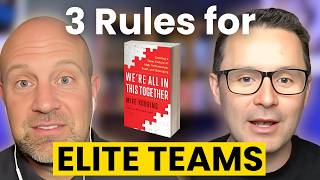
Mike Robbins explains what separates high-performing teams: belonging and psychological safety as the foundation, plus healthy expectations paired with genuine care. He covers how hybrid work and AI are changing connection, and argues that direct feedback and strong relationships matter more than ever.
Chapters
Today's special guest is none other than Mike Robbins, author of We're all in this Together. Sit back and enjoy the show. Mike, a huge welcome to the Lead On Purpose podcast.
Thanks for having me. It's an honor.
Oh, such a joy to have you here. Look, you and I speak a very similar language. We speak to very similar teams. We're passionate about helping teams work well together, get the most out of their individuals. But working we over me, not the individual in a silo. But how do we operate at a very high performance level. So your most recent book is We're all in this Together. And I want to just go back to talk about why did you write it? When did it actually, you know, drop? And just, you know, obviously Covid was a big factor. So what was your inspiration behind this?
Well, I wrote a book called Bring youg Whole Self to Work that came out in 2018. That was my fourth book. And I finished that book, put it out, and just sort of felt like there was more I wanted to say. I've been studying teams and performance culture for a couple decades, and so I started working on the book and I was actually working on in 2018, 2019. I finished the manuscript, James, and turned it in at the end of 2019, and it was scheduled to come out in spring of 2020. Of course, no idea that it was going to come out right as we were getting into Covid. And it was interesting because everybody was using that phrase quite a bit, especially in the early days of COVID You know, I since have released an updated version of the book a couple years back with some thoughts on the pandemic and sort of all the things related to that and just the way the world has changed in so many ways with how we work now. But my main inspiration as well was also just looking at the state of, you know, I live here in the US but just looking at the state of the world and the intensity of divisiveness that we see all over the place. I mean, the book is really about teamwork and culture, but there's kind of a meta message in it, if you will. That's really about, like, how do we find common ground in this incredibly diverse and intense and divided world we find ourselves in?
That's so, so important. Your work is so important. Let's talk about divisiveness. What do you feel is it that drives that division between humans?
Wow. Well, I mean, I think there's a number of things. I think we actually do have a fundamental need to belong to. And ironically, One of the ways, if you look at a lot of research around belonging, the sort of base level that will elicit a sense of belonging, at least initially, is if you and I hate the same people, right? So we bond around that which we hate or we don't like. I mean, we can do it in a more superficial way. Yeah, shared, common enemy. I mean, you think about just in a more superficial way, it's like sports rivalries, right? I come from the world of sports and it's like easy to hate the team that's the rival of your team that you root for or the school that you went to. But those are usually in good fun, although sometimes they can get pretty intense and even violent, as we've all seen in different sports. But I think as it relates to what's going on politically and socially, look, I think there's a lot of pain in the world, wherever you find yourself in the world. And I think the nature of life today, it's not that there wasn't divisiveness 20 years ago, 50 years ago, 100 years ago, but simultaneously we're more connected than ever through our devices and through all the social platforms. But you know, the way the algorithm works, it's really designed to sort of get us angry and outraged and scared of each other in a weird way. So a lot of this technology that I thought initially like a lot of people, oh, this is going to be a beautiful way to bring everyone together. And there are some aspects of that has actually turned out to be incredibly divisive just based on the business model of some of the companies.
Yeah, you can see that. And this interesting term of belonging. A dear friend of mine, Owen Eastwood, wrote a book called Belonging and I love his whole idea of if we don't have belonging, actually we don't have a foundation. There is no foundation for teamwork, for excellence, for community. So in your research with belonging, what did you understand about it and why is it so crucial?
Well, I mean, if you look at Maslow's hierarchy, it really comes, you know, after sort of our safety and survival needs, our need for social connection and belonging is there on the pyramid. You know, then it goes into kind of esteem and self actualization, if you think of what Maslow talked about all those years ago. But again, we have a fundamental need to belong. Most of us have an experience in life, regardless of where we come from or what we look like or what our background is of not belonging. And so, you know, as we talk about inclusion, as we even talk about culture, belonging is so fundamental. And you know, one of the beautiful things about the way we work today is people can work from anywhere, in any region, in any time zone through their device, from home, which is beautiful. But what we're finding, even in a post Covid world, it's more challenging to find that sense of connection and belonging. So a lot of the companies that we're working with are really struggling with how do we get people connected and how do we have that sense of belonging which doesn't just come from being in the same physical location together, but when we're not together, leaders and teams have to work that much harder to really feel connected and ultimately create that sense of belonging.
Yeah, I agree. And it's interesting. You know, you work with some of the big Fortune 50 and Fortune 100 companies, the Googles, the Microsofts, the household names, so you would get to see some of these patterns and trends at scale. What are you seeing for the future of work? Because here in New Zealand, and I speak a little bit in Europe and Australia, we're seeing this whole idea of, hey, hybrid work is great, but it should be weighted towards rubbing shoulders in the office, like at three days or four days together, and then a bit of flexibility one or two days from home or wherever. What are you seeing in those bigger companies in terms of future trends?
I mean, most of our clients are still struggling with this, and it does seem to vary a bit. In certain regions, things are better than in others. You know, here in America, there's a real sense of individualism and autonomy that people have in general, it's kind of baked into the culture of the country, for better or worse. And it's hard, especially with a lot of the tech companies, to get people to come back to the office. And what we're seeing, a lot of the research is showing us that most individuals, especially further down in the organization you go, really want to be able to work from home. Makes sense, right? It's easier. I can be in my sweatpants, I can pick up my kids from school, I can walk the dog, run the errands, all the things. But there's a real negative impact on trust, on psychological safety, on connection, on culture. And so I don't know that anybody's quite got it figured out. Most of the leaders and the senior leaders that I talk to, while they're doing the best they can to try to figure it out, when they're really honest with me, they're saying, mike, we don't really know yet what this is going to look like and what the future holds. I mean, I think we understand that hybrid working is kind of here to stay to some degree. But I think the question really becomes on a case by case basis, not only within each company, but within each team and organization inside the company. What really works based on the nature of the work that we do and the personalities that we have? It seems to be, again, generically speaking, the more senior folks are, the older folks are, the more they really want to be together in person. And the younger folks are, the more junior they are, the less invested they are in that for a variety of reasons. So I don't know. I mean, I find this a really fascinating time to be alive and be really looking at some of this stuff. But I think if we have this conversation five years from now, we'll have a lot more perspective on it.
Yeah, 100%, Mike. And it's interesting that younger generation wanting the flexibility, also wanting that trust. What do you think in the short term is going to be the impact on connection? If we do have this younger generation kind of at tension with the older generation, is it going to create chaos for our cultures?
I mean, I think we're seeing some of that. And look, if you think about, if you go back 10 years, 20 years, there's always that tension between cultures, right? I mean, the older folks think the younger folks are immature or they don't understand, or they're entitled, or they're spoiled, or they're soft. And look, there's some truth to that, if you will, if you really break it down. But there's also just a difference between Whether, if you're 25 years old today, it's a little different than being 25 years old 25 years ago. But there's still some things that are common about that. And 25 year olds 25 years ago had similar annoyances with the people who were 40 and 50 years old, and vice versa back then. So some of it is just stage of life things, but it's definitely, you know, the added complexity to what we've all been through over the last five years, the way we work now, the introduction of artificial intelligence, as well as the ability to do so many things. I mean, the fact that you and I can have this conversation with you in New Zealand and me in San Francisco, well, doesn't seem like a big deal to us now. I sometimes think about my father who passed away in 2001, who by the way, spent his whole career in radio. And I think about trying to explain to my dad, hey, Dad, I have a radio show my own podcast. I go on other people's radio shows, but they're called podcasts, and people can listen to them on demand, on a phone in their pocket, that his mind would explode just if I explain that to him. And I think sometimes we're swimming in the advancement of technology so much, we sometimes don't fully appreciate how fast it's moving.
100% agree. We're not able to keep up, I think, with how fast that rate of improvement is. We had, about a year ago, we had Mo Gaudat on the show, who was the CBO at Google X, and obviously had a lot to do with AI and has a very strong opinion about where that's headed. In your opinion, what do you see happening in terms of us being in IT together, working together, being high performers, and having AI kind of come alongside us? Is that a good thing, bad thing? What do you think?
I mean, look, most of the people that I talk to that are way smarter than I am, when I talk to them about AI, there's a simultaneous excitement and fear. The excitement is all the possibilities that exist with respect to how we can work and the acceleration of things. I mean, you think about the way it can potentially level the playing field and opportunities around health and wellness and so much, and just being able to free things up. I think the fear is it's going to disrupt every industry and potentially take jobs away, you know, as the Internet did, as mobile did, as the social world did. I do think it's. And right now, I think a lot of us, even relatively smart people, we don't understand it all that well, and we don't really know. It's kind of like. I was at a conference about a year ago, and one of the founders of ChatGPT was there, and he said this was a year back. He said, we're like in 1990 of the Internet right now with AI. And when he said that, it, like, made sense to me because I was like, imagine being at a conference in 1990 and having people explain the Internet. You would be like, what is? I don't even know what that is. You know, I was in College in the mid-90s myself at Stanford in the heart of Silicon Valley, and, like, having someone explain to me how email worked and how the Internet worked, you know, and I was a relatively smart kid, but it was hard to understand at the time because it was so different. And now it's just so ubiquitous with how we work. So back to your question about us being in IT together. I do think there's an element of us needing to be open and sort of embrace a level of vulnerability to, like, I don't understand how this works. I don't know what this means. Ask as many questions as we can, learn as much as we possibly can. Because there's going to be different sort of levels of adoption as it relates to artificial intelligence. And depending on the industry that you're in and where you live in the world, the impact is going to be more significant or less significant and at different times.
Yes, really fascinating. I'm trying to get my head around it, and certainly me and the team are talking about what do we use, what do we not use? Is it a research tool, is it an automation tool? So it's very interesting.
One thing I like to think about it for myself, just if I think about something relatively simple, now that most of us understand ChatGPT, I think of it as like additional team members having other voices at the table. Especially for entrepreneurs who run small businesses, let's say. I mean, this can work for managers in larger companies as well, but like having a thought partner. So I'll go on to chat GPT myself and start dialoguing a little bit when I have ideas for podcasts or articles or content that I want to create. So for people like me and you in the content creation space, that can be really helpful, but just in terms of streamlining things or automating things, you know, and understanding that, again, I like to think of this notion of all of us being in it together. It's kind of like, you know, we're all in the same storm, but we're in different boats. And so again, what's happening in your, you know, world, if you will, even inside of a company, there's different things happening in different teams and departments. So there's something that connects all of us universally, but then there's the individual realities that we're living in on a daily basis. And so again, as it relates to AI, there are some, you know, functions and some particular jobs that people have right now that may not see where does AI even fit into what I do. But it eventually it's going to show up. So the more you can be proactive about learning about it, the better off you'll be down the road.
I'm with you 100%. And it's interesting. We talk about this, you know, we're in it together. And I often think of the photo of Earth from space and we look down at that and we go, wow. Literally, we are all humans in this together. Protecting this little planet. But somehow we, we've marked off our little territories and created countries and borders and we defend those with our all our might and we're willing potentially to destroy this planet to defend our own little patch. Now I see this play out in organizations all the time, in team sports as well, where someone will have a bit of RAM syndrome. WRM world revolves around me. It's like all about me. They just focus down on that. Now when I want to work with a team, it's like, okay, I want to see how we can move from me to we. So you've worked with so many teams, leading teams, you've studied high performance deeply. Two things. What do you use to define high performance and what are some of the pillars or themes that you see in high performing teams?
Well, the way that I think about high performance, I try to keep things really simple, even though there's a lot of complex aspects of it. High performing teams really do two things. From what I've seen in all my years of researching it, they have a really high level of expectation, but it's healthy. So it's not perfection. It's like healthy high bar. So they expect a lot of themselves and each other and they hold each other accountable, they push each other, they challenge each other. At the same time, there's a high level of caring and nurturing. So we expect a lot, we care a lot, we challenge and push, but we also value and appreciate. So when those two things happen, teams can really thrive. Now that's based on the idea that you have some talented people to begin with, right? And some level of understanding. You know, again, I come from the world of sports. It's like you have to have some decent athletes to have a good team. But what makes the difference between a good team and a great team really has to do with are we willing to really challenge ourselves and challenge each other to operate at the highest level that we can? And are we committed to really caring about each other, valuing each other, having each other's backs? And again, while that seems simple on the surface, it's actually not that easy to practice for a whole bunch of reasons, some of which you were just talking about the territorialism, people's egos, you know, wanting credit, wanting to, you know, move along in our careers. None of those things in and of themselves are evil. But if we put our role, what we do individually, above our job, which on a high performing team, everyone knows that we all have the same job, which is to help the team win, then we're Kind of pulling in different directions and some of that us versus them, me versus you thing starts to show up naturally. And then even super talented individuals aren't going to succeed as a team, if that's the mentality that they have.
Yeah, that makes sense. And do you think there's any critical components? Like, for me, vision is so important. If we don't have a shared vision and understand what it is and where we're headed, chances are we're not going to be a high performance team. Are there any key ingredients for you that you're like, James, these things are essential to give people a chance of being high performers?
I think. Yeah, I think the vision and being clear on sort of what winning is, where are we headed? Why are we doing this? Right. Because again, that's part of why I use a lot of references from my background playing baseball in college and then professionally. And so sports is a good analogy, but not the perfect analogy to business in the sense that in sports, the good news is it's pretty clear we're trying to win the game, we're trying to win championship. It's. It's a very defined activity in a way. Even though it's not that easy to win and perform, in business, things are much more complicated. And even at the executive team level, the CEO and his or her, you know, direct reports, there can still be a lot of different things going on and a lot of different agendas at play. So the better you can do, and especially when you go down through the organization, 2, 3, 4, 5, you know, 10 levels down, if it's a really big company, you got to be clear about what are we trying to accomplish at the macro level. And then how does what we're doing at the micro level tie into that? Otherwise people are just showing up and punching a clock and getting a paycheck and there's no real connection. And one of the things that I do really appreciate about the younger generation, for all of the challenges that we hear and different sort of stereotypes, is there really is a desire, from what we see, from a lot of the research, and I hear this in a lot of my conversations, of wanting to be part of something that really matters. And I think over the last couple decades, that's become more and more important to people of all ages, that we're doing something that actually has meaning and purpose and we're trying to actually accomplish something that has a positive impact in the world, not simply just, you know, how can I be successful and make as much money as possible? Not that there's anything wrong with that. But there's much more of a mission driven mentality that exists for a lot more people in our world today than did in the past.
Yeah, I'd have to agree with that. People in the past, maybe power and profit were important. Power being status, career trajectory, improvement and then of course profit makes sense. But I'm seeing more so purpose being a big driver for people to join companies and stay at companies. I'm also seeing a big driver for investment. When investors are looking around, they're asking what good is this company doing for people planet, etc. So do you see that playing out in a north north trajectory of increasing more people are going to want to have purpose driven businesses or do you think this is a time and a place and eventually it'll go back to quarterly returns and profits?
I mean honestly, what I've seen, and I'm 50 now and I've had my business for 24 years, I've seen a few cycles with it over the last 24 years just paying attention to it. Look, I think it evolves over time, but I also think some of it has to do with economic opportunity, right? I mean the conversation around purpose, as important as it is, and you and I both know, and a lot of people listening, it's a privileged conversation if we're in survival mode, right? If you lose your job or your business goes under and you're trying to feed your family, yeah, I'd like to have some purpose, but I want to make sure I can survive. So again, back to Maslow's hierarchy. It's like purpose is higher up into that sort of self actualization at the top of the pyramid as opposed to down to the base level. So again, when things slow down economically and look, we've been in really turbulent economic times over the last number of years, but thankfully, knock on wood, like we haven't been in really dire straits economically since the Great Recession. I mean certain industries in Covid obviously really were decimated, at least in the short term. But overall there's been quite a bit of economic opportunity and growth globally, even with inflation and some different instability. So that said, I mean, hopefully that continues in the best possible way that it can. But the way that the economy works, and I'm not an economist, but it ebbs and flows. So when things are better economically, especially over a long period of time, I think people can spend more time and energy focused on purpose and building companies and doing things of purpose. When things really slow down and there's a scarcity of opportunity. Just by the nature of how fear works, people are going to stop and go, I just need a job. You know what I mean? I just need the business to actually be profitable so I don't have to let everyone go and close the doors. So, I mean, I think in general, and that's another thing, back to the conversation even about the future of work. I do think that part of what's happened in the last number of years with the job market being relatively strong through all of this that we've been through, is that employees still have a lot of power, right? When the job market slows down, when companies are laying people off, when people are really more desperate for jobs. Back to how many days a week do I have to come into the office, right? If I need a job and the company says, you got to be here five days a week, okay, if I don't have any other options, I'm going to do that. But if I have multiple options and I say, hey, I'm going to work from home, and they say, you can't do that, I say, well, I'll go somewhere else. You know what I mean? So it's just the nature of sort of supply and demand in the marketplace. But I think in general, there is a mindset overall and a sensibility overall that's expanded pretty significantly of people wanting to have jobs that have purpose and work for companies that are actually doing good in the world, as well as having success 100%.
And as you and I talk at this point, at the date of the recording, we're coming up very close to the US Elections, I do believe. The team has told me that we will be publishing this after the election. So if you had to think about your theme of we're in this together, and you had a chance to sit down with the two leaders of the two dominant parties in America, what would you ask them? Or what would you say to them?
Wow. Well, again, everyone listening to this will probably know the outcome of the election when we don't know it at the moment.
I mean, I think in both cases, the two people running for president here in the United States are very different, not only in terms of policy and philosophy, but just temperament and personality. And my invitation to each of them, I would be honored and grateful and probably a little intimidated to talk to both of them.
Although I did, you know, grow up in San Francisco, and Kamala Harris was the district attorney there 20 years ago when we were first living in San Francisco. But I would say, look, there's a lot of Opportunity to find common ground here in America. As diverse as we are, as divided as we are, and the more that you can actually focus on being the president for all people here in America and also understand the position that you hold in the world, because for better or worse, America has a significant impact on the globe. I think, you know, looking for common ground, realizing that even people who think very differently about politics or have different views about things or come from things from a different perspective, like my experience having lived in the United States for 50 years and traveled to 49 of our 50 states, is that.
We'Re way more alike than we are different. And when I travel overseas, I was just in Dubai last week. I was in Toronto the week before that. I was in Singapore a few months back. When I travel in different places, I've had a chance to spend a little time in Australia. That was many years ago. I find that when I get into conversation with people, without sounding too corny about it, it's like when we lower the water line on the iceberg a little bit and we start to share human being to human being. Yeah. Our cultures may be different in our language and our customs and our foods and some of our beliefs, but underneath that, there's some core universality of being human. And I think that in our country here in America, so much has happened in the last decade or two that has pushed us apart from each other. And the way to get attention and the way to get votes and the way to get people to pay, you know, is to sort of speak to those divisions. And I really think one thing that I find when I travel around the US and this is true when I also spend time in other countries across the board, whether someone's a conservative Republican or a liberal Democrat, here in the US Almost everybody is disgusted by the divisiveness and thinks it's a problem. So if we can address that, even though people have different understandings or sort of they have different people they blame or different forces that they blame for the divisiveness, I think there's a universal sense of collective. Can we do something about this? And so either one of these people, as the President of the United States, has an opportunity to do something about that, and I hope they do.
Yeah. Thank you for sharing that. And I am excited about the potential for the future with whatever leader steps in. And whether it's Kamala Harris or Donald Trump, they're two very different people. And I guess the one thing for me that I admire, I speak to a lot of leaders week in week out, and I get to ask them questions about their upbringing, their values, what winning means, what losing means. The one thing I really value is. Is just being humble and respectful. And, you know, I don't see that. In the last decade, I've seen some leaders from North America be incredibly the opposite of that. Aggressive and finding faults and flaws and attacking personally, attacking their competitors personally. And I just don't think it sets the example to our kids of how we should treat others.
Agree. Agree. No, I do, too. And I think at some level, I'm a big believer when I talk to leaders in companies, it's like the more personal, the more universal, the more willing you are. And especially in today's world, look, I mean, in the world of people getting on podcasts and having long conversations about their lives and about their upbringing and about what it was like when they were a kid. And again, your story and my story may be very different, but if we're willing to share our story and we're willing to share vulnerably what we think and how we feel, some of our hopes and dreams, as well as some of our fears and doubts, some of our successes, but also some of our, you know, failures and shortcomings, that becomes very humanizing, that becomes very relatable. And not to do it like a way to connect with people as a technique, per se, but I just feel like the best leaders that I work with, yes, they have a lot of confidence. Yes, they're smart, yes, they're willing to say and do the scary thing. And they've got some sort of superpowers that make them, you know, a bit different, if you will. But they also have that ability and that humility to realize, you know what? I'm just a human being. I wake up. And you know what? All the cliches are cliches because they're true. Like, I put my pants on one leg at a time or whatever we want to say, like, that really does matter. And I think having both that ability to say and do the hard thing or the big thing, or have the talent and the skill that needs to be brought forth in certain moments, but also at the same time to have that humility to realize, you know what? I'm just a human being, and at some point, I'm not going to be here like everybody else, you know what I mean? And I really think that that's what the world, whether it's here in America or elsewhere, I think that's what people are really longing for. And then we have to ask Ourselves, collectively, too. Like, what can we do to create the conditions that are more conducive? Because is it really the leader's fault all the time that he or she is doing or saying the thing that's mean or divisive? Yeah, they have some level of responsibility, but there's also kind of a larger ecosystem. You know, even inside of a company, if you get. If it gets held against you for admitting that you made a mistake or that you're a little afraid or that you screwed something up or that you're not sure about something, and that gets weaponized back against you, all of a sudden, not only you as the leader, but everyone else gets the message. Don't do that.
Yeah, right. And all of a sudden, it becomes an environment that's not safe. It's a psychologically unsafe environment. I'd like to explore that for a second with you. So you've researched it so deeply, you understand what high performance looks like at a team setting. What are the three or four pillars or themes that are critical?
Well, one of them is psychological safety, and I think that term. You know, I actually had Amy Edmondson from Harvard Business School, whose work has been really foundational with all the stuff around psychological safety. I interviewed her for my book We're all in this Together and had her on my podcast. And the one thing that she said, though, that I thought was really interesting, she goes, you know, Mike, I'm grateful and humbled that my work has really resonated with a lot of people. And a lot of people are talking about psychological safety these days. She said, in hindsight, though, I wish we would have called it something else, because the term psychological safety kind of gets thrown into this notion of, like, safe space, meaning, like, we can't challenge each other, we can't call each other out, we can't push each other. And she said, that's not at all. In fact, in psychologically safe environments, people really push each other and challenge each other. We just know we're not going to get shamed or ridiculed or kicked out of the group simply because we have a different opinion or we make a mistake or we even fail. So that, to me, James, is so important that it's psychologically safe enough that I know I can speak up, I can take risks, I can make mistakes, I can even fail. Not that I want to, but I can do it in a way. Back to what I was saying earlier about healthy, high level of expectation, and we really push and challenge each other. That means there's going to Be accountability. There's at times going to be consequences when something doesn't go well. But not consequence. Again, like, you're a bad person and we hate you and you're out of here. But consequence, like, oh, there's an impact to what we do if we succeed or fail. And so I think teams that really do that and another thing that's related to that is that high performing teams really invest in their relationships with each other and the health of the team. I mean, I sometimes think of it like a marriage. It's like, yeah, you're really lucky if you just fall in love with someone who's awesome and the two of you live happily ever after. But in my experience, and my wife and I've been together for 25 years, she's amazing and I'm grateful to be married to her. But it's been a lot of work. And you know, we have two teenage daughters and we've been through some stuff and life and Covid and deaths in the family and all the things that life throws at you. Right. If you're going to have a healthy relationship over time, you know, it's going to take some work and you're going to have to really commit to it and it's not going to be, you know, all rainbow and sunshine and unicorns all the time. And so teams that understand that and go, okay, we're going to go through some ups and downs. We're going to go through some periods where we get frustrated with each other or we're not producing the kind of results that we want to produce. But instead of jumping ship at that point, like, we keep recommitting to the team, to the health of the team. And it's an ongoing process. It's not like, hey, we have this. I mean, I'm often invited to be at off sites with teams and it's like, hey, we could have the best off site in the world. That doesn't magically mean the team's going to be fantastic forever. This is just a moment in time. Maybe it was a breakthrough, great. But now we got to keep maintaining that and we got to keep building on that as we move forward.
Hey, James here. I wanted to take a quick moment to let you know about something. Look, I get asked to deliver keynotes and workshops for teams and companies all over the world, from London to Antarctica, from America to Australasia, from armies to small businesses to large corporates, to sports teams. But I go in and deliver keynotes around the mindset of high performers, around the habits of high performers about how we navigate change. If you would like me to come and speak to your team or speak at your conference or deliver a bespoke. Bespoke workshop, please get in touch with my team. Carolinejlochlan.com will be able to help. I'll also make sure that we put that in the show notes. Yeah, it's interesting you say that because in a similar line of work, you know, working with a leadership team, you'll have a great day with them, right? And then it's like three months later, you check in, they're like, oh, my God, it's a hot mess again.
Right?
And I said, okay, the integration implementation is the key. So what you're saying is psychological safety is the number one pillar. It's very foundational one. And then you talked earlier about this idea of inclusion and belonging. So I imagine that's a critical pillar for high performance.
Yep, absolutely. And then another really important one, and I talk about this quite a bit, and we're all in this together is what, what I call embracing sweaty palm conversations. Talking about hard things, conflict, feedback, sensitive topics. You know, I like to often say to teams I work with, great teams talk to each other, not about each other. So what that means is stuff comes up. And again, even in the healthiest teams, even with the best relationships and the best of intentions, we're going to get pissed at each other. We're going to get frustrated, we're going to, we're going to, we're moving fast. And especially the bigger the team, the more that's going on, things are going to happen. And if what happens is if you and I have the ability, James, on the team, to talk to each other and the team environment is such that we really challenge each other, like, let's deal with things directly. So I know that I can come to you and talk to you about an issue I have with you and we'll work it out. Or if I come to you to talk about Susie because I'm annoyed with her, you have the ability to say to me, hey, Mike, go talk to Susie. Like, or, let's work this out as a team so we're not wasting a lot of time and energy gossiping and commiserating about Suzy or fill in the blank. You know what I mean? And again, it's hard to do that. It's way easier for me to talk to you about the other person that I'm frustrated with. Or again, my boss, my manager, the CEO, whoever it is, I might be intimidated of him or her. I'm going to go talk to you and we're going to go to lunch and complain about them, which is a total, normal human behavior, not evil in and of itself, just problematic. If we're doing that over time and the team environment isn't conducive to such, that really sort of there's a forcing function that says, no, no, we don't do that. We deal with stuff directly. Otherwise we know it's going to be a problem down the road.
I like the idea of the sweaty Pam conversation. Like you're nervous, you're worried, you'd rather maybe not have it. So what's an example of one that maybe you've seen unfold? And how do we actually have that conversation?
Well, I mean, it happens a lot, you know, I mean, think of feedback is essential and the feedback happens often. You know, manager to employee. There's some kind of regular performance review cycle thing. That's one thing. But then what about when we have feedback for a teammate, someone who's a peer, right? Or even our own manager, or there's something that didn't go so well or we're not performing it right, how do we talk about that? How do we bring that up? And so what I often will remind people of is, look, the thing about giving feedback and receiving feedback, it's vulnerable on both sides of the equation. And mostly how I start every sweaty palm conversation I have, James, I have to give someone some feedback or I have to talk about something that's hard or there's some conflict, I will usually start some version of saying, I don't really want to have this conversation or I've been avoiding this conversation. Because what we know from the research on vulnerability is that the natural human response to vulnerability is empathy. So if you can go into a conversation, even if you're really scared or you're worried that it might not go well, with enough courage to be vulnerable, first and foremost with yourself. And it doesn't have to be a big old long, you know, psychological thing, but just to say to someone, I really want to talk to you about this important. And I'm feeling nervous. Like I've been avoiding talking to you about this. I've been. I'm worried you might get upset. I don't know exactly the right thing to say, some version of that. Again, not to manipulate them. But if you go into it with, you know, I use the iceberg as a metaphor, right? Lower the waterline on the iceberg a little bit. What's going to happen most of the time. Not 100% of the time, but the vast majority of the time, the other person will be a bit disarmed and they will respond in kind to the vulnerability. They may not agree with you. They may have their own version of the story that's different than yours. They might potentially get defensive about what you're talking about. But the more we lower the waterline on the iceberg, the more we can have a real human to human connection. What becomes hard is over time. James, let's say you and I work together and we've had three or four or five or 50 interactions and it hasn't gone well. Or you're frustrated with me, I'm frustrated with you. I've decided you don't like me. You've decided I don't like whether that's true or not. Now we've got some scar tissue built up and it's hard. But oftentimes what we have to do is figure out how do we navigate. Because not everybody's going to be best friends, not everybody's going to get along great, have the same values, think about things in the same way. That's okay. We don't want every. It doesn't need to be harmonious. 24 7, right. That's weird. When I talk to a team and I say, how does conflict go on the team? And they say, oh, we never have any conflict. I'm always like, oh, red flag. If there's no conflict, that usually means people are lying or they just simply don't feel safe enough to actually speak up. So conflict's not a bad thing. Conflict's a really good thing. The absence of feedback is a problem for everybody. Even if it's great, if, oh, no one gives me feedback, great, I don't have to deal with that. But I'm probably not going to perform at the highest level if I'm not getting feedback. And we're not going to perform at the highest level collectively, if we're not giving and receiving feedback all the time. And if conflicts don't get addressed and resolved, they don't just magically disappear, they're still there. So we want to celebrate those things when they come up, even though they can be uncomfortable. Because if we start to talk about them more, even if it's messy, even if sometimes it makes things worse, not better. Initially, we build up the muscle memory individually in our relationships. And collectively as a team, we're not afraid to talk about hard things.
I think it's such a critical part of elite teams, whether they're Sports, military, business. I was working with a professional sports team and we come up with this idea that the head coach loved this thing. He's in the belly, not the back.
Yeah.
And if you've got a problem with me or you've got a problem with your colleague, you've got a problem with another manager, come front me up and hit me in the belly. Don't stab me in the back. Like, totally be up front. And I really loved that. And it did set the tone for a really high performing season. They had one of their best seasons of all time. And I think it was because there was clarity of thought, there was upfront conversations, there was challenge. Like, there was care, but challenge. They cared for each other, but they also cared for the mission, why they were doing what they were doing absolutely well.
And one thing I often will say, and I've done a lot of research and a lot of work around the power of appreciation. So valuing people, caring about people, distinct, by the way, from recognition, recognition being more about performance outcome. Good job when you perform. Appreciation being more about value and caring about people. They're both important, but one is conditional, one is reactionary. You have to earn the recognition. Appreciation is more about genuinely valuing people, caring about people. Now, again, we're going to like some people more than others. But if you and I work together, James, and we can establish in our words and our deeds that we value each other, that we care about each other, that we respect each other when the inevitable conflict comes up, or when you come to give me feedback and you've already demonstrated over time that you care about me and you value me, when you say, hey, Mike, I have a problem with that, or this is an issue, or I need to talk to you about this, or we got to raise the bar on that. Am I going to get defensive? Yeah, probably. Because I'm a human being and most of us get defensive at least a little bit when those conversations happen. However, if I know that you value me and care about me, and you've already made that clear, I am going to take your feedback differently than if I get the same feedback from someone who has not demonstrated that they value or care about me.
Yeah.
And it's less about the feedback or the skill of giving the feedback or the courage to give it. It's more about the relationship that we have with the person giving the feedback. So back to even our earlier conversations about AI and the future of work and being together. This is why there really isn't a substitute for time and space. Now Again, we don't have to be together all the time in order to have strong relationships. It's just harder when we're separated. It's harder when we don't see each other. But we got to figure out how we invest in the relationships. Even with the fast pace of everything, even with doing things at scale, even with using AI and all these technology tools to move quickly, we have to invest in our relationships with each other because that's the way that we can have those sweaty palm conversations. That's the way we can build that psychological safety so we really can push and challenge each other to be our best. If we're just bots, literally, or we're just faces on a zoom screen, or we're just email addresses in an inbox, or, you know, names on a Slack channel, like, it becomes so impersonal. Right. And that's another reason, even back to the earlier conversation about divisiveness, when we're communicating at scale with all these people and it's just screen names but not real humans, a lot of the nasty conversations that happen on social media would not happen if people were face to face with each other 100%. Well, it doesn't, because A, you'd be scared, and B, you'd have more empathy for the other human. When you can actually see them eye to eye, face to face, you're like, oh, wait a minute, I might disagree with that person. I might think their ideas are problematic and even dangerous. But in the moment, unless they're taking a swing at me or they have a weapon in their hand, they don't seem that dangerous.
Yeah. You know, it really disarms them. And we do have, I think you're right, better connection when we're shoulder to shoulder. And when we're hybrid or working from home, we don't get the opportunity to do that as often.
You know, one example I often use when I'm talking to groups about this, I will say, you know, and again, maybe it's a little different in New Zealand or where you live in the world, but we have a lot of traffic where I live. Right. And there's a lot. Is there a lot of traffic where you. But like, when you're stuck in traffic and you're in your car and someone's trying to merge in and you don't want to let them in, what do you do? You don't look at them. Right. You keep your eyes straight and you don't look. Because the moment you look, unless they're screaming at you or flipping you off. You're going to let them in, right? Because you make eye contact. You have that human to human empathetic connection. We've all had the experience of trying to merge in when people won't let us in and there's a bunch of traffic. So you go, okay, fine, come on in. Right? And then hopefully the social norm of like, they wave and say thank you and the whole thing, and then it's not like 20 cars all come in at once. But you know what I mean? There is that moment that we know, like, instinctually, I cannot look at that person because if I look at them, I'm going to let them in, right? And so when everyone thinks about that and goes, oh, yeah, that's the thing. It's like human to human, person to person, right? There's all these. Again, cliches are cliches often because they're true. It's like, it's hard to hate people up close. You get close to people, you listen to people, you start having conversations with people. Like, I was in Dubai, like I said a week ago, there's all of the things that are going on in the Middle east, some of which, again, as an American, like, we don't get a ton of international news here for the most part. It's all very filtered through an American lens, for better and often for worse. I really liked being in Dubai and meeting people from Pakistan and Iran and Egypt and places all over the region. And I was just having conversations because I have a level of ignorance with respect to some of that stuff. I'm curious about it and just wanted to hear what people thought from really living in that region of the world, in the Middle East. And I learned a ton. And I realized there was a lot of assumptions that I had before I got there. Then when I got on the ground, it was actually talking to real people. It was like, okay, this is different. The weather here is different. The people here look different and talk different and come from different places and the food and all the things. But I was like, this isn't that different from home when I'm interacting with people in California, where I live, because on a human level, we're not that different. But we have to be willing to have those conversations with each other and be open to the idea that, like, maybe there is a lot more common ground than we realize.
And there really is. I mean, like yourself, I spend a lot of time with people from all different parts of the world. And whether it's on here chatting like this or sitting in person or at events, and we have way more in common. And, you know, you look at our fears, they're all very similar fears. You look at our dreams, they're all very similar dreams. You know, our hopes for certainty and variety, connection. It doesn't matter what country we come from, we're pretty much the same.
Yeah. And the thing about the being in it together, too. Like, for years when I was working with teams, James, I would often say, you know, we get into this, us and them and them. And I would stop, and just without being overly naive about it, I would say, now who's the them? I'm just curious. Like, I don't know. I'm trying to understand who the them is in this scenario. And again, we divide ourselves even within teams, within organizations. But it's like, aren't we all connected? And you said it earlier, when you look at the globe, it's like, here we all are, you know? And I learned this early in my career, public speaking. I would get really, really nervous. I mean, I still get nervous when I speak. I love it, but. Right. But I remember realizing something early on about speaking to groups of people. Whether I was talking to 10 people or 100 people or, you know, even bigger group, if I got up there and did really bad, which happened a handful of times, it wasn't just bad for me. Even though it was very uncomfortable, it was bad for everybody. Right. Like, it was awkward. You're in the room, the guy's up there bombing. It's terrible. Nobody's engaged. Nobody's laughing. The whole thing is falling flat. I started to say that to myself backstage before I would walk on stage to speak. Okay, we're in this together. We're in this together. Meaning that, like, I want to go deliver some value to this group of people, but they actually want me to do well. Because if I don't do well, it's not just bad for me, it's bad for them. So, like, one of my little techniques in the early days of public speaking is I would get up and I'd be most nervous right at the beginning, and I would take a breath, and I would find some person in the audience, even the meanest, you know, scariest crowd. There was at least one person smiling, and I would literally say the first thing I was going to say right to that person. And in my mind, I would pretend that's my friend. And then I would start looking for other friends in the audience, and I would see faces that were open and smiling and the ones that were scowling at me. And looked kind of mean. I wouldn't look at them, at least at first, to manage my own nerves. And it's. I started to go, oh, this is kind of cool. I'm out here making new friends. And it was a weird little mind game that I played with myself. But as I think about it now in the context of my work, it was kind of a metaphor for the way that I like to look at things. It's like, really look. And again, I live in the real world. I realize sometimes we have competitors in business and I realize sometimes not everybody's kind and people will take advantage. I get all that, but for the most part.
Like, I'm a relatively street smart person. I'm able to watch my back when I feel like I need to. But I don't think we usually get ourselves into trouble by being too kind and being too trusting. For the most part, I think we actually get ourselves into trouble doing the opposite, assuming everyone's out to get us or constantly watching our back, you know, and then creating stress and drama when it doesn't exist. Every now and again we are going to get taken advantage of. Every now and again someone's going to do something that, you know, they'll use it against us, they'll manipulate us, they'll jump in line in front of us. But you know what, Am I going to live my life stressed out and upset all the time because I'm afraid that might happen? Or am I going to go, you know what? If it's really that important to that person, let them cut me off on the freeway? Do I need to waste a bunch of time and energy screaming and honking and chasing after them to make sure they know they did the wrong thing?
No need. Yeah, no, I'm with you on that 100%. And I believe with. When it comes to competition, there's room for everyone. You know, if it's coming down to business and fighting for clients, I think there's room for everyone. If you're good at what you do and you add value, whether you're speaking, writing, running software companies, doesn't matter what it is. If you're good at what you do, there's room for you in the industry.
Totally. And I think of competition as healthy and unhealthy or positive and negative. And this comes from my years in sports. And look, baseball in America is a very. It's hard to make it. You know, I played in college and then I got drafted and played professionally and I was working my way up through the minor league system. It's hard, and you get. Lots of guys get cut. There's a lot of internal competition. But what I learned about competition, James, all those years of playing, is like healthy competition, is when we compete with each other in a way that brings out the best. So, like having a rival. And you talk about, I mean, great athletes, especially once they retire, they'll talk about the bond they had with their big rival. You know, whether we're talking about tennis or football or basketball or any of the sports. Right. It's like without that rival, either another team or another individual, those teams and those individuals aren't going to be as great if they're just doing it on their own. And that's what healthy competition is. Even inside of a company. We push each other, we challenge each other. It makes us better. Unhealthy competition is when we root against each other. So I want you to fail so that I. Then it comes from a scarcity mindset. To your point, there's enough for everybody if we're really good at what we do. And sometimes if you and I compete, yeah, you're going to beat me sometimes, and maybe I'm going to beat you sometimes. But if in the process, we end up getting better and we challenge each other and we push each other, that actually benefits both of us and everybody, as long as we're mindful of not being sort of mean and nasty and, you know, negative about it.
You can see it with, like, the Federers and the Nadal, Djokovic, like, they've all pushed each other.
Right, Exactly. And think about, I mean, how great all of those tennis players are. And they would probably all admit to a person, each of those other rivals made them better. And if each. If one of them were on their own and just sort of dominating the sport, not that they still wouldn't be great and maybe they'd have a few more championships, but they probably wouldn't have been able to succeed at the level and in the way that they did with their skill, and it wouldn't have meant as much.
I like the idea that your theme is we're all in this together, but within that, we can still be driven, we can still be competitive, we can still fight for it in a really authentic and caring way.
Absolutely. Because, look, I mean, at the end of the day, I am a relatively competitive person. I do like to win. I have my own ambitions. I mean, they've changed at age 50, they're different than they were at age 25. But I do think that one of the lessons that I learned from sports and I figure this out all the time now. And I think most people listening can relate to this. Whenever we win or have a big success, I think it's usually a blessing and a curse. Sometimes there's that, oh my gosh, I accomplished this thing. But immediately we realize that's not the thing. It never was the thing anyway. It's who I became in the process. It's what I learned. And yes, it can be gratifying, it can have impact financially and otherwise. But oftentimes we realize, oh, if I don't appreciate this, there's no real value in it anyway. And for those of us high achievers, if we're not careful, we just keep creating the next thing and the next thing and the next thing and we're just on this sort of never ending cycle. I think there's a way to be ambitious, yes, but to be focused on purpose and meaning and to appreciate it along the way. Even by the way, when we fail or when we fall short. I love winning much more than losing. Absolutely. But some of the greatest experiences in my life in terms of growth, in terms of self discovery, in terms of creativity, have actually come on the heels of a failure or a really painful loss that had me stop and reevaluate. Right.
Yeah. Like some of I go back to my earlier days, you know, competing the world championship wins were great for a moment and learned a little bit. But the World championship losses, which there was way more of those, I learned so much more about myself. That emotion lasted a lot longer. It motivated me to step up. So I think you're right. There's a lot to be said for failing.
Yeah. And the thing is that failure isn't the opposite of success, it's part of success. And I think for a lot of us, we have a weird relationship with failure. We're either so afraid of it that we don't go for it or we hang on to it in a way that we think of it as this, you know, bad, shameful thing. But I always feel like, man, if you put yourself in the game to the point where you failed, good on you for having the courage to get in the arena. Because that's where it happens.
That's right.
And even the most successful athletes, the most successful business people like, and mostly here in America and I know around the world, the stories that we love, they're not the, like, straight to the top story. It's the I went up and I fell down and I got back up and I went back up and then I fell down again and I kept going and I kept figuring it out and reinventing along the way. And that's why whenever I find myself getting really scared about the future or AI or what is the future of work hold or what's going to happen, I just try to remind myself, and not in an arrogant way at all, but I think this is true for all of us. Like we've all made it through 100% of the challenges that we've faced up to this point. So there's no reason to believe that we won't make it through whatever challenges life throws our way. Not to minimize. Sometimes the challenges are significant. But like I think we can have some confidence in our ability to persevere. I sometimes when I'm coaching people, one of the exercises I'll do with them when they're really struggling with something hard, I will have them make a list of some of the hardest things they've overcome. Not to re traumatize them or stress them out, but just to remind themselves you're actually really powerful and very resilient. You're just in a moment of vulnerability where you're not sure if you're going to be able to climb over this one, but you've climbed over all the other ones that have been thrown in your path. So if we use that as evidence, most likely you will get your way through this one, even though this one might be tough.
Great way to build self belief. You know, you can go from self beating to self belief just by doing that, identifying that you can do hard things. Yeah, I love that.
Absolutely.
And I just wanted to say for the listener or the viewer right now, please go to the show notes, order the book right now. You can get it right now delivered to your house. In fact, order two copies, order one for a friend. And also if you'd like to learn more about Mike, I'm going to put all of his social channels and his website in the show notes as well. And Mike, I just want to say a huge thank you. I'd like to ask you one last question though. So if you were to fast forward many years into the future and you were highly aware that it was your very last day here on earth, someone very young came into the room, someone that you love dearly, and they said, mike, how on earth do I go about leading my life on purpose, what would you say to them?
I think I would say.
Focus on what and who matter most to you.
And.
Do what you can to be as kind to yourself as possible through the process. Because I think we get sold a bill of goods, or at least a lot of us have, myself included, that somehow being hard on ourself and harsh to ourselves is the way to achieve success. And I don't think that's true.
I wholeheartedly agree.
Well, thank you so much. A listener that is listening right now needed to hear that message. So I deeply appreciate you. I appreciate your work, and I know it's not the last that we'll chat, so please keep up the great work and I look forward to seeing that book on many shelves around the world.
Thanks James. Thanks for having me. And I love the conversation.
Absolute pleasure.









