Why Change Feels So (Hard Even When It's Good) Travis Hahler
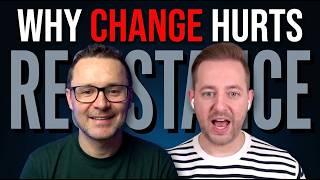
Travis Hahler explains why change feels hard even when it's good, framing resistance as a diagnostic signal of unmet needs. He identifies six neurological barriers: loss, entrenched habits, learning load, exclusion, threat response, and competence concerns. Leaders fail when they ignore individual experience and push strategy without addressing what people actually fear losing.
Chapters
Today's special guest is the Neurological Nomad, Travis Haile. Enjoy the show. Travis, a huge welcome to the Habits of High Performers podcast. How are you?
I'm doing great. Thank you so much for having me, James.
Oh, it's a pleasure. And look, I'm super excited because your new book is finally out. We've all been waiting for it. It's called Rethink Resistance. And it's interesting, the word resistance, it's like, oh, well, most of us don't want to engage in that. We want to avoid that. But you're talking about rethinking it. So can I start with, first of all, resistance? When you're talking about resistance, how do you define that?
So I think I define a little differently than I think traditionally people have defined it. A lot of times people define it as people pushing against or fighting against something that you want. So it's like a battle between people. For me, the way I talk about it in the book especially is It's a check engine light for me. It's not necessarily that people are against you or fighting or battling. It's something is going on that they need. And that is the check engine light that tells you, hey, there's a need that's not being met here. There's something that's happening here. And my hope is that the book helps kind of reframe to get curious, to say, you know what, what is it that this resistance is telling me? Not so much I need to battle it. I need to get over it. What is it telling me and how can I help us get through it? What support can I bring? And giving you that tool, that toolkit on what support might look like in certain situations.
Amazing. And I think my understanding of resistance, you know, we know that lots of like change can be good. For example, moving home, you've bought a new house and you're packing up your current home and you're about to move. It's a really positive change. You're excited to move to this new neighborhood, your dream home. However, on moving day, like, it's not fun and it's stressful and you don't see the positives even though it's this dream move. So I think all change is stressful or all change can heighten this amygdala. So obviously the amygdala fires off and it says you're in danger, keep safe, stay within your comfort zone. What do you know about from neuroscience that say around change, what actually goes on in the brain and the body or maybe the nervous system? Hey, James here. I wanted to take a quick moment to let you know about something. Look, I get asked to deliver keynotes and workshops for teams and companies all over the world, from London to Antarctica, from America to Australasia, from armies to small businesses to large corporates to sports teams. But I go in and deliver keynotes around the mindset of high performers, around the habits of high performers, about how we navigate change. If you would like me to come and speak to your team or speak at your conference or deliver bespoke workshop, please get in touch with my team. Caroline@jjlaughlin.com will be able to help. I'll also make sure that we put that in the show notes.
Yeah, it's— there's a lot, there's a lot that goes on. And one of— so I've, I've, uh, through the work that I've done and through the research that I've done, uh, kind of anchored in 6 barriers that the brain creates through change. But one of the big things that I anchor in, uh, James, within the book and even in the way that I talk about it and the way that I teach it and the way that I bring leaders through it is that all change equals loss. And that's kind of what you were just describing, is you can't have a change without giving something else up. And there's always loss. And your example is a perfect one. And I've actually used this recently because I have a friend who in the last year moved, and it was a dream move. It was a dream job. It was a dream city. It was a dream neighborhood, dream house. Like, it was everything. And I was just talking to her about a month ago. And she said, you know what, I'm still grieving the move. And I was like, tell me more. And in my head, I was like, this is exactly what I hear from so many leaders and so many people. And she was like, you know, I just, I still miss my friends that were in the other city. I still miss our neighborhood. I kind of miss like the way the kids would play in the cul-de-sac. We're not on a cul-de-sac anymore, but the house is amazing. Like, she's like, I, everything's amazing, like we love it, the school's great, everything, but I still am mourning a little bit and grieving a little bit of our old life. And I was like, yeah, loss just is weird that way. It's always like change, always some form of loss. And so that's kind of an anchoring point, one of the foundational elements of why change is so hard for us as humans. But, um, getting back to kind of the, the 6 barriers, we talk a lot about routines and habits learning and how exhausting learning actually is for us as humans. We talk about exclusion and how change is usually an exclusionary process where you're not typically consulted, right, when a change is brought, especially in corporate America. How, you know, your amygdala and anxiety play a huge role in that, your cognitive load that you're carrying and that anxiety that you have can push you over the edge. To go into an amygdala hijacked state, which is where your brain basically says, we got to just focus on staying alive in this moment, all the way to loss. And those are the barriers that I talk a lot about in my time with leaders as well as in the book. They're the basis of the book.
Let's talk about the habits one. Obviously, it's something I'm passionate about is habits and how we form them.
I'm so shocked you're going there, James. I'm so shocked.
Utterly predictable, right? So tell me more about the habits being a barrier.
So, and I'm sure you have probably far more research than I have, but, you know, part of habits is the way that they're stored in our brains. So the basal ganglia is typically the area of the brain that activates habitual repetitive habits, and we use that to become energy efficient within our days. Knowing that we may need to use energy for other things that our brain requires significantly more for. So if you think about, uh, your day-to-day, you have these habits and routines that have made you successful at whatever it is that you're doing. You do those over and over and over again. And when you're asked to change, you have to abandon most of those habits to learn. And those are two very different processes. And it's really hard for our brain to abandon the habits because doing that is actually unsafe in our brains, in our brains' kind of way of operating. But it's also something that, you know, we anchor in and it's hard to just move away from. And the, the example I use most often is if you've ever been asked to change a password, how long does it take for you to actually stop typing the damn password? It's a long time. And that's something so simple, but you do it over and over and over again autonomously. Every single day. And so these are really hard things to change, especially when we talk about work. We talk about the way that we work, um, and giving that up is another form of loss as well. So it's really a difficult process for us neurologically to go through, um, and that's foundationally— I, I call that the basis. I, I joke about it. I say you can pretty much blame your basal ganglia for almost every problem that you have with change, but It's true. It is really the neurological foundational barrier to change that you have to get over.
Yeah, absolutely. And it's interesting when you look at habit formation and there's around that mid-30s to 40s stage where we're quite set in our ways. In the work that you've done in leadership, have you found certain age groups to be more resistant or less resistant to change?
It's interesting. I do, but I don't know that it's always what you're— what you think. I, I have found actually that younger individuals are less adept to change, especially when it comes to changing habits. And that's always been really interesting to me. So over the last 10 years, as I've been kind of noticing that in the work that I've been doing, um, I got really curious about it. I started kind of digging deeper into that. What I found is that younger workforce individuals, so people earlier in their career anchor very deeply in habits because they either have shown success or they've been told they need to do something. And they're basically following that, that process of like, if I do this, I will be successful. If I do this, I will meet expectations. If I do this, my leader will be happy. And it's really hard for them to abandon it. I think the, the kind of more middle-aged group that like 30 to 50. They're still really ingrained with habits, but their habits are more, I would say, more behavioral in that they're not necessarily process-driven. They're more like, I like that I go to the office on Monday, Wednesday, Friday, and I don't have to go Tuesday, Thursday. It's more behavior-based than it is like operational and process-driven. I find the younger, the younger, newer to the workforce, it's, it's very process and and ways of working driven.
That makes sense. And when we talk about rethinking resistance, I really like this idea because often when we have problems, we just fixate on the problem and that doesn't have any positive outcomes. Generally, it has negative consequences. So you're talking about rethinking resistance. How do we know that we're actually being resistant? And then how do we go about rethinking it?
It's a great question. One thing that I love about the book and, and actually I'll, I'll share something that I haven't actually really shared with anyone except for I think maybe my mom when I was first thinking about this book, I originally wanted to write it as a book that you could read either forwards or backwards. And the reason for that was because I was like, this is really important for leaders to understand how to lead and drive change. But it's also really important for people who receive changes to understand the neurological aspects of what's happening in their own brain. And to have the tools to be able to go and talk about it in a meaningful way with their boss and, uh, or their manager or whomever is in charge of the change because we often lack language. And so that's part of this whole process of the neurology and the neuroscience coming into change. But really what it comes down to is thinking through and, and getting really curious about what's actually occurring within your team. And, you know, or you as an individual looking at, gosh, I really am struggling with this. Why is it like, what about it? And I actually talk about the 6 barriers in the book as a checklist, like use it as your own self-checklist. Like, have I had the time to learn the new habit? Answer is yes. Check the box. Have I had the time to actually sit and play with this new way of working and really Really think about it and really like learn all that I can learn and build that competence. Check the box. Do I feel like I'm being excluded from everything or that every time I get an email, it doesn't seem to pertain to me, but I'm being impacted? Like it, it's going through those steps of thinking and getting curious about what is it that's blocking me at this moment. And then as a leader, you do that both for yourself and for your team, right? You're able to look and say, What, what is going on with James? He's just not grabbing this. What, what have I offered? What as a leader have I built as support to get him what he needs in these 6 barriers? And maybe what is missing, or maybe I can ask better questions. And I think that's also a key is the questioning. We as leaders are like, how are you doing? How's the change going? Those are really broad questions and people don't typically open up. To extremely broad questions. Well, if you ask someone and say, do you think you've had enough time to actually like go in and learn this new system? They're going to be able to give you a really good answer. And that can orient you to what they might be needing or where they might have support that's missing.
Does it get two-way street? I quite like that. So I've got a family member back in Ireland who's early to mid-60s, getting close to retirement. And has been working for the same organization for over 4 decades.
And—
Wow. Yes, incredible. It's almost unheard of nowadays, right? Mm-hmm. And I was chatting to them and they were just expressing how stressed out they are. They've had a major change in their role to a whole new department, and they are just facing so much resistance. They haven't been told exactly what they need to do. They haven't had any onboarding, no training. And there's all these new systems and, of course, AI, and it's causing a lot of biological and psychological stress. Like, it's horrific. What do you think the number one reason is that change initiatives fail?
There's so many reasons, but I think the number one reason for me is just we typically don't think about the individual. We think about the strategy. We think about the timeline. We think about the process of how we roll out change, very rarely do I walk into a boardroom and an executive team has said, what's this going to look like for the person? Very rarely. And I don't— and again, I don't say that to say that they're not thinking about it, but it's not an easy conversation. Whereas the other things are strategy, timelines, all of that. They're very check the box and we can figure that out on our own. Figuring out how people are going to actually experience the change is something that requires, one, a high level of empathy and understanding of who your people are, and two, probably some validation steps around like, we need to talk to some individuals from different teams. We need to validate that this is like how they're feeling and what's going on. It's really the basis of like why change management even exists as a thing that we need in organizations. But That for me has by and large been the big gap. And that's one of the reasons why I think that this idea of neuroscience of change and thinking through neurologically what happens has really caught on. You know, I wrote the book maybe in— it's probably not the wrong way, but in a way that's not typical for how I have seen other books be written, where people have the idea, they validate a little bit, and then they write the book, and then they go out and speak on it and do workshops. I've been doing workshops and speaking for the better part of the last 8 years on this particular topic. And the reason I wrote the book was because it was making a difference and I was seeing it with leaders and how they were showing up. And so I was like, I can't scale this singularly. This book can help though. And, um, and so I've seen how it changes the way that leaders talk about change and transformation at a corporate level. And it does bring the person into the center a lot more.
That's beautiful. When you say that, I just resonate so strongly with that, Travis. I think of being a pracademic where you're in the field doing it and you're seeing the change and then you're like, "Oh, cool. I'm gonna put together a book that actually explains this for the masses so that they can all access it individually." I've been the same. I speak like yourself often. Around the country and around the world, and it's all on high performance and leadership. But I had no desire to write a book initially at all. I just wanted to speak and connect and help. And about 4 or 5 years into speaking about this topic, I had someone in the audience from, I think it was Penguin, and they're like, "Hey, you've got a book. That's a book, what you're talking about." I'm like, "Nah, let me just keep speaking. I'm good." And it took me a few years to kind of accept that actually there probably is enough here to warrant a book on this topic. And so, I love that you've done that because you're right. A lot of people will go, "Here's an idea." I could sell that and scale that and get paid to talk on that. It's the wrong way around. It's back to front. So I love that you're going, James, I've been in the field, I've seen the results. Now my new book, so Rethink Resistance. I'll just go up and get the subtitle as well here, Travis. Rethink Resistance: Embracing Neuroscience to Lead Transformational Change. And for everyone right now, go into the show notes, Travis Haller, H-A-H-L-E-R, In the show notes, you can get his book right now. And I urge any leader, anyone that's going through change to go get it. Can I bring it more personally, Travis, for a second?
Yeah.
I think this is maybe your second book that we're going to talk about, but I want to take—
Oh no, don't let my husband know that.
You'll be in big trouble. Another 3 years of writing chaos, right?
Yes.
Well, I want to think about— So I've got a little boy, Finn, and he's 10. And so he lives here with myself and his bonus mum, Caroline, and then he lives about a 3-minute walk away with his mum, and they're about to move. So she's got a lovely new partner and they're about to move, and it's going to be 30 minutes away. He's moving out of this tiny little community where we've kind of— everything's been safe and normal. It's a big change. So For the person listening right now that's going, "Actually, I've got a big change in my family right now or in my life or in my relationship," what advice would you give them? Because arguably, I look at my role and Caroline, my partner, we're leaders. We're the leaders of our family and we have to navigate this big new initiative, this change. What advice do you have for us based on what you've learned from the book?
Oh, that's a good question. I think It's interesting. You're not the first person to ask this type of question around like family. I had someone who after a talk came up and was like, I understand so much more about my teenage daughter and why like some of these things are just like a battle every day. And I'm like, it gets real hairy when we start talking about kids especially, but their little brains as they're developing. But for me, One, give yourself a little grace at the moment because you're going through a lot. Uh, you know, we all are going through a lot. I think the, the level of change in the, in our world is very, very high. Um, and no one truly knows all the aspects of that except for you. Um, two, I think the biggest thing that you can anchor in and, and try to understand a little bit better is around that aspect of loss. And I think that, like, if I were to tell you one chapter of the book that I think would resonate and help in a very personal change would be that chapter around loss. And the reason I say that is because there are types of loss that we experience and, and they're definable. You know, if we, if we think about loss of relationships, that's one loss of control. That's another loss of competence. Those are the 3 I anchor in for the book because they're the 3 top losses that you could experience in a corporate setting. But there's oodles more. I mean, 10 fingers, 10 toes more types of loss that you can experience within your, within your life. And, but if you, even if you just go back to those 3 basics, relationships, control, competence, oftentimes. You will find something that resonates in there around, wow, that's totally true. I am worried about the relationships that I have today versus what I might have tomorrow. That is true. I don't feel like I'm in control, or I've taken on a lot more control and I'm worried about that. Um, you know, it's— I think those things are very personal things. And, um, and typically when we're feeling lost in our personal lives, I think it comes a lot of times down to loss, um, when we're, when we're going through change.
It makes sense. And like, if we go into the, the brain science of it for a moment, just so that the listener can kind of get a feel for it. So when the brain senses change, what are some of the first things that start happening, and where do we start feeling those?
Um, it's, it's so big because the— especially loss, like, that's like your limbic system. It's kind of everything gets attacked. But the first things that really happen is like your, your brain goes into this mode of, of trying to understand, is this safe or am I threatened? And, and change oftentimes goes more threatened because our brains are trying to prepare us for this like worst case scenario. Um, and you know, there's rushes of different things. There's cortisol that, you know, goes up. There's stress hormones, right? There's different things in your brain that will, that will start firing. But the, the essential initial, let's call it the first look, is that question: is this safe or unsafe? And depending on what your experience is and depending on, you know, your background and how this has transpired in the past, your brain is gonna make a decision in that moment of what it is, and that's gonna start you down a path. Um, and so neurologically, you're already kind of set up on an almost predetermined path based on what your experience has been, um, and we'll fill in all the blanks. So, you know, our, our amygdala, as an example, is, you know, always looking for these stressful moments and things that could be threatening, and it's starting to try to put together a game plan, right? And so that's what it's doing constantly. So you're filling in blanks, you're asking other people there's some really cool processes in your brain that like make you desire other people's input and validation. Um, and so when you're creating your story, you're asking others to say, what do you think, James? Like, here's what I see. What do you see? And start building that together. And, um, and in your brain, you're going to people who you trust. And so in those moments, it's really hard to convince you that your story is wrong. Because you've essentially gone to the people you trust, you've gone to the things you trust, which is your experiences, and you've built what's going to happen. Even if it's wrong, it doesn't actually matter at that point because you believe one thing regardless of what someone else is going to tell you is the truth. So there's so much there that happens. And, you know, the neurological processes are, are very complicated and complex, but Essentially, it all boils down to the, am I threatened or am I safe? And what does my experience tell me about that? And so when you're going through especially personal change, that's where you have the most insight, right? Corporate change, you're like, okay, I've gone through some of these things. That's what it's meant. Personal change, you're like, oh, wow, what was— when was the last time that, you know, I had a partner or, you know, someone in my life who started acting this way or started talking that way or started maybe showing up or not showing up in that way. Um, we're really quick to be able to piece things together as to what we think is happening. I think Brené Brown actually does a really good job of talking about this, um, this kind of process of creating these stories and why it's so important to talk about what it is that your brain is saying. Um, and I love the way she puts it. She and her husband I can't remember if she came up with this or her therapist came up with this. So whoever the credit goes to, we'll give it to them. But she said that she and her husband say, the story I'm telling myself right now is this true or false? And it allows then her husband to say, well, that is not what I mean at all, or that is exactly what I mean. And I think that's so important. And thinking through it in that way of like, this is a story, this is what my brain is interpreting this as. True or false? Is that what you mean? Is that what's intended?
Yeah. Perception shifts reality.
Yeah, it does. It really does.
It's interesting. Sometimes 100%, it really is. I can think back to many experiences in my own life and with businesses I've worked with where that's the case. But I think Brené also in the same kind of topic talked about these ideas with her husband around stealth expectations. And she said that we'd get to a Saturday and we'd wake up. And in my mind, I was going to go to the market, I was going to have my favorite coffee, I was going to do this. And in his mind, he was going to go play snooker with his friends, he was going to go watch the game Saturday night. But we hadn't told each other this. These were stealth, these were in our own brains. And so the day started out and we had to clean the house and then we had to take the kids to sport. And then I got to 2:00 PM and I hadn't been to the market and I hadn't had my coffee and I was irritated. And so she talks about the idea that we've got to talk about what these expectations are and make them less stealthy and actually bring them to the table because we start to form these stories. You talk about beliefs. It's really awesome that you did. So the second habit in my book is called Rewire Your BS, Rewire Your Belief Systems. And high performers do that really well.. But our beliefs, when I look at a belief, I look at it as something that we hold to be true, often without evidence. So I believe that, I believe that, you know. So some people that will be religious, you know, they'll believe in a God and go like, I've never met him and had tea with him, but I know it's legit, like he's there. Uh, for kids, Santa, I believe that's true. For others, it might be there's a lot of money coming my way, I just feel it, I believe it. There's no evidence to back these things up. But we start to create a story. And that's what beliefs are. And they can be really founded on no truth. Or as we start to go through life, we start to build these truths. When you work with businesses, what are the beliefs that you see in the ones that navigate change really well? What are the beliefs that they start to install in themselves and in their people?
So one of the things that's really interesting about this work is a lot of A lot of organizations that I work with, they'll be like, okay, so if we implement all of this, this, this will make everything go better. And I'm like, yes, with one caveat. It's this, it's an equation. It's this plus time equals success, not this equals success. And one of the beliefs that I think is really critical within an organization for change to be something that happens on a— either it's a faster or more effective basis— is that the teams and people have to believe that the company will do what's right for them. That's a cultural thing. Culture is not built by doing it one time, one way, right? Culture is built by after 5 times of doing large-scale transformative changes. Every time you showed up with the backpack of support with people at the front of the mind, and you proved to your people that that is the way that you do change. And if they believe that, change will go far better because it, what it does is it will reduce the stress levels when change happens because they know that they're gonna get the support that they need. They know that there's transparency. In that the business is sharing what they can when they can. And you can say, they're going to tell me what I need to know. There's frequency in how they're touching on this transformative change and when it's happening. There's, you know, time built in there to learn and build new habits. All of those things build a culture and a mechanism within a company that allows it to change really seamlessly. But again, this is over time. This is not something that, you know, and if we're talking about large-scale transformative changes, some of these changes take 12 to 18 months each. So, you know, you could be 3 changes and 6 years down the road before you really build that culture. But I think it shows up in small ways too. I'm talking like the large scale, but like if you do it large and small, it can go a lot faster than that. But that's the one thing I've seen be very successful as a belief. In the people that are being changed. If they believe that, it will go far better.
Yeah, I agree. And it's interesting, the first principle of my book's called Always Play the Long Game. Like high performers and people who win consistently, they are patient and they don't expect things in 3 months, 6 months, a year. It's like, hey, it might take 4 years to get the thing or 14 years to become the world champion, whatever it might be. And I love that you say it's this plus time. Equals a successful outcome. Really, really important. I'm thinking about AI in our conversation. No matter where you are in the world, and I was down in Antarctica at the start of the year, and they're talking about AI in Antarctica. What on earth? Every continent, it's the thing. It's the thing that I believe a lot of people struggle with in terms of, will I be relevant in 5 years? Will I have a job in 5 years? So, for the company that's rolling out some form of automation or AI, what advice do you have for them right now? What are their people feeling? What are their people resistant to?
There's a lot happening in that space, as you're right. I hope that the people talking about change and into AI in Antarctica were penguins. I hope they were figuring out a way to be more efficient at catching fish or something like that. I love it. AI penguins. AI Penguins. But one of the things that I've been talking about recently is, is the way that we're typically going about AI transformation. And I actually recently launched a new, a new keynote around why your AI transformation is neurologically destined to fail or designed to fail. And the— and one of the things that I talk about a lot is this belief that— and we go back to beliefs this belief that leaders have that by giving people autonomy and quote unquote space, that innovation happens. And that's an interesting concept. And, and on the, on the surface, that looks sound, right? Like, oh, James, if I give you the time, the money, the tools, like you'll innovate, right? It's reasonable. But it's actually wrong. And from a neurological perspective, people don't innovate just because they have time, tools, and space. They innovate because there's something to innovate towards. And so if we're— and this is what most companies are doing, and if you read any article on anything right now, it's all AI and what big companies are doing. Most companies are saying we're arming our people with all the tools, we're giving them access to everything, to ChatGPT, Gemini, Claude, Cowork, all these things. And, you know, they're telling their people, let's go and find efficiency, like become the better worker, like optimize your day, optimize your workflow, optimize your deliverables. And what I've likened that to, and the example I use that seems to resonate is it's almost like walking up to a stranger and saying, hey, would you mind giving me your bank account information and your PIN number? That person immediately goes, what? Absolutely not. Like, No, you're going to steal my money. But there's actually two sides to this, right? It could be that I'm going to go and clean out your bank account, or it could be that I just want to deposit money into your bank account. It could be good, it could be bad. We naturally gravitate towards bad. So when you give someone access and freedom to these tools and you say, go innovate, go find your efficiencies, in their brain they go, okay, but if I find the efficiencies and I figure out how AI could do more of my job, this could be the ruin of my career. They don't go to the other side, which is by being more effective, efficient, better at using it, it could actually make my career and create this space for me to do something that I have dreamt of or never even dreamt of doing and could be what propels me forward. They don't go there. They go to the negative. So one of the things that is really crucial in helping with that is this team mentality, this herd mentality at times to say, here are the tools and here are the big problems that we need to overcome as an organization. Let's all figure it out together. Let's figure out how we make our month-end close a 2-week process versus a 3-week process. Go and figure out how we could do that. And then it becomes a, Well, I'm gonna work with James because I know James knows this and I know this, and I think if we come together on this, we could actually come up with a really good way of doing it. And that is one safe, and that's critical. That safety is necessary for innovation. And if you don't have safety, you can't innovate. It's impossible because people will hold that innovation back. So that's the one thing with AI that I've been talking about a lot, and I see so many companies going down this road of you as a person do it, when we should really be saying we as a company are going to do these things and these are the things we're going to leverage AI to help us with.
Every company needs to hear that right now, um, because honestly, every leader I'm chatting to, AI is the topic. Every board that I sit with, AI is the topic. And I think that they need to understand your approach to that. And for any leaders or board members listening right now, just go order a copy in the show notes right away, uh, because I know you'll go deep in the book around what change looks like, feels like, and how we navigate it. So, I'd love to ask you just in, say, a personal way, is change and resistance to change, is there a way to habitually respond in a better way? So, let's say over the next 3 years, James wants to, when change comes his way, let's say he's, I'm flying to a keynote, it's a really important one, I'm looking forward to it. And I get to the airport check-in desk and they're like, sorry, there's a technical fault, flight's canceled, you're flying tomorrow. I'm like, Christ, I'm missing out on the best keynote of my life. What am I going to do? I would love James to go, this is so awesome. This is exciting. How amazing. What an opportunity. Is there a way for me to build that habit so that when change comes, I'm more likely to go, hmm, it's exciting. What might I do here? How could I respond? Is that a a behavioral thing that's changeable?
So yes, it is. I think you getting to the excited part of your flight being canceled and missing your keynote might be a stretch, James, but if you, if you get there, let's talk. But I think that for me, it's all about being curious and building that curiosity because our natural instinct is to react. And that's the problem with resistance and change is that Resistance is actually your brain's natural reaction to change. So it's your first reaction. So it's not necessarily that you're gonna do away with that natural reaction, but how do we shorten it so that the resistance happens quickly enough that you can then start a new process or a new habitual, like, way of working with that resistance? And I think it's curiosity. It's okay, this happened. I feel that feeling inside my chest that says I wanna like scream out loud and, and be really upset by this. But what about this is worrying me? Is it X, Y, or Z? Okay. Is it that I just don't have any information? I'm freaked out by the fact that I don't know what that means. Could they, you know, at the end of the day, let's take your keynote example. Could it be that they could move you to the following day? No big deal. It's no problem. Could it be that you do it virtually? Could it be that, you probably are missing a lot of information in that moment. So in that moment it's like, okay, I need information instead of freaking out about this and, you know, calling my spouse and, you know, going off on it or going off on the person at the airport. Let me get curious. Okay. You said my first option is this. Great. I know that. Now let me get information from, you know, the keynote sponsor— sponsors and say, what would it look like if I can't get in until tomorrow? What are some options that we have? Here's some things in my head. So I think it's about getting curious fast and saying, what do I need in terms of information? What am I feeling in this moment that I can actually start to step myself through? And oftentimes it's information. Spoiler alert, a lot of times it's information that you're missing in those moments.
As you say that, like, I think of, you know, throughout my life, health challenges where something will come up, and I'll be devastated and scared and worried because I don't have all the information. And then I get the blood test done and I get the scan done and you're like, "Oh, it's fine. I've got all the information. I can see where we're headed and we've got a plan and it's going to be all good." So, it's a very interesting thing around information and being curious. I love that, just leaning into curiosity, asking better questions.
I will be vulnerable in this moment and say I wrote this book and I'm also horrible at it. Right? Like it's a natural thing that I battle with every day too. And so it's not necessarily easy for anyone to, to, you know, to make this shift at all. But it is possible and it is something that, you know, I work on every day to be more curious. You know, I, I work in tech, we shift all the time and it's taken years for me to get better at it, but One of the greatest compliments I got was the last time we made a significant shift as an organization, I was talking to one of my peers and they're like, I don't know how you stay so calm as a cucumber through some of this stuff. And I was like, that's the nicest thing anyone's ever said to me because it took a lot of practice to get here.
Yeah, it's not natural, right? Something we all have to work at. Yeah, it's beautiful. Now folks, I want to remind you one last time, please go in the show notes, get Travis's new book, and it's all about rethinking resistance. And it's something we can do. It's something we can actually influence. It's not outside our control. And Travis steps you through it in the book. Travis, I've got one last question for you. So imagine we were to fast forward many years into the future and you were highly aware that it was your last day here on Earth. And someone very young in your life that you love dearly, it might be a great-grandchild, they come into the room and they say, Travis, how do I go about leading my life on purpose, what would you say to them?
This is a, this is a great question. A beautiful question. Thank you for asking. For me, and I've, I've talked about this a lot, it's think of your life as a book and write the last page of your book and then work towards it. What is it that you want your life to look like in the last chapter? And how do you build the chapters that get you to that point in life? It has done wonders for me. And by the way, I can't take credit for this. Someone told this to me early in my career. It has done wonders for me as I have tried to go through my own journey and career, personal, et cetera. I think it's one of the most impactful ways to live with purpose and to really, really take in what can I learn from this chapter and those moments where you maybe step into something that you're like, this is gonna write that stepping stone and you find out that nope, actually I just fell right into a puddle and this was not anything I thought it was gonna be. What do you learn from it? And how does it actually set you up for the next chapter that you need to get to the final chapter? That would be my advice.
That's beautiful advice. Yeah, think with the end in mind. And yeah, I often say vision precedes victory. Like, get clear on what the outcome looks like or the end looks like. At the back of my journal, so I carry a journal with me everywhere, I write a thing, a little private thing called The Last Word. And essentially it's a paragraph. That I hope my family will be able to read upon my death. And it's very simple, and it's just what I hope they're able to say about me. And it's not something I share with the world, but it keeps things simple. And then I get busy being busy and get excited about all these ideas, and then I come back to that and I'm like, what are you playing at, man? Come back to the simple stuff. Do the simple stuff really well. Spend time with the people. That actually matter and focus there. So, yeah, I love that idea of write your last chapter. And mine's not really a chapter, it's just a little paragraph. But that's such great advice, Travis.
Thank you.
Thank you. A pleasure to connect with you. I don't think this will be the last time we'll be chatting and certainly cannot wait to thousands and millions of people get their hands on your book over the next few years. We'll certainly do our part to encourage our listeners and audience to connect with the book and to share it. But go well, and thank you so much.
Thank you so much, James. And for everyone listening, I love to connect and hear feedback. So if you got the book and you have thoughts, good or bad, I'd love to hear them. So connect with me on LinkedIn or through my website. Part of this whole experiment of being a human is learning and growing and continuing to evolve. So let's connect.
All the socials will be in the show notes, folks. You can click them and connect with Travis direct. Travis, thanks a million.
Thank you, James.









