Why Di Foster Talks to Death—and What It Taught Her About Life
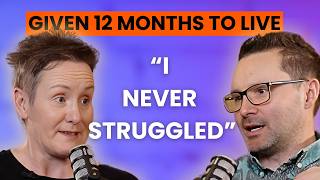
Di Foster was diagnosed with terminal breast cancer 15 years ago with a 12-month prognosis. She chose three guiding principles: be present, go natural with lifestyle and nutrition, and be grateful. She practices daily worry time at 4:45 pm, morning journaling, and reframes setbacks like a failed marriage as a first marriage.
Chapters
Today's special guest is Di Foster. We're going to talk about presence, we're going to talk about emotional reframing and, of course, living with intentionality. Enjoy the show. The Lead On Purpose podcast is sponsored by NZ Mortgages. Learn more at nzmortgages.co nz.di Foster, a huge welcome to the Lead On Purpose podcast.
It is so lovely to be here.
James, I'm glad you're here. I've been waiting on this moment for months. I remember the first time I met you four or five months ago in person. I've met you many, many months ago online, just following your journey, being inspired by your message. And it was actually Caroline, my partner, who came across you. I was like, james, you've got to see this woman. You've got to meet her. She's in Christchurch. I was like, no way, she's not. And so when I first got to meet you, I was like, wow, this Di Foster. Amazing to actually be around you. And your energy is infectious. As the listener and viewer will get to discover. Your story is mind blowing. And stories are stories, but some people's stories are truly transformational for the person that gets to witness them. And there's so many ways to apply what's happened in your life to our own lives. And when I chat to you, I'm like, God, I'm going to listen to that. Geez, that's helpful. So we want to unpack the life of Di. And there's quite a lot to unpack.
There's quite a bit. Let's go.
Yeah, let's do it. So anywhere that you want to go deeper, let's go deeper. But I want to start with the tough stuff. So we are not defined by moments in our lives, but we're defined by how we respond to them. I believe you've had to suffer something that most people to this stage probably have never experienced. And that's.
And that's where we say, james, can we just stop for the moment? When did I ever give you the impression that I suffered?
Damn true. Zero.
Can we just back up the bus for a moment? Let's just take the word. I journeyed through a couple of things. I did not suffer through them.
I love that. Okay, so right away, viewers and listeners listen to that right away. Perspective is everything. What we experience in our bodies and in our minds all comes down to the perspective we place on the experience. So I said, most people suffer through. And you're like, hold up a second.
No, you said, I suffered through it. Just so we're really clear.
And I love that. I love that you can say, no, I chose not to suffer, and that is a choice.
See, I wouldn't even say I chose not to suffer because that's such.
It doesn't even enter my head. It was like I journeyed through something and I chose. I'm a very pragmatic person, and I just chose to be as happy as I possibly could given my life circumstances. So I think that you can love your life regardless of your life circumstances. We don't have to love everything that's happening in our life, but we can still love our life and we can certainly love ourselves through that.
Well, right now we've got people going, what the hell did Dai go through?
What did you not suffer 100%?
So please share what happened in your life that took you off on a very different journey than you had expected. Where did that all come about?
It's always an interesting place to start because it's like, do we start right back at the beginning or do we just start with the dramatic? So do you want me to start at the beginning or.
I'd love to start at the dramatic, and then I'm happy to go back to the beginning.
Okay, perfect. So 15 years ago, I was sitting in a little oncologist's office here in Christchurch, and what he said to me was, die. You have terminal secondary breast cancer. It is metastasised in your lungs. You have a life expectancy of 12 months, and there is zero percent chance that you will be here in 18 months time. And on the back of that, what they said was pretty much there are no treatment options. So the only treatment option available to me was palliative care, chemo. And if you know anything about that, that will not extend my life, it may help my symptoms. Now.
What they told me to do was go home and put my affairs in order. And there was this little thing inside of me that thought.
Fuck, that was not where we were heading. I'd just met the love of my life. I'd moved to Christchurch. I'd been with Steve for about 18 months. And I was just like, this feels really unfair. And when I've spoken to Steve about it since, he said for him it was a grieving thing. It was like he was grieving the relationship that he was just so ecstatic to be in. And it was like we were gonna have maybe two years together. And so in that moment, if we, you know, go back to that dramatic moment, there was this little voice inside of me when they said I had zero percent chance of being here in 18 months. And I'd more likely have 12 months. I thought, my life is not yours to give me. Like, this is my life. And I thought, I'm pretty sure I could be here for five years, and I'm pretty sure that I can reduce my symptoms without doing palliative care chemo. So I'd done chemo before. I'd done surgery before, I'd done radiotherapy before. I was under no illusion of what that meant. But also, you know, my mum will tell you that.
There has been one miracle that's happened in my life. And it was in this moment that I was sitting opposite the oncologist and it was that I shut up and listened. Now, my mother, I love her, and she would say that I literally wake up in the morning just. And bounce out of bed just to hear what I've got to say, like. Cause I am immensely interesting and funny and literally I'm like, wake up and I'm like, what am I gonna say today? Cause it's gonna. And so my mother would tell you the fact that in this moment, I shut up and listened. That's when the miracle happened. And there were three things, what I call my whispers, that I heard. And the first one was simply, die. If you've only got 12 months left, for God's sake, be happy now. I figured out really quickly that we're not meant to just be happy in life. We're not meant to just be one singular emotion. We're meant to experience all of the emotions. So for me, that turned into be present. Just literally be in that present moment, each and every moment. The second thing I heard was, go natural, so be present. Go natural. So for me, it was, let food be thy medicine and medicine be thy food. So kind of just like everything I do in life, let it build towards my health and not be taken away from it. I didn't really know what that means, but I knew that I'd figure it out as I went. And what it did turn into was do what felt right for as long as it felt right, and then when it didn't, just let it go. And I think the other thing that happened is quite often people, when they get a diagnosis like that, well, their whole life turns into this wellness task list. And I was determined that to keep some sort of normality in my life, I still went to work every day. And I was allowed one appointment a week. And that's why I removed myself from the medical system, because they literally send you these appointments that conflict with each department, and it's just. It's quite a lot. And what they were offering was not actually going to help. So I felt like at some level, I took control for what I could control back to myself and made some choices about that. And that wasn't new to me. When I had surgery, when I was first diagnosed with breast cancer, they said to me, you have to have surgery because you have a very aggressive tumor. And I said, I don't have to do anything. And so we know that people that take responsibility for their own health have far better outcomes. So I took two days to decide that that's what I wanted to do. But if we get back to the three whispers, the third thing I heard was be grateful.
At this point, I'm pretty sure I snorted out loud and I thought, what the fuck do I have to be grateful for? I've met the love of my life. I'm only going to have 12 more months. And there was this really calm whisper that just said, you've got 12 months to figure out what you've got to be grateful for. And so I left the hospital and I had those three whispers, and I just pretty much took each day as it came, and I had an idea of one day, one lifetime. You know what? I wanted my lifetime to represent in each day, and I just took it one day at a time.
I want to unpack so much of this day.
There was quite a lot going on in there. It's amazing.
It's really phenomenal, I guess, being open. So breast cancer has played a big part in my family. Mom had breast cancer in her early 40s. Mastectomy. My grandmother, her mother, breast cancer. My great grandma, or my grandmother on my father's side, died of breast cancer. So it certainly plays a role in terms of conversation. I'm very aware of it. Your response to it is something I've never heard before. I've never came across that. I think it's amazing. Take ownership. Take responsibility. Decide on the journey. This is my journey. Not just be told what you're going to do. These whispers. Okay, this interests me. When you say a whisper, how did that show up? Was it your inner voice? Are you a religious or spiritual person? And it was higher power or God or something speaking to you? What was the whisper all about?
Well, I was brought up Catholic, but I wouldn't say that I'm religious. I would say that I'm spiritual.
I wouldn't say. But I would believe that that spirit is within me. And so I would say I call them the whispers of my own heart, you know, because it was just something within me. It's not a voice from above or anything like that. The other thing is I'm very good at packaging things up to communicate them. So let's not pretend that these whispers just came to me in this moment. I guess it probably took a couple of weeks for me to get clear on what they were and to frame them up so that I could then move forward with them.
It's amazing. And if we look at each of those individually, so that first one around being present, I mean, when I hear these whispers, if someone's listening right now who is going through an incredibly difficult time with their health, these are going to be so powerful. But equally someone who's going through a difficult day, someone who's had a shit day, it's been full on at work, they've got a difficult relationship problem. These whispers all apply equally and if.
Somebody has a very blessed life and doesn't think that there's much wrong with it. The third whisper is incredibly important because gratitude, when we've sort of got semi control of our own life, then extends out into giving back 100%.
And let's get to that in a second, the gratitude piece. But the present piece is so pertinent right now because we are in a world that's highly distracted. We've got a lot of distractions. We have digital technology which a lot of people are listening and watching to this on right now. That's a bonus. However, it can be really detrimental. So presence, how did you create presence in your life? How did you become more present?
I think that.
I think it was mainly with my thoughts because I had a very, very, very busy mind, like in my 20s. Just as a matter of interest, I actually, my first diagnosis with breast cancer was when I was 29, so very young, very young. So I was only 38 when I was diagnosed with terminal cancer. Just to put some perspective around that.
No family history, but we'll get back to that in a minute.
So I think it came around to my thoughts. So I'd always had this very busy mind. I'm quite ambitious. I've always been talking to, to my dad about how we think and all of that sort of thing. And so I think I just was very aware of my thoughts. So I kind of think of it as going down the rabbit hole. And so I became really good at catching my thoughts and reframing them to something that would be more useful. So one of the things that I did is I became very Aware of what I was in control of. And I don't even love the word control, but what I have influence over and what I don't. So if I was worried about something that I had no control over, so the day I die, the way I die, I would be like, okay, that day is not of concern to me now, but actually, what can I do? Oh, I can meditate and I can eat really well. And so literally, I would just catch myself and go, you know, like, actually, I'm doing the best I can today, and I'm doing this because I love myself and that's okay. That's enough in this day. And then anything that I was worried about that I didn't really have control over, I had worry time. Like 4:45 every day. I was allowed to worry for 15 minutes about everything in the world, everything in my life that I have no control over for the rest of the 23 hours and 45 minutes. That's when I got to action. All the things that I needed to for what I do had influence and control over.
That's powerful. I mean, if I only met you for three seconds in my life, and you said, james, Worry time, it's 15 minutes a day. The rest of it, get on with it, that would change my life like that. One thing alone is life changing because the amount of time we spend worrying, complaining, bickering, panicking, full of fear, I mean, it's tens of hours a day for most humans. That's a game changer.
And it's not even the time that I think is the problem. It's the energy. It's the energy. So, like, you know, I can watch Trump now with an entertainment lens and go, wow, this is fascinating. Like, where's my popcorn?
Unhinged as well.
It's like, wow. You know, because I don't have control over whether he's the President of the United States or not, but I do have control over my response to him. And so my ability to respond is my greatest, you know, like what I do have control over. So when we talk about, you know, being present, one thing I noticed that certain things might trigger me, you know, like, I might be triggered. So I knew what was. What I would be triggered on was unresolved in myself. So when I was worrying at 4:45, I was also in the morning journaling. And I was journaling every event or everything in my life that I needed to reframe or I needed to forgive somebody or I needed to forgive myself. And I just spent months and months and Months, just journaling, letters, reframing everything.
Why did you do that?
Because.
Unbeknownst to me at the time, there is a framework around natural, like radical remissions. But I intuitively knew that I was holding onto things in my life that were not serving me. And so I went back through and picked up those things. Like, I changed my language around my first marriage. It was like I was married to the most gorgeous human being and we had a 10 year relationship and I still have an enormous amount of love for him and he is the most divine human being because he will never, to my knowledge, he has never, ever said a bad word about me. And he has a few reasons to be, you know, to be a little bit angry with me, but he never did that. And so, you know, I decided instead of saying I had a failed marriage, I simply said I had a first marriage.
That's a big difference. That one little word changed how you felt emotionally.
Yeah.
And so you started doing this.
Yeah.
With different experiences and memories and.
Yeah. Wow. And so instead of I needed to forgive myself for that relationship, I needed to forgive myself for the way that I ended that relationship. And I realized that I was simply disappointed that I didn't have the information at the time to live up to my own gold standards. So if I had felt bad about the end of that relationship, it was because I hadn't lived up to my own gold standards. And so then, you know, I changed it around and was like, well, how do I live? How do I live up to my own gold standards in life? Got the gold out of them. I've said, you know, my sister was. Is nine years younger than me. When my mum came home and told us that she was pregnant, I was like, holy shit. My parents don't need me to be the baby of the family anymore. So I decided then I needed to grow up. And then I could see that in my, that in my 20s I was so growing up and being good that then when I was 28, I literally, that was part of the reason I left the relationship because I'd always been forcing myself to do the right thing and I hadn't spent any time going die. What would you like to do? You know, like, I know that you're meant to wear these clothes and you meant to do this and this is how business people look, but actually what suits you, you know, and it was like that, 28, leaving that relationship, leaving my life essentially at that time and starting again, and then literally having almost 10 years where I just was like, I'm just going to lean into not being responsible and not doing everything right. And I just got to know myself after that.
Unreal. And I think too few of us do that. I've been through a marriage that ended in divorce that I look back on as being a great time in my life. I've got a great relationship still in friendship with my former wife, but that took time to look back on that with. Oh, that was actually quite beautiful. And again, how it ended, I'd love to have had more information on how to communicate better. I had no idea. Even the timeliness of the communication and the tact of the communication and the speed of the dissolution, and I had no idea on that stuff.
And even Languages of Love, that would have been big for me. But also I look back and think I'm not sure it ever would have change the outcome. I don't know that it would have, you know, because, you know, I remember saying to my, you know, to my partner at the time, my husband at the time, I said, you know, we are. We are tactile beings, you know, we like to, you know, communicate and be touched and all of that. And he said, I'm not. And I remember my heart broke. And I thought, if anything, I know about myself, I am. Yeah, that is who I am. That is, you know, when we do. I've done a strength test recently, and I was really surprised. But the first thing my strongest just, you know, strength was love.
There you go.
And I thought, of course it is. Yeah, of course it is. I'm also one of the most challenging people you'll ever meet. I agree. But I'm also the most supportive and loving.
Yeah, I can. I agree on that too. You know, I agree on both fronts. I think it's amazing. It's interesting around this Languages of Love. I want to dive into that for a second. So Gary Chapman has the love Languages assessments. Free assessment. I'll make sure we put it in the show notes. So mine is time spent.
Is it to receive or to give?
Time spent, like with others. Giving, yeah.
Is that how you like to receive it, though, or how you like to give it? Because that's the thing I always think is really interesting is everyone gets caught up on the fact that it's like we don't necessarily give love the way we want to receive it.
Yeah, totally. For me, I don't actually want gifts, like physical gifts. I don't want. I actually really like to receive touch. So, like a hug, I love. I'm a hugger. Right. Or if I Go for a massage. It's like, oh my God, this feels good. This is a treat. This is indulgent. Yeah, I love time spent giving that. And yeah, in return it's in the top two. But then, yeah, I would say like the massage and stuff like that. Like time spent is good, but touch is really key. Gifts are right at the bottom for me and I give gifts not all the time and they're not very lavish. They're usually, usually a book. I usually gift books.
I love that.
What about you? What was the love languages that you discovered you needed to receive and then that you like to give?
I'm definitely time, you know, above all else, it doesn't matter what you do if you don't spend time with me. Interesting. I love receiving gifts. There you go. But I'm a shit gift giver, so like I'm well known for maybe once every five to six years out the gate, like primo gift. Like I am amazing.
My birthday's coming up soon. Is this one of the years?
We're too early. I haven't known you long enough. You know, even to my nie and nephews when they were possibly not a great gift giver their whole life, but when they were 16, I've taken each of them on a trip. Now that fulfills two things for me. I knew that I wanted to re establish an adult relationship with them and it's time. So each one of them, when they've been 16, I've taken them on and they've got more extravagant as they've gone on. Sorry, Sean, if you're listening to this, you just got Melbourne, Jessica got Vietnam, and then Ben got three weeks in Japan.
Oh my God. Lucky kids. Lucky you too.
And now I'm going around like, Sean's just turned 30, so that was one of the reasons we went to Europe last year. Again, time, time is everything.
And it's one thing literally and people say, oh, there's so much time in the world. Like, no, there's not. It's very finite time.
Yeah. And so I like to, you know, it's definitely time. I'm definitely words of affirmation, you know. I love receiving gifts though, because it's the thing that I'm not good at. My sister is a amazing at it. Oh, both of them are really. Jo is amazing at the gift itself and Kate is incredibly thoughtful.
Shout out to your sister.
Gorgeous. Yeah, two of my sisters. And I've got a brother as well. And his wife is amazing at gifts.
Pretty much him surrounded in gifts.
I love that. And I'm absolute. But as I said, once every now and then, I'm out the gate. You'll be lucky if I ever remember someone's birthday. It's just like. It's not on my radar. It's just.









