Why Everything Is Scary Until You Do It
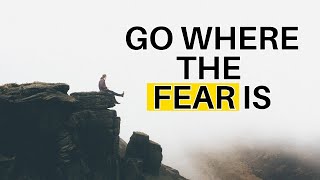
James Laughlin breaks down why fear holds us back and how gradual exposure rewires it. He defines fear as False Evidence Appearing Real, shares his story of leaving a secure job, and warns against reckless "burn the boats" advice that preys on people's insecurities.
Chapters
The Lead On Purpose podcast is made possible by our generous sponsor, NZ Mortgages. You can check them out at nzmortgages.co.nz when was the last time you did something that truly scared you? Have you ever wondered if the fear that you're feeling is actually a sign that you're on the right path? Today we're going to explore why the things that terrify us might just be the experiences that change us the most. When was the last time you felt afraid? I'm sure it wasn't that long ago. And if it was a long time ago, maybe you're playing it safe now. Look, let's get clear. I'm not talking about doing stuff that's actually dangerous for us or being around people who are dangerous for us. I'm not encouraging that at all. Let's get clear on that. But other things can hold us to ransom. Speaking on a stage, starting something new, looking silly in front of others. So why is it that that happens? Look, I'll start with an acronym. F.E.A.R. f E A R. False Evidence Appearing Real. Often we get this false evidence that appears to be real and it makes us go, well, you shouldn't do the thing we hold back. Look, I remember a couple of things I'll share with you. I had a really steady job working in an educational institution. I'd been there for a long time. I got paid very well. I had like 14 or 15 weeks of holiday a year. Life was pretty good. But I was bored. Bored senseless at the start of it all. It was exciting and fun, but eventually it got to the point where I was like, God, there's something else out there. I'm not sure what it is. And that was frightening because the thought of leaving the safety of comfort, of pretty good pay, really good holidays, pretty good benefits, and not a bad working environment. The thought of leaving that and starting something new was frightening. Why? I don't know. Because it was just so safe where I was. I had this little inkling that, hey, I want to start my own business. I'd already had a retail business and I had an educational platform business that I was running for drummers. And that was interesting, but I wanted something totally new. And I thought, you know what? I want to work with people who geek out on high performance, people who are great at what they do, but want to become the greatest version of themselves. That's what I want to do. So just before COVID I fully stepped away from the safety net. Now I'd spent a couple of years building things up here's something I want you to know. I had a guy who was kind of coaching coaches, right? It's a seedy industry. You got to look out for this. If you're a coach, look out for this. And essentially they're saying to a coach, here's how you build a coaching business. And this coach said to me, look, give me, I think it was like $5,000 a month. Give me $5,000 a month, sign up for a year, I'll help you build a great coaching business. And so the fear kicked in for me right away. Why? He said something, he said, always burn the boats. I said, what does that mean? And he started telling me this story of this navy captain who had these sailors on a boat. They headed to an island and they wanted to take the island and essentially overrun the island. So when they landed to start fighting, all the sailors and infantry got off the boats. And this captain or this leader turned around and burnt all of his own boats. Why? Because he felt that if the men that were fighting there knew there was no return, they would go all in and win the war. And of course I was told, the story goes, they won the war. However, if you do a little bit of research, that story is a myth. It was made up, it's not real. This coach was selling it to me like, this is what happens and this is what you need to do. You need to give me a bunch of money. And I promise you the world, when you have a gut feeling that something is off, trust your gut. What I did, and I think this is helpful, hopefully for you, if you're thinking about facing your fear, if you're trying to take the leap, sometimes starting slowly by exposing yourself. You know, when you talk to great psychologists, the talk about exposure therapy and just, you know, tiny, minimal amounts of exposure to that fear to build up to the thing. So for me, two or three years before I finally said goodbye to the safety of my full time job, I'd started building up the business, some clients and some speaking engagements. And so, you know, got lots of feedback and did some studying and leveled up and continued to build the business. It was like a circle, right? I'd just go round and round building it. So by the time I left, I was leaving and walking in to equally the same amount of pay, if not a bit more and a trajectory that looked very positive. I wasn't burning the boats. Don't listen to that metaphor, right? If you need to build your side, hustle on the side, do it, do it slowly, do it gradually and eventually, it'll become your main thing. Now, that's me just talking about changing careers. But this could pertain to anything. You know, it could pertain to a relationship that you want to move into or a relationship that you want to maybe step away from. Like, it's not about ripping the band aid off really quickly. It's about stepping in, exposing yourself to a fear, trying things, being challenged. To me, that's so important. Really, really important. You know, I want you to think about what you have done to overcome your fears. Maybe it's a fear of water swimming. Maybe it's a fear of standing on stage. What have you done? Look, if someone had said to me 10 years ago, James, you'll stand on stages with anywhere from 50 people in the audience to 5,000, and you'll speak for an hour, sometimes up to three hours, if you're running a workshop, I would have said, you've lost your mind. That will never happen. That's horrific. I'm sweating just thinking about it. It's what I would have said 10 years ago. There's no way you would have caught me on a stage speaking at all. And now what do I do? Well, at least twice a week, I'm on a stage somewhere in New Zealand, Australia, or around the world, speaking to people about what I'm passionate about. High performance, leadership, team, culture change. And I love it. Absolutely love it. Why? Well, there wasn't just a day that came that I was like, whoa, I'm going to jump on a stage and speak to thousands of people. No, no, no. I exposed myself to that fear. Actually started with Skype. Do you remember Skype? God knows where it's gone now, but Zoom's kind of taken over. On Skype, I started teaching drums. I was one of the first to teach drums back. It was 2004, 2005, maybe, back in the early old days, and I was teaching drums on Skype and talking to one person. A few years later, that came to four or five people on the same call, getting taught at once. I'm speaking to a larger stage, digital stage. But I started to build up confidence in speaking and thinking on my feet again, that exposure therapy. Then I got to do it at a summer school, like a workshop in Canada. And again, it was small class, slightly bigger class, then in front of a stage, continuing to build that momentum. And then as I started thinking about shifting careers, I started doing the same thing. Teaching. It was then on Zoom. Coaching, running leadership groups and masterminds on Zoom. And during COVID of course, you'll remember lots of us got used to using zoom and then stepping on stage. It was. Well, I started in a small classroom with 10 people speaking to them, and then 50 and then 70 and then 100 and then I remember speaking. It was 1500 people at a large convention center. And I didn't have the fear anymore. I had excitement, but no longer fear. Why? I had exposed myself to that fear enough times where I was confident in my competence, my abilities, my skills to actually get up there and do the thing. So whatever your fear is, go and face it. I think the best thing to do with fear is to dance with it. Sometimes it will push you and it'll be a little bit strong and so you'll have to maybe lean back. Other times you'll have to lead the way and do the dance. So I want you not to be shy with exposing yourself to what it is you need to to overcome the fear. But just be cautious. Sometimes when we're in vulnerable times in our lives, people can see that. And there's certain people that will take your money when you're vulnerable. It might be cool. Coaches, clinicians, NLP practitioners. I mean, some of these people are amazing that I'm listing off here, but just be careful. People will sometimes prey on vulnerability. So be really careful who you let in. If you're in that kind of phase of your life where there's vulnerability and you're not sure where you're headed, just be careful. Don't go all in. Don't burn the boats. Slowly expose yourself to the fear. Step into it. Learn. Build confidence. Go slowly. Look, do you know what the top fears for humans are? And this is global? Number one fear. The fear of not being enough.
Not being enough. Not being enough for the people around you. Not being enough for yourself. Not being enough for your family. It's number one fear, followed by the fear of failure. The fear of failure. Isn't that so on almost silly that we are afraid of failure? We were born to fail. You know, when you think about learning to walk, how many times did you fall on your face? So many. But look at you. You're walking. Failing is essential. It's part of what we do. You've heard this so many times, but sometimes that subconscious fear sitting in your amygdala, that part of your brain that's scanning for fear and threats, sometimes that amygdala overrides our logic and our knowing. So it's really important to understand those fears are going to come up time and time again. The fear of not Being enough. Fear of failure. So what are you going to do about it? Well, I'm going to challenge you, please, to recognize what you're afraid of. And also consider that beneath every fear is an opportunity. Because when we start to dance with our fear, expose ourselves to it and overcome it, opportunities are on the other side. The people that I work with, if they choose to not overcome their fear and just start to expose themselves slowly, they wouldn't be gold medalists. They wouldn't be world champions. They wouldn't be speaking to a thousand people in their organization on a stage. They wouldn't be writing their book, whatever it might be. They wouldn't be doing it because they're sitting in fear. I'm so proud of them doing the work on them. It's not my secret sauce. It's them exposing themselves to the fear moving forward. Look, I'd love to know what you're afraid of. Currently, send my team an email or if you're here on Spotify or Apple, you can see there's a send me a text, send me a message feature. Just hit that. I'll get that message, but please let me know. And if you're on YouTube, just comment below. What are you afraid of? What is it that you're going to tackle? What are you heading towards? I hope it's something that excites you on the other side that will motivate you to move towards it. And if you spot other people around you who are operating from a place of fear, it's your challenge and it's your responsibility to help them navigate that. You can't do it for them, but you can lead them in the right direction and perhaps share this episode with them, with a person that you know who is fearful of taking a risk of moving forward. And as I say at the start, this is not about being around people who you're afraid of. This is not about putting yourself in harm's way. It's not about that at all. Avoid that. But you know, for personal growth, it's important that we face our fears and do so in a safe and healthy way. So, look, I hope you enjoyed this episode. Please do. If you're on Apple, hit subscribe and leave me a rating review same over on Spotify. And if you're here on YouTube, hit subscribe. Great to see you here. And until next time, please get out there and lead your life on purpose. The Lead on Purpose podcast is made possible by our generous sponsor, NZ Mortgages. You can check them out at NZMortgages Co NZ.









