Why Hustle Culture Is Failing Us | Mohammed Faris
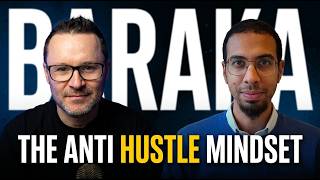
In this episode of the Habits of High Performers podcast, host James Laughlin interviews author and productivity coach Mohammed Faris, the creator of The Productive Muslim and The Barakah Effect. The conversation traces Faris’s personal journey from a secular college student overwhelmed by conventional self‑help advice to a Muslim who reframes productivity through the lens of faith. Faris critiques modern hustle culture, introducing his "gardener mindset" – a three‑part model of intention, diligent process, and reliance on God – and explains the concept of Barakah, a blessing‑based outcome that transcends traditional ROI. They explore how the Prophet Muhammad’s simple yet structured daily routine (pre‑dawn gratitude, ablution, prayer, community gathering, and mindful start to the day) can serve as a template for modern high‑performers. The dialogue links these practices to scientific findings from Blue Zones, circadian health, and habit formation, highlighting the five daily prayers as a powerful habit loop with physical, social, and spiritual benefits. Faris emphasizes purpose‑centred work, sincere intentions, and detachment from results, arguing that true productivity serves worship and community rather than personal gain. The interview also touches on charity, community impact, and the universal applicability of these principles, encouraging listeners of any background to draw wisdom from faith traditions. The episode concludes with practical advice for designing a productive morning and a final life‑lesson about sincere intent and hard work.
Chapters
Today's special guest is Mohammed Faris. We're going to talk about productivity. I'm a productivity nut. I've had so many people on the show, including the amazing David Allen on GTD. But today we're going to talk about The Productive Muslim and The Barakah Effect. These were books that were suggested to me to read because, James, these are the same topics as you, but from a totally different point of view. So if you're interested to hear about that today, enjoy the show. Mohammed, a huge welcome to the Habits of High Performers podcast. How you doing?
I'm good, thank you for having me. Really honored to be here.
Oh, I'm so delighted you could be here. And it's interesting, just to give the audience a background how we connected. So my good friend Bariz Shah, he's a New Zealand-based author. I picked up his book many years ago, was fascinated by his story, got him on the podcast, and we got chatting. And as we got chatting, I was, I was getting curious about his faith in Islam, and it was really interesting to me. It was something I had never been exposed to. And of course, you know, over the last 20 years I've been exposed to lots of movies and all this stuff, chaos, right? And Bariz says, why don't you come to the masjid? And I was like, okay. And this is the same masjid where there was a terrible atrocity several years prior here in Christchurch, New Zealand. And I was filled with excitement, fear, there was, you know, all these feelings, right? So I rocked up at 5 AM or so and Got to meet Bariz and his brothers and it was amazing and peaceful and they fielded all my questions. I had so many questions and they fielded them all. I was this crazy, curious Irish guy and we went and had a beautiful breakfast. And since after that with Bariz, him and I get together almost monthly to chat about life and to chat about faith. And I grew up in Northern Ireland, so you can imagine there was some challenges there around religion for me growing up in essentially a war zone. So, he put me onto your books and he says, James, you've got to read The Productive Muslim. I was like, yes, I do. I'm into self-help books. I write a self-help book. So, I was like, yeah, I've got to get it. And then I came across your second book, The Barakah Effect, and that was awesome. And I read it with— I was reading it going, Muhammad speaks the same language as me. This is awesome. Different view, but same kind of language. So, Muhammad, what got you to writing all this? What's your story?
I love that. Thank you so much for sharing that. Um, all right, so I started off curious about self-help productivity when I was in college. I was this rinky-dinky student who's broke, thinking to myself, I need just something with my time. I gotta be productive, gotta get, get things done. I was busy, I was feeling busy and overwhelmed, and I was thinking, man, I'm just a student and I'm feeling busy. Imagine if tomorrow I have a family and I work. Oh, how would I manage it all? One of my friends told me something very interesting. He said, if you have a problem in life, know that someone somewhere wrote a book about it. I was like, huh, that's really interesting. And I remember like, okay, I'm struggling with this whole time management productivity stuff. Let me just go and see what's on this topic. And that's when I kind of started following the classics like David Allen, The 7 Habits, right? The good old Robin Sharma, Be Your Friend, all like kind of like learning about what is mean to be productive, get things done. But then I had this part of me was thinking, well, these are great, but I wonder, is this something that can come from my worldview, right? As a Muslim, as a practicing Muslim, I was like, is this something can inspire by my own faith? And I was looking around even towards the mosque, the sermons, you know, the regular talks we have. I'm like, I don't hear this sort of productivity language being spoken. So let me just start a blog. And I remember the it was November 2007, um, I woke up in the morning for that 5 AM morning prayer, and, uh, these two words, Productive Muslim, popped in my head. Huh, that's pretty cool, I like that. And 2007, when the blogging scene was starting, right? Remember blogger.com? And I remember, yep, yep, the whole copy blogger, like all the, the, the whole content was the thing. So, um, basically I said, okay, let me just register. I went to godaddy.com and registered productivemuslim.com. And I said, let me just start writing about productivity as a Muslim, right? So what does it look like, especially given some of our certain challenges? For example, the 5 daily prayers. Like, how do you manage the 5 daily prayers and be productive? How do you manage Ramadan and fasting, you know, and be productive? So kind of answering those questions, I call scratch your own itch, right? Like, what are you struggling with that I would love to find answers for? Um, and that's what got me into Product Muslim. Initially, I was just kind of taking what's out there and kind of applying an Islamic lens to it, so to speak. But then eventually I started to ask myself, well, is there anything in my faith talks about productivity? Is there anything from within our own sources? So I looked into the Quran, looked into the prophetic sort of lifestyle and his sayings, and I start almost like, almost interpreting verses and interpreting sayings of Prophet and his biography from that angle. And to a point where I started even challenging the kind of the models of productivity that's put out there. Because I realized that, you know, I talk about the hustle culture model of productivity and how that's being perpetrated as the way to be productive and successful. Go, go, go, busy, busy, busy, all-nighters. And unfortunately, we've all seen how it affects people's health, well-being, spirituality, relationships. And I felt like that doesn't sound right, but what's the alternative?, right? Because then it's not, it's not being lazy. What is the alternative? So I started like redefining and rethinking productivity from this worldview. If I, if I, if I accept this worldview that I'm here to worship God, and I use worship in its broadest sense, meaning to be, to do things that are good, to avoid bad, to be a good person, then what does it mean to be productive across all my roles, not just at work? So what does it mean productive as a dad? As a husband, as a neighbor. And I think when I started writing from that perspective and then looking into the verse of the Quran and the sayings of the Prophet, it just— the picture came through. And it's like, oh, and that's when the whole— can you say this movement started? This Parak Muslim blog, we got our first million followers within like a couple of years. Back then it was really easy, right? Facebook was so easy to get a million followers. Now it's much harder. But it's like, you know, things are popping up. People are like, oh, we were looking for this. Like, we never heard this before. Um, so that was my kind of the journey, my first book, and got introduced to my publisher. So published the first Productive Muslim, trying to explain productivity from that faith angle. And then my second book, The Baraka Effect, was, well, what is the outcome of this productivity if I do align myself in the way I manage my energy, my focus, and time, and I live this worldview? What is the outcome? And there was something that you couldn't put a you couldn't put a name— sorry, you couldn't put a number to it, output to it— is this idea of Baraka. It's almost like this blessing, this grace, this peacefulness, this, um, you know, this feeling of completion, of success that's hard to describe. Even though sometimes maybe the numbers don't show it, but you're like, I know, I'm just content, I'm happy, I'm being— I'm fulfilling all my duties and responsibilities in the most holistic way. So I call it the Baraka effect., and I started collecting stories and sharing ideas. That's what the second book is about. And that's where I'm at so far.
Hey, James here. I wanted to take a quick moment to let you know about something. Look, I get asked to deliver keynotes and workshops for teams and companies all over the world, from London to Antarctica, from America to Australasia, from armies to small businesses to large corporates to sports teams. But I go in and deliver keynotes around the mindset of high performers, around the habits of high performers, about how Navigate Change. If you would like me to come and speak to your team or speak at your conference or deliver a bespoke workshop, please get in touch with my team. Caroline@jjloughlin.com will be able to help. I'll also make sure that we put that in the show notes. That's incredible. Thank you for sharing that. And it's interesting, I'm so into productivity. And David Allen, you mentioned earlier, I've had him on the podcast twice. I just think he's just so incredible with the GTD method.
I call him the father or the grandfather of productivity.
The grandfather's probably very appropriate, actually. Been around a long time. He's impacted millions of lives. That's cool. And so, for me, I'm really magnetized to learning how I can be more productive with the time. And if I seen your book initially, I might not have lifted it because I would've looked Productive Muslim, and I went, well, it's not for me. I'm not a Muslim. But then when Baris chatted to me, he's like, dude, this is your language. You've got to have a read. And I was like, well, if Baris says so, I'm going to read it.. And it got me curious. I was like, I'm so stuck in my world. And we all are. We're stuck in our own worlds and our algorithms prove that. And it's actually quite exciting to get outside your world and go, oh, I see what they're saying. I see how they're looking at that. And then I can learn a little bit about your faith as I'm going through your book as well, which for me was interesting, not knowing a lot about it. And so the Baraka Effect for me was this idea that kind of that we get more from less, that we're not hustling hard. Would that be fair to say?
Yes. It's like, it's like the idea of you could be hustling all your life. That is, your results not up to you. The outcome's not up to you. I call it the gardener mindset, right? You know, you do your best, you put in the hard work, you follow the process, you ask God for help, but you cannot guarantee the results. And just because you don't get the results you're looking for does not mean you are a failure. Right? And I think for a lot of people, productive space, that feels very uncomfortable because the hustle culture world is like, we control the outcome, we control. If I fail, I'm a loser. If I fail, something wrong with me. Versus saying, wait a second, you know, what is first? What's your intention? And what is why you're doing this? And if it's for a higher purpose, if it's for higher meaning, if it's for worship, if it's for a long-lasting impact, you might not even see the results in your own lifetime. And then, and it's okay to be like, again, we, we think productivity a lot of times is very short, hustle culture is very short-term, but sometimes there's some things requires to think long-term, right? Called having a high time preference, right? Thinking long-term, thinking what's the high impact, why am I doing this? So we start with, so set the intentions, and then you follow the process, you take the action, you take the means. I call the gardener mindset, right? You go out there, you plow, you sweat, you work hard, And then there's an element, the third element, which I say is about— is asking God, right? And I feel that again, sometimes we are conditioned to think that everyone is secular, no one has spirituality anymore. And I doubt that. I feel with the rise— even I was talking to some of the publishers, they're saying the religion and spirituality category is like booming, right? People are really looking for spiritual answers. So I said, well, so there's a third one, which is to ask God for help. Like, feel that you are part of this whole universe, and there's a higher power, there's Allah, there's God who can make things happen, and ask him. And once you do this 3-part, that's your responsibility. The results, the outcome is not up to you. And it's— it fills you that peace, right? It fills you with that calmness. It fills you that, you know, even if I don't see the results, I'm going to keep going. And I think we sometimes need that language in the productivity space. Versus the hustle, hustle, hustle, get results. If you don't get results, you're a failure, so to speak. And I think there is that different worldview, which I think is very important to have.
I love that. It's interesting. A couple of things have come up for me as you share that. So the first principle in my book is always play the long game. And I think as high performers, people tend to want to just win quick and fast. And it has to be this term, this quarter, this year. I must get into the big team for this Olympics. I was like, well, there's always another Olympics and you're still young enough to do the one in 8 years, not 4 years. And this other concept for me is I'm probably the anti-hustle guy when it comes to high performance. Some people are like, "You're weird. You must hustle to win." I'm standing on stages speaking to audiences and telling them not to hustle. And they're like, "What do you mean?" I was like, "Well, it's not hustle that gets you results. It's habits. It's daily rituals and habits." And if you stick to those for long enough over a long period of time, you'll get great results and they'll take care of themselves. Now, the other part that you've shared with me that, you know, as I said, I came from Northern Ireland and religion, Protestants and Catholics kind of fought and still do quite a bit. So, I tended to step back from religion and not engage with it. We didn't talk about it at home. We certainly learned about it at school. And I was curious, I think I was top 1% in the UK in the religious education class when I was at like 16 years of age. We do GCSEs in the UK. And so I was very curious but never kind of engaged. But as I've got older, the one thing I do a lot is meditate. I meditate a lot and I think about the universe and I think about higher power and energy. So in a lot of ways, that could be called God or that could be, you know, it's just my way of connecting with spirituality. Why do you think that as we get older, we want more of those spiritual answers?
That's a good question. Yeah, it's a great question. I think, again, I guess perhaps it's the realization of our mortality, right? Realization we're gonna die soon, right? And part of us thinks, is this it? Is this all it? You know, we're like, is this it really? Like, that's it? Like, this whole— what my whole life is about? And you, you wonder And then you look outside and you see this beautiful, beautiful world we live in. Anything can be just— this cannot be just it. It can't be, you know, something. It'll be, it'll be just almost meaningless, so to speak, um, if, if that we just come here to have babies and don't go die, right? Like something is off there. And I think that's what puts people on this journey, um, and, and then when they find a path, that makes sense to them, a path that's clear, a path that, you know, just speaks to them. It's okay, well, I'm ready to commit and I'm ready to kind of have these guidelines. One of the interesting things about Islamic faith is that it's just very, very detailed and very involved, right? Like 5 daily prayers, you know, it's like it's very involved. But that, that structure, you talk about habits, right? That structure establishes you. Uh, one of my next book, which I was talking about earlier, is about the 5 daily prayers, because I was just fascinated by this idea of like, why 5 daily prayers? Why every day, every single day for the rest of our lives? Like, what is about 5 daily prayers? And then I started discovering from a not only spiritual perspective, from a physical perspective, from a social perspective, from emotional perspective, from a community perspective, from a, you know, from just, um, uh, from work perspective. It's so— I was like I was blown away. Like, it's a simple ritual. Again, back to habits and process. That simple ritual, which is once becomes structured part of your day, it has knock-on effect too on your family, on relationships, on your community. And it blew my mind. I was— I never saw that ritual. I used to go, oh my God, I gotta pray again, right? Versus, oh wow, I'm looking forward to praying because now I know the value. And I think sometimes we don't see it. We stick these as prescription. Okay, I gotta do it, gotta do it. But it's beautiful when you start asking those deeper questions and make it relevant. How is it relevant to my life and how to make it work? And that's part of the journey of life, I guess.
Yeah. Yeah, it's beautiful. It's interesting that you share that with me. I think about Dan Buettner's work on the Blue Zones. And so he traveled the world with National Geographic looking at parts of the world where there was a weirdly high number of centenarians living in those regions. So people over the age of 100, Loma Linda, in California was one, somewhere in like Cyprus or Crete, Japan, Okinawa. There's just a small number and really large concentrations of people over 100. And he started looking at, well, what are they doing? Like, what does their life look like? And a lot of the things you just mentioned, community, they got together often. They were connected with God and spirituality and would have at least a weekly connection with others to pray. They moved their bodies physically and walked uphill They ate clean food, they fasted. And so you start looking at all of this and you're like, well, actually what you're telling me just a minute ago, that kind of all lines up with his scientific research.
Mm. Love it. I love it. And again, unfortunately, this is a sad— I will say it's one of the saddest things that happened in the last 100 years is when we, because of history, because of understandably, understandably the wars between religions and all of that, It's all like throwing the baby in the bathwater, right? Oh, it's all bad. Oh, we don't need this in modern life. We're modern creatures. We're more logical. We're very scientific. Therefore, all this stuff is a bit nonsense. Let's just throw everything out. Versus realizing there's thousands of years of wisdom that's in here, that the least we should do is explore it. And I think the work that I do and the work that others in the field do, that when we try to explain these concepts, in modern terms, in modern, like, in self-help terms or modern terms, people are like, okay, I get it. I might not be part of that religion, but at least I understand where they're coming from. And it's like, why they pray 5 times a day. I understand now why Ramadan is a, is a powerful time of the year to fast, for example. All of those things becomes clearer when you put that language around it, um, versus sometimes when, again, we just put it as, oh, this is just, you know, a bunch of stuff that's been said a long time ago and it's not relevant to our modern lives. We don't need this stuff. We, we're very advanced now. Uh, we don't need any of that at all. I think that's where the, the challenges. And as a Muslim, again, as a Muslim, we have this from our, from our creed understanding is we're not sent here in vain. We're sent here to worship God. We are— we have a blueprint, right? We have the Quran, which is the, the last divine message to mankind, and we have the prophetic example as a human model for us to follow. And the idea is that you do your best. If you do good deeds, you'll be rewarded. If you do bad deeds, there'll be, you know, you'll also be punished as well. And there's, you know, and there's like ultimate justice, right? And even like, you know, with what's always happening in the world, sometimes you see atrocities around the world thinking, this can't be, people just can't get away with all of this and not, there not be any justice. But the fact there is a hereafter, the fact there is, there is a time of reckoning, and I think that elevates the purpose of life and then elevates things like Well, what is the purpose of me being productive? What is the purpose of me running my business? You know, how do I manage my energy, my focus and time in such a way so that I can live a good life and be a good human being and to reach the destination in a way that's meaningful versus kind of like, yeah, let's just make more money. Let's just hustle more. You lose yourself along the way.
And you see people, you know, I've worked with a couple of billionaires now and you see them A very small number are maybe fulfilled and deeply purpose-centered, but many of them are actually hollow and miserable and their health or their relationships are suffering. I mean, their bank balances have way more zeros than mine, but they're not happy, right? It's like, well, I'd rather the peace of mind and the joy and a few less zeros.
Oh my God. I'll say, if you can go to bed at night and sleep, I mean, it's huge. I mean, just to sleep peacefully, that is huge. It's such a huge gift. We take it for granted. Versus going to bed and you're restless and you're just stressed out and anxiety and you worry about what's happening tomorrow. I mean, I will say it's such a blessing to have this wisdom that you follow, and not just abstractly but practically, right? Get up and pray. Get up and we have— we wash ourselves before. For example, I love the idea of washing yourself before you pray. That refreshes me a lot. I— that resets my entire body. Now I can give you all the scientific evidence why that's helpful and good, but even if you didn't tell me any of that, the fact that I just go through that process, it re-energizes me. Versus, okay, I have— can have coffee, this is great, but there's something deeper when you have a spiritual refreshing experience. Um, and you need that, you need that to, to make it through this world with all this happening as well. Like just staying sane and staying healthy, you know, positive, and having that resilience. You know, we've all seen the images from Gaza and the videos from Gaza and these people who are unbelievably under so much— I mean, there's a genocide, yet you see this resilience. I think, where'd that come from, right? And, you know, you think you'd lose your mind if you see someone, you know, entire family being blown off, but Where does that come from? It comes from faith. It comes from that, from these rituals. So I feel like it's so sad that we don't— I'm talking back to self-help world— that we don't tap into this. We feel it's taboo. We feel it's like it's not professional. It doesn't feel right in a mainstream book. But I think it's important we need to tap into that now and bring it because people are hungry. People are really thirsty for this.
I agree. I'm seeing it more and more. And you know, Robin Sharma, who we mentioned earlier, I have been following Robin's work for years and he does really lean in on the spiritual side and he's one of the few that started doing that more. And I think that's important that we all do that and lean in in our own way. Now, if someone's listening right now going, I want to be more productive, what would a productive morning or a productive day look like if they worked with Mohammed?
Um, so I'll explain, um, the prophetic routine because this is the— there's a great book called Michael Hart's, you know, when he ranked the most influential people in history, he put Prophet Muhammad as number one. And when he was asked why, he said he's one of the few people who was both religiously and worldly successful. So whenever we study successful people, we look at their routines. Well, what is the routine of Prophet Muhammad? And I actually wrote an article about it, and Islam the Barakah Effect also mentioned it. And if you look at his morning routine, it looks simple, but I feel we've completely lost it, to be honest. Where, you know, he wakes up before dawn and does something— again, talk about circadian health, talk about, you know, sunrise, sunlight, talk about— there's a lot there that can go into just the scientific waking before dawn and getting that first sunlight. But he wakes up before dawn, you know, this is after he's been up at night praying. There's a whole different story, we'll go to that. But by the way, before dawn, Um, and then he— and his— in the description of him waking up is very— he rubs his eyes. He would, um, he has this close— almost like a toothbrush called siwak, which will rub his mouth. And he would thank God. The first thing he would say— well, he's a specific, uh, prayer, I would say, which is, praise be to God who gave us life after death, and to him we shall return. So, man, the first thing you say when you wake up is first, thank you, I'm alive, and the fact that I know I'm going to return back to him. So it sets you up for that, that first hour. And then after we—
can I touch on that for a second before we go to the next bit? So what I love about that is there's so much science around gratitude practice first thing in the morning, and the neuroscience backs up what it does to us at a cellular level and the manifestation of things that it creates. So that's a big tick, right?
There you go. There you go. It's the first word. And then he gets up. And of course, if you compare that to us, when the first thing we do wake up is check our phones, which is a whole disaster, right? I mean, that by just by not doing that is a huge plus. And then he gets up, he prepares again, washes himself with that, without water, the ablution process, which is washing your hands, your mouth, your nose, your face, your arms, wiping over your head, your ears, and your feet. And based on my next book, I'll talk about this. I said this is 80% of the sensory parts of your brain are in those areas, in those limbs— your hands, your face, your arm, mouth, nose, head, ears, and feet— like 80%. So already you're waking yourself up. Right? And then you get up and then he goes to the mosque and he leads his congregation. There's a community, there's prayer, there's idea of just being together, listening to reciting the Quran. So there's a recitation, there's again like the whole unison, like when you stand in line, the heart rates actually almost like align with each other when he's standing next to his shoulders. So imagine first thing in the morning, like I will say to people, like by 6 AM I've already bumped like 20 people, right? The sense of community, the sense of coming together. So you pray, he prays together, and after he turns towards— then he talks to his community, and he stays in the mosque until sunrise. And it's something that's, again, sitting, meditating, thinking, reflecting, not just going rushing out to the world, you know, just like taking it easy till sunrise. After sunrise, he kind of goes in, he goes, checks on his family. If there's breakfast, he says, is there anything to eat? You know, he lived a poor life, so if there's anything to eat, he'll say, no, there's nothing to eat. Okay, I'm fasting today. So he would start his day fasting. If there's something to eat, then he will eat something, and he'll come back and he'll start his official day with congregations and people asking questions, stuff like that. So that would be like— that's a prophetic routine. So I'll take that as a model. I say, well, what does that look like for 21st century professional, right? Like you said, for me it's like waking up before dawn, the idea of waking up with gratitude, not checking your phone first thing in the morning, you know, washing yourself in cold water. You want to use the cold water stuff, right? The idea, if you need to eat something, if you don't need to, again, whether intermittent fasting or not fasting, but the idea is that you kind of get some if you want to. But praying, first thing. One of my friends, he said, upload your consciousness to God before you download from the world, right?
I like that.
You just had this amazing— you may have dreams. So take a moment to just like sit with yourself, right? That first hour, the first hour you pray, you read. I mean, read Quran. You think, you reflect, you plan. Okay, now I'm ready. Now I'm ready to face the world. Now I'm ready to open my phone. I'm ready to go, go talk to you, go spend time. If you have the time ability, like I have, my commute is not too bad, so I spend time with my kids before they go to school. So that helps, you know, you know, that family, that you bring that together, and then you start your day. Just, just by starting your day right, if by 8 o'clock you feel so accomplished, you feel so good, and you feel like, hey, I can have the most stressful days of my life, but because I started right, I feel good. And I think the beautiful thing is that there's all these spiritual scriptures that support this. For example, there's a saying Prophet Muhammad said that the early hours are blessed for my nation. There's this barakah in the early hours. This is blessing. Anyone who knows this, right? You wake up in the early morning, you get so much done in so little time. In fact, I met— there's a tycoon in Tanzania, East Africa. This guy is like a multiple industries, like oil industry, cement industry, flour industry. Like, he's into like multiple businesses, banks. I told him, what's your secret? You know, what's your Barakah secret? And he goes, you know, I start my day after the dawn prayers, and by noon I'm done. My jaw dropped. I'm like, that's productive. I mean, the fact, you know, you start your day from that, and by noon I'm done. Like, I don't have to— I'm done with work. And I'm like, that's incredible. Like, imagine trying to fit that into the 9-to-5 of the hustle culture. Like, that something doesn't fit right there. So yeah, these are some of the things I would be sharing. So, you know, early mornings is huge for sure.
It's so amazing. I can see now why Bariz was like, you've got to meet Mohammed Fariz, you've got to read his books. I just feel such a connection because I've been an early morning person for years. And, you know, my mission as a young kid I was about 10 when I decided, 11, that I wanted to be a world champion, a world champion drummer. And I started doing the mathematics. I was like, I've got to get up early and I've got to get practicing before my competitors practice. And so I'd always be up early and that was driving me to succeed. And obviously I worked super hard. I was fortunate to get a good result. And then I started going, ooh, there's something to this early morning. So if I could apply that to my career, maybe there'll also be some rewards for early morning. I know there's something special about getting up before everyone. I don't know if it feels like you're getting a head start on the world or you're getting this kind of unfair advantage, but there's something beautiful.
Tapping into the barakah.
There you go.
That's the language. I will say you're tapping into the barakah. Everyone asks me, can someone who's not Muslim experience barakah? I'm like, yes, because these are universal laws, right? For example, one of those laws of barakah is you give charity and you'll get an ROI, right? You don't know exactly how, but you know. And every financial advisor you spoke to says, yes, give charity. Some are giving charity, we can't explain it logically, but there's definitely ROI somewhere in the— your wealth increases if you give charity. Same thing, wake up early in the morning, there's, there's a barakah factor there. So the— so it's beautiful when you have this, like, oh, now I understand all this stuff. This is actually— but I guess what— this is what we're kind of trying to find and make it work, basically.
Yeah, I love that. And when I look at Baraka, I definitely think giving to receive obviously is not the way forward, but giving without any worry about things coming back, things end up coming back, of giving people a tip. So when we were traveling recently as a family, I deeply love giving a tip. And leaving before anybody can say, "Oh, that's a lot," or, "You don't need to do that." And I just want to quietly do that. And I go, "You know what? It'll come back in some way, I'm sure. Who knows?" And in weird ways, it does. My partner, Caroline, and I talk a lot about absolute abundance, and often we'll stop at certain times throughout the day to just kind of bring abundance in. And it's so strange. It just happens. A big keynote will come in. We're like, "Whoa, we literally just did the abundance thing and that just came in." Or you get a good health note from your doctor to say that thing that we were looking at is actually okay, you don't need to worry about it. Okay, we brought that in. So I had never called it barakah, I just called it absolute abundance, but it seems like that's your language for the thing that I'm really into.
Unexpected. And like, I like what you said, that it's not about seeking the barakah, right? So you're not like, oh, what will I get? Let me give a tip and hopefully get something in return. Like, it's almost like you we do it, and in our language, we do it for the love of God. We do because we love God. We do it as a way of saying thank you for the gift of life, for the gift of so much, so much. We're drowning in his blessings, as Elie likes to say. And this is almost like a small contribution, small thing we're doing, whether it's getting up to pray or getting up to give charity. And one of the names we have in Islam is the 99 names of God. It's a beautiful— actually, if you want to read another book on this, it's a very beautiful book on The 99 Names of God, and one of his names is Ash-Shakur, which is he's the most thankful, which means you do something small and he thanks you abundantly. And it's, it's almost like, again, it's such a beautiful way of thinking. Like, somebody do something very small, like leave a tip or something, and he saves from a health scare, right? Um, or he, you know, like, averts an accident from your family or something, something which could not have expected. And that's kind of the part of the barakah, like, that's why it And this is what I was trying to do in the book. It's like, this is a part of a culture. And sometimes we kind of lost that culture in this, especially post-colonization, post-modernity, where people become so— I said logical is the— I don't know the word logical, but it's kind of like, what's in it for me all the time? What's in it for me? What will I get out of this? Even comes spirituality, sadly. Oh, if I pray, what will I get? If I give charity, what will I get?, and I was like, no, the idea here is that you are here to worship God, here to serve God. You do it for the— whether you get something in return or not is not the point. The point is you are fulfilling your purpose, and you might not see the results of what you do. The story I started off with in the book, the Al-Baik story, the fried chicken story of the man who for every fried chicken he sold, he gave like a charity, 1 riyal in charity. And his business was not doing well, and he died in 2 years later. And his sons took and inherited his business, and it was still in terrible condition. And 20 years later, it took off. And it's not like— so if you were looking for quick buck or quick short-term ROI, you'd have given up that practice. But they knew that they were doing it for the barakah, so they kept doing it. And I think that's where it takes the conversation to a much higher level, because one of the challenges, of course, like I said, is sometimes people trying to make it transactional, and you kind of lose the barakah along the way that way.
Beautifully said. I think about W.R.A.M. syndrome, world revolves around me. And a lot of people just love that.
I've never heard that before, but I love that.
Yeah, I use that a lot when I'm working with clients. I think you've got some W.R.A.M. syndrome today. Let's think about others and what we're doing rather than passion. Let's think about purpose. So I think Baraka is a great reminder. And even if people don't see a direct ROI, it just makes for a much more beautiful, loving world. If everyone's doing things to give and to help, my goodness, don't we all enjoy our world a lot more? It's going to be way more enjoyable, way more connected.
Yeah, in a very, very practical way. In a very practical way. One of the sayings Muhammad said that one of the elements of faith is to remove harm from the road. So you walk in a path, you see like a big log on the road, just remove that log. That's a sign of faith because No one's watching, no one says thank you, no one will appreciate it, but he's watching you. God is watching you. So it's like one of the signs of faith is to remove harm from the road. And I'm thinking like, you know, you could be walking— like I said, it makes it beautiful. If everyone does that on a trail, it'll be beautiful trails everywhere, right? Yes, right. Especially after a storm. So something— that's why I say that the power of faith in improving ourselves, improving character— and I think this is a language I feel in the self-help world we've lost this language of If you look at— if you know, I love the old self-help books, like the 1950s, '30s sometimes. They've, you know, character, virtue, some of these more meaningful things. And then now these read books, you're like, okay, it's like trying to make it so surface level, the depth kind of vanilla. Yeah. And, and trying to please everybody, so to speak. But we need to go back to the— these, these, this, you know Ancient wisdom is called the character of virtue. I think when no one is watching, right, when there's no ROI, why would you still do something? And I think the high intention— again, the book, the hierarchy of intention and leveling up our intentions— because that, that is what elevates us, right, as human beings and in society, citizens as well. So there's just so much is lost when we, we lose that, even the language of how to speak about these things in our daily lives.
And that's the danger of oversimplification. I guess certain things should not be simple. They should be difficult and they should take time to understand. So I'm doing a lot more Stoic reading. So Ryan Holiday obviously brought that back a lot for many of us. But I'm reading a great book now. I can't remember the author's name, but it's called How to Think Like a Roman Emperor. And it's all about Marcus Aurelius, who was arguably known as one of the kind, fair, thoughtful emperors. And another book, when you talk about the old books, this was written in 1918 or around that time. It was called The Master Key by Charles Haanel. And it's one of the most difficult books I've ever read, like challenging, but it's all about the mind and the heart and the spirit. And there's exercises in it that are very odd, very unusual, but actually I could feel like things changing and my thought process is evolving. And so I'm like you, I'm not afraid to lift a book that was written the start of the last century. Like, why not?
And there's definitely a lot of wisdom again that we need to tap into. So I hope— I'm not sure what, what your audience get out of this podcast, but I hope if they get one thing from this audience, from this podcast, is honestly the idea of don't be afraid of faith, don't be afraid of religion. There's so much wisdom, and let's learn from each other. Let's, um, let's sort of experience, take, take on different lens, a different worldview. You'd be surprised what you might learn. Perhaps that's the key message there.
Yeah, I'm with you on that. And I'll put in the show notes as well a link to your books, a link to your website, your LinkedIn as well. I know you're very active on there and a lot of our audience are active on LinkedIn as well. So I'll make sure and put all that below. May I ask you one last question though, before we wrap up?
Sure.
Yeah, absolutely. So if you and I were to fast forward many years into the future and you were highly aware that it was your last day here on Earth, and someone very young that you cared for dearly, they walked into the room and they said, Mohammed, how do I go about leading my life on purpose? What might you say to them?
It's interesting because it's almost like I got that advice 15 years ago, which has been guiding me throughout these years. And that is from a scholar that I deeply respect. And I, we asked him, give me advice we can live by. And he goes, have sincere intentions and work hard, right? Like, have sincere good intentions and work hard. And I think the key word is sincere. So that is that there's almost like, get back to what's in it for me. None of that. It's like, so you got sincerity for God, sincerity to serve, sincere to be a best version of self, and good, right? Sincere and good intentions. That's your why. And then of course, work hard. And if I could add to that, I'll be detached from results. It's like you might not see the results in your lifetime and it's okay. It's okay if you live your life with sincere intentions and hard work. It's a, it's a good life. It's a good life.
That's beautifully put. It reminds me, I was in Rome recently and Florence, first time in Italy, and we went to a museum that had some Van Gogh, Van Gogh, and His art is just incredible. The colors he had created were phenomenal. But in his lifetime, he was known as a crazy man, a nut job. And after he died, now they're worth tens or hundreds of millions, his art pieces. He's a great example of just do the work, be passionate about it, expect nothing in return. Maybe even have some naysayers or critics about the way you live your life, but that's the price to pay for the long game.
I love that. My favorite verse in the Quran, it says, um, um, God does not waste the work of the good doers. So your work is never wasted. And I feel like that's such a reassuring verse, like God will not waste the work of the good doers. Like you do your thing and you feel like, oh my God, no one's appreciating, no one's valuing. But just knowing that God does not waste the, the work of good doers gives you that, that spirit to keep going.
Sure, 100%. And we all need it. Well, Mohammed, I want to say a huge thank you. I want to wish you nothing but the best for your next book coming out in January next year, all being well. So I'll be looking out for it. And anytime you want to come back on and talk about productivity and anything that we've chatted about today, you just shout out.
Awesome. I appreciate you. Thank you so much, James. Thank you so much.
Thank you so much.









