Why the Most Successful Startups Think Like Brands (and How You Can Too)
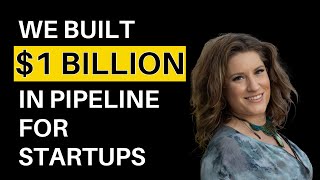
Lauren Perkins, who built Fly Fit and led Microsoft for Startups, explains how startups can borrow corporate stability while keeping their agility. She walks through the ABCs framework for brand thinking, shares how to use corporate assets like procurement shortcuts and pilot programs, and talks about founder wellbeing from physical training to financial runway.
Questions this video answers
Think Like a Brand, Act Like a Startup.
Inc (INC).
One billion dollars in pipeline.
About 3,000 startups ("3,000+ startups").
2019.
Chapters
I know that you worked at Microsoft. Global leading expert, a best selling author and someone who happens to be a friend.
I didn't actually mean to be an entrepreneur. We built a billion dollars in pipeline for startups, Microsoft for startups in my first year there. We don't get a fucking penny of this billion dollars. Hello, you're off the mark. We fucking hate what you're putting out right now. You're glutton for punishment. Why would you put yourself through this? She goes, why would we hire you now if you want.
Do the same shit? I didn't even realize that I had developed this reputation. You have to tell people that like you actually give a shit. It's not just about like male versus female. Nothing ever gets built alone. No, that's a hard question.
For a long time I avoided that question.
Today I welcome my friend Lauren Perkins onto the show. Lauren is probably best known as General assembly founding instructor, Columbia University Entrepreneur in Residence and Microsoft for Startups Managing Director. Look, she has the most incredible insights into entrepreneurship. It's in her DNA. We're going to explore that today and we get a sneak peek into her newly released book, Think like a Brand, act like a Startup. Enjoy the show. A huge thank you to NZ Mortgages for supporting the Lead On Purpose podcast. You can check them out at nzmortgages co nz. Lauren, a huge welcome to the Lead On Purpose podcast.
Thank you so much for having me. I'm so excited for this chat.
It's been such a long time in the making and I'm so delighted. It's not always that I get to bring in a global leading expert, a best selling author and someone who happens to be a friend and in a mastermind with me. So this is quite an awesome experience for me, I have to say.
For me too, like having somebody that you're genuinely friends with and you can share this not only with each other but with your whole audience and in my community, community as well.
I'm delighted to have you and it's just, it's so incredible to see your book out there and yes listeners, we're going to be talking about this book. Think like a brand, act like a startup. I'm going to put a link in the show notes and I know by about 20 minutes in you're going to be hitting that button and wanting to order it. But let's chat a little bit about what gave you the inspiration to write the book. But also let's talk about what you've done to put you in a position to share Such insights. So I know that you work at Microsoft. I know you've done some incredible things, but let's talk a little bit more about your career and what's got you to this point.
Yeah, absolutely. So I didn't actually mean to be an entrepreneur and many people who knew me when I was younger would be like, no, no, no, she's been born and bred for this. It's just in my DNA. It took me a little bit longer to like, really own it and lean into it. But I've built several companies. I had was a consulting practice doing CMO as a service work both with startups and with corporates, helping them innovate and build new ventures or bring that spirit of acting like a startup into their organizations. And that's with some companies like, you know, Pfizer, originally with Microsoft's garage. Laura Mercier on the brand side, really had an opportunity to just like, dig in and like, build a lot of things very quickly. And then my last startup, Fly Fit, took me overseas. Heathrow, you know, ended up being an amazing investor and partner in that, which gave me a different perspective, like, what is it like to build a startup outside of the U.S. the opportunities, the challenges. And that really was the leapfrog for Microsoft, for startups. They were looking for a founder who had gone to market with a corporate before, who had learned firsthand as a founder how to leverage those corporate resources, both the good, the bad and the ugly. Right. Like, to bring all of those lessons not only to Microsoft, but to their startup portfolio. And over the journey at Microsoft, it was really, you know, they were a beautiful, deep startup portfolio that now has like 3000 startups in the portfolio and growing and then has micro portfolios within it in terms of, like, different focuses and areas. But yeah, it's, it's been an interesting ride and journey and, you know, some other sort of highlights along the way. I got to be early at General assembly, not only like teaching, but getting to advise companies and in EIR at Columbia University, actually, while I was building Fly Fit, which in retrospect, I'm like, how did I do all of those things? I launched a book, was an EIR and built a startup.
But that's how start. That's how startup founders think. Right? It's like, it doesn't have to be or it can be.
And 100%, you're definitely a yes and person. We've chatted so many times about how you look at business and life. It's yes and let's see what's possible You're a possibility. And Lauren, you look through the lens of what is possible. I love it. You're also.
Absolutely. I might borrow that from you, James.
I love it. Yeah. I feel like you are, you know, quite humble, very humble about what you've achieved. And for people that don't understand your world, I urge them to do a quick Google around what you just mentioned, around what you've done with Microsoft. And that's incredible for them to be sitting at 3,000 plus startups.
When I joined the startups, we had hundreds, but an entirely different size, different scope. But I mean, when you're in some place like Microsoft, one of the reasons I took the role when they were asking me to come in and how might you take advantage of corporate resources not only as a leader at Microsoft, for startups and within the Microsoft ecosystem, but like for startups to take advantage of was not only a big opportunity, but at the same time I was like, I felt like I had to do it on behalf of like my fellow founders who needed that leverage.
So if I pull the lens back on that. You were talking about being humble. I'm not great at talking about myself as a former cmo, I'm amazing at promoting everybody else, but also I'm very team oriented. And you knew this just from being a friend. And if you're in, whether you're a startup founder and your team is five or whether you are an executive at some place like Microsoft, it's always a we, right? Like you might be leading or the leader or a leader, but nothing ever gets built alone. There might be somebody who's the figurehead or out front. And so I think one of the reasons for a lot of the humility is like, we built a billion dollars in PIP pipeline for startups at Microsoft, for startups in my first year there, unreal. And I was so excited to promote that because I wanted startups to know, like, hey, we are trying to help you grow. And this is like, we don't get a fucking penny of this billion dollars. This is pipeline for you guys, like, and that's actually what the pipeline like was. Now it's such a huge number, but it was a huge team effort. And when you think about like Microsoft, they have so many different teams within the organization, not to mention there was somebody in charge of that. And so Sam, who was responsible for how do we actually build this bridge, she was a fucking rock star at putting those pieces together and navigating that landscape. So I might have been the person that put their neck on the line to say, hey, not only should we do this and we need to put a lot more effort in, you know, investment in how we build this out and how we make it a value proposition not only for Microsoft, for startups, but for our startups. But a lot of it was then to be able to say like, I actually want to tell people about it. And I remember when I wanted to promote it at Stack List. So Amanda, who's the founder of StackList, known her for a long time and it was so funny, she was like, you have to tell people that, like you actually give a shit as a founder. Yes, you are now at Microsoft, but like that you're doing that. And you know, my, my right hand at the time, Frank, he and I had worked together in many iterations, including previously at Startup Weekend. And when I brought up the idea of telling people what we were doing, but also at that point, I feel like it was like maybe nine months into me being there. It was a pretty bold idea to be like, let's tell people like what we've already done in the last like six months. And I remember one of the Microsoft execs at first looking at me and he's like, are you sure we should do this? He was like, and then I pull this messaging together because I'm really big, as you know, on brand and building, the right story and narrative behind it. And it was very real deal talk. And they were like, this is not Microsoft. And I was like, no, but this is the Microsoft for startups that startups want to be a part of.
Is that something that we're willing to lean into? And I was shocked that I started getting yeses. Plus, like there were a lot of people in Microsoft for startups when I first joined. This is like early days, 2019 that were founders themselves. And I think one of the other opportunities was not only were there other founders, but there were a lot of people that were like, it was a breath of fresh air to be coming at this with the lens of we are going to build our own brand, we are going to help startups build their brand, we're going to make sure that startups leverage the Microsoft brand and then any of the other customers that they win in the Microsoft ecosystem, we want to teach them how to use that so that they can grow faster, create more revenue and then create higher valuations if they are going to fundraise or when they raise their next round. And so that was some of my hypothesis going into Microsoft for startups, but then to be able to make it real and start really putting some traction behind it. In the first six months was really quite remarkable to be like, as a founder, I had a hypothesis and then I had done it as a founder. Some of it was very successful with Fly Fit and Heathrow, and some of it wasn't successful. And so then to be able to go in with another iteration and true startup style of, okay, what did I learn, what worked, what didn't, what would I do differently? Like, true retrospective style and then talking to other people who had done the same as well as doing some retrospective with people that had been on my team at Fly Fit. So, like, my right hand at FlyFit was at Columbia University, and when I was an EIR there, she was like, I've wanted to move to London. I was like.
You'Re, you know, you're a management consultant at Deloitte. Are you sure you want to, you know, sure you want to work for a startup? We really don't have a budget.
And, you know, Steph and I still have a great relationship to this day. And that doesn't mean that everything went well. There was a lot of shit that didn't go well. And those are the types of things over cocktails that you can, you can talk about. But I do take a lot of pride in the fact that when things weren't going well, we really tried to, to build those relationship bridges along the way. But also then when we both were onto our next adventures, and I definitely, you know, encouraged her transition before mine, it was nice to be able to say, could we do a mini retrospective? Could we have that conversation? And now can we have it from a different perspective, from a different lens? Like, if you were now in my shoes, what would you do with it? And then I was able to have those types of conversations internally at Microsoft as well, to be able to share, like, my learnings and my stories. And especially when you're not on camera, you can give some transparency on things that maybe are covered. You know, you don't want to give away stuff that, like, investors or strategic partners, like, don't want you to be sharing or that just, you know, like almost like with Brene Brown, like, the integrity of, like, making sure that when you share something that it is for learning purposes, but also integrity of all the other people involved. And I think that's one of the reasons why the failure part of startups doesn't get talked about enough or only gets talked about when it's like a WeWork style implosion.
Right?
It's like and then there's, and then there's still a hundred different variations of the story, right? And I know a bunch of friends that have, you know, we're at WeWork, so there's, there's a lot of iterations of that as well. But to bring it back to this like idea behind.
Not only why I went to Microsoft, but also just like creating that openness of there are going to be challenges in working with a corporate, but there's also a ton of advantages. And I was always a huge proponent of saying this should not be your only play. Like if this is your only business development play, this should not be it. Unless you already like have a stable customer base, you're sitting on a ton of investor funding and you have 18 to 24 months of Runway for business development. So you probably really need at least like 36 months, right? Because you need to get those deals moving, get the pipeline built, etc. That doesn't mean it always takes that long. I love the fact that there are some startups that because of some of the things that we were able to do collectively as a team, including being able to do deals on Microsoft Paper, a startup could come in and bridge a relationship with a Microsoft client and then be able to use Microsoft Paper to shortcut the entire, you know, process of getting the deal done. So all of that procurement stuff and the due diligence that a big company needs to do to work with a startup in many cases was able to get shortcuts. So we were looking for shortcuts, we were looking for opportunities to create leverage. But also this isn't about Microsoft for startups because this approach can be used in any of the large corporate entities. Like I started my career at Nike and if I was building another company in the fitness or the wellness space, then maybe I would partner with Nike or maybe I would go to the Nike Ventures team or the Labs team and like try to do a co creation or you know, depends on the venture. But there's so many ways of creating that leverage. And so just give a couple examples from Microsoft for startups, just for the color of it. But at the end of the day, the idea behind how do you create this leverage? And also.
Maybe as you said, get out from the humility of the we and team effort and everything is to be like, what is the impact that you're trying to create? And I think that that is really kind of the crux of where the brand startup dynamic can come into place. Where you borrow those stable elements, you create leverage. But that's what they do well, big brand. It's like, if you're the rebel startup, you want to stand on the shoulders of the big brand giant that has that big giant foundation. Now, if they need to be nimble, then they need to partner with a rebel startup and say, actually, like, we want to build this thing or we want to like, fund your proof of concept or this new, you know, this new opportunity that you're going after. And it's knowing when to use which.
And I think most people would struggle with that, Lauren, is knowing when to go which way. And I think a lot of people look at brand and look at startup and go opposite ends of the scale. Not connected. But actually, you are debunking that massively. And INC actually wanted to collaborate with you on this, right?
Yeah. So INC approached me.
So I wrote for Inc in like 2012. So this is how the startup ecosystem kind of.
It's an intertwined web. So Kimberly Wiesel was my editor when I was at Inc. When I was writing for them back in 2012, 2013. And then I got really busy with my last book and then just a lot of startup stuff. And so a mentor of mine knew that I had been given an option for this book. And they were like, I don't think that publisher is your publisher. He knew somebody at Inc. And was like. And essentially pitched it on my behalf. And then Ink was like, well, we want to see. Like, we want to see it at least, but like, we really like the idea of it. So. So INC published the book. They've been a great partner and publisher. And I think that is another example of thinking like a brand and acting like a startup. It's like, what is the partnership and what's in it for both sides? I'm not naive that like, INC is just going to do this for like, the fun of it. I mean, we often as founders choose to do things because they're fun, but once you have a business, you still have to have a business reason for it. So, yeah, it was a beautiful compliment. They were like, this is definitely right up our alley. We'd love to get this out there in the world. And they were looking for some fresher. Maybe I shouldn't say that's fresher voices.
I love it. Definitely say that.
And. And as you said, I had been. I had been building up a number of other companies and founders and, and whatnot. And that sort of, you know, a lot of people know me from that sort of secondary circle, but I haven't been as as big of being the front person myself.
It's your time, and I'm glad it is. And I love that there's that credibility piece where, like, Ink are reaching in going, actually, yeah, we want to partner. And it says a lot about the. I call it the mana. So here in New Zealand, we talk about mana having a sense of, like, an aura about who you are and that when you speak, people listen. And that's why this book is doing so well globally, is because you've actually walked the walk. You actually practice what you teach. There are so many people out there who are AI ing everything and chat gpting everything and becoming experts instantly. But the fact is, you've done it over multiple years. You're believing.
This book was handwritten, painstakingly handwritten.
Those are the types of books I love.
Amazing.
And what's the key message? If someone's going, is that book for me? Who's the book for? And what's the key message?
Absolutely. So think like a brain. Athletic startup is all about how do you harness stability and agility to drive growth and innovation? So in the book, there are two venture teams. One is a young struggling startup that's finding their way. And then you get to follow Sarah and Jamal through their journey. And then Kevin is a corporate innovator who is building ventures in the corporate environment. And I chose to include stories, and they are true stories, but their names have been changed. The companies have fake names in order to be able to create the kind of transparency that I wanted to be able to create. And I mean, I think to really answer that question, it's sort of like it is for the Sarahs and the Jamals and the Kevins who are actually building those companies. I think it's also for the people that work with them, because I remember, and even in the dedication, you might remember this from, from reading the beginning of the book, but there was one startup operator who, her founder absolutely wanted me to come be a partner. And the CMO of their. Of their startup, they hadn't had one. They hadn't been figuring out that side. They'd been building product, but they really weren't taking it out there. And he was a serial founder. And so, you know, he was very clear on his ways. And she looked at me and she goes, why would we hire you now? And I was like, that's a strange question. So I asked her a clarifying question. I was like, why wouldn't you? And she looked at me and she goes, you're the CMO or the partner. Or that strategic partner that we hire if we fuck it up.
I remember being like, I'm so glad that I didn't make the assumption. And I asked a clarifying question because I never would have expected that answer. And what she meant was, was that especially in New York, I was known as a startup fixer. When I wasn't building my own companies because I knew how hard it was as a founder to do it, I partnered with other founders at critical inflection points. And so I was, I didn't even realize that I had developed this reputation of like Lauren's the person that you like SOS message in the middle of the night when you're out of time. Money, funding, like sanity, like all of the things. And I was like, well, yes, I am great in a crisis, which happens to be one of my superpowers. But also what if we fixed a lot of these problems before their fires? And sometimes the fire is like we just got a ton of funding and this iteration of the team is not, doesn't know what success looks like at the next stage. So one, how do we upskill them? Two, how do we fill the gaps? And three, how do we do it in a way that honors everyone's contribution to date and.
Gets not only the people in the organization to that next level? And if that means that there's another step which is gracefully allowing some people to maybe accelerate their shares because oftentimes in the startup world people only stay because they don't want to miss out on their sweet stock options. And it's like if they're no longer the right fit, but they were critical at another stage, how do we like orient our deals in a way that's like great for the people, great for the culture, great for the bottom line and the future sort of bottom line cap table investors. And if you don't have a cap table or investors and you know it is a, you know it is a self funded venture or like I know some founders that have done an amazing job at winning customers. And this methodology, especially whether you are trying to just build customers and revenue or you are trying to do so with the leverage of larger partners, like the startup ecosystem is asking for more of that impact. And so I think we need to think a little bit more creatively about how we approach these types of inflection points and how we do so in a way that's really good for the people. Because even though AI is amazing and it's can give us a lot of like bandwidth, it still can't build A company, it can't run a company. And I don't know if it will be able to even in five years. Like, there's just so much amazing human quality that goes into the decision making and the intricacies of building a company.
I'm with you on that 100%. And I think as AI does increase its capabilities, which is exciting, the human connection will become the goal, the thing that becomes the most important component, 1,000%.
I think that this is like even if you use the brand startup analogy, brand is still that perception and that essence of the human and the human connection and the community and all of those beautiful elements like the AI and the tech, the startup parts. It's like you can't have one without the other. They do extremely well when you take the superpowers of both and you bring them together and instead you cut away the fat that like holds either one of them separately back from where they could get if they just combined those, those elements 100%.
And do you think from your own experience, do you think that in the startup and founder world everything's created equal for males and females, or is it a different experience?
Oh, that's a hard question.
For a long time I avoided that question, but the reality is, is that it is different. What I am grateful for is I think the ecosystem is changing. And even though we still do have a huge disparity between even just like male and females that get invested in. When I started, there were not female role models for me to look up to. There weren't even female like mentors.
In terms of, in the tech startup world. And at one point I remember somebody saying, well, what about Sarah Blakely? And I'm like, Spanx is a great consumer brand company, but also I came from consumer brand and came into startup with that like unique perspective which allowed me to bring in tools and superpowers, you know, from the Nike and the crunch days that they didn't have in the startup world. But that didn't create a tech female founder like protege or, you know, they do say there's a lot of research that women need to see somebody like them has succeeded, whereas men just need to, just need to believe that it's possible. And believe being sort of a looser word, right? Because in today's world you could do a lot of spiritual work and just, you know, create a very clear vision of what could be possible in five to 10 years. And things are moving so quickly. You can make a lot of things true. But if a woman still needs to be Able to see that somebody like her has succeeded. It's a very different approach, but also it's a great reason to have women on your leadership team because they bring a very different perspective. And for me it's not just about like male versus female. I think diversity in lots of different ways. Background, education, location. And I say location because if you want to have a global company, you need to be able to understand what the lived experience is of your customer is in different places. And different places could be physical or it could be industry. It could be a number of different, like filters or, you know, factors. But I think the diversity is actually one of the biggest breeding grounds, not only for innovation but also for just understanding of customer and those insights.
That's what drives growth 100% with you on that. Definitely. And in terms of, say, larger. So let's take Nike for example. You know, what could they be learning from you right now in terms of thinking more like a startup? How would that help them at this point? Because I think it's quite a difficult market. There's a lot of headwinds out there right now, globally, certainly here in Australasia, it's like that. The UK I just got back from, same thing. No doubt there's headwinds in North America. What might they be able to utilize from your framework and from your book that could really help them?
Absolutely. So actually their dream crazier campaign is very much in the spirit of thinking like a brand and acting like a startup. They got deep into the emotional tissue of what it is to like be a female athlete and what the challenges, what the struggles, what the opportunities, what the stories were. And I think I would say Nike is so good at pulling those consumer and those market insights out. So. And the reason I say that is when somebody needs to innovate, the first thing I encourage them to do is what makes you uniquely qualified to fucking crush it. And I say that very strongly because it's like people often start in different areas. And so when you need to innovate, it's like big brands have so many resources. They have market research, they have customers, they have subject matter experts, they have capital, they have back end infrastructure. All of these things sometimes sound rather boring. But when you're a startup and you just have an idea, if you could go to a department and say, I need this and this and this or I. And that's what I did at Fly Fit when we were partnered with Heathrow, I was able to sit down with the marketing team and it does help if you actually understand the area with which you're asking questions. So if you don't, then you kind of need to ask broader questions. But it still works. Like with Heathrow, I was able to say, okay, I want to do this type of market research. I want to understand these pain points points. I want to understand this about, you know, how long do people have between flights and what do they normally spend their time, their money, blah, blah, blah, blah. We were able to map all of those customer pain points. Do you know much time that would have taken me as a founder to do and how much money I would have had to like pull together to. And some of the things that I asked for, I literally thought was going to take weeks or months. They already had it.
Unreal.
You sort of just like, you're like, wow. So some of what I would say in the question with like a Nike is what are those superpowers and what are they really good at and what do they have access to? And maybe they're not presently doing something dream crazy because if they were doing a dream crazier, maybe we would have heard of the latest thing. Or maybe we are no longer their customer. Maybe they are going after a different market and so we perceive there to be either a challenge or an opportunity that maybe doesn't exist. Like maybe they're going after teenagers and you and I are no longer there.
We're old, Lauren.
Right. I would bridge that with another part of the book, which is, and this is where I think a lot of big companies, whether they're big brands or whether they're corporates, this is where they fall down. They're like, well, this is what we do really well and this is how we have made money. And then they don't do the business model innovation, they don't do the category work. So like in the second part of the book, it's the ABCs audience, brand and category. And I really challenge big brands to take the superpowers they have around all of their audience and stakeholder understanding and their brand and all of that and say understand the category, but then also with all of that insight, do a bunch of business model canvases, do assumption mapping. Because a lot of times we don't do that extra work, do some of that strategic planning and then look at what those opportunities might be. Maybe it does mean that you're going to bring in some entrepreneurial folks, some eirs, maybe you're going to do some co creation with customers. In fact, one of the stories that I never have told is when I first Came up with think like a brand after, like a startup. There was a very large clothing brand.
That needed to be reinvented. And then in the first part of the book, the third chapter is actually named after them. It's called the Gap. And it's kind of a joke because the Gap needed to reinvent themselves. And I had proposed this program to them of how they could co create new lines with their customers so they would actually build product that people wanted to buy. Incredible. They had the access to customers. They, they even had superfans that were like, we fucking hate what you're, what you're putting out right now. We would love for you to give us what we want. Like people still cared that much that they were like, hello, you're off the mark. And so it was like, why don't we take advantage of this? And we had put together this whole program. You know, the funny thing is, you know, why we did. They didn't end up doing the program.
I was too much of a rebel. Here I was with this like, you know, co creation plan and now granted, this was like a decade ago.
And I think that I just came across as like, okay, well, you know, she's got a lot of fresh ideas and she actually has a great program. And because it went all the way to the board, I'm told, and I had some, some insiders who gave me the real deal. That wasn't the, the politically correct answer that came back to me in terms of why they didn't invest in it, but I thought it was really fascinating. They were like, she doesn't have the, like, you know, the pedigree that we would expect of somebody who's going to run an innovation program at Gap. And honestly, it was the same shit that I ran into when I joined Microsoft. They were like, we're so excited to have a founder who's done this before, this and that. And then as soon as like the glitter wears off, they were like, why aren't you working the way that we do? And I'm like, if you want the same results, do the same shit. Yeah, if you want something different, then let's work differently, let's act differently, like, let's lean into that. Like, let's really go after it. And I look back and there's like two things that I take away from that. One is if I was pitching it at this point in my career with having a venture backed startup behind me, having Microsoft for startups and all that, I think the answer would have been entirely different. Right.
But it's also something that at that point in my career, I had an amazing collaborator who had been a Saatchi and Saatchi VP for a long time. And I think what I needed was I needed another person like her to be like, okay, you've got a rebel in the middle. And I have like one person who's like, like, you know, come from this, like, you know, pedigreed background, but I think that they just kind of needed a couple more. And the reason I share that insight and that and that learning, and I'm really grateful for the gal that worked for that, that C suite person who actually fed back to me later all of the insight because she was like, she was like, I knew it was time to leave when they weren't willing to even try a small pilot of co creating a line when they spent so much money on this and you were proposing something that was like highly reasonable. And at the same time we were going to create a ton of PR off of it. So even if nothing happened, we didn't produce the clothes and we just designed them, it would have been, you know, worth, you know, 10x the cost of it and just the PR value. But the reason I share that and I appreciate that is because there's something that founders and brands can take away from that. If you really want to do something and you know that you need a rebel and you're a big brand.
Figure out what the safe to fail experiment is and how to put boundaries around it to make it a hell yes instead of a no. And if you're the one bringing it to the board, you should be a part of that. Because if I'm the one asking that, I'm not the insider. The insider needs to ask that. Now the other thing is, if you 100% right, and then if you're the founder that that's listening to this right now or you're aspiring to be, the lesson learned is you need a bigger board of advisors, you need more senior people that you can lean on. You need more champions. So for me in this case, I had like one senior champion in his right hand. And in retrospect, if I knew what I knew today, I would have networked my way to all of those other stakeholders, or at least a couple of them advanced so that it would make it easier for him to be able to like sell through this idea and, and, or I would have given him an exercise of, here's how you do a safe to fail experiment. Why don't you bring a framework to the board and say, what would you need to be true in order for us to try this? You can start small and then get bigger.
I'm so lucky to have just heard what you shared, as is the listener. That's gold. And I'm just going to pause for a second here and say to the listener or the viewer, go to the show notes. Get the book right now. If you're a founder, an aspiring founder, if you are part of a large brand and you're a decision maker, get the book. You just need to get it so it's in the show notes. Lauren, I want to ask you a couple more questions before we part ways. For now, I believe that you will be on the show many more times. So a couple of questions. One is this. When I think startup, I think full noise. It's all go. It's lots of hours. It's flat out my health second. Relationships second. Like everything gets put to the side when I think startup. What have you learned about being a startup and what would you say to someone who's in that fears right now? What advice would you have around health, relationships, etc.
A thousand percent. I think it's an important question that we don't talk about enough. Health is wealth a thousand percent. Like before I started Fly Fit, I put myself personally in a in top physical shape to the fact that I actually trained for and raced a half ironman in parallel with building out our go to market. And.
Sorry Rachel, but I made my made my chief of staff do it with me. She actually beat me because she had more time to train.
Well done, Rachel.
And actually, if I'm honest, she was a better act athlete than me. So I'm not offended by it at all. But I actually thought it was really funny. Kind of like looking back, I'm like, huh. But the reason I bring it up is I needed to get myself in top physical shape, top mental shape. I needed the structure and I needed that strength around me. Now the funny thing is that one of my longtime collaborators, Barbara, is not an athlete. She loves Pilates and a number of other things. But she would look at me like when I did the New York City Marathon when we were on like when I launched my first book or in this instance where I was doing a half ironman and she was like, you're glutton for punishment. Why would you put yourself through this? To the point where like occasionally she'd even say to me, you're distracted because you're training too hard. And I'm like, this is what makes me Stable. And the reason I give this example is because what Barbara needs and what I need are entirely different. That doesn't mean that we both can't be and aren't high performers. And so I think also some of it is, is like, okay, what does each leader need to be stable personally? And then what do they need in order to be able to create that flex in terms of that, like, agility that is needed? Personally, I think that one of the other things that I would say is, like, I also think I mentioned the, like, putting myself in a nice financial position. And when I say, like, feeling stable, what feeling stable is for me and you or Barbara might be entirely different for me. It was like, I wanted to have a year of personal, like, full overhead cost. In retrospect, if I were to do that again, I would have, I would have doubled or tripled that number. And I say that like, honestly, because we have to learn and we often only get those insights in retrospect. Right. And so I think that dance between stability and agility is really important. I. With my last startup, I hired a therapist for the first time in my entire life.
Well done.
Which is, I mean, I look back and I was like, wow, I really should have done it before then. But I knew it was going to be one of the hardest things that I had done and that there was a lot of complexity around it. And so I didn't want to burden my friends. Although I also, like, I guess if I put like the whole stack together in terms of my personal stability. Stack training, meditation, breath work.
Female founder, WhatsApp group. And then I would add having a mastermind group and having a therapist and having a coach.
Amazing.
That was my, like, minimum stack. And I'm sure I'm forgetting a lot of things, like, because I've been a competitive athlete. Like, you already know this. Like, I grew up swimming. I started triathlons at 16. So for me, like, eating Paleo, you know, cutting the carbs. Like, when I the. When we were launching Fly Fit, I wasn't drinking. And I remember when Heathrow and like, the team and my co founder and I, we were, we were sitting down, like, literally with Heathrow executives, and I wasn't drinking. And they were like, have a champagne. And I'm like, I haven't had a drink in so long. Like, and I'm doing a race in like a week. Like, we're just signing the deal to, like, move this forward. There'll be plenty of chances. Now granted, I ended up having half a glass of champagne. So I did break now. I didn't need to. It was. It ended up being a personal choice. I'm Italian. I love wine. I have nothing against wine, but it was a personal choice that I made to say I needed to be at my clearest, most grounded, most vibrant. And so doubling down on my health was what made me stable.
That's so valuable.
It isn't for everybody. Right. Like, for many people, doing a half Ironman should be the only hard thing that you do in your life. For me, it almost gave me the superpowers and the confidence that I needed because I'm like, if I can be training for this, then running a startup is like, no big deal.
Incredible.
Now, granted, it wasn't my first triathlon and it wasn't my first startup, but it was my first Ironman and it was my first startup at that level where I was a founder and driving those outcomes and taking that kind of risk in the global sort of startup scope and scale that I was going after.
Incredible. I know that there's someone that needed to hear that right now about health, about perspective. And I really do believe that your perception shapes your reality and how you looked at health and how you looked the half ironman, thinking that's going to serve me, that's not going to distract me. And I think someone needed to hear that today. So thank you.
Absolutely. Go for it.
I want us to, for a minute, fast forward way into the future and you're highly aware of that. It's your very last day here on earth. Someone very young that you love comes into the room and they say, lauren, how on earth do I go about leading my life on purpose? What would you say to them?
So it would probably be my nieces, Leah and Haley. Haley's the one that normally asks those, like, bigger questions.
But if they ask me that question and it is that last day, and, you know, I think all of us go through struggles where we don't know when that last day is. It could be soon. Right. And so I think this is something that I try to ask myself a lot in terms of, like, legacy and try to share those messages.
I think that our health is so important and we don't put enough focus on it, but I think our having healthy relationships and connection and support is so key. And I think many of us and a lot in the startup world. So like anyone who's listening to this and you've been putting off your health or your relationships or your personal life, I've met so many founders that like the startup creates the identity and then they start to, you know, it starts to be one and the same. You need to be able to separate for lots of reasons, because when it's time to walk away, whether that's an exit or whether it's like it really needs to get shut down or you need to give it an old yeller, you need that perspective. But the reason I give that clarity, just because of the context of who I am and the question that you're asking is I think we all need to put a lot more into our health, into our relationships, and into our stability. For many people, that stability is going to be figuring out what is it that they need to be financially stable as well. And I think it's important to recognize that because if you do not feel stable, it's really hard to do anything that's risk or agile. In fact, when I was coming off of Fly Fit and I had the opportunity for something like Microsoft versus, I wanted to build another startup and I thought I was ready and I wasn't because I wasn't resourced. I wasn't personally resourced. And so I think that we do that by doubling down on our wellness and on our community, our connection and like that vibrancy, it's just, it's so important and it doesn't get enough attention.
100% agree. I wanted to say a huge thank you for reminding me of that. And I'm sure there's a listener right now going, yeah, me too. It's just incredible. And I do truly believe that you are one of the few who are walkers, because leaders are walkers and you're walking the walk right now. So I just want to step in.
I appreciate that.
No, absolutely. And you know, you consistently show up with that. But I want to encourage the listener and the viewer right now, Go check out the book. Order it, whether it's on Amazon, whether you get it on Kindle, get a. Whatever copy you need to get. I just actually did a little Google right before we went live and it's in multiple bookstores around Australia, New Zealand. So wherever in the world you are, you can get this book. It's a game changer. Lauren, thank you for committing several years and lots of years before that in creating this book for us to fast track our success.
I appreciate that it is, it's honestly, it's why I, I wrote it, but it's also, it's why I also released it and launched it in like the present messy reality. And you and I talked about this. You were actually part of encouraging me to just, like, release it out there in the world. I think we all need to share our wisdom more, and that includes, like, what you're doing here with the. The podcast. So thank you so much for having me. I really appreciate it. It's been so much fun.
Absolute pleasure. Until next time.
Until next time.
Thanks, Lauren.
Bye.
A huge thank you to NZ Mortgages for supporting the Lead On Purpose podcast. You can check them out at nzmortgages co nz.









