Why Your Employees Hate You with Dr. Lauren Tucker
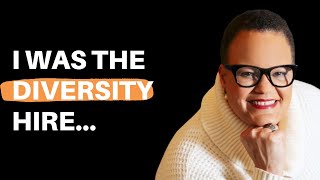
Dr. Lauren Tucker argues that bad management, not diversity gaps, causes workplace problems. Leaders inherit myths about talent and ambition that don't work. She prioritizes transparency, fair hiring and promotion processes, and trust-building, and points to Kristen Gavalo at MullenLowe as doing it right.
Chapters
Doctor Lauren Tucker, thank you so much for taking the time to join us here at the Lead On Purpose podcast.
I am very happy to be here. Thanks for inviting me.
Oh, it's going to be so much fun to connect and get to go deep with your area of genius and passion. So to get started, you know, the world that I see around me is often us and them, and at times there's othering that goes on when people are othered and. And really, for us to survive as a human species, we need to learn how we actually connect and find common ground. So what you do in the work that you do, I think it's vital work, it's crucial, it's essential, but it's not easy work. And I want to just ask you, where did this come from? What inspires you to want to make this change? What has happened in your life where you're like, this is my thing, and I need to make a difference for the leader that's listening right now, for the leader that reads your future books, you know, what is it that they need to hear? And why are you so inspired to tell them that?
Yeah, I think, you know, I have throughout my entire adult career, there's always, you know, this idea of being the diversity hire, Right. And so, despite all of the credentials that I've gotten, I've gone to great schools with great pedigrees. The University of Virginia as an undergrad, the University of Texas Austin for my Master's and my PhD from the University of Wisconsin. It's too often I have felt pigeonholed as a diversity hire.
And yet I would argue that my career.
Has had similar signatures of people that aren't diversity hires, of people that are white men who really didn't get the kind of managerial competency, both learning it as well as having it applied to us and having our careers be well managed. I noticed that it was really kind of hurting everybody, not just people who were on the margins or the diversity hires. But I remember when.
My first big advertising job, I was onboarded with a cohort of other early career folks right out of either undergraduate or graduate school. I was out of my master's program at the time. The managing director onboarded us by saying, and this is back in 1987.
We pride ourselves on giving you enough rope to hang yourself.
Back in 1987. While we should have been appalled at either the lynching or the suicide reference.
We weren't. We lapped it up. We thought this was. This was. This is tough stuff. And we came from, you know, Great pedigree schools, and we're going to compete with one another. So we lapped it up.
As I look back on that, I realized what should have. Also.
All of that should have appalled me, but what should. What really has appalled me about that memory is this was executive power abdicating their responsibility for helping us navigate through. Navigate those. Those opportunities. Right. The challenges that those opportunities present. We were basically thrown out into the deep end on our own. And that's when I realized those of us who came a professional age in the late 20th and early 21st century, we were all raised by wolves. I mean, we were all raised by wolves. And then we were only left to model the wolf pack behavior that was, you know, that was put upon us. Right. That we inherited. And. And now we're living, you know, in that wolfback behavior, assumed a myth of talent abundance. Everybody, sure, everybody should want to do this job. Every. There are tons of people who want to do this job. You know, this is, you know, people should be, you know, something that. That came up in a Devil Wears Prada all the time. You know, girls. Girls would die to have this job, right? That's what people. People would die to have this job. And so we were left to. Not only to our own devices, but this kind of laissez faire management encouraged this Darwinian competition.
To for job success, which meant those people who.
Got to job success may have been great at navigating the politics, but they weren't necessarily all that great at the performance of their jobs. So it didn't ensure excellence, and excellence should be what we focus on, and excellence should be.
In some ways, the great equalizer. But we haven't been able. We really don't have people that manage excellence well. They didn't learn it back in the late 80s, 90s and early 2000s. And now we're left with people who are in the C suite or people who are at that level of management just below the C suite that fundamentally do not understand how to manage humans. And I think what we're left with is an incompetency, a managerial incompetency that is leaving middle management holding the bag. Because people. We know this through the research that people lead managers, they don't leave. They don't leave companies. But then the blame really goes, you know, is heaped on the employees for failing. But the middle managers are left trying to figure out what to do next and having to deal with the operational inefficiencies that come from constant churn. Not getting things done, not getting the right people into the right jobs. And that's what we talk about is inclusion. Management is about getting really great people, not the best people. The best requires that you interview everybody and have a very objective way of evaluating everybody in the world. That's another myth we feed ourselves, that you can get the best people. Now you want to get the. The great people, the right people doing the right jobs and elevating their relevant differences. Which doesn't always mean it's about black and brown people or women or, you know, disabled people. It's. It's about elevating the relevant differences. Those relevant differences can also be making sure that the right people from the right divisions are included. I cannot tell you how many times I've got men who are white men who say, I'm in it or I'm in analytics, and I'm constantly being left out.
So it's about elevating those relevant differences to what we're trying to do to be able to create the memorable, meaningful, and remarkable content, products, and services that are going to be relevant to a multicultural and global market. And let me emphasize, you know, we. We keep hearing politically about, oh, multiculturalism, globalization, as if somehow this is a new phenomenon. You know, the Romans and the Greeks had a multicultural, global society as far as their globe went, right? As. As far as their, you know, the. The dragons be here kind of lines on their maps, right? But it was always multicultural. It was always global. This idea that this is a new, you know, somehow new, new phenomenon, we got it. That's another myth we keep feeding ourselves. And so I. It's a long answer to a short question, but I will say that I started a while back.
Not only championing the cause of inclusion first, but I start. I was championing it before I understood how to articulate it. Now I talk about it as. We have to focus on inclusion as an input with greater diversity and representation and managerial competency as an output as opposed to diversity first methodologies, which, while the hearts are in the right places, diversity without inclusion just hurts everybody and creates the kind of resistance and narratives that we're seeing played out politically and socially and culturally across not just the United States, but really around the world. This idea that difference has to be something that's a point of contention rather than an important part of how we become better as human beings and. And how we produce better, a better world as human beings.
That's amazing. And when you think about inclusion management, to me, a part of that is to change the perception or even the filter that Leaders and managers are seeing through. So when someone's looking through a filter that's inclusive and they're managing as per that, what does that look like? What are they seeing? What are they thinking? What's that filter?
First of all, we've got to get over that filter. That filter starts to restructure and debunk a lot of the myths around workplace experiences. Again, this idea of the best talent. We also have a myth around ambition that I've been seeing quite a lot lately. This idea that, well, these people don't want to work. This idea that members of the executive suite say, in the media, God bless them. I started out as a journalist, but journalists play into the same myth. This idea that ambition is defined.
The same for everybody. And if you look at the dictionary, the first definition of ambition is about.
The desire for fame, money, status, etc. Power. But what we're seeing now is a, is a, is a. Is an evolution of talent. And they're defining ambition on their own terms, right? So. So there's this. This is what's feeding that division between leadership and. And talent. Leadership is busy trying to sell the myth. Maybe they bought into the myth that everybody wants what, you know, Jamie Dimon's like, everybody wants what I've got. Everybody wants what I've got. Well, first of all, the probability that I get to where Jamie Dimon gets to is 0 to 9. Dude gets flown in every day to the office on a helicopter. He's got five houses, he's got all kinds of other things.
The fact that they don't understand.
That the, the vast majority of the talent force understands that's never going to be a possibility. So me running on the treadmill of the workplace experience to. Because you're dangling some aspect of that in my face, like, what do you think I'm an idiot? And this is what talent is saying, like, stop insulting my intelligence. I am working for you because I want to do something like take care of my family, or I want to be able to do some stuff on the side and create my own, or I want to do. It's not that I don't want to work hard, and it's not that I don't want to put my human capabilities in service of the growth of your company. But stop assuming that my ambition is the same as. Your ambition is the same as the things that got you here. We actually, you know what's interesting is I always think of Double Weir's product. That whole movie was about that, right? That there was this assumption that, well, doesn't everybody want to be like Miranda Priestly and live her life? And at the end, Andy Sachs says, no, I don't. And she threw away her mobile phone, which was, you know, in the era of smartphones, that's almost like drowning yourself. She's like. She's like, I'm throwing away this mobile phone. This is not the life I want to lead. I'd rather live something that is more authentic and make a. And make a living that is more authentic to what I want to be, which is a good writer, a good journalist, working on subject matter that I think is important, not sacrificing everything for this very shiny, pretty life. That is not who I am. So, again, really debunking, you know, part of. Part of getting into the mindset of being an inclusive leader is we've got to give up those myths that we've been telling ourselves over time. Another myth that talent is abundance, interchangeable, replaceable, and just another fungible commodity. No getting the right person. And it's funny, my brother is actually a communications director for a transit system, and he is, like many transit systems across the country, woefully understaffed. And so he. He was talking to me over the weekend about his challenges of finding somebody. He's got jobs, you know, open and available, and he keeps getting people that have just. No, he just knows they have no capabilities of doing the job that he needs them to do.
He's got tons of people looking for those jobs, but he doesn't have the right person. He's not getting the right people. And so he was asking me, how do I recraft. How do I rethink these job descriptions so that I'm in the. In the interviewing process so I'm getting the right people. What he's recognizing is there is no such thing as talent abundance. And if you reframe your head as a manager, as a hiring manager, from talent abundance to talent scarcity, it will change your behaviors and your processes so that you are doing a much better job finding the people that you need that are the great people doing the right work. And you're going to stop getting and. And inviting the people that aren't right and wasting their time. Right? And you're abusing their time and also abusing your own time. So, again, another myth we have to debunk, another myth that has been around for a long time is defining yourself and expecting people to define themselves by what they do. That is not what humans should be doing. Again, this is not saying that People don't want to work. It's not saying that they don't have their own ambitions. It's not saying that they're lazy. If I see Mike Rowe, the host of Dirty Jobs.
Continue, say this one more time, that there are a lot of people out there that don't want to work. Most human beings want to do purposeful things. They don't want to just sit around on their couches all day playing video games and watching Perry Mason all day. We have to understand that that is not. Humans are inherently industrious. They don't want to take handouts. They don't want to. But we are forcing people into that situation because, as John Clifton, who's the CEO of Gallup, says, a lot of the jobs that are being offered out there are terrible jobs. They're not jobs that humans want to do. They're either jobs that machines and can do, right? We're not training people to do the kinds of jobs that are 21st century jobs. And so. And it's not to say that there aren't people that are interested in dirty jobs. There are people that are interested in dirty, dirty jobs, but they're not interested in jobs that are not paying them a quality wage.
And we have to, and we need to recognize that there's a cost of being an employee. There's a cost of goods sold, right? If we, if we're all selling our, our work, right, There's a cost of goods sold. If you Google the cost of being an employee, you won't get anything. You'll get nothing but the cost of employees to companies. But if you think about this.
If, if a, if a mother of three goes to work, she's got to pay for child care. Either child care because that person's, you know, that kid's under 5 years old, or child care after school, that can cost anywhere from $10,000 to $15,000 per child.
So we're looking at $45,000, maybe an additional $5,000 a year for transportation to go into an office, because everybody's got to go back to the office. So now we're looking at a situation where the median, you know, the median salary, the median income for a woman in the United States is something around 35, $36,000. That person, she's already, if she's a single mother, she's already at a loss.
And quite frankly, for a family of five, four or five, and you've got two parents, the median salary of those two parents put together barely, barely pays for the child care. For those three kids. But we don't seem to talk about the cost of being an employee, the cost that you have to bear for health care, the cost that you have to, now you don't even get pensions. You've got to, you know, you've got to contribute to your own retirement. You've got to pay for, for transportation. And that's just the financial cost of being an employee. We're not, you know, this is not even considering the emotional cost, the mental cost of being away from your children because you're commuting three hours a day. I have a cousin who travels from northern Virginia into D.C. every day. That's an hour and a half both ways. It's a lot of time spent in the car, a lot of time spent away from your family, spent away from your children. So we've got to reframe the relationship between leaders and managers and the talent force.
So that we are.
Bridging that divide.
And creating talent as business partners as opposed to these opposing forces that want different things and are in really antagonists of each other. Because if we continue, this is really where are you surprised when you look at these numbers that your employees hate you? This is what I tell leaders of companies. Your employees hate you. And if you think I'm, if you think this is hyperbole, you better pay attention to your engagement numbers, your employee net promoter scores. Nothing is really. And it's funny because my, my team, when we were talking about the title of my hopefully forthcoming book next year, I'm writing it as we speak, we settled on your employees hate you. But before we did that, should we pull our punch here? Should we back off of that assertion? Well, I can tell you after reading all of the LinkedIn posts, different articles, different blog posts of people who have recently been laid off by Google and Amazon and Salesforce and.
Twitter, if you read some of their experiences in terms of how these folks the process.
Of being laid off, how they were laid off, how they were messaged, how they were treated.
It is no wonder that your employees hate you. And what's interesting to me is how many of these same big brand employers have how much diversity theater they have promoted over the last few years to talk about how inclusive they are, how progressive they are, how well they take care of their, of their employees. Google has actually a little app out talking about how to achieve inclusion, how to be a better manager, how to evaluate and promote. In the stories that I am hearing from people who have gotten laid off at Google, it is scandalous. This is Nothing but diversity theater. And this continues to alienate and disaffect talent. Talent. Other talent sees this and they're, they're starting to say, I can do stuff on my own, I can be a freelancer, I can be a contractor. In a knowledge based economy with knowledge driven, you know, in a talent force that's driven by knowledge, information, service and creativity, those uniquely human capabilities, they have other alternatives and we're seeing that as well around the world. They have other alternatives other than necessarily working for these companies that confuse being tough employers with really being, they're really abusive employers.
And what do you believe an employee? So what do you believe they truly want? So when from their leaders, like from the leaders of the companies, what do they really want?
They want more. This is this. So I'm going to start big and then I'm going to go very tactical. First of all, they want managerial competency.
And unfortunately, even folks in the C suite have not learned true managerial competency. Sure, they may know how to run operations, they may know how to manage financial strategies, but to truly understand how to manage human talent, most of those folks again were raised by wolves and they did not learn managerial competency. And the arrogance of leadership that I see so much in the news or even in the experiences that we've had as management consultants tells us that these leaders don't want to learn. They don't want to learn, they don't want to get in the right mindset. So we're genuinely focusing on kind of that next level, tomorrow's C suite leaders. Because I think they're starting to realize something has to be done differently if they're going to manage humans for the 21st century. And whenever we take on an engagement, I always ask, I always demand. We sometimes come in through the chief people officer, sometimes through the chief DEI officer.
I also demand that I meet the CEO, the CEO or the CEO, and whenever I ask them, what is your number one priority?
What I.
Typically hear is growth.
And what I always say is wrong. Your number one priority is talent. If you invest and take care of your talent, your talent will take care of your business and growth will follow. But this, this myopic focus on shareholder value.
Really does not ultimately deliver long term shareholder value because the focus really should be on talent. You know, when we see, so when I see.
Leaders.
Talk about.
Their, you know, layoffs, etcetera, Inevitably they blame everybody but themselves. But what layoffs typically are is a failure to plan their talent force. We're seeing layoffs now because when they, when we saw in the tech industry all of that demand for, you know, during the, during the COVID pandemic, they just hired everybody and they just, they didn't think about what they really needed. They don't do the forward planning. And then what happens when.
You know, they don't need all of those people? Those people become the fall guys. Right? The scapegoats, because.
They didn't exercise managerial competency when they were doing labor force planning. Right. Talent force planning. So I think what today's employees are looking for is competency, fairness and transparency and how they're being managed, hired, interviewed, evaluated, promoted. They're looking for, they're looking for proactive succession planning so they're able to see the future and how that's going. And, and they want, they want.
They want to minimize, they want managers to minimize the cronyism and nepotism that they see on a regular basis that emphasizes who you over performance. And yet they're the ones being, you know, being told they're not performing well. We're seeing companies, and I think about Bed Bath and Beyond is just one of the latest where, you know, I'm sure their C suite will walk away with a serious, some serious money. But who, how about the people that were working there? Why was that? Why wasn't there better understanding of where that business was going? A much loved brand, by the way, that could not seem to wean itself from, you know, discounting. And yet it could have been online, it could have changed its marketing strategy. There are all kinds of things it could have done, but they didn't have competent people who were really focused on what is this? How is this going to impact, how's the future going to impact our company today? How should we reshape our talent force, retrain them, reallocate them, rethink our messaging, etc. They didn't think that way because quite frankly, I guarantee you their C suite are going to walk away just like the guy with, from Lehman Brothers, when Lehman, remember back in 2008 when Lehman Brothers fell, that CEO walked away with $50 million. It was everybody else that lost their jobs. Yeah. So I think employees want to see.
Management competency, transparency, accountability.
They want to feel that they're being treated fairly. And this issue of being treated fairly is understanding salary transparency, understanding the process for evaluation and promotion. They want to feel that they are true business partners in the success of the organization.
And I think, you know, I'm reminded, in fact, I've been talking to some union leaders because I want to I'm interested in their perspective in terms of how unions can rethink their own role.
In helping to forge that partnership between talent and management. But I look at the, you know, the recent.
Strike that was proposed by the railroad workers. What happens? The government comes in and really sides with leadership that says, no, you shouldn't. It's not efficient. It's not efficient for us to give sick leave. Are you kidding me? These are humans. It is completely inefficient to not treat these people as the humans they are. And humans need sick leave. What are we going to do to make sure that we attain the growth goals or efficiency goals and yet continue to care about the safety of our talent? I hear this from mine workers, seal workers, that they feel like they're not being heard. It doesn't matter whether they're white, black, or other. They're like, we do not feel safe, valued and heard by our management. When we are talking about safety issues, we're talking about production inefficiencies. And what that tells me is.
For most companies, you don't just have a diversity problem. You got a talent problem. And more importantly, talent has a problem with you. Again, I say your employees hate you, and it's time to deal with that reality.
I love the title of that book, and I know that there'll be many, many leaders and organizations wanting to get a copy of that book when it comes out. It's interesting. I recently had our former prime minister of New Zealand on the show, and he said, look, you need to appreciate that any company or organization's greatest asset goes up and down in the elevator every single day. That's the greatest asset of every organization. And I think it's important for us to remember that. So for the leader that's listening right now that truly wants their team member, their employee, to go home and say, I love my leader, I love my manager. I love the person that's leading our team. They make me feel that I matter. What does that leader need to know? What do they need to focus on? What's their big priority? To make sure that those team members actually do love, respect, and appreciate them.
They need to create processes, and this is ultimately where we focus a lot of our attention. They need to create processes and systems that encourage the behavior that leads to happier employees, individuals. It's very difficult for individuals to do this on their own. So managers need to work with company leaders to restructure processes.
We have too many processes that are designed to.
Are designed to. Really, quite frankly, they're designed around an idea that people don't want to work, that they're, you know, they're just going to goof off if I don't keep my eye on them. So this, right now, it's really about building trust. And managers can, managers can play that role.
The challenge with middle managers is that.
When the systems don't change.
They find themselves blaming up.
And what blaming up does, which is really interesting phenomenon that we have found in our research with one of our partner, our research partners called talent keepers, is that blaming up while in the short term enhances the relationship between the manager and those they manage.
It ultimately erodes the trust between the talent force and the company. So the systems and the processes need to be changed. And the critical player in doing this is the chief talent officer. The chief talent officer is that connective tissue between the C suite and the rest of the company. And the chief talent officer really needs to be an advocate for talent. Too many of them you want to call the mid chief, you know, human resource officer. I hate that terminology because it's old school, this idea of human resources. But unfortunately, you know, there's some great people in human resources and they realize that, they already know that this, the talent force is evolving and they are aware of this disaffection and alienation that is happening. Unfortunately, the human resource industry has too much of a tradition that comes out of the 20th century industrial revolution. Protect management, protect leaders at all costs, protect the company at all costs. And so that that trust between human resources and the humans that are the resources has been completely eroded. And so today's talent partners are trying to rebuild that trust. But they cannot do it without the entire C suite, including.
The general counsel.
Who must start.
To rethink.
How.
They operate in the organization. Compliance, understand legal compliance, understand their job is in part to protect the company.
But they have become too adversarial and too assumptive that employees are the enemy. And this has to change. This has to change because your employees, your talent, they aren't the enemy. We must assume that we all want to work together for a common goal of growth in the company. And if we don't change that behavior, then we're going to continue to fuel this divide. And for each company that has that divide and that growing divide, you're going to lose your competitive edge. And so I think the chief people officer and the talent team and the recruiting team are very important, important in building this connective tissue between leadership managers and in the talent force. But there's a lot of work to be done to.
Rewire the processes that not only foster bias and exclusion, but really corrode the creativity, innovation.
And mutual trust. You need to be competitive in the 21st century.
Yeah. I love that you brought trust to the conversation. Because before respect, there's got to be trust. Before independence and autonomy, there's got to be trust and respect. Before collaboration, which is ultimately where we all want to head, there's got to be trust, respect, and then this independence. So what's a piece of advice you would have for the leader that's listening right now, whether they are leading their family, whether they are leading a professional sports team, whether they're leading a small team or a large organization? What's your one piece of advice to say, hey, for you to start building more trust, here's one thing you could do today. What would that be?
I think ultimately communication and transparency.
I find it fascinating that. So, you know, for all the different devices, we have channels, we have Slack email, you know, basecamp, we have all of these different channels, and we are still really terrible at communicating.
I think that communication comes from.
What. What I. I like to call the thought distortions that happen. And I'll give you an example, which I thought, I think is really interesting.
When I was chief strategy officer at a large independent agency.
Right before COVID we were one of the last agencies to shut down for the pandemic. We all got. The executive team, got on Zoom.
And.
I had already told my team two or three weeks before the kind of. The official shutdown dates of everybody to stay home. I. I just. I had immunocompromised people on my team. I just. My focus was. Oh, my focus had always been, as long as you deliver on performance expectations, make whatever meetings you have on time, etcetera, I don't care where you work. Doesn't matter to me. So we're on the Zoom call and the CEO, you know, is saying, well, you know, still waffling on shutting down for Covid. And we were literally, I think, one of the last agencies to do so. And finally I just said, what is. What is your hesitation here? I'm confused as. What is your hesitation? He. He literally. I couldn't believe my ears. He literally said, how do I know they're working if they're at home?
And I said to him, which pretty much signs my own. My own demise at that agency. Which I said to him, how do you know they're working now?
I mean, I said, first of all, you don't know what they're doing at Their desks. Right. But I also don't see you walk the halls.
And so part of this idea of building trust is coming down from that perch, coming out of that corner office and getting real and.
Treating your talent force like the humans they are, like the human capabilities that nothing will replace. AI won't replace them, robots won't replace it. What he didn't see was the humanity and his own talent force. So he just assumed, hey, when they're at home, they're not doing anything. Productivity went up three times.
Okay, during, during COVID But his belief was not only that they would go home. So his lack of trust in his talent force was made clear that day. But what was really clear to me was he wasn't willing to do the hard yards.
To invest in the time to get to even know his talent. And you don't, you don't, you don't try something you don't, you know, you don't favor something you don't trust. So here he was leading an 800 person agency, but telling us he didn't trust anybody that worked for him. That to me, you can't do that. You have to start getting to know the people, the humans that are in your care and you've got to start trusting them in a assuming positive intent. That's what I think a lot of times I'm seeing is this lack of assuming positive intent between management and the talent force. That is not going to foster the kind of creativity and innovation and collaboration that we need to see if we're going to continue as a country to be competitive. But if individual companies are going to be competitive, they're going to have to, to focus on building that bridge.
That's so golden. Thank you for sharing that. It's takes me back to a conversation with a friend who used to. He was the chief executive for the Philadelphia 76ers and he has this saying, API, James API, my man. I was like, what's that? It goes assume positive intent. And that was a game changer for the organization for him was just assuming positive intent when things went wrong or when things were being questioned, just API. And he says the difference in the dialogue and then in the trust that's built up from the individuals is just huge. So I'm really delighted that you brought the API concept up. Thank you.
I will take that in the future. API. I like it. And I will say this, you know, recently, you know, I was, I was talking to a woman, proud, pro, proud, but worried mom of a recent hire at one of the Global, you know, the globe's largest consulting firms, which ironically makes a big deal about how inclusive they are and all of their thought leadership around inclusion and equity and diversity. And.
You know, those companies tend to hire kind of large hundred person cohorts from, you know, right out of school, either grad school or undergrads. And in. So they had a large onboarding event and the managing director got up on stage and said, and looked around and said, I want you to look around because 80 of you are not going to be here by the end of the year.
And I thought so. When I was, you know, Starting out in 1987, I had the comment about, you know, enough opportunities to hang yourself. But that kind of abdication by executive power of responsibility.
Is still alive and well even in companies that pride themselves on being better and having managerial competency. Because what was really interesting is my friend's daughter came away with, oh, so that was supposed to be a motivating speech, but you just basically dismissed all the things that I've accomplished so far, including what I consider to be the accomplishment of getting this job. And now you're basically dismissing all of that and telling me it might not be good enough for 80% of us to get through the year.
You're already blaming us for failure before we even started.
And it didn't motivate. All it did was really demotivate and ramp up the anxiousness of early, early career folks who are already anxious, of course. But when I heard that story, what I heard was we are managerially so incompetent that we cannot navigate you to jobs, not navigate everybody to job success by the end of the year.
That's where I hear the same thing. And I firmly believe there's no such thing as bad teams, just bad leaders. You know, it's not the team, it's the leader. So if the team's underperforming, bring it back to what are they being asked to do? Is it being communicated clearly enough? Do people, are they clear on their roles and responsibilities? And if they're not, it keeps coming back to the leader 100%. And what's interesting when you say that is the whole idea of belonging. When you look at the human need, it's not even a want, it's a need we need to feel like we belong. When we feel like we don't belong somewhere, we underperform, we withdraw. You know, we're not productive, we are very ineffective. So essentially what that leader said from the outset is you probably don't belong here. And 80% of you are going to, going to be gone. That's a turn off right away. Right.
And it's inadvertently admitting your own incompetency at hiring. You know, bottom line is, you know, this is the same argument that I use for, you know, I've been a college professor at the University of South Carolina. My first semester there.
In my first exam, 50% of my class got a D or an F on my exam. And my father, who had been my mentor, he'd been a college president and a college professor for years. I called him up, expecting him to agree with me. Yeah, I called him up, I said, these kids are idiots. They're idiots. I can't believe that 50% of them basically failed my class. I don't understand. Can you believe this, dad? This is horrible. And my father, who. One should never put a father in the position of being both a father and a mentor. And thank goodness he put his mentor hat on. And he said, Lauren, if 50% of your class is not passing your exam, you failed to get your point across. I was devastated. I was sobbing on the phone. I was, I was lying, lost. I can't believe there's nothing in my phone.
But luckily, he was being a good mentor. And the dean, when I went to her to discuss the issue.
She put me in. She gave me a teaching fellowship for a class and really how to teach college at the University of North Carolina. And it was then that I started formulating some of these ideas. I was told by one of the professors.
During that fellowship, he said, lauren, your job isn't to teach. Your job is to help them learn.
You don't trick somebody into learning. You invest in helping them learn. I started to think about that from a management standpoint and actually one of the best. To me, one of the best training that I got in managing human talent was being a college professor. And what I learned was how many college professors.
Confuse, again, toughness with abuse, that we, we tend to really abuse our students. And I. Let me, let me give you an example. I can't tell you how many professors start their classes with I grade on a curve. I grade on the curve. And as a data scientist, it first tells me that most professors don't know what the curve is. They don't know what a bell curve is. They don't know how to use it right. They don't understand what it's for.
But no one randomly takes your class. No one randomly applies for job. People raise their hands. Students will either raise their hands because they want to take Your class or because they need the class to go to the next level so nobody randomly takes your class. So this idea of bell curve grading on the curve, it's just, again, abdication responsibility to help every single person in that class get to an A. This isn't about grade inflation. My responsibility is to help these students learn what they need to learn to. To be successful in this class, to graduate my class successfully onto the next class, and then successfully graduate from college.
What I realized is that takes a whole different approach to all the things that we just assume are. Are set in stone about teaching people how we use quizzes, how do we use, you know, how do we integrate a book with the class, what the process is for preparing for exams. You know, during my second year, I never had to worry about kids cheating on exams. That's a word, because you know what I said? Look, if you want to come, I'm giving you essays.
You have a whole week to come in. You can prepare these essays. I'm giving it to you a week in advance. Prepare these essays. Come into my office. I will tell you if your answer is right before you ever take the exam. Because my goal was to help them learn. I mean, they were stunned. They're like, what?
Yeah, you don't need to go to your fraternity and go into the exam drawer. I'm. I'm best evidence here. I can tell you whether it's right. And then all you have to do is basically, that's your essay for the. For the class. I remember that I went from the worst reviews in the department to the best reviews, even by those who did fail. There were some people who did fail my class, but they always said I was tough but fair. They realized that I had done everything to get them through the class successfully. But they still have some responsibility. They need to show up. They need to. Out of 100 students, I only got about three or four that actually came for that whole week that I was there to help. What I realized, just like myself as an undergraduate, as one of my favorite professors said, lauren, you're just not an accounting kind of a gal. Despite how much he was great, he was a great professor. I just kind of sucked at accounting. My CFO will tell me that today you kind of suck at accounting.
What I hear when you say that, too, is like, you could apply what you just told me to being a professor, but equally what you said, you could have replaced the word student with child, and it could have been a parenting lesson, and it could have been team member with chief executive like, it could apply across all these different parts of our life in terms of being, you know, you can be tough, but you don't need to be abusive and you need to be firm. But there's also a fairness that comes with that style of being, being firm. So if we get back to the whole idea of inequity, if someone's listening to this and going, okay, I want to get to the bottom line and I want to look at what's it going to cost my company, what's it going to cost my department? What is the true cost of inequity?
Well, first of all, you know, when I talk about it, about equity, I had to get people in the right mindset because equity to me is just another word for personalization and customization. You know, I have a. I had someone say, well, I don't believe in equity. I believe in equality. And so what I said, so if you're on Amazon, you don't mind Amazon giving you the same product recommendations that I get, because you don't look like somebody who's probably interested in menopause products.
And they always look at me like, what? What, what? And so what I say is, we live in a digital age and you're thinking analog. Like, this is a time when customization and personalization is. We just expect it. We expect it when we get on Instacart, we expect it when we get on Amazon. So why wouldn't you expect that as a workplace experience? And that means what it's going to cost you.
Isn'T necessarily more money. We know this through research. We know that when.
Potential prospects, talent prospects, feel, you know, perceive that you're going to invest in their learning and development.
Feel like you're going to be fair, feel like this particular job that you're offering is a great job, which typically means It's. It's probably 30% more in terms of not compensation, but just more opportunity, more learning, more development, more responsibility. People do want responsibility that they are willing to take less in compensation if they feel it's a 30% greater opportunity. So what's that going to cost you? It's not necessarily money it's going to cost you, but it is going to cost you in the time and energy that it takes to intentionally manage the humans in your care and stop leaving it as somehow a default Darwinian, you know, fight to the top. That when it comes to things like succession planning, the C Suite needs to intentionally think about what is going to be required for that next evolution of leadership. And then Intentionally and purposefully develop those folks. When I hear about things like the office, going back to the office and everybody, oh, we got to go back to the office. Go back to the office that is, you know, the office is a great example of the abdication of responsibility and leaving everything to, to default. I don't argue against going back to the office, but the office should be an intentional space that should be used purposefully, not just, you know, an escape to get out of the domestic drudgery of home. This is, you know, I remember a woman calling me and saying, lauren, I just spent three hours in a round trip commute for a six minute meeting in the office. That's talent abuse. Okay? That's not being tough. That's not that. That is just abuse.
I am now being asked to help leaders who have gotten in the right mindset to help them re redesign and rethink their office space so that that office space is intentional around leadership and you know, leadership development, learning and development spaces for that, spaces for deep work. When people do need to get into a place that doesn't have kids around it or may not have the distractions of the refrigerator, etc. That they can go and do deep work, that their places, their collaboration and teaming, spaces that are designed for working with colleagues and making sure that we're all working together, that are designed for hybrid meetings because we may have colleagues around the world. So I have finally convinced some folks to start thinking differently about the office and have been asked to help consult on that. Now I have other consultants that are actually experts in inclusive design that I bring in. But these are the folks with the mindsets that I'm looking for that understand that we need customization in terms of career pathing. Some people don't want to be managers. So how do we make sure that they are getting fulfilled both in terms of compensation, but also in terms of opportunity. Maybe it's opportunity to work on new projects, maybe it's opportunity to work on bigger projects. Maybe it's an opportunity where they don't want to be managers of other people, but they do understand how to teach people. So maybe they become part of the learning and development team. We need to be more intentional and more purposeful and take the time to manage humans. You know, Jamie Dimon, who I quite frankly, of.
JP Morgan Chase, every time he, I would say I pick on him, but every time he talks, he gives, gives, gives the whole world a reason to say, sit down Jamie, you don't know what you're talking about. And he talked about, you know, getting back to the office is all about the hustle. You know, that's where. That's where leaders are made. Around, you know, around the, you know, the water cooler is. What are you talking about? No, that's not where leaders are made. And where are you around the water cooler. And what happens if the water cooler isn't on my floor? The water cooler that you go to isn't on my floor. Floor. I'm. I'm already being left out because I'm just on the wrong floor. Not because I'm a black woman, but I'm just on the wrong floor. So we have to be more intentional. People like Jamie Dimon have to do a better job of reaching out to the next level of spending time getting to know his people. Not, hey, you know, are you going to get a drink of water at the water cooler that's outside of my office? That's not a hustler. That's just somebody that's lost. Yeah, they're just lost wandering around the office. So these are the things that I'm trying to help leaders at the very top of their careers and at the very top of their businesses to have the courage to adopt this mindset that I'm talking about. And. And then once they do that, we can help them implement the processes and the systems that will help them be better leaders and make it less scary. I've had people say, oh, I'm scared. They literally said that to me. And they're scared because they're like, maybe we've been doing it wrong all along, and I haven't taken the responsibility. And now I'm afraid to take responsibility because I haven't learned how to do this. We're there to help you learn how to do this. And the future starts now. We're not going to look back on how we got lost. Right. We don't use a GPS to find out how we got lost. We use a GPS to figure out where we want to go, and then we figure out the pathways to get there. And so that's an integral metaphor for what we try to do once people have been able to see that this mindset that we're trying to promote is the critical strategy for managing people in the 21st century.
Yeah. That's amazing. Thank you for sharing that. And, like, I want to be mindful of your time, but I've got a couple more questions, if you don't mind.
Sure.
So if we were to just highlight one leader that you believe is doing a really good job in Inclusion management that runs a company that has great culture. Do you have anyone that comes to mind?
Yeah, I will. You know, I always, you know, love it when the folks we work with are known for being inclusive leaders and have been told that they're inclusive leaders and have such a great following. Kristen Gavalo of the Martin Agency in Richmond, Virginia, has just been promoted to the global.
CEO position at Mullen Low Network. It's a global network of ipg. She continues, you know, even.
When, you know, the hard yards of laying people off, sometimes it is a reality and we have to do it. But she and I have talked about better ways of doing it. She's executed on that. I think she's a nationally inclusive leader.
But she also has the mindset that when she needed some help, when she came into the Martin Agency, they were reeling from a sexual harassment incident.
She truly knew that there had to be better ways of managing not only that transition, but she has understood that there are better ways of managing her succession.
Again, no one's perfect. We're, you know, again, we were all raised by wolves. Right? So she has been very good at acknowledging when she's made certain mistakes. She's always been very transparent with her executive team.
She has a very inclusive and diverse executive team. Lots of representation on there, but representation that isn't just about targeted differences. It's also putting people from departments that hadn't been represented historically in that company onto the executive team. And so she has just taken up this role as global CEO of Mullen Low and is really now doing, you know, making sure she's talking to clients that may not have been gotten the attention they need. You know, really bringing a new, new thinking to the management of humans.
At Mull and Low and handling some challenging situations where, you know, she's, she's got to figure out how to reshape the talent force. But she, she, she has, she also uses, and I think this is critical, and this is something that's really smart. She understands that she has executive power. She also understands that she has executive insight to where she might take somebody in this role, where that role might be being eliminated, but that person has capabilities that she could apply to an opening that they have over here so they can minimize.
You know, reductions in force and really leverage.
Those human capabilities, which includes, I can do this, I can learn how to. I can learn how to apply my capabilities to this role. She gets that. And that, to me, I think, is, that's what I want to see out of more leaders, is the ability yeah. To have that insight is critical. And I, as I said, she's a naturally inclusive leader, and she really, she understands how to, how to think about doing that.
Yeah, she sounds incredible. And I really appreciate you sharing that with everyone as an example of what can happen. And I think it's so important for us to look at with a possibility and mindset, like, what are the possibilities? How could it look. What are the opportunities? So she sounds like she's doing an incredible job. Now, one last question for you. So we were to fast forward into the future, the very distant future. It's your last day here on planet Earth, and it's actually your last five minutes. And you know it is. And someone very near and dear, maybe a grandchild or someone very young, a very young child, comes up to you and says, hey, Lauren, how can I lead my life on purpose? What advice would you give them?
That's a great question. And the advice is something that I have learned from a friend of mine. He just recently, I would say in the last year, asked me this question that seems like such a simple question, but given the careerism that we get caught up in and we kind of hand off to our kids in this country, I think it's important, it's very important to ask yourself.
What kind of lifestyle do you want to lead? Like, what really. What kind of life do you want to live? I think my father.
Understood this. I think maybe people of the, you know, that greatest general generation understood this. And I think my brother and I talk about this often, that we didn't get it. We didn't quite. We didn't understand it at first. And his, the lifestyle that he wanted to lead was, I want to be with my family. I want to. I want to know my kids. I want to create a life where they're happy, they get the opportunities that they want to grow. And I remember him turning down a job at a bank up in Manhattan because he was like, I'm not going to be able to see you all the commute by the time I, you know, I'll leave in the morning before you get up, and I'll. I'll end up coming back home after you've gone to bed. That's not the lifestyle I want to lead. I don't think my brother and I got that when we were younger. And now every young person that I talk to.
What are your. What kind of lifestyle do you want to lead? Lead with your personal ambitions. It's not selfish. It's not about the me generation. But those are the ambitions that you control, you control your dreams, you control the kind of lifestyle that you, you know, that you want to leave. Like, you control that vision. When you start to put the vision of your career advancement over your personal.
Goals, dreams, ambitions, you put the control of your life in somebody else's hands, and that's going to leave you permanently discontented. And I think that.
On a macro sense, I'm encouraging everyone to give up this careerism that we've kind of bought into. And for younger people, I hope that.
Through that lens, they see a life that is a life of personal fulfillment.
That I believe will.
Also, if they choose to be an employee or if they choose to work for themselves, will drive not only their job success, but their life success.
That, to me, is a lesson I wish I had learned earlier in my life, but I am now embracing now. In terms of. As much as I love the mission of this company and the mission of what I do, I love evangelizing about it. My team knows I have personal goals about where I want to live and lifestyle I want to lead, which hopefully is going to me. And I'm ending up in Spain next summer. That's where I live. Right. I just, you know, that's where I'm. I feel like I'm a Spaniard at heart. So. Any of your listeners interested in inclusion management in Spain? I'm your woman. I love learning. I'm expanding my mind by, you know, you can expand your mind by learning a new language. As I said, I've got about 2,000 Spanish vocabulary words in my head. The problem is putting them together in sentences that actual Spanish people understand. That's the big challenge there. But I, you know, when my friend asked me that question, and he's from the Netherlands, he lives here, but he's from the Netherlands. And he said, you know, Lauren, I've never been one of those people that, you know, put my career. And he's in. He's in finance. He's like, I've never put my career before my life, yet I've come here, and that's what people do. He says, I'm going to ask you the question, what kind of lifestyle do you want to lead? Like, what kind of life do you want to lead? And once I started answering that question and I got clarity.
It helps me run my business better. It gives clarity to everything else. I can't always control whether I get clients or I don't get clients or how they respond to the kinds of things that we do. But as long as I have clarity on what my own personal goals are. And I tell my own, I tell my team this, be very clear on what you want to accomplish in your life.
Then use that as the filter for how you want to work in this company. And I think that's why my team's pretty. I ask all the time. We talk all the time. I think they're pretty dang happy with their experience, their work experience here, knowing that by next summer, you know, the whole company may change. It may be that I start taking things down. They know what the future is. I've been very transparent.
But I want them to be personally content with their, with the pathway of their lives. And I don't want them to wait as long as I have to understand that. And so that's what I would tell anybody that is even a minute younger than I am in that minute before I pass on to whatever awaits after this life that is. That to me is, is, is the, is the key to fulfilling your human potential is let those own own your own dreams, your own ambitions for the life that you want to lead.
That's so, so powerful. And I, I really appreciate you going deep with that and such great advice. And to me, when I hear you say that, I truly think that that is leading life on purpose, like what you just defined. That's truly leading life on purpose, intentionally so. Thank you for sharing. I really appreciate it and thank you for the incredible work you do, Lauren. It's just phenomenal. I'll make sure in the show notes to include links to your LinkedIn and your website and for people to look out for the upcoming book as well.
Yes, thank you. I really appreciate it. And you know, if you hear of anybody that's looking for, you know, as I said that, that clarity and, and we just had a great outing, an event that I spoke to at Carney, one of the big consulting firms, and I realized I had achieved my mission when one, when I got called up to, to engage them further and one of the guys said, you know, I went in thinking we were going to hear all about dei and I'm, I'm, I'm down for that. But I came away with a leadership lesson and that was what was exciting. And I said, that's my goal. That's my goal is leadership through inclusion management.
It's amazing. That's so, it's so specific and it's so essential as we start to cross this bridge into this next generation of incredible future leaders. So thank you for the work that you do and I will keep an eye out for anybody in Spain looking for someone amazing like you.
Excellent. Excellent. Thank you. I appreciate that.
That's so good. Hey, well, Lauren, I look forward to connecting again. I don't think this will be our last conversation.
It will not. I hope not. I hope not.
No. Thank you. Muchas gracias. And adios.
Gracias. Gracias.
See you later. Thank you. Hey, guys, if you enjoyed the content today, please smash that subscribe button below. And if you want to become part of my community, I've got an amazing free Facebook group. Please come and join us. The link is in the description below. And also, if you've got any questions about today's session, I'd love to know. Just comment below and I'll be sure to get back to you guys. Have the most amazing day.









