Jan Cisek’s talk "Feng Shui Checklist" (YouTube) presents a concise, practice-oriented approach to teaching and applying feng shui using short checklists (recommended 6–9 points). Cisek motivates checklists with Atul Gawande’s Checklist Manifesto and a rescue story, demonstrates an in-room muscle-testing exercise to show environmental effects, and walks through his working checklist items: overview/context, energy/qi (site history, orientation, sun), flooding risk, clutter, geopolitical stress, electromagnetic ‘electro-smog’, connection to nature, and space/room optimization (especially the bedroom). He closes with practical first steps, follow-up/yearly checks, and urges keeping lists short, pausing to reflect, and sharing/improving checklists within the feng shui community.
Chapters
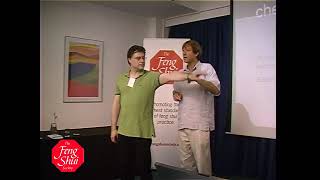
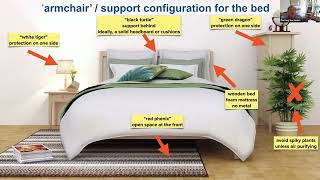
So my course is called Feng Shui Checklist. Obviously feng shui is, has become quite a big body of knowledge now with different things coming in. And so it's a challenge to balance between knowledge and wisdom. So the thing about learning anything is we all start as novices and we gradually progress through being proficient, competent to an expert. And that takes some time. Novices need rules and checklists are very, very useful way of helping them to expand the knowledge and learn much, much faster. I using checklists to teach Feng Shui for a long, long time now and I think it's one of the best tools to use. I got inspiration for this talk from this book Checklist Manifesto. It's by Atul Gawante and he's a surgeon working in Boston, US and it's amazing. Just following simple checklists will save lives. And I give you a simple story from the book. A girl was walking with her parents in Austrian Alps and she fell into a pond. And it was winter, so it's very cold and took her father half an hour to get her out. She was dead. But she kept working on her and obviously they got called the helicopter. By the time they got to hospital, she was dead for two hours. But they kept working on her. The following procedures, following checklists, they kept working. After some time her heart started to beat and after some more hours of work her body temperature got to the right state and so on. Two weeks after the accident, she left the hospital almost completely clear. Two hours dead. Do not give up. Amazing checklist. So simple guidelines. It's very simple. The most important thing is to use it. Six to nine points. They're very, very simple. When you have to put something in a very simple format, you have to process the information and find out what's important, what's not in process. As a Nov, most people don't know what's important, what's not important because they don't have enough experience, they haven't seen enough. So six to nine points, very simple list. And I'll show you my checklist and pause. After you take one item, you pause and you start to think, what's next? That helps to focus. So that's a very important point, right? So this is my checklist. Obviously it's not complete, it's work in progress. I've been working on this for 20 years or so. Most of the things you already know. But there's certain things more important than us and I'll spend more time on those. So first reality check, I'll go over them. Each overview look at the energy, yin and yang, geopolitic, stress, electro smoke, nature, space and rooms and assessment. Let's start with feng shui and see how feng shui affects. So for that I want to do a quick demonstration. Can I borrow you? So we're going to use muscle testing. So if you just stand like this, like so. Now just muscle test. So just resist. So just resist. So there's some resistance. Yeah. Okay. So everybody can do something on that, on their colleague or somebody who says just so try that. So there's some. Some test. Yeah, Chaos. Okay. Chaos. Okay. Now I'm going to retest this gentleman again. Okay. Much, much more. Easier to break the resistance. What was the change in the room? I don't know whether you could feel, but what was the change in the room? I create a bit of disharmony. Just that creates. They've tested it scientifically, just creating a bit of disharmony. It changes. So put it back and strong arm with subtle. I don't know whether you can feel it, but yeah. So great, thank you. So that suggests that obviously feng shui works and we know that feng shui works, but you can do simple exercises like this to show people what effect the environment has on them. So that was my first point. Overview. Obviously everything works in context. You'd be surprised how many times problems disappear once you put them in the right context or realize the context. I look at people's needs or my own needs. Obviously there will be problems. You can check a lot online now. You can check people's forms online. You can use Google Earth or Google Street Maps, do online surveys. You can get a lot of information from a client just talking on the phone, they'll tell you everything. Next, energy, qi. I think one of the key concepts in feng shui, again, context will make a difference. Check the history of the place, qi of the area, qi of the property, qi of the people, location, orientation, compass directions, how the sun moves around the place. You might have the best. But if it's an area that is easily flooded, you're in trouble and you're going to get more and more problems like that. You know, choose a place slightly higher up so you're not going to be affected by that. What's exaggerated, what's missing? Do you have too much clutter or do you have not enough clutter? Both problems. Geopolitic stress, one of the biggest and the best way to deal with that is really avoid it. And obviously different ways of neutralizing as well. So you need to work, if you have to work with it, I'm sure you'll find a way. But even bigger one now is electro small. And this is much more difficult to avoid. We cannot switch off WI fi in this hotel. So we were affected by the WI fi. We're affected by mobile mass, electromagnetic radiation and so on. So that's going to become the biggest problem for the next 10 years until they sort out what to do with it. Connection to nature, even a small plant in an office will boost creativity 15%. Creativity and productivity. One little plant, because we're part of nature. So if you don't have a plant, just have a picture of a plant. It works as well. And then space rules. So obviously your bedroom is the most important space because you spend most of the time in one position more or less. So optimizing your bedroom is the key. This is a house that Jesse James and Sandra Bullock are selling due to the divorce. So let's have a quick look inside and see what's going on. Maybe there's something going on on the feng shui level. Living room. So any beans? Beans. So the first thing you notice, beams. So good or bad? Could be, could be good, could be bad. We don't know. Again, depends where they sit, if they both sit here. So maybe the cutting tree of the bin kind of divides them and that could be a problem. Well, let's check the bedroom, which is very important room. So a bit of repetition, obviously, but we still don't know. It's likely that obviously this created a problem, but maybe it's not the problem. So without having a big picture, we don't know. So at the end I summarize. So I tell people one of the most important things. And when I'm doing the feng shui consultation, obviously I run sort of processing thing to see what's important, what makes a difference. And I set up a practical plan of action. Let's start with simple things that people can do. So practical things, first steps, what people can do straight away and then follow up with an email, telephone call after a few months and the yearly feng shui mot. Your home. You're never going to fix your home. It's a living thing. It's going to take you for the rest of your life and you need to change it. It's like your body, it changes all the time. So a lot of people think, oh, I just done my feng shui, my home feng shui, and that's it. No, that's just the beginning. So coming back to the checklist, start your own feng shui. Checklist, Start to see what's important, what's sort of repeated a lot in your practice and start to share it with other consultants. So, hopefully, as a feng shui society, we're going to develop the best checklist on this planet and we're going to post it so people can learn from it. And in that way, we'll build this body of knowledge. But key points to remember, keep it short and simple. Six to nine points. Remember to pause, think about, reflect and put it into practice.