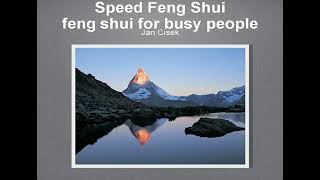
Shortcust to feng shui mastery - Jan Cisek
Recorded webinar presentation by Jan Cisek (environmental psychologist and long-time feng shui practitioner) introducing practical shortcuts, heuristics and quick interventions in feng shui. Covers thin-slicing decision-making, yin/yang framing, sleep and deep-sleep hygiene, grounding/earthing, ergonomics (monitor height, posture), plants/biophilia, pattern recognition, cognitive biases (Dunning–Kruger, confirmation), priming/placebo effects, bagua uses and small ritual remedies; finishes with audience Q&A and examples from the speaker's practice.
Chapters
Yan is going to be our first speaker today. I mentioned that Jan has been in the feng shui conversation for 40 years, and he's been with the Feng Shui Society right from the start and a welcome part of the team. He always is. He has a long memory and some great ideas. And today he's going to talk about shortcuts. Because he is an environmental psychologist, he's studying and working on a PhD in Feng Shui. He has a background in east and west perspectives and interior design. And I've always admired Jan's approach to life of just getting done what you need to do and then leaving all the faffing around aside. And he truly does leave this shortcut. So he's really the best person to talk to about how we can bring shortcuts in. So, Jan, over to you.
Welcome. Thank you. Can you see my slides?
Definitely.
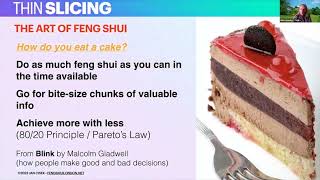
So, yes, as you. As you said, Gina, we all practitioners, except that some people, actually, for some people, it's a profession. I believe strongly that there's not a single person on this planet who doesn't use feng shui. Everybody use feng shui in some way or another. And you can see that from my presentation. But also animals use feng shui, even microbes use feng shui. If you kind of look at any living organism, plants use feng shui. So those principles are there. And it's just, you know, ancient people kind of verbalized it in different ways, not only in the Far east and China, but also in the west and so on. So first thing, why shortcuts? Obviously, we love shortcuts. We all use shortcuts. Without shortcuts, we couldn't be doing this. Look, technology, huge shortcuts. We can be in this space in different time zones and different, maybe different even seasons. We could be in one space. We're all very good at that. There's different names for shortcuts, hacks, time savers, cognitive accelerators. Ergonomics is part of shortcuts, rule of thumbs, heuristics, and basically help us to get things done. Example of that would be prevention is better than cure. It's a shortcut, but also it's a wisdom. During the talk, I want you to think about your shortcuts specifically to feng shui. But if you've got any other amazing shortcuts, let us know. I will have some time at the end to look at that and you can put it, put them in the, in your chat. There'll be some links. I'll put some links as well. Some of the things I'M going to talk about. So just a quick first shortcut. So I kind of use this idea that Malcolm Gladwell wrote the book Blink How People Make Good and Bad Decision. You should read both parts because the first part is about good, how people make bad decisions. But second part is about how people make good decisions. People just get stuck on the first part. And I got this idea of thin slicing and this is what I do a lot and we all do that at the same time. So just kind of exemplifying how it works. So how do you eat a cake? How do you, how do you slice a cake? Obviously like this. Yeah, now it's a big slice. I like cakes. You don't have to have a huge slice. Slither of the slice with a cross section of the cake. You eat it, you like it, you don't like it. And you can see it actually as well in this example, what it looks like, the whole thing. But a lot of people try to learn feng shui. Like they would eat the whole cake layer by layer. So they start with one aspect, then go to another, another. It takes a long time. So if you thin slice your feng shui, different aspects that I'm going to cover, then you get more quicker. So yeah, so. And also we do that as well. You know, people, you know, I mean, homeless people use feng shui, they'll find a place where it's warm and maybe secluded. You know, I've got some protection. That's thin slicing of feng shui.
Yeah.
So also the idea about achieving more with less. So the less you do, the more you can do it. And that's kind of daoist principle as well. In the west it's called 80, 20 principle, Apparetta's principle, you might have heard of them. So just so we're on the same page, you know, that's my view of Feng shui, obviously the kind of. What does it do? What's the function of feng shui? Just to remind ourselves. So obviously to minimize and mitigate any environmental stresses. And there are many. Plus add and maximize positive kind of environmental factors. Whatever you're doing in a positive framework, you know, just to kind of amplify things that you want. That's feng shui. And then obviously you men in change, we're changing all the time. And I'll give you a lot of little tips of how you can change your life very quickly. So. So yes, about those three things. So. And obviously, you know, there will be a few principles that I'm going to mention and One of them is obviously yin and yang, which is the kind of second principle. The first one is obviously energy qi. But I just want to remind you that all models are wrong. Some models are useful. So you need to kind of think in those terms that you don't want to kind of put your sort of life into feng shui. Use your feng shui in your life. Yeah. So people get dogmatic about certain aspects and they get stuck. And then obviously the have to call a consultant to unravel the mystery of feng shui. But just a quick reminder about yin and yang. Obviously the terms are kind of interrelated and obviously there's a relationship between them. And the difference is really in the degree, if you think, not in kind as such. So for example, is an apple yin or yang? It depends. Depends how you compare it. So will be yang a yin compared to a carrot or to meat, for example, if that's the domain is food. Yeah, but it might be yang or yin compared to something else that is more yin, like, you know, a lemon. Yeah. So it's a. It's a question of degree as opposed to kind because, you know, you can't compare an apple with a car. Different, you know, domains, if you like. So I use different ways of kind of explaining yang because it's a bit of confusion. People go black and white sort of thinking. So my idea of yin is diverging. There's more. It's kind of more relaxing, kind of absorbing. Yeah. And that's also links to entropy and matter. But Yang is kind of converging. Yeah. So, you know, when we started as a feng shui society, we diverge, which check everything, we studied everything, and then we start to converge, kind of simplify certain things and concepts so people can focus, can do less and, and achieve more. Let's give you a couple of examples of this. So this is a book by Philip Philippe Fernandez. I can't see it now, his name. And it talks about history of what we think and how we think it. And it takes about eight night hours to read regular traditional reading this book. You know, if you speed reader, you can do it in 20 minutes. But he summarized it at his thought in two words. Divergence and convergence. Divergence and convergence. So a lot of examples of that. So for example, you know, Britain went through this process of Brexit. So they kind of diverge from European Union. Yeah. Which was kind of converging different nations. Yeah. Ireland's trying to converge itself, you know, is separating two parts. But they want to. So a mobile phone is a divergent device because there's millions of things you can do. So those two forces work all the time nowadays. I'm sure you've heard of cbdc, central digital currency, that all banks are trying to figure out how to control all the currencies and probably allies. So that's kind of convergence. But when you think about different kind of aspects of feng shui, these two forces will play in different ways. But again, it's more of a difference in degree as of kind.
Yeah.
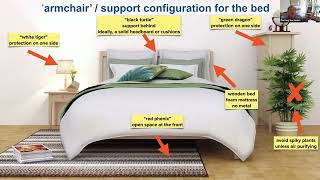
So a couple of examples of shortcuts just to get us, because we're good at that. We just need to remind us, you know, how we do it. So NASA has spent allegedly, you know, hundreds of thousands of pilots to develop this super space pen for astronauts. And, you know, you can write with this pen anywhere in any environment, outside the space, in the ocean anyway, in any position. Yeah, that was great. And it works. You can actually buy it, you know, if you want. But Russian astronauts use a pencil. That's a shortcut. First step, hold your pen ergonomically. You. Most people hold the pen between those two fingers. So that's how we taught incorrectly. That's not an ergonomic way of holding a pen. If you hold a pen between your two fingers, the index finger and the middle finger, it's more ergonomic. There's less pressure. They've done studies. Children naturally want to hold the pen like this because they feel kind of more in tune with their bodies. They feel it's much nicer, kind of easier. There's less tension. You know, if you look at old paintings and scriptures, people used to hold the quail like this, or they were doing kind of Japanese things. So try. That will take a few weeks to get used to it. But, you know, obviously, if using a big mark is difficult, but, you know, for pens and pencil, that's the most ergonomic. Well, you're saving energy. Remember, feng shui is about energy and kind of being more efficient and effective. So two environments, obviously, big contrast. And this is a question of, again, yin and yang, less or more. And both can be seen like that. So on the left, you've got a, you know, two chairs, two computers, and probably a nice view and not much on the desk. On the right side, you've got a very cluttered desk. Now, who's got. Who's more kind of successful or, you know, happier with the environment? We don't know, because both can be successful. So for the person on the right side, clutter. Obviously, mass is not a problem. Maybe that's how they thrive. You know, that's this kind of stuff. And maybe they have amazing view. So here a lot of rubbish nonsense, but you know that, you know, outside is beautiful and the same with these people have a nice view, but maybe they're not focused, they don't know what they're doing. Maybe they're not creative, you know, you don't know. It's difficult to judge people without seeing whole picture. The ultimate feng shui mastery is finding this leverage point. And I'll give you some example. It's not always possible. But from acupuncture we know that good acupuncturists will use one or two needles because they know how to shift the energy in the body. And this is the same with feng shui. If you find the right leverage, you find one spot and you can change everything. Quite often you have to do more. But Sarah Roseberg that Gina mentioned, she said even a geomancer can recognize Qi energy. That is all there is to feng shui. And that's kind of ultimate thing. Obviously I'm going to cover different ways of getting to that point so it can become more artful, if you like, in this whole thing. So first example, I will talk a bit about the biases, but there's a Dunning Kruger bias where we think we know more than we do and underestimating what we don't. So the I had clients because she was sleep problem. She get a lot of consultations with classical feng shui masters and they tried different things, mostly direction. So they thought, oh, if you sleep this way, pointing in that, you know, according to, you know, astrological chart, maybe you sleep better. Nothing worked. Yeah. And so I went there and discovered that actually she was using a hair dryer before she would go to sleep. And obviously hair dryers will have a lot of electrosmoke and that affect the electrosmoke inhibit melatonin production. Didn't sleep. She stopped that one thing. She started to sleep better. So you need to obviously need to know enough about environmental factors and stresses to help people. But you know, obviously she got there in the end. But, you know, if she started with me, you know, she would save herself a lot of trouble finding the, the kind of exploring different obviously was nice. You know, she tried different, you know, positions. And so I'll talk about direction shortly. So yeah, so you need a kind of big picture of how things works. But also you need details. You need both, both kind of visions. And there are books about this and this guy in my Gilchrist Wrote very intense book. You know, it took him 10 years to write it. But the key message from this book, and you could watch, you know, a video about this book in 15 minutes, you understand the book will take you probably 20 hours to read. It's very dense. So there are two types of attention, kind of narrow focus attention, kind of young focus if you like. And then broad village vigilant open prefrontation where you see more big picture details. And as you see in this animation, you've got this rabbit that's looking for some food or whatever and there's a fox on the side, you know, you know, the top sort of section of the, of the picture. So obviously the rabbit needs to look for the food, but also needs to have peripheral vision, which is in this case more important because, you know, might get eaten by a fox before it gets to any food. So we need both. And unfortunately because of this small devices called mobile phones, we lose in peripheral vision. And that's a fact. So you need to kind of learn how to have open spaces, expand your view. You know, like Gina's got this view of landscape behind her, so that's kind of expansive. So obviously, you know, don't get stuck in one mode of thinking because as the same if the only tool you have is a hammer, you tend to see everything from. As a nail. So that's. You want to avoid that. Yeah, but sometimes it works. Yeah. So it depends on the context and what's happening. So once you learn all the rules and everything, you can actually start breaking them and find shortcuts. Yeah, so it's useful to find a big. But you can start with shortcuts as well. You can, you don't have to learn everything. So kind of a few examples of how. So in feng shui, most people look for health, kind of help with help, relationship, money, career, home, all kinds of things. But kind of obviously you don't have time to go to all the areas but kind of examples of them. So you want 8% improvement in personal professional domains. So one thing you do and your life works kind of will improve tremendously. Sleep is the key. Start with your bedroom. If you sleep well, most of your problem will start to disappear because your brain will work better. Yeah. So you probably notice most of those things, you know, avoid electro smokes, switch off WI fi for like most people don't do. It will affect your melatonin production, your deep sleep, you know, sleep in total darkness, avoid metal, you know, foam mattresses, you know, maybe put your bed in pie position if Possible solid headboard. Obviously avoid geopolitic stress and possibly sleep with towards north. You know, there's very little evidence that sleeping in particular direction will help you with sleep. I just found two studies. One was that sleeping with towards west was better than east. And it was a very small group so we can't generalize it but it was a bigger study of how animals arrange themselves. But not all animals. Some animals like to arrange themselves with the head towards north north because they kind of arranging with the magnetic field of the earth. So that can work. But not animals. And even the animals of particular type, not all of them. So it's not universal. If it was universal, everybody would be doing. All animals would be doing and humans will figure out after so many years being on the planet that that's the best direction. So but obviously people use astrology and as well but this certain things are more important than others. The reason it's important sleep because of your deep sleep. In deep sleep it's the most essential part of your health. All the rejuvenation happens in deep sleep. You know your DNA repair, everything is happening sleep. So the more deep sleep you have the better. So electrosmoke, geopolitic stress, light affect the melatonin production and affects your deep sleep. So it's a 90 minute cycle. It's not how many hours you sleep, it's 90 minutes cycle. And you can see in the chart on the right, you know that the first kind of deep sleep cycles are the deepest and then get less and less. So want to improve your productivity at work? 30% increase. Yeah. Have your monitor ergonomics. So that's not an ergonomic way where people sit and look at the monitor and the neck, you look down on the monitor and the muscles at the back of your neck get affected and that affects your processing sort of capacity. So the best way is have your screen in the middle of your eye level. So you need to move. Most computers have kind of stance you can adjust. Unfortunately I've got a standard. I had to put a lot of books underneath. But it works. So yes. So you need to have so and the study suggests just that one thing can improve productivity up to 30%. Now for women the size of the monitor is important. So the bigger monitors women perform better for men doesn't make that much difference. Yeah. So obviously if you're working from a laptop you have breaks. So then kind of optimize how your works. Examples of clutter, non clutter. So Steve Jobs, the founder of Apple very cluttered office, he was Most creative. Then. Then he went into a Zen mode, you know, nothing really and not so creative. And then his successor, Tim Cook, look at his desk. Look how tidy it is. That's not possible. Nobody's that tidy. I think it was a photo shoot, but, you know, takes a lot of energy and amount of attention to organize it in a grid like way, you know. And unfortunately Apple is not very creative now. So I think you should mess up the offices big time and maybe the creativity come back to just remember this. That's the first desk by Steve Bezos. You know, Amazon. I think he create. He made it up from something. I think it looks like one of those things that we use for wallpapering the wall so that you just, you know, so, yeah, so it doesn't matter really, you know, ultimately. But obviously it helps, you know, if you've got a nice office, nice desk, helps you want to boost your creativity, which is important in life and in finding shortcuts. Have more plans. So studies, just a lot of studies on plants and biophilia. You know, the more plants, the more nature you have, the happier you'll be. So. And it's difference between, you know, sort of original ideas by males and kind of other ideas, creative ideas by females. Yes. So women and men kind of look differently at certain aspects, obviously, kind of generalization, but see what works for you and what plants kind of work for you best. So now this is a big one. You want to decrease your inflammation. Inflammation is the kind of problem behind any illness really. So it depends on the studies between 10, 50, 80, 90%, you can increase decreased inflammation. Very simple idea. And some of you already doing it. It's grounding or earth. Lots of studies on my website you can look at those studies and kind of connects you with the air to the earth, to human resonance. Obviously, you know, we can't walk barefoot everywhere. So there's an option, your bath. If you got a bath and you have spent maybe 10, 15, 20 minutes in your bath, you'll naturally be grounded. Yeah, I've tested lots of bath and most baths ground, unless it's plastic and there's something wrong, very rarely. So, you know, if you touch the tap, you know, you washing dishes, you'll be kind of grounded as well. Yeah. So obviously add some Epsom salts, magnesium, because when you're stressed, your body depletes itself of magnesium. So add some Epsom salt. And that's one of the best way to absorb magnesium actually through your bath. So Paul McCartney famously Start the whole movement on the COVID of this obviously he was upsetting his habit of smoking. So. So there's some interesting studies how, you know how that works. Actually people have bad habits and they started grounding themselves and things change. So there's earthing mats, you know, sometimes it's not possible to have that but so you can buy them like shake. How it works, it doesn't work everywhere, so you need to kind of have somebody to measure something. But I developed this device called Schumann resin generator. And this my website, I'll put some links later. And it kind of puts that frequency around you in your home. So your body naturally seeks that frequency because it's a natural kind of relaxation state, alpha state, you know, the 7.83 hertz, it's more or less the alpha state. So it kind of relaxes you. And there've been many studies on that as well. But the easiest one, automatic tiles. I love this. A lot of houses have now tiles and are recommended obviously not everywhere but the kitchen, you know, bathrooms obviously. And you can measure the grounding effect. You can get this little kit online and you can measure how much you know this electrosmore is in your body. And then you ground yourself goes to zero. It's amazing. Very simple. Once you do it, you don't have to think about it. It's a hack, it's a shortcut. And once it's done, it works. So you want to improve your relation again, different percentages because people are different environments. But you want to improve your relationship. Have more pictures of people you know, your family, friends, anybody. Some people don't like it. So there'll be another shortcut for that. Yeah, because the more pictures you have, the. Your vagus nerve, which is the most important nerve in your body, gets activated. But any pictures you know will help. But cold showers is the easiest way to activate your vagus nerve. And then you kind of your body works, you know, so a couple of minutes, you know, especially at the back of your neck, if you put some cold, cold water, it activates your things. But anything that makes you happy will activate your vagus nerve. So reading, people like reading. Obviously I'm a bookaholic. Thousands, thousands of books. And so the more books you have around you make you happy. Now there'll be one hack for reading as well. Will help you with study more. And in terms of Feng shui. But in this picture you've got mirror tiles so avoid anything that kind of fragments it. The whole world is kind of fragmented, so is diverging, which is good. Sometimes that divergence is not Positive, but avoid anything that kind of. So some people have the mirrored tiles, some people have mirrored cabinets and they divided in half. So avoid that. Yeah, but get more books. You don't have to even read them. Studies suggest that the more books you have, the more intelligent you'll be and you don't actually need to read them. Obviously, by reading you become even more intelligent. Wise. So we've got this idea in feng shui, bagua. It's a shortcut. It just gives you your life encapsulated on one page. So you can look at different areas of your life and just change them. So a couple of stories from my life. So I got this postcard from Tallinn, from Estonia, from a friend and I put it in. In the travel area of my office. I wasn't intending to go to Tallinn, to Estonia. Three months later I was working for the government of Estonia. I couldn't believe it. So be careful what you put on your walls. I can tell you lots of another example. So at one point I changed the screen saving on my computer. Kind of nice open spaces because I've never been to Caribbean. Yeah. Six months later, I ended up living in Barbados for a year. It was a long holiday. Very hot. Yeah. So feng shui is a kind of ritual, but you need an intention. Obviously we're doing all kinds of things, but you add that intention or sometimes without intentions. Like in the case of Tallinn. It wasn't my intention to go there, but it happened. Yeah. And the same with the Caribbean. I was thinking going holiday, not that long, though. So feng shui is a kind of physical affirmation and that's a shortcut of thinking how things shrieks. But ultimately it's a ritual. Everything we do is a ritual. You know, lots of different ideas for, you know, activating different parts of your bagua. You know, fish is famous money plants. I changed some people's life just adding one thing. You know, people call me and they ask me, oh, I don't have the resources for. For your advice, but I can give you that for free. Get a money plant and shortly, you know, they get the money. Somehow it works. Yeah. So because they have a strong need, they have a passion for changing their life through feng shui. And just anything can work. Yeah. And sometimes you need to be more specific, but sometimes the general advice like that would work as well. Fish owners are one of the happiest, you know, the study suggests so, you know, but obviously not everybody's into fish tanks. But pictures of fish, there's a nice kind of Koi cup. Actually I sell it on my website. It's a 3D picture. It's going to get the depth of the, of the, of the fish. So we all geniuses and we notice things all the time. And just some people just kind of go next step and do something about it. So Alexander Fleming discovered penicillin because he was a very, very messy lab technician. He left petri dishes and they kind of started to get moldy. He discovered penicillin saved million lives here. So obviously we get distracted. Lots of things, we notice things, but we get distracted. So kind of this building, the pattern recognition ability is very important and this is how you do it. So obviously, you know, you analyze things, you see things. You know, we have 300 million pattern recognizers in our new record. We see patterns all the time. You wouldn't recognize me if you didn't know that the face looks like that. Yeah. So you analyze it breaks down that kind of divergence, kind of yin, yin domain. And you synthesize information into something that is useful. So on the right side, you see this lady, she's too close obviously to the numbers and that's why she can't see it. So remember, focus but also big picture. And quite often big picture is more important than the details. So very simply, what changes the most, what is repeated, what's missing will help you to identify a pattern, you know. So in your home, where are the changes? You know, obviously outside, inside, that's a big change. Between the rooms, in the thresholds, you know, in the doors, that's a big change. Staircase is a big change. Yeah. What is repeated, what things you have most in your home. Yeah, I had one client and, and I walked in, it was like lots of triangles. I couldn't believe. Like a triangle mirror. Not many people have triangles. The first mirror was triangle, triangle ashtray, triangle parts. It's like, what's the deal with the triangles? And then I look outside, it was on a triangle plot. So the triangle plot affected them in prime them kind of subliminally and they start collecting. They didn't notice. It's like, you know, oh, oh yeah. Actually lots of triangles. They didn't notice they were collecting triangles. And obviously what's missing, what's not working, what can you change? So looking at difference in sameness. But a basic kind of algorithm, this computer and the zoom works on the most basic, the most basic algorithm. So you can use some technologies, shortcuts is, and, or not. So when you look at something you can ask yourself and, or you can Ask yourself. Or. Or you can say not. Yeah, so that's the most basic algorithm. There's a book about that as well, you can read about. So. So yeah, those three things, what changes the most, what's repeated, what's missing, will help you to look at patterns and you know what's working, what's not working, what to change. So a very random pattern, but you already know the pattern. You just seeing it and not seeing the pattern yet. So it's random, but that's the pattern. And you do it all the time. So random. Yeah, all the shapes, but that's the pattern. You know the pattern, you remember the shapes, you know which shapes is which.
Yeah.
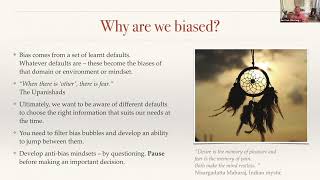
So another example. So if you've seen this picture, you know the little thing that is hiding that. So do you see the trees instead of the forest or the other way around? Or there's something else, you know, so I'll give you a little moment and some suddenly things will start to pop up. And the word is faces. So. So there are a lot of faces. Yeah. So before you didn't see it, and now you're seeing it. Faces. Yeah. And you can't unseat now, once you see the pattern, you can't unsee it. Yeah, you can't see. So the face on the bottom right, you know, nice noise, looks like this. And then try not to see it. You can't, you can't. So once you activate your kind of pattern recognition, which we have, naturally, it's nothing, but start to think about it, reflect on it, you start to see patterns everywhere. So little fun thing for you. Which word jumps at you. So just focus on one word, you can do more. There'll be words kind of hidden in this, Anything. So I can see purpose, I can see love, I can see money, I can see what else I can see here. Obviously, looking at this, different times will kind of. Different things will kind of jump at you. Yeah. So but the words that kind of jump at you, your brain might be thinking about it already. You kind of. It's at the back of your mind and maybe that's important, maybe not, you know, and strength, another comes up. So lots of things you can do a screenshot and then look at that later. It's kind of fun thing to do. So people have been thinking about it for ages. So it's not rocket science. You don't have to invent all those things. There's something called Triz. Yeah. And it's a Russian kind of invention. People who are working on in the patents Office, they notice patterns and they may and then verbalize them. So there's 40 different patterns, things that you can apply it in feng shui. So, you know, on the right side, I can pull out some of my favorites. Skipping, skip harmful action. Stop eating junk food. It's a shortcut. It actually doesn't cost you because you're not doing it. Yeah. So color changes. You can change the color in feng shui. You know, you can do certain things that works and feel less than right. So lots of different ways of looking at it, but they are the information for kind of pattern recognition changes out there. And it's not defined specifically to feng shui. And this principle, kind of universal, you can apply it to anything. Can apply all those principles to your relationship if you want, or you know, how to set up a business. So priming. So I'll give you a little tip. You know how to read all the books, you know, you want to read very quickly. So I haven't written any books on the feng shui, but I wrote one book on speed read. That's my book on speed reading. And, and there's a technique. So I'll put you the links and you can read about that techniques. But basically what you do, you take a book, any book on feng shui or anything, just pick one book and you open the book on first page. Yeah. And you look at four quarters of the book and you turn the pages as quickly as possible. You don't move your eyes from one page, so you see the whole both pages. And you kind of download that book. And basically it primes your brain. So this is what I'm doing. I'm looking at you. I don't even have to look at the pages because it's in my purple vision and my brain is kind of scanning the information. So then when you go for the book, you go quicker because you've seen it once. You really have seen it once. And that's priming. Another example of priming. So if you hold a. That's a good example. If you fold a piece of paper very quickly, it takes about, you know, five, six, seven seconds. Yes. And you can't fold it again. Yeah. And then you unfold it. So you've got a groove. Obviously that's a pattern. Yeah. And then you can fold it at the back of, you know, without looking, even much, much quicker. Fold it. Yeah. So that's priming. That's how your brain works. That's how learning works. You know, repetition is, is, is learning, basically. But you can download Your books or whatever books you want and then it kind of see in your mind and then suddenly starts to kind of work for you. So obviously, you know, sometimes you need to do it two or three times and sometimes just once. Yeah. So useful thing to download all your feng shui resources. Yeah. And there's more on, on the, on my website, on speed ring website. So, so then you've got all that information. You kind of overwhelmed a lot of people read and study everything. And so what is. So simple questions will get you the right sort of information. So what does it do? Yeah, what does feng shui do? What does this remedy do that will give you extra information. You start to kind of probe into the area. Do you want more, do you want less? What else? Yeah, so these, that's a key kind of question you can ask kind of lenses that help you to assess the information and then you know, what's relevant, what's less relevant. So there's a lot of kind of sloppy thinking. Unfortunately, any discipline, not only feng shui, lots of, you know, superstition and nonsense. Actually people pay me a lot of money to unravel the mystery of feng shui and that's basically because of, we have confirmation bias. We want to see certain things. You know, you're making assumption, lots of superstition. We're all superstitious to some extent. Kind of wishful thinking that, you know, moving forward should change all my life can change certain aspects, but not maybe not all your kind of lack of basic common sense, basic knowledge, people don't understand how physics works. Sometimes limited beliefs and kind of perspective and basically lack of critical thinking, people not questioning, you know, not researching, not challenging the dogma and so on. So I wrote a blog about that. I think I talked about the bias at one of the other talks. So there's a, there's a video about that on a feng shui society website as well.
So.
Yes. So you need to challenge yourself, talk to people, have some kind of a way of reflecting on all that information. So famous picture, you know, those guys trying to figure out and they're looking at details, they're blind, so they're looking at it and they're reporting to each other. And then after some time, you know, maybe, but they should ask somebody who's got eyesight and tell them what it is. Yeah, so that's a shortcut. Yeah, so the same, you know, so there's certain, obviously things that we, we know and some things that we don't know. And it's good to be Aware of that.
Yeah.
And we're learning, we're all learning. So we want speed, we want things done quickly, you know, short of time, and then result, will, effectiveness. And it's a good example of how the words also that applies to Feng shui. So in the first on the top, this, this, this boat or ship or whatever is going in the wrong direction. Everybody's drunk, the engine is not working, it's a mess. They're not going to get that where they're going with the thing. And then they sort out the, the, the, the, the engine, the new captain, everybody's working perfectly, but they're still going the wrong direction. So direction, what you want is more important than actually how you do it. Yeah. Obviously if you're going the right direction and everything is working, you're going to get the faster. Yeah. So putting things right in the framework doesn't necessarily change the framework. It's a starting process. Yeah. But it's not everything. So coming back to this picture, my first example, so, you know, sometimes doing nothing is better than being busy doing nothing. Yeah. So these people on the left, maybe they've got a nice clean environment. Obviously there's some issues, got a sloping ceiling. And you know, those office chairs are not the best office chairs. They're not office chairs. So lots of things can be done. Yeah. But maybe there's kind of sitting there and being distracted by the nice, you know, view. But the person on the right with the messing one, very focused. They know what they're doing. And the clutter, the noise doesn't disturb them, actually. So it all depends. Yeah. So another way of looking at this is kind of thinking what affects us most. Yeah. And obviously power is very important. You know, it's a measure of control you have in your life and you can't control your environment. So there's a little picture of a boat, you know, you know, so we can't control the sea, we can't, can't control the weather as much. Yeah. So. But we obviously can control our boat, you know, we can control what we do. Yeah. So what has a part of your life Feng shui or you. So the kind of, my view of order of power is that us, we have the most power, then the people around us can affect us. Yeah. Family, etc. And then the environment, then feng shui. So feng shui is important. Obviously you won't have nice environment. It's, it's all good, but it's not the most important thing. You know, people like Nelson Mandela, he lived in A he was in a prison for over 20 years. It didn't affect him. Kind of make him stronger actually. People who survive concentration camps again, you know, so you need to start with yourself, then look at others and then the environment. Yeah. Obviously look at all of those things and then you're unstoppable. So there's a placebo concept and I wrote a blog about it in more details. But basically placebo and nocebo, opposite of placebo. It kind of help you tell us how feng shui works. And it kind of. It's magic. Yeah. So placebo is a positive belief, how things works, kind of self fulfilling prophecy, your positive expectation. It's basically a ritual. And no sibo is opposite is a negative belief kind of self defeating prophecy. And a lot of people, including myself, sabotage, sometimes good projects. Yeah. There's loads of research on placebo and. But it's in one way, all feng shui is placebo. You can't separate the ritual that you do, even if you think it's all size and research behind it. But you can't separate your intention. Because you're moving your furniture for something, you're not doing it randomly, you know, just because you've got nothing else to do. So that's a useful way to think about your, Your how. How you do feng shui. So it all works. So little quotes from people that I admire. Imagination is more important than knowledge, said Einstein, because the imagination is almost infinite. Your knowledge is limited. Yeah. And you know, probably imagination creates all knowledge. So. So it's kind of creating environment that, you know, I already mentioned you have some plants, nature. Your imagination will work better. You know, another quote from my favorite philosopher, Gilles Deleuze, Bring something new to this world. Start something new. You know, we're here for probably a reason. Yeah. So don't waste your life. Do something. Bring something crazy and new, innovative. I studied saints because they were doing some pretty far out things, you know, they really changed the paradigms. And another philosopher, Claire Colebrook, she said a problem is a way of creating a future. So you know, obviously resolve problems on a daily basis. Yeah, but that's a nice way of looking at problems. I don't like problems or challenges and stuff, but actually I thrive on problems because I can see a potential for changing it. So. So when plants grow and evolve, they do so by way of problems. Developing features to avoid predators, to maximize light or to retain moisture. So that's feng shui. That's a beautiful example of how feng shui works. I don't have much time to go into time running of time. But obviously feng shui is about space but also time. Lots of different perspective on that astrology. But Greeks have a very, very neat way of classic classification of time. So obviously we live in kind of chronological time, you know, present, past, future and so on. And we use clocks and calendars to measure that. But there's other types of times, kairos and ion where kind of beyond this chronological time can go beyond. And basically kairos and I is like now you now everything is happening in now and by beyond kind of obviously you need both beyond kind of chronological things. You can starting miracles happen when people are present. When all Your energy is 100% in the present moment, you're congruent and things happen. Yeah. And there's of evidence for that as well. So look at, look at different times and then go beyond time. Right. So at the end, so key kind of reminders. So thinking shortcuts without cutting corners. Obviously there's nothing wrong with cutting corners. Yeah. But you know, if it's going to damage you create some negative cost. Don't cut corners, look for patterns. Yeah. Ask good quality question. Remember about this algorithm and or not just learn about decision making. So there's a book thinking better with the shortcuts, you know, on the right side. So. So don't assume that you already know what is important or trivial. You know, if Alexander Fleming look at this petri dish. Ah, that's trivial. He wouldn't discover penicillin. Yeah. And again so look at, look at, be on a look at what might be overlooked. Yeah. And obviously details are important, but also big picture. I think big picture is more important. Be curious about, you know, study tests, question things, empower yourself with evidence. You look for evidence, you've got the Internet, you know, go to Google Scholar, all that research about different aspects is there. Yeah. But also think like, like those people like a feng shui master, like Sherlock Holmes, like love or any other people who are very good at though shortcuts. Yeah. And kind of, you know, obviously, you know, the Swiss knife is a convergence. You can do many things with one little knife. So the last thought is sometimes you walk on water and sometimes you take a bridge. Remember that there are different ways of doing things. We've got a bridge in London. This is a millennium bridge was a problem. A lot of people start walking, got wobbly. So without rebuilding the bridge they put some stabilizers, the dampers and not cost them a bit, but not rebuilding the bridge and they fixed the problem that was A shock. So what I'm interested now is the what are your shortcuts? So I mean you can unmute yourself and tell me very quickly. We've got a bit of time or put it in your, in the chat here. So there's my details and I'll put also the links that I was talking about.
So anyone, do you want to change the screen so that we're looking at you? Everybody could maybe take a screenshot of your details there and then we can see you. Yan, you stop the sharing in a second. You have an interesting mind, Jan. Grateful you're an original thinker. Let me spotlight you. Yeah, a spotlight.
Okay, so putting, I'm putting the links in the chat so you can get all the links.
Okay, well done. Lovely. And your question? Well people may have questions. We could do a couple of minutes of that before we go and have a tea break. Has anybody got a question? And you asked them a question, didn't you to give you a feeling on what their shortcuts were. So I don't know anybody wants to write anything in the chat or put their hand up, I'll look at the big view to comment. Oh yeah, we got a comment from Marta. Hi smarter. Hello.
Hi.
Go ahead.
Hi everyone. Thank you. Jan, I really, really loved your contribution because I'm. I'm a bit of. I'm a student at the London school Feng shui for starters but we've always been taught that plateau is a very bad thing. So I felt bad for a little while because I love my books as you do, I love my plans and I've always been a bit messy and. But I've discovered through the, through the years that the way my brain works because my creativity needs that because it allows me to, I don't know, to focus and my intuition stops working and I get really nice ideas when I have clutter around me. I know it sounds bad but unfortunately that's the way it is and you know, I felt bad for a while but now I listening to you I feel a bit better to be honest.
Books about clutter, that is good for you. So. Yes. So I think I've got a blog about clutter as well somewhere.
Yeah, go and have a look. Thank you so much.
People have different preferences and you have to respect that. There's some studies suggest that when people have clear environment they may be think better but it's you know, people who are very creative and.
Yeah, exactly. I think creative people need, I'm not saying like haven't junk everywhere but I think they need something that sparks the creativity. They need to have that focus. Something that really, I don't know, makes them figure out things.
Einstein famously said, you know, if a cluttered desk is a reflection of a cluttered mind, what is an empty desk?
Yes, that's very true.
Thank you.
Thank you so much.
If it works, use it. If it doesn't work, don't use it.
Yeah, thank you so much.
Can I just add about dismantling the, you know, the aspect of clutter, because there's clutter of too much stuff that's been around a long time that's not put away, that's in the wrong place, no value. And then I have a tendency to come in and explode. I've got a newspaper, a book, something arrived, lots of things around, and it stimulates me. And I think there's different types of cluster. There's the long stuff that's not put away, that really does not add any value except remind you of things you haven't done. And then there's stuff around that stimulates rather than a pristine vanilla environment. So the word needs unpacking. And I think you're making some good distinctions there. Well done, Marta. Anybody else got a question?
When I can't find anything on my desk, I start to declutter, but leave it working because it takes a lot of energy to keep clutter free environment. So sometimes it's not efficient.
Yeah, you have to work out your own way of being with your stuff, don't you? Okay, thanks, Marta. Anybody else want to make a quick comment before we have a some comments in the chat?
So, Joy Teller, my shortcut is asking the client what already works and what doesn't work for them. In spite of any feng shui rules, don't try to try and fix something that isn't broken. Keep things simple and practical. Absolutely. That's a shortcut. Another one, Becky. One of my shortcuts. So many little things in every. In the everyday, I think like an extension cord with an off switch where I keep my phone and computer charges plugged into. And it's tied on to a bookshelf, so it's close to a church. Yeah, Proximity, you know, making things work, you know, it's ergonomics. Yeah.
Yeah, very good. I find labels helpful. Just label things, then I can find them, and then when they're not there, there's a label, the container's empty.
Like another quote from Dennis List. What feels good is good feng shui. If it doesn't feel good, it's not good feng shui. Yeah. Use your emotions, you know, to evaluate your environment. Yeah.
Does anybody have any questions about that or are you all kind of still digesting the information? Yanji Just want to quickly put up your last page that's been requested with the contact details. And then you can. People can. You know how to take a screenshot on your computer? You can take that. It'll be there in the recording. Just do that and. Okay, we're a few minutes over, but we're going to have a seven minute tea and break. Seven, Come back at. Yeah, come back in seven minutes. Three minutes past the hour now. Seven minutes past the hour. You can stay here and ask Yann a question if you choose to. We can record it and then it will be on the record. But if nobody's got questions, everybody's having a break. So.
More from Jan
Feng Shui Logos – How to Design Logos and Business Cards with Feng Shui Principles – Jan Cisek UK