Feng Shui Research: Advancing an Ancient Discipline with Science – Jan Cisek
This content was created by Jan Cisek. This content was uploaded by Jan Cisek. This is a YouTube recording titled "Feng Shui Research: Advancing an Ancient Discipline with Science – Jan Cisek" (uploaded/created 2024-09-26). The excerpt is a live presentation/talk and short Q&A led by Jan Cisek (presenter) with a host/moderator (labeled SPEAKER A). Jan Cisek — an environmental psychologist, longtime Feng Shui Society member and PhD researcher — outlines an evidence-based lens on Feng Shui: reviews meta-analyses and empirical studies, discusses gaps (e.g., the poorly studied concept of qi/chi), and surveys research areas that intersect with Feng Shui (sleep/bedroom layout, prospect-refuge and support/backing, curved vs. straight forms, biophilia/nature, air/water quality, Schumann resonance/grounding, EMF/electrosmog, priming/placebo/epigenetics). He also offers practical tips and “hacks,” points listeners to online resources (Google Scholar, Perplexity, ResearchGate), invites participation in his PhD study on bedroom and workplace design, and calls for community-driven, evidence-building research while cautioning about biases and overclaiming. The talk is educational, blends scientific critique with practical advice, and encourages collective research to advance Feng Shui beyond art/philosophy toward more rigorous evidence where appropriate.
Chapters
And our next presentation.
Is.
Feng Shui research Advancing an ancient discipline with science. And this is Jan Chisip, who you have met here today. He's been holding the fort and put today's gathering together. Thank you, Yan. He is going to talk about how Feng shui as a subject is increasingly being explored through the lens of scientific research. And he said there are hundreds of scholarly papers dedicated to it and it's gaining academic interest, recogn recognition and validation in the aspect of geography, ecology, environment, architecture, urban planning. I would add health in there too. He's going to talk about evidence based approach to Feng Shui and practical hacks. Jan is Mr. Hacker in that respect. You're pulling that up great. He always has great hacks. He is a member of the executive committee and he's also been around since the beginning of the Feng Shui Society. I remember sitting down in my house throwing the I Ching with Yan. He's a fellow of the Feng Shui Society for his longevity and long service for the society and Feng Shui. So let's welcome Yan, our hands in the air and say, yeah, take it over, Jan. This looks good.
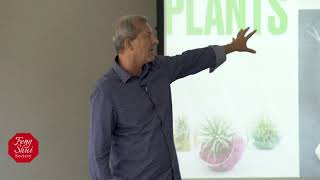
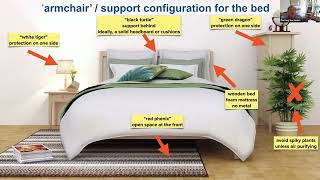
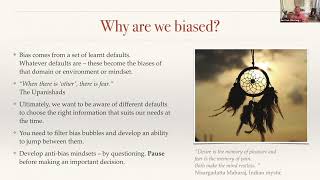
So, hello. Hi. So very briefly I'm doing all kinds of things, but this presentation about one aspect of Feng shui which is kind of evidence based. And so there's quite a few, I'm going, a few things I'm going to cover, but there are lots of kind of bits and pieces about research that is available online. Also, I want to give some practical tips in terms of Feng Shui and talk about my PhD research and show you some tools how you could do research. So obviously environment psychology, I'm an environment psychologist, is a science as opposed to art and design, that is feng shui, that design philosophy, that is feng shui, both are kind of interdisciplinary, both are into ecology. In feng shui we have this idea of heaven, human and earth. And in psychology we look at every kind of environments, including virtual environments. But in feng shui is mostly physical environments and Feng shui is quite spiritual and transpersonal. If you know the origins, you know that. But environment psychologists start to become transpersonal as well. So although I'm going to provide all kinds of evidence for what feng shui can do in Hongjui, doesn't mean that doesn't work. So the feng shui tips and hacks that work, and there's no evidence for that, but the evidence based approach I think is kind of integral to feng shui development, progress. This will give this some credibility, confidence, so on. So obviously Lots of people said the same thing. Extraordinary claims require extraordinary evidence and this presentation is about that. But the definitions of Feng shui and environment psychology are more or less the same. It's just different in kind of expression and obviously in b is about 60 years old Feng Shui over 3000 years old. So. So global popularity is increasing for different things. So when you Google in psychology you go, you know, lots of results, but you get more for fun. But if you go to Google Scholar, it's the opposite. As you can see on this chart. It's exactly opposite. Yeah. So when it terms of evidence the popularity of Feng Shui is kind of dropping. It was height of the popularity was in 90s, but now there's less interest. But also in Far east is still that when you think about how many people use actually feng shui or were we talking about billions? So over a billion in China. And even if they don't believe in Feng shui, once a year on the Chinese New Year they're using a bit of Feng shui. And then if we add the Indian version, Vastu Shastra, that's another billion and a bit. So I think 2.5 billion people are aware of this concept and a lot of them are using it. So and also ecology is part of that. So governments should take notice. So volume of the research. If you go to kind of online search engines for research, you see that if you type it just feng shui for article, abstract keywords, you get almost 400 documents here. But if you just type Feng shui in the article title, you get about 169 documents. So there's not that much research as such available. Yeah, but I'm going to talk about two meta studies which are interesting from my perspective. So I have to go back. So one of the first books that kind of claim or position itself of scientific feng shui is by Michael Mack and Albert. So and that was published in 2011 and I blogged about put all kinds of links in the chat. So you can go to my blog and read the review of that book. It's a very good book. I've got it here actually. It's one of the top books on on my list. You know, when I teach feng shui, I tell people buy that book first. Yeah, because it's very good, it's very systematic. But it got the discipline for train to travel because what's his name? Machu Matthews, another Australian academic wrote a critique of that book and it's called Feng Shui Teaching about Science and Pseudoscience. And it's a very good critique. It's all valid. If Michael Mack didn't position itself as science like art and feng shui, there wouldn't be this book. So I'm very grateful that actually he made this kind of mistake because then we have a lot of critique of this discipline. And without any critique, it's very difficult to, to progress any disciplines. So that's the second most important book if you're a feng shui practitioner. It's a bit expensive, but definitely worth buying because you, you see all kinds of things that are problematic with feng shui, especially with the, with the claims. So the. My critique of this book is that he talks. Feng shui is a kind of pseudoscience. Now if it's philosophy and art, it can be called pseudoscience because actually it is not suicide. There's no consensus that feng shui is science. A few people use that word kind of flippantly if you like, but it's not valid. You know, you can't really say that feng shui is science. There needs to be a lot of more research for feng shui to become science. So two meta studies, one from 2023, 121 very useful. Free online, you can access them. And the first study look at it's kind of more solid one, empirical and quantum studies in feng shui, systematic review. And basically the results was that feng shui is not fully science. Definitely not. And it's not superstition. So they look at different things and that's how they establish that claim. And they look at 36 kind of empirical and quantitative studies in feng shui. The other study is more kind of narrative review. So not that useful, but still useful because you've got some data how this was compiled and the key idea, key takeaway from that study, second study is that the concept of qi or chi remains very poorly studied in scientific research. We still don't know after 3,000 years or more, we still don't know what it is. Some people claim they know what it is not true because if it was true, they will put the theory into practice. Somebody would critique that. And then if it's not descript discredited, then you have a solid period. But most of the things that people say about key is just opinion. And there's a good paper, the problem with key Vitalism, science and solve traditional change. And that explores that idea. Yeah. So as I said earlier, it needs to feng shui. Personally, I don't think that feng shui should go in that direction too much. Obviously we can use the lens of science to critique all the claims, but it will take a lot of work, a lot of high quality empirical studies, meta studies, to look at all the elements of feng shui. Not just one or two things, all the elements, all the disparate elements separate together and conduct that. That's a huge, huge job for feng shui. So I personally think that feng shui is very safe as art and philosophy and obviously there's evidence of that because it's based on Chinese metaphysics, which is philosophy. So some practical things that I'm going to go through, this is just a list, so I'm going to go in detail through all those elements. So obviously you know about the, the support, the famous five animals or armchair configuration where you have support at the back and open space at the front. So there's some research about that. My study is about that as well. And in advanced psychology we've got some good prospect refuge theory. And this geographer, Appleton, I'm not sure whether he knew about feng shui, although he was geography, because I couldn't find the evidence that actually he could pull it out from feng shui literature, but says the same thing. You know, you have support, you feel better. And I'm going to measure actually in people's physiology how that feels. You know, I'll tell you about that shortly. So in your bedroom, obviously you've got nice support, you've got headboard, you've got some nice things on the sides, tables, you know, and so on, and you feel better. Obviously you position your bed in such a way that you can see the window and you can see the door in a pipe position or command position and definitely use sleep better. So lots of claims about sleep and tons and tons of sleep. So if you opt, if you start with feng shui, if you knew, start with your bedroom and definitely you get good results by optimizing your bed, doing all kinds of things, you know, that are available online and through different courses. And this nice quote. If you, if sleep was a drug, doctors would prescribe it for virtually every element. And sleep disorder is the key to health, there's no doubt about this. Nothing more important than your deep sleep actually going to kind of deep aspect of, of this subject. So lots of references, you learn it through that, most of that references on my website, so you can find that easily. So another aspect is in feng shui we don't like sharp kind of objects or straight lines. And my MSc, my Environmental Psychology MSc was actually about that. And I look at pavements and shapes and conclusions that people actually prefer flowing lines, kind of curvatures and so on. And there's more studies on that as well. So adding some nice shapes, round shapes. If you've got a choice between buying a square coffee table, go for round one or oval and you get that kind of conveniality in your home. So again, more references about that. And this nice quote from Van Gogh, life too is probably round. So nature big thing in, in feng shui but also in branch psychology and other sciences, loads of studies. Obviously you know, exposure nature can trigger endorphin effect, lower blood pressure boost brings attention, accelerated patients recovery. People recover quicker in hospitals when they have a window next door. Probably didn't know but fish owners from pet owners are the happiest. They study on that. And obviously plants, all kinds of plants can enhance your environment. And on my website got list of healthy plants, air grazing plants, money plants, anything that is useful in feng shui. Again, more references. Yeah, this is a good book that just came out. I actually reviewed that on my website. Highly recommended. So lots of research in one book for the effect of nature on, on your health. But yeah, definitely, you know, one kind of key aspect is, you know, if you buy a new home like Jackie, love the tree, very good idea. It might block the energy flow in some ways from one perspective or the other. But that nature actually will house the place. Obviously if it's too close to the building, it might damage the foundation. So you have to be careful. But if you don't have that sort of nature around your park. Wallpaper very inexpensive on Amazon other websites you just go and fill that space. One wall where Gina's got one of those kind of wallpaper pictures and it looks amazing. Obviously you can have wood or expensive space, whatever you like. Now feng shui, wind, water, Chinese knew something about what's going to happen now because one of the top pollutions are air quality and water quality. So air pollution, water pollution, top big problems on this planet. I don't want to kind of be too gloom and doom but you know, a lot of people die actually as a result of poor quality. So get you know, some air cleansing plants, maybe ionizers, maybe kind of, you know, purifiers and so on. And if you've got, you know, air conditioning, check if it's working and so on. And obviously, you know, if you have a chance of buying a house, don't buy it near a busy road. The same for water quality. Lots of research on that. In this case from the U.S. 267 contaminants were detected. And they can affect your health in big, big ways. Yeah. So big simple tip is to get a water filter not just for drinking water, but whole house water filter because you might absorb a lot of these contaminants for your skin when you're showering. And obviously there's lots of research on nature and biophilia. Oh, sorry, this is spiritual, sorry spiritual one. So. So obviously feng shui is kind of spiritual and transpersonal discipline. People who have that sort of outlook of like what is spiritual religion or nature which, which kind of fits in into the criteria of spirituality and transpersonal. People are healthier, live longer. So we talked earlier about little shrines in your homes and other things. Whatever you're doing in your home, loving your home will enhance it. And it's definitely a useful thing to do that. And there's more studies and my, my research is about that as well. So more references. So a couple of little kind of one off studies. You know, the Odyssey. If you've got like 100 studies about one aspect, that's definitely solid evidence. But sometimes you find one or two studies and it's pretty enough to appreciate that. So one of the said that, you know, books makes people more intelligent, increase the IQ and in and part of the study was to look whether people reading or not reading. And even if you're not reading the books, you're still getting wiser and more intelligent, knowledgeable. Obviously if you're reading them, it's even better. And I put this picture because it's got the mirror tiles. Maybe somebody will do a research of mirror tiles. Position people in front of that mirror tiles and see how they feel when they're looking at themselves. Kind of dissected. Yeah. So definitely that's not good for trade. But books everywhere, it doesn't matter. It doesn't have to be in the wealth or knowledge area of your home anywhere. Then Schumann resin, there's a lot of research on Schumann resin. So that's the natural vibration of the earth. It's measurable. You know, NASA discovered, measured it in 60s, you know, it was kind of figured out in fifth in the late 50s. So and actually that kind of frequency, about 8 hertz is similar to the alpha brain state. Lots of research on that. When you relax, when you're healing, your brain works in an optimum state. So having an abundance of Schumann resonance will create that as well. And then on market there's a link in the chat as well. So you can look at the human resin generators and get one of them and see how that works for you. But this other application in feng shui, that kind of help you to access the same frequency and that's called grounding. Lots of research on that. Amazing. I think NHS should recommend this to the patient because it reduces inflammation. All measurable, it's all data there. Another thing is that it kind of helps with. Helps people with electro smoke sensitivity. So when people are hyper electrosensitive, when they ground it, they're less affected. So obviously, you know, there's all kinds of mats for grounding. But tiles I recommend to all homes now having tiles because most often you'll be grounded where there are tiles, but if not, then maybe have a bath. You know, again, there's a trend to go for showers. I recommend baths because definitely when you are having a bath you will be grounded. That's how they discovered it. They ask people who are hypersensitive, well, are you not feeling, you know, hypersensitive, hyper electrosensitive. And they said when I'm having a bath. So that's very useful and easy. And again, there's meters, you can measure that in your body as well. Lots of pictures and friends. So social connection, lots of studies on that. Pictures everywhere of your friends. Happy holidays. That will make you happy and healthier. Then a couple of kind of interesting areas in science that kind of help you, might help you to decipher the kind of plausible mechanism, how functioning. So it's priming effect, lots of research on that. So we're priming ourselves with our environment, with rituals, whatever we're doing. Then obviously placebo effect. And it works whether you believe in it or not. It's amazing. And obviously people who kind of drew drawings in the caves that was a priming and placebo effect. Yeah, Epigenetics looks like how environment affects your gene pool. And then obviously feng shui looks at all those things. So the symbolic, ritualist and practical intervention that can have this priming, placebo and patient effect. Yeah, so lots of research there. I love this quote by N. He was asked why he's using feng shui. It was the shoe horse above his, you know, door. So I understand that it brings you luck whether you believe it or not. Perfect example of how to bridge science and kind of belief Systems. So my PhD in Feng Shui is focused on two areas. So 1/3 of our life, about 8 hours we spend in our bedrooms, another third of our life in workplaces. So 2/3 of our lives we spend in only two environments. And I think we should look at them and optimize them. And obviously feng shui, look at that in Brahman psychology. Look at that. Design looks like that. Architecture looks like that. So the title of my PhD thesis is Feng Shui Application in Bedroom and Workplace Designs A Scientific Study of Personal and Transpersonal Preferences. So I'm looking at personal preferences and transpersonal preferences and you can take part in that. It's not published. I just finished a pilot study. So you go to that website, you can register, I'll get your email. But it's all anonymous. And you know, you can do that study, you learn about yourself because there will be some personal and transpersonal questions, questionnaires, but also you're going to look at bedrooms and offices and evaluate them. So you're going to help with this study as well. And you're going to obviously learn something through, through the research. So I really encourage you to take part of that. It's going to probably published in next month. Yeah. But you can go to this website and register. So obviously, you know, when you look at any evidence, any belief system and feng shui to a lot of parties, belief system, because there's nothing hardcore evidence, you know, you have to ask us, is it true, is it, you know, accurate? And so on. And obviously in this age where, you know, there's so much information and there's information and now we have AI can spin anything. You know, you need to use your critical thinking and maybe a bit less magical and mythical thing. I'm not against this kind of thinking, but, you know, if you kind of believe everything, then you might get result, you might not get result. I kind of point this idea that feng shui works. Yeah. And if it doesn't work, do something else. There's no one way or another way of doing feng shui. There's so many different ways. Like, you know, washing dishes. Yeah. If you like. Yeah. But you need to kind of reflect on how you're thinking about the whole thing so then you don't fall into a kind of sort of mental or thinking traps. And that's to do with your biases. So I've done a blog about that, actually a video I presented at the Feng Shui Society about biases. We have over 180 biases now. And the major bias that punctuate people, and I fell for that in the past, is confirmation bias, where you preferentially noticing, seeking and recalling information that confirms your mindset, your belief system. Yeah. And so then you don't see other parts or other kind of perspectives. Yeah. So Useful. There's a lot of tests online, but it's very useful to be aware of your biases. So then you're kind of more accurate in your evaluation of feng shui. I'm not into what's true or not true. I'm kind of interested in how it work, what works, what works better. So there are lot of online tools for your work. So Google Scholar is first step, it's free and you know, set up your account and have alert for feng shui and you know, in real time or once every week you get a list of latest research on Feng shui. Very useful. You don't have to think too much about it. I've been doing this for years and that's why I know this. I've got all the research that's been published. Yeah, when it's published, I see it immediately, I download the paper and I read it. Usually Perplexity is the Asar AI search engine. I haven't used Google for two years. Sometimes I use it for flights and stuff like that. But Perplexity is a good starting. You put that, it gives you all the links and so on so you can discuss certain things. Free again, paid version, slightly better. Research Gate is a website where you get lots of research papers. A lot of them are free, open source and the same semantics, color. Now when you put keywords to find information, depends how you put the thing. So you know, you put Feng shui as one word or feng shui with a dash or you get different kind of results. So you kind of need to be a bit careful how you do it because sometimes you get more results, sometimes less. Yeah. Depending on what search engine you're using. But I really encourage everybody to do research and there's obviously you can do something called community based participatory search where everybody doing all kinds of things together to get results. And that builds the body of Feng shui. And when we started Feng shui Society over 30 years ago, Gina and others, that's what we're doing. We're kind of sharing information, doing case studies and we're building the body of Feng shui. So that's very useful for us as a community, not only just practitioner, but anybody enthusiast, because everybody will benefit from this work.
So.
So yeah, so we are all feng shui researchers. And to advance the discipline, yes, it requires collective effort, collective observation, studies. And so like they did before, they were just observing nature, seeing what works, what doesn't work and applying it here, recording it. Now, times have changed, things have changed. And you Know you need to do it differently. There was quite a lot of talk about electro smoke, you know, and there's a lot of research about that. I didn't put a slide on that because that will fill the whole screen. And so there's another reason, but just as a little bit of, for EMFs. So your mitochondria, part of your body that produces your energy, your ATP, it is responsible for production of, of energy, is affected big time by electro smog. So by reducing electrosmog in your environment, you naturally you have more energy. And obviously feng shui is about again, other two things, kind of environmental. Yeah, plastics will affect your mitochondria production and linoleic acid, which is basically seed oils, you know. So by reducing this you have more energy. And there's a lot of research on that as well. You can find it. So check things, think critically, become aware of your biases, use all those online tours, get involved with the Feng Shui society. We have actually a page for the research. You can send us an email if you want to be part of that. And so this evidence based approach is critical. It's just another aspect. It doesn't say that feng shui doesn't work, it just says that there's not enough evidence for certain things to kind of qualify the science or as evidence based. Yeah. And we need it. And obviously it's going to grow. Yeah. So you know, the first PhD in Feng Shui was in 86, so that's what, 38 years ago. And we've got more and more research and that's very useful. And obviously it's going to grow and it's become easier. Yeah. So, so we need this basically to progress feng shui. And we talked about how to kind of promote feng shui that will give definitely feng shui more credibility and will progress it beyond kind of art and philosophy. Yeah. But so that's very encouraging. And I'll finish with a quote. So this is from this film, the Other Woman. If you haven't seen it, this lady is a bit upset about something and she employed a feng shui consultant and she said feng shui is so good, it's important, you know, to know where to place things in order to make yourself feel better. And that's the art of Feng shui. Because art is about emotions. You know, the function of art is create affects. Yeah. The function of philosophy is to create concepts and the function of science is to create, to produce evidence. Yeah. So, so I'll finish on that. Nice note. And yes, you find me on my website and I've put the links in the chat. Any questions?
Yeah, where do we start? Great film, that one. Yeah, I have to endorse that. I'm gonna add a spotlight and tour de force. Yan, I think you've given people food for thoughts. Absolutely. There's a lot there. Worked hard. And good luck with the rest of your PhD.
Thank you.
More from Jan
Feng Shui Logos – How to Design Logos and Business Cards with Feng Shui Principles – Jan Cisek UK