
Beyond the Hype: The Science Behind K-Beauty Skincare | HAPPI Webinar
Dermatologist Dr. Jane Yoo and AmorePacific's Michelle Shea break down K-beauty science beyond the marketing. They explain three delivery technologies (liposomes, exosomes, spicules), key actives like ginseng and stabilized vitamin C, and how brands validate claims through clinical testing and navigate FDA regulations.
Chapters
Hi and hello. Welcome to this new Happy Webinar, our first of the year. It's called Beyond the Hype and Trends: The Science Behind K-Beauty Skincare. And there's no reason to level set today. Everyone who is watching this webinar knows why we're here. K-beauty is a global movement. It's a true powerhouse. And according to NielsenIQ, K-beauty sales in the US surged to $2 billion. That's up 37% year over year, with facial skincare leading the way. Social media is fueling interest among consumers, but it's not just TikTok that's fueling this trend. The leaders in K-beauty, they really put skin health above all else. In fact, that's why it's super important for us to look at the science behind K-beauty skincare. To go beyond the hype and the trends. And that's why I, as Christine Esposito, the editor of HAPPY, have two experts with us here today, dermatologist Dr. Jane Yoo and Michelle Shea of AmorePacific. I'm so excited about what they both have to say. But before I turn the mic over to our experts, a little bit of housekeeping. We have tried to leave some time for Q&A at the end of this presentation. So send your questions in through the box, the Q&A box that you see on your screen, and we will try to address as many as possible during the webinar. Also, the presentation will be available on replay after, so if you want to share this with your colleagues, you want to review what was presented, it will be available there. Now with that, I am going to get off the screen and let my two experts take over. And Dr. Yoo and Michelle, thanks so much for joining us, and you're up.
Thank you so much. My name is Dr. Jane Yoo, and I'm a dermatologist and Mohs surgeon here in New York. So today, this presentation will explore the world of K-beauty through the lens of dermatology, focusing on evidence-based skincare innovations. So what we'll do today is we'll dissect the trends, the scientific principles, clinical efficacy, and effective communication strategies to understand the true potential of K-beauty. So these are my disclosures. So how we will do this will be first by understanding the unique features and common misconceptions of K-beauty from a dermatologist's view, then a deep dive into the scientific principles and advanced technology behind K-beauty formulations with my colleague Michelle. Finally, we'll review how We assess clinical efficacy as well as safety. And lastly, we'll bridge science education— science— bridge science with consumer education. So what makes K-beauty unique and why are people attracted to K-beauty? I think a lot of you have seen many of these brands. They've been popping all over the place and they have been on Instagram and TikTok and consumers have been raving about it. Well, consumers say that they love K-beauty for a lot of different reasons. First of all, the skin-first philosophy that focuses on hydration as well as prevention, the cutting-edge technology that it has, and of course, the affordable luxury, because these are high-quality products that are at different accessible price points. You also have targeted solutions that are tailored for specific skin types and concerns. And so this is one of the main reasons why K-beauty is really all over the place. I'm a dermatologist just like you and totally obsessed with K-beauty. I even have the Gold Olive Young, Olive Young status membership. So I spend thousands of dollars trying out products and testing them, whether it be on Costco, TikTok, Amazon, Sephora, and Ulta. You can pretty much find K-beauty products all over the place in the United States. And the US is actually, has over 50% of K-beauty sales online, which is amazing. And just to put it out there, I love Laneige and I have every single lip sleeping mask except for 2 flavors. So if you have everything, DM me because I'm missing 2 flavors and I like to complete my collection. So I was in Korea this past summer. So this is kind of like my haul when I went to Olive Young and AmorePacific. So as you can tell, I'm a true lover and fan of K-beauty and I love trying different face masks, different creams, just like lotions, all the new things that are out and about. I also love going to pop-ups, and I've had the fortune to be able to go to a number of pop-ups with AmorePacific. Michelle was with me here in Seoul in the City. It was a huge success for AmorePacific. Dr. Groot recently had a pop-up downtown for their hair product, and K-beauty has really taken off, as you can see, not only globally, but in different, you know, arenas. And especially because it has such elegant textures, formulation, and sensitive skin innovation. Culturally, I know that everyone is into K-pop demon hunters and Squid Game. And so a lot of it has been fueled by music, fashion, and television. So what are the unique features of K-beauty from a dermatological standpoint? Well, From controlling inflammation to emphasizing hydration and skin barrier health, K-beauty presents distinct approaches that dermatologists recognize for their potential skin benefits and innovations. Pretty much Western paradigms will skew towards more corrective treatments with strong actives and procedures, and K-beauty leans more toward preventative maintenance with a strong emphasis on tolerability as well as adherence. So now we go over the common misconceptions about K-beauty routines. It's not about multiple steps or new trends. In my office, I have a sign that says, um, trends come and go, but science lasts forever. So here we clarify misconceptions by distinguishing genuine effective practices from the hype and unproven fads. So it's really less of a 10-step beauty routine than more of a skin health philosophy.
Okay.
So, let's take a deeper dive. So, now let's look at separating the scientifically supported skincare methods from the myths, ensuring that consumers adopt routines that are truly there to improve their skin health. Well, science-based skincare is, you know, based in evidence-based practices And again, you look at different things such as barrier repair strategies, such as ceramides, cholesterol fatty acid balance, those non-stripping cleansing that can definitely get, you know, dermatologists can get around, as well as daily sunscreen habits. These are cosmetically elegant formulas that can improve patient compliance, as well as anti-inflammatory soothing for reactive skin. And some of the K-beauty products include centella asiatica, as well as panthenol, and allantoin. However, then you have some skincare myths, right? Extreme layering as a virtue, pore shrinking claims that go beyond temporary results, and then overstated regenerative claims for these trendy ingredients without any clinical evidence. You also have one size fits all, which is not necessarily true for consumers. So therefore, brands must pair the science-backed claims with clear educational messaging to really build some trust. You want to show how— why it works through visuals, simple explanations, and expert validation. So now my colleague Michelle will go over the science behind skincare innovation in K-beauty.
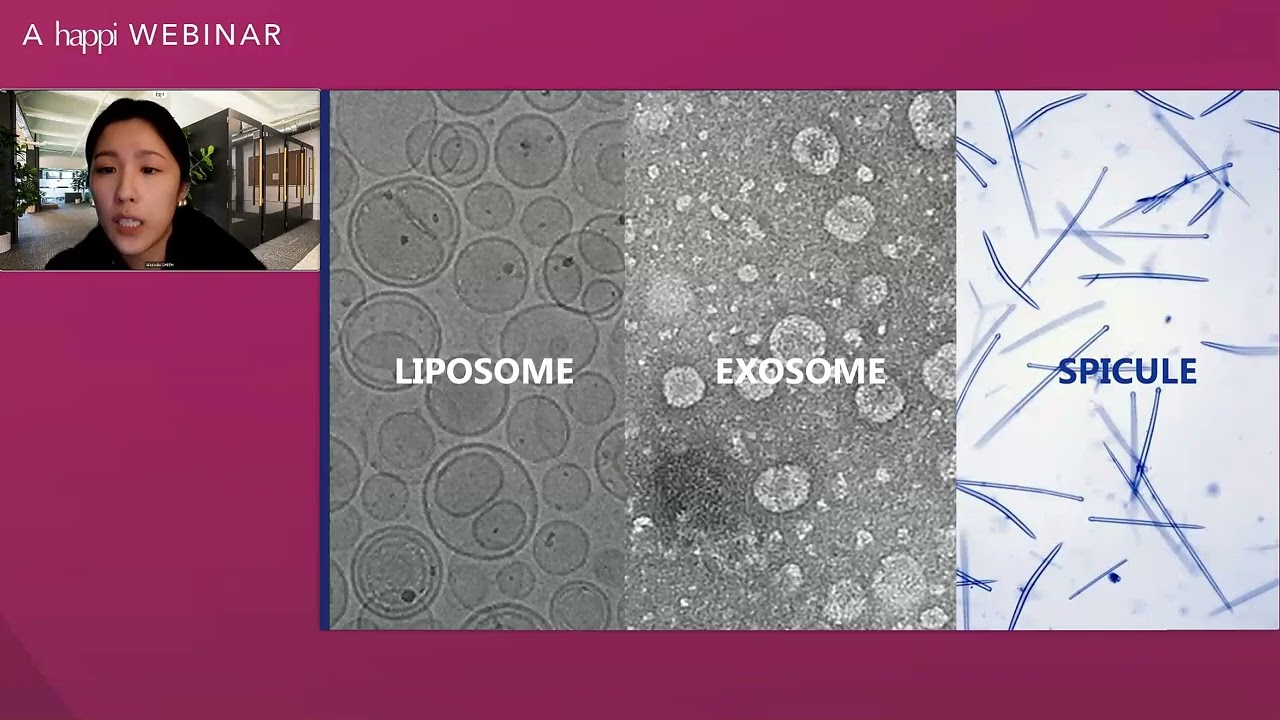
Thanks, Dr. Yoo. Hi everyone. My name is Michelle and I lead the scientific communications team at AmorePacific's America's Research and Innovation Center in New York. So before we dive in, I wanted to— oh, next slide. Before we dive in, I wanted to briefly introduce AmorePacific to those that might not be as familiar with us yet. We're a global beauty company headquartered in South Korea. So you might know us from some of our most beloved skincare brands, including Lineage. I know Dr. Yoo is a big fan. It's known for its hydration expertise. And Sulwhasoo, which is deeply rooted in its Korean herbal ingredients like ginseng. We have brands like Innisfree, Estera, and IOPE. And aside from these brands that are more known in the US market, we have a full portfolio of more than 30 brands internationally across skincare, color, haircare, and to even supplements as well. So what truly sets AmorePacific apart is our commitment to research and innovations. We operate one of the largest beauty R&D networks in Asia with over 70 years of scientific heritage. So our team pioneered technologies like the cushion foundation, sleeping masks, and advanced delivery systems, which we'll talk a little bit more about today, including liposomes, exosomes, biomimetic ingredients, and cutting-edge clinical testing to ensure efficacy and safety. So building on this foundation, I'll dive into how K-Beauty translates advanced skin science into real measurable results. And we'll explore some of the delivery systems and trending ingredients shaping the industry right now. And so just as importantly, how we evaluate their effectiveness to ensure that they truly work on the skin. So one of the defining characteristics of K-beauty formulation is its emphasis on sustained research, continuous ingredient innovations, and increasingly sophisticated delivery systems. These delivery systems play a very critical role because many actives are unstable, poorly absorbed, or effective only under specific conditions. So without the right system, even the most promising ingredients may never reach its intended target and do what it's supposed to do on the skin. So in K-beauty, the delivery systems are really designed to do 3 main things: is to protect the actives from degradation, is to help guide the actives to where it's supposed to go and to control the timing and efficacy, the efficiency of its release too. So when we're talking about efficacy, we're really talking about the combination of the active itself plus the system that's delivering it. And I wanted to highlight 3 delivery technologies that's really defining current K-beauty innovations right now. So you're likely already seeing them around a lot and you'll definitely be seeing more of them in upcoming innovations too. And we'll start with liposomes. So liposomes are microscopic spherical vesicles made of a lipid bilayer structure, which is the same building block that forms our skin's natural cell membranes. And because of that similarity, they're biocompatible with the skin, which makes them especially effective delivery vehicles. So functionally, liposomes act like little tiny protective bubbles They encapsulate active ingredients like vitamins, peptides, or antioxidants, and many more, shielding them from oxidation and environmental degradation before they ever reach the skin. So this protection is especially important for actives that are potent but unstable on their own. And so encapsulation also changes how these actives interact with the skin too. Liposomes can improve penetration by helping ingredients move through the skin barrier more efficiently. They allow for more controlled gradual release once applied onto the skin. And from a formulation standpoint, this means that we can deliver high-performance actives in a way that's both effective and skin comfortable too. So reducing the likelihood of irritation while maintaining efficacy and efficiency. And this is one of the reasons Liposomes continue to trend in advanced Korean skincare. They're not new or experimental. They're very well studied and it's very science-backed technology with decades of research behind them. So what's evolving is how precisely we can engineer their size, structure, and release behavior to optimize both performance and tolerability. So within our Amorepacific portfolio, IOPE's Allanto Liposome Technology is a strong example of this application. These liposomes are ultrafine, so they're actually approximately 1/400th the thickness of human hair. So that allows for more efficient interaction with the skin. And by pairing this technology with delivery— this delivery system with selective actives, it's designed to help visibly improve skin firmness, texture, and overall radiance. And so liposomes are very commonly— they get confused with exosomes, but they're actually something that's very fundamentally different from each other. Exosomes are nano-sized extracellular vesicles that are naturally secreted by cells as part of the normal biological communication process. So rather than simply carrying an ingredient from point A to point B, that's more the job of a liposome, exosomes function more like biological messengers that help cells coordinate the normal biological responses. So that's what makes them very interesting in skincare because Rather than acting as a direct treatment, exosomes are bio-inspired, so they're modeled after mechanisms the skin already uses to maintain balance and resilience. And in, in topical formulas, they're being explored for their ability to support the processes related to skin comfort, barrier integrity, and recovery from stress. So exosomes that are utilized in skincare today can come from many sources, including plant sources like green tea, which is an area that we focus on at Amore Pacific. Our research into green tea probiotic-derived exosomes is a good example of how this concept is being translated very thoughtfully into skincare. We use a Lactobacillus strain sourced from green tea, and our researcher identified exosome fractions that showed skin calming behavior in lab models, including helping to moderate excessive inflammatory signaling. So this— and all of this work focuses on supporting skin equilibrium, not altering cellular function in medical sense. And from a formulation perspective, this positions exosome as a complementary ingredient rather than primary active. So they're designed not to treat the skin but to help create a more supportive environment, especially useful in formulas that's intended for stress-sensitive or barrier-challenged skin. And you'll see this approach reflected in skincare products that incorporate exosome technology to help reinforce the skin barrier improve overall skin feel and resilience over time. In this way, exosomes expand the conversation beyond delivery alone and into how we can design formulas that work with the skin's natural communication system while staying within the cosmetic science realm. So from what I'm seeing out there, liposomes and exosomes are really very commonly grouped together or sometimes even used interchangeably, even though they're very different, they have different roles in skincare. So while both are nanoscale systems and they both involve encapsulation, they're built on entirely different principles. So as a summary, again, liposomes are engineered delivery vehicles designed to carry and release specific ingredients. Exosomes are— they help with the bio-inspired communication systems that reflect how cells naturally exchange signals. So understanding this distinction distinction between the two is very important because it changes how we think about their function, their benefits, and where each technology makes the most sense in a formula. So the third one on the slide, the spicules. Spicules are another fascinating technology in K-beauty that you might be hearing more about recently, and they're definitely worth paying attention to. So unlike liposomes and exosomes, which work chemically or biologically to deliver or signal ingredients, Spicules provide a physical form of interaction with the skin. Essentially, they are microscopic needle-like structures. When applied to the skin, they create thousands of tiny invisible micro channels on the surface of the skin. And this process is controlled and gentle, typically producing a very mild tingling sensation. So these micro channels act like express lanes for active ingredients to help components such as retinols, peptides, or other actives get into the skin barrier and reach deeper layers of the skin where they can work more effectively. And at the same time, this mechanical stimulation from spicules naturally encourages the skin's repair process, promotes cell turnover, and gradually improves skin texture, smoothness as well. And so spicules are sometimes confused with microneedling, which I know Dr. Lee can tell you a lot more about. But especially now that the term microneedles are used more loosely in a lot of skincare products out there. And there are so many different formats of products, including the name microneedles, but they're actually quite different. So microneedling uses needles to puncture the skin, stimulating collagen and allowing deeper penetration of actives. It's a professional procedure that can cause micro-injuries, and it requires downtime and demands a very careful technique by a dermatologist to avoid irritation or infection. The spicules, in contrast, although they sound similar, they're microscopic, much shorter, and non-invasive. So they sit on top of the skin surface, creating only the superficial microchannels that I mentioned through gentle mechanical interaction. So there's no actual puncture to the skin. There's no bleeding, there's no injury, and there's no recovery period. And the effect is a very controlled, mild stimulation to help skin respond to actives more effectively. So, spicules, traditionally, they come from marine sources, primarily sponges, where they naturally help form the skeleton of the organism and are composed largely of silica. And these natural spicules are known for their tiny needle-like tips, which can create that tingling or even painful sensation when applied to the skin. And that's actually a factor that contributed to their popularity on social media, as users are noticing that immediate pain or tingle effect, leading them to a perception of visibly delivering the actives to the skin so that they feel it's working. And so as the category has evolved in K-beauty and technology is innovating, synthetic spicules have become possible. So they're not only from sponges. Marine sources anymore. And these lab-created alternatives allow formulators to have a more precise control over size, shape, the purity and consistency of the spicule, which is very critical for safety and performance in topical skincare. And as an example from our portfolio, the Iope Reti-Jection Serum incorporates a unique synthetic spicule structure that's designed to be a lot more blunt than the traditional natural spicules. So this design reduces this discomfort on the skin while still creating that effective microchannels. And by standardizing these microscopic synthetic structures, allows brands to optimize the mechanical stimulation and ingredient delivery while keeping that experience as comfortable as possible and safe for at-home use. So in the past, year, I would say spicules have really become a trend in K-beauty because they offer that unique combination of physical delivery and biological stimulation. And this dual action allows products to enhance the performance of high-potency ingredients such as retinol, peptides, or even PDRN. And these actives are often limited by their ability to penetrate the skin or there's irritation. So by creating these microchannels, spicules help deliver more effectively without increasing the harshness. So both for efficacy and tolerability. And another reason spicules caught on so quickly and popular is that they really meet the growing consumer desire for professional-level results at home. Today, we're seeing skincare users, they want visible transformative effects similar to what they might be able to get in an in-clinic treatment. But without the pain, the downtime, or just with the need of professional oversight. And in Korea, where in-office procedures are much more common and accessible, spicule is a popular alternative for upkeep at home. But in markets like the US, where professional microneedling are less accessible, spicules have the potential to become a more popular option, offering a high-tech, premium performance experience that they can safely and conveniently use at home. So now that we've talked about how K-beauty gets ingredients where they need to go, let's dive into the key actives that are driving results and shaping the latest innovations. So in K-beauty, delivery systems and active ingredients, they really work hand in hand. And how actives are formulated, protective and delivered is just as crucial as the ingredients themselves. The first ingredient I wanted to talk about is ginseng, which really is a Korean skincare icon that's with a very long heritage that spans centuries across many Asian cultures. Traditionally, this herb is known for its restorative and energizing properties when ingested as a superfood. So it's known to help support vitality and resilience. And I always like to make the example of equivalenting the two ginseng to chicken soup. So when you're feeling under the weather, chicken soup is that like comforting go-to, the food to help you recover. But in many Asian households, ginseng plays a very similar role. So something you would turn to for nourishment to heal and strengthen you back to life when you're feeling down. But in modern K-beauty skincare, what truly makes ginseng effective is not just the presence of it, but the way that it's processed. So the key innovation here is our biotech bioconversion technology, which is the process that's exclusive to Amorepacific that transforms naturally occurring ginsenosides, which is the key anti-aging component found in skincare, ginseng for skincare, into a format that skin can actually absorb and utilize. So in raw ginseng, many active compounds exist in forms that are very poorly bioavailable unless it's passed through our digestive system as a food to help with the help of enzymes, digestive enzymes to break them down. So if we use it on our skin directly, our skin wouldn't be able to benefit from it. So applying this patented bioconversion process, we make sure that ginseng actives becomes highly bioavailable, unlocking its potential for topical formulas. And the step is just as important as the source of it, of the ingredient itself. So what sets our ginseng research apart, specifically under our Solasoo brand, is really this modern technology. And our R&I center published work showing that when skin models are stressed with both UVB exposure and IL-17A inflammatory signaling, which are conditions that accelerates aging in the skin, This ginseng active helps inhibit pro-inflammatory pathways and support epidermal function. And in skincare formulations, that translates to us eventually being able to clinically validating the visible improvements in skin firmness and resilience. Okay, so next, let's talk about retinol, which is really one of the most widely recognized studying ingredient in skincare. And it's long been a staple in the industry for supporting skin renewal, skin texture, and improving fine lines, all of that. But what's exciting is that it's far from being finished. It's not done yet. There's still a lot of ongoing innovation and evolution that's ongoing is how it's formulated and combined with other actives. So for example, I didn't get to put it on this slide here, but Innisfree has been exploring different ways to pair retinol with soothing and regenerative ingredients. So their formulations— excuse me— combine retinol with cica. So to help with the minimizing of potential irritations that could be caused from retinol and while still delivering the benefits of retinol. And in a different approach, still under the Innisfree brand, it integrates retinol with PDRN. So leveraging the synergistic effects to enhance the tolerance and efficacy. So showing really how careful pairings can improve both performance strength and skin comfort. And, um, so our other brand, IOPE, which you see on the slide here, is pushing the boundaries with a quad system. So with a multi-retinoid approach, which— this approach combines multiple forms of retinoid in a single formula. And this is innovative because each retinoid has slightly different absorption profiles and mechanisms of action. So combining them all together allows for a broader, more balanced benefit while reducing the irritation that can occur with a single high dosage of retinol. And what these innovations highlight is that even with a classic ingredient like retinol, can continue to evolve through very smart formulation strategies, pairing it with complementary actives and advanced delivery technologies. So in K-beauty, it's really not just about using a well-known ingredient, it's about how we combine them, process them, and how we deliver them. So same with retinol, another staple ingredient is vitamin C. We all know it, we recognize it for its brightening and antioxidant benefits. But today it's moving beyond just a single percentage in a formula. Our innovations focuses not just on the concentration, but on the stability, the complementary antioxidants, and the synergistic player— pairings that enhances the efficacy and tolerance to the skin. So for example, the Innisfree Green Tea Enzyme Vitamin C Serum, which you see on the top, which you see on the top of this slide, it combines two forms of different vitamin C derivatives with the ferulic acid and vitamin E complex and plus a green tea derived enzyme. So this big combination helps refine skin texture, targets dark spots, and improve overall brightness while remaining very suitable for sensitive skin. So it's showing how careful formulation like this can maximize the results without increasing the risk of irritation. And another one of our products from IOPE, it takes a, it takes a different approach with a very high strength 40% vitamin C formulation, which is significant because maintaining the stability and tolerability at such high concentration is very difficult. And our research confirms that importantly, too, at the same time, the efficacy of vitamin C increases as the concentration rises, meaning that when a high concentration can be safely delivered and stabilized, the skin can actually benefit and experience even more pronounced benefits. So by using this advanced stabilization technology that we are working on and the delivering technology, including specialized packaging, IOPE makes sure that this high potent level of vitamin C remains effective on the skin while minimizing oxidative degradation and irritation on the skin. So now that we've talked about kind of the evolution of the staple K-beauty ingredients, I wanted to dive into something that's newer on the horizon. So PDRN has been really gaining attention as a key player for its skin repair and rejuvenating benefits. PDRN, which stands for polydeoxyribonucleotide, it's an ingredient that's traditionally derived from salmon DNA and it's very widely, very widely used in injectable treatments at dermatology and esthetic clinics in Korea. And in that setting, it's prized for its supporting skin repair, hydration, elasticity, firmness benefits. So making it very popular in Korean beauty treatments in the office. So as that category continues to get popularized and it evolves, brands are starting to incorporate PDRN ingredients into topical formulations. So it's expanding its reach beyond just in-clinic injectables. And what's exciting is that PDRN no longer comes exclusively just from salmon-derived sources. So different innovations has opened the door really for us to plant-derived vegan alternatives, such as PDRN that's extracted from green tea, offering really a more scalable and diverse option while maintaining that same regenerative benefits that it's known for. And our Innisfree Green Tea PDRN Serum is a great example, being one of the first brands bringing this trending ingredient into the US market. And more recently, AmorePacific has pushed the PDRN innovation further with a new type of PDRN that we call the Blue PDRN, which is a vegan alternative, also, and it's derived from algae. So our research shows that this new blue PDRN has a molecular size approximately 1/20th that of the traditional salmon PDRN. So it's much smaller and easier to utilize for the skin. In, in preclinical photo-aged tissue models, blue PDRN demonstrates wound closure equivalence to salmon PDRN. So highlighting its potential to be used in skincare. And this ingredient right now, it's being highlighted in Iope Stem3 Clinical Recovery Serum. So translating that regenerative science into at-home and clinical concepts into actual real skincare products that consumers can purchase. And before I hand it back to Dr. Yoo, I'd love to share a quick behind-the-scenes look at an interesting clinical study that we collaborated on together to substantiate claims. So we recently launched our brand Astera into the US market officially early last year. And with the brand's unique positioning, we wanted to highlight the post-procedural benefits of our hero product called the Atob Barrier 365 Cream. So to do this, we partnered with Dr. Yoo on a US-based clinical trial that included participants with diverse ethnicity and skin tones. And this study focused on microneedling as the procedure, which allows us to demonstrate two key things, which, number one, the cream's compatibility for post-procedural care, and secondly, its ability to help restore the skin barrier after disruptions by the microneedling. And the results were really exciting and showed significant improvement in skin barrier recovery. Soothing of redness, texture improvement post-microneedling. And Dr. Yoo will share her perspective on clinical efficacy in just a moment. But I wanted to spotlight this project as an example of how we can creatively design studies to bring new types of claims to life. Now back to you, Dr. Yoo.
Thank you so much, Michelle. So yes, this was a split-face microneedling study to evaluate the efficacy as well as consumer perception of this novel moisturization agent, the Atob Barrier 365 Cream that I actually use on a daily basis. I love it because it has this microencapsulated technology with liposomes for the ceramides. And so you have basically better, like, penetration and, you know, hydration that lasts for over 120 hours.. And we saw amazing results in that clinical study. So moving on to perspectives on clinical efficacy, how do dermatologists evaluate product claims? And, you know, how do we critically evaluate product claims to ensure safety and efficacy? So we'll go over this in this next section. Okay. So evaluation includes reviewing the ingredient concentrations as well as like the study design. And the reproducibility of results to validate efficacy as well as safety before recommending any products. You know, so we really need these robust clinical studies to provide the scientific foundation to verify skincare benefits. So it helps to distinguish effective products from those lacking evidence. I think there's, there's a lot of hype, there's a lot of trend. One thing I know is that people have been talking about beef tallow and creating their own sunscreens. But, you know, again, things that are trending are not based just in science. So you really have to ask yourself these hard questions. And so that's why we lean towards clinical studies. Okay. So again, clinical studies are our source, the robust cosmetic claim substantiation. And some of the different tests that we use to measure the clinical efficacy include moisturization studies, as we did in the STURA study, skin barrier protection studies. We measured TUL. In that particular study. For hair care, there's a bunch of different, you know, instruments that they use, including trichoscopy. A lot of us are familiar with other devices like corneometers as well as cutometers and spectrophotometry. So these are all different instruments and devices that help us to develop the tools and to develop the data to be able to say that these skincare products are working efficiently. Now, before a cosmetic product can be marketed, it must undergo rigorous safety testing, and these tests assess the product's potential to cause skin irritation, allergic reactions, or any other type of adverse events. And so this process is actually crucial in ensuring that consumers do not experience harm when using the product. So, of course, you know, a lot of you are familiar with SPF testing. I'm a skin cancer surgeon, so that's something I know and love. But there's other different tests for cosmetic claims. There's ones for patch testing. That's important for people who might develop any sort of sensitivities, as well as the Human Repeat Insult Patch Test. There's toxicology assessments, even taste studies, especially for lip products such as lip balms and glosses to ensure that they're free from any unpleasant aftertaste. So I really wanted to bring this up because this is a common question. Is it a drug or a cosmetic? Now, Here we're going to clarify the distinction between the two of them, because understanding this difference is essential so that we ensure compliance with regulations and avoid any type of misbranding. So what is a cosmetic? Cosmetic is actually a product intended to be applied to the human body for cleansing, beautifying, promoting attractiveness, or altering the skin, whereas a drug is intended to diagnose, treat, cure, mitigate, or prevent disease, or affect the structure or function of the body. Okay. So this is a clear distinction between the two. And this is, you know, this is critical for making informed decisions about the product usage and marketing in the skincare industry. Okay. Sunscreen is a drug in the United States. It's a cosmetic everywhere else in the world. Okay. Cosmetics are not considered drugs. So this is just the really key point I want to drive home. And who regulates sunscreen? It is the FDA. Okay. FDA regulates sunscreen because it's a drug. Who regulates cosmetic claims? It's actually the FTC, the Federal Trade Commission. So it's not necessarily the FDA. However, a lot of you are familiar with MoCRA. So what does MoCRA stand for? This is the Modernization of Cosmetics Regulation Act of 2022. So this is US legislation that updated FDA oversight for cosmetics as well as the personal care industry because they thought there was not enough regulation going around. So basically this new legislation, what it does It increases consumer safety through mandatory facility registration, as well as a product listing and good manufacturing product practices, as well as adverse event reporting and stronger FDA recall authority.
Why?
Well, this law then requires great— greater industry accountability, enhanced labeling, and ensures that manufacturers substantiate product safety. So it gives the FDA more power to regulate products like makeup, skincare, and haircare, which has been much needed. So now we move on to bridging science and consumer education. I think this is really important. This is a picture of Olive Young at Myeongdong, and I recently visited Olive Young at Seongsu, and that was the huge Olive Young, and it was about like 5 stories. But, you know, sometimes as a dermatologist, you walk around the store and you're looking at what other people are purchasing. And I saw this lady, you know, pick up this like a type of face mask. And I said, oh my goodness, is she really going to buy this? And I actually tried to come over to her and tell her to not purchase the item, but unfortunately she didn't speak any English. So I tried to do my duty. But again, you know, a lot of these things are based in marketing and not in the science. So I really come back to, you know, making sure the consumer is well-educated. On that note, for communicating the science and not overwhelming customers, we need to be able to use clear, concise language and repeatable examples that help the consumers understand product benefits and ingredients to enhance their confidence and adherence. So I really try to simplify things in my office when I'm describing, you know, medical conditions or even skincare trends. Because at the end of the day, what is glass skin, right? What is, what is the outcome that we are looking for? You need to have something that you can actually measure. Now, this is just going over the FDA cosmetic labeling requirements. So cosmetics in the United States must meet these labeling requirements. So you must have the proper ingredient listing according to FDA guidelines. Clearly state the indicated cosmetic use and then avoid any drug claims unless the FDA approval is obtained. And this is where cosmetics gets into a little bit of trouble. Okay. Because these are the allowed cosmetic claims. So the cosmetic claims must be truthful and not misleading. They must be supported by adequate evidence. And that's where we have those clinical trials come in. They must be clear and understandable to consumers. And although cosmetic claims typically focus on appearance, beauty, or grooming, the allowable claims include moisturization, improving appearance, smoothing, brightening appearance, cleansing, and conditioning. So I want you to remember this as we move to the next slide. So now, what are the problematic cosmetic claims?
Okay.
And this is where I think it's kind of like a murky area, whether it's K-beauty or J-beauty or any other type of like beauty in the cosmetic industry. So claims that imply medical benefits or impact physiological functions are really prohibited. And the FDA does tend to crack down on this. These include the anti-aging claims such as boosting collagen, repairing DNA damage, claims that treat or prevent skin conditions or diseases. Right, such as reduce eczema, prevent acne, treat rosacea, and claims, of course, you know, because right now we're all into wellness and longevity, that affect the structure and function of the skin or body. So skin regeneration, reversing biological aging. So in conclusion, K-beauty combines this tradition of innovation through evidence-based practices. And so I hope that we Together, Michelle and I have been able to give you some information about understanding the science as well as dermatology insights, so then the consumer can embrace effective and safe skincare innovations. Thank you.
Okay, Dr. Yoo and Michelle, thank you so much. That was a great presentation. We've had a bunch of questions come in. I am going to try to squeeze some in since we're kind of getting up against time, but let's Let's see. All right, one question is someone wants to know— there were a lot of questions about spicules, so let's get into that. They'd like to know if spicules lead to better penetration in comparison to liposome encapsulated actives, or is it like active dependent? Michelle, maybe you can address that question.
Yeah, I think the short answer is that they're very active active independent. So it just depends on what's in that formulation, because I think the most important thing when we talk about skincare benefits within a formulation is it's not just that active alone. The active combined with the delivery system, combined with the base formula, everything contributes into the final benefit for the skin. So unless we have a very specific clinical study comparing the two exact ingredients that we're talking about. It's very hard to just say this one's better than the other. And yeah, that's why I think formulation is so important because everything plays a role.
And Christine, I just want to interject here because I think a lot of people confuse the speakiels with the microneedling. The microneedling definitely goes to a different depth. It's specifically in-office. It's not at home. When I think of spicules, I think more of kind of like an exfoliate, gentle exfoliation. You can correct me if I'm wrong, Michelle, because I've, I've tried the VT Riedel and it has this like stinging kind of like burning, burning sensation. But basically you're not going to get the same effect from the spicules as you would with the microneedling there. And also in the United States, it's illegal to inject PN, PDRN, and exosomes, as well as any type of spicules. So just be careful where people go. There's a lot of like legislation regarding muddy spas, especially here in New York. So just understand that it is illegal by the FDA.
Great response. Another question that did come in was there was a listener who was curious about about a label, like how do they evaluate a K-beauty brand if it's like real or they're doing the research behind it? And I don't know if you can address that question. I guess they were looking at it like almost like leaping bunny way. But to me it sounds like the companies that are doing the science behind these great innovations are sharing that information. They're doing the clinicals and they're sharing that information with consumers. But is there kind of an avenue for something that is certifiable K-beauty?
I— it's a very tricky market. I think there are a lot of confusing products out there, but unfortunately, as in my knowledge, there is nothing like that. For third-party certifications like Leaping Bunny or the National Eczema Association seal, for example, all of those kind of certifies a specific area of the formula. So it's either vegan, it's cruelty-free, or if it's suitable for eczema-prone skin. Those are all independent labels. But in terms of if a, if a company is doing its research or not, I think that's definitely something that consumers can dig a little bit more into on, say, like the company websites, or sometimes you can find more detailed information. If, like, AmorePacific, we do publish some ingredient-specific peer-reviewed papers. I think that's a good sign to look into too, if you're just wondering if who you're purchasing from is doing their research. So I don't think there's a straight, easy way, but just kind of many different resources online that consumers can kind of use to educate themselves.
That's great. Dr. Yoo, I don't know if you wanted to follow through with that kind of response as well.
I agree with Michelle, and I think I'm just a proponent of even if companies— because it used to be okay, the K-beauty had to be from Korea. But now we're in a very global environment and K-beauty has landed in India, it's landed in China, all over Europe. And when I was in Rottenburg, which is close to Amsterdam in the Netherlands, I saw all of these K-beauty shops. So I think sometimes it's really the spirit of K-beauty and using those core principles that we talked about that makes it a K-beauty brand.
That's a great answer. A question also is, you know, we— you mentioned about how to educate consumers and going to the websites and digging into their— and doing research. Can you speak a little bit about the role of influencers? Just because we do see so much of this coming out of social media and fueled by TikTok. TikTok. So how do you really channel that and make sure that the right information is getting out there to the consumers who want to buy these products because they perform, but, you know, you want to make sure that they're shopping the right channels?
Yeah, I think influencer, um, information can get really confusing sometimes, but what we try to do from a brand's perspective, especially from my team on the research and innovation side, we make sure to work with our PR and influencer teams that are directly in contact with The influencers that we're working with to help get the information out there, at least we try to make sure that our team with science background reviews all of the information that's given to these influencers. So everything is scientifically sound, it's substantiated, it's accurate. We're making cosmetic claims, not drug claims. And for a lot of projects, if we are able to, we invite the influencers in, we sit down with them, actually explain the products to them as like the brand scientist. Sometimes we work with them specifically on how just to like give them more insight on the brand so they can speak to their audience in their own words. And depending on, I guess, the type of influencers they are, there are a lot of dermatologist influencers now and cosmetic chemist influencers. So with them, we get to do a little bit more in-depth education to help them educate their customers. But, um, sometimes if it's a, a, an influencer that just is not as interested in many numbers or clinical studies, then we take a different approach, maybe like a fun science experiment to help them understand antioxidant, for example. Or we do like before and after studies with them to help showcase, um, the efficacy of a product very visually.
Great response. Now, I know, Dr. Yoo, you do a lot of, you know, you work clinical studies, you help brands. Can you speak a little bit about how important that is in terms of this space and getting that messaging out as well?
Sure. I think, you know, it's, it's a very different generation. Certainly I am on Instagram, but I'm not on TikTok. So I wouldn't say I'm a dermatologist influencer at all. You know, because I'm pretty old compared to the younger generation that is, you know, all over that social media. But I think it's, you know, it's come to us too, where like we get questions in the office about things that are trending and like, you know, what is real and what is not real. And so then we reference, you know, the studies that I have done or my colleagues have done to show the clinical results and the product efficacy.
Fantastic. So when I have experts here, I'm not going to ask— I'm not going to leave these questions off the table. I'd love to know, you know, what do you see trending in K-beauty hair, body care? Are there other areas that excite you in terms of what's out there or what's coming down the pike that, you know, really can make this industry or this segment explode even more? Can jump in and take that big question.
I lecture on AI, so I would say like, you know, the beauty tech, all the wearable space is something that I'm truly, you know, hyped about and excited. I think we'll have things that can like measure like hydration, like we'll have wearables that can like look at different markers of aging. So I'm really, really excited about all of that that's coming down the pipeline, and especially as we had CES, You know, just about a week ago, we saw big things happening from LG, AmorePacific, Colmar, as well as L'Oréal. So there's only more to come.
Yeah.
And from my perspective, I think procedure-inspired or almost equivalent claims could be coming up a lot too. So like we mentioned briefly in the talk too, consumers are looking for at-home equivalents. So in the US, it's not as affordable and accessible to go to a clinic for beauty treatments. So I think that's something that a lot of brands might be focusing on in the near future.
True. Well, I think that's going to wrap it up in terms of the time that we have for Q&A. There is a lot more that came in and I wish we could address more of them, but I definitely wanted to make sure that I spent some time thanking Dr. Yoo and Michelle for a really great presentation, really detailed, a lot of great information in there for formulators I want to thank the audience for their kind attention. I just also want to let everyone know that this webinar has been recorded and it's available on demand for you, that you can access the presentation at any point once it's uploaded back to our website. Give us a couple hours to get that loaded. It'll definitely be there by tomorrow. You can definitely share with colleagues as well. The deck won't be available directly, but you can definitely access the entire webinar online. I'd also— quick shout out— I'd like to know what other topics do you want us to address in a webinar? Send me an email, reach out to any one of us on the Happy team because we want to address the topics that you're most interested in, like Dr. Yoo did and Michelle did for us today to take us through this whole entire K-beauty space and the science that's really driving it. So Dr. Yoo, Michelle, again, thank you so much for a terrific presentation. I appreciate the time and effort. And on behalf of all of HAPI, we want everyone here to have a really successful 2026. And I think this was a great way to kick it off. So thank you again for tuning in.
Thank you.
Thank you.










