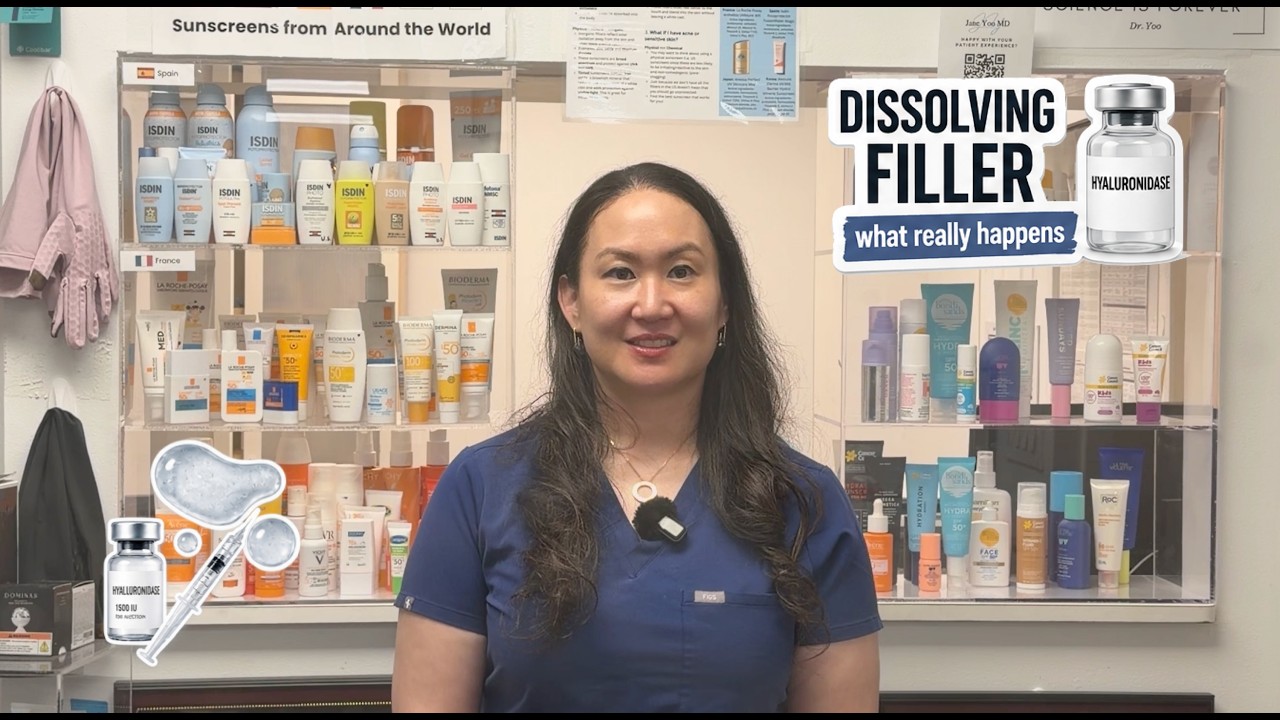
Dr. Jane Yoo explains how hyaluronidase dissolves filler by breaking down hyaluronic acid specifically, leaving collagen, elastin, fat, muscle, and bone untouched. The enzyme can affect your body's natural hyaluronic acid, but it's continuously replaced. A hollow appearance after filler removal usually reflects aging that happened while you had filler, not tissue destruction.
Chapters
Hi everyone, I'm Dr. Jane Yoo, board-certified dermatologist and Mohs surgeon. If you've heard hyaluronidase ate my face, let me explain what this enzyme actually can and cannot do. Hyaluronidase breaks down hyaluronic acid. That's its function. It cannot break down collagen or elastin. It does not dissolve fat, muscle, or bone. Those are chemically different substances and hyaluronidase does not have any activity against them. It can temporarily affect some of your own naturally occurring hyaluronic acid, but your natural hyaluronic acid isn't cross-linked like filler, and your body is continuously turning it over and replacing it. So why can someone look hollow after dissolving? One reason is that you are seeing your actual face without filler for the first time in years, and your face has continued to age during the time that the filler was there. There can also be temporary changes in hydration, swelling, and the surrounding tissues after treatment. So if you look different after dissolving, that does not automatically mean hyaluronidase destroyed your facial tissue, and what you see right afterward is not necessarily your final result.