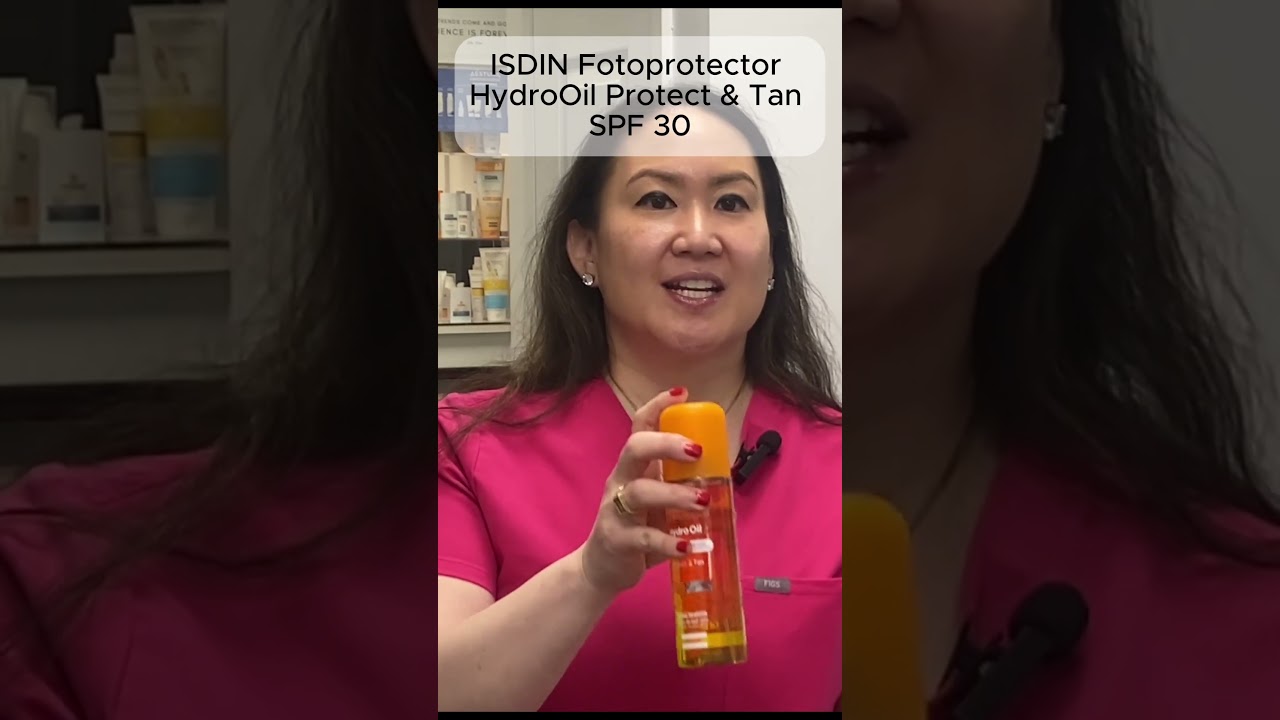
Jane Yoo explains how modern tanning sunscreens combine UV protection with ingredients that help you tan safely. She recommends ISDIN Photo Protector Hydro Oil Protect and Tan SPF 30 and Vichy Capital Soleil Solar Protective Water SPF 30, and stresses reapplication after swimming or sweating to prevent skin cancer and photoaging.
Chapters
Tanning sunscreens might sound like a contradiction, but they're actually part of a growing category of sun care designed to support your skin's natural tanning process without skipping on protection. Unlike tanning oils of the past that offered little to no SPF, today's formulas combine broad-spectrum filters with ingredients that enhance melanin activity or boost skin radiance. This is especially important given the long-term risks of tanning. Indoor tanning beds and unprotected sun exposure significantly increase your chances of developing skin cancer, including melanoma. They also accelerate photoaging, leading to early wrinkles, dark spots, and skin laxity. These newer generation tanning sunscreens offer a better approach. They protect your skin while helping you develop a more even, natural-looking tan over time. Here are two products that do just that. ISDIN Photo Protector Hydro Oil Protect and Tan SPF 30. This bi-phase dry oil protects against UVA as well as UVB damage while using Pro-Melanin technology to help enhance your skin's natural tanning processes. Clinical studies show that it can increase melanin activity by up to 43%. It absorbs quickly with a smooth, dry-touch finish and hydrates the skin without leaving behind a greasy residue. Vichy Capital Soleil Solar Protective Water SPF 30. This weightless water-based sunscreen contains beta-carotene and sunflower seed oil to nourish the skin and enhance radiance. The bi-phase texture applies easily and supports a gradual glow and still provides a reliable SPF 30 coverage for everyday outdoor use. Tanning sunscreens won't give you an instant tan or replace self-tanners, but they're ideal if you want to tan naturally and want to support that process more safely. They work best when used regularly and reapplied throughout the day, especially after swimming or sweating. If you're gonna be out in the sun, use a sunscreen that does more than just protect. Choose one that works with your skin, not against it.