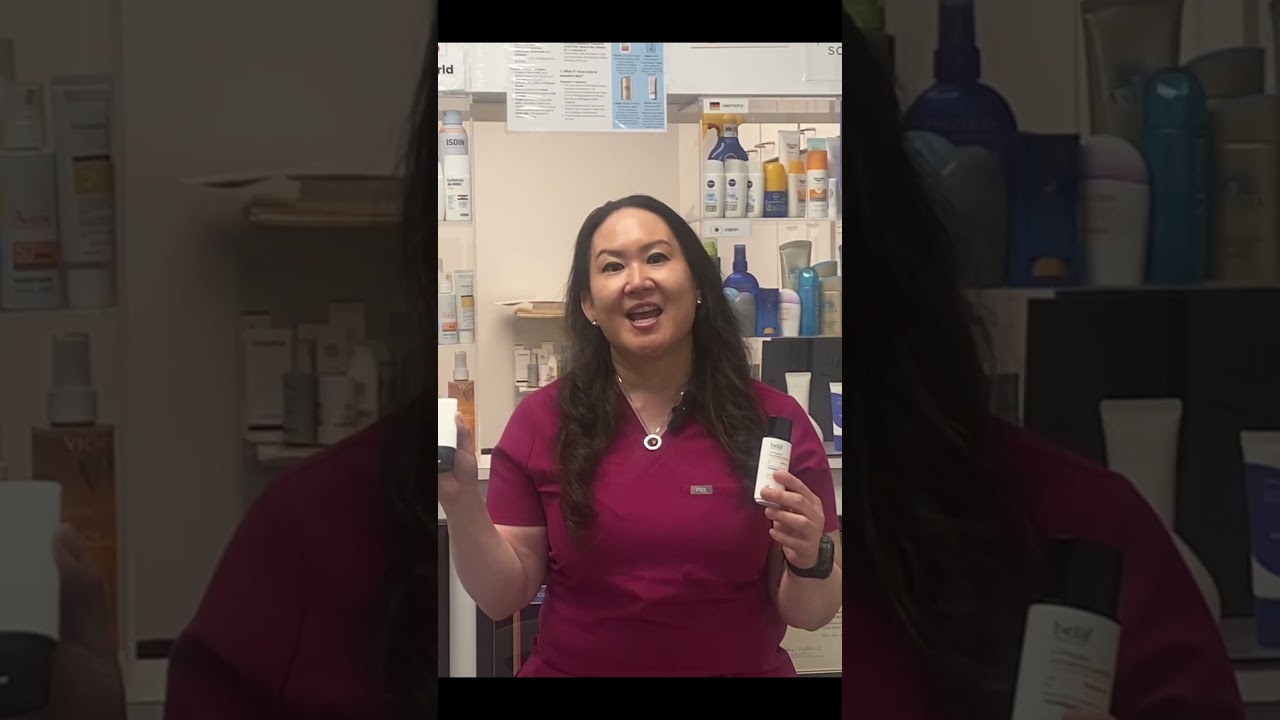
Jane Yoo compares Belif sunscreens sold in the U.S. versus South Korea. U.S. versions use older chemical filters like avobenzone and octocrylene, while Korean formulas use newer filters such as Tinosorb S and Uvinul A Plus. The Korean versions feel lighter and serum-like, while U.S. versions are thicker and waxier.
Chapters
Have you ever noticed that when you're traveling abroad, you'll often spot sunscreens that look almost identical to the ones you can find in the US, but somehow they just feel different? It's a question I get all the time. Are these international versions really the same as what's on our shelves here? The short answer is not really. Take Belif sunscreens, for example. In the US, you'll find options like the Aqua Bomb Glow Sun Stick and the True Cream Aqua Bomb Sunscreen. These American versions use chemical filters such as avobenzone, homosalate, octocrylene, and octinoxate. The textures of these US formulas tend to be thicker, sometimes a little pasty, and the sun stick format can feel waxy on the skin. Even the creams, though hydrating, don't have that truly weightless invisible finish you might expect, so they can leave a little bit of residue, especially if you're layering on other skincare or makeup on top. Now, if you look at the South Korean versions like the UV Belif Protector Aqua Bomb Sun Serum or the Multi Sunscreen Plus, the experience is noticeably different. These formulas use advanced chemical filters such as Tinosorb S and Uvinul A Plus, which truly offer broad spectrum protection and are known for being photo-stable as well as gentle on the skin. The textures are lightweight, almost serum-like or like a thin lotion, and they melt into the skin with no greasy feel or white cast. Why the difference? It mostly comes down to regulations. The FDA in the US has been much slower to approve new sunscreen filters, so American brands are limited to older ingredients. That means less effective UVA coverage and fewer innovations in texture and finish. Meanwhile, in South Korea, sunscreens are regulated more like cosmetics, which allows for faster adoption of new, more effective, and more elegant UV filters. As a result, Korean formulas often feel better on the skin and offer more reliable protection against both UVA and UVB rays. So while it's great that brands like Belif are making their sunscreens available in the US, if you want the absolute best experience— lighter feel, better protection, and a finish that disappears into your skin— the South Korean versions are absolutely worth seeking out. If you tried both, I'd love to hear which one you do prefer.