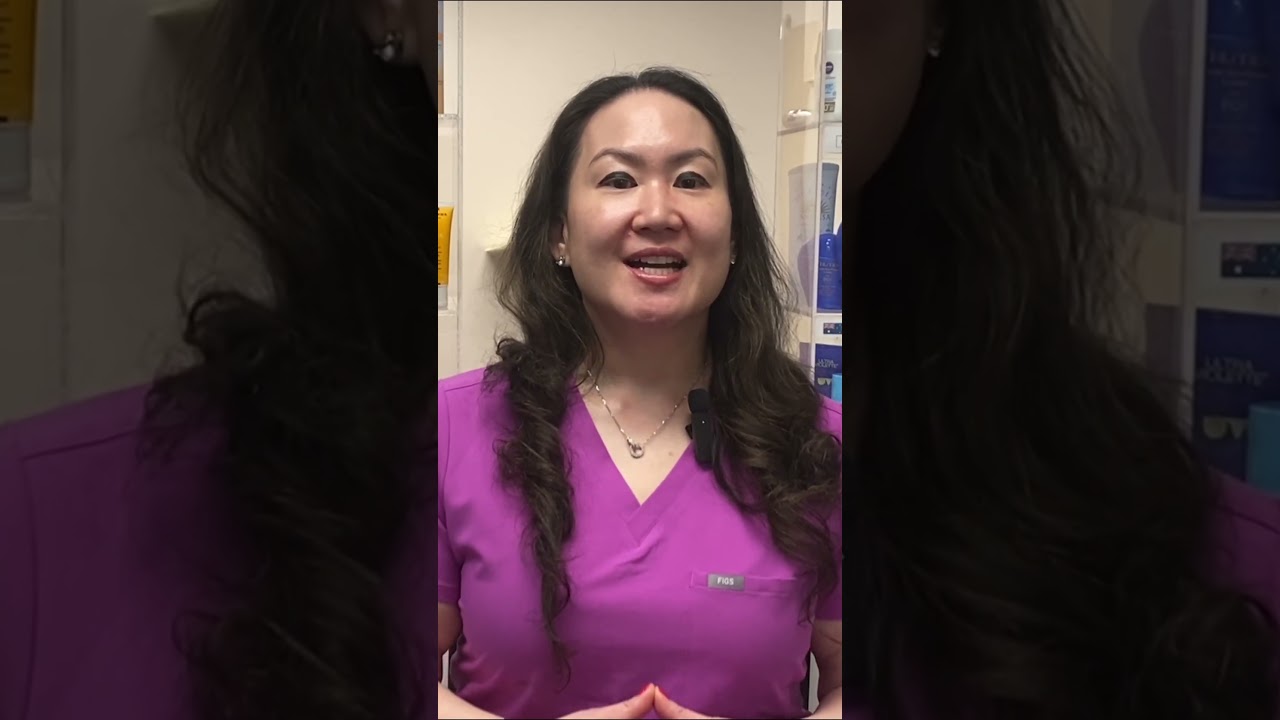
This content was created by Jane Yoo. This content was uploaded by Jane Yoo. This is a YouTube video titled "What Are Biostimulatory Fillers?" (created 2026-08-02) consisting of an educational monologue by Dr. Jane Yoo, a board-certified dermatologist and Mohs surgeon. The speaker explains biostimulatory fillers as a regenerative approach to facial rejuvenation that stimulates fibroblasts to produce collagen over time rather than simply replacing volume. The excerpt covers mechanism of action, common agents (poly-L-lactic acid/PLLA — e.g., Sculptra, calcium hydroxyapatite/CaHA — e.g., Radiesse, polydioxanone/PDO, and polycaprolactone/PCL), typical injection depths, the gradual and natural-looking results (PLLA results can last up to ~2 years), and clinical uses both preventive and corrective for improving skin firmness, texture, and structural support.
Chapters
I'm Dr. Jane Yoo, board-certified dermatologist and Mohs surgeon. In modern dermatology, biostimulatory fillers are changing how we approach facial rejuvenation. Unlike traditional hyaluronic acid fillers that primarily replace lost volume, biostimulatory fillers work by stimulating the skin's own collagen production over time. Rather than creating an immediate filling effect alone, These treatments support gradual improvement in skin firmness, texture, and structural support. Bio stimulatory fillers are injected into the dermis or deeper tissue layers where they activate fibroblasts, the cells responsible for producing collagen and other components that help maintain skin strength as well as elasticity. As collagen production increases, the skin slowly rebuilds its underlying framework leading to a more natural-looking and longer-lasting improvement. Some common biostimulatory agents include poly-L-lactic acid, PLLA, calcium hydroxyapatite, Caha, polydioxanone, PDO, and polycaprolactone, PCL. For example, PLLA-based treatments like Sculptra gradually stimulate collagen production, offering results that can last up to 2 years. Caja, found in products like Radiesse, provides immediate volume while also acting as a scaffold for new collagen formation. One of the key advantages of biostimulatory fillers is their gradual nature. Changes develop over time, allowing results to appear more subtle and natural compared to traditional volumizing fillers. This makes them particularly useful for patients seeking skin quality improvement rather than focal volume correction. Biostimulatory fillers are often used preventively as well as correctively. As collagen production naturally declines with age, these treatments can help slow visible signs of aging by supporting the skin structure earlier rather than waiting until significant volume loss has already occurred. Overall, biostimulatory fillers represent a regenerative approach to aesthetic medicine Instead of masking signs of aging, they work with the skin's biology to encourage long-term structural support and gradual rejuvenation.