Co-Founder of $120B CrowdStrike Warns: The Cold War You Don't Know You're In
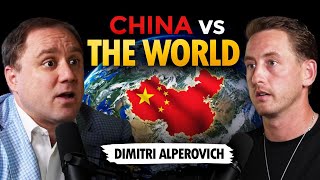
Dmitry Alperovitch, co-founder of CrowdStrike, argues the U.S. is already in an unrecognized Cold War with China. He draws five parallels between Putin's invasion of Ukraine and Xi Jinping's ambitions for Taiwan, warns a conflict there would be catastrophic, and calls for a deterrence strategy focused on supply-chain vulnerabilities and AI competition.
Chapters
We're in a cold war with China. We have been in this cold war for decades without realizing it. The Chinese knew.
That's crazy.
And narrowed it down to basically 5 reasons why Putin wanted to invade Ukraine, why he did it. And I looked back at the list and I said, oh my God, this is the exact same list that I can apply to Xi Jinping and his desire to take Taiwan. Dmitry Alperovitch is an American think tank founder, author, philanthropist, and former computer security industry executive. That is going to be a much bigger deal. Than even the war in Ukraine. Just like a huge power outage like that, absolutely devastating to global economy. He is the chairman of Silverado Policy Accelerator, a geopolitics think tank in Washington, D.C., and a co-founder and former chief technology officer of CrowdStrike.
It's got to be such an interesting balance to manage a relationship as the president of the United States managing relationship with the president of China.
I was in the Situation Room of the White House getting really frustrated, and I'm like, guys, are we going to do anything about it? Well, this is economic warfare. The senior person literally looks at me and Dmitry, don't be so naive. As long as they keep stealing, they can't innovate. And I was like, what? In the long term, the democracy has a huge advantage. We can learn from our mistakes. We can pivot. If you have a dictator like what you're seeing right now with Putin in Ukraine, they're not going to pivot. They're just going to keep doubling down on a losing hand and keep destroying the country's resources. In the short term, you get a lot of efficiencies. In the long term, you have stagnation.
All right, Dmitry, thank you so much for joining me today. I was actually really excited to talk to you because you've built something incredible. Something— I mean, your company is very well known. I think when I checked the stock market, it's over a $120 billion market cap, which to me is mind-blowing as an entrepreneur to see something that you create turn into something so much bigger than you can imagine. But for those of you who aren't familiar with you or your business, can you just kind of give us a 30,000-foot view on yourself?
Sure. Well, first of all, thank you for having me. Great to be with you. So I've been actually in technology and cybersecurity industry literally my entire life. I started a company with my dad when I was still in high school, and it was an encryption company. So that's what got me really interested in cybersecurity very early on in my career. And after that, I went to Georgia Tech and studied computer science and then got a master's actually in cybersecurity and went to work for a startup right out of college and worked in the industry for the next 10 years and then got the bug to start my own company and, uh, founded CrowdStrike, which is now one of the largest cybersecurity companies in the world, public company, um, that helps basically protect companies large and small against bad guys, be it nation states, be it criminal groups that are trying to break in and do, do a lot of harm to them.
Yeah. So you started that company and did you have any idea what it was going to turn into when you started it?
So you certainly had hopes that would be big. And I started when I was an executive at another very large company called McAfee. Doesn't exist anymore, but at the time was one of the biggest cybersecurity companies. And I started because I was seeing the problem that McAfee and other existing players weren't solving, which was the emergence of these nation-state actors— China, Russia, Iran, North Korea— they're breaking into companies and it required a different way of solving the problem, leveraging AI, leveraging cloud, sort of a different type of cybersecurity methodology to address this threat. And we hope when we started that we would one day replace McAfee or Symantec. But at the time, McAfee had an $8 billion market cap. So it was different times. Market was a lot smaller. So you kind of had hopes that maybe one day you could be that big, you know. But certainly nothing of the likes that you see now.
What was it like being— you say you're an executive at McAfee?
Yeah.
What was it like working there? I know there was a lot of stories about the founder, and I think I've watched some videos about, you know, crazy things.
Well, I was there about 3, 4 years, and that was long after the John McAfee era. He started the company in the '80s, he left in the mid-'90s. I joined in 2008, so he was long, long gone, had nothing to do with the company. So at that time, it was a Big public company, enterprise-focused. It was a fun time. There was a lot of building. Of course, it was also 2008, and, you know, the whole world was crashing around you. And the company I was at was actually sold to McAfee, so I got there through an acquisition.
So you were part of a startup that got sold to McAfee, and that's how you ended up joining?
Yeah, well, the real story is I was part of a startup out of college that got sold to another public company that got sold to McAfee, and then we actually sold McAfee to Intel. A huge company. And, uh, that was when I said, you know what, I'm done, time to start my own thing.
So were you in the business side of it or the technical side of the, of the companies? Because, you know, going through several acquisitions, you could learn a ton about how, you know, financial arbitrage and how, you know, M&A works.
Were you involved? Yeah, so I was doing, uh, uh, really when you join as a startup, you're doing a little bit of everything. I joined on the technical side, but very quickly we I was very involved with sales, very involved with— I was at one point a GM of our cloud business. So starting literally a startup within a company from scratch and doing everything from sales, marketing, finance, pricing, you name it, and building the technology along the way. So you learn a little bit of everything and get involved in acquisitions, obviously, and buying companies and helping sell the company and so forth.
Well, it's kind of like a superpower to have a technical background and also understand sales and marketing. That's very rare. Was that a big strength of yours?
Yeah. You know, when I joined this, this first startup, it was called Cipher Trust out of college. I'll never forget it. At the first all-hands meetings I attended, the CEO said, everyone here— the whole company was about 250 people— everyone here is in sales. I don't care what your job title is. If you're not selling, you're buying. Right? So that was a great way to think about things as a young kid just out of college, that whatever you're doing, if you're not helping close a deal or keep an existing customer happy, you should reevaluate your priorities. And that stuck with me throughout my entire career. And, you know, particularly now as an investor, it's really important to appreciate that best technology doesn't always win. And it's the best go-to-market that is really hard to get right. Takes a lot of effort and understanding that is crucial for any founder.
Yeah, I was on the opposite end of the spectrum. I was really good at go-to-market and really bad at technology. We had a big blowup when we first launched the company and then of course the tech followed along. But you're very, you're very right about that. That's actually a really interesting point that everyone in the company should be focused on sales or revenue. Is that something that you brought into your business? Business as well and like that philosophy.
Absolutely. Absolutely. And to be honest, even as an investor today, one of my litmus tests when, you know, I get pitched by a founder is, have you ever sold anything in your life? That's a great litmus test. I don't care if it's a lemonade stand or, you know, in college you had to hustle or whatever. But if you haven't done it, if you haven't put yourself out there, you haven't been rejected, you know, you don't really know what it's like. And too many tech founders don't have that skill and aren't successful, even if they're building the very best thing that you can possibly imagine.
It's so true. I was fortunate that before I got into tech, I would actually import products from China and I would sell them in person at music festivals or at state fairs or at, you know, marathons. We'd set up booths and we'd have to, you know, get rejected all day. We got really good at understanding how to convince people to buy your products. And then when you went online, it was way easier to figure out how to make advertising work and marketing work. But I totally agree, that's probably a great litmus test.
Yeah, and by the way, messaging and getting the messaging right in technology in particular, but really all types of businesses, is so hard. And particularly as a founder, and particularly as a technical founder, you have so much pride in everything that you do, and reducing it to the essence of what you do is so hard. And often that essence is actually not even about the product, but about the problem you're solving. And it's so difficult to get right. I mean, even at CrowdStrike, it took us years to get to a very simple message, which ended up being, "We stop breaches," which is actually nothing about the product at all and how it does things.
Yeah.
But that was the essence of why would someone buy us.
Right.
It's because they have the peace of mind that we would stop the breach and they would be safe. But initially we were like, "We're cloud-based, we're doing this, we're doing that." And it's like people get lost. Right. Right. And but you're proud of that. You're like, of course. Of course we have to include it.
Right.
It's so important.
Yeah.
And everyone can say they stop breaches, but you have to explain why. And actually you don't.
Right.
And simplification is the hardest thing you can possibly do.
That's great advice because you're so proud of what you built. You're in the weeds. You're talking about why it's better than everything else.
The rest of the world doesn't care.
Yeah, especially if you're working with enterprise clients and you're working with someone that works in an organization. You just have to capture their attention. Right. So that's actually really interesting advice. So when you guys started the business, How many founders were there?
Uh, there were, uh, myself and my co-founder.
There's just two of you as founders?
Yeah, we had a third guy that was our CFO, but, uh, it was basically the two of us that started it.
Wow. And was— what were the early years like? Was it, um, what you expected, or were there, like, you know, lots of ups and downs? What was kind of the early days of the, of the startup like when you started it?
Uh, well, not just the early days, but every day, you know, it was the highest of the highest and the lowest of the lowest. I mean, there were always challenges, whether it's competitive challenges, whether it's, you know, you're trying to land someone and they take another job, or someone's trying to leave and you got to save them, or an issue with a customer, whatever it may be. So it's never a straight line. People sort of look at what the company has become now and the fact that we did it, you know, the time from starting to, to go in public was 8 years, and like, oh, that's super fast. Every day was a—
yeah.
Huge fight, existential crises along the way, and it just all is very, very difficult. You know, starting a company is an amazing experience, but it's not for the faint of heart. It's not for a person that, you know, wants to have a life-work balance. Such thing doesn't exist, as you know. You're always on, you're always working, you're always traveling. So it's fun, but it's incredibly rewarding, but it's also really, really hard.
When you're dealing with so many things and people and problems and all the noise, how do you identify the things that matter that you wanna focus on for the day?
Yeah, well, you wanna try to get, I think, as much done as possible, so, but prioritization of what matters right now, is this a big deal that you need to help close? Is there an issue with a product that, is impacting retention or whatever it may be, uh, you gotta dive into it first. But you know, you typically have a long to-do list and you're jumping from one thing to the other. And, uh, you know, I've learned over the course of my career to be great at multitasking. Like, I never come in and I'm like, this is the one thing I'm going to do today. No, there's gonna be 50 because that's just the way life is.
So what is— can you talk me through what a typical day— maybe not now, but when you're in the thick of it, what did a typical day look like? You know, for example, when you wake up and there's a ton of things to do, it's like, well, where do you start? Like, how did you have any routines or habits?
You know, you know, you have an assistant that really organized your day. So, you know, at that point, I've actually very little to say about what I'm going to do. It's like, okay, my morning call is with this prospect that got set up 3 weeks ago that I'm going to need to close. Then I have a meeting with my engineering team, try to solve some problems. And there is a you know, team meetings somewhere, or whatever it may be. So just, you go from one thing to the other and try to solve problems along the way.
Yeah. Did you have any personal, like, habits or routines that would kind of, uh, you know, help you get through stressful times, or things that you do, any kind of morning routine?
Yeah, I think I'm generally pretty good at handling stress, um, and I love being busy and doing different things. You know, I do get bored easily, so if it's like, if I'm just doing one thing That's like the worst. Yeah, right. So I want to be like, okay, I just spent 3 hours with the engineers solving some really great problems. I want to be on a sales call with a customer just to have a complete sort of mind switch of I'm now focused on something else. I want to jump into a marketing discussion about how we're going to participate in this conference, where our messaging is going to be, what are we going to demo, right? So just jumping from one thing to the other to try to solve different problems from across the company. It's a lot of fun.
Yeah. Do you have any leadership philosophy or like, you know, for example, when you're starting a business and you want to bring on amazing people, amazing people can go work anywhere. And if you don't have a big company, you either have to give them a big piece of it or create a big vision. How did you recruit great people to your company? What was your philosophy as a leader to get amazing people?
Absolutely. I think that was— the most important thing that I did, which was the recruiting. And I had set a very high bar for everyone I would hire. I wanted to be— to have the best people I could possibly imagine in every field that we were hiring for. And that actually led to something at the time, back in 2011, when we started the company, was actually fairly unique, which is a completely distributed company. And our board hated it. Like, in every board meeting, they would be like, Where's your center of gravity? Where's your headquarters? And we were just completely distributed. The first—
Wow.
People I hired, the first 10 people were in 5 states and 2 countries. This was when? In 2011.
Wow.
This is before Zoom, before there was like really good— you know, Slack didn't exist, none of that stuff. And we actually— we started the company on Skype. That worked for about a week until it didn't. And we went through like a ton of teleconference software. Thank God. Zoom came out when it did because I'm not sure the company would have survived. Wow. But, you know, at one point, 70% of the company was completely distributed. That we had offices and, you know, distributed is not remote. And I want to make that very clear. What I wanted to do was find the very best talent and not be limited by geography. Yeah, right. So if you've got an amazing guy or gal that lives in Lakehouse in Michigan, nowhere near a big city, I still want you. Yeah. And I want to make sure I can make it work for you. So it's about the flexibility of the work environment. But then if you got someone in New York that has a small apartment, a couple of kids, and needs to get out of the house to be productive and work in an office, give them the opportunity. Right. So it's about having that flexibility, obviously within reason. You're not going to open up an office for one person. There has to be enough people in that area. But office or at home, there's no, uh, you know, um, discrimination. Whatever it is that we need to do to make you happy to be here, uh, and be productive, that's what we need to do. And, uh, that led you to basically the world is your oyster in terms of hiring, within reason. We didn't hire in China, we didn't in Russia, the places where, you know, we had adversaries that were trying to break into our companies. But, you know, in Western countries, we would hire basically anywhere and make it work. And that gave us an enormous advantage of finding people that we would have never been able to hire if we were just localized to one specific location. But, you know, as the saying goes, A players hire A players, right? B players hire C players. So having just a really, really high bar for everyone that we would hire was absolutely vital. My rule of thumb is I want to hire everyone who is smarter than me, right? So I can learn from them. And that, I think, gave us an enormous advantage early on.
Do you still feel positively about companies that work either remote or no, not in one? Like, would you do it again? Would you have a—
100%. And, you know, now as an investor and a board member in a bunch of companies, I tell people all the time, if you culturally handle it— and it's hard to pivot to this later on if you didn't build it from that way from the get-go. It's very, very difficult. But one of the reasons why I was really, really passionate about this and was really pushing back against our board who wanted the traditional company with a headquarters, everyone located together— a lot of venture capitalists really think that unless everyone's in one room, your whiteboard, a company can be successful. But the reason I wanted to do it that way, aside from just wanting to hire the best people, is that having been acquired a bunch of times in my career by companies that were in other cities— so when I started my career, CipherTrust was based in Atlanta. We got acquired by a company that was based in Minneapolis and had offices in California and Florida. And then McAfee had an office in Santa Clara. Intel was in California as well, but really obviously globally distributed. And what I found is that because these companies were really centered around their headquarters, unless you were in the headquarters, you were missing out, right? I was in Atlanta, ended up having to fly to, to our headquarters almost every other week just to make sure I'm in the meetings. Yeah, even though you have teleconferencing, but people just make decisions at lunchtime. Yeah, you know, around the water cooler, and you feel like you're in Siberia if You're not there.
Yeah.
And it was important to show face. And that's really hard to do. It doesn't scale. It's not productive. And because we thought that, you know, what we had potential to do here is build a big company that would grow not just organically, but inorganically through acquisitions as well. I wanted to have a distributed culture from the get-go that would make it very easy to assimilate other companies that we would eventually buy, which we did, because everyone's remote, right? So you don't feel like, you know, if you're not in HQ, you're really missing out. And that was really, really important for us early on, and it proved its weight in gold down the road.
How did you realize that? Was it because you were part of companies that got acquired?
Yeah, because I experienced it myself that this really sucks.
Yeah.
That if I'm not there, I'm not really as effective. I'm not as plugged in. I don't always know what's going on, and it's a horrible feeling. That's why a lot of people leave after an acquisition, is because they just feel so disconnected.
Right.
There's even talk in the office like, oh, in Santa Clara, they do this, right? It's they. Yeah, it's not us. Not us, right? It's us versus them. And different offices would do this against each other. And, and we not only did we try to hire people wherever they are, But we actually started enforcing it at some point because we noticed that, oh my God, you know, we hired this great guy in Seattle and then he hired all his friends, which is great, which is what we want him to do. But now you have this cluster of people in Seattle and it becomes like us versus Seattle if someone else is in New York. Yeah. It's like, okay, we got to like try to break this up and bring more people into that team that are specifically not in Seattle so that they have to integrate other people because we literally found this. Oh, they went to lunch and decide on this. Didn't think of like, let's have a call with everyone else who's remote. Yeah, because they had enough of a quorum in Seattle to do this. It's like, okay, we got to push the team to hire another location so that they, they wouldn't even think of doing this.
Right.
Because enough people are outside of that, that, that local area. And you want to do this across all teams, not just engineering, not just technical teams, but obviously sales is always really distributed. But you know, HR, finance, all these functions. If you put, you know, there have been FBI indictments just in the last couple of years of a police station that the Chinese opened up in New York City, a Chinese police station to basically intimidate the local Chinese diaspora, push people to come home by threatening their families domestically in New York City.
Wow.
In the largest city in America. Wow. Chinese police station here in Florida. There were FBI indictments of or reports of people affiliated with the Russian government trying to track down defectors from Russian intelligence services that were living here under anonymous names to try to kill them. Wow. So, you know, this is, this is serious.
Yeah. So what do we do as a country and what are you going to do to help the country moving forward?
Well, the biggest thing I'm trying to do right now is with this book, World on the Brink, to try to educate the public on the threat of China, right? That this is as much of a— in fact, probably a bigger problem than the Soviet Union was during the first Cold War. The stakes are way bigger. They're way more powerful than the Soviet Union was, at least economically. And the stakes are even bigger because, you know, we didn't really have significant land disputes with the United States. The biggest one that's sort of akin to Taiwan was West Berlin. Right, that they want to take West Berlin. It was surrounded by East Germany. That's why the Berlin Wall went up, right? Because you had all these people escaping. But as I write in the book, the Berlin Wall actually helped to stabilize that conflict because before the Berlin Wall went up, there was an incredibly tense period where we thought that the Soviets were going to invade West Berlin. We're going to go to war with them. President Kennedy at the time went on national television talking about the prospect of nuclear war coming and that people should be— if you remember the duck and cover drills from those times that you can find on YouTube, that really emerged from that period where people were building fallout shelters because they thought we were going to go to nuclear war with Russia. It wasn't because of Cuban Missile Crisis, which only lasted 13 days. Yeah, it's not enough to build a nuclear fallout shelter in 13 days. But the Cuban Missile Crisis came a year later, actually as an outgrowth of the crisis. But once the Berlin Wall went up, the crisis really stabilized because Kennedy even said when he was alerted to the fact that they started building the wall in August of 1962, he said, thank God. Right. 25 years later, President Reagan says, Mr. Gorbachev, tear down this wall. Kennedy said, thank God. If they're building a wall, they're not invading. Right. Just avoided nuclear war. Terrible for East Berliners. That are contained there. But, you know, nuclear war is more important. Avoiding it is more important. Of course. And even with West Berlin, the Soviets didn't have this ideological or strategic need for it. Right. It was much more about symbolism of this outpost of Western capitalism inside East Germany, but far away from Moscow, far away from the Soviet Union. Nothing like Taiwan.
Right.
And it wasn't the chips manufacturing powerhouse.
It didn't have—
stakes were nearly not as high and they didn't have, you know, claims on other lands that were super strategic to the United States and vice versa. Now things are way more dangerous because Taiwan is super important to China, super important to the United States and the world. And we are, I believe, on a path towards war. So we have to do whatever it takes to deter this conflict. Right. When you think about the potential outcomes here, there are three. China invades and wins and takes Taiwan. Disaster for us in the region and so forth. China invades and loses, doesn't take Taiwan. Still enormous disaster, still global depression, still enormous casualties that we would suffer in a war with China, which, by the way, is a nuclear power. We have never in our history fought a nuclear power. Yeah, we would hope it would stay conventional. Yeah, there's no guarantees. Right. So just unbelievably dangerous prospect. And the third outcome is they're deterred. They never invade. That is the Goldilocks scenario. If you remember WarGames, that movie from the 1980s, the best move is not to play. That's what we need to hope for. And for that to happen, we need to have a comprehensive strategy of how do we confront China in every area, whether it's economic, military, cyber, and work on containing them just like we did with the Soviet Union. Preventing them from becoming a regional hegemon, preventing them from having a lot of leverage over us in things like critical minerals. Yeah. Last month they announced a complete export ban on rare earths to us and the whole world, which are critical for magnet production, which you need in jet engines and—
oh, wow—
warplanes and EVs, lots of things. Now, there was a truce that was established between Trump and Xi in South Korea some weeks later. Where they resume that export control, but they show to the whole world, yeah, the leverage that they have. Yeah, to get off that crack, uh, of critical minerals coming from China as soon as possible. We need to— by the way, same thing with our pharmaceuticals. So many of our drugs and precursors for those drugs manufactured in China, right? Huge problem. Yeah, right. Um, they're increasingly becoming, after Taiwan, the second largest producer of chips. Wow. So we can't let them gain leverage on us there, right? You know, it's bad enough to be reliant on Taiwan for chip production. Imagine being reliant on China, right? Right. You're not going to manufacture a single weapon system, right? Because they're not going to let you, right? Right. So we need to do all of that decoupling and build resiliency in our supply chains. We need to make sure that China remains dependent on us for advanced chips, for AI technologies. So we need to win the AI race, for example. And we need to make sure that the hard power, the military power, will remain the most powerful naval force and air force in that region to deter conflict.
It's like a giant game of chess with 1,000 pieces on each side.
Exactly right. And you know how you win a chess game? I'm actually a very avid chess player. You don't win it by, you know, having your opponent make a mistake and lose a queen or something. I mean, you can win that way, but at a high degree of player playing, that doesn't happen, right? Good players don't, don't make dumb mistakes like that. You win by making sure your opponent never has any good moves to play. Yeah, you completely contain them where any move they make, their position is going to be much, much worse. Yeah, that's how, you know, at the grandmaster level, yeah, they play. And that's what we need to do. We need to counter them in every single area, make sure that they can't make a move that doesn't make their situation worse.
Do you think China has an advantage due to the fact that they have the same president in office for a long time versus we're flip-flopping every 4 years and/or every 8 years in a good scenario, changing things, going back and forth like that has to create massive inefficiency as a nation.
It does. So in the short term, there's no question that's a huge advantage for them. There's one strategy. We have a new national security strategy every 4 years. Is it really strategy if you keep changing dramatically, you know, when your president gets elected? So that is an issue in the long term. I think the democracy has a huge advantage because we can learn from our mistakes. We can pivot, right? We spent two decades fighting these forever wars in the Middle East. You know, we, we pulled out and said enough is enough. If you have a dictator that's personally invested in us, like what you're seeing right now with Putin in Ukraine, they're not going to pivot. They're just going to keep doubling down on a losing hand and keep destroying the country's resources. So having a change of government where someone comes in and not only is not personally invested in the mistakes of the past, but may have actually run against it, is when you have an opportunity to change course, have the people say, you know what, that didn't work, let's try something else. That doesn't happen in dictatorial countries, right? So in the short term, you get a lot of efficiencies. In the long term, you have stagnation. Yeah. And that's actually what's happening in China today, is Xi Jinping has made a huge, huge mistake in my opinion, because he threw out of the window the old strategy that was set by the great Chinese leader Deng Xiaoping, who came into office after Mao basically and really is the modern father of the rise of China in the 1980s. And, and the economy that it has today really has to do with Deng Xiaoping. He's the one that established the agreement with Carter to open up China. And have Western companies go in and trade with China. And he had a saying in the 1980s that sort of the guidance to the Chinese people, he said, hide your strength, bide your time. Now, unfortunately for the whole world, in particular the United States, no one bothered asking. It was well known that he said that. No one bothered asking is, who are you hiding your strength from?
Right.
And what are you buying your time for? Yeah, we're like, we're not going to pay attention to that. Yeah, they want our money. They want our money. They want our investment. They're going to produce cheap goods for us.
Yeah, love it.
Yeah, let's do it all. And Xi Jinping comes into office in 2012 and says no, no more. Show off your strength and hide— no, uh, and waste no time. I mean, he didn't say that, but that's in fact what, what he's doing. Yeah, right. He's become belligerent. He, uh, is accelerating this timeline on Taiwan. Taiwan always mattered to China since Mao. They wanted to take it, but it was always sort of this distant goal of One day we're going to get it.
Yeah.
Doesn't have to be now. Doesn't even have to be under my watch.
Yeah.
We'll just make steady progress. We don't want to anger anyone prematurely. We're not yet that powerful.
Yeah.
Xi Jinping, I believe, wants to do it on his watch. The man is in his 70s, right? In 2032, when his probably, uh, fourth term ends, he'll be 79. In the Chinese system, they don't tend to elect their leaders into their 80s, unlike ours.
Yeah.
So, uh, he may very well think that that might be the end date for his rule. And who knows, by that time, health concerns— he doesn't look like the healthiest guy in the world. Lots of things can come about. So I actually think that if he's going to go, he might very well go before 2032, which is not that far away. Yeah, right. And he is accelerating everything from military developments, building capabilities that he needs for invasion, to a huge focus on self-sufficiency, making sure that we become as addicted as possible Yeah, to the goods from China so that he deters us from intervening in, in case he invades. So, uh, but I think he's done it too prematurely. China would have been much better off waiting another couple decades, becoming the world's biggest power unequivocally. Yeah, they're still not that today. And then taking Taiwan, deterring the United States from invading, would have been much easier. Yeah, we've been complacent. We wouldn't have mobilized the country the way we're trying to do right now to fight this threat. But he was impatient. And dictators are like that, where, you know, they want things now. They want a legacy of it. I mean, presidents want that, too. But, you know, there's more constraints in a democracy from doing—
It's got to be such an interesting balance to manage a relationship as the president of the United States managing a relationship with the president of China. It's got to be such an interesting dynamic because, you know, like, we're friends with some of our competitors in business, but the stakes aren't that high. I mean, there's money on the line, but there's a lot of other competitors. Now it's like, this is about, you know, being the world power. How do you be friends but also be working behind each other's backs? How does that relationship play out?
Well, I don't think you befriend— they're an enemy, right? You can have respect for them, grudging respect. You can figure out a few things that you can work on them together. But most of the things you're not going to be able to work with them because China is very good at making you pay for everything. You know, President Biden used to say, you know, we want to work with China on climate change. Well, China had no interest in working with you on climate change unless you gave them concessions on things like Taiwan and other things they cared about. Yeah. Which we weren't going to do. So like, just don't even bother. Yeah, they're going to do what they're going to do if it's in their self-interest. And if it's in their self-interest, you don't have to convince them to do it. Right. It's in their self-interest already. Yeah. So like, don't try to bribe them with other things to make them do what they already need to do.
Right.
And just treat them like we treat the Soviet Union. It's an adversarial relationship. We need to contain them. We're still going to talk to them.
Yeah.
And, you know, we developed arms control treaties with the Soviet Union in the 1970s. Cold War didn't end. Yeah, we didn't think that they were suddenly friendly to us and we needed to bribe them. Yeah, it was like, you don't want an arms race, we don't want an arms race. Let's figure out a way to make the world a little bit safer. You know, we can try to propose some of those things to China. Right now they're completely uninterested. So, you know, I wouldn't waste a lot of my time on it. It's like, if you want it, come talk to us. You have my phone number. Yeah, but let's not bend over backwards. Yeah, try to please you. And the Chinese are very, very good and making us beg for— beg them for things that they should already be wanting to do. Yeah, right. We need to flip that dynamic entirely. They should be begging us. We are the world's preeminent superpower today. Yeah, we have the world's greatest economy, 25% bigger than China's on a GDP-to-GDP basis. We have this incredible alliance network. They should be afraid of us. They should be begging us for things, not the other way around. Yeah, and it's quite incredible that we often find ourselves in this position.
Yeah, it's just crazy that one human being can make a decision that puts the world on, on a brink, right?
Well, look, you know, one human being made a decision in 2022 to invade Ukraine with huge ramifications, not just for the region but the world. And one human being in China can make another decision that would be even greater in terms of its profound ramifications.
I think it's incredible what you've done in your career, but I think it's even much cooler that you're now focused on things that can help our country thrive and help— I mean, at the end of the day, save lives and make life better for people here and avoid a catastrophic war.
Yeah, war with China. You know, just think about this one statistic, right? If one aircraft carrier is sunk It's about 5,000 sailors that will, that will die as a result of that. Right. And China has missiles, the DF-22 ballistic missiles that can— were specifically built as carrier-killing missiles. That, God forbid, one event would be the deadliest day in American military history.
Wow.
You know, before that, the deadliest day was basically D-Day. 2,000 Americans died. Really? Yeah, that was the deadliest day. Yeah.
Wow.
Now, they're deadly battles over multiple days— Gettysburg, etc. But like, on one day— wow, you know, 2,000 Americans died. Wow. One aircraft carrier is 5,000.
Wow.
So incredible stakes here. Yeah. Um, you know, I don't want a war with China or anyone else. But unfortunately, the way you deter wars is by being willing and ready to fight them and having capability to win them outright. Yeah. And we have to make sure that China knows that if they even think about going for Taiwan, they're going to get crushed. Yeah. And the stakes for them are actually very, very high. This is the one big difference between Ukraine and Taiwan, because the Ukraine project is all about Putin. No one in Russia really cares about Ukraine, or cared about it. He could end it tomorrow if he wanted to, on terms that no one really is even going to care about, right? It's all an ego project for him, but it's not an existential one, right? His rule and power will be perfectly secure regardless what happens to Ukraine. That is not the case for Xi. The outcome Overtime one for China is binary. You either take it or you don't. And if you don't, it's probably the end of him. It's probably the end of the Chinese Communist Party rule in China. Huge stakes.
Yeah.
So before he goes, he needs to have a great deal of certainty that he can do this, that he can win. And the more uncertainty we can introduce in his mind, the better off we are. And the, the, the answer here is delay, delay, delay. Buy us more time.
Right.
Get through his rule, because maybe whoever comes next is not going to be as obsessed with this and is going to be willing to wait. Uh, I also believe passionately that China is on a decline. Their power has peaked. Their demographics are declining. Their economy is on very shaky grounds. It is an economy completely dependent on exports in the world that is becoming more protectionist— tariffs going up, not just in this country, but really everywhere in the world. It is highly dependent on raw materials. It's got enormous, enormous issues and it's going to be very, very difficult to manage them going forward. And we have unbelievable strengths surrounded by two oceans, the most innovative economy in the world. If we win the AI race, it's basically game over because the AI is going to be transformative to everything. And we have— talking back about chips, the choke point on AI, which is compute, right? You cannot build any AI models without massive amounts of Nvidia chips or Google TPU chips and Amazon chips. And China has none of them. Yeah, their chips are nowhere near as good. And by the way, the few that they have from Huawei were manufactured for them by TSMC. TSMC had to pay a huge fine. For letting them do that. They will not be getting any more chips from TSMC. We can absolutely have a stranglehold on their ability to procure compute and build any good AI models. They'll still have some chips and they'll build some models, but the gap between our model and their models can keep increasing massively. Yeah. And they'll fall far behind, which is going to be transformative, not just to our economy and their economy, but to the way we fight wars. Militaries are the ones that adopt these technologies first, right? Yeah. So trivia question for you: what do you think was the most transformative technology in the last 100 years that most affected warfare? Technology, not, not a weapon system, like fundamental technology. And not nuclear, just maybe nuclear weapons aside.
The internet?
No. Was it, um, electricity? Oh yeah. And not because we're shooting lasers at each other, right, but because it completely transformed logistics ability to plan, to fight at nighttime, to move people, to move resources— like, all of that has completely revolutionized warfare, right? And AI has absolutely, absolutely has the potential to do that to the way we fight. It's not just about autonomy and drones sort of finding targets on their own. Yes, that will all happen.
Yeah.
But it goes to much more fundamental ways in which we organize, which we do logistics. Yeah. You know, there's a saying in the military that Wars are not won with weapons, they're won with logistics. Those that have the best logistics are the ones that win wars. So the way that AI can completely transform all of that— enormous potential. If we are the ones that corner this resource and not China, unbelievable advantages to us. And it all comes down to chips. Yeah.
Yeah. It's a very interesting— I learned so much and I appreciate you sharing all this. I'm definitely gonna spend time reading your entire book after this.
And, um, World on the Brink: How America Can Beat China in the Race for the 21st Century.
Yeah, really, really appreciate your time. This was amazing.
Thanks for having me.
All right.
Outro. Yep.
All right, that was a great—
great.
All right, all right, I'm gonna do a quick, um, outro video. Um, Alperović. Dmitry Alperović, World on the Brink. Ready? What's up, guys? Welcome to the show. This episode is extremely interesting and different than a lot of other episodes we've done before. Here I'm interviewing Dmitry Alperović. He's the author of World on the Brink, which goes deep on the conflict between the US and China and goes into Taiwan and chips and how everything actually is really important to focus on right now. And there's a lot that I learned in this episode that you could too. He also founded CrowdStrike, which, if you guys aren't familiar, it's a huge company. It's on the New York Stock Exchange, $120 billion market cap. Very impressive story. Not only do we go through his story as a founder and how he built an amazing business, but we learned a ton about geopolitics that I didn't know much about until now, which has really opened my mind. So I hope you enjoy the episode and I hope you learn a lot.
More from Jared





How to track independant creators' performance for the products you're selling





