Do You Have What It Takes to Succeed?
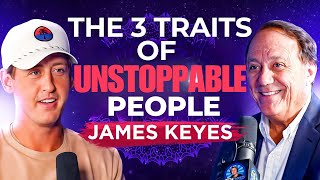
A leadership author identifies three core qualities for success: embracing change with a positive attitude, building confidence through preparation and overcoming self-doubt, and clarity through listening and simple communication. He adds curiosity, creativity, critical thinking, and belief in something greater as complementary forces that enable decisive action.
Chapters
That means you as an individual, if you really want to be an entrepreneur in that environment, in grade school, in, uh, in the factory or in the corporate world, you have to have what I call 3 things. I call them, they're my gift. Um, one is recognizing that change is going to happen.
Yep.
There's nothing you can do about it. So if you're in the, in the, um, that environment, In a factory, it may be that your shift was changed. It may be that the factory has to close or layoffs.
Machineries.
Machinery, yeah. If you deal with that in a negative fashion, then you're probably going to be the next on the block. If you keep your head up, work harder, and say, "We'll get through this. I want to be the outlier. I want to succeed," you'll make it. And so, that same attitude, the ability to embrace change, and recognize that it's not personal, it just is what it is, and keep your head up. It's your response to change that really matters. So that's the first.
Yep.
The second is, even if you say, okay, I got it, change happens, I'll deal with it, how many of us have the confidence to do that?
Not especially people that haven't necessarily done it before.
Exactly. That's when that little person on your shoulder that says, yeah, not that smart, who do you think you are? And that's self-defeating. That's us. That's just fear. And it's irrational fear because it's not necessary. Most of us are good enough to be able to do it. So that's the second, having the confidence to be able to do something about that change and to keep that positive attitude. And then the third is, I call it clarity, because you've got to have the ability to understand your fellow workers, to really listen to them. And That's often a shortcoming. We don't, right? We're working on our answer before we even hear the, the question, right? And so that ability to listen— so I call it clarity, but the clarity inbound and outbound, the ability to articulate what you want and what you're trying to accomplish, um, clearly, simply. We overcomplicate the heck out of everything, right? So those are the 3 things that I, I really credit all of the success I've had in my career and the ability to weather those political storms in the corporate world to change confidence and clarity. Those three things.
I want to double-click into the confidence part, but, but first on the clarity part, like as a leader of an organization, when someone solves a problem and they figure out a, like we'll look at problems and most people will overcomplicate them and they'll, figure out a really complex, long, hard, expensive path to get to an end result.
Yeah.
And the people that really make the moves in the organization figure out how do you take this whole complex thing and figure out one simple move, take it to the next, something cheap, simple, quick that can get you there. And like, I think that goes— I don't know why certain people have that and other people don't. Do you think it comes from the confidence, or do you think it comes from the quiet mind? Where does the Where does the clarity come from?
I think all three are related. I think that change tends to cause us to overcomplicate things. We see it, we see the change as far worse than it usually is. The lack of confidence contributes to it because if we don't really understand something, we muddle in it and make it even worse. We overcomplicate it. Or we see it as way more complicated than it is. And then that clarity piece, that ability to truly listen and understand your surroundings, if you're so busy defending yourself, being the victim, having your head down, it's gonna seem like it's an insurmountable problem. You will overcomplicate it. But I took a lesson from, actually I put a whole chapter in the book about complexity, and I started with a quote from Einstein who said, if you can't understand something, well enough to explain it to a 6-year-old, then you don't understand, right? And that's so true.
Yeah, that's— that is very true. So how would you explain to a 6-year-old how to build confidence?
I would tell them that—
it's a good question, right?
It's a great question. I'd point to them, uh, first things that are in their orbit. So I'd talk about, um, um, Mahomes. And, uh, how he has confidence when he steps on the field. Um, or Tom Brady, you know, they may be too young for—
I saw Tom Brady in a video with Bryson DeChambeau in a driving contest, and Tom Brady had so much confidence he was going to win. Yeah, against Bryson DeChambeau. It's like, yeah, where did that come from? But yeah, great example of someone's confidence.
So I don't know for sure if he did this, but my guess is Tom Brady was smart enough to go practice.
Oh yeah, because when he— I watched the video, the guy was hitting the ball 340 yards.
Yeah, which, you're a golfer, Yeah, exactly.
Brady hits the ball 340 yards, incredible.
Yeah, yeah, but somebody taught him how to do that. Yeah, he didn't just stand up there at the driving range and go, you know, hey, I think I can do this. So, and that's the secret, it's, it's preparation gives you confidence. So in the case of Tom Brady, when he'd walk on the field, or when, uh, any great football player walks on the field, most of the time they're, they're some of the hardest workers on the team, right? Brady was an example of that. He'd sit there watching game tapes over and over and over. Even after a victory, everybody else was out partying, right? He's watching the game tapes for next week. And when he walks on the field, now he's got confidence. So step 1 for someone who wants to build confidence: prepare. Yeah, you know, if you're, if you're in school and you walk into a test and you didn't do your homework, you're screwed, right? Of course you're gonna have no confidence. But if you really worked at it and and truly put in the time, then you'll have the confidence and you'll probably do well.
Now, do you think— so for example, like if someone's in a corporate business, right, and they have a role and there's only so much they can prepare for in that role, do you think that them preparing in their own life outside of work, whether it's through working out or training for a marathon or doing something that they have to control their impulses, do you think that leads to confidence in the workplace?
I do. I think it's, it's way more than just studying or preparation. I think there's a whole package, and I, I talk about it more or less as a roadmap in the book, that it's a combination of change, confidence, clarity— yes, but curiosity, creativity, critical thinking, the ability to really get inside of, of issues so that when you do walk into that boardroom, you understand, you have a better understanding what it is. But there's also this other balance that you and I talked about, that sort of belief in yourself or in a greater, uh, force, right? Uh, I use, I use Yoda when I talk about this, but when Yoda was teaching Luke, um, it wasn't just teaching him the lightsaber. Yes, there was knowledge. He had to learn how to use the lightsaber, right? But he also pointed to Luke that, that ignorance is the dark side, right? Because it leads to fear. Right? And he, and he pointed out that it's not just your knowledge of the lightsaber, it's the Force, right? What's the Force?
That's the, the other side of the— that's the side opposite of the mind.
Exactly. It's that balance. It's that—
now I was talking about the faith, the soul, the intuition.
Exactly. Yoda said it better than I could ever say. Yeah, the Force be with you.
So wise by Yoda.
Yeah, it's true. But you gotta believe. You've just gotta believe. So, so yes, that combination of knowledge and faith, or the Force, if you will, I mean, you can accomplish anything.
More from Jared





How to track independant creators' performance for the products you're selling





