From Addiction to Purpose: How Adam Jablin Transformed His Life
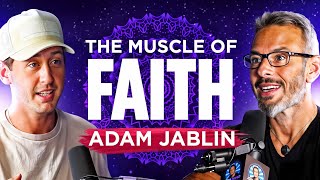
In this episode of the Zen Hard Podcast, host Jared Goetz interviews Adam Jablin, a former lace‑manufacturing heir who spiraled into heavy substance use, survived a near‑fatal addiction, and has been sober for 18 years. The conversation weaves through Adam’s childhood in New Jersey and Florida, his transformation from an insecure "fat kid" to a muscular teen, the pressures of running a family business, and the descent into alcohol, prescription pills, and other drugs. Adam describes his surrender to recovery, the role of his newborn daughter in prompting rehab, and how sobriety reshaped his identity. He now works as a recovery‑focused coach, using a deep‑story‑mapping method that uncovers recurring life‑patterns from kindergarten onward, helping clients recognize internal drivers versus external expectations. The dialogue also explores broader themes: the importance of presence versus mind‑wandering (e.g., scrolling vs cold‑plunge), the concept of life’s seasonal cycles, authenticity in personal branding, and practical tools like journaling, visualization, and Jared’s "perfect walk" meditation practice. Throughout, both hosts emphasize faith‑like perseverance, the value of surrender, and the pursuit of purpose beyond external success. The episode includes a sponsor plug for Zendrop and occasional light‑hearted banter.
Chapters
When you don't know what to do, I think that's how you know you're on the right path.
I agree with you. And I think that also develops the muscle of faith. A fitness enthusiast and recovery warrior, his unique positive energy and gift to relate to others has influenced people from all walks of life, including leaders in the fields of health, psychology, entertainment, sports, business, and politics. Adam Jablin.
The word surrender has some— to some people it feels like a weakness, but I think it's the biggest strength. That we could find.
So we were the number one lace manufacturing company in the world.
And you only get tired and cranky because your mind is worried about things or it's thinking about things. Like, if you had nothing to worry about and you didn't care and all that matters was what was in front of you, you wouldn't be tired or cranky.
I don't judge my kids. I don't judge them. You know what I mean? So they know I'm a safe place to land.
Right.
There's no judgment. I taught them very early the difference between love and approval. You know what I mean? That I will always love them unconditionally. Constantly. I will always, but I'm not going to approve of every fucking thing they do. It's impossible.
Right. So it's like people work so hard to build businesses and do all this stuff so they could have freedom, but really it consumes them. What's up, Zen Hard listeners? This episode is sponsored by Zendrop. Zendrop has a very special place in my heart, not only because I started the company, but because dropshipping is really a life-changing business for me. You see, I tried tons of things when I first got started, and what I love about dropshipping is that there's always an opportunity to sell a new product to a new person. There's billions of people and millions of products you can sell, and you never need to touch inventory. All you need to do is pick a product, run ads to it, and if people buy it, you make a profit. So if you're interested in getting started in your e-commerce journey, check out Zendrop.com and get started today. What's going on, guys? Welcome to the Zen Hard Podcast. In this episode, I interviewed Adam Jablin. This conversation was one of the deepest ones I've had so far on this podcast because Adam was so vulnerable and open about his work through recovery, which taught him so many lessons that he's brought to his coaching clients to help them heal. And this is not only deep, but it's also entertaining. So stay tuned. Enjoy. And I can't wait to see what you think. Everyone says it goes so fast, and I know, but there's nothing you can do about it.
It just goes fast. All you gotta remember, the days can be long. Yes, the days, but the years go fast.
That's such a good way to put it.
Yeah.
And like, those long days, when you look back to them, were the best days.
The best days, dude. The best days. Even like going to Disney and you're hot or whatever, and there's people, even if you skip the line, you know what I mean? You're exhausted.
Yeah.
Yeah.
You want to get out of there in the moment.
You want to get— but the memories are—
yeah. Even like, you know, at, um, after dinner when he's, you know, cranky and we gotta clean and there's a lot, you know, chores and it's like, you know, 7 o'clock at night and you're kind of tired. But like thinking back to those nights, it's like, man, I would do anything. I know when I'm older, I would do anything to have one of those nights again.
You should record that.
We're recording. We're good. Yeah, we're rolling.
That's how we naturally—
we're on, we're on, we're moving.
Yeah, yeah, we don't even— we even let you know.
Yeah, we don't. Yeah, I purposely do it that way. We just go.
We don't care.
Yeah, it's smoother that way. Yeah, but let's see, it's like a topic that it's like you can talk about it all you want, but is there anything you— I think understanding that concept that, you know, these moments that life goes quick Understanding that, what it does is it enables you to recall that more often and bring you back to the present.
Absolutely. I think that's the—
absolutely, that's the benefit of having those conversations.
Yeah. And it frees you, right? Because you and I both know when you're in the moment, you're tired, you're exhausted, you're cranky, you're, you know— but we're a couple of guys, you know, hanging out, and you start recalling like, these are— this is what life's about.
Yeah. And you only get tired and cranky because your mind is worried about things or it's thinking about things. Like, if you had nothing to worry about and you didn't care and all that matters was what was in front of you, you wouldn't be tired or cranky.
100%. It's the mind.
So it's like people work so hard to build businesses and do all this stuff so they could have freedom, but really it consumes them.
Consumes.
Yeah. And that's where the—
were you there?
What do you mean?
You know, going over the, the arc of a story, you know, from the concerts to the place in the Hamptons to the hoverboards and the whole arc of a story, would you say you were in, in the obsessive-compulsive mind?
100%. I still am. I don't think it's something— I mean, maybe you've transcended that. I have I transcend it regularly, but not permanently.
No, I think we all— no, me too.
And it like, the only way for me to transcend it is to schedule time in my day to give myself the space to transcend it.
Absolutely.
Give yourself the space to remember that stuff.
Yeah.
Otherwise you're just caught up. Maybe there's a point in life, and I'm not there yet, where you can just wake up and just be good. And I'm sure people are there. Maybe you're further along the line than I am.
Well, I mean, I think there's seasons, right? I bet you've had a season like that. Yeah. You know, I think there's seasons. You know, there's, there's a season where we're gonna get overly enthusiastic and driven again, you know, where we're tunnel vision. Then there's that season where you and I are going to be like in our heads.
Yeah.
You know what we were talking about this morning with the contractor?
Just—
yeah, right, that stuff.
Yeah.
And I, I then I, I do think there's a season of, of reward Yeah, you know, where you kind of find that peace.
Which life is about the seasons. Like, it's, it's this whole experience. Like, the only way to become your truest potential is to have those seasons, because that's the only way you can learn yourself.
Yeah.
If it's always, you know, happy and go-lucky and joy, you won't even know your mind. You won't be able to. And, and you certainly— because like, I believe we all have very similar operating systems, right? There we have different, uh, experiences But like, our minds work relatively similarly. So in learning and going through challenges, it's kind of our duty to learn and grow and in, in turn help others navigate their lives as well, which is kind of what we're doing right now.
100%. One of, one of my issues is when I'm in one season, I want to be in the next season.
Yes.
You know what I mean? Even that peaceful season, once I'm like really at peace, I'm like, I'm like, all right, I need, I need something. I need some juice. I need, I need that new pinnacle. Yeah, you know, and then I'm there and I'm like, all right, I want— I need to build it, you know what I mean? Yeah. Eventually you're finally at peace again and it just— it's that cycle.
Yeah, dude, it's like I, I, uh, I wanted to move into like a beautiful golf community and then when I'm there I'm like, now I want to be on a farm and have nothing around me.
But I know if I go to the farm I'm going to want to go right back, you know?
100%. So it's, it's, it's funny how life works. So tell me a little bit about— I mean, you've learned through a lot of personal experience, through— I mean, mostly most known for recovery.
Yeah.
Um, I would love to hear a little bit about your backstory.
Yeah, yeah. I mean, I also don't want to be too long-winded at the same time. I want to chop it up.
I'll cut you off if it's too long.
Sounds perfect, sounds perfect. Uh, backdrop. So, kid from Jersey, right? And when I grew up in the '80s, it was amazing. You know, we were— you had your crew and you're on your bicycles every day, and it was, you know, utopia. It was before 9/11, it was before social media, it was, you know, it was just American dream. The American dream, 100%. You come home when the, when the Sun's coming down, you know, it was freedom.
Yeah.
Um, the one thing about me that made me feel weird or insecure or lack of self-esteem was I was the fat kid.
Oh really?
Yeah, I was the heavy kid.
Wow.
So my dad used to call me El Chubo, you know, and when I had to go shopping with my mom, there was like a section called the husky section. Really? Right in store.
Yeah, that wouldn't be around anymore.
No, not, not In today's day and age. There was a movie in the '80s called The Goonies.
Yeah.
Right? You ever seen it?
Yeah, yeah, yeah.
So there's this kid that did the Chunk Shuffle.
Yeah.
Like he would always have, right? Yeah. And my friends would ask me to do the Chunk Shuffle. And look, I hated it.
Yeah.
I hated it. I hated the way I looked. I hated the way I felt. I really did. But what it did for me, what it gave me an enthusiastic kind of class clown, laugh with me, don't laugh at me. Yeah. Vibe. Yeah, right. And you read people really well. Yeah, because you don't want to be the brunt of somebody's joke, right? So you're always, you know, outward. Yeah, you're always outward.
You gotta be the likable fat kid.
100%. Yeah, 100%. We moved down in 1986, '87, from Tenafly, New Jersey to Boca Raton, Florida, where you could have your shirt off every day. You could be in pool, you could be at the beach. I would go in the pool and still wear a t-shirt on. It would like suck to my back, you know what I mean? Um, and during that time in the '80s, you know, my heroes were like Stallone and Schwarzenegger with Rambo and The Terminator and Rocky. And so these, these guys were like Adonis. And, and I remember thinking all the time, if I could look like that, all of my problems will go away.
Yeah. How old were you at this time?
I'm probably around 11, 12. Okay, you know, somewhere, somewhere between 11 and 12. So my mom just sees how much it's torturing me, and before you know it, she's buying me Flex magazine and Muscle and Fitness magazine and Arnold Schwarzenegger's Encyclopedia of Bodybuilding. And they buy me a Weider weight set, um, and we stopped going to McDonald's every day for my 6-piece you know, Chicken McNugget and soda and fries. Yeah. And we're getting grilled chicken and apples. I mean, this is before macros, and you know, it was, it was the '80s.
Yeah.
But in 4 short years, I go from being the fattest kid in the class to the best built kid. Wow. Yeah. I go from kids being like, yo, Adam, how many Oreos did you eat last night? To like, hey man, how much can you bench press?
Wow.
You know, the girls liked me. Wow. So everything on the out outside changed. Everything changed but me. Yeah, you know, I was still that insecure class clown. Laugh with me, don't laugh at me. But with the muscles and the coordination from having your body, right, I was able to like play and hang with the older kids. And back then there was just something cooler about older kids, you know. They had more permission, they had a car first, they had the hotter girls. Yeah, you know, you just wanted to— you wanted that attention. Yeah, you wanted that approval. So these are now my boys. This is who I'm playing.
Yeah.
And they were experimenting. And I'll just, you know, I'll never forget, you know, whatever they were passing— the Coors Light, the Amstel Lights, the 40, the blunt, whatever it was— there was no peer pressure. Yeah, yeah. There was nothing. I drank it and it fixed something inside of me that I did not know was broken. It fixed it. And it wasn't like I became cocky and arrogant I just became confident, and I was so disassociated from like what I had done that I remember even like looking at my body being like, whoa. Yeah, you know, and superpowers came out. Like, I became the man. Yeah, you know, who do you want? You want that girl? No problem. Where you want to go? Like, I was the first one in high school with a fake driver's license. Yeah, it was terrible. It was from Iowa, but it worked. Yeah, you know, on that mission, I went to Arizona State University because it was the number one party school in the country.
So you were like the popular guy in high school at that point?
Yeah. Had like a Ferris Bueller.
Gotcha.
You know what I mean? Uh, but, and I dominated there, you know, and it was sex, drugs, and rock and roll, and that's where I experimented. Yeah. And I was raised in a family business where it wasn't— look, my family was the best, but it wasn't like, Adam, what do you want to do when you grow up? What are your dreams? It was like, this is who we are and this is what we do. So we were the number one lace manufacturing company in the world. You know, in the world.
Yeah.
Uh, lace, meaning like Victoria's Secrets, La Perla, Hanky Panky. 95% of what we made was into—
how long was that business? Like, when was that started?
Uh, that was started— so the first version of it, because I want to give my father credit, the first version of it was 1950.
Okay.
Okay. And then the story is very colorful, but somewhere in the '80s the unions got very, very strong. Very strong. Our employees loved us, but when the union says you're not going to work— yeah, you're not going to work, right? My grandfather had some connected friends, uh, in New York. Italian. Yeah, that were like family to me.
Yeah.
And, uh, anyway, long story short, he's able to somehow get the strike to go down. Pulled some strings, pulled some strings. The New Jersey family told the New York family, you're stepping over our grounds. And before you know it, the strike came back full force. My grandfather got a call one day that my father's not going to make it home alive. Oh wow. There was an— before cell phones, yeah, there happened to be an accident on the George Washington Bridge. That night my dad came home extremely late. When my dad came home, my grandfather was like, that's it, I'm out, I'm out. I can't, I can't do— this is not why I'm in business. Yeah, he sells his machinery for more money than they were ever worth. Yeah, because at that time in the '80s, Madonna was wearing lace, Prince was wearing lace. It was like, it was hot. Yeah, you know. My father now, who's a cowboy, doesn't— he knows two things really, really well: horses and, and how to be a professional cowboy, and how to make lace.
Okay.
He decides that he's gonna open up his own company down here in Boca Raton, Florida, because it's a non-union state, you know what I mean? And it's like 2.5 hours away from the garment district, so it's, it's not that bad, right? And so my grandfather, the way I looked The way I always saw it was he was like Joe Montana. Yeah, he really was. But my dad comes into business and he's Tom Brady.
Gotcha.
And he just dominates.
Crushed it.
Crushed it. Crushed it. You, you. So this family always wanted the best for me, and it was like, this is who we are, this is what we do. With my charisma and my personality, you know, the they— it was the perfect fit. So I go from Arizona State— I keep hitting the mic— I go from Arizona State to right into the family business. And the family business was different than I thought it was going to be, you know. It was work hard and be the first one there and start at the floor. And I had to learn everything from janitor to yarn inventory to, uh, the clipping machines to export to, you know, learning what the mechanic did, uh, changing needle repeats, then going up in design department and learning with the design department. I had, I had to, yeah, to learn the whole thing. And Dad wasn't Dad anymore, right? Dad was boss, and that was a different side of his personality, right? And I just felt constant pressure, man, that there's no way I can live up to these two icons. Yeah, there's just no way. Which just fueled my drinking and, and popping prescription pills. Yeah, it just fueled—
there was just a lot of pressure.
And internally more than I think externally. Yeah, you know, if I can really be clear about it now, they— I mean, they wanted the best for me.
Yeah, right.
You know, they wanted the best for me and they believed in me, right? But I didn't feel that way about myself because I was— I never did inner work. Never. My work was here.
Yeah.
My work was, yo, where are we going tonight? Boom, boom, boom. You want to go? You want to get into that club? My work was always external, nothing internal. And I just don't know how I'm going to live up to this pressure and these men. And I go through about, let's say it's '21. So yeah, I go through 9 years of learning the business. On that way I meet my wife and the whole— but drinking and, and drugging like a maniac when no way— when nobody's really knowing it. And I had the perfect disguise. Yeah, in the body, right? And in the charisma.
Was it during the day activity at all, or was it only after work?
It— in the beginning it was always after work and the weekends.
Gotcha.
You know, in the beginning. Yeah. And then somewhere around, let's say, 24, 25, the prescription pills start coming in. And then around 28, 29, I'm living off bodybuilding supplements because my body can't even break down food. Wow. You know, I'm taking, uh, what was it at the time, Ephedrine in the morning at 5 o'clock in the morning, uh, so I could sweat out the night before.
It's Ephedrine.
Ephedrine. They're taking— they took it off the market, but remember a company called Rip Fuel back in the day? Yeah, they— but it was a stimulant. Yeah. So I'm taking these fat burners that literally are now like illegal. Yeah, you're sweating it out, but my heart rate's going like this. Wow. Taking a Xanax right after, just to relax, just to relax with a cup of coffee, because now I gotta take the baby to school.
Yeah, you gotta focus with the coffee, Xanax, relax.
Dude, this is all day. I had torn my ACL and MCL, which introduced me to Percocet, OxyContin, Darvocet. So I'm popping those.
You're like an architect of like, how do I use these substances to get through my day?
It was exhausting. It was exhausting. But meanwhile, I don't know I'm an alcoholic or an addict. I'm just trying to live. And if I told you the amounts, some of it's disclosed in the book, but I still even minimize it there. Still, people wouldn't believe me.
Really?
Yeah, because first off, one of the reasons I try to minimize it a little bit is I don't want people to think that their body can do that. I don't want to give anybody a permission slip.
Yeah, you don't want someone to compare themselves, say, oh, I'm not quite there, so I'm okay. Exactly.
Yeah, which if you have the addictive mind, that's exactly what you do. Yeah, because that's what I do.
That's the level of what's okay. It just keeps getting more further down the line.
Yeah, when I was doing ecstasy with my friends, you know, I mean, he's doing 6, 7 tabs. Oh, okay, I'm not that bad. Yeah, exactly, exactly. So the body's— look, I went from a very bad habit to an unhealthy dependency to being a full alcoholic and addict.
Wow.
You know, so just so you know, the middle stage, like an unhealthy dependency, right? I'm the kind of guy where if I take vitamin C 10 days in a row, on the 11th day I'm not leaving the house till I take the 11th. Yeah, yeah, yeah. Um, but is it really an addiction? No. Yeah, I'm just dependent upon it, right? Right. But when you cross that line to becoming a full alcoholic and addict, there's no going back.
Does unhealthy dependency always lead to addiction?
No, not at all. Not at all. As a matter of fact, many people have an unhealthy dependency and either have a moment of clarity or an awakening, or something scary happened, or hire a coach, whatever, and realize it's just something that they can't let go of.
Yeah.
But when they get the permission slip that they can live life without whatever that is— yeah, they let it go without suffering.
But it's got to be pretty scary to try to face life without the thing that you're dependent on, because probably subconsciously you feel like people won't see you as worthy because you can't show up.
It's— yeah, I mean, it's challenging, but it's certainly— you don't need to detox from it, right? You know, you're, you're not going to— let's use that word— you're not going to suffer, right? You're not going to suffer, right?
When does it turn into addiction? Is that when you're physically addicted? Like, how do you define the difference between—
so in each human being, it's internal, right? You, you don't, you don't really know. Yeah, but when you have the mental obsession that just won't stop the mental obsession, then you have the physical craving.
Yeah.
And you have no solution. And now, now you need it. Now it's— you need it like you need air.
Yeah.
Like you need it to breathe, right? So imagine the pressures of life, and you're, you're an addict, and now someone's going to tell you out of nowhere, stop breathing. Yeah, stop breathing. Like, what, are you crazy?
Yeah.
And that's what happened to me. Like, when I— right before I went to rehab, my— we were about to have a baby. And I thought— first one. And I thought my daughter was going to be the solution.
Yeah.
I thought it was going to give me such a purpose and such a meaning that I'll be able to stop all of this behavior. Yeah, I really, really did.
Yeah.
And I was woken up to reality very quick. Because I had never loved anything so much in my life. And it wasn't Disney World and puppies and rainbows. It was sleepless nights and baby monitors and baby formula. And it was, it was more responsibility than I ever thought I had within the business.
Yeah.
And now you want me to stop breathing?
Yeah. Wow.
So it, believe it or not, it added it. Fueled. Like, I need more. I need more, more, more, more, more.
And so you went to rehab prior to having your first daughter?
I went to rehab when my daughter was 6 months old.
6 months old.
Yeah. So I'm 18 years clean and sober.
Yeah.
My daughter's 18. Yeah. I mean, I kind of grew up with her.
Gotcha.
Yeah.
I literally— you've been clean since she's been born? Yeah, since she's been 6 months old.
He's 6 months old. Wow. I was— I— she's 6 months old And from— it's either from 5 months to 6 months or 6 months to 7 months, um, for 28 days there I'm in rehab. Wow. I'm missing that time.
Oh my God, I'm missing such precious time.
I know, I know.
But you sacrificed that time for the rest of your time, bro.
I had to. I surrendered because I was going to die. Yeah, I was really gonna die.
Now you're— you— how many kids do you have now?
I have two.
Two kids?
Yeah, 18-year-old daughter, 15-year-old son.
It's incredible, and it's very inspiring to people that are kind of on the same journey as you because a lot of people don't make it out right, and then their kids look at them and don't— they're not proud of their parents. They're not— they don't— they love their parents, but they don't want to be like their parents because of the choices that they made. And that pain is it's kind of like nothing is worth that pain.
Yeah.
So like, you sacrifice— I had a conversation with, uh, another person, uh, Lori Van Dusen, on, on the podcast the other day, and it didn't have to do with addiction, but it had to do with, you know, for example, you sacrifice time to make your other time better. Um, we were talking about how people say they don't have time for working out, or they don't have time to get, you know, to do something good for themselves, meditate, whatever it may be. And we came to the conclusion that the time that you put into that stuff just makes all the rest of your time better. It's an investment of time. It gives you time, gives you more time, makes the other time more enjoyable. Time is a weird thing in and of itself.
100%. 100%. Like, I guarantee you we're going to do this podcast and we're not going to know where it went. Yeah, you know. And then again, those seconds, if you take those same seconds and you put your hand on a stove, let's see how long you could stay Yeah, you know what I mean? So you ever do a cold plunge, dude? I saw— I started with our boy here. I started getting into it like 2 weeks ago, 3 weeks. So I've done them before. Yeah, that makes time slow down.
Yeah, that's the slowest time there is for me.
Oh my God. Oh my God. I'm still at like the 2— when I make 2 minutes, I'm happy.
2 minutes is great. Yeah, it feels like forever.
Yeah. Where are you at?
I do about 2 or 3 minutes. I mean, I've done more. Sometimes I'll just dip in depending on— I also haven't had a backyard since I moved. We've been renovating it and we built a, um, like a 6-foot deep cold plunge you could just jump into now, so you're not like slowly get into it. So there's no like— my mind being like, yeah, the sauna and the plunge right at home. Yeah, that was a big part of my life before I moved to Florida. When I was in Texas, we had the, the barrel sauna that got up to like 220. With the infrared sauna that was like 170. I could read a book in there. You know, in the wintertime in Texas, it gets down to like in the 40s. I had this saltwater pool that would be like a giant cold plunge, hit the, hit the sauna, go for a couple of laps, recharge, refresh. That's— where do you do it? Do you have a setup at your place?
That's heaven. No, no, dude. Right now I'm going up. I'm going up to Wellington to meet Andrew. Yeah, there are a few in Boca. I don't have it set up for myself yet. That's like that's part of the journey.
Yeah, you know, but it's great.
It's amazing.
Great.
It's—
but it's weird though how 3 minutes or 2 minutes in a cold plunge versus 2 minutes scrolling on your phone is such different experiences of time.
Oh dude, those, those 2 minutes in the cold plunge are torture.
Yeah.
And but meanwhile, you and I both know that the reward after— yeah, from 2 minutes on your phone scrolling and you're sucked in.
Yeah.
And now this thing's going, and either, you know, depending on who you are or what state you're in, you're either comparing, you're not feeling like things are going fast enough, good enough, or now you're, you're judging other people, right? Or like, you just get into a completely different mindset.
And I feel like it has a similar effect on your subconscious self-worth, right, as drugs. Because when you're scrolling on your phone, you never sit down and say, I'm gonna scroll for a half hour. It's always like, let me flick something open. And then after a couple minutes, you're like, I should probably get off. Like, deep down inside, I shouldn't do this. And you ever get sucked into like a hole on your phone where you're like 30 minutes in? Most people do.
Of course.
There's been nights when I'm like, you know, I'm away on a business trip and I'm by myself in a hotel room, I have nothing else to do, I'm scrolling, and it's like 11 o'clock at night and I'm like, I should go to sleep. It's like, I'll watch one more video. And my subconscious is like, what the fuck you doing? Like, stop. My, my mind is like, no, no, one more, one more, one more. And like, now my subconscious is like, you're, you're a piece of shit, you know that?
It's like, but dude, think about it though, whatever we're doing when we're scrolling, it is sucking away our attention and intention, right? Like, it's sucking it away. When you and I are in a cold plunge together, Grant, we're not happy.
Yeah.
You know what I mean? But we're focusing our attention, we're controlling it.
You have no choice but to—
you have no— breathe, you know what I mean? Go somewhere else, you know? But you're controlling your mind.
Yeah.
The other one, it's controlling you. And that's, that's the difference right there. In addiction, you don't control it, it controls you.
Right. Yeah, similar. So do you consider yourself now that you, you know, sober for so long, and, and by the way, congratulations on that. It's amazing, like inspirational, amazing.
Thank you.
Are you the type of person that if you say I'm getting in the cold plunge for 3 minutes, you're gonna do it, or would you get out early? Like, are you— do you have full control over the mind?
I'm still human. Yeah, I'm still human. I mean, there are times where I Rocky Balboa it and I, I get through it, and there are times you could ask it like where I jump out early, you know, but The idea for me is I'm giving myself the permission that I'm doing it. Yeah, that I'm, I'm doing it. Yeah, that, that's the main thing. Yeah, I mean, even if I go in for 1 minute. Yeah, you know, I went in.
Yeah, and that's, that's where it becomes a bit unhealthy with certain people. They're like, they, they have to do something a certain way, whether it's going on a run or a cold plunge, whatever it is where it's hard, and then if they don't do it enough, they beat themselves up about it.
That's me.
There's the word where's the balance come into play? You know, doing it for a minute's amazing.
Yeah.
If you say you're going to do it for 3 though, and you do it, your subconscious does root for you a lot more. You do feel stronger inside.
100%. By the way, majority of my clients are the people we just spoke about.
Which, which type of people?
What— the people that are just so driven, more is never enough, nothing's enough.
Yeah.
So they're so unsatisfied, they're so unhappy in life. Like, they have so many things to be blessed about. Yeah, but they're so compulsive and obsessive about the next, the next, the next, more, more, more, and they're never really enjoying the moment.
Yeah. Is that a product of having an inner world that's very uncomfortable that you can't sit with?
100%. 100%. And not doing the work. Yeah. Some of the things that we— you and I discussed off camera.
Yeah.
You know, the, the internal really controls everything. The internal. And I was duped, and I think majority of people are duped, where we think the external controls it. The money, the body, the relationship, whatever it is. Yeah, but we think the external is what it's about.
What's some of the work that you do, or teach clients? Or like, what's some of the work people can do to fix the internal?
Yeah, well, first thing I have them do, like always right in the beginning, is I need to know their story. And I mean their story. I don't— we go from kindergarten through fifth, whatever they remember from before that, kindergarten through fifth grade, middle school, you know what I mean?
Yeah.
Like, what was it like? You starting— you're, you're starting to get puberty, you know? When was your first kiss? When was your first drink? When was your first drug? When was your first experience? What are those memories? High school, you mean, what was it like freshman year, sophomore year, junior year, senior year? College, right? Your first job, whatever their arc of a story is. But one of the things you're going to see is when you really get into somebody's story is you're going to see certain themes and certain patterns that never stopped coming up. Ah. Never stop coming up. So we're gonna go— and now I have a common language with them, by the way, because they're— they understand that I'm a good listener and I'm really interested in them.
Yeah.
So I'm also picking up on common language. Um, if they did hoverboards, if they did dropshipping, if they did concerts, what their favorite team is, who their favorite player— whatever it is, and I'm speaking their language. So the wall starts coming down, right? I'm not, I'm not putting my stuff on them. Yeah, I'm allowing, I'm allowing. So we're going to uncover these themes, and then once we start seeing this arc of a story in these patterns, that's where some of the healing begins.
Can you share some kind of— obviously there's confidentiality with your particular people, but what would be an example of some patterns that you might uncover that can lead you to kind of a healing process?
Yeah, I can talk about— there's a very well-known famous athlete that I worked with, and without going into his story, there was a theme of abandonment from his father and this internal angry, angry drive to succeed. And this constant competition that was fantastic on the field— fantastic on the field, terrible in his life.
So it was a gift and a curse.
It was a gift and a curse. And it doesn't mean that you want to lose it in one area of your life.
Yeah.
But you need to learn how to control it in another area of your life, right? Because the reason that we're together right now is that you're not learning how to lower the fever on that, right? You're burning hot, right? And I need to somehow give this fever Tylenol so it stops affecting your wife, all of your relationships, your friendships, now your relationship with your children that you're about— you're this close to repeat history in your own way. Yeah, you know what I mean? So, but it's fun. Yeah, that's what I do. Like, when we're working together, it's fun, it's enthusiastic. It's not— they don't feel like they're being lectured. They don't feel like, you know, bad boy or bad girl and you're being put in the corner. They actually start seeing things change. Yeah, that's, that's where the magic happens.
Yeah. What are some of the tools you use as far as, okay, we've identified the patterns, we identify what needs to happen, how do we make it happen now?
Yeah, it's Dude, some of the stuff you're going to hear is so practical because you hear it all the time. Yeah, but what I do is I design it to them. Yeah, I design to them. So even if it's prayer, okay, now I don't tell them who to believe or how to believe. Yeah, but that there is something bigger. Yeah, so if it's God, if it's Jesus, if it's the universe, if it's divine forces, it's— we don't care.
There's no doubting that there's something more intelligent out there than us.
100%. Yeah, we're gonna at least connect to that, right? Then we're gonna meditate and we're gonna slow the brain down, but also we're gonna do like a visualization practice where we're gonna live from where you want it to be, like how you want it to look.
So while you're in that kind of meditative state, you're, you're pulling your— you're basically creating the future moment and attaching an emotion to it. So next time the opportunity comes up, you're kind of living from there.
Yeah, right. Um, we do journaling, but sometimes we'll even journal together. Yeah, because they don't— well, they haven't had— they don't— they didn't develop the habit yet, right? You know, so let's start doing it together. Yeah, so you see, right? Just like a personal trainer, right? It's just like a personal trainer. Yeah, I'm do— I'm like a spiritual trainer. Yeah, right. And we, we also break the limitations and do some exercise. Like some people I've, you know, bungee jumped with, or I've jumped out of a plane or swimming, whatever it is. Yeah, but the idea is to get you out of this comfort zone. Yeah, this daily comfort zone. And, and meanwhile, while we're doing these exercises, there's so much connection, and that's what they're really missing, right? Missing that human connection. And somebody, just one person, one person to be there for them and only for them.
Yeah.
You know what I mean? They're not there for their wife. They're not there for their kid. They're not there for the agent. They're not there for the business. There's one person that's going to be like, dude, I'm here for you. And you could say anything. It's a locked vault. Because we all need that, dude. We all need to feel safe. And that's a lot of it. Some people, their trust is broken. Their trust is completely broken in humanity, in any— what do they want from me? Why are they here? I mean, what's the angle?
Right?
You know, I mean, are they trying to put my money in their pocket? Right? You know, they need one person that they can confide in everything, right? Everything, even those thoughts, which we all have, right? When they're madly in love and they write, but sometimes it's like, I can't believe this bitch is calling again, right? You just need to vent and get it out and be like, okay, now let's lower the fee. Yeah, let's slow it back. Right, right. But when you do that, you get to come home like Superman.
How many deep insecurities that people don't want to share with others do you— like, do you think most people have that inside of them?
I haven't met one yet that doesn't have one.
Yeah.
And you, you and I have met some of the biggest names there are.
Yeah.
And I haven't met one.
Yeah.
That does not have it, which is important to talk about, right?
Because there's a lot of people like who listen to this show, for example, or consume content that are trying to come up in the world and they're trying to create a life for themselves. And they look at, you know, business, you know, successful business owners, athletes, celebrities, and they say, oh yeah, because they're them and they have it figured out and I don't have it figured out. But the truth is no one really does. No one really knows what they're doing all the time. Like, most of the time, no one has a perfect inner world. Like, we all have this similar, similar flavors of insecurities. Maybe they're based on different experiences. Yeah, but everyone has that stuff, 100%.
And I think sometimes, especially in today's world, like, let's say it's right now, 2025, where we are, right? Because things are about to jump the next 4 years, and you and I know it.
Yeah.
But with social media and all these external distractions, a lot of people are trying to make themselves fit into something that they're not really meant for. And therefore, if you're a marathon runner and you're trying to compete in the Mr. Olympia, which is like, you don't have the build for it. No one's saying we don't believe in you, but you have to be you. You know, you have to be the true authentic version of you to have that impact and that success that will really help not just everyone you love and countless others possibly, but yourself. Yeah, because you're trying to fit, you know, a circle into a square box.
Yeah, the unfortunate truth is that most people never find the real them. Most people, they have a dream, it doesn't happen, they figure out something that's just comfortable enough to get by, and maybe they find joy in that, and maybe it leads them there eventually. But a lucky few find it early on, whether it's the, you know, the content creator that everyone else is watching, and it's like, that's their, you know, mission, and, and that's, that's their purpose. It might not be yours. How can someone find their purpose in life?
Well, I'll even do this exercise with them, but it's so First, I want to know, like, what really excites them. Yeah, like, what really excites them. Yeah, you know, not their responsibilities and not who they love. Yeah, but like, what I want to know, what really turns you on. Yeah, you know, and then I— while we're talking about this, I'll be like, let's just see if this conversation will affect a few other people. Yeah, just, just see it, right? Every single time it does.
Yeah.
Because they're speaking from their heart.
Right.
They're speaking from their heart. Like, it's attractive.
Right.
You know? And then when you start realizing, okay, this is what really excites me. This is something I love doing. When I share about it with somebody, it makes them excited. It makes them have an— it has some sort of impact where it at least inspires them to either join me or they want to do their own thing. Now you have endless possibilities, right?
Yeah.
You know, now go on social, now make a recording of yourself, right? I mean, right. And that's, and that's where the insecurities come up, right? But they— but people know me as this.
Yeah.
People— what? I don't care.
People could sense authenticity though. And a lot of people do this just for the sake of doing it because everyone else is doing it and they think they have to do it too.
Yeah.
And it's, it's completely inauthentic. And I think that's why certain people have a huge footprint online and certain people have no footprint online, no matter how hard they try, because they're not in line with their authentic selves.
That's it.
You could sense authenticity. And I think what's also kind of a powerful thing for people that are kind of early on in life, early on in their career, the truth of the matter is like, if you don't find your, your purpose, you could still create income and business. And the further down that path you go, the harder it is to get out of it and then find your purpose. So if you haven't went, you know, people want to make money. That's kind of— that's what they think they need to do. But once you build a business and you have 100 employees and you have all these responsibilities, if you find your purpose, then good luck trying to back your way out of everything you're doing and get there. It's like if you're early on, it's actually kind of a blessing.
Yeah, dude, this— that's my story, by the way. You just— you really think when I'm running the manufacturing plant and I'm drinking and I'm drugging and I got the cars and I got the house and I got the gorgeous wife and every— the whole illusion. You really think I thought my purpose was going to be helping people with this? Do you know what I mean? No. Right.
No. Of course.
Not even close. But I do remember going to bed every night being so empty, just thinking like, is this going to be the rest of my life? Am I a lace manufacturer? Am I going to be 50 or 60 sitting with the next heir apparent of Victoria's Secrets just talking about yarns and dye colors and fabrics and, you know, things that never excited me from within.
How long did you— how long were you in that state for?
My recovery changed everything.
Really?
Yeah, because what happened was when I finally started learning—
you surrendered. So you're like, I surrendered.
I surrendered, bro.
Like, not give up, you know what I mean? Like, the word surrender has some— to some people it feels like a weakness, but I think it's the biggest strength that we could find, is the power to surrender.
I couldn't agree with you more. I couldn't agree with you more. So I totally shifted my identity, you know, surrender, let go, changed, whatever that's going to make somebody feel more comfortable. But I had something to focus on now. I attacked my recovery program as if my life depended upon it, because it did, because it did. And then one day at a time, one month at a time, one year at a time, whatever I had found started becoming very attractive to other people, and I was helping people all the time.
Were you open about your recovery to people? Like, did— or did you have like an insecurity, like, oh, that person didn't know I used drugs, I don't want I was too open.
It made my— so my wife and I are not— my ex-wife and I are no longer together, but it made her very uncomfortable.
Yeah.
You know, she loved the idea of anonymous, right? But I couldn't be a fake anymore, right? I just couldn't be a fake. And plus, you have the same energy as me, so you'll get it. When someone saw me not drinking, they'd be like, what's it like? I, I was that guy, right? That was a part of my identity, and now I'm not doing that, right?
It has to be something.
Yeah, like, what's going on with him? But it became very attractive, and I started finding a self-esteem and a confidence within becoming the real me, and that actually started bleeding out to my employees, to my company.
So were you still at the lace manufacturing through this process?
I was in the lace manufacturing business until 2020. Oh wow. Yeah. Okay. Yeah.
So did you find more peace in that career? Through sobriety?
I found not peace. That's a really good question. I found more purpose. I found more— I still felt a little unsettled because I felt I'm still a rat in a cage a little bit.
You're not on your, your life's mission path, but you can at least bring love to the people in your business and the things around you.
100%. And my employees would confide in me what was going on in their families, in their lives. And I learned how to lead completely different, you know. So I wasn't Joe Montana and I wasn't Tom Brady, and I thought, I thought I had to be one of those. I have to be, you know, the next guy. Yeah, I, I, you know, what's the quarterback to Casey?
Uh, I don't watch football.
Yeah, yeah, I forgot his name. Uh, but you know, he's the next guy, you know. Um, I can't believe I drew a blank on that with the Super Bowl coming up, but I thought I had to be the next guy. And then what I really learned was, just to use sports analogies for people, was that I was like Phil Jackson. I was a— I wasn't even a— I wasn't a quarterback. I wasn't even in the NFL. Yeah. Okay. I was a coach in that, like, I knew how to lead differently. Yeah, I knew when to keep my men on the floor. I knew when to call a timeout. I, I led the company in a little bit more of a Knights of the Round Table where everybody had a voice. Yes, my decision in the end was going to be the decision, um, but everybody had value and it became a much more harmonious place to work.
Yeah, which brings a lot of purpose. Yeah, to your days.
Yeah.
Were you CEO or were you the leader in the company at that point?
You know, at that time. So you got to remember, my, my dad was the man, you know, still in like— oh yeah. I mean, look, even though he lived in Aspen, every final decision that was ever made would still have to be channeled through him.
He's still around, your dad?
Oh yeah.
Okay.
Yeah, yeah. He's going to be 75. He lives in Aspen. He's living the life of his dreams.
Do you guys still have that business or was it— did you sell it?
Sold.
Ah, so that was your exit from the company. You saw it through to the end.
Saw through the end. As a matter of fact, I tried to get every single employee another job if they wanted one. Like, it was, it was difficult at the end. It was difficult. It wasn't like one of these big buyouts.
Yeah.
Um, the world was changing. Yeah, dramatically.
Gotcha.
And our old customer base could not see Amazon coming. And when I, when I would even bring it up, they would look at me like I was the dumb kid.
Yeah, whatever.
Yeah, every woman wants to feel a bra on and, you know, everything on their body. Yeah, we're not Zappos, right? You know, like you just heard all this stuff and inventories were going like this.
Yeah.
And the MeToo movement came and the everything was shifting manufacturing from India and China, you know. And the only way that we could even compete now because our prices were more was to be there faster and better and better quality. And at that time they start— our customers even stopped caring about quality.
Yeah.
Do you know what I mean? It was like, how much quantity could they get for the dollar?
This was a race to the bottom at that point.
It was a race to the bottom. And I mean, I don't want to— this— I don't want to be a drawn-out story, but one day I get this random phone call. And meanwhile, like, I'm thinking like that. Imagine you and your business, you're like thinking like this, you know. I'm not thinking about how do we move, how do we move to India, do we move to China.
Yeah, yeah.
I'm thinking like, how do we make this work?
Yeah, we gotta keep surviving and figure out the next thing.
Grit, right? Grit. And we get this random phone call, you know, is your building for sale? You know, no, you know, the building's not for sale. He's like, well, would you like to hear the offer? I'm like, sure, go ahead. Really? Give me a minute. Like, give me a minute, you know? Hang up the phone. I call my father. I'm like, I just got a really interesting phone call. Yeah. And it changed the entire game. And since the world was changing so much, this guy that I knew, this cowboy, this, you know, Tom Brady, he was even losing his love for the game. So it was the perfect exit strategy. And now I don't know what to do with my life.
So did you have a, like, a life-changing financial event at that moment, or was it just kind of like a nice little bump and you're still— like, did life change a lot financially at that moment?
No, it, it was just a nice— it was a nice little bump because I was, and I appreciate it. I need you to know I appreciate it. I do. There's still a little boy in me that would love to get the big payday, but that was my father's. That was my father's and that's how he treated it. It was like, I built this. Got you. You ran it. You ran it, but I built this.
Right.
Um, but what it did do for me was it gave, it gave me that little bump of security. Yeah. And it gave me freedom for the first time.
Yeah.
You know. Yeah, dude, that is worth— and you know this because of your journey, I, I was listening to it— that's worth more than anything, any amount of money you could think.
Were you already working on anything else around that time, or did you basically finish And then you're like, oh, what do I do next?
I'm like, what do I do next? I call my mentor. Yeah, right. And I'm like, what am I gonna do now? Like, what am I gonna do? He's like, what are you talking about? He saw it so clearly.
Yeah.
He's like, you're finally gonna be Adam Jablin.
Yeah.
He's like, you're gonna finally bring people to like a higher reality and a higher thought. Thank God I did not know about competitiveness and coaching. And like, because honestly, if I would have known how many people call themselves a coach— yeah, I don't think I would have ever gotten into it. But I just, I just loved this idea of helping as many people as I could. And I had 3 credit cards at the time, the first time under my own name. Yeah, you know, everything was either for my family, my wife, our stuff, or the family business, you know what I mean? But I never had like— and to me, those 3 credit cards with not big you know, allowances on it. Yeah, were like gold. And I was like, okay, um, how do I do— I'm literally in my garage. I'm like, how do I do this? And I was like, okay, I found a social media marketing team and I started putting together how I think and how I believe. And I, I just— it was the first time I started betting on myself. Yeah.
How'd you go from working in an organization that was already built and you were running to having the structure to start something and, you know, and understand your priorities and stay on top of your tasks and not procrastinate? Because one thing, when you have a business that's moving, yeah, it's happening. Yeah. But if it's just you starting something new, it's easy to say, oh, you know, we'll do another day, or I don't know. Like, what'd you do to kind of set things up for yourself?
It's a great question, dude. I, you know, sometimes I look back on it, and since I came from such a built empire, I don't give myself the credit that I have my finger on the pulse with what I'm doing now, right? You know, because it's just so different. Yeah, but I was hungry. Yeah, I was hungry, you know, and I really wanted to help people. Like, that was my main thing. I really wanted to help people. So that hunger and that desire, it was just the perfect storm. Yeah, it was the perfect storm.
What was your first move?
I think the first move, if I remember it right, the first move I did— well, fine, look, this kind of goes to the beginning of the end. Um, my wife and I, things were not well, and she was used to me being the third apparent to the Lace Dynasty, right? And unfortunately, we And she really did not want me to be known for my recovery, right? It made her extremely uncomfortable, right? And we, we couldn't find a way through. We just couldn't. Therapy and everything, we couldn't find a way through. And that also gave me drive because it was like, okay, if I'm betting all on me now, this is really like— I really have to make this work. And I think the first move I did was I hired somebody to help me design Instagram. You know what I mean? Just to— I didn't know, dude. I didn't know. You have to understand, I was coming from, you know, yarns from France and yarns from North Carolina and Type 6 yarn rather than 6 yarn and needle repeats and gauges and, and, you know, fabrics. And, you know, I didn't know. I didn't know where to start, right? So I, I was like, this social media thing seems good.
Yeah.
So I started building social media and just putting my message out there and having enough confidence in it and put my book out, which really, you know, that, that really changed waters within the home. But it got a lot of attention, and the book really started helping people. And I don't know if you felt the same way, but I was just like falling forward.
Yeah, that's how you know you're on the right path.
Yeah, everything felt like a risk. I don't know, but I— it still feels like that to this day.
Yeah, it always feels like that. Yeah, I mean, at least for me.
Yeah, for me.
We all— everyone has different experiences, but a lot of commonality on the journey?
Oh yeah, just uncertainty. I— that was the thing, and I'm, I'm still making my peace with it, which is how I help people so well with it, because I could speak from experience. But I came from a very certain world. Yeah, I mean, it was certain. Yeah, you know, and if you run the play like this and execute like this, we're gonna win. Yeah, period. Now I'm going with— I don't even have a playbook. Like, I don't— I'm just throwing things at the wall.
But I will say, like, everything that I've done that has worked, yeah, has been without a playbook, which is great, you know. And I've tried things that have a playbook and they didn't work. Like when I, you know, started selling hoverboards, it was literally like my friend sent me one, I rode it around, people asked me where to get it. I had found a guy in China that could ship them directly to them. I started passing out business cards and like next thing led to another, you know, thing. No playbook at all. I started— I discovered dropshipping from like I watched a video about how you could sell products from AliExpress and I was like, that's interesting. And like the business scaled to $2 million in 60 days. And like I was talking to like media, you know, agencies, media buying agencies, and they're like, there's no way you're spending, you know, $20,000 a day to make $50,000 on the front end. And I'm like, look at the— and they're like, this is an anomaly. I'm like, okay. My coaching business, I had, you know, I had an e-commerce coaching business. I don't know if you know that. I literally saw some guy selling courses on how to sell courses. And I was like, if he could do that, I could probably sell a course on e-commerce. And I literally like made a video, got a sales guy, and that turned— and I had no playbook. I didn't like learn how to do it. And that turned into a $15, $20 million a year business. Just by falling forward. Yeah, I think the playbook sometimes hurts people because it— you take other people's limitations into perspective, take other people's beliefs into your path. You know, if I had heard that media buyer tell me that's impossible, I never would have tried it. It's like, I don't know, I think that's the— that's how you know you're on there. When you don't know what to do, I think that's how you know you're on the right path.
I agree with you, and I think that also develops the muscle of faith. Right? Even if we're not talking in, in religious or spiritual terms. Yeah, right. You start, you start practicing and strengthening that muscle of faith even on the losses. Yeah, even on the ones that you did improperly. But you realize that if I keep going, I'm gonna see this through. Yeah, I'm gonna see this through.
So yeah, one thing I, I talk about when it comes to faith or just continuing to go forward is like, I mean, I don't know if you see the world in a similar way, but I see the world in that, you know, how you are in the present moment creates your entire life around you. And if you're in— if you're not in the moment and you're thinking about how everything needs to happen all the time and you're, you're plotting and planning, inevitably those things aren't going to happen that way because there's infinite ways things could happen. So they're not going to happen the way you expect them to, which in turn makes you feel something in the moment that's not optimal. It's not, it's not love and joy and abundance. It's, you know, fear. I don't know what's going to happen. Why didn't that happen? Anger, which then changes your world for that, you know, in that pattern. And so really just focusing on being present, having faith, knowing that if you can fix your inner world, knowing— and, and when I say knowing, it doesn't mean hearing it from someone and say, yeah, I'll try that one day. It's like you got to find that knowing. Like, that's when things start to happen in miraculous ways.
100%. So my clients, they're trying to find that playbook, what you just said. But yeah, I remember they're also dealing with some form of an obsessive-compulsive addiction. Yeah, right. So how do we remove that, that playbook? Yeah, that is mental, physical, spiritual, emotional, and financial because of what you're spending on it.
Yeah.
And bring him to this playbook.
Yeah.
And that's where I build the bridge.
I have a tool that you can share with your clients that has worked for me. Have I told you about my perfect walk?
No.
I've talked about on the podcast before. I wrote a book about it. Um, you got a copy of that, Elliot?
Nice.
Yeah, you can have that one. It's not published yet, by the way.
I'm taking it. Take it.
Um, the book basically goes through the practice, and the practice is a tool you can share with people. And it— for it— so the, the walk came from learning things from all different types of people and experiences, from Tony Robbins to the plant medicine journeys, from Joe Dispenza meditation retreats, you know, Robin Sharma masterminds, you know, everything that I've done. And I'm the type of person like, I like to try everything. So I'll do the 5 AM meditations, I'll do the running, I'll do the walking, I'll do the cold plunging, like try to find the best thing, the best combination of things. But I'm also the type of person that likes to put in the least amount of effort for the highest amount of impact, which is great. So somehow through years of testing things and doing things, I derived this formula I call the perfect walk. And it's simply like a 20, 25, 30-minute practice where you got— you get out in the morning, go out on a walk, and it goes along with music. And it's, it's 5 parts. So it's 5 songs, 5 parts. First part is you tap into your heart, you know, you bring your attention here, you think about something you love, your family, things you're grateful for. You really cultivate the energy of feeling grateful, right? You open up, then, and the music goes along with it. And the music changes to, you know, Gladiator style where you feel powerful. You feel like, you know, challenges are like little flies you can swat away. You feel like you're 20 feet tall and you can break through a brick wall and you're, you know, the Tony Robbins stuff that, you know, your state kicks in. And then the third part is a moment of completely letting go, just being as present as you can possibly be. No thoughts in the moment. Notice the things around you, the smells, the sights, the trees, whatever it may be. And then the fourth part naturally comes because as you become present, you then become connected. So you start to feel connected with a higher power, God, the universe, whatever it is you believe in. I like to make my awareness go out like as trillions of miles outward and breathe as if I'm breathing the whole universe. And as you do stuff, you get better at it. And the last part is a celebration, and the music becomes like a victory song and and you, you know, you can celebrate the fact that you got up and did this for yourself, or you can celebrate, you know, when I was in the process of selling my company, I would walk and imagine, you know, the DocuSign coming through and the whole team hugging each other. And you walk as if it happened and you feel it and you get the goosebumps. And it's like a meditation. It's an exercise, a spiritual practice all in one that as you do it more and more, you get better at it. And you find things, you learn things through the experience that are beyond things you can learn through concepts. So the book teaches you the concepts, but the walk teaches you the experience. And that's a tool that for me—
I love it, dude. Of course I'll pass it on and give you the credit.
I don't even care about the credit.
Like, oh, it's healthy, you know what I mean? It's healthy. It's healthy for people to realize where they're getting the education.
It didn't come from me. It's a— it's a— like, that's the thing. Like, It's just little things from everywhere else that just turn some. And here's the thing, like, not that I don't want the credit, it's that my ego wants the credit, of course. But this didn't come from my— like, I'm not like, oh, so smart, I came up with this thing. It came from my soul. Like, my soul figured this out and it figured out how to, like, find its space in my life.
Yeah.
And that's how I do it.
I love it. Oh, let me tell you one of the stories of why I was like, I'm going to give you the credit.
Sure.
Okay, because I want to show you what a dick I am.
Yeah. So you seem like a big dick, by the way.
Yeah, yeah, yeah. So I'm with, uh, I'm with Tony, and he sees me really curious, and, um, we were talking about mentors, and I'm thinking about Dion, and, and, you know, he's talking about Jim Rohn, he's talking about this guy that taught him NLP, and, you know, he's he's going through it. And, and he was, he was talking about how these mentors can become like fathers, father figures, which Dion is like to me.
Yeah.
But he saw, like, I guess he could just read, you know how he is, he could just read me, you know. And, and he came up to me, he's like, what, what's up, you know, like, what, what do you want to ask? And I was like, I was like, would you say Jim Rohn was like, like a father figure? And he, dude, he was like, no. No, not— he was a dick to me. Wow. Yeah, he was like, he wouldn't, he wouldn't do what we're doing right now. He wouldn't come and talk to me. He would, you know, it was, it was hard. He was hard on him. It was business. It was, you know, but like, I thought— and the way he gives him so much credit for some of his earlier work. Yeah, I thought there was— this was like a father.
Yeah, that's what I would have assumed.
Yeah. And I, I was like shocked. And all of a sudden I looked at him, I'm like, dude, you're a better man than me. And he's like, why? I'm like, I don't know if somebody that treated me like that, if I would just give him the credit knowing you're you now, right? You know what I mean?
Like, a lot of credit.
Yeah, like, you're, you're, you know, I mean, you're the Michael Jordan of whatever he started. Yeah, yeah, he started the NBA and you're— and, and he's like, I have to, I have to give the credit to where it's due. Wow. It taught me, it let me hear New Jersey in my head because I was like, I don't think I would. Yeah, yeah, you know, but I think there's something about giving credit that has—
I don't know why, you know, I'm not saying this is why Tony's giving him credit, but right, like sometimes you'll hear people talk about a topic and when they say I learned this from so-and-so or this is what Aristotle said, you're not like, oh, who's this, this douchebag trying to tell me what to do, right? It's like, oh, thank you for sharing me with, you know, with me what they taught you.
Yeah.
So it's like, it kind of makes it easier to share advice when you say it's from somewhere else.
Yeah. And there's humility in it.
Yeah. I've seen like clips of people online and it could say the exact same lesson. Some guy can be preaching a lesson and another guy can say, the Stoics used to do this, and listen up, I'm going to tell you what they did. And it's the exact same lesson, and the guy that's preaching it, I'm like, eh, I don't like you. The guy that is giving credit there, I'm like, yeah, that's fucking awesome, I love you.
Yeah, so that humility is attractive.
Humility, that's what it is, right?
It's attractive.
Yeah, it is. How did you get involved with Tony's work?
Oh dude, that's a great story. So I met a woman who was like, I really think you should go to a Tony event.
Was she involved with the organization at all?
No, but she had been in that world for a while. She's made a major impact on my life. And she's like, I really want you to go check out an event. Now, I needed to show you how my brain was. I was like, you know what? I got this. I'm a sober guy. She's like, I really— I really feel like you need to do this. Yeah, like you really need to do this.
Yeah.
And I'm like, yeah, I appreciate it, but yeah. And then, um, I get this— my very first event, I get this thing, CIS ticket, like, so I'm up front with all—
I got that one time.
Yeah, yeah, right? Yeah. So I'm up front with all the, all the people in it, and I go in with such an attitude, dude.
How do you get the ticket, by the way?
Um, because it's hard to get those. Yeah, it is hard to get. The last one I got invited But this one, I got through her. Oh, I got through her. And she was going to a Dr. Joe Dispenza event. She's like, I can't go. She's like, listen, I need you to— I need you to do this. I need you to do this. And I go in and, you know, I can't even remember how many people are there. You know, he's just gigantic. I don't know what year was this. This is, um, 2021.
Okay.
And where?
In West Palm?
In West Palm.
I might have been there.
That'd be cool. UPW. Yeah, it was Yeah, my first event was UPW. I think I was there. Yeah, yeah, my first event was UPW. Yeah. And dude, I go in and the music's loud and everyone's wearing the same hat. Yeah. You know, and I'm like— and everyone's jumping up and down, you know what I mean? I'm like, I'm not about this.
Yeah, that's how I felt.
I— this is not for me. Yeah, this is not for me. I go up and, you know, there are all these major celebrities and and people that I'm sitting with, I'm like, that's, that's kind of cool. Yeah, I mean, that's kind of something. Yeah, I mean, I'll probably, I'll probably go for like today. Yeah, it's a 4-day event. I'll probably, I'll probably just stay for today and see what this whole thing is about.
Yeah.
And then this monster comes on stage. I, I can't explain it. Every Jersey, this is not for me, this is BS, comparison, negative, just that guy I have in me. You know what I mean? That alcoholic addict, I'm right, you're wrong. The ego, it just leaves. And everything he's teaching is resonating with me on levels like the first time I got sober. And some of it I was like, because the human ego, some of it in the first day was like he's talking about Michael Jordan and he's talking about Superman. If you stand up like this, it does. Yeah, I'm a Superman guy. I'm a Michael Jordan guy. Did he know I'm gonna be here? Is he selling me? Yeah. And, um, but that event changed my life.
Yeah.
And before I knew it, I was like sucked into that world, and I, I really did a deep dive into personal development, you know, maybe like a real deep dive, maybe for the first time. Yeah. And then it's taken me time, but I had to calibrate God development and personal development because I think that's something that's missing. You actually have it in your walk.
Yeah.
Right. But some people, especially I know, they go so into personal development, they're starting to forget their shoulders aren't wide enough.
Yeah.
And there's not enough fuel in the tank on your own. Right. And you do need this other part. Yeah, you know, and there are a lot of people that I met in personal development that I've coached because it's the I, I, I, me, me, me. We are— oh yeah, yo. And they're struggling with addictions. They're struggling with addictions. And I do think there's a really good bridge to build with the God development, the spiritual development, and the personal development.
100%. I went through the same journey. I got, um, very deep into the personal development.
Yeah.
Um, made money, like, you know, got the things, uh, felt good. Um, but there was like, you know, my ego was not letting me do the things that my soul wanted me to do. So like, you know, I was going on 30 years old and I'm like, yeah, I'm definitely gonna have kids one day. It's like, one day I'll do it, like, you know, soon, soon, you know, let me get through some of the more important stuff first. It's like my soul is like craving the love of having a family, but my ego is like, nah, like, you're, you're on the— you're on a stride, keep it going, right? And, um, and then I had— I, I, and I, I get into meditation, but I didn't grow up with God. In my life with religion or any figment of what God might be.
I read books.
None? None. I mean, I'm Jewish, but I didn't go to temple. I didn't learn anything about God.
Got it.
And, uh, and so, you know Ben Greenfield by any chance?
Yeah.
Yeah. So Ben, I listen to his podcast all the time and I was starting my podcast like for the first time, like maybe it was 4 years ago now. And, uh, my guy, maybe I should consult with him. He has a great system. It's like a one-man show. He's got all these show notes. He's got, he's got a good like podcast system. So I hit him up. I'm like, hey, can I pay you for consulting for like an hour? I'd like to just ask you about your whole organization. And, you know, instead of trying to figure it out myself, like, let me figure out how you do it.
Smart.
Yeah. And I booked a call with him like 3 months later. Uh, so I had 3 months before the call. It was on my calendar. And, um, I was on a walk and I was listening to one of his podcasts. And in the podcast, one of the people he was talking to said, you know, because he does all the biohacking modalities, he's, he's all, he does all the things.
Oh yeah, he's a leader in it.
And someone asked him, what, you know, what, what's the most profound thing you've done? What's the, the best thing you've done? And Ben's like, well, aside from this one thing I can't talk about here, I've done this, that, this, that, whatever. I'm like, what the fuck's that one thing you can't talk about? Like, I can't stop thinking. I'm like, put it in your— I'll put in my notes when I get on a call with him. I ask him about that thing. And so I get on the call with him, I ask him all about his podcast, his operation, his team. I'm like, oh, one more question for you. On episode number— I don't remember the number— blah blah blah blah blah, so-and-so asked you what's the, you know, most powerful thing you've done, and you said this thing you couldn't talk about on the podcast. What was that thing? He's like, oh, that thing. And well, I guess ironically, I can't exactly talk about it on this podcast, right? But it was a plant medicine, uh, journey. And I was like, tell me more about it. And he's like, he made it like, you know, you go to this thing, it gives your brain like 20,000 times more lucidness, and, and you just figure out everything in life. And I'm thinking it's like the limitless pill. And I'm like, how do I sign up? I want to do this right now. I want to do this, do this, do this. This is still before, like, you know, God has entered my life, right? I'm like, holy shit, this sounds incredible. He's like, I'll text intro you, and you have to apply, and it's expensive, and it's like secret. You can't find anything about it online. I'm like, I apply, I get in, I book the trip. I didn't— and I had no other thoughts about— I didn't know anything about it. All I know is he told me my brain would be more lucid, I'd figure out everything in my life. I booked it, fly out there, take a car, you know, an hour from the airport to this place. And I get there and it's like this beautiful compound and there's like everyone's hugging each other and like very sweet people, but a little too huggy for me. Hi, nice to meet you. And they're still holding on.
I'm like, yeah, thank you.
I'm, you know, don't want to be rude. And, uh, And then we're talking about doing the journey the next day. I don't know what I signed up for. I have no idea. And I'll tell you, when I went into the journey the next day, I had an experience where I was— first I was God, and then I was one with God, and then I was all of God's love. And it was like deep inside my soul. And, and I was just— and keep in mind, you have a voice recorder on while you're going through this. And then finally, after a bit of time— and time is completely distorted during this experience— after a bit of time, I came back to, all right, I am Jared, but I'm also everything all at once. Like, I have— I'm experiencing this life right now, but I'm more than this life. And then you start, you know, you're— before you do it, you're encouraging yourself to like speak while you're in this state. And the first thing out of my mouth was, "Have kids, have them now." And it was like just so— it was like— so the medicine basically takes your ego or your mind, and it's like usually your mind has your soul in a jail cell and it's locked away. And occasionally, like, you know, the— it kind of slipped out for a little bit, but the jailer is your ego. It doesn't let your soul speak or do anything. This medicine, basically, the, the ego falls asleep, he leaves the keys there, and your soul can kind of get out and explore for like 6 hours. And that's when I had my first experience of what God is. And it was like, how have I not even— like, it was so much more like profound than words. Words in and of themselves were created to take information from me and share it to you, which means that they're limited. Yeah, you have to use a lot of them to try to communicate things. These things are so far beyond what words are able to comprehend that you— it's just through experience. You can't learn it from someone else. People can guide you there, give you encouragement, but you have to find it within yourself. But it told me, like, in that moment, like, have kids, have them now. Right after that, I went home, I And within, you know, a year I had my first son and it was always an anchor. It was like, you know, my ego comes back online all the time, but I have an anchor to bring myself back to that space.
It's a good word, by the way. Anchor.
Yeah.
You know, I mean, that's what my recovery is. Yeah, that's my anchor.
It's an anchor. Yeah. It's like, you know where you need— like, you know, it exists 100% because before that you don't know, like, what your goal is, like what you're supposed to be like. But if you have an anchor, doesn't mean you're always there. But you have a reference point of like where you could be.
Yeah, yeah. As a matter of fact, just to bring it full circle too, Ben and I had an Instagram Live where he had, he had come to a place where he was going to personally stop going on some plant medicines.
Not this one.
Um, no, no, no, not yours.
I'm sorry, because he, he does say that publicly. Yeah, this one needs still—
no, no, no, no, no, not— I'm sorry, not the one that you were talking about. But he was experimenting. You have to remember, Ben is forward-thinking.
Yeah.
And he really is to help people. So he, he would— he's doing things to help other people, you know, not for just for him. Yeah.
To help experimenting on himself. Yeah.
Even nutrition, like ketosis. And, you know, he's doing these experiments on himself to help the world.
Yeah.
And there were some that he was like, I'm shutting this down, right? You know, I'm showing— and that's— we— that was where our Instagram Live was.
Oh yeah.
Yeah.
Wow.
Yeah.
How did you connect with him? Just through social media?
We found each other, yeah, through social media. Yeah, through social media. I'm definitely a fan of his work.
I probably should have spent some time looking at your social media before this.
Then you go back into the— yeah, into the overproportion mode.
Oh, that too. I don't even have social media on my phone.
That's healthy.
Yeah, I, I go like— I've done it before where I delete it and then like some— for whatever reason I'll have to download it. I'm like, oh yeah, I'm not going to delete it yet, I'll delete it tomorrow. And then next thing you know it's like 6 months later, I'm like, You need your hit. But I haven't had it for like, I think since November. No, October. No, yeah, around there. October, November. So it's been a while now. Yeah, it's nice.
Yeah, if you could have a team do all your stuff.
Yeah.
And just be totally— as a matter of fact, detached from it.
My social media content is way better than it ever was because of the incredible podcast team we have now. I don't look at it. I don't look at anything. I just— I have no— because if I do, my ego is going to get in the way. It's going to stop things. All I want to do is show up, have incredible people like yourself, have deep conversations about life, and see where they lead to.
If I can encourage you, keep it off your phone. Yeah, keep it off your phone. Yeah, you know, I would like it.
Next time I go to download, I'm going to remember you.
You give me—
you got one point.
So I'll text you, I'll be like, get it off. Yeah.
So, so you met Ben through social? Yeah, yeah, that's, that's—
I mean, there is a beautiful power in it, right? Yeah, there's a beautiful power in social media where you can connect with people and, and express yourself. Yeah, um, and, and help other— and help others. Yeah, there is a beautiful power in it, but that power is—
it's a fine line.
It's a fine line.
It could easily be crossed.
It's fine line. And trust me, I see— I get myself sucked up into it.
I honestly think the addiction is— maybe it's not as bad physically as drugs, but mentally it's, it's up there with, with some drug addiction. Granted, I don't have the experience to say that for a fact, but I see it as worse than people think it may be.
100%. Well, what it's doing to your mind, your soul, your attention, and your intention, you know, it's it's crushing it. Yeah, it's crushing it. So you could say it's equal, you know.
I—
it just may not kill you, right? So like I said to certain people, like, you're, you're not going to get pulled over for, uh, for eating, for eating and driving. Yeah, you know what I mean, right? Can it kill you over time, right? You know, your choice of foods, 100%.
Um, but it's so innocent. That's the problem. Like, drugs have, you know, oh, that's bad. Like, most people think it's bad, you know. You can convince yourself it's not that bad for a while, but It's got a bad reputation. Social media is innocent. Everyone has it. It's, you know, everyone— your mom uses— everyone uses it now. It's, it's innocent. It's normal.
Cigarettes were the same way.
Yeah, I think it's way worse for our minds and for society than we have any idea. And I don't think we have any data. I mean, we have— there's definitely some data, but I think the long-term effects of this stuff in 20 years, when we look at Gen Z, like I meet younger kids, I can't even have a conversation, look them in the eye. They're talking like looking over here the whole time.
Totally.
Like, I'm right here.
Yeah, focus.
It's like, and connect, you know, you're communicating, but you're just saying things and trying to like me to hear you, but you're not looking at me.
That's what's missing today. Yeah, dude, that's— remember I was telling you with my clients too, it's about connection. Yeah, it's really about connection.
Yeah.
And what you were talking about, the heart.
Yeah, the heart.
The head and not the heart.
Yeah.
You know, once you can get in there, you can change the entire game.
Yeah, it's— it is easy to get pulled away from the heart if you stay in the same cycle.
Oh bro, and look, that's part of my own journey too, you know. Trust me, with the business and the clients and, and growing and what you were saying, what's the next move? You know, I mean, when the head takes over, that is not— you do not want to be in my head. Yeah, when it takes—
it's like my head's worse.
Yeah, yeah, you do not want to be in my head, you know. But when I'm in my heart, this is where this happens, dude.
I am— and I don't know if envious is the right word, but I, I love the fact that you get to help people regularly because that is the most joyful thing even just helping a stranger. Or like, stupid quick story that just will sum up my point: I went to get my blood drawn for a blood test, and this woman was working behind the counter, and there was 9 people in the waiting room. And she went to take my blood, and she's all stressed. And I'm like, what's going on? How are you? And she's like, man, I'd be way better if I had time to get my sweet tea this morning. And I'm like— my brain's like, what the hell are you drinking sweet tea in the morning for? And I'm like, oh, hold on, like, be nice, be nice, you know. Give her some love. And then I leave and she's all stressed. I'm like, I'm gonna go get her a sweet tea. So I like went to Sonic, spent the dollar on it, like literally drove right back there, like walked in with this giant sweet tea, and she broke out in tears. It was like, changed my entire day and my entire like energy, body of energy. Couldn't have felt better doing anything else than that in that moment, just from helping someone on such a little thing.
That little thing was huge though, right? That little thing. And look what you did. Like, you had to get uncomfortable, you had to lose time of your day, you had to go out and do something for somebody else. But that feeling you get after—
it was relatively not much discomfort. I wasn't in a rush. It was a dollar.
I understand.
Yeah, relative to the outcome, it was like—
there you go—
very high leverage for an amazing emotion.
People can get—
you can get that from anything, from just being a nice person in general, just from being kind.
Yeah. Just from being kind.
Yeah.
Yeah. I— look, I love what I do.
Yeah.
I— that's— if I didn't love it, I'd stop.
Yeah.
Because it is exhausting.
Yeah, I'm sure.
I mean, it is exhausting because you really— look, especially if somebody is coming off of pharmaceutical pills and alcohol, right?
Yeah.
Which is like, those are the cream of the crop ones.
Those are— right.
You really have to pour your heart, mind, and soul, and you have to be ready for combative thoughts, and you have to stay strong.
Yeah, you have to show up.
You have to show up and be like, I understand, like, yeah, I hear you. Yeah, I hear you, but that's wrong.
Yeah. How do you get yourself into that state when you're having a day where you're just like— you know, we all have days where you wake up, you're tired, you're not in the mood to do things, but you got to show up for someone. How do you snap into it?
So that's a great question. What I usually do is I say a prayer. I say a prayer. I will take a couple of— even if it's a couple of minutes to like meditate and focus on them.
Yeah.
And then I go right back to where I was in the pain. I mean, I, I reflect. Yeah, right. Because I, I have to get back there to remember exactly what that feeling, that angst was.
Yeah.
You know what I mean? And now I'm not so much into whatever you and I think about the kids, the business, the whatever, wherever your— our minds go.
Yeah.
You know, I'm now thinking about that was the worst pain I've ever felt in my life.
Ah.
And I remember securing it and hiding it, protecting it like, like nobody else. Yeah. And that's where they're at.
Yeah. And you can compare yourself now to that. It's like, my bad day is not— is, is It's a miracle.
It's a miracle. It's a miracle. So that's what I, you know, I just have to focus on where they're at, like really be there for them and remember exactly where I was.
Yeah.
You know, and that's where the magic happens. Yeah, that's where the magic happens.
It's crazy, like in the time of your despair, it seemed like the worst thing in the world, but it ended up being your greatest gift.
That's the story of our lives. Yeah, right. I was, I was listening. I told you I was listening to the podcast that you did before, and like, that's what I kept hearing repeatedly in your story, you know, these, those dark times and those parts of times of uncertainty and going back and living in your mother's apartment. Yeah, you know, and, and rehab for me and whatever, all these things that you and I had to go through, those are the times that really made us grow.
Yeah, yeah. It's important for, for people to hear that because, you know, a lot of people growing up, they have parents that haven't done the work. They don't know that these dark times are going to be a blessing one day. They just see it as their life sucks and it's not worth it. And I don't know what I'm going to do. I'm going to either, you know, whatever it is that they're going to do. But every— I mean, I, I've at this point have had the privilege of speaking with a lot of incredible people. I'm honored to have the opportunity and I can't wait to see where it goes. But every single person has went through times that, you know, the last person I had on, I mentioned earlier, Lori, she built a $5.6 billion book of business working at Citibank as a financial advisor in '08, left the company got sued by Citibank. So the biggest bank in the world at the time sued her. The, the, the company she joined after leaving ended up being a fraud, lost all of her clients, and then the crash happened all at once. All meanwhile, where she has a kid— the kids, a husband, a life— and now she's getting sued by the biggest bank in the world. I don't know if you've been through a lawsuit before. I've been through one, and it's very stressful and very painful. Like, I just imagine the stress that she had in that moment and, and how, oh, you know, life's just gonna fall apart now. It was especially like if you grow up and you, you don't, you know, you don't grow up in an environment like you grew up, from what I know, relatively well off financially. If you didn't grow up that way, you, you believe that, you know, it's maybe it's too good to be true that I'm getting this moment, but I'm gonna go back to my reality.
Yeah.
You know, in that painful moment for her, it's like— but she got through it, and it led her to writing a book that became a bestselling book. It led her to starting a business that was bulletproof. It led— like, that pain, it led her to running 15 marathons because she had to run to keep up with the pain and, and, you know, transcend it, right? Every single person that I've spoken to, the one thing that unifies them, that made them into they are, that made them impactful people, great people, lives that are admirable, is because of those very, very dark and painful times.
100%. I'm glad you brought that up, by the way. I wanted to bring— so I got to see in my childhood, and this is where my dad is also my hero in a way, with the dark times.
Yeah.
So my childhood, by the way, still an amazing childhood, but like, I remember, you know, look, we had a Buick and a station wagon.
Yeah.
You know, we had it like— and still, like, I still got GI Joes, and, you know, Hanukkah and birthdays, I got presents. And, you know, honestly, but I do remember when I told you, like, he did his own thing.
Yeah.
And he became Tom Brady.
Yeah.
And when those— the Buick and the station wagon became a Lexus and a BMW.
Yeah.
And when my mom took me to Foot Locker Yeah, and I would never do— I would never look up at the Michael Jordans. Yeah. And she saw me and she's like, you want them? And like, and I, I remember thinking, things are changing. Yeah, you know, things are changing. But the darkness that he went through, the business closing, starting his own thing— like, I never understood my dad's insecurities or worries. I just thought he was like this tough, angry cowboy. Yeah, I had no idea all storms he had to weather. Yeah, you know, just like Lori, just like yourself, and just like myself.
Yeah, it's crazy to think my son has no idea the battles that— I mean, granted, he's so young, but like, he'll never know the battles that I fought and will probably continue to fight.
But you're open, so you'll teach him. Yeah, you know, and we're coming on a whole new world, you and I. Yeah, you know, we'll parent in a different way, and you'll explain it, and you'll be there to really guide him and mentor him, not just parent him.
Yeah.
You know, when those times come. And you're gonna be— dude, your, your child is blessed.
Thank you. Yeah, that's the best compliment I can get. I, I'm curious, when your kids were younger, you know, 18 months, if you have a good recollection of it, to like 2 years old, it's like a pretty interesting time.
It's a trip, dude. It's an acid trip.
My son, he knows what he wants and he is willing to do anything to get it. But he can't tell you and he can't do it himself. So he can only say, I want that, I want that, I want that. Like the other day we come in and he loves the golf cart. That's like his favorite thing in the world. He calls it the gaki and he fucking loves the golf cart. Like any day, any, no matter what he's doing, if he goes on the golf cart, he's a happy kid. We walk through the garage, we walk past the golf cart and, and he's like, oh, I need to get on that golf cart. And I pull him in the inside. I'm like, we're not going on Golf cart right now. Sorry. And he's relentlessly trying to go on the golf cart, but he actually started saying, uh, water. And I'm like, no, there's no water in the garage. But he wouldn't leave the door for like 10 minutes. He's crying. Ellie was there. He's crying. And, uh, I opened the garage. I'm like, maybe there's something else in there. And he runs over to the golf cart, gets this old cup of water, and just starts drinking it. And he was relentless about it. What do you do when your kids are relentlessly trying to get— do you give them everything they want? Do you tell them no? What do you do? I don't know what to do. I'm too nice, dude.
Enjoy the journey. It just— because there's no perfect path. Yeah, there's no— and look, he was right about the water right there. You know, there are times that you're gonna have to say no to the golf cart, right? And just because Dad said no. Yeah, and we're not doing that right now. So he understands He understands parenting and he understands boundaries and he even understands the word no. And there are times that you and I are going to just be like, all right, you win. And you ride the wave. Dude, if you and I could write a book on how to be a parent, you know what I mean? If there was a handbook, we'd all buy it. We'd all buy it. And nobody, look, the truth is nobody really knows how to parent your children except you and your wife.
It's so true.
Nobody knows. You could, you could ask Tony.
Yeah, you know, and he'd be like, yeah, you got all these people online that are like, oh, I'm the best parent in the world, listen to what I do, I, you know, pack these snacks and do this. And that way it's like, yeah, well, let's see the kid in 20 years. I think the one thing that you could say is the, the energy you give, the love you give, that's what matters.
100%. And the other thing that I was taught which I do— I have done it ever since they were little— is I don't judge my kids. I don't judge them, you know what I mean? So they know I'm a safe place to land, right? There's no judgment, you know what I mean? They— and they— I taught them very early the difference between love and approval, you know what I mean? That I will always love them unconditionally, constantly. I will always— but I'm not going to approve of every fucking thing they do. Yeah, it's impossible, right? You know what I mean? And I want them to do it early because so many of us, including myself, confused it, seeking approval, thinking it was love.
Yeah, that's, that's powerful.
Yeah.
And it's— if you can make your children understand that no matter what, I love you, no matter what, it'll always be with them. I know I was, you know, I grew up in a single mom, one-bedroom apartment, you know, moved around a bunch. Um, there's mold in the apartment. I went to a decent school. It was a fine childhood. But one thing I was blessed is I had so much love. Like, my mom, my, my grandmother, like, just so much. They just— so much love. And I was very— like, my, my nanny would always tell me, like— and it just sounds silly, but she'd always tell me I'm special and, like, you know, always praise me. And like, even now, I think it still has an impact on me. Like, I don't know if like she didn't do that, would I, would I have the, you know, when things are going crazy, like, oh, you're gonna figure it out because you're special, or whatever it may be. Like, those— saying those things early on, I think, really programmed me in a way that made a big impact on life.
Absolutely, bro. Absolutely. Look, I live in— we, we both live in South Florida where it's very affluent, and A lot of people have a lot of money, and you're going to see it, especially as the kids develop. And I've, I've seen it. So, but there are these families that could do everything for their kids, everything. And all these kids want are the love and attention, you know what I mean? Like, my son's boys love me, love me. Now, some of the fathers, they could buy me 3 times over, you know what I mean? They have like, you know but they don't get the love and attention. And I'm taking them to the gym and I'm training with them, and, and they crave, they crave that love. That love and attention is worth more than any dollar amount you and I can ever make.
Yeah, yeah, it is. And people always like— I'm lucky to have a lot of older people that have been through it in my life that always tell me, you know, things are going to go fast and you're going to miss these times. Like, one thing that we do is every night at 5:00, it's family time until we put Maverick down around 7:30. So it's— we go on a walk, we have dinner, we do bath time, we go to bed. And even my, my company, everyone knows, like, between those times it is family time. I— unless there's something that's extremely important and extremely urgent, or we have, you know, a very important thing, people— someone flying in or whatever it is, I never book something during those hours. Sometimes my mind is like, oh man, you be like, you'd be making a lot more money if you're handling this right now. But I don't think I'll regret that.
Not— I don't think so. Never. Never. That is not the hoverboard story with Mark Cuban.
Yeah.
Do I mean where you can go, well, this— that is the best decision you've ever made.
Yeah.
And you'll never look back on it.
Yeah. Did you do it? Did you structure anything like that, like where it was like non-negotiable time, or like how did you keep yourself as a present parent?
Dude, I was especially when we were together, I was super dad. Yeah, do I mean that? Like, that was my thing.
Yeah.
But it was what you're doing right now from 5 to 7:30. And also, you and I have spoken on the phone, so I know there's a lot more time you're with little— yeah, yeah, I mean, and you're with your wife.
Yeah.
But those are your sacred hours. But I— it was the same modality that I had with my recovery. It was just like, this is important. Yeah, this is important, and I'm, I'm gonna be here. Yeah. And just so you know the truth, if you could hear the chitter chatter in my head while I was doing it. Yeah, yeah. Like, you know, there were some games or some events or some play thing or something at someone's house. I'm like, you know, I don't want to fuck up. Yeah, like, get me the hell out of here, you know? I mean, like, but, but I was there, right?
That's what matters.
But I was there. Yeah, 100%, no matter what this thing was saying to me.
Dude, I wish more people were vulnerable like you.
That's— I appreciate that.
Like Because it's true, like, but people put on this front like they're perfect, and which makes other people think they're not worthy because they're not as perfect. It's like, no one is perfect, dude.
The more I could admit my flaws, the more I could show you my defects of character, the more I could show you my insecurities, my fears, the healthier the relationship is. Yeah, you know what I mean? Because now we have trust. Yeah, now we have— how am I going to help anybody if they can't trust me?
Yeah. I think vulnerability is the cure-all, but it's the ego's worst nightmare.
100%. 100%.
It heals everything, it opens everything, it progresses everything, but your ego is scared shitless of it.
Totally. So your ego wants to control and dominate and pretend like it actually knows what's going to happen, and you and I have learned the hard way it has no idea what's going to happen in the future. It has no clue what's going to happen.
It doesn't want someone thinking something negatively about me because I was vulnerable to them. It's like, no, you got to keep that mask on, that front.
Exactly, exactly. That's always the answer.
At least most— like, I don't know a time when it's not to be vulnerable. Sometimes it'll hurt someone, or sometimes it'll be uncomfortable, but it always leads to the progress that you need.
Oh yeah, oh yeah. Even in those, those challenging times, those uncomfortable times, those conversations Remember we were talking about my coaching? Yeah, that's actually one of the steps. There's so much fear in that uncomfortable, that uncomfortable conversation. Yeah, that they'd rather resort back to the old self, right? You know, they just want to go back to the old program, right? Because I don't want to tell her that. I don't want to tell him that. Yeah, I don't want to say this is what I want to do. I don't want to say this is where I'm unhappy in our marriage.
Yeah, you know, but but that could be the conversation that you've been waiting for to have the change.
100%.
And how long are you going to wait?
I wait a long time.
Yeah, I'm sure we all do if we don't have an amazing coach or someone to help us.
I wait a long time and just mask it with popping pills, you know.
Oh, they just get you through and, you know, handle another time, drink pills, no problem, feel good next time.
Like we were discussing with the contractor this morning, right? We don't want to have to go in that mode.
Yeah. Yeah, but occasionally.
Yeah, but if you didn't do it, what else is he gonna get away with?
Yeah. Um, incredible conversation. Yeah, dude, we're, uh, we went very deep, and I genuinely appreciate you being so open and, and vulnerable on that topic, um, and sharing everything with us today.
Loved being here, man. This is great.
Super fun.
Thank you. Super fun.
Yeah, well, we'll definitely— it was funny when we first met on that Zoom call, I think I told my wife, I was like, I just met the coolest fucking guy. Like, I think we'd be good friends with this guy for sure, which doesn't happen very often.
For sure.
Yeah.
I'm inviting myself to your house to do a plunge in a sauna with you.
You're invited.
You know what I mean? Uncle Adam is going to play with Maverick.
Let's go. Yeah, I would love that.
Love it.
Yeah, man. Thank you.
Thanks for having me.
More from Jared





How to track independant creators' performance for the products you're selling





