From F1 racing to Indy 500 champion, Danny Sullivan shares the secrets to being a legend
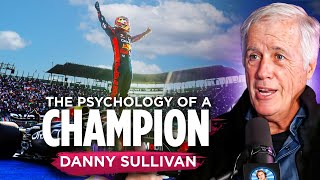
In this in‑depth Zen Hard‑style interview, host Jared Goetz talks with former Formula 1 driver and 1985 Indy 500 winner Danny Sullivan about the full arc of his career and life. Sullivan recounts the physical challenges of racing—how he stayed hydrated in extreme heat, his "sauna"‑like cockpit conditions, and even the rare moments he had to urinate during a race. He explains his early hydration regimen, the lack of modern electrolyte drinks, and improvisations like using a CamelBak in the Baja 1000. The conversation shifts to his rise to fame in the early 1980s, detailing how a meeting with Benetton’s Luciano led to a PR firm that secured magazine features (People, Women’s Wear Daily, Good Morning America) and turned him into a media personality. Sullivan describes how strategic relationships with sponsors (Benetton, Ray‑Ban, Hugo Boss, Lexus) and a savvy PR team amplified his marketability, and how he leveraged those connections into business opportunities—stock in the Penske holding company, a Lexus dealership, a Red Bull distributorship, and a Hugo Boss store. He reflects on the importance of genuine networking, maintaining long‑term relationships, and helping others in the racing community. Sullivan also shares personal insights: the high‑adrenaline “high” of racing versus post‑career life, his transition from a bachelor‑lifestyle to a 29‑year marriage, and the value of being authentic. He offers advice to younger listeners about cautious social‑media use, seeking truth amid misinformation, and embracing global perspectives gained from racing worldwide. The interview concludes with Sullivan encouraging the next generation to stay curious, build real relationships, and seize emerging opportunities.
Chapters
Then there's no right or wrong path to go down, but do you believe it's a higher power or do you believe it's you? Do you believe in God?
I'm done. I'm so tired of hustling and chasing money. And I said, I'm just tired.
An American former racing driver, he earned 17 wins in the CART IndyCar World Series, including the 1985 Indianapolis 500. Sullivan won the 1988 CART Championship and placed 3rd in points in 1986.
Sullivan also scored a victory in IROC.
He competed in the 1983 Formula One season with Tyrrell, scoring 2 championship points. Danny Sullivan.
I think the biggest thing you got to be careful on in social media, if you're going to write something that's controversial, put it out, sleep on it.
Yeah.
Before you do it, because it never goes away. Yeah. That, that story is in the cloud.
Yeah.
Forever.
Yeah.
And You know, you don't know what might happen later on in terms of job opportunity, career opportunity, relationship opportunity. Had you gone and said something because you were angry? Ultimately, you got to be pretty true to yourself and not be afraid to say, I don't really want to do that.
Yeah.
And follow your own path. Not always right, and it doesn't always work out, but you're going to learn from those mistakes. And maybe get you back to where there's a path that does work.
What's up, Zen Hard listeners? This episode is sponsored by Zendrop. Zendrop has a very special place in my heart, not only because I started the company, but because dropshipping is really a life-changing business for me. You see, I tried tons of things when I first got started, and what I love about dropshipping is that there's always an opportunity to sell a new product to a new person. There's billions of people and millions of products you can sell, and you never need to touch inventory. All you need to do is pick a product, run ads to it, and if people buy it, you make a profit. So if you're interested in getting started in your e-commerce journey, check out zendrop.com and get started today. What's going on, guys? Welcome to the Zen Hard Podcast. You're gonna love this episode. It's with Danny Sullivan. He's most famously known for winning the Indy 500 with his famous Spin and Win, which you got to check that clip out. I didn't know about it when I saw the clip. I was like, I can't wait to ask him about it. But there's so much more, so much more depth, so many interesting stories that are not just fun but very inspiring. You guys are going to love this one. Stay tuned and I can't wait to see what you think.
Perfect. So 40th year anniversary, 40th anniversary of the win at Indy. That's how—
40 years, man.
Yeah, you're not even that old.
I'm not even 40 years old.
Yeah. So that's how long ago it was. Yeah, 1985.
Does it feel like 40 years?
Uh, there's sometimes it does because I've just been out of the car for long enough now that, you know, there's not a real fresh memory of driving, um, driving around Indy. But, you know, because it was a— I'm not saying it's just what everybody says, it was an iconic win because of the spin. And in the wind. Yeah, they play it all the time, so it's always coming up. So it's always— somebody's always doing an interview over it or talking about it or sending me the picture of it or sending, you know, yeah, hey, can you sign this? Can you sign that?
So I mean, so I'm not like a racing guy. I never really like followed racing, but ever since I met you, I started looking into it a little bit. And prior to this conversation, I started doing a bit of research And I watched that video. I mean, I'm sure you talk about this all the time, but holy shit, how fast were you going when you spun out?
Uh, we— I went into the corner about between 215 and 220. And, uh, miles per hour? Yeah.
Wow.
So we were averaging the whole lap, including all the turns, everything, we were averaging around 212 to 214. And so, um, but You know, it was one of those things that everybody said, well, why did you pick turn 1? Indy's a mat— it's 2.5 miles in length.
Yeah.
Okay. And you got all those grandstands. They got— I think they got 280,000 numbered seats. Yeah.
Yeah.
Huge place. And a lot of people pass on the back straight because it's more open and so forth. But going into turn 1 is a little bit like going down into a tunnel.
Yeah.
But I was quicker than Mario off of turns 3 and 4. And so I had more of a run on him into turn 1 than I was— we were about equal off of 1 and 2. Yeah, I didn't have as much of a run down the back straightaway. And that's why, that's why you don't get to pick the places you pass all the time. You got to seek out the opportunity and where he might be a little off. Anyway, that's why I won. But when we went into the corner, he's up. So when he comes off of 4, we come down straightaway and he moves over. He's trying to break the draft. To get the toe, you know, aerodynamic toe off the car. And he's moving around, and then we go into Turn 1, and I'm up alongside of him now, and he just turned. He just, he just took his line and went right down, and the old apron where you warmed up was down there, and I went down below the white line onto the apron. But when I came back up, having completed the pass, when I come back up, it's just enough of a change, and you almost have no downforce on those cars. Yeah, there's, I mean, so little, right? And it just tripped the car a little bit. The car just started moving at the back, and I kind of tried to correct it a little bit. Yeah. Um, and it was about to bite in the front.
Yeah.
And it would have just turned right and gone right on the wall, which we, we wouldn't be having this conversation.
Yeah.
And, uh, so I just turned back and I tried to hold it, and it spun. I spun, and I just jumped on the brakes and going around and I'm like, oh shit, just getting the lead in the Indy 500 and I'm gonna hit the fence. And all of a sudden the smoke cleared and there's the turn 2 sweeps right in front of me. Not right in front of me, but I could see 'em. So I took my foot off the brake and now the engine's dead because I just stood on the brake. So it stalled. And in those days you had 3, we had a 5-speed gearbox, 3 speed up gears to get outta the pits. And then you ran two top gears. So it's kind of like, okay, what gear do I take to jumpstart it? Because I could do it and it'll jerk it again and I'll go, I'll spin again. And you see me going into turn 2. And actually, if you watch the video close there, you'll see the car just go like that. And I almost did it again. And anyway, I don't know to this day what gear I picked, but that's, That was the—
was something. So with people that have had like crazy achievements, like, you know, at the highest levels, oftentimes people talk about getting into a flow state or kind of something beyond them is guiding them. Like, how did you feel in that moment? Like, how did you— how do you describe your ability to have chosen the right gear and gotten back and, and winning it?
Well, you know how I just walked you through the and how long it took and what we did and this, that, and the other. And so, well, that all happened in about 1 second. Yeah. Okay. But it's— I think, um, that we're all— you in your way, everybody that's successful, they're blessed. There's something in their mind that makes it function. And whether you're doing a billion-dollar business deal or whatever, your mind is always in that gear. Slow, slow motion, you want to call it whatever, you know.
Yeah.
And, you know, look at guys who play tennis. They're receiving serves at like, what, 130 miles an hour or something stupid, and they're moving forward to the ball.
Yeah.
I'd be in the parking lot hoping, you know. So everything in it— I remember having a conversation with Larry Bird about it one time, and he, he could see everything on the court. He saw everybody moving. Yeah, in different— where they're going to go, do I pass or, you know, and I think I was just blessed with something that capable to drive but have the mental awareness at the right pace that that happens. It's like fighter pilots. Yeah, you know, those guys are just amazing what they're doing. And it's the same thing that I just— I was born with it. You don't develop it. You develop the skill as you go along the same way you did in your business. You refine it and learn and refine it and learn. But you've still had to have the basic instinct built into your DNA someplace.
And do you believe that's— well, then there's no right or wrong path to go down, but do you believe it's a higher power or do you believe it's you? Do you believe in God?
Oh yeah. I mean, I was born Catholic and He's Catholic and so forth like that. I don't— I think it's still in your DNA. I don't think, you know, when they're figuring it out that, oh, this guy is going to be a race car driver or whatever. There's just something in there that I believe that, that just lets you fit into certain categories. I could have— maybe I could have been a fighter pilot or something. Yeah, something else. But, but there's something in our DNA that I wasn't going to be the most successful hedge fund guy on the planet. Just, it's not my, my thing.
So, well, you've also become a pretty successful business guy.
Well, you know, I've had some success, but it's— but it's— I also realized too, in racing, as in most sports, ours is a little bit different. I mean, if we can get eliminated, I mean, we can be— we can get killed. But if you get hurt, you you've got a short window of really your success. Most people don't have super long lifespans or careers in racing. That doesn't mean they get killed. I just mean they— your window's there and okay, now you're starting to get too slow.
Yeah.
Next, let's get a younger guy. Same thing. Football. What's an average football player? Like 3 years, 6 years, something like that. It's okay. Okay, I've got to make a living. How am I going to do it? You're meeting people all the time. Here's an— maybe there's an opportunity there. Somebody talks to me about this, that. We talked about Red Bull because of racing, and I'm reading an article. Literally, I was reading an article in the Financial Times, and I see this thing about Red Bull going into America. The guy likes sports, wanted to get into racing. I I called a buddy of mine from that I raced with at Porsche.
Yeah.
Who knew him, said call this guy, call that guy. Next thing I know, I'm in the guy's office pitching the Red Bull driver search program.
Yeah.
To this guy, which was a success. But from that I said, any chance to get a distributorship? You know, because I figured that's really where the money is, you know. And that's how— so Um, again, it's just trying to progress if and when you get out of the sport.
And yeah, when did you like realize that you had that kind of it factor? We'll call it the it factor, that whatever you want to call it, the piece of you that can just make it happen. Like, when did you first realize that you had the right in the race?
Yeah, in the racing world, you know, I don't— the first time, um, it started as a whim, literally. I was working as a waiter in New York City. And—
oh, really?
Yeah. And a friend of the family— I'd left home— friend of the family had connections in racing. I'd seen all his pictures. He was a friend of mine's father.
How old were you at this time?
Uh, I was 19 or 20 at the time when we really got going.
Yeah.
And, um, because of the lottery, Vietnam War, I didn't get— I had a very high lottery number. So I didn't get called up to go to Vietnam. And Vietnam was the big thing at the time. So, you know, and so I kind of dropped out of school and was— went with a buddy to New York for a weekend. I stayed 2 and a half years. You know, you're real tied down back in the day.
Yeah.
And my family saw this guy at a funeral and said, hey, we don't want to be looking for Danny. Here's his best friend's number. Could you find out? We think he's in New York.
Yeah.
And he called and he used to come there as business. He was an academic pediatrician, wrote for second largest syndicated columnist in America for Ann Landers. Who was this? A guy named Dr. Frank Faulkner.
Okay.
Faulkner. And he was— he wrote— he was with the Fells Research Institute, NIH, National Institutes of Health, WHO. I mean, he was the guy. And, uh, but he had connections in racing, and I'd seen all his pictures and books when I used to do sleepovers out there with his son. And, uh, he said, look, what are you going to do with life, in your life? You can't be a waiter the rest of your life.
Yeah.
And, uh, I said, I want to go racing. And literally, it was just a— it was a two-beer comment, you know. We were having a beer, you And I just said, I want to try my hand at racing. I want to go racing. He says, lost so many friends, I'm not going to help you. Eventually I talked him into it, and he called Jackie Stewart, who he knew very well, and he said— and Jackie said, well, send the lad over to Jim. That was Jim Russell from the Jim Russell Driving School. And let's find out if he's got any talent.
Had you done any racing prior to going there?
Never been to a race.
So it was just an idea and then—
and a whim.
And then— and that was in England, right?
Yeah. So he sent me— well, at the time, Jim Jim Russell didn't have the schools in America. This was— don't forget, this was 1971. Well, it was 1970, but it morphed into '71 because in those days you had to be 21. Ah, to drive unless you had parental permission. Yeah, which I wasn't going to get. Okay, that wasn't happening. And, um, so they sent me for my 21st birthday. He sent me to Jim Russell to find out if And I'll tell you what, Jared, they have these little Formula Fords, little open wheel, 1600cc, 100 horsepower engines on road tires.
For context, how much different is that than like the big league cars?
Well, it looks like an IndyCar, but it looks like a baby IndyCar.
Gotcha, okay.
Okay, it's just Formula Ford. That's like Ford Motor Company.
Gotcha.
Formula 3, Formula 2, Formula 1. Those are the stepping stones, or they were at those days. Yeah, there's now different formulas in the middle of them and stuff like that, but, and it's still to this day where all the young drivers go.
Oh wow.
So, so I mean, they go go-karting and then they go to Formula 4 because it is fantastic racing. It's close, it's wheel to wheel.
But how much slower is Formula 4 than Formula 1, for example?
Oh gosh, you know, it's a whole different ball game. Yeah, yeah, you gotta— you— well, nowadays I think they're up to about 150, 160 horsepower, but a Formula 1 is just shy of 1,000.
Oh wow.
Okay, so, so, so was it— but they, they're stepping— so, but they have no aerodynamics, right? No wings. Yeah, small tires, smaller brakes, smaller everything. So the sensation when you're racing with somebody is the same. So I know you've got a GT2.
Yeah.
Okay.
GT3.
Sorry, GT3. But if you put all the GT3s together and then you put a GT2 in there, it's just that bit quicker. And then if you go to the next spec, it's faster again. But it's all relative in a GT3, what you're doing with the other guys. And, uh, but I will tell you, the first time I drove the car, you drove over here in your GT3 faster than I drove this car the first time I drove it. Okay, because you imagine, you, me, everybody shows up, yeah, gets in the car, nobody has any experience, right? So they can't let everybody just, well, go, go as fast as you can, have fun, right? No, too dangerous, too dangerous. First time I drove the car It was like I was hooked. It was like somebody just— everything.
I love this.
I just love it. I just— and it just— and with the caveat that they made with Dr. Faulkner was, if they say I had talent, we could pursue it. If they didn't, yeah, I'm going back to university.
Yeah. Okay.
Yeah. And And Jim said, one of the best we've had come through there.
Wow.
Now I think he told everybody that so they'd keep coming back. Yeah. But with their relationship, and that's where it started. But here's the other problem. I was a waiter. I got like $600 bucks to my name.
Yeah.
Frank's an academic pediatrician.
Yeah.
So he's not got this big private practice where he's making—
not loaded.
And so we started mainly through his contacts, but it was a hustle. To try to find, can we get $15,000 here, $10,000 there, the whole nine yards. I lived in a boarding house for a year in England, in England, and £8 a week, £8 sterling, which in that time was about $20 a week for room and board. That was meals as well. Okay, so you can imagine a lot of beans on toast.
Yeah.
And, and, uh, but it was other guys trying to be racers.
Yeah.
So it was just fascinating because we were all at different levels. There was one guy that was pretty experienced, and I said to him one time, how come you're, you know, still living in the house? He said, don't want to move. He said, it's too much fun because, you know, you sit around with a bunch of like-minded people having tea. And it wasn't a big booze-up or anything like that. I mean, we sometimes go to the pub, but it wasn't that kind of a scene. It was just You know, yeah, you're talking, you're reading the magazines. Oh, what happened this, what at this race? And again, remember something, well, you can't because you're too, too young. Yeah, but back then, you know, you only had like 2 TV channels, right, at the time there. You had 3 in America or something like that. So it wasn't like you sat around and watched races and tapes, and we weren't streaming. And yeah, you know, we didn't have the— anyway, and so, um, it was all about it was all-encompassing about racing. And the one thing about, um, England is from a racing, a road racing perspective, this is the melting— England's the melting pot, really. Everybody I raced against, everybody from every walk of life, every nation, every country, every place, they were there. Kiwis, Aussies, you know, Japanese, you name it.
Yeah.
They were there, okay? And it was just, and all the teams, you know, most of the Formula 1 teams, all but 2 Formula 1, 3 Formula 1 teams, all but 3 are based in England. Oh wow. Within 50 miles of each other.
Yeah.
Yeah. So.
So you were just in it. You were in the environment. You kind of like your life shifted from, I don't know what I'm doing to I'm racing.
This is, well, it's to, I'm racing but I got to raise a lot of money. Yeah. And it wasn't— it's all relative. It isn't— it wasn't a lot relative to now.
Yeah.
What the numbers— but also relative to it, it was. It was the same thing.
Yeah.
Because you, you, you were not going to be on TV. You weren't on the internet. You— I mean, we, you know, we used to send out little press releases, and when they got faxes, that was really cool. Yeah. You know, instead of mail and stuff. Yeah. But But so it was just all those stepping stones of learning. And I think the one thing that a lot of racers nowadays, I have the problem with— not problem, but I have this discussion with a lot of the young guys. Yeah, you're working out in the gym and you're doing all this stuff and you're on the sims and you're, you're training and all that stuff. But what about the marketing? Because like you, just like we were talking about George, you know, trying to raise the money for your dream.
Yeah.
You know, most people don't have it. And, and by the way, you're racing against a guy that does, right? And Dad's willing to pay for it.
And you need the money, I'm assuming, for the car, the travel, rebuilds, parts, engine rebuilds, tires, oil, everything. How did you raise the—
the—
well, actually, before we get into that, how long were you in that school and that environment before you actually had a competitive race?
Well, the school is a— it was an 8-day school that they probably could, because it was called an overseas school.
Gotcha.
So that was for people that came from— so they had to make it. We didn't drive for 8 days, trust me. I wish we had, but they didn't give us that much track time, right? But you had some different things, and they take you to here and they take you there, and, uh, and then you graduated. But to get a license, you had to do 6 races. I think it was yeah, 6 races, and they had to be on 2 different tracks. So you couldn't do all 6 just at the school.
Gotcha.
They wanted you to go to another track. And it was a really funny, um, it was a really funny story, if you don't mind me. The, um, so because Frank was very connected to racing through his connections, he was best friends with Ken Tyrell. And Terrell owned a Formula One team that Jackie Stewart won all 3 of his world championships with. And so I would work on the weekends with them. I'd go to the races just as a gopher, you know, pushing tires around, wiping the car, cleaning, doing everything as a favor. And I went to most of the races that I went to. I didn't go to all of them. I went in the transporter. Oh, wow. With the truck drivers. Yeah. I mean, who were mechanics as well. But I'd ride in the truck with him, and, and it was a great experience because you're traveling through Europe with all the crossing the borders with all the paperwork and the carnets. And, and I mean, I could, I could sit here and tell stories about that. And then I worked, uh, right down from the shop at a place called Bell Colville. It was a Lotus Alfa Romeo dealership, and I was pumping gas and, and greasing cars. Yeah, that's basically what for 20 quid a week. Yeah, it was all under the table because it was, you know, they, they couldn't pay me. I didn't have the papers anyway. Um, and I, I was working there one day and a buddy that worked in there too, he had a motorcycle, and he came and he says, hey, I got this girl, I got a lunchtime date with her, can I borrow your car to go? And I'd bought a Lotus Cortina. Okay, for 400 £1,000. Okay, okay. From the dealership, and we'd borrowed the money and got this car. And that was what— after pubs closed, a half hour out of pubs— pubs closed at 11 o'clock at night. Yeah, at 11:30 I'd go out on the back lanes, and that's what— that's how I used to practice. Wow. Fast as I could down these lanes at 11:30.
Like, like public streets?
Yeah, just— but back, they're all back roads. I mean, yeah, I don't know if you've been— spent much time in England, but when you get in the countryside, yeah, I mean, some of the roads aren't much wider than from me to you right now. Okay. And, uh, but what a fabulous— and, and so this buddy said, "Oh yeah, I'll borrow it." And anyway, I said, "Okay, I'll take the motorcycle." And, uh, I said, "Give me your helmet." I couldn't get it on, it was too small. I couldn't get the helmet on. So I thought, well, I'm just going to meet the Formula 1 mechanics at this pub for lunch. And when I say the pub, nobody's drinking. It was just where you could go, right? Because they didn't have diners and all that stuff at the time. So we'd go down to the pub. So I went the back way to come back to ride the motorcycle back to the dealership. And I missed a corner going too fast, hit a little farm track, Jeep road, hit the center part of it, launched up out of the thing, landed on my head, broke my neck.
Oh my God.
In the field. And Luckily, and this road is not as big as this table, okay? Yeah. Luckily, the mechanics from the Formula 1 team were coming back that way because their shop was only about half a mile away. It was the way— it was the fastest way back. And they saw the smoke out in this field.
Oh my God.
And they go, what's that? And they stopped and came out and they found me. So anyway, but I was supposed to do my second race that weekend. To get my license at a different track. And so I got out. They took me to hospital, spent the night. I got out of the hospital. They— I left. I just left. I thought, I got this race. I can't miss this race. And I'm broken, still broken now. It's C5 to this day. And I go back and I'm now in an apartment with 3 girls. Okay. And I go in and Nobody's home. It's 1 o'clock or something, 2 o'clock in the afternoon.
Yeah.
I get in the bathtub because they don't have— England, not many places had showers.
Yeah.
You're in the bathtub. I can't get out. I broke a neck. I can't push like this, like that. I can't put any pressure on. I couldn't roll over. I tried to roll over and push up. I stayed in the bath for 3 hours till they came home from work. And I said, hey, I've got a problem. And And needless to say, I didn't do that. I couldn't do the race on the weekend. I raced the Cortina at Brands Hatch about a month later, taped up the headlights and entered it in a race down there. But that, it just, I had more.
So you almost died.
Well, I don't think so.
Maybe not almost, but like.
But it's still broken, C5, and it's just.
You still have pain at all?
I sometimes get a stiff neck. From, uh, and they were, they were careful. I had a big crash in IndyCar, and, uh, what was it, in, uh, '95, um, at Michigan, missing somebody else. And I was, I had a big hit. I was sustained, I had a sustained hit at 71 negative G's.
What does that mean, 71 negative G's?
Well, Put it— do you know what a negative G is? No. So that's the gravitational pull against your body.
Gotcha.
So if you're going around the corner in your GT3 really fast and you're really leaning over, that's a negative.
Gotcha.
Okay, okay. Fighter planes and F-18, F-35 and everything, the computer won't let them pull more than 9.6 negative G's because they black out.
Yeah, that's when their face is all like Yeah, well, I hit 71. Oh my God. Oh, that's how, how bad the G's—
the wall, 226 miles an hour.
Oh my God.
And then I had 2 spikes at over 160 because we got a black box in the 160 G's. Oh wow, in the black box. But I was unconscious for 11 minutes and got air-vac to the— but luckily one of the greatest creations in racing was the IndyCar safety team. And they created the safety team, doctors, everything, trucks, everything, all personnel traveled to every race in the world. In the world, same people. So when you all, so they knew everything about me. They knew I had a broken neck. So they had to cut me outta the car and get something on my back 'cause they couldn't revive me. So they gotta, they can't just, if somebody had picked me up, I could have been paralyzed or worse like that if it just happened in Brazil or something like that. So anyway, I'm not picking on Brazil, I'm just saying, yeah, as an example. Um, but the, uh, so that's— that changed a lot of things in my career.
When was the moment that, you know, so you're, you're in England, you know, you finally get the second race done, you get the license are you still working? Like, when did you finally go all in on racing?
Well, then, then I came back. Once I got that license, I came back to America, traded it in, and got— because I had a British national license, it was good for a U.S. international license. So I traded the license, got that, then I could go back to England. But I worked that winter trying to raise money. We were trying to hustle money to go. Now, okay, I love this, I got to do it. Now the hard part is, okay, how are we going to—
how much money did you need to raise back then?
Don't laugh. I did the first year in Formula Ford, 1972. I started 52 races because sometimes you'll have a heat and then a final.
Yeah.
And then because England's so small, you might race someplace on Saturday, go to a different track and race on Sunday.
Same car?
Same car. Just load it up and take— because it's so small, that's why everybody comes there. It's like a a melting pot, right? So I'd started 52 races, and including living, everything, I spent $15,000. Now today, that same program would be $300,000.
Gotcha.
To do—
to do what? What does someone that sponsors you get out of it? Do they get a percentage of the winnings?
Well, they more get, we're helping you out. Yeah, type of thing. And I was lucky, and this was one of the big lessons that I'd learned from Jackie Stewart being a gofer for for the team in Formula One. He kept— he was such— he was the first true professional race car driver. He understood the corporate side. He's with Rolex still to this day.
Oh, wow.
Ford Motor Company he was with for God knows how long. Goodyear, everything. But Jackie was the first one. You know, the guy started 99 Formula One races. 99. That's all. He started 99. They didn't do as many as they do now, but 99 Formula One races. He won 3 world championships, but he won 27 of the 99 Formula 1 races. Wow. 27. I mean, that percentage is— Fangio was better. Fangio started 52 and won 26.
How many people are in these races?
It varies, but most of the time there's— nowadays there's always 20.
Okay.
Okay. But some of the fields would be bigger or smaller and stuff like that. But I learned so much from Jackie. So I'm at a race at Silverstone. And I'd gotten through Tyrell and some other people that Frank knew. I'd gotten into this one team, but I bought the car, built the, you know, had to help build the car, all that sort of stuff. And I'm paying for it.
Yeah.
Okay. But they got two factory cars that are sponsored by a company called Catnic Steel Lintels. It doesn't mean anything to you. A steel lintel is door frames, window frames, all that kind of stuff. So I'm working on my car, uh, the two factory drivers, if you like, the works drivers are over here. They're working on their cars, all painted up orange, black, white, catnik, you know, on it. And they're working on the car, and two kids come by and they ask them a couple questions, and it's like, hey, I'm working, don't bother. They came over my car, so I'm like, yeah, okay, this, yes, they're nice. Yeah, they're like 6 and 8.
They're just interested.
They're just interested.
Intrigued little kids.
And it's just— and Jackie said it's always easier to be polite and nice to people and stuff like that. So anyway, I do the race, I beat the two works cars, I finish 5th. It's like my 3rd race.
Yeah.
Go to the factory on the Monday morning and the owner calls me and says, hey, come into the office. He says, Katnick's going to sponsor you. Wow. And I said, really? Which is a big deal, you know. And And I said, really? Great. I mean, they're not paying me a wage, they're going to sponsor the car. Yeah. I said, wow, fantastic. I said, can I ask why? Because I didn't do that good. Yeah. You know, said, you know those two kids you talked to? That was Catherine and Nicholas. That was Cat Nick.
Wow.
And they were so impressed that they went back and told their dad.
So just being nice to those two kids was a big break.
But that— so you asked me The original question— sorry, we got sidetracked— was how did you ever know? You never know. There's always stepping stones. You know, you go up, you're pretty good for a race, got a sponsor. Yeah, you're pretty good for a race, no sponsor. Yeah, no race, you're in the doldrums. You know, so your careers are like— nobody goes like that, right? Maybe if they've got unlimited funds.
Yeah.
But you always hit— even you hit roadblocks all the time. You had failures.
Yeah.
The reason you had the failures helped you be successful because you made those failures. Same thing. And I don't think even when I got into Formula One before IndyCar and I got into IndyCar and even when I won the Indy 500, you kind of go, okay, you're, you, you're, you've made it in a sense that you've accomplished winning races and winning the Indy 500 and so forth. But there's always the pressure, right? Because you don't keep delivering. Yeah, you're done.
What's next?
Yeah, you're, you're out. You're, you're gone. It's a— it's all about performance, which it should be. How do you—
I mean, I'm assuming there's— there was many times along the path where there was a lot of doubt that crept in, or fear, uncertainty.
All the time.
How do you navigate that?
You know, um, you know, it, um, I'll tell you a story. So we'd done Formula 3, uh, I didn't have the money to do the first 5 races, finally raised money, so I got on the team, only lost the championship by 10 points, okay, and won a bunch of races after that. And the top 8 guys in the championship, this one Formula 1 team called and all gave them all a test drive. Yeah, Formula One team. I didn't get the call, and I finished second. Oh wow, in the championship. Yeah, I didn't get the call. And but Frank, Dr. Faulkner, knew the, the gentleman that owned the team and said, uh, called him and said, hey, just not— no pressure, just want to know. And Frank was so diplomatic and good. Why didn't you And he says, well, we don't really think that he had the talent to do it. And, you know, that becomes like a red flag. Then it's motivation. And later on, the gentleman said, he said, I was wrong. He said, you were the only one in the group other than the guy that won the championship. But he lost. He died from cancer. Yeah, he got cancer. So he said we were wrong, you know, but it's just somebody's opinion. Yeah, you know, how many deals have you looked at and you go, yeah, no, yeah, no, yeah, no, right? And then you look back and you go, that one hit it, and you go, gosh, what didn't I— but for me, it's kind of like, okay, what's the problem? What do I need to change to make them or the next person— because if he's thinking that, so might be one of the other teams, right? In any category, it doesn't matter what category.
Yeah, well, a lot of people when they hit these types of roadblocks or, um, you know, when they're along their journey and they have fear or they don't know what they're going to do, they kind of get paralyzed. And I notice people that are major achievers in anything don't really get stuck in that rut for too long. They kind of figure out how to change their minds.
Do you—
is there any kind of methods you have, or is it kind of just naturally I was just competitive.
Yeah, just naturally competitive.
Yeah.
And I just thought, I'm going to show you. Yeah, I'm going to show you.
Yeah. You know, and was there ever a moment where you were just like, this is over for me? There's no way I can—
Well, there was, but it had more to do, like everything, you know, I had some success. Now I'm in, I'm in between. I was in between Formula 3, Formula 2, had come back and racing here. I was working 3 jobs.
Uh, how old were you at the time?
I was 29.
So you'd been in the racing scene?
Yeah, I've been hustling money. I— everybody I met, yeah, hey Jared, by the way, yeah, you know, do you want to go? You know, it was that kind of— because that's— if I didn't have the money, yeah, that's what you had to do. And I got jacked around. People promised me stuff. I mean, I, I could even tell you a famous name, and the guy promised me everything. I got him all tickets to Formula 1 race, and which was hard to do. Guy didn't even show up. And I hustled, used all my creds.
Yeah.
To try to get these passes. And, uh, you know, you learn that people are just, you know, people change their mind. It's— I'm not calling them names for doing it.
Yeah.
But I'd had more downs than you have ups.
Right.
And I was working 3 jobs and I couldn't— I was tired of chasing money.
Yeah.
And I was going to go work. A buddy of mine was working on one of those crab boats up off Alaska.
Yeah.
Where they get— where it's dangerous as hell.
Yeah.
But you make a lot of money.
Show about that.
Yeah. And I thought, I don't have to have a— I don't have to be on a phone. Yeah. I don't want to talk to anybody else. I don't want to catch some crab, make some money. Uh, and then a guy who I kind of call my Renaissance man— a guy's name was Garvin Brown, and he was heir to Brown-Forman Distillers, which owns Jack Daniel's, Buffalo Code, Early Times. I mean, just goes on and on. Now they got 30 brands, 40 brands, whatever. And Garvin, I'd met, um, through a friend. Even though I was from Louisville, he's from Louisville, I met him in LA, right? Through a friend. And he used to come back for the board meetings. So we'd— he'd always take myself and girlfriend to dinner. And, and he said to me, he called and he said, you kind of sound flat.
Yeah.
And I said, I'm done. I'm so tired of hustling and chasing, you know, money. And I said, I'm just tired. Yeah, I've had it. And I wasn't getting anywhere. And I'm thinking, Shoot, I'm pushing, I'm going about to be 30. And he said, you got anything going? And I said, well, these guys called me about coming out to Riverside, California, and they want me to do this Can-Am thing. He says, well, come on out. He says, let's go take a look at it. And I said, Garvin, I don't have the money to buy the airplane ticket to get out there. And he goes, no, no, I'll buy it. Don't worry about it. I'll take care of all that stuff. So I called my dad. Now I'm back in Okay, Grace is with him.
Yeah.
And I told him the story. And I said, will you guarantee my credit card if he doesn't pay? Yeah. And he was like— and you know, you're in the— you're in the— so far in the back of the bus, you're almost out the back, you know. The ticket was like $300. So I go out, met with him, stayed one night. He lived in Beverly Hills, stayed one night. And we go out to Riverside to see this candidate. And it was— and it was It was not. I said, I don't want to drive that thing. Yeah, because I'm just going to look bad, right? It's one thing about just get— I'd drive anything, but sometimes you're just going to look bad.
Is this a racing car?
Yeah, racing car, big Can-Am car. It's a purpose-built, uh, small block Chevy, full body, open cockpit, so you sit in the middle, a big aerodynamic body over the thing, and they're fast. Yeah. And, um, so We had stopped at this hotel on the way back in. I said, I want to introduce you to a couple of people. Well, I knew Mario Andretti and I'd met Mario and I'd been up to his place up in Pennsylvania. And, you know, Mario and I had a good, good relationship. And there's a long backstory to it, but I won't bore you with that detail. And, and Al Unser was— they were both standing in the bar. Getting ready to go have dinner. And I went over and we said hey, and I introduced him to Garvin. I said, hey, excuse me, I got to go to the bathroom, which was legit. I wouldn't— yeah. And Mario says to Garvin, he says, what's your relationship? And he says, oh, I'm trying to help Danny and stuff. He says, you help him, he's good. Oh wow. So coming from him, and, and then from Al Hunter said, yeah, he says, I, I know Danny, he raced against my, my son.
Yeah.
And so he said, "Help him out if you can." So we're driving back in from there and he tells me, he says, "You know, I've decided I'm putting you on a retainer and we're gonna go racing." Wow. And I'm driving and going, "What?" He says, "Yeah, retainer." And I'm kind of like, "How much we're talking about here?" And he said, "Well, how about we start at $25,000?" I didn't want to say, be really, say a month or— yeah, no, but anyway, because this is back in the day, I said, oh man, we're fantastic. And then we looked around, we went to England to look around at a deal over there for Formula 2, and I took him all around. And eventually we passed on a deal there, we couldn't get everything to work. And so it looked like it was done. And then I found another deal, put together, was a disaster. They wrote a book about it. It's some guy that followed us. It's just called Fast Lane Summer. And it was the story about— because these guys were a disaster and the car was terrible. And I talked Garvin into buying a car from the Lola distributor. This is a big manufacturer distributor, racing car manufacturer. Not like a Porsche, but a really good. And these guys were trying to get me out of the team 'cause they were on this gravy train. Like they didn't want to get off. And Garvin, to his credit, he fired everybody right there in the parking lot at a racetrack. And the transporter's there, nothing's loaded up or anything. And they all left. Everybody left, just drove off. And he turns to me and he goes, well, what the fuck are we going to do now? And I said, we're going to load this truck up. I got 3 guys that are flying in to turn this thing around. We got a new car.
Yeah.
And we're going to load this truck up. And he said, well, how are we going to get it to Chicago? I said, I'll drive it. And it's a big semi. And a buddy of mine— I mean, if you knew the names, but if I said the names, it wouldn't mean anything. But if you were in And a buddy of mine and Garvin and his— he had a buddy with him. We loaded the truck, got it all loaded. And they had gone to a meal. They had gone to have lunch. They will go back because he'll be— they'll be struggling and we'll, we'll make another deal with them. And I'm driving the truck down this two-lane road. They're going back to the track and I'm just honking the horn like this, giving them the bird. We go to the next race, got the new car, 3 guys I got came in from California. We went to Brainerd, Minnesota, out there, sat on the pole first race, starting first position. Yeah. And they left the skirts down. These were ground effects cars and you had to put the skirts down 'cause when you drove the car around in the paddock and everything, you didn't wanna scrape 'em up. But when they went on the track, they were literally skirts to keep the bottom of the car sealed to the track so the air wouldn't come out the side.
Oh, wow.
Yeah. And one of the mechanics had never worked on it, forgot to put them down. Oh, but so I had to make a pit stop and I came all the way back through the field and I think I finished third, second or third. And that was— and then we started winning races and everything and that was it. What, what, what series?
Like what class of racing?
It was Can-Am, which was these, these major— it's— it was one of the best series that I ever drove.
It was a big, big deal at the time.
Big deal. Yeah.
And were you on a team of other— were there other drivers or—
No, we were the only— I was me and the mechanic. Mechanics and helpers. And Garvin was a thing, and we had a— it was just, it was— and but the, the, the Can-Am Series was a traveling, you know, went around. Yeah, all these races. And well, most of the teams were California-based. Paul Newman had one of the teams and stuff. We'd go to these races back in Mid-Ohio, Elkhart Lake, Wisconsin, Brainerd, Minnesota. We'd just stay out on the road.
Yeah.
So Everybody knew. So after the race, nobody was getting in our jets flying off any place. So the whole paddock, everybody, all the teams, everybody, we'd have the booze and cook the burgers and stuff like that. Budweiser would supply the beer. And we'd all stand around till after the race, win, lose, or draw with everybody. We got to know everybody that way. And then we'd travel to the next race and we'd do it again.
How often were you doing races?
Time? Um, well, it was about— sometimes it was every week, sometimes it was every 2 weeks. Wow. But we'd stay on the road. We'd stay back east for about 3 months, 2 and a half months, 3 months.
How, how are you staying in shape or training?
Or like, I had a— so I was one of the guys early on, um, I'm read— read an article, uh, I'm not the most prolific reader, but I'm reading an article and it's about how physiologically our bodies at 29, 30 start going down. Okay. And nothing we can do. And maybe 31 for somebody, but around that age, yeah, we all start leaving. And I thought, I'm racing against these guys that are 17 years old, 18 years old.
Yeah.
And I'm almost 30. Yeah, I better get in shape.
Yeah.
And so I was playing squash in England because there was a squash court near where I lived and and I could get in for not very much. And I had one of my sponsors from BP. The guy was a really good squash player, so he'd take me to play squash and, you know, I ran and, you know, did the stuff and so forth. And so I started researching what I had to do it. So I started this stuff before. I mean, Michael Andretti and all those guys used to laugh at me about all this. Really? In the end, I had trainers and stuff like that. To get and stay in shape. And the big thing was not— the funny part, it wasn't just about physiologically going over.
Yeah.
But think about this, you're traveling all over the world later on. I mean, as I got more successful, now you're doing races in Japan, the next races in Europe, back in the studio, you're traveling. Okay, you're driving a race, so you're 3 days at a racetrack, you know, wearing your body out.
Yeah.
All this other stuff. You're making sponsor appearances, you're doing this, you're doing that. Your schedule is nonstop all the time. You're wearing yourself out. Not sitting in an airplane, you're— what it's doing to your body. Yeah. Just from dehydration, etc., etc. So I just thought, well, if I'm going to do this and I'm going to stay at the top of my game, then you get into a race And, you know, I had one of the fastest Indies that they'd run for a long time. It was still 3 hours and 22 minutes. Wow. And there's no relaxation.
Yeah.
Pit stops aren't like, oh, I'm going to come in gently. It's more intense than almost doing the race. Yeah. So you think about that, what you're doing. You have to stay top shape for late in the race. Some of these races, place like Toronto, Mid-Ohio, take Long Beach. You know the Long Beach Grand Prix. Okay. Just for example, Long Beach. These aren't paddle shift. They're not automatic or anything.
Yeah.
In Long Beach, 3,800 gear changes in a race.
3,800?
One every— you're going up or down every 2 seconds.
Wow.
Now, sometimes when you're on the straightaway, you're— so you come out of the hairpin, for example, your hairpin there was first gear. So your first, second, third, fourth, fifth, down, fifth, fourth, second, boom, through the corner, back up, back up, down through every lap.
And, uh, how many pounds of pressure do you have to put on the clutch for a car like that?
Don't laugh, but once you get rolling, you don't use the clutch.
Oh really? You're just gonna—
you— well, it's timed to the RPM, right?
If it's at a certain RPM, it slips into gear.
Goes in.
I do it in my car sometimes.
Yeah, you can do it in— yeah, I can do it in almost any road car. Yeah, but you got to get kind of up in the power range, if you like. So if the red line, say, 6,000, yeah, you want to shift, it's usually going to be 5,200, something like that. It'll, it'll just, it'll fall in.
Gotcha. So you're not really using the clutch at all in these, right?
Pit stops and to get going. And then I use sometimes the clutch on downshifts. Yeah, because They're straight cut gears. Right. So there's, so it's to save the dog rings and everything that are in there. I would use the clutch a little bit on the downshift because it just saves the gearbox. Yeah. And it's almost sometimes harder to match it on downshift because you got to get the speed and the RPM right. So that's why the clutch will, they'll help a little bit. In fact, the Meadowlands, this would've been Maybe '86, I think it was '86, Meadowlands, and I won the race. Second lap, the clutch went, gone. Oh wow. So I did the whole race.
On the second lap?
On the second lap, I did 2 pit stops with no clutch.
Wow.
So I'd come in the pits, knock it out of gear. They come in, they jack you up to change the tires and put the fuel in. And I said, just tell me, I told them this before I came in the pits, I said, I got no clutch. Just tell me right before you're about to drop the jack.
Yeah.
And I'd jam it in second gear and it would go, and then they'd drop it and go, well, once it's rolling, then I could pull it back into first gear.
Wow.
So I made two pit stops like that and won the race. And won the race. Wow. And, uh, um, it was anyway some funny stories with it, but it, it So you can do it, but I was lucky I didn't stall it. Because to do it one time is one thing, to do it two times was even a little bit more luck. But there, no power steering, no power assist brakes. Nowadays—
It's a lot of work.
Leg pressure on the brake pedal was just—
How often are you hitting the brakes on these races?
Well, on a road course like a Long Beach or Meadowlands or something like that, hell, you're in them Indy, you only use them coming into the pits.
Gotcha.
You know, hopefully. Yeah, you only, right, right. Because you're almost wide open in top gear most of the time.
Right.
And then at Indy, we would run, I mentioned in the spin how it had 3 speed-up gears to get out of the pits, 'cause you gotta accelerate up to get to the speed. 'Cause don't forget the gears that you've got in it are running up in 220 and stuff like that. But you can't do that, otherwise you'd be going out of the pits. Like, you take it off in your GT3, like, in 4th gear, right? 5th gear, boom, exactly like that. You want to accelerate. But we ran 2 top gears in those days that were about 250 RPM different, so that if you were racing a guy, you had it a little bit more RPM.
Yeah.
And if you were running by yourself and you were in a groove, to save fuel, ah, you— so you'd be just a little bit off. Because don't forget, in those days, um, we were— don't laugh— we were doing about 1.8 miles to the gallon, 1.6, 1.8 to a gallon.
Wow.
Okay, these things just sucked it down. When I stopped IndyCar, we were running just shy of 1,000 horsepower.
Wow.
In a 1,560-pound car.
Wow, that's insane.
Yeah, and, and as you get to drive them You're— after you're used to the power, you're trying to mash the gas pedal through the— through the bulkhead. You know, you're just, come on, come on, come on, more, more, more.
You know, can someone like me, theoretically, if you said you put me on a track with one of these types of cars, can it— can the average person who knows how to drive stick, like, get the thing around? Or is it—
it'd be— it'd be a little hard to get it out. You could drive it. The biggest issue is not the shifting or any of that. It's the tires, because the tires are built to get up to a certain temperature and then they operate really well. I mean, they're sticky almost. But to get them up to that temperature, you got to go fast.
Gotcha.
Okay. And that's the hardest part. So I don't know if you ever watch any of the races in Formula 1 where they have the tire warmers. Okay. And then they'll take them off. If you had— if you could use a tire warmer and get the tires up to temperature and you went out and you could accelerate out and be fairly hard right away because they drop— the temperature drops pretty fast if you're not on the—
yeah.
And that's why even in current Formula One races, we're always talking about, I didn't qualify, I didn't get the temperatures into that window. Yeah, they've got it. Excuse me. They've got it such a narrow window now to get them to operate at the perfect temperature.
Yeah.
That there's an art to do that. And so that's where you'd have the— in fact, we had this conversation. I was at an RDC dinner in Daytona last night with it, and we were talking about certain kind of tires. And when you leave the pits for the 24 Hours of Daytona, go down the pits and then you turn right into the infield and there's like a horseshoe hairpin that goes right at the end. You can't believe how many people crash at that hairpin because they don't have the temperature up in the tire. And then they get down there and the thing just goes like that. Just go straight and they go— they— so, um, and when it's cold like it is now, and it will be this weekend, you have— but now they've got a— most of them are running a Michelin, which is— is— has a better operating window, a broader band.
So going back to like, what was the— I know, you know, you told the story, you know, driving the truck to Chicago, and that was kind of like you got out of the rut, now you're on— now you're on the track, right? So to say, um, When did you first make some real money?
Well, Garvin was really good and he took care of me, um, that year. And then the next year, uh, was more of the same. Um, and I got an opportunity— actually, Garvin was spending a lot of money. I mean, he's paying this out of his pocket. Yeah. So to be fair, that's That's, that's hard, right? It's, it's a— and we were real good buddies with Paul Newman, and he said, hey, I want Danny to drive for me for next year. And so that was a good year, you know, next step for that was good. Then in '83— that was '82— '83, I get a call from Tyrrell, the Formula One guy that I used to live with, with Jackie Stewart.
Yeah.
And he goes, hey, I'm doing a test with 10 drivers at a place called Circuit Paul Ricard in the south of France. It's down near Toulon in the south of France, Bandol actually, to be more technical, but it's in the south of France. He said, I'm doing a test and it's going to be in— it was like in December.
Yeah.
And the weather in south of France even in December can be iffy.
Yeah.
Well, I go, so I get invited to test and Garvin goes with me. And it's all the best up-and-coming drivers. And I knew most of the guys and some big names at the time in Formula 2 and things like that. And so I get there and Ken was a very clever guy. And he— right, I'm in my suit and he goes, oh, by the way, you need to sign the contract. So if you get selected, yeah, this is your contract for the next 3 years. Okay.
How old were you at this time?
So right now I'm 33.
Okay.
Okay.
So I was a little younger than I am now.
Okay. Most of these guys are, are 5 or 10 years younger.
Gotcha.
Okay. In the group.
Okay.
And so slides the contract out. Garvin's not in there. I'm reading the contract. Go straight to the part money.
Yeah.
You know that part?
Yeah.
Where's the money? And, uh, I'm looking at it. And so anyway, Garvin walks in and I'm getting out of my racing overalls. He goes, what are you doing? And I said, I can't sign that contract. I can't even live. Oh wow. And it was like, it was like £10,000 the first year, which is, I don't know, $15,000. I gotta pay my way to the races.
Yeah.
Well, the races are in, you know, South Africa, Europe, Japan. It's impossible. Yeah. You know, I'd spend $15,000 if I went by bicycle for most of these things. And the next year it went from $10,000 to $15,000 to $25,000 pounds. Wow. In my third year, I'm gonna make $25,000. And by the way, I can't have any outside sponsorship.
Oh, that's crazy.
I can't sell anything on my suit or anything like that. So I said, I said, darn it, I can't live. I'm making more now than— than not. I mean, I was making a decent living. I was making a couple hundred grand or something like that. I was okay.
Yeah.
And I said, I can't do it. He goes, you can take this two ways. He goes, Danny, he said, if you get selected, I'll pay everything. I'll pay all your salary. I'll pay. I'll pay travel. I'll pay everything. So I don't know if I should have taken that as an insult, like, I don't really think you're going to get elected, or I looked at it as he wanted me to do the test.
Yeah.
So, and I'd been watching all these guys, you know, oh, can you change this? And because you got to get, when you get fitted in the seat, you got to have it really comfy tight.
Yeah.
Because you're, you know, so I'm watching all these guys and everything. But I knew all the mechanics because I'd been a gofer for these guys or with these guys. And I get— I'm the last guy. I'm going at the end of the day.
Yeah.
Okay. And I get in and I said to Roger, who was the chief mechanic, and I said, Roger, can I change this, change that? And he leans in and he just— I'm sitting in a car like that and he just touches my arm like this. He goes, Danny, Just drive the car. Got it. You know, but I wanted to— I thought I needed to be that way to be professional, to look like I was as professional, as intent.
Right.
Because the problem in the Europeans, just sidebar, yeah, is most of them don't take us seriously because all the guys that used to come over and race— now Mario was different because he was Italian, right? Okay. But most of the guys came over to race, had the money, and just came over to race. Yeah, spend the summer, right, here in Europe racing. And we were also where we're more talkative and we could do the stuff. But, you know, you get the guys from some places, they're just like this. Yeah, blinders on. So anyway, I go out and I got an outlap. So you never, never raced on the track.
Okay.
Okay. You get an outlap. And they didn't have sims then. So you got an outlap and then you got 8 timed laps.
Outlap is so you can learn the track?
Well, an outlap is just you leave the pits.
Yeah.
And you come around, so you haven't done a complete lap. And then when you come by the start-finish line, that's lap 1.
Gotcha.
Okay, I got 8 laps.
Yeah.
Okay, 8 laps. And then when I take the checkered flag is the in lap, and then that comes back. So it's, it's a lap, but you're— it's not timed. Gotcha. Okay. All 8 laps were faster than everybody in the group.
Wow.
All 8 laps.
Wow.
And typical Ken, he goes, well, you selected yourself. And he says, next test is in Brazil in a month's time. Okay. And, and that was it. That was the conversation. He— because typical of all the teams, they're always jetting off. They got to catch the last plane.
Yeah.
To get back to London and stuff like that. And, uh, Garvin and I went and had kind of a, you know, a bit of a celebration and stuff like that. And, uh, and then we showed up in Brazil.
And these tests are so that you can get selected to be on a team?
Yeah, that's how he had— he was— he's— Ken was known for always finding a young up-and-coming driver.
Gotcha.
If Ken Tyrell picked you, he had one of those eyes, right, for talent, right? Okay. The way certain people do in football scouting, baseball, you know.
So why would you have another test if you already got selected?
Because they had a big tire test that they did for Goodyear before the beginning of season, and he wanted to see me with— then you're in the test with all the teams and all the Formula 1 drivers. Ah, you're there. Gotcha. And they want to see. So I said— and it was outside of Rio. And I said to Garvin, I said, look, we're going early, we're going to get acclimated. Yeah, because, you know, it's hot. Yeah, on there.
Yeah, other side of the equation, pretty dangerous in Rio.
Yeah, which I didn't know. Yeah, I mean, I, they said I went out for a run out of the hotel in Ipanema, and, uh, and I come back in and the security's like, what? Yeah, you've been— yeah, so I went for a run on the beach. Are you Crazy. Yeah. I said, look at me. I got shoes on and running shorts.
Yeah.
There is nothing to rob. Okay. I mean, I had a plastic room key. Some— no, those are like European hotels. You had to get your room key from the— yeah, you know, they were— they gave me— they were laughing. They said— and but anyway, so we got down there and we got acclimated. And this was a huge test for Goodyear. They did all their preseason testing. When I say all the preseason testing, This was like a 6-day test.
Okay.
For all the teams.
Yeah.
They brought 3 or 4 jumbo jets full of tires. Oh, wow. That they were junk. They throw them, they get rid of them. And so anyway, Michele Alboreto was the team leader. Good guy. Italian guy. Was later killed driving for Audi in sports cars. And, and but I mean, fabulous guy. He and I got along. Great. And they had what they had, these things called qualifying tires in '83. They were your regular B compound. Is a regular— that's your race tire. Yeah, it's a good tire. But the qualifiers were good for one lap.
Okay.
And if you put your hand on it when you came in, you couldn't get your hand off.
Gotcha.
And the turbocharged cars, were like throwing rubber off of them because they were, they had more power, right? And, uh, they gave me a used set of qualifying tires and went and said— and I only drove 10 laps the entire time that I was there— and they gave me a used set of qualifying tires, said, okay, go out, see what you can do on those. And so they've already been used by McHaley.
Yeah.
So the life is pretty much sucked out of them. And I was only 2 tenths off of him when they were brand new. Oh. And Terrell said, okay, He says, I'll send you the, you know, you know, you're, you're good to go.
And that was that your entry into Formula 1?
That was my entry into Formula 1.
Wow. You know, that's crazy.
Yeah. And it was just, and that's, I mean, total time in a Formula 1 car before I showed up for the first practice, the first race was like 10 laps. Wow. 20 laps total.
Wow. You know, when was your first actual Formula 1 race?
Uh, first race was Johannesburg, South Africa, I think, in— or do we— I think we went to Brazil first and then we went to Johannesburg after that.
And, uh, and that's where the real crowds were.
And this is a real deal.
This is when you start to get like the, you know, because you were, you were an all-star. I mean, you, you know, we were talking the other day, what was the group you said you were part of with Gretzky and Jordan? And who was the other person?
That was Future Sports Legends. That didn't come till '85. That was after.
Okay.
Yeah. I mean, nobody knew me. I could have— I could have walked through the paddock naked. Yeah. And no fan would have known who I was.
People start knowing you after the spin and win.
Oh, yeah.
That's when— that's when—
but actually they get to know you in the Formula One because there's— there's only 20 drivers. Right. And— and I did— there was a problem with the car in South Africa and I had to start. South Africa's high, so the turbocharged cars dominated there. So I had to start last in the pit lane. But I finished 7th.
Okay.
I came through and finished 7th. And then in Monaco, which was our— would have been about our— I went to do Long Beach. We did a non-championship race at Brands Hatch in England. I finished 2nd and almost won the race. Wow. Guy pushed me off on— I passed him around the outside and he just kind of forced me in the grass coming off the deal. I'd have done the same thing. I mean, I knew him. I raced with him for, for, you know, a long time over the years. And, and so I finished second, which was like, who is this guy? Yeah, you know, and then, but that was a non-championship race. Then we went to Long Beach and the guy that won it, John Watson, is driving for McLaren, Marlboro McLaren. I was leading him in the race and something broke on the car and he won the race.
Okay.
Okay. I wasn't leading the race.
Yeah, but you were leading.
But I was leading him by quite a bit. I'm not saying I would have won it, but could have. But I could have.
Yeah.
And then the next race was Monaco and I qualified dead last. 4 cars didn't make it. Even Watson and Niki Lauda didn't make the race. Pouring with rain in Monaco. And Tyrrell comes up to me and says, Which tires do you want? And I was about to say, are you kidding? Because it's raining. I want rain tires. He said, I thought so. We're going to start you on slicks, on dry tires. Yeah. And I said, and I'm looking at him like, what? He said, it's going to stop raining. Well, they didn't do pit stops back there. Yeah, they could do them, but they weren't set up the way they do now.
Yeah.
Where you would have just gone until it got drier and come in and change the tire.
Right.
And probably the scariest couple laps for the first 20 laps. Scary as shit because you're on— you're sliding around everywhere trying not to hit the fence and stuff like that. And I think, I am going so freaking slow. And then I come around a corner, guys in the wall, like, well, maybe I'm not going that slow, you know. And I went from last to fifth.
Wow.
And finished fifth in the race. And, um, and that gave me my first world championship points because they gave points down to 6th. Now they go down to 10th place. They did— they only went to 6th place then.
Gotcha.
And, uh, and that was a big thing, plus at Monaco, plus in the conditions and stuff like that.
Yeah.
But then he was sponsored by Benetton, and Benetton wanted to be with a turbocharged car because they realized that the normally aspirated Cosworth cars were not competitive enough. And he Tyrrell didn't want it. I tried to get him to join forces with another guy that had a turbo and he wouldn't do it. And so he said, I might have to take a pay driver and, and I might not be able to honor your contract. So I was going to be out of a drive after one year, which turns out I ended up— so I was living in Europe and I went back. I had a home in Colorado, in Aspen. And I went back there. I was at home. I had a kind of a small apartment. Okay.
I'm envisioning a giant house on a mountain.
I did later on have a house there, but I had an apartment that a friend of mine owned, or building owned.
Okay.
And it was a rental. Gotcha. Okay. And it was cool. I mean, I wish I still had it, but the— and I stopped at an IndyCar race in Phoenix. And just to see some people and so forth. And I saw this guy, Doug Shearson, who had the Domino's Pizza sponsorship.
Yeah.
Who I raced with and against in some of the junior formulas. And he says, hey, Howdy Holmes is going to retire and go run the family business. He says, what are you doing next year? He says, I want you to drive for me.
Wow.
And then literally Cheryl hadn't told me about this yet.
Yeah.
And I literally got home to Colorado and he calls and says, hey, I might not be able to. And I said, well, when are you going to tell me?
Yeah.
When can you make the decision? He said, well, it might not be till February. Well, if you don't have your drive set up in November, December, you're not getting a drive in February of anybody that you want to drive for.
Right.
And so I went to see Frank and Berkeley, and he and I stayed up like 2 nights in a row. What about if we do this? What about if we do that? What if Ken doesn't do it? What about this offer over here? And I called Doug and said, okay, we're in. Yeah. And I— first year I won 3 races.
Wow.
For him.
What was the difference in Indy versus, uh, Formula One?
The— they both look similar in the day.
Yeah.
The, um, IndyCar was turbocharged, ran a different tire, steel brakes, and ran on alcohol.
Okay.
Okay. And the IndyCar was 300— roughly 300 pounds heavier than the Formula One car.
Similar power?
In the end, we— no, we were actually a little bit more than the Formula One car because of the turbocharger.
Gotcha.
And then you had different setups for ovals because less downforce, especially the fast ovals.
Yeah.
And then road courses, you had bigger wings and stuff like that, just technical. Um, but they didn't drive— they didn't drive— it was just a heavier car and didn't stop as good as the Formula One. A lot of that's because of weight, right? You know, and, uh, um, so they weren't that dissimilar to drive.
But Indy, if you— so you won 3 races that season.
So I won the Pocono 500, big oval.
Yeah.
I won Sanair, small oval, uh, 1-mile oval. And then I won Cleveland Road Race, road course. So there's street courses: Long Beach, Toronto, Cleveland. Yeah. And then there's road courses, which are places like Laguna Seca, purpose-built tracks.
Gotcha.
Okay. So that's the difference between a road course and a street course. And then the ovals and small ovals.
Which one of the three were your favorite to do?
I was more of a road racer. I mean, that was all my background. Everything in Europe was road race and that. But I won—
Wait, the roads were the ones that were designed for racing or were the street designed for racing?
The road courses were designed for racing. But they weren't just ovals? They were a purpose-built track. Gotcha. Just designed up, down. Laguna Seca in California. Elkhart Lake, Wisconsin, Road America, Elkhart Lake, Mid-Ohio, Watkins Glen up in New York. Those were purpose-built racetracks only for racing. Whereas Long Beach, they built around the streets. Toronto, they built in the streets.
Gotcha.
There was an argument over which, but when you had people in downtown Toronto, it was really cool because it was a captive audience and stuff like that. Much tighter, twistier, concrete walls, no runoff area.
Right.
So you had to be really precise. And then the ovals. But I won all 3 500-milers. Won Pocono twice, Michigan, Indy. So I had the trifecta.
Yeah.
There's only 4 of us, I think, that won all 3 500-milers at the time. I don't— now don't know. what the status is on that and short ovals and stuff like that.
Is 500 miles the longest race?
Yeah, yeah, in IndyCar.
So that's like a 3-hour?
Well, if you have a lot of yellows or stuff like that, it can be 4 and a half hours. Wow. It's just, there's no, it's, you run it as fast as you can.
Yeah.
But I think for my, I think for 500 miles I averaged like 183 miles an hour.
What, what was your pre-race like? Did you drink coffee? Did you have anything to, you know, give you energy?
Don't laugh. My— I mean, I was, I was big on to diet and what I ate during the week and all that stuff. But believe it or not, before the race, because all the races started in the afternoon, my favorite, PB&J.
Really?
PB&J. Because there was, there was no, um, it was too hard to get a good pasta in the paddock or anything like that, right? Uh, later when I drove for Alfa Romeo, they had a, they had a chef and they flew in all the pasta. Yeah, it was a different story.
Carbs, carbs.
But the PB&J was— I never had to worry about, uh, anxiety, you know, not that I got— but you know, your nerves are going, you're, you're, you're stressed before the thing. PB&J gave me the fix, the energy. I mean, I'd have breakfast, I'd have egg whites in the morning and stuff like that, but But by the time the race starts, it's 2 o'clock in the afternoon.
So no coffee, nothing, no stimulants?
I don't drink coffee.
Never have?
No, makes me sick.
Wow.
I drink tea. I mean, it's something in the coffee. I don't know what it is. And then when I was with Red Bull, I mean, I drank the Kool-Aid, you know, if you like.
Yeah. So you were drinking the Red Bull when you were with Red Bull?
But I didn't, I never, when I was with Red Bull, I wasn't racing.
Gotcha.
At that time.
Yeah.
No, because you don't need any adrenaline rush, right? There's, there's enough. There's enough. You don't need— if anything, you need more. Yes. And I hydrated. I learned so much about dehydration because think about it. Okay, you're an athlete.
Yeah.
You're trying. So you got 2 layers of long underwear on.
Yeah.
Okay. A 3-layer suit. Okay. Then you put a balaclava on.
Yeah.
And you got a helmet on top of that, and you got gloves on that, and you're down in the car. You got no drink bottle then. Yeah. Because they didn't have the place to put them, and the technology wasn't advanced and stuff like that. And you're racing some places where it's 95 degrees and 90% humidity. Wow. And you're in this thing, and, you know, you, you're sweating like a banshee. Yeah. I mean, I'd lose I'd lose between 6 and 8 pounds of water weight.
It's like being in a sauna.
It is. In fact, when I used to train when I was in Kentucky for the, for the races, you know, when I got into that training thing, I'd wear, I'd wear long underwear, uh, I'd wear, uh, sweatshirts and sweatshirts, bib overalls, yeah, a beanie cap, put gloves on, and I'd go cut wood.
Oh wow. And out in the heat of the day, how did you stay hydrated, or, or at least relatively hydrated?
I, I Because you also don't want to have to pee. I started hydrating on Monday. Yeah, for a weekend race, because remember, you got practices on Friday and Saturday, so you're using up some of the hydration. And I'd hydrate all the way through because in hydration it's about soaking the glands, right? It's not about taking that and filling my stomach.
Gotcha.
It's soaking the gland.
How do you do that?
Just by drinking water for 4 days before and then maintaining that water drink while I'm doing the practice and the quality.
Drinking a lot of water 4 days before. What about electrolytes and salt?
Yeah, there was— I didn't like salts. I didn't— I don't just don't really love salt. Yeah. And we didn't have that much in the way of electrolytes. And the problem is when they came out with Gatorade. Yeah, that was the deal. Well, Gatorade's got so much sodium in it, it's got a lot of sugar in it. Yeah. And all that. I was so— I I was more of a water guy and I like the taste of water.
Yeah.
So I just did it like that.
How much water would you drink for the 4 days before the practices?
I'd be getting up 6 times at night to take a leak.
Gotcha. So you're soaking the glands.
Yeah.
And by the time race day comes—
Well, you dehydrate some during the thing, so you can't get it quite saturated back the way you were. Yeah. Because of practice days and qualifying days. So Friday and Saturday we're in the car. For, you know, 6, 7 hours in the 3 days.
Yeah.
And then, and then I try to soak it back up at night.
Yeah.
And then race day, I usually found a porta-john or something before the start of the race.
Have you ever had to use the bathroom during a race?
One time.
Did you just piss yourself?
Yeah, just go for it. Because it was at Indy in '92. And it was like this temperature.
Yeah.
So you get hot in the car while we were running, and then a yellow would come out, and now you're driving around behind the pace car.
Yeah.
Freezing.
Yeah.
And everybody— I talked to a whole bunch of people after that. I said, yeah, just peed in the car. And then when you did Baja, when I did Baja, uh, you did a catheter, but it was like a condom with a tube on the end.
Oh really?
And it just runs run down. And of course, these things, there's holes in the floor and everything, and you just run down. And it is because, I mean, I, I did a, I did one stint in Baja one year. I was, I drove for 9 hours. Wow. And you're, and you, you remember those, the CamelBaks?
Yeah.
So what I'd do is I'd take the CamelBak, I'd take the sack itself, I'd cut everything else off. Yeah. And I'd stick it down in the suit. Yeah. And fill it up. And now I used electrolytes then and some things. There was some little things that you could do, but it wasn't a 5-Hour Energy type thing or just— what do they call them anyway? And I'd put a little bit of that in the water. And then because you wear a big bib around to keep the dust out, I'd run that up underneath here and I'd put it right there in the corner of my mouth. And I just buy about every mile and a half, take a little sip, um, that much.
Yeah, thimbleful, just consistent little drips of hydration.
Kept me hydrated. Yeah, for the whole thing. And I'd do the same thing before it. I was always hydrating up until the event, but then when I got in and, uh, and then at some stage during the run, all of a sudden you'd go, I gotta pee, you know. And, and then once it started it's hard to do it the first time because you're, you know, you're sitting a little bit with your butt down because you're in like, you're in like a Recaro seat type thing that you've got your, and with your butt down a little bit. So, and you know, to get it to go up and out, but once it started, then it was really, you know, just kind of.
Then you're focusing on trying to pee while you're driving.
Yeah, but then the system just takes over. Then you don't, once it goes the first time, I found You, you, I knew you knew you were doing it, but you never thought about it anymore. Think about it.
That's things that people don't think about in this sport. So what was the moment that you went, like, when did you realize, like, I'm actually a rock star in this industry?
I don't know if you ever really believe that, you know.
I mean, they, you know, when did you start to get recognized and, and, you know, being featured in magazines?
The real big stuff, I mean, I was in the motorsports magazines if you had success in the junior formulas and stuff like that. But it really started about '83 when I was doing Formula 1 because, you know, American doing Formula 1. And then there was a— I'll tell you a very interesting story if you don't mind. A guy, so as I said, we're in, we're way before streaming, social media, all this kind of stuff. And the thing that I realized was one of the lessons was that Cat Next Door Lentil wasn't just about, about that. But I realized early on, if you got 3 drivers all look roughly the same, you know, I mean, all okay looking, all got a number of wins and stuff like that. What sets me apart to the sponsor? What sets me apart that that sponsor says, I want Danny Sullivan, not, you know, whatever? And it's publicity. It's impressions, right? It's in these things. It's in this stuff. So at Long Beach, after the Formula One race, Luciano Benetton, head of Benetton, and Luciano said, meet me at Westwood. At this time. And Luciano's English was like my Italian. We could go to dinner and be okay. Yeah, just pig, pig English, pig Italian. Get back, oh, that word. And we could have a nice time.
Yeah.
But now he wanted to talk business. So I, I called him, I called his buddy of mine. Claude spoke 5 languages, Swiss guy, lived in LA, sharp guy. And I said, would you come with me as a translator? Which Luciano was really happy for. Yeah. And you remember how we used to— maybe you don't. They used to have all these— remember those where you could buy the newspapers and they were those boxes on the side of things?
New York City, they had them everywhere.
Yeah. And they had— well, in Westwood, UCLA, they had all these boxes. I mean, they had 20 of them, you know, USA Today, New York Times, right? You know, Wall Street Journal, everything. And Luciano's standing on there and he's got all these papers stacked up on the top of one of the boxes. And he goes, I see your name in the paper. And I see Tyrell, the team's name in the paper. I don't see Benetton.
Yeah.
And he said, how do I get Benetton's name in the paper?
Yeah.
And Claude, who'd been translating, you know, he just went, he just told him, he said, you got to get Danny a PR firm. To, to do it, to get his name out there and your name and as part of the program, right? And, uh, he said, you get somebody, you know somebody for Danny? And he goes, yeah, I got the right guy. And they, they didn't translate, they just, they had the conversation. Yeah. And then they, and then Claude translated. And they took me to this guy, uh, named Alan Nirob at a place called Rogers and Cowan, which is a big entertainment firm in and still one of the big entertainment PR firms. They do movie launch. Yeah, big PR firm. Alan, by the way, is now CEO of the company. And the only other athlete he had in the whole thing was Ozzie Smith.
Okay.
Shortstop for the St. Louis Cardinals. Right. And he didn't know anything about racing. Alan didn't know anything about racing, but he knew about PR. Yeah. And how to— and how to leverage it and manipulate it. And this guy was brilliant. And he, he said, okay, but I'm going to need a lot of your time to do this because I can't just send the guy a clip or something. You had to talk to— but he knew how to leverage. Like, he had Victoria Principal as one of his clients, okay, when she was a big deal in Dallas, okay? And People magazine wanted to do a story.
Who is she?
Her name was Victoria Principal.
Was she an athlete or actress? Actress.
I was— me and Ozzy were the only two jocks.
Gotcha, gotcha.
If you put me in the jock category, but we were the only ones in that. But he had Robert Wagner. I mean, he's got Mel Gibson, Denzel Washington, you know, he handles— I mean, his—
all the celebrities, all the—
he's a big dog. So they'd say, hey, we want to do a story on Victoria and People magazine. He says, okay. He said I'd like you to do me a favor. I'd like you to do a story. I've got this young American race car driver in Formula One and stuff like that. And they said— so that he knew how to leverage it. And so they— and it was like, okay, we'll do that. And then so the next thing you know, I'm in People magazine. Okay, I'm in Women's Wear Daily. Don't laugh. Women's Wear Daily is so big to women. Your wife would know what it was back in the day. I don't even know if it still exists. He had me on the COVID of Playboy. I mean, he had me—
so you just became the ladies' man overnight?
He did everything. He had— I did, I did Good Morning America 7 times in 9 months.
Wow.
And I remember Jill London was the host, hostess on the thing. She said, Benny, we'd love to see you. What are you back for this time? I mean, I did, I did The Carson Tonight Show, I did Letterman. Oh wow, all these shows, right?
Yeah.
I mean, he had me on So next thing you know, it's like it's just— he exploded. So in '84, when I drove for Shearson, I won those 3 races and I was negotiating. I only had a 1-year contract. Yeah, I was negotiating a contract and they were really happy with me. I was really happy with them. And Penske called Dr. Faulkner and said, hey, Frank, does Danny have a contract for next year? We, we would, we were interested to talk to him and say, I don't know, let me find out till I come back. He says, no, he's in the negotiations. Dave Penske's on the phone. Boom, whisk me to New York, does his contract. Boom, boom, we're, we're done. Okay. And, uh, and I actually took a pay cut for, but it was Penske. Yeah. And this is, and Doug and I had been friends, but he didn't have the resources of Roger. And I asked him one time later why, and he says Al Senior, Al Unser Senior, was great. He was in his heyday, and Rick Mears. And he said Al would not show up for most of the sponsor stuff. He'd just book it and never even show up. They want your exposure. You've created this, you know, whole different— nobody was doing it, right? But nobody was. When I showed up, they go, fuck, is this guy, you know?
Yeah.
But, but the sponsors, which was the whole goal, they saw you everywhere. They loved it.
Yeah.
And I was in— I mean, I was the, I was the longest athlete for Ray-Ban. I was with Ray-Ban for 10 years. I was 17 years with Hugo Boss.
Oh, wow. I like that brand a lot, actually.
Yeah. I mean, so they were— but, but I work, you know, you work it.
Yeah.
These aren't just, hey, thanks. Really good. Yeah. You know, take 10. Yeah. And, and do it. It's, it's a lot of, a lot of work. In fact, I had a stretch. I was single, but I had a stretch of 14 years, okay, where I was, I was 48 weeks a year on the road. Wow. That's insane. I loved every minute of it because I had that little place.
Yeah.
And, and I had a hotel that I used in New York.
Yeah.
And because, you know, you're in Ohio and the next race is in Toronto. Do I really want to fly back to the West Coast?
Yeah.
Come back, do this all the time on the plane. I knew people there. I had a gym where I, I had it all set up, you know. The hotel would keep stuff for me there, you know. And, and so I— it was like, that's how I met so many people. Yeah, because I was always—
how did you remember? Like, whenever I go to cities, I'm like, I feel like I know someone there. How did you remember everyone you knew in all these different places? Did you have like a Rolodex or something? Or yeah, you're like, okay, I'm going to the city.
And I had a It was funny, one of the guys when we were doing the Can-Am, so later on I got to the point where I got pretty busy and I had introduced this friend of mine, a girl in Kentucky that was roommates with my cousin at college. And she came to one of the races and I introduced, and she had got connected with this close friend of mine that later became the editor publisher at AutoWeek. But he was a journalist at the time, and she— he lived in California, and she wanted to go to California. She said, hey, I'm not willing to go out there just to live with him. I got to do something. I thought, well, would you think you could be my assistant? I mean, I needed somebody to help with, you know, bookings and, you know, just BS stuff, you know, just keeping the schedule and appointments. And, you know, and she goes, Well, what are you paying? I said, what do you need? And so we talked. So she became my assistant. She was my assistant for a long time. Oh, wow. And it was fantastic. That made it where I was capable of being able to do a lot of that because you had to have somebody. Yeah. And I had an accountant that was taking care of the credit card bills and stuff like that. You can't just— yeah, you know, I'm not that good or that efficient.
Yeah.
My wife will verify that with you.
Yeah.
But so I ended up kind of creating this little structure, and as I became more successful, I needed that, of course, to, to handle it. Of course.
And when did you kind of take the leap from, okay, racing to getting into business?
You know, it really started, um, so the Benetton thing— Luciano and I were, we were great buddies. I really liked Lutano. And that was '83.
Okay.
Okay. And in '83, he said, yeah, he said, I wanted you as an American because we want to open the American market.
Right.
Okay. I said, great. And, you know, what are you doing about this, that, and the stores? And I said, well, what are you going to do about stores?
Yeah.
Can I get some?
Yeah.
I had no idea.
What type of stores were these?
Benetton had their own clothing. They were really famous for their— all their colored sweaters. Okay. The United Colors of Benetton.
Okay.
And they made these wild colors and stuff, sweaters, and they were— I mean, these guys were massive.
Yeah.
For a long time, you know, and they made so much money and then they invested in so much. So you've been to Italy, right? Yeah. They own a third of all the highways in Italy.
Highways?
Yeah. Wow. You know how they're all toll roads? Yeah, yeah, they own a third of them. Wow.
Okay.
You know who owns The government owns a third, they own a third, and the Catholic Church. Because they're— think about it, a toll road. Yeah, it's a cash cow.
Yeah, forever.
Forever. It's just nobody's not driving.
Yeah.
So they were investing in different stuff. And I said, so I had no idea about it. But I knew somebody that owned a mall in California that their, you know, anyway, I never got involved with them. But the daughter did, and she ended up with like 30 or 40 stores.
Oh, wow.
You know, uh, this was a guy on Fashion Island, and, uh, so they, um, so his daughter wanted— anyway, and then, so that was '83. And then when I went to work for, um, uh, when I went to work for Shearson, and he was out— Doug was out of a small town, Adrian, Michigan, and had inherited some money and stuff like that. So then when I signed with Penske, you know, Roger's a pretty successful guy. He wasn't what he is now, but he, you know, he was growing. He had car dealerships and stuff like that. So I talked to him about any business opportunities that might come up, and that's where I started thinking. And I'll tell you a funny story. I won't tell you the numbers, but he says, I said, well, can I get some stock in the holding company? And it wasn't public. It's not publicly traded. Still to this day, it's publicly traded. And he goes, well, you can buy it.
Yeah.
But he says, I won't get out. But yeah, you can have it. So it was not very much. It was a couple bucks a share or something like that. So I bought like, I don't know, 15,000-20,000 shares or something like that. And I can't tell you what deal turned out to be.
It's a good one. Great one.
Yeah. Wow. And, uh, and, uh, uh, but it wasn't so much that. Roger helped me get into connection with Lexus. I became a spokesperson for them. I got a dealership, you know, different things. I was a Lexus dealer in Jacksonville. Oh. And then, and then because of, of, um, Boss, I had a Boss store in Toronto, Canada. You know, and but only because I partnered up with somebody that was with Boss, right, that knew what they were doing.
Right.
Okay.
Yeah.
But I could get the location because of my relationship with Boss, you know. So it was that. So it was just trying to leverage what I had, right, to for the future. Because by the way, get hurt. Yeah, it's all done. Yeah, it's all done.
Yeah.
And I've got an expensive lifestyle at that stage, right? I mean, I didn't, but you know what I'm saying. You're just— you all of a sudden, that stuff's gone.
Yeah, you gotta have— you gotta plan for the future.
Exactly. And so I'm thinking, okay, what do I do when I get out? Which was one of the reasons I wanted to do, uh, the Lexus store, because it was Jacksonville and I saw myself eventually moving there. And then the, the guy that I knew, the managing partner, um, Bob had a heart attack and died. And then the money guys. He put in another manager, and at some stage he said, I want, I want to own it all. And, uh, so he said, what do you want to get out? And he— it was good. I didn't want to get— I said, I don't really want to get out.
Yeah.
He says, well, I, I own more than you do.
Yeah.
And I, I didn't want to— you, you know, last thing you want to do is get in with— yeah, it doesn't match with a partner.
Yeah.
Because then it's never going to be good, right? You know, exactly.
Just make a deal.
Yeah. And he, he was He just said, what do you want? I told him, he said, okay, here, just— yeah, thank you.
So you were really leveraging a lot of these relationships that you made and the respect that you had. Oh, I had people to connect dots and just help make other people money and be part of it.
Yeah, that's all, all I had was the— but I had the connection to get into where a lot of people couldn't get in, right? Like when I did the, when I did the Red Bull distributorship, these guys almost didn't even know what Red Bull was, right? And they had no idea how to get it. So, and we had to— we went up against, you know, 15 other people, right? But I was friends with the owner, right, Dietrich.
And, uh, so the relationships have really went a long way for you.
Relationships are everything. How—
what would your advice be? You know, a lot of the listeners are younger and they're, you know, trying to start businesses or figure out their path. What would be your advice on relationships?
That you, that you have to develop relationships everywhere you go, and you can never underestimate who that person is when you meet them.
Yeah.
And they may not be somebody that big or that important, but if you're legitimate and have a real friendship with— you got to be really friends. You can't just go in and get somebody's business card and put it in your Rolodex. You, you've got to develop relationships with it. You never know who that person's going to turn into or what deal they're going to do or what opportunity may come your way, even if that person's already established, right? Because they may say, hey, I've got an opportunity. They think of you, you want to participate in it, right? But you've got to be legitimate. You've got to be— you, you can't just say I'm stacking my Rolodex. Yeah, you know, 100%. And you've got to maintain those relationships. Yeah. Talk to people and call people and, and, and then next thing you know, somebody calls you out of the blue and says, hey, I was thinking about you the other day.
Yeah.
You know, or you might be a good fit for our organization to be a spokesperson for.
Yeah.
So, you know, that's how it starts. Or you go back and you go, hey, I've got this opportunity. I'm going to drive for this team, for example, since we're talking about racing. And you're looking around, you're going, you know, I've got somebody that might be a fit for this team. I was the guy that took Hugo Boss to Penske, who's still with them.
Wow. Yeah.
Okay.
It's a great—
since 1985.
Yeah.
They're still a partner with Penske.
Yeah.
And it was just— they were the right group. Penske was the right group for Boss, right? They had the right image. They had the clean cut.
Yeah.
The clothes fit. Roger wasn't a Tommy Hilfiger. I'm not knocking Tommy Hilfiger, but they weren't a match in his corporate look type thing. And so I think that's the advice that I would give. And as we said earlier in the conversation about, you never know who you meet. It's always easier to be friendly to them than not.
And be real, maintain relationships. Yeah, my experience has been I've made lots of relationships, and then years later, they've turned into things that have amplified both of our lives. Doesn't always happen right away.
Absolutely. It could be—
almost never does.
It almost never does. And you never know when you might be able to help that person out for something. They get in a jam, or, you know, and it's legit. And you say, hey, well, come on, you need some help too. It sometimes can go both ways. I mean, some of the kids that I helped in racing, I didn't have the money to sponsor them, but I had the connection to open the door for them, to put them with, you know, XYZ or something. I'd say, like, remember Mario and Al Senior telling Garvin Brown that story? Hey, help this kid, he's good. Yeah, I've had the benefit of being able to do that, right?
Yeah, paying it forward.
That's great, you know.
And what I'm, I'm curious, like when you're, you know, winning these big races, you're in the spotlight, you know, there's this high. It's almost like, you know, a musician on the stage, you know, there's this unbelievable high they get, and then regular life doesn't give them that same high. And a lot of people turn to drugs or whatever it may be. Have you ever felt like— have you ever kind of experienced that where you had these great highs and then life was like, well, what's going to match that?
I think racing in general was the high.
Yeah.
Because, you know, the thing about a musician— you just mentioned a musician— they're performing tonight, and then maybe two nights later, three, they get the high all the time, right? We get it when we win races or when we're doing good. I mean, don't forget, it's still a high for us driving a car, but the whole goal is to win, right? And win races or run at the front. You got to be competitive.
But what about after your racing career though?
I mean, well, I got it more from just the projects that I got involved in from Red Bull to the Lexus to different things, just the business side of being out there. And I got to do this. I've got a thing called Racers Roundtable right now. We did— it's on MAVTV. I'm not trying to pitch it. I'm just saying that's where it is. And we did all these interviews. Tony Stewart and I did like— basically we're just telling stories. Amongst a bunch of racers. Yeah, from sprint car guys, stock car guys, drag racers, you know, Formula people, IndyCar, you know, all this kind of stuff. And, and a lot of them who I knew, but a lot of them I didn't. But it was just— and so these opportunities come along to do that. And for me, it was— we did 17 shows in 2 days. Wow. Think about this, you're doing, you're going to do 17 of these in 2 days.
That's a lot.
Now, that's a lot of show. And so, but it, but the result was so much fun and everybody had such a good time and the stories are fantastic. So, and then you have a day like we did the other day playing golf.
Yeah.
With 2 great guys.
Yeah.
That were, I'm not saying us, I mean the 2 other 2 people we play with, the great guys. We had a great time. Weather was not very good, but we had a great walk out there, conversations, talking about different things. And I think that's what happens in life. I was open to like go to those different cities and the whole thing. What it was also my personality. It's not for everybody. I know a lot of people, couch potatoes. Yeah, they just wanted to go back to their house. Turn on the TV. Yeah, watch whatever, and they'll show up. They're great talent, great drivers, but that's not for everybody, right? But that's— you said something earlier, you still have to be yourself. You can't manufacture your conversation. You can't fake to be a friend. Oh yeah, you've got to be, you've got to be legitimate with people.
People. 100%.
And, and the other biggest thing from, from my perspective, the racing I did, I raced all over the world.
Yeah.
I met people all walks of life, all different nationalities. And for me, it gave me a better perspective of what it's really like living in some of those countries. Spent— I did a series down in New Zealand. I was there 2 and a half months.
Yeah.
You know, driving through the whole countryside, you know, and, and it's like, wow.
I actually did that too. It's funny. I was in New Zealand for 2 and a half months.
No way.
Driving through the country, not racing through the country, of course, but I got to do that too. Funny.
Well, I was going to different racetracks to work, you know, to do my profession.
It's amazing though. But it's amazing immersing yourself in the culture of these different places, meeting the people in these different places. It's a beautiful— great.
It's an eye-opener too, because their perspective a lot on life.
Yeah.
Or just how they live, you can— you kind of makes you take a step back and go, wow. Yeah, that's, that's, yeah, that's interesting.
Yeah.
You know, and, uh, and I think that's one of the things that, um, uh, racing gave me. But I think that's one of the problems a lot in America, that we're We're pretty myopic and we get in our own little zone. Yeah, I was in my zone. My zone just happened to cover more, more of the world. But, you know, I think that we don't understand a lot of what's going on around other places in the world because we look at it and go, what are you talking about?
Yeah.
You know, you don't have water, you don't have air conditioning.
Yeah.
What do you mean? It doesn't make sense. What do you mean you don't have food? Yeah. Type thing.
Yeah. And then a lot of the things that you learn about what's going on isn't even true anyway. And you don't know if it's true. You doubt about everything you hear.
Exactly. So I think that the— I think if you— if a young person— I don't care if you're racing or whatever you're doing, but if you go into it with wide eyes open, looking and trying to learn and understand a lot of that stuff, I think that's— that's—
yeah. Excited to see what happens.
Yeah.
I also, I wanted to just kind of, as we're going through the end here, you've been married for what, 20, how many years?
Almost 29.
29 years. How did you make the transition from, you know, the ladies' man, you know, in these magazines, living this incredible bachelor life, to settling down the last 29 years?
Just was the right one. It was just—
how old were you when you got married?
Almost your age. I was 47.
You were 47?
46. 46.
46.
Yeah. But when I met Brenda, you know, and I'm also older now.
Yeah.
So I've, I've lived a certain life and so forth. So you get where I don't always say you're set in your ways, but you're looking at different things or different things or personality traits or whatever it was. And when I met Brenda, it was almost like the first night that we actually— or day we actually physically went out.
Yeah.
You know, not phone calls or stuff like that. It was like, oh my God, I could ask her right now.
Yeah.
You know, it was just like, this is kind of the one. I'm not saying everybody always gets that.
Yeah.
But this was just— we were on the same page. We liked a lot of the same things, her mentality, just everything like that. You've met her. She's a lot brighter than me and stuff like that. But it just, it just was one of those things. It just, it was like not even a question. Everything, everything, just everything else was stopped. I think again, that's a blessing. I don't think everybody always gets that. Yeah. And I think that was also because I was older. I waited a lot. I didn't jump in just because, okay, this feels good, you know, um, let's go, you know. I took my time, and that was a lot because of my career. It wasn't for everybody. I was on the road all the time.
Yeah.
And I, as I said earlier, I like that.
Yeah.
I like being— doing my own thing. Yeah.
And you still get to do a bit of that now with the show.
Yeah. Yeah. No, I mean she's, she's very good about that.
Yeah.
But, but you also get to the point where now I got somebody that I want— I don't want to necessarily just go on the road all the time.
Yeah.
And, uh, and we were able to do that a lot because I was still racing in the beginning of our relationship, right? And we moved a lot. We had— I mean, I think the first 10 years we were together, we had 10 homes. And, you know, some of them overlapped and stuff like that. But then we, then we said we had this opportunity, so we picked up, moved to France, and, you know, and we were there 6 years and And, you know, because we could, because we didn't, we hadn't started a family, we didn't have a family, we weren't going to do that. And she was again, like-minded, like, yeah, let's try that. Yeah. And so I think that's just making, you know, take your time and, and figure it out. And a lot of people want to get married early and have a family. I am nothing against any of that.
Yeah.
It just wasn't in my— yeah, in my DNA. Yeah. And so I think you've ultimately— you've got to be pretty true to yourself and not be afraid to say, I don't really want to do that.
Yeah.
And, and follow your own path. Not always right. And it doesn't always work out, but you're going to learn from those mistakes and maybe get you back to where there's a path that does work.
If you got to start over again, would you do anything differently in life?
I don't think so. I mean, there's always things you go back and go, gosh, I wish I hadn't done that, or I wish I hadn't said that.
They usually lead you somewhere that you're like, oh, I'm glad that happened.
If I look back, I mean, I joked recently, I said, I think Tom Selleck might have said it, yeah, I was an overnight 11-year sensation. So I would have liked to have had some success a little earlier on. And, but I'm not so sure I would have learned as much of what not to do a little later on. And look, you always go back and go, gosh, I wish I'd gone left instead of right.
Yeah.
Or wish I hadn't done this. You know, hindsight's always, you know, pretty, pretty good vision, 20/20. But if I had to do it again and, and I was 21 years old again and said the same thing, I'd be right back at Jim Russell School.
Yeah.
And Trying my best, man. What a—
what an incredible story and really cool that, you know, I've known you for a while. We've never really gotten this deep before, but everyone I meet in the neighborhood's always, you know, always has great things to say about you. Oh, you gotta— you gotta know Danny, blah blah blah. So it's really cool to dive in— to dive in with you. Um, to end things off, you know, the world is in a place it's in now between politics and social media and, you know, just the environment we live in for younger people out there that are trying to navigate this life of theirs. Do you have any words of advice that you think would be powerful for them?
Well, I think it's just as exciting a time as your time, my time, and so forth. I think the biggest thing you got to be careful on in social media is just be— if you're going to write something, if it's controversial, put it out. Sleep on it.
Yeah.
Before you do it, because the— which it never goes away.
Yeah.
That, that story is in the cloud.
Yeah.
Forever.
Yeah.
And, you know, you don't know what might happen later on in terms of job opportunity, career opportunity, relationship opportunity, that you've gone and said something because you were angry.
Yeah.
I mean, we used to be, you know, you could say something, people might not remember it, correctly. But even print, you had to be careful in those days, because somebody can still pull up the— social media is just a more advanced form of the print.
Yeah.
And I think that's, that's probably the single biggest thing. But I look at it too. It's, it's— I don't care which side of the politics you're on. It's exciting. Yeah, it's exciting. I think the hard part now is to get truth. Yeah. To get the real story, right? But I don't care which side you're on, I think it's really hard to get, get that. And, uh, and, and that's always the one where I think you got to be a little bit more cautious. I mean, back in, in my day, we could almost believe, you know, the news broadcast.
Yeah.
Or, or what was in the paper was pretty— was usually pretty accurate. Nowadays I don't know where you go to, to get that. You just got to keep researching. But I also think it's with AI and all the things, the things that you did, my, my, I would have never even thought, no, my generation wouldn't have thought about that type of stuff.
Yeah.
So I think there are opportunities out there that I have no idea that everybody's, um, you know, thinking about, but it's so exciting what you can create now.
Yeah.
And, and go for it.
I mean, I take it as be excited for what opportunities are there as opposed to being fearful of what you might miss, right?
Or, or don't be too negative on either side, on the politics side, on either side of the aisle, because they're, they're all got their own opinion and they're all trying to do the right thing whether you agree with it or not. But yeah, you can't, you can't be— say their side is always wrong.
100%. So, well, Danny, thank you so much.
You're incredible. I really appreciate it.
Had a lot of fun today.
Likewise. Thank you.
More from Jared





How to track independant creators' performance for the products you're selling





