Mastering Dept, Limiting Beliefs, and Smart Credit Strategies for Passive Income with Jack MacColl
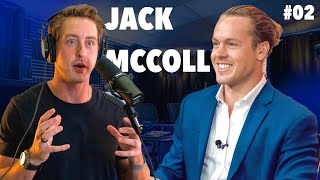
Jack MacColl explains how to use zero-percent business credit cards and balance transfers to fund short-term investments in e-commerce, oil wells, and crypto yield farms. He tracks dozens of cards in a spreadsheet and physical binder, sources deals through mastermind groups, and emphasizes mindset work like gratitude and fitness to maintain confidence.
Chapters
Jack McCall, my very dear friend. How are you doing, man? Thanks for coming on.
Mr. Goetz, man, it's such a pleasure to be here with you today. I appreciate you having me on the show.
For people who don't know, we met back when I was with Yik Yak, and Jack and I ended up partnering on a hoverboard brand. And then we got into another business together. We'd been to China together. We moved out to LA, we're starting to sell products. And since then, your career has blossomed in many different ways through the spring break company that you started and exited, your company where you're selling information and you're helping people leverage debt to create passive income streams. But also, you always seem to have a high energy state and you always seem to keep yourself in the type of mood you need to be in to achieve a lot and to continue to grow. But to start off, can you give me a little bit of context on your ideology? Behind debt and how you can utilize it to grow passive income streams?
Yeah, 100%, Jared. You know, first of all, I appreciate the kind words. You know, I think when people have access to money, their chance of success in business dramatically increases. And not even necessarily having money, but having access. So for me, that's been the first step on anything. Like anytime you're trying to figure out how to invest in investment, or fund an investment, how to fund a business, you know, you got to find the capital. And for us, like back in our business ventures selling hoverboards, we always use our hard-earned cash. You know, if you ask me, I think hard-earned cash is a perfect form of funds for long-term investments like crypto, stock. But anytime you can borrow money at a 0% interest rate, that gives you all the ability in the world to scale much faster. And so really what I've focused on over the last 2 years is how to become the most attractive person to borrow large amounts of money from the banks. And so for any investment that's relatively short-term, 1 to 2 years, for any business venture that sees an ROI in 1 to 2 years, I will always finance those with 0% interest credit, right? Because in that scenario, you're not paying interest, you're not giving away equity, and that gives you all the ability in the world to have the highest chance of success. And so I've been incredibly fascinated with debt, uh, specifically when we're able to leverage it at 0% interest.
So getting the debt is one thing, and then deploying it into ventures that are short-term and give you a return is a whole nother thing. So someone like me, you know, I have access to tons of credit. And for those of you don't have access to a lot of credit, there's, there's plenty of tricks and tips and you guys can follow Jack. On Instagram and across his platforms and learn more. But for someone like me, like, what type of short-term investments do you recommend? Or is there any kind of systems that you follow or things that I should be leveraging?
Yeah, 100%. So I always tell people, you know, the first step is getting access to money, right? Once you have the money, you know, then it goes to your question, how do you, how do you allocate that money so it multiplies? A couple of things that I'm invested in, I have multiple e-commerce stores, dropshipping stores, I'm invested into an oil well. I'm invested into two different forex funds, one that's traded with automated software, the second one that's, that's actually manually traded. I'm invested on tax lien real estate projects. I'm also invested into a real estate fund. And all these investments will pay anywhere between 30% and 140% on a yearly return. And so like, that's what I'm always looking for. How do I maximize my returns on these investments, right? And like something that's been big for me, I go to a lot of different mastermind events. I joined mastermind groups and I really network to find these people who are experts in their niche so I can partner with them, you know. So first step, you know, always get access to money, which we have found the easiest way to do that is through 0% interest business credit. And, you know, then it's, you know, finding those right people to partner with or to invest with. And I've really been able to find those people through different mastermind events.
So, okay, so networking, getting yourself out there, talking to people and looking for opportunities. Because, you know, if you're looking to invest in something, most people just go to a financial advisor or like a real estate fund. For example, I just got into a real estate fund and it pays 8% per year. And the minimum investment is also pretty high on those. But hearing 30% to 140% sounds incredible. But When you're talking about networking, you know, going to these events, what type of attitude do you go into these events with? Like, how do you see yourself when you're going to a mastermind and you want to learn from people? What kind of state of mind do you try to go into these events with?
Yeah, that's, that's a good question, Jared. And I really try to be as open-minded as possible. I come to these events being as, as spongeable as possible. You know, I come to learn things, I come to network. I'll put myself out there, you know, introduce myself to as many people as possible, trade social media handles, trade contact information. And really, you know, don't be shy to tell people what you're looking for, you know, what you're trying to get out of things. Hey, I'm looking to learn more about real estate, or hey, I just got access, you know, $200,000 that I'm looking to invest with. I'm looking to learn about these opportunities. But, you know, really communicating, like, you know, why you're at these events, why you're trying to meet people, tell people on what you do. And a lot of times, like, I'll trade services, right? I have, you know, good experience in business and teaching people about credit, and I have access to money, right? So I'm immediately more valuable than some other people because I have a skill that I can, you know, teach them, and I also have money that I can inject into their, you know, into their investment deal.
Very cool. Now, someone like me that had a lot of limiting beliefs about money, If somebody told me that an investment could make me 40% per year, I would immediately think it's too good to be true, right? And I've overcome those beliefs. I've learned and I've realized that, you know, wealthy people have access to better investments than people that have limiting mindsets. Have you had any limiting beliefs in your career? And if so, how have you overcome them?
Yeah, I mean, I think when you start out from the beginning, you see, you can see high returns and you're like, you're, you know, kind of saying what you're thinking is like, you know, this can be too good to be true. But I think once you start vetting them, learning about the business model and understanding the business model that can make such high returns, and then also talking to people who are also invested, you know, get their input on the situation. They're trying to perform. And I think word spreads very fast if someone's scamming people. So, you know, trying to meet that person in person, that you're going to invest with. You're going to talk to other people that have invested on that same deal. And if you've seen success and you understand the business model and you believe in it, give it a shot. And I think when it comes to leveraging business credit to fund these investments, you know, you have 0% interest for the first 12 to 18 months. And even if you need to buy more time, you can balance transfer that debt to another business card. And so ultimately, when you're using credit to make different investments, I think it's much less risky because one, you can always balance transfer the debt to a different card, to a different bank. And then even in a worst-case scenario, there are very protective laws on consumers with credit, and there are pretty easy ways to actually wipe debt right off your credit profile. And obviously that's a worst-case scenario. I've never had to do that, but there are very good strategies on how to actually dispute that debt dispute the inaccuracies on credit profiles to get that debt removed. So anytime you're using business credit over your hard-earned cash, I think it's so much less risky because one, it buys you time, and two, there's, you know, credit repair strategies that can protect you.
Can you just touch on balance transferring? I've never heard of that before. What exactly is that?
Real quick, before I go into those details, um, let me emphasize the difference between personal credit and business credit. So Business credit accounts don't report to your personal credit profile. And so why that's valuable is you can apply for many more business cards than you could personal cards. And then when you spend money on those business cards, that utilization isn't reported to your personal credit. And so I'll max out all my 0% interest business cards, have 100% utilization, and that utilization does not affect my personal credit score. Or if you max out your personal cards, you know, that's going to absolutely tank your score. So the first step is to get to the business side so you can max out your utilization. And when it comes to balance transfers, because your score is still high, because that utilization isn't reporting, that gives you the ability to apply for more 0% interest business cards. Once you get those cards, then you can balance transfer the debt from the first card to the second card for only a 3% fee. And so that gives you even more 0% interest for, you know, either 12, 18 months, and you can balance transfer multiple times.
Wow. So every time you want to do a balance transfer, you're essentially adding on a 3% fee. So if you're making a return on it of, let's say, 10%, you're actually net returning on that.
Exactly.
That's really cool. Now you're talking about credit cards. What if you come across an investment that requires, you know, a wire transfer or a check or something along those lines? Is there a way to leverage business credit cards to get into those type of investments?
Yes. So Jared, also a very good question. So we call that liquidating credit cards. And there's a couple ways you can do that. The first and easiest and most convenient way is just to run it through a merchant processor. So for example, if you had a friend that has any merchant processing account, he can send you an invoice for his quote unquote service. He will run your card for that quote unquote service, and then he can wire you the money the next day. So you can turn a $50,000 credit card into $48,000 in cash, just that $50K minus the 3% credit card fee. And then you can easily have the money the next day. You just eat that fee. And there's also other ways, a little bit more in-depth strategies, but it's called manufactured spend. So there's different strategies where you can buy merchandise from strategic stores, either online or in person, and do a split payment. And essentially, once you return those goods, then you can actually return the goods onto a debit card which puts the cash into your bank account, and then you just essentially liquidate that credit card without that fee. On the best case scenario, you can manufacture spend to take you a little bit extra effort and pay 0% fee. But if you just want to run it through a merchant processor, which is generally the easiest and most convenient, it'll just charge 3%.
Or even on a better case scenario, you could even find a good such as like a Rolex watch or something that's going up in value and buy that and then go sell it for a profit and get the cash and then use that for more investments.
Yeah, that, that's also a way. There's so many different ways. You know, first step is getting the money, getting the credit, and then there's so many different ways on how to turn the credit into cash. And a lot of the investments I do, I have to have the cash. And so right after I get these cards, you know, I'll season the card, I'll put some expenses on the card for the first week, and then, you know, I'll liquidate that credit card into cash and then, you know, deploy that cash accordingly.
How many business credit cards can, you know, can a business open up? Let's say a new business versus a seasoned business that has millions of dollars in expenses.
So you can open unlimited business credit cards. And the big reason there is because they don't report to your personal credit. So just in the last year and a half, I went from zero business cards to getting approved for $500,000 in business credit, most of it being 0%. and I was only able to do that because most of these cards, 9 out of 10 of these cards are business cards. And so essentially when someone goes and applies for 5 personal cards, since those cards report to your personal credit, when you apply for additional cards afterwards, those banks can see all those credit cards being opened and that looks risky. But when you apply for a business credit card, since it does not report, other banks can't see it. So there's a big difference between the personal side and the business side. But the only thing that's going to slow you down is your hard inquiries. So every time you open up a credit account, or at least apply for a credit account, you'll get a hard inquiry. And once you have too many hard inquiries, that is going to make you look riskier and limit you to getting more credit products. However, after you go through a round of, of credit stacking and getting approved for, you know, 4 to, to 9 business credit cards, you can actually go in and dispute those hard inquiries get those removed, and then go back to either the same banks or even other banks. And, you know, rinse and repeating, basically.
One of my initial thoughts or, you know, concerns that I would potentially run into is keeping everything organized. Like, do you have any tools or tricks to keep a sheet? Is it a Google Sheet you use, or how do you know what credit cards you have and your investments and when everything's due? How do you keep everything organized when you have all this, all this stuff going on?
It's a good question. Yeah. So I do have a spreadsheet, a Google spreadsheet that, that basically gives me all the details of the card, the bank, the name of the card, the limit, the balance, the interest rate, whether that be 0% or even if 0% interest cards run out of their 0% interest introductory period. You know, the interest rate for some of my cards is like 16, 17, 18%. So if I'm investing in things that's making me you know, 60 to 100+ percent in a year, if I only have to pay 16% to have that money still lent to me, I'll continue to do that. And then in terms of organization with my cards, I used to have like all my cards stacked in a rubber band stack, but now I actually have like this binder. It's like this book that just keeps all my credit cards basically like baseball cards. Yeah, so I, I just bring it everywhere. I got all my cards with me, I got my spreadsheet, and you don't wanna miss payments. A lot of times like people will not set up autopay, they'll miss payments. That can be terrible for your credit profile. So you got to make sure auto payments are on. You got to make sure there's money in the accounts, that the money is going to be paying off the cards. Because if you get an insufficient funds notification, that looks very bad. So it does take some time and organizing, but it's nothing too, you know, not, not manageable.
Is the organization at that level, is that like a daily thing where you go in and update everything, or is it a weekly thing? Like, how often are you jumping in the spreadsheet to update everything?
I'd say weekly. I'd say weekly. I'll kind of check my bank apps just to make sure everything's going good, make sure I recognize all the transactions, but it's consistent upkeep. I think I need to count my cards, but I'm looking at my binder right now. I probably have maybe 40 credit accounts open.
Wow. So like most people don't think this way. Most people are thinking, how do they make money? You know, whether it's getting a job or starting a business, and a lot of people don't have money to start a business. And most people look at debt as a bad thing. They're like, I don't want to have debt. You know, they associate it with student loans or tax debt or many different things that are negative. How did you come across this way of living and way of doing business? Like, how did you shift your mindset into let's use that as a good thing?
Yeah, I mean, so I would look at, I would look at guys like Grant Cardone, and I was thinking like, you know, how were they able to scale so quick? And I was actually reading books on John D. Rockefeller who monopolized the oil industry, and all these business icons, they all talk about borrowing money and, you know, leveraging banking relationships to get access to more money. One of the big reasons why John D. Rockefeller was able to scale so quickly at a young age is because he had access to money, and he had really, really strong banking relationships. And so when I learned about my first, you know, how to get a business card, which was only 2 years ago, April 2020, less than 2 years ago. Honestly, I was pretty embarrassed that the fact that I didn't know about business credit. Then I found out about the 0% interest business cards and I was like, holy cow, like how am I just finding out about this? This is an absolute game changer. And I've really realized that if you can make yourself attractive to these banks by dialing in your credit profile, you can get access to so much credit. And I think for a lot of people, they need that bump, you know, that extra $100,000 in accessible funding. And if you can get that with not giving away equity, with not paying interest, that gives you such a higher chance of success in anything, right? Anytime you're paying 10 or 20% interest, you know, that just makes it so much harder. And then if you're giving away equity, that's also making it hard. But I realized like the easiest way to get access to money is through 0% interest business cards. And there's internal rules with all the banks. Like I had to figure all this out. I was able to get in touch with these high-level relationship managers at all these banks. And all these banks are looking for, you know, a lot of the same things, but very unique things as well. And so when I'm helping people dial in their credit profiles, it's all about making them attractive to these lenders because the banks want to lend money. And so it's all about just becoming attractive to these banks and knowing, you know, what cards to apply for that you're gonna get the most value out of. How to apply for them. You know, you can apply online, in branch. The best way is through relationship managers because that actually makes sure— ensures your application goes to the underwriting team. And so, I mean, I work with people that just graduate college, kids that are 21, 22, 23, and they're getting approved for $50,000 credit cards at 0% interest for 12 months. And I can't even imagine how much farther I would be in life financially if I had access to resources like that when I was 21 to 23. You know, I found out about business credit at 26, and the last 2 years my life has been a night and day difference on, you know, my success financially. And I really credit that to, you know, my access to, to business credit. It's really just changed my life.
So one more question about the business credit cards. So most business credit cards give you, or the ones that you're going for, give you 0% interest for 12 months. What do you do after 12 months? Do you close those accounts and open new ones, or do you keep those accounts open with higher interest rates?
So I definitely do not close them. I always keep them open because it just builds, you know, age and history and relationship with that bank. It can be situational though. A lot of my 0% cards that ran out expired of their 0% interest introductory period. A lot of times I'll just still keep that balance. Like if I'm keeping a, you know, $40,000 balance and paying 16% interest for the year, but if I can invest that money into something that's making me 50, 60, 100% in the year, you know, the net gain is still so high where it's worth it to pay that, you know, 16% interest. But ideally at that point, I'll just go and apply for more 0% cards, liquidate those cards, and then, you know, continue investing.
Investing. Gotcha, totally makes sense. I see that you've been getting into cryptocurrency a little bit. At a high level, for someone just getting started, or someone who's not super knowledgeable in crypto, what are your high-level thoughts on crypto?
I mean, I think anything with a fixed supply over time is going to increase in value. And I think there can be so much corruption with financial institutions. I think when you look at something like Bitcoin that you can't fudge, because of the blockchain. I think the technology is incredible. And I think because the supply is fixed, it's only going to go up in value. I'm a big believer in it. I'm also a big believer in DeFi crypto, decentralized finance crypto, where you actually hold your crypto on a ledger, on cold storage, and then you can essentially add your crypto to different liquidity pools or yield farms and make 40% to 120% APY on your crypto just by adding liquidity into these, into these pools. Kind of a little bit more advanced topic, but there's so much you can do with crypto and I'm incredibly bullish.
Yeah, I mean, I was holding a crypto called Solana. I did real well on that one and I was on my— the app that I'm using, I think it's NXT, and there was a button and it basically allowed me to stake my crypto and I didn't have to do anything. I didn't have to sign any agreements. and it's giving me like an 8% return on it just by pushing the button on there. And it got me thinking, there's probably a lot of ways that you could earn interest on your crypto. Do you have any tips or like any specific pools or ways that people can earn money on their cryptocurrency?
Yeah, I mean, 100%. So I mean, there's two ways to store your crypto, either on a centralized platform like Coinbase, Voyager, Nexo, you know, you're not actually holding your crypto, they're holding it, you're just, you have an account with them. The second way is to do it, you know, the DeFi route. So you can store it on your Ledger, and then once you have this crypto, you can essentially provide liquidity to these pools and these yield farms in trade for supplying the liquidity for these, for these pools. Then you make, you make the interest. So like a good example I always give is like Robinhood, for example. Like Jared, if I was able to sell you a piece of Apple stock, you wouldn't buy it from me. I would sell it to Robinhood and then they would sell it to you. So Robinhood has to facilitate that trade by providing the liquidity to make that happen. And so anytime you provide liquidity to these pools in decentralized finance, you're the one that's making all these transaction fees that's paid through the interest. Yeah, I mean, you can easily, on a, on a low-risk standpoint, make 40 to 100% return on your crypto just by loaning it out, just by providing liquidity and of course, you're still making the returns if that crypto goes up in the meantime.
Can you give one example of a place where people can do that?
Yeah. So when it comes to platforms where you can actually, you know, put your money into different pools or farms, one that I use a lot is called pancakeswap.finance. And essentially, you can connect your hard wallet into the site. And then there's different, different farms and different pools that will range in the APY you can make. Like, I'm looking at a farm right now. It's a CAKE-BNB farm, and you can make 38% APY just by adding liquidity into that farm. You're still going to take advantage of the CAKE token appreciating and the BNB token appreciating, and then you're also making 40%. But it's a very, very easy way to multiply your returns.
Yeah, and that, that's really interesting. I've done that with some riskier coins. I guess anyone listening, you know, don't take this as financial advice. But, you know, if you could find a less risky cryptocurrency and find a pool that you can make a return on it like that, that's something really interesting to look into. I want to pivot a little bit to more so you, you know, you're— you've kind of reinvented yourself many times, right? So you were originally a professional athlete. You got into selling products, and now you're in the debt space and you're in the spring break space. When it comes to growing as an individual and reinventing yourself and becoming that next version of yourself, you know, how do you move forward? How do you get past those thoughts of like, oh, that's beyond me? And how do you kind of continue to grow and reinvent yourself?
I think the more you're able to learn through, you know, courses, mentors, YouTube videos, reading books, like, you can do anything you put your mind to. And so like, I'm consistently learning about new things, different business models, different businesses. And if something excites me, then I'm gonna jump in. And right before COVID I was actually living in Bali, Indonesia for 3 months. I was doing Airbnb over there. And, you know, then COVID happened. And, you know, the whole business was shut off. We had, you know, money tied up on these villas over there, but no one could travel. And I was asking myself, I was like, okay, with COVID going on, what are the two industries that are going to do the best? And in my mind, I was like, okay, consulting, which is, you know, teaching someone, you know, consulting them on a different, you know, on a skill to make them better. Um, and secondly, e-commerce. And so from there, I got into dropshipping on automated e-commerce stores, like on Walmart Automation and Amazon Automation. And then secondly was the consulting. And so I was trying to figure out, you know, what skills do I have where I can put together a course. And eventually that led into a course where I can teach people about credit and business funding. Because at the time I was getting access to so much credit. And so I was like, okay, I got to put this into a course and then, you know, teach other people. But I think, you know, how to adapt and keep moving, always learning about new things, seeing where the potential is. And, you know, there's a lifetime to everything as trends change. As the economics of the world change, you know, there's going to be more opportunity in different areas consistently kind of shifting. And so I'll try to be on top of these, these new opportunities to the best of my ability. And so I'm not scared to switch things up. I'm always proactive on learning new things. And if I see opportunity, I'm gonna, I'm gonna dive in and give it my all, no doubt.
So at this point, you know, you've overcome a lot of fear. Especially early in your career, and then you went after something and then it worked, and that built your confidence, and the next thing you went after may have been a little bit bigger, and it worked, and it built your confidence more. But a lot of people just getting started out, they have a fear. They don't believe in themselves. They see other people being successful. They even have access to the knowledge of how to do it, but they don't take action because they're scared. Do you have any like tips or, you know, rituals or habits that you do that keep you in a high energy state that allows you to push past that fear?
Yeah, I think, I think when I look at other people who are successful, I remind myself that a failure is just a stepping stone closer to success. And it's only a failure if you don't try again. So if you're trying to complete something or accomplish something and you're failing, failing, failing, you have to embrace the failure and understand that it's only a stepping stone closer to the success. There's always failure. You can look at people that are so wildly successful, but chances are they have just failed more than other people, and that led them to a success. And so I'll remind myself to that. I like to embrace challenges. I'm obsessed with progression, and I think You know, if you want something bad enough, you're gonna, you're gonna sacrifice what it takes. And so if you want to live this dream life where you're, you're traveling, you're going to these cool places, you're building this amazing business, you can provide for your loved ones, you know, just know, like, you're gonna have to go through some, some hard stuff to get there. And, you know, I've gone through a lot of hard stuff to get to where I'm at right now. And I'm, I'm consistently embracing the challenges. I'm embracing the failures and just reminding myself like, you know, to get where I want to go, this is just part of the journey and I'm going to embrace it.
You always look back and it's always like a good story. I mean, we had a lot of hard times back when we first got started and, you know, during the time it's really stressful and you think, I think it comes from a root of like, you're not good enough. That's where the real deep fear comes from. You're not good enough for other people's approval. But when you look back, it's always— it always ends up working out somehow. And it's hard to teach that to someone. They kind of have to experience it on their own. But I also think like society grooms people to try to avoid failure. I mean, when you go to school, if you fail a test, it's a bad thing. It's really bad. But when you're in the real world, you have to fail. That's how you grow.
Yeah, that's so true. People who have a 9-to-5 job, they're, you know, considering you know, making the next step and creating their own business or whatever, move to the next thing. And I always tell them like, you know, what's the worst that can happen? You try something on by your, by yourself, you mess it up. And, you know, chances are you can still go back to that same job you were working, right? There's minimal risk. And I think kind of like how you're, you know, asking the question is like, how do you get through these limiting beliefs to be able to think that you're worth doing these things? And anyone that will work hard enough and, you know, try hard enough will complete what they want to do. Like, if you want it bad enough, there is always a way. There have been people so— that came from nothing that created everything, right? And so I think educating yourself on those success stories, listening to motivational content in the morning, journaling your goals, you know, being consistent, working on those goals every single day. And just, you know, surrounding yourself by as many people who are encouraging you as possible. You know, sometimes that's easier said than done, but I think if you want to start somewhere, start cutting out those people that are not supporting you. You know, if you have friends that are working 9-to-5 jobs and you talk about your ideas and your business ideas and they're, and they're talking down on you for them, you know, maybe, you know, associate a little bit less with them, right? Whatever you want to do, there should be nothing stopping you, and you got to support yourself by educational content, motivating content, and motivational people to help you get there.
Yeah, and I think it's important to acknowledge that normally, when we, you know, when we think about trying something like our brains are programmed to try to protect us. So you're more likely to imagine the worst case scenario, you know, and anyone that's been successful, like myself, and I'm, you know, nowhere near as successful as I want to be. But my mind is always telling me, this isn't going to work, it's gonna end up really bad. And it worries and tries to protect me from doing something uncomfortable. But I think for anyone who, who values growth, which the majority of society does value growth, because it keeps you fulfilled, it's just a system of continuously proving that your limiting beliefs are wrong. So, like, if you have a belief that, you know, I'm not smart enough, or I didn't come from a wealthy family, so it's impossible to succeed, which was one of my limiting beliefs, you know, there's no way I could do this because I've never done that, or I'm too young, or whatever the limiting belief is. I think it's just a consistent battle of proving your limiting beliefs wrong. Like, take it, understand it's a limiting belief, and then prove it wrong. I think that's where growth comes from.
Yeah, Jared, that's a really good point. And something I always tell people also is the real risk is not taking risk. You know, for me, I don't want to work some job I don't like until I'm 50 or 60 years old. I'm not cool with mediocrity. I want to be the best with anything I do. And you really— the risk is, is is not trying. If you don't try now, the later you wait in life, the harder it gets. If you're in your 20s, you're trying things, you're failing left and right, I am so happy for you. I am so happy for you that you're trying things, you're figuring it out, and you're out there getting it, because that, that is what it takes. And something that hit me pretty good, my grandmother, um, 97 years old, just passed away a couple weeks ago. Had a great life, great, great passing.
Oh no, so sorry to hear that.
All good, Jared. It really went the best way possible. But You know, um, she was in a retirement home for a bit, and I was just like thinking about the end of my life. Like, where do I want to be at the end of my life? I want to be completely financially set. My care is incredible. I can support my entire family 10x. Like, that is how I want to, you know, be at the end of my life, and I'm going to do whatever it takes. And so it really goes back to, you if you don't take the risk, you know, the risk is you're going to possibly end your life with, you know, not the most resources. And I want to have the most resources possible. So I'm going to do what it takes to make sure I'm taken care of and my loved ones are taken care of.
Yeah, I think that comes down to having a vision. I mean, a lot of people have a vision for where they want to be tomorrow, or where they want to be at the end of the year. But most people don't have a vision for where they want to be in 20 years or in 30 years or longer. And we, we overestimate what we can do short term, and we underestimate what we can do long term. But I think having a really crystal clear vision of where you want to be allows you to kind of have a North Star of where your goals should be. Do you have any like morning routines or rituals or habits that kind of get you aligned with your vision on a daily basis?
I do. And the biggest thing for me is writing down gratitude. I'll fill up a whole page, usually it's like 10 or 12 things. But you know, what are the things in my life that I'm, I'm so grateful for? So I think anytime you start your day with gratitude, it sets such a strong foundation. And then something that I used to keep up a lot more with is writing down positive affirmations about myself, just basically hyping myself up, writing it down. Also your goals. I'll write my goals down on a weekly basis, like what things am I trying to accomplish this month, this year? You know, what am I aiming towards? And I think anytime you write something down, the chance of you actually completing it and accomplishing it is dramatically higher. And then even something I'll do once a quarter, I'll actually write down like 50 things that I want to accomplish in my life, whether that be, you know, hiking some crazy hike. I want to have like X amount of kids. I want to live in this destination. I want to travel to these countries. The more detailed your vision is, the higher chance of success that you're going to make that a reality.
Yeah, and it's super important. But like some people listening, they're like, okay, I want to come up with a vision. But they're sitting there in a low energy state. Maybe they were scrolling on Instagram for an hour or ate something unhealthy. And they're sitting around and they're in a low energy state. And they're like trying to come up with a vision, but they can't come up with one. One thing that I've learned is that you need to be in a high energy state to actually dial into the vision of who you're supposed to be. And a lot of people also, like when you mentioned writing down gratitude, or what you're grateful for, people are like, I don't have anything to be grateful for, or I don't have the things I want yet. So what am I grateful for? But I think gratitude doesn't come just from material things. Obviously, it could. I believe that everyone has things they could be grateful for, little things. And I think it's a snowball effect. So if you can come up with you know, someone in your life or something that happened, even something really simple, like you went to the coffee shop and you had a good interaction with the person who got you a coffee, or whatever it is. You have to start with something, some baseline of gratitude on a daily basis. And I believe it attracts more gratitude in your day and allows you to kind of hone into that energy. What are your thoughts on gratitude if somebody, you know, thinks that they don't have much to be grateful for?
No, I completely agree, Jared. I think when you start, it will snowball. I have access to clean water. I can go down to a bank. You know, there's so many countries that don't even have banks, basically. Like, we have so many resources. Like, I'm grateful that I can call my parents and they're going to answer my phone call. I'm, you know, grateful that I have a brother that I have a great relationship with. I'm grateful that, you know, I've provided a positive impact to my peers and I'm able to inspire people to do better. There's so many things. And maybe you can't think of tons of things. Think small, you know, start somewhere, start basic. You want to be putting your goals down when you're the most optimistic, right? Because you have the best goals and the best vision. So I think that's huge. Like, if you're in a bad mood, it might not be the best time to write down your goals. But like you said, go on a run, listen to some music, go on a walk, go to the beach, and then, you know, write your goals down. I think you're gonna be more inspired that way.
I have a few more things. One of the main things that a lot of people that achieve a lot value in their lives and their careers is discipline. You know, discipline obviously compounds on itself, right? If you say you're going to get up and work out and you do it one day, and then you do it two days, and you do it seven days, then you start to believe in yourself. Oh, I can get up and work out seven days in a row. I could go do this business venture. But if you say, hey, I'm gonna wake up and work out, and you do it one day, and the second day you fail, you lose belief in yourself. So discipline is really important for self-confidence. And self-confidence is what allows you to continue to grow and try new things. Do you have any routines or any disciplines that you keep in your life that are non-negotiable that help you to grow?
Journaling. Journaling is something I'm incredibly disciplined on. And probably my most active habit. I'll do at least 5 days a week. I'll fill up so many journals. And that really helps me start my day on just getting clear on what I'm grateful for and what I'm looking to achieve, right? So writing those things down at the beginning of the day. Fitness, I think fitness is massive. I think the more confident you are about yourself, the better you're gonna do in different communications, different, you know, business ventures. You're just gonna feel better. Like anytime I'm hitting the fitness hard, I just feel invincible. I feel like I can do anything, right? And in contrary, if I'm slacking on the fitness, I may be thinking like, I'm not, you know, I'm not feeling that good, I'm not looking that good. And that thought will carry over into other things. So it's kind of like a snowball, right? And I think there's so much power in fitness and, you know, lifting weights and working out and, you know, playing sports because that's something— it's that— that's like you versus you, right? And so you have the power to progress on every single session in the gym or playing sports. And I think when you can take that principle of consistent progression, you can take that principle to other things and be so much more successful with it and just, you know, always getting better every session. I'm going to go one more rep or, you know, a few more pounds. Like if I'm really in my routine, I'm always getting better every single session.
So someone listening to this right now may be super inspired. They may be like, all right, that's it. I'm about to get my fitness routine. I'm getting up early tomorrow. I'm gonna go for a run. You know, I'm gonna, I'm gonna try hard. But then they get up the next morning and they're tired and they feel like shit because they just woke up early, they didn't get enough sleep. And their mind is convincing them, no, no, you should get back in bed. Or, you know, you don't want to push yourself that hard today, you didn't get enough rest, or your mind starts chirping in your ear that it's not a good idea to push yourself. And I know you've been disciplined for a long time, so it gets easier over time as you develop habits. But when you wake up and you don't feel like doing these things, how do you just do them? How do you overcome your mind and push past it?
Yeah, I mean, it's, it's not always easy. Like, even sometimes I'll catch myself slipping up. And once you fall out of routine, it can be pretty hard to get back in routine. So I'm consistently fighting that same battle on like, okay, I need to stay in my routine. I need to get back on the horse. And do my best. And I think having like future anchor points is very important in context of like, okay, like for example, on the fitness stuff, maybe I'm going on this vacation with my girlfriend or my family on this date. So I want to look my best, you know, having something like a deadline. And, you know, really just anytime I go to the gym, I have never regretted going to the gym. And I think just reminding yourself like, why you're doing what you're doing. You know, whatever that reason is, remind yourself every day and write it down, right?
Just knowing that you're never going to regret going to the gym. Like yesterday, I was super tired. It was like 3 o'clock and I was like, you know, I'm going to lay down for a little bit. And then I remembered, you know what, if I go work out, I'm going to feel better. If I go lay down and scroll on Instagram, I'm going to feel much worse. So I got up. I have a gym in my garage, so it's really easy to get to. And I had a workout routine already on my phone, so I didn't have to think about it. And I felt astronomically better after the workout. And having that as like a reference point for when I feel like shit in the future is the way I defeat my mind. I'm like, okay, I did this last time. And I know that my mind is lying to me right now. It's telling me I want to go lay down, but I shouldn't. You know, we live in a world with so much distraction, right? It's like you get on your phone, you check Instagram, it gets super addicting. Do you have any like tips or tricks for people that just get distracted all the time, or they get too addicted to social media? Do you have any ways to avoid those issues?
I think some easy ways is to just put your phone in a different room, you know, plan it out on your calendar, maybe from 10 AM to 12 PM, I'm going to work. In that meantime, if you don't need your phone to help you with that task, that work task, just, you know, put your phone in a different place. And even notifications, I'll like deactivate all my notifications on my apps 'cause I don't want the notifications. And then yeah, I mean, just reminding yourself like, why are you doing it? You're, you're not gonna complete what you're doing if you're getting distracted. And I think one thing that you said about working out, you had the, the workout already created on your phone. And so when you go and start a workout, if you have it created and outlined, the chance of you actually finishing it is dramatically higher because it's already set. I think the same principles goes for your workday. If you have your goals and your tasks written out for that day, you're going to have such a higher chance of completing those than if you're just kind of freeballing it.
Yeah, so it's just a formula of structure and willpower. Our minds are really powerful, especially the smarter you are, the more powerful your mind is, and your mind is not always your best friend. It's about structure and willpower. If you could set the structure, and you could have the willpower to do it, that's where the discipline starts to grow. And that's where the self-confidence starts to grow. And that's what allows you to take bigger risks. And then that's what allows you to get bigger rewards. Jack, yeah, this conversation was awesome, man. Really insightful stuff. And thank you so much for coming on, man. If people want to find you or connect with you or learn more from you, where can anyone find you?
Yeah, 100%. Jared, like, thank you so much for having me. It's been a pleasure. And hopefully everyone listening has had a good time and got some great value. But if anyone wants to find me, my Instagram is King of Debt, King of Debt on Instagram. If anyone wants to learn more about what I do, my credit mentorship, it's creditstacking.com. But I have this case study where I walk through the same exact strategies on how I was able to get approved for $500,000 in credit in a year and a half. So if you guys want to watch that case study, definitely recommend it. Tons of value in there. We'll post it below in the show notes. But, um, yeah, I have tons of free value, free content on my Instagram, King of Debt. Jared, thanks again, man, and thanks for everyone listening on the show today.
Awesome. All right, guys, hope you enjoyed.
More from Jared





How to track independant creators' performance for the products you're selling





