My Story, Manifestation, Energy, Creation, Failures, Successes, and beyond
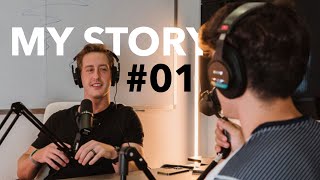
In this inaugural episode of the Zen Hard Podcast, host Jared Goetz, joined by his mentee Brian, walks listeners through his unconventional entrepreneurial journey, the personal crises that reshaped his mindset, and the evolution of his businesses. Starting at 17 with sketchy mansion‑rental parties in the Hamptons, Jared leveraged a favor for a prom group into a partnership on large‑scale concerts featuring Steve Aoki and Lupe Fiasco. After breaking even on those shows, he invented the "world’s largest foam party" (Electric Flurry), scaling to a million‑dollar revenue by age 21. A disastrous partnership with a trust‑fund DJ led to a $250,000 lawsuit that forced him back into his mother’s home. While recovering, he adopted habits from The Way of the Peaceful Warrior, began running early morning runs, and shifted his focus from scarcity to abundance. This mindset attracted a field‑marketing role at Yik Yak, where he built a 35‑school college tour that helped the app grow from 100k to 10 million MAU. Parallel to that, he launched a hoverboard dropshipping store, leveraged influencer marketing, and briefly partnered with Mark Cuban on a patent. After a successful Tony Robbins‑style manifestation experience (including visualizing his future self and buying a Lamborghini), he pivoted to inflatable lounge dropshipping, discovered Facebook ads, and built a six‑figure e‑commerce operation. Realizing the fragility of teaching others without inner work, he co‑founded Zendrop – a dropshipping platform born from his own pain points, rebranded after pandemic shipping chaos, and grew to over a million users. Throughout, Jared emphasizes habits (75 Hard, early rising, gratitude, meditation, sauna, plant‑medicine retreats), the power of giving, and the phases of life (career, family, purpose). The conversation blends storytelling, practical business tactics, and personal‑development philosophy, illustrating how energy, feeling abundant, and disciplined habits can turn setbacks into scalable success.
Chapters
And I was like, holy shit, this is crazy. So doing 75 Hard is guaranteed to change your life no matter who you are. And I got sued for $250,000, lost everything, moved back in with my mom. We came up with the idea to throw the world's largest foam party. First night we sold out, we made $50,000. Second night we lost $50,000. I was throwing up. I was literally, my head was in the toilet bowl and I get a text from Mark Cuban. Hey, gonna call you in 5 minutes. What's up, guys? Welcome to the Zen Hard Podcast, where we're going to be deconstructing the inner worlds of world-class achievers to bring you habits and tools and tactics to really grow in life and really become extraordinary. The Zen Hard Podcast is sponsored by Zendrop, which is my company. It's a place where you can go and find products to sell without ever needing to buy inventory. You can start building an e-commerce empire. Purpose of this podcast is to really refresh your mind and give you new ways to think about life, really show that the biggest achievers in the world focus on their habits. They focus on their inner worlds, and they create states of feeling happy and energetic, and they know that the universe is shaped by the way that they feel. So we want to dive into all these fun things, and this is going to be the first episode where we kind of dive into things. You guys can learn a little bit more about me and the podcast, and Brian here is gonna be working with me on this stuff, so you can learn a little bit about him as well. And this is a project that I'm extremely excited about because it's really my passion. You know, I do love building businesses, I do love running companies, and I do love making money, of course, but my passion is personal growth. My passion is learning how to, you know, really have a life of balance where you wake up and you're happy and your life just feels good. And this podcast is all about that. So, uh, let's go ahead and kick off. So what's going on, Brian?
Let's go. Um, yeah, Jared is my mentor. I've been living with him for a few months now. But basically, you already told us what the purpose of the podcast is. You already told us what people will learn. So What is your story? Like, where did everything start? Where this passion started? When did you first started making money? And then why did you have this necessity inside of you of making money?
Yeah, you know, and, and a lot of people listening, they're trying to figure out how to make money. And the whole purpose of this podcast is to show you that when you're always focusing on the need for more, the need to make money, the need for this to happen, The universe gives you back more needing, right? So the trick is to learn how to feel abundance in whatever state you really are in, and the universe will bring you abundance. So I'll tell you a little bit about my story. Um, I've been an entrepreneur now, um, since I was 17, 18 years old.
Yeah, that's my age.
Yeah, yeah, that's kind of when I really kicked things off. Um, when I was in college, I met, uh, one of my best friends who Sadly, he passed away recently, actually. But he brought me an opportunity where we would rent out mansions in the Hamptons over the summer. And then we would— every weekend we would rent the house out to prom groups for them to come and party because they weren't able to get houses. And it was a little bit of a sketchy business. Like, we would go to these homeowners and we'd say, hey, you know, we have our family coming in from Europe. We need this house for a month. And they'd say, all right, it's $20,000 for the month. And then every weekend we would rent the house out for $20,000. And that was kind of my first business venture, and it was, um, you know, did a lot of things wrong, but it was fun and I learned a lot. And, um, you know, from there we, we did a favor for a prom party that they couldn't get a house, and last minute we were able to give them access to the house we had rented. And the prom group, uh, one of the pers— the people in that group, their brother happened to be a huge concert promoter, and he lived in the town next to me, and he was maybe 3 years older, and he was booking like Avicii and Steve Aoki and Lupe Fiasco and all these big artists. And he was like, hey, you did a favor for my sister, so do you want to be a partner on these 2 concert tours that are going to be coming through your school? I went to school at SUNY Albany, and he was like, we got Steve Aoki and Lupe Fiasco coming to Albany. Since you did a favor for my sister, you guys can be 50/50 partners. You just got to come up with half the money for the shows. I was like, that sounds amazing. How much money do we need to come up with to throw the shows? He's like, $75,000. I was like, whoa, I've never had that kind of money before. But we went to all of our friends, our family, and we raised the money. We threw the shows. So we booked this big arena in Albany, and we had, uh, Steve Aoki on a Tuesday night, Lupe Fiasco on a Wednesday night. First night we sold out, we made $50,000. Second night, we lost $50,000. So we ended up breaking even on the venture, but it showed me the power of throwing events. So from there, we, we tried to figure out how do we create a show that we don't have to pay the artist so much money, right? Steve Aoki and Lupe Fiasco, that was like three-quarters of the budget. So we were like, let's throw our own unique show. And we came up with the idea to throw the world's largest foam party. And that way we didn't have to book any big artists, but we could still sell it as an experience. And we did our first event. It was called Electric Flurry. You guys can check it out. It's still on YouTube. It's from like 10+ years ago now. 12, whatever.
Checking that out.
Yeah, it was really cool. We got these like giant foam cannons that shot foam 200 feet into the air and we hired like, you know, cool artists and DJs and like laser lights. And we would book these venues and we would sell tickets. And the first show we did, we sold out. And we made about $50,000. But I had about 7 business partners at the time. It was like my whole fraternity was involved. So, um, 2 of us, you know, ended up running with the idea. We booked about 20 shows over the next 2 years, and I learned a lot about, you know, managing a business. And actually, we did our first million dollars when I was 21. And then, uh, we booked the show that was a little bit out of our league It was, it was at an arena on a college campus. It was actually at the Mullins Center at UMass Amherst, which is like where they do the big basketball games. And we ended up booking this arena and we needed to sell 3,000 tickets to break even. And we were using cash flow from other shows to break even. Well, we, we budgeted for like $190,000. Wow. But afterwards we realized that it cost us a lot more and we only sold 1,000 tickets. So we basically lost all the cash we had. And on top of that, we couldn't pay our vendors. And I had this, this kid I met. I won't mention any names, of course, but he was a trust fund kid. He inherited like $50 million and his dream was to be a famous DJ. So when I met him, I was like, hey, if you want to invest in this show, you can help us get it going and you could play on the main stage. And he invested, invested $50,000 into the show. And we didn't have the money to pay him back. So he ended up suing me personally. My business partner somehow got out of it. I was the only one involved and I got sued for $250,000 and I had no money to my name. I couldn't afford a lawyer and I ended up needing to move back in with my mom. Like, so I'd built this big vision of myself, this persona, and I was living in Miami in this penthouse, like having a great life. Lost everything, moved back in with my mom, and now I'm like 23, 24, um, sleeping on my mom's couch in a one-bedroom apartment, and I have nothing going for me. Meanwhile, in my head, I'm this big concert promoter. I built this big vision for myself. So at that point, I started thinking like, how do I get out of this hole? Like, I was depressed, I had anxiety, I was you know, I wasn't living up to my potential, which is really where a lot of, you know, negative feelings come from. So I read a book called The Way of the Peaceful Warrior. I remember, um, I forget who gave it to me, and the book was interesting because it was about some college kid who— he wanted to be an Olympic, uh, gymnast, and he thought life was all about success and all this stuff. And he met this gas station attendant, and the gas station attendant was a kooky guy. But as he got to know the gas station attendant, he started learning that the way of being comes from within, from getting up early, from going on runs. And his whole kind of life changed from this gas station attendant. And for me, I was like, well, maybe I need to start implementing some of these habits. So I started getting up early and going for runs in the morning. And my mom lived by the water, so I'd run over to the water and I would sit on a bench and I was just— it was the only time that I was able to feel peace. I just kind of let go of all my stresses and all my anxieties. And, you know, lo and behold, the next opportunity came into my life. So right when I let go of the need and the depression and the anxiety and I just focused on abundance and, you know, feeling good, I got a magical email in my inbox from a startup called Yik Yak. And it was a pretty famous company. I'm sure a lot of people know about it. They had just raised a Series A. They raised $10 million, and they wanted to sponsor my shows, but I didn't have any shows. So I was like, well, I can either— I could probably like finesse this company into like funding shows. I can make this money. But I was in a different energetic state. I was like, let me just try to give. Let me give them something instead of trying to make for me. So I, I got on a call with them, and I was like, hey, if I were you guys, here's what I would do. And I laid out everything. I was like, I'd promote the app the same way I promote the shows, by going to college campuses and making a big scene and blah blah blah blah blah. And they were like, well, that sounds amazing, do you want to come do this for us? And I had never had a job at the time, so I was like, uh, you know, I'm open to a conversation. So they're like, can you come meet us? And I'm like, sure, when? They're like, can you fly in tomorrow morning? And they, they were in Atlanta, Georgia, I was in New York at the time. So I had a flight, 6:00 AM the next morning, flew to Atlanta. I showed up and I didn't know what to expect. You know, I'd never been to a startup before. I'd never, you know, been around companies that raised money. And I get there and they're in this really cool office and it's like a really cool vibe. And like, I was like, I like this. So long story short, I ended up taking a job with Yak Yak. My role was the director of field marketing. So that means like, you know, you know, college campuses and in-person events and things like that. And my first task was, it was August and school, like college started in September. And my task was to put together a college tour where we'd get a tour bus, we wrapped the whole tour bus like in Yik Yak branding. We got a mechanical yak that we'd bring around. We got all this merchandise. We hired 8 people to come on the bus, a videographer, and we needed to get a tour bus driver, background checks. We had to plan the whole tour, 35 schools, find people on every campus. And it was a lot of work to do in one month. But I grinded through it. You know, I was working 16, 18 hours a day, planned the whole tour. We flew out to the West Coast. We started in Washington State. And it was funny, at our first tour stop, I met my future business partner. I'll get into that in a minute. So we did the tour. and I lived on a tour bus for 4 months, and the app grew from about 100,000 monthly active users to 10 million monthly active users in 4 months. And that allowed the company to go raise more money. We raised the Series B of $62 million. And, uh, it was really cool because, you know, I had really been a big part of growing this app. Um, and then, so the person I met at that first tour stop, uh, his name's Jack McCall. He's still a great friend of mine. He was just at my wedding not too long ago. And, um, you know, he was the only person on social media that I knew that had a bit of a following. And while I was, uh, doing stuff with Yik Yak, I got my hands on a hoverboard. You know, the hoverboards that you ride around, right? And, um, my friend who was in China at the time sent it to me, and he's like, hey, should we start selling these? And nobody had ever seen them before. So I created a Shopify store. I was still working for Yik Yak at the time, but I'd get up at like 6 in the morning, work on the Shopify store, And then I printed out business cards and I would ride the hoverboard all around town, at the mall, at the airport. And every time someone asked me about it, I just hand them a business card and I listed them on my website for $1,500. And I was getting them from a supplier in China for $300 and I was selling 1 or 2 or 3 of them a week and I was making more money than I was with my salary. So I was, I was like, how do I sell 1,000 of these hoverboards and make $1 million? And I didn't know anything about Facebook ads at the time or influencer marketing. I didn't know any of that stuff. So I reached out to Jack because I knew he had like 30,000 followers at the time. And I was like, maybe if Jack posts this hoverboard, uh, on his Instagram, people will buy it. So he posted it and we made a few sales. And I was like, whoa, we need to find people with more followers. And Jack knew all these big influencers out in LA because Jack was just a really cool guy, professional snowboarder. He had a lot of friends on the West Coast. So we got connected to Hayes Greer, Nash Greer, Kenny Holland, um, a bunch of these influencers that had like 5 or 10 million followers, right? We flew out to LA and we showed them the hoverboard, and they were like, yo, this is the coolest thing we've ever seen, because still nobody had ever seen these hoverboards before. So like, we were at, I think it was, uh, Hayes Greer's house or something like that, and, um, they're all riding this hoverboard around the tennis court, and they call their manager over and their manager— we were hanging out, and manager's like, Jared, these, these kids never want to do business deals, but they really want to get involved with this. So I was like, all right, let's make a deal. So I had them all invest about $5,000 each, just a little bit, so we can get some inventory. And I brought them on as partners. And when they started posting, we did like a quarter million dollars our first month. And I was like, holy shit, this is crazy. I made more money in a month than I had in a year with my salary. So I made the decision to quit my job at Yik Yak. I sold my shares for a 6-figure exit, which was cool. And I flew out to China to the Canton Fair, where I wanted to find more viral products, like the next hoverboard. And I went out there with Jack. We went around, and we were looking for products. And we found these inflatable loungers that nobody had ever seen before.
And didn't the guy from Shark Tank Um, try to sue you or something, or—
no, no, no, they try to get the, the patent, right? Well, okay, so what happened was when I was selling hoverboards, I heard the news that Mark Cuban was going to buy the patent on hoverboards, right? So I was like, well, this could either be really bad or really good. And, uh, so I'm like, I need to get in touch with Mark Cuban. I'm like, how do I do this? I don't know. So I'm asking everyone, nobody knows how to get in touch with him. He had an app at the time, it was called Dust. and it was like a messaging app that like messages would disappear after you sent them. And I messaged him on Dust. I was like, hey, I'm Jared. I'm the founder of Glider Hoverboards. Heard you're buying the patent. I just wanted to see if there's an opportunity to work together. And he answered me and he's like, I saw your brand. I think it's really cool. Can you talk on the phone? Can you connect with me on the phone next week? And I was like, oh my God, Mark Cuban wants to connect with me on the phone. So kind of a funny story, actually. Um, I had just got back. When I was with Yik Yak, I was traveling all around the world. So this is before I quit my job, right? Right. I was traveling all around the world. I was in Australia for 2 months, like, spreading Yik Yak. I get back from Australia, and I had the call scheduled with him for the day after I get back from Australia. And I'm all jet-lagged. I get back, I'm like, my sleep schedule's all messed up. And he, he booked a call with me on Friday. Friday comes along, and He, he never answered me. So I'm like, oh, all right, whatever. I don't know what's gonna happen. Saturday, I'm like, you know, I'm in— I'm back in New York. I'm like, you know, trying to hang out with some friends. Saturday, I don't hear anything from him, and I'm like, well, I don't want to just like sit around and wait for him. So Sunday, I was like, I'm gonna go hang out with my friends. So I was like out, you know, I was young, I was 24. I was, uh, I was out, I was partying, um, I was like you know, drinking, and I was whatever.
So you haven't, you haven't learned the, the way of the peaceful warrior yet.
I wasn't living it truly yet. I was, um, you know, understanding it but not being it, you know?
Right.
So, um, anyway, I get like really like— I went out party, I got hammered, and, uh, Monday morning I'm really hungover. Uh, me and my friends are walking around New York City and we stumble across a kava bar. And I didn't know what kava was. But do you know what kava is?
I have no idea.
It's like, um, an herb that you drink and it's like supposed to make you feel good. And I was like trying things, so I was like, let's go drink some kava. I didn't know you're not supposed to mix kava and alcohol, so I drank this kava. We got back to my friend's apartment and I threw up. And I also, I also smoked a joint, so I was like a little bit stoned. I was throwing up. I was literally— my head was in the toilet bowl and like I had bloodshot eyes. And I get a text from Mark Cuban, hey, gonna call you in 5 minutes. And I'm like, oh no, no, no, no, not now. So I'm like, I'm like smacking myself, looking in the mirror, like, come on, wake up, Jared, wake up. I'm like, I'm up on like the third floor and there's no elevator, so I like run down the stairs, I go outside, I'm like, all right, you got this.
That's like a movie scene right there.
Yeah, I didn't tell any of my friends, I was— because I didn't tell them I was talking to Mark Cuban. I was like, let me just keep this to myself. So I get downstairs, Mark Cuban calls me And I'm like, you just gotta like get in the moment right now. And I shook off all the hungoverness and I got in the moment and I had about a 15-minute conversation with him where we agreed that we were gonna partner together. And the agreement was contingent on me stopping the sales of the hoverboards I was selling from China and waiting for his patent to finish. And this was October, right? And like November, December, Q4 is like You know, and, and this was right when the business was taking off. So I had to decide, do I want to stop selling right now? I could probably make a lot of money over the course of November and December through Q4, um, but if I stopped selling, I could partner with Mark Cuban in February or March when his patent goes through. And I was— had like a— it was a big debate between me and my partner. And even my partner's dad was like, you should keep selling. And I'm like, well, we could make a lot of money, but if I partner with Mark Cuban, like, that's like You know, you're— you win pretty much. That guy doesn't lose. So we made the hard decision to stop selling in October. So we shut down the website. I emailed him, hey, we stopped selling. He's like, good, I'll let you know when the patent comes out. And, um, he never ended up getting the patent. So, but whatever, it was a short-lived dream. I didn't— I didn't have a patent on the hoverboard. I couldn't continue to sell it. You know, there would have been legal battles, whatever. But I ended up going out to— that's, that's why I went to the Canton Fair to find the next hoverboard. I was like, what else can we sell? And we saw those inflatable loungers. You ever, you ever see those things? You like wave them through the air and they fill up and you can lay on them. They look kind of like a banana.
No, I'm not sure, actually.
Yeah, I'm sure like most people listening have seen them because they're like all over the beaches and whatever. So we found those in China. We had a little bit of bankroll because I sold my shares in, in Yik Yak. But actually, when I sold my shares, I settled that lawsuit from like 4 years ago where the guy sued me for, for $250 grand. So I like— and I battled this whole thing myself. It was a crazy story. I can get deeper into it, but it was a very traumatic experience. But the sale of the sale of my shares allowed me to settle with that guy and I was free and clear of any debt and any problems. So we had a little bit of money left over. While we were in China at the Canton Fair, we bought 4 of those inflatable loungers that we can go home and make videos and start selling them. So we bought 4 of them, all different colors, went home. Jack was a video editor, really talented, really tasteful, really cool guy. So he went in, you know, on the beach in Washington with great views and, you know, and made these amazing videos.
And let me guess, here is when you learn about Facebook ads.
Bingo. This is my first— well, so we didn't have enough inflatable loungers to send them to influencers. We only had 4, right? And we were waiting for a shipment to come in. We ordered 500 of them and we were waiting, and it was going to take like 2 months to get in via boat from China. So in the meantime, like, we got to start selling, we got to start generating money. I left my job, blah blah blah. So I went on Upwork and I found someone who knew how to run Facebook ads, and we were profitable. You know, we were spending maybe like a couple hundred dollars a day doing a few hundred dollars in orders a day and shipping out the product and then buying more inventory. And then we, we started— we did that for about a year and we were like doing all right, but every time we sold out we had to buy more inventory and the cash would just fund the next round and the profits would fund my life. And it was like, it was very hard to take it off the ground. And we even started, you know, going to like music festivals and trade shows and and like in-person events and setting up booths. And we would go to like a marathon, for example, where we could buy a booth and we would sell like 200 or 300 of them in a day and make all this cash and then send it back to China to get more. And I did that for about 2 years. And it was cool, but I was living in LA with my now wife. She was my girlfriend back then. We were like splitting rent. She was working at the Cheesecake Factory and like at a hair salon. And like, we were hustling. And I was like, I even, I remember I, uh, I took mushrooms one day and I went on a hike, and my biggest fear was that I was gonna have to become an Uber driver. It was like, it was, it was like, I was like, no, no, no, I don't want to become— nothing against Uber drivers, but I was like, I don't want to become an Uber driver. And I thought I was gonna have to because I wasn't making that much money, and if like my business didn't do all right, I wouldn't be able to survive. So we went to a trade show in Dallas. It was like a trade show for like outdoor retailers. And I was there for 3 days. I was talking to hundreds of people, like selling 50 units to this store, 100 to that store, you know, writing down all these tickets, like managing this whole operation. And it was a Sunday and I was going to fly home on Monday. I had a flight at 7 a.m., so I get back to the hotel room. I'm about to go to sleep. It's like midnight. And I get an email on my phone from John Mack. He's like an e-com— he's founded Commerce HQ now, but he's like— he was like an e-commerce influencer, right? And it was like, how to sell products without ever seeing or touching them. And I was like, what the hell does that mean? Like, how do you do that? And I was like, I'm so tired, I'm going to go to sleep. But I'm like, let me just open the email real quick. And I clicked the link and it was a webinar. And the webinar showed you how to go on AliExpress, find a supplier, list the product, run ads to it, and then ship it directly from China, which was dropshipping.
Yeah, that's exactly what you were looking for.
Yeah, but I didn't know that that was possible, but I was like, holy shit, I never have to buy inventory, wait for it to come in. I could just scale anything. So I was so excited I couldn't sleep. I got to the airport like 3 hours before my flight so I could like build a dropshipping site. And I found a supplier in China that could dropship the inflatable loungers. but they were way cheaper. They weren't the brand I was selling. The brand I was selling was like— we were selling them for like $80. I found a supplier that would like ship them to the customers like $14 all in. So I was like, let me try selling them for like $35 and running ads. So I started running some Facebook ads and I was like spending like $50 a day and generating like $200 in sales. And I was like, well, this is amazing. And I, at that point, I already decided we're going to move from LA to Florida because LA was expensive and, you know, we had family in Florida Florida, and like, it just kind of— we're like, let's just move there. So, um, there was a Tony Robbins event going on, and I was not really into personal development at the time, and I was like, yeah, Tony Robbins, like, I don't know, that's not me. My friend, uh, Brett Lockett, he's an ex-NFL player, really cool guy, he was kind of a mentor to me, um, he was like, dude, you should come with me to this event. I was like, all right, fuck it, it's like $1,000 for the ticket, um, I'll do it, I'll go.
Yeah, let me ask a quick question. Were you applying habits and discipline before that, or did it start after this event?
Not really. This was kind of like this. This event is what changed the course of like everything for me. And I'll tell you the story. It's pretty crazy. So we were moving in about 4 days and the event was 3 days long. So we're supposed to, you know, I had like a Nissan Maxima and, you know, we got a U-Haul trailer and we packed everything into it with our dog. And we were supposed to leave on, I think it was like a Tuesday, and the event was on like a Friday, Saturday, Sunday, Monday or something. I forget how many days it was, right? But I went to the event and I was learning about energy and, and how to feel good and how to feel strong. And we were screaming and jumping and writing our vision and all this cool shit. And then we did this exercise where you're— it was like a meditation. You're sitting down, you're imagining yourself as someone else who really loves you. So like, think of someone that cares about you. I thought of my aunt because my, my aunt and I have a great relationship. She's a very pure soul, pure heart. So I imagine myself as my aunt. And you're, you're this other person in your mind, and you're walking up to your future home, and you're looking in the driveway, and you're looking at the cars, and you're admiring the cars, and you're walking into the home. And you're admiring the beauty of the home, and you're looking at the pictures on the walls of your future family, and you're admiring the family, and you walk upstairs and you're noticing the details of the beautiful home that you're walking up to. And then you walk into the bathroom and you look in the mirror, and it's you the whole time. And it was like, I was like, whoa, I just loved my future self from someone else's perspective. So I truly felt love for myself through this process. Anyway, fast forward, I get in the car the next day to drive to Florida and something changed inside of me. So I was driving and I started getting all these ideas that were just downloading to me from the universe. It was like, you know, why don't you try duplicating this ad set? So I'd call— I had to hire someone to run my ads, my support while I was driving. So I went on Upwork and I found someone. And I was like, I would call them, hey, can you try duplicating these ad sets? And he's like, yeah, no problem. And I was like driving and I'm looking at my sales like going up and I'm like, I'm like thinking of ideas. Let's try running this or, you know, and these ideas were just downloading out of nowhere and they were coming through me and I was calling these people and I was making them happen. My store went from doing like $800 a day the day I left and in a 5-day span it scaled to like $2,000 and like $15,000 and $35,000 and then 50 grand in one day. And, and the whole time I'm driving and I'm showing Madeline, my, my wife— I'm like, she's my girlfriend at the time still— I'm like, look at this. Like, one day we did 15. I'm like, I just made $15,000 today driving. I'm like, I only spent like 5 grand on ads. I'm like, I'm like, all right, this is amazing, but don't tell anyone about this. Like, this is too good to be true. By the time— by the end of the drive, you know, 50 grand in sales, I'm like, I had more money in my bank account at that point than I had ever had before in a 5-day span. So I'm like, don't tell anyone about this. Like, I was like, thank you, God. And I wasn't really religious or spiritual at the time. I'm like, thank you, whatever is up there. Um, I know this is too good to be true. I know this can't continue for— I got lucky. Like, thank you for the cash I got, but I know this can't last long. Fast forward 2 months, I was making $50 grand a day for 2 months straight. So I now have all this cash in my account. and I had to drop off Madeline to do someone's hair. She was a hairstylist at the time, and I had like an hour and a half or 2 hours to like just kind of wait for her. And I was like, you know, I got all this money now, what should I do? So I'm like looking on cars.com and I see this gray Lamborghini that was like 5 minutes from where I was. So I'm like, let me go look at this car, you know, no intention. Long story short, I ended up buying it in cash when I went to go look at it. And then About 2 weeks later, this is when the big aha moment happened for me. I'm driving this Lamborghini and I realize this car was the exact same car that I had when I did that meditation, that exercise where my aunt was walking up to my house looking at my cars. And I realized I just manifested this physical item into my universe, into my reality, through putting emotion and energy into a thought. And that's when I was like, oh, this is, this is something. So that's when my like real personal development journey started.
That's when you noticed there's something out there.
That's when I was like, in there, that's when I was like, I need to like really figure this shit out. So I, uh, I got us a condo on the beach in Singer Island. And yeah, I was still like, I still had this like limited mindset even though I had this cash. I just I had this like deep fear that I was going to lose it all because I didn't grow up with anything.
So like, maybe because you already lost it before too, right? You already had cash and you lost it, so you already had this like fear of losing it again.
Yeah, like I had this like stored like deep inside of me. No matter how well I did, I just thought like I was gonna lose it. And so I, I negotiated on this condo on the beach. Like it was like the summer in Florida, which is like the off-season, and I was like, if I pay 6 months up front and I'll stay here the whole summer, like I got it like half off for the rent and we moved on to the beach. It was me, Madeline, and my dog. And I started getting up, uh, every morning at like 6 AM and going down to the beach and drinking coffee and just like listening to beautiful music and like just feeling my vision. And like I would stand by the water for like 30 minutes or like go for a walk, or I would let go of all stress and just feel abundance. And that's when my career really started taking off. You know, my dropshipping stores, you know, I scaled those. Um, everyone was asking me like, you know, how are you doing this? How are you doing this? So I was like, let me make some videos explaining how to dropship. I was like, maybe I could sell these videos like as a course. And then people started buying it like crazy. I'd post on Instagram and I would make $5,000, $10,000 a day in course sales. And then I, uh, I got hit with a Facebook ad from a guy named Adam Wenig. He's a friend of mine. And the ad was like, you know, how to make money selling courses online. And I was like, let me click the ad, watch his video. I found out he lived in South Florida right by me. So I was like, I got to connect with this guy. I got to like see what's up. So I paid like, I think I paid him $15 grand to like go to lunch with him or something like that. And I was like, I got to just pick this guy's brain. So I sat down with him at lunch and I'm like, dude, how do I— like, I don't think there's many dropshippers that are like better at dropshipping than me. And you're selling courses on how to sell courses. Like, you don't have like the reputation that I have as like one of the best dropshippers in the world. How do I create a dropshipping course and scale it? So he's like, here's how you do it all, blah, blah, blah. I was like, why don't I build you a dropshipping store? You document the whole process and then you build my, my course funnel for me. So I built him a dropshipping store. We documented the whole process. We scaled that store. That was all his. And he built me my phone sales funnel where I had a VSL. We would run ads to it, people would book calls, and then we would sell a course. And then, you know, over the next 2 years, that became one of the biggest e-commerce education businesses here in the US. We had built a community of over 500,000 people on our email list and a Facebook group of 50,000 people and, you know, thousands and thousands of students. And it was, it was cool because it kind of manifested out of nothing. And, you know, it became— we had 25 sales reps that were taking 10 calls a day each. Like, people were booking. So we're doing 250 calls a day selling $2,000 courses, $5,000 coaching, $20,000 masterminds. And we were printing cash. And but I had this like feeling inside of me. I was like, I don't really want to be the e-commerce guru because most people don't succeed. Even if you teach them, even if you give them all the tools, they don't have the inner world figured out to where they can actually build a business that's successful. So we would sell these people these courses and coaching programs and, you know, 90% of them would, would end up failing because they didn't have the personal development and they didn't, they didn't know how to, you know, have discipline and continue to grow their business. And I was like, I don't really want to be the e-commerce guru. That's like not what I want to do. And there was also a bunch of these like young kids that would like make $50 grand on Shopify. Like, you don't know what their profits were and they would flaunt a screenshot and they would sell a course. And everyone's ripping my funnel. So I'm like, shit, like, I don't really want to keep doing this, but I have like 50 people on my team that all need money. And like, I have this huge community. I don't want to just shut it down. I don't want to screw all my employees over and stuff like that. So at that point I was like, I need to make a pivot. And while I was dropshipping, like a few years back, I ran into an issue with a supplier that sent out 7,000 fake tracking numbers. Which was like a huge amount of money. Um, basically customers paid me for the product, I paid him for the product, and he was supposed to ship it out, but he didn't ship anything out. He just gave me fake tracking numbers to give to them, which was like a half a million dollar hit at the end of the day with like $50 product costs, refunds, chargebacks. And at that point I was like, they're like, there needs to be more reliable suppliers. So a couple years later I was like, instead of shutting down my info business, what if I create a platform that all the students in the community can use. So that's where Zendrop was born. And, um, I was like, I don't know how to build software. And I'm talking to these Indian developers and on Upwork, and I'm trying to figure out how to build this software. And I'm consulting with people and I wasn't getting anywhere. And, um, I ended up reaching out to a friend of mine who, back before Electric Flurry took off, when I first started it, I moved. I found this guy on Craigslist that was like subleasing his apartment and ended up becoming great friends with him. He was a guy from France named Lucas. So I reached out to Lucas and that was years later. And he ended up moving to Australia and he was living in Australia. And I pitched him on my vision of like this, this marketplace for suppliers for dropshippers. And he's like, yeah, bro, we can do that for sure. So I'm like, can I fly you out and can we like really dive into this together? So I fly him out from Australia. We sit down, come up with a plan to build ZenDrop. He's like, yeah, it should take about 3 or 4 months to build. Like, great. I could pivot. 3 or 4 months, I could start, you know, moving my effort from the courses to this. 2 years later, we have our first version of ZenDrop because development takes a lot longer than you expect and all this stuff. And we launch it. We actually launched it under a brand called Silk Road at the time. I thought it was a smart move because Silk Road was like this big underground market that went out of business. It was like on the dark web. And then also Silk Road was like the trade channel between Asia and Africa or something like that back in the day. So Silk Road was a cool name and we launched Silk Road, but we launched it right before the pandemic started. So we launched in August of 2019 and it went off like wildfire because everyone was talking about it. And we scaled to our first 7-figure month in 4 months. But right when we got all these new users, COVID hit, and all of our shipments from China were on commercial flights, like passenger flights. That's how we got the product from China to the US to the end customer, right? And they shut down all the flights, so there was no way to get the product from China to the, to the, the, the user's customer. So we had all these new users paying us all this money, and we couldn't ship their product. So, so we had to refund people shipments were taking— we were trying to get things on boats and it was a huge mess. We ended up starting off on the wrong foot, got a really bad reputation because people are like, you guys said we can ship in 7 to 10 days and it's taking 90 days. And it was out of our control, we couldn't do anything about it. So, um, we went to like a million dollars and then like right back down to like 50 grand. And I was like, oh shit, like what are we gonna do? And so, you know, I didn't give up. It was, it was really easy to give up at that point, but I was like, we We can figure this out. So we relaunched under a new brand, Zendrop. We explained to the community what happened. People are still—
Why did you pick that name?
You know, I spent a lot of time brainstorming and, you know, as I was kind of learning personal development, meditation was a big part of my life. And the feeling of peace comes with the word Zen. So I wanted to bring peace and, you know, confidence to dropshipping. So we just came up with the name Zendrop. And, uh, we relaunched the platform and it took us a long time to like win back people's trust, even though what happened was it was totally out of our control. You know, COVID messed up a bunch of things. Um, so it was out of our control, but people still didn't trust the brand and it, it took a little while. Um, but really over the last 5 years we've grown to, you know, we have over a million users on the platform now and we're in a position that I never thought I would be in with this company. And, um, yeah, that's, that's kind of my, my business side of my story.
Yeah, so you stayed persistent even though everything went crashing down. But I'm sure for you to like continue going with Zen Drop, like even though it fell to the, to the ground and you continue doing it, I'm sure you had to have a really strong mindset. And with a strong mindset, because you were doing all this meditation and stuff, right? What else were you doing besides meditation that, you know, gave you this like mindset to keep going and to stay consistent with everything you were doing and to be like, I'm not giving up, you know?
Yeah, I think positive. Yeah, I think like, um, I'll answer that question in a couple different ways, but I think that from going from zero, from like your, your personal development path or spiritual path to like the first level, you get a huge lift. And then from there, it's a slow growth, right? So, um, you know, with Zendrop, you know, with all that stress and, and fear, and, you know, I don't know if we're gonna be able to get this thing back off the ground, there was like probably 100 times where I was certain we weren't gonna survive, like we were done. But the getting up early, um, focusing on the things that I was grateful for, and whether that's through meditation or going on a walk or sitting in the sauna or whatever the habit is, focusing on the energy of gratefulness is like the first step. And when you could change your energy through what you're focusing on, your thoughts change. And when your thoughts change, your actions change. And when your actions change, your reality changes. So when your energy is scared, you know, fearful, you feel lack, like you're gonna lose things, your thoughts make you do the things that would actually sabotage your success. So, you know, I was learning meditation at the time, and, and since then I've learned a lot. Like, I've done— I've been to several Joe Dispenza meditation retreats, right? I've done 3 plant medicine journeys. I've read hundreds of books. I've done 75 Hard now 3 times. Um, I spent time personally with Robin Sharma, who wrote The 5 AM Club.
Reading that now.
Yeah, amazing book. He's— and like, it's cool because in, in this work where I was feeling abundance, I somehow manifested meeting Robin Sharma. And then not just meeting him, I had him on a podcast when I was doing this a couple years ago, and then I ended up spending time with him in person. It was really cool stuff.
Yeah, there's a quote in that book that you told me, and then I went to read the book and it made a lot of sense, which was It's exciting in the beginning, it's messy in the middle, and it's beautiful at the end. What, what does that mean to you?
Yeah, that's a really important concept for people to understand. Everything that you want to do, when you have a new idea, it's really exciting. Yeah, and you get other people behind it and you're excited and it's fun and you're like, you see, even if you see step 1, 2, 3, 4, 5, 6, 7, and you see till the end and it seems so clear, once you get started, Things get messy. Things don't go as you plan them to go, right?
Just like Zen Drop.
Just like Zen Drop. Just like anything. I mean, people think that the people who have succeeded in life, everything went smooth for them. That couldn't be further from the truth. So things are exciting in the beginning when you first think about them and you're first getting that energy built up. They become messy in the middle because when you're creating anything, we live in a universe of unlimited possibilities, right? So for you to think that everything's gonna go your way is arrogant and it's just nonsensical, right? So in the beginning, in the middle, things get messy, a lot of mess. But if you see them through the end, they get beautiful. They become a beautiful story. And that's what it means to me. It means you just, you need to be able to ride the waves of the ups and downs and know that when you're at a low point, the high point's gonna come next. And know that when you're in a high point, enjoy it because a low point's gonna come and not judge the situation, not judge, not let the situation and the circumstances affect your energy, not, not say, oh, this bad thing's happening, so it's going to change how I feel. It's going to change my thoughts. No, just notice it and just know it's part of the mess that you're going to get through and have fun with it. And that's what it means to me.
Yeah. So since we're already talking about levels, let's talk about the phases of life. So we've been, you know, talking a lot when we go on walks and you talk about the phases of life. There's the first phase, um, when, you know, you learning new stuff. There's a few phases, you know. I want to let you talk about it. And right now you're in a phase where you just had a kid, now you're building a family, you know. It's totally different. Like, what changed? Like, what was the, the last phase you were in? What's the phase you're in now? And what do you think is the next phase for you?
Yeah, it's a great question. So, you know, when you kind of take a look at life. You know, it's kind of like a book. You know, there's different sections, there's different chapters. In the end, it's a beautiful story. When you're in it, it's stressful or amazing. I look at like the first section of life is like when you're a kid to like, you know, whether you go to college or you start your first job. It's like when you become an adult, that's like your first phase, right? Second phase is like you start your career and you get to a point where like you've done something and like you're getting to the point where you're gonna like start a family. And not everyone starts a family. I think it's an amazing thing to do. And if you don't want to do it, it's probably for some other reason. That's a different conversation. And then I think the next phase is, you know, when you start a family and you become a supporter of other people and other people come before you. And that's the phase that I just entered. And sometimes it's really hard to enter that phase from a limited mindset. You think Hey, I have all these responsibilities. I have to run the business. I have to get up in the middle of the night with this baby. And if you let that overwhelm you and you feel overwhelmed and you're not sticking to your habits and your meditations and your walks, you can easily— that, that energy can easily transmute into thoughts that sabotage your success. And so that's the kind of phase of life I just entered with my new baby. And now that I'm married and I'm starting a family and I'm realizing that You know, long-term joy is more important to me than short-term pleasure. So I'm, you know, I'm eating healthy and working out not because it's fun or I love doing it, but because I know it leads me to feeling better. And I think, you know, for me, the next phase is, you know, really focus on raising the family, get to that next level in business and life, and then work on something that's just completely purpose-driven, which is what we're doing right now with this podcast.
Exactly. That's what we're doing right now.
It's purpose-driven. It's like the more you give in the universe, the more you receive. But if you give because you want to receive, it doesn't work that way, right? Once you learn that— like, I have a funny little story that taught me a great lesson that I'll share with you. I went to get blood work drawn. I'm working with like a longevity doctor and I spend like, you know, $1,500 every quarter on like all this blood work and whatnot. Anyway, we can, we can— yeah, we can get into the details of what that's all about. But so I went to get my blood drawn from this, this place called LabCorp. And I get there and it was like super busy, and the lady working there was the only person working there, and she was super overwhelmed, and she could tell she was stressed. And I finally got to get my blood drawn, and I was talking to her, and I was like, yeah, busy day, huh? She's like, she's like, yeah, you know, I wish I had a chance to stop at Sonic and get my, my sweet tea this morning.
That's a great story.
And I'm like, my first— my, my mind started judging her, like, why, why are you drinking sweet tea in the morning? And I was like, that's not the energy I want to put out. So like, I was sympathizing for her stress, and I was like, she's a beautiful soul inside this woman. And, um, so, you know, I try to cheer her up a little bit, just try to give some good energy, some love. And, uh, I leave the appointment, and I was like, you know what, I got time. I was like, I'm going to go get this woman a sweet tea from Sonic. So I drive to Sonic. It's $1 for sweet tea, so nothing to do with the money. I get her the sweet tea, I drive back, and I walk into the lobby and I see she's dealing with like 9 people. And she sees me walking with this sweet tea and she literally burst into tears. She's like, that's the nicest thing anyone's ever done for me. And the, the energy I got from doing that for her, it was such a beautiful feeling, right? It was like I could have went and bought a Ferrari and it wouldn't have felt as good as the feeling of giving this woman a sweet tea. Right. And it's like that energy you get from giving, whether it's, you know, if a lot of people are listening to this podcast and they're getting value from it, it's not from an egotistical standpoint. It's not because, hey, I think I'm smarter or further along the path than people. It's because when you give, you feel really good. And if people's lives change because of something, it's the best feeling in the world. And that energy manifests, you know, you're going to get more out of the universe by giving more.
So, right, I have a really nice story about that also. I told you, so I was setting up the podcast and then I let your, your computer screen fall on the table and it broke the camera. I was like, no, it's— this thing is like $2,000 for me to fix. This is gonna be so expensive. Then I called you and like, don't worry about it. You were like so nice and I was like, oh my God. But then you're like, yeah, just get in contact with the support and see what they can do. So I called support and like the guy had a really deep and nice voice. For some reason it sounded like a radio like host, and I was like, dude, you should, you should start a podcast. Your voice sounds really nice. And I think, I think this guy had in like was thinking about, thinking about starting a podcast, and the moment I said it, he was like, oh no, really? Like I have the green screen, I have the microphones, I really want to start like you just said it. That's crazy, like because I've been thinking about it. And he was like, I'll give you— like, I'll make it so you don't have to pay for the screen, right? So I'll cover it for you.
And then I'll—
I go to the Apple Store the next day for the appointment, and they're like, it's gonna be $1,000. And I was like, no, it's not, I got it covered. And they're like, oh, let me check in the system. And I was like, oh yeah, it's right. So it's not $1,000 anymore. So from one compliment, just being nice to the guy, you know, I saved $1,000. So it was really nice also. But talking about giving, you brought me in from Jersey, you've been mentoring me, you giving me time, you know, from your mornings, mentoring me, teaching me a lot of stuff. It's been really life-changing for me. Like, you've been giving a lot to me. Like, what is the reason behind all the giving?
Honestly, you know, I saw a lot of potential in you when I first met you, and I saw you, you know, doing some things with Zendrop and whatnot. And, um, you know, I think in, in mentoring someone like yourself, uh, it, it brings a lot of, you know, fun times. It allows— from a selfish perspective, it allows me to, uh, really dial in my philosophies on life and articulate those things. And, you know, I think I, you know, I've been in your shoes before. I've been 17. And I think that in learning a lot of these lessons that you're learning now and that, you know, other people can learn through listening to this kind of content, you can go on a trajectory where you hit less of those roadblocks that I hit, you know, from getting sued and from getting depressed and getting anxieties. And I think if you, if you learn the, the fact that it's not about being perfect, it's about how fast you can rebound or, you know, it's not about how much you work, it's about getting up in the morning and doing things where you win those first battles in the morning. I think these lessons for someone like you will, will allow you to grow in a way that would be pretty hard without them. And someone like yourself, you have a lot of potential to add value to the world. So if I can help you grow and you can add value to the world, the world could become a better place. And for me, that's, that's worth it.
Yeah, that's exactly like what I was going to say, because you helping me, it's like I have this mindset now that after we done with this partnership, you helping me, I feel like as soon as that's done, I want to be able to do the same thing you did for me but for somebody else, and then to be able to put your message that you passed on to, like, to me, to more people, right? So just spread it more and more and make it like a never-ending cycle, like, of just positivity. But you, you were talking about running in the morning, getting over all those thoughts, and that's something you taught me really well by those morning runs, right? I got here, we started doing like 2 miles, we went to 3 miles, 4 miles every morning at like 5 AM. And like, I fell in love into running after that, and I learned a lot to like how to quiet down the ego in your voice when it's telling you to stop, when you feel like giving up, when your calves are hurting, when like everything just hurts, everything just tells you to like, like stop, and you're like, shut up, right? So just shut up, you keep going, you keep pushing. At the end, you feel like so good about yourself that you, you told that voice to like shut up. And then whenever you starting a business, whenever you feel like doing anything in life, you feel really confident on doing so because you won like power over this voice that tells you you can't do anything, that is trying to protect you in some ways, but in reality it's really not. Can you talk more about what is this voice inside of you and how can you like make it shut up.
Yeah. So most people think like to create an amazing life, they have to— it's all about being the smartest or working the hardest. And that's not it at all. It's about building self-confidence. And self-confidence comes from winning battles. The first battle is when your alarm goes off, getting up in the morning. Second battle is the next thing you do. And if you could start your day by winning those battles, you— your subconscious mind that's judging everything you do starts to believe you're worthy of being able to do more. So running is a great one because the harder the battle, the more confidence you get. So when you go running, you know, after mile 1, you're like, oh, my leg hurts, or your mind starts getting crafty. You might say, oh, you know, maybe tomorrow run a little bit more, whatever. It comes up with a ton of different things to get you to stop running because it wants you to be comfortable and it wants to keep you in the position you're in. But when you win that battle, your subconscious mind is like, you're a strong person, you did something good for yourself. So when a business opportunity comes your way, whatever that opportunity may be, let's say— I'll give two examples. Let's say, um, one version of you, you know, you say you're going to get up for 7 days in a row and go for a run. And then, you know, day 1 you get up, you go for a run, you feel good. Day 2 you get up, you go for a run, you feel good. Day 3 you get up and your mind comes up with some kind of excuse and you sleep in, and then now you're running late, so you don't go for that run. And then day 4, well, you already fell off. I'll start again next week, right? Your subconscious mind is like, well, I'm kind of proud of you for running 2 days in a row, but like, you didn't do the whole thing. And now an opportunity comes your way that might be a bit out of your league. Your subconscious mind, that thing that's in the back of your being, is going to be like, yeah, it's great opportunity, I would love to do that, but I probably can't do it because remember that run Remember that one run? Exactly. Didn't go to, or remember hitting snooze, or remember, you know, giving in. But now imagine there's that same version of yourself that gets up every morning for 7 days in a row. On day 3, your mind is like, no, you're tired, blah blah blah, and you fight, you know, I don't need that right now. I gently, I don't need these ideas, let me just continue onward. Day 4, you know, oh my God, if you don't sleep you're gonna get sick, or, but I don't need that right now. And you're fighting through and you're winning these battles. Now a business opportunity comes to you and you have a new being, a new energy. You are—
foundation.
Yeah, you're a new version of yourself that was able to win those battles. You're— you feel worthy of being able to do more things because you kept promises to yourself. And that's one of the big, you know, premises of this podcast is talking about how discipline leads to confidence and how a vision plus discipline is the key to success. Because if you have discipline but you don't have a vision, you're going to feel strong, but you're not going to have a direction to go in. And if you have a vision but you don't have discipline, you're going to see where you want to go, but your subconscious isn't going to guide you there. It's going to sabotage you. But if you have a clear vision that you focus on every day and you have really strong discipline, your subconscious mind is going to give you the thoughts you need to get there. And it's not so much about thinking, what do I need to do next, what do I need to do next, what I need to do next. It's about Who do I need to be? And then trusting in the universe to give you the ideas you need to go to get there. And that concept right there is a major key that I've realized through lots of different practices where I don't need to, you know, wake up in the morning and I'm like, I don't know what to do, so I'm not being productive. So I feel bad about myself. No, I'd rather, if I don't know what I need to do, I'm gonna go on a long walk and listen to music and change my energy, or I'm gonna go on a run and change my energy. And in changing my energy, I change the thoughts that change my behavior, which changes my reality. And that's, that's the key concept here, right?
And for everything you want to build in life, you gotta have a foundation, right? You gotta build something. And for you to build something, first you gotta destroy something that was there before. So if it was a bad habit, you gotta destroy that bad habit so you can build a better habit on top of that one. It's like building a house, right? If you have this place that's like real estate, but it has like a, like a trashy house in it, but you want to build a mansion, you gotta, you know, like destroy the, the small house so you can build the mansion on top of it. Can you, can you talk about some things that you had to destroy in your life so you could build better things on top of it?
Yeah, I think it's, it's less about destroying things, it's more about Um, starting to slowly add new habits that you're going to stick to. So, you know, somebody listening to this might get really motivated and they might say, all right, I'm gonna start running, I'm gonna go on this diet, I'm gonna start reading, I'm gonna do— I'm gonna drink a gallon of water, whatever. Like, they're— they have all these things they want to do. I'm going to meditate every day, I'm going to do this. The problem is, is that we're human and we're not perfect. And if you fall off one of those habits and you lose one of those battles, It's kind of like, think about, uh, you in two parts: your, your true self and your mind. Every time your true self wins a battle, it gets a point. Every time your mind wins a battle, it gets a point. And every time your mind gets a point, it gets stronger. Every time your true self gets a point, it gets stronger. So when people try to implement all these habits and they fail on one or two of them, their mind gets stronger and then sabotages the rest of their habits. So if you slowly implement habits, if you say, all right, this week I'm going to get up, you know, 3 days and I'm going to run, right, rather than 7, and you stick to those, your true self is getting all the points. Your mind isn't getting any. All right, next week I'm going to— I'm going to do 3 runs. I'm going to do 1 meditation. You win all those, your true self's getting all the points. Your mind's not getting any of them. And week after week, you start adding more habits. And naturally, through us having limited time and energy, you're gonna start dropping the bad habits to do the good ones. Maybe one bad habit was you'd wake up in the morning and you'd scroll on social media. Well, if you change your habit to getting up early and reading or running, then you'll naturally have to lose the bad habit because you don't have room in your day for the bad one anymore. You only have room for the good one. So in slowly implementing new habits and giving your power to your true self, building that and adding more on top and continuously winning, I'd rather you implement, you know, 5 habits over the course of 5 months than all at once. And, you know, with us, you know, you're here, I'm mentoring you, so I'm being very hard on you, right?
Right.
Like, I don't let shit slip because I know the power of what happens when your mind wins a battle. So you're here with me and you're, you know, you moved into an apartment by yourself. There's no distractions. And I gave you the option. I said, hey, listen, we can, you know, work on things together and be friends and whatnot. Or you can go all in. But if you go all in, it's not going to be easy. And I did that with you because this is what your life is for right now. Somebody else listening who may be, you know, living with discouraging family or friends or working a job that they don't feel great about, I don't recommend you dive all in to these habits all at once. I recommend you pepper them in, you know, with us. I want you to do them all at once because this is what you're here for. And if you fail one of them, it's like it's not okay. It's not cool because I know, and it's not because it's only because I know what's best for you. And, you know, that's what I want to happen. So that's why I'm so hard on you about these habits.
Exactly. And talking about habits and discipline and exactly what you're talking about, let's talk about 75 Hard because it's a challenge that you put me in that I'm right now on day 20 and I actually did fail and you were hard on me. So I'm back now, stronger than ever. I'm not going to fail. But I think it's a great challenge. Like, it pushes me to have to be very disciplined, and with that discipline, applying those new habits. And those habits are drinking a gallon of water, getting 2 exercises in for 45 minutes, one of them having to be outside, right? And you have to stick to a diet, and there's some other things, right? But yeah, talk, talk to me about why did you start 75 Hard? How was your first challenge? Like, you've done 3 of them, so Yeah, how was the first one? How difficult was the first one compared to all the other ones? And I also saw before and after picture of you, so you look completely different. You look jacked at the end. But yeah, talk to me about that. How did you feel when you started and how did you feel after finishing the first one and how did you feel after finishing like 3 of them?
Um, so what I, what I love about 75 Hard is it— I, I love frameworks, something that exists and there's no debating, right? So with 75 Hard— and by the way, we have to have Andy on this podcast because I'm a huge fan of Andy.
Yeah, that's, that's the goal.
He's, he's the man. And this challenge has changed so many people's lives. Not physically. I mean, yes, physically, mentally, mentally, and just changing the course of people's lives by sticking to a framework. So what I love about 75 Hard is that if you fail anything, you start from day 1. And if you're on like day 30 or 40, you do not want to start from day 1. Right. So there's been like countless times during 75 Hard that I was really tired at night and I hadn't read yet and I just want to go to sleep, but I have to read 10 pages. It's just, you know, there's no debating with myself. There's no debating with my wife. Like, if she wants to, like, watch a show or go to bed. Yeah, I'm down to, but I need to read first. Like, there's no debating. And through that process, you know, 75 days in a row, you're reading at least 10 pages. You've gotten through 750 pages at least, which is more than most people read in a year, truthfully, right?
Yeah.
So in sticking to the framework and winning those battles over and over again, what you're doing is you're making it so that your subconscious mind knows that if you make a promise to yourself, it's already done. There's no like, oh, maybe I'll do that. Like, if you say, you know, if you're talking to someone about, um, let's say a business venture, and you guys are having a conversation and there's something that needs to be done and you don't have a framework of habits, there's gonna be a part of you that's like, yeah, I'll do that. But then there's a part of you that's like, I don't know if I'll really do that. But when you do 75 Hard and you stick to all these habits for a period of time that makes it, you know, uh, I think they say 60 days is when a habit starts, whatever the number is, right? You're making it so that you're— you are— it's already done in your head. There's no debate. So what I love about 75 Hard is that you're transforming physically, mentally. You're learning discipline. You're building so much confidence. After my first 75 Hard, the reason I did the first one was I was starting a business venture where we were buying software companies and it was like out of my league. But I knew if I had done more things that involve discipline, I would build more confidence. I'd be able to take on this venture that was out of, out of my league. Right. So you're, you're really leveling up your league by, by building these disciplines. And really, 75 Hard is just a framework. And a framework allows it so that there's no internal debate, external debate. No, I have to go get my second workout in. You know, it's 7:00. Let's, let's watch a movie. Great. We'll watch a movie. But I have to go on a 45-minute walk first.
Right.
There's no debating it. And that framework is a guaranteed way to build your self-confidence. And building that self-confidence transforms you. And transforming yourself brings you different thoughts and different outcomes. So doing 75 Hard is guaranteed to change your life no matter who you are.
And I love how you talked about like you wanted to get those business ventures, but instead of you going and learning more about those kind of businesses, you decided to learn more about yourself. So you would be more disciplined instead of trying to like learn the actual business, right? So I think that's genius, and I started the challenge, and then I got one friend to start the challenge. That's the one that's, um, visiting here with me now. And that friend created like a group chat with like— I'm on that group chat now. And because of me, he started, and now he has a group called 75 Hard in Brazil with other like 20 people, dude. So like just from me doing it, I got someone to get another 20 people, and It's crazy, but yeah, it's a bullying effect.
But let's, um, so first of all, I want to go deep down this rabbit hole. Let's save some of the good stuff. You know, I'm short on time today. Um, I think like if the government made it mandatory for everyone to do 75 Hard, the world would heal itself.
Oh yeah, for sure.
I mean, 100%, everything would be fixed.
Everything.
And people are focused— anyway, we won't go down that rabbit hole today. We will go down at another time. So I think, um, yeah, this was a great kickoff. And Brian, this was fun. We should, uh, we should do these more often.
Welcome to my podcast. It was great having you.
Yeah, welcome to mine.
Yeah, today I was— yeah, today I was the one interviewing, but usually what you guys will see is Jared Goetz interviewing other guests. But it was great talking to you. You know, we have these conversations before, and this was truly life-changing for me. And yeah, finish your podcast, bro.
Absolutely. Well, um, if you guys are listening, uh, this is the first Zen Hard podcast. My goal and my mission is to bring as much value and information and tools and tactics and habits as possible to you so that life can be better. And if there's anyone specifically that you want me to interview on this podcast, make sure to leave a comment, um, and I look forward to doing more of these.
More from Jared





How to track independant creators' performance for the products you're selling





