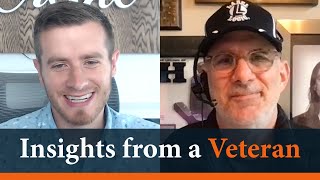
How Jay Gilbert built his influential music industry newsletter
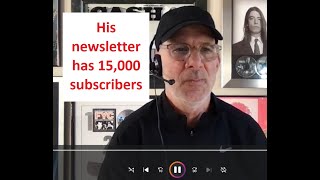
Jay Gilbert built Your Morning Coffee from a few hundred subscribers to over 15,000 by covering music industry news weekly. He grew it through speaking engagements, LinkedIn outreach, and a companion podcast launched two years ago. The newsletter funds his consulting firm Label Logic through selective ads and leads, not by scaling the media itself.
Chapters
When it comes to disruption, few industries have experienced as much upheaval over the past 20 years as the music industry. The lucrative CD era ended with the rise of Napster piracy, and the introduction of Apple's iTunes did little to stem the losses. It's only within the last decade, with the rise of streaming services like Spotify, that music revenue has begun to recover. Jay Gilbert had a front-row seat to all of this turmoil. Working for companies like Warner Music and Universal Music Group, he got to know just about every facet of the music-making process. Then in 2015, he struck off on his own and launched a consulting business. To help raise awareness of his services, he began writing a weekly newsletter called Your Morning Coffee. What started out as an email sent out to a few hundred friends eventually grew to 15,000 readers and is now one of the most influential newsletters in the industry. In my interview with Jay, we talked about how the newsletter found an audience, its contribution to his consulting business, and why he doesn't want to scale it into a traditional media company. Hello, I'm Simon Owens, and this is The Business of Content, the show about how publishers create, distribute, and monetize their digital content. If you want to listen to an audio version of this episode, subscribe to The Business of Content wherever you get your podcasts. Okay, on to my interview with Jay.
Hey Jay, thanks for joining me.
Yeah, my pleasure. Good to see you.
So you run an incredibly influential newsletter about the music industry. Let's start with talking about like how you became knowledgeable about the music industry in the first place. Like you have a lot of experience working various different jobs within like labels and stuff like that.
Yeah, I started off as a musician. I used to tour as a musician. Worked at Tower Records. And eventually I fell into a career with record labels. I started working for— it was then MCA, became Universal— ended up staying there over 18 years. And I learned various different departments. I would stay in, you know, sales, marketing, and then later e-commerce. And I absolutely loved it, but that was like being paid to go to school. And then, you know, I worked for Sony Music. I worked for my last major label gig was with Warner Music Group. We at ADA, and I managed Amazon's business globally for them. And it was great, but that, you know, about 8 years ago, I decided to kind of strike out on my own and do my own thing.
So over 20 years, you saw the entire transformation of the music industry. You talk about like the, the kind of golden age of the CD era, which from what I've read was probably the most profitable time in music history. You saw the post-Napster kind of crash, uh, the rise of iTunes, and then finally the rise of streaming services like Spotify. So you not only worked in various different departments, but you've also seen the evolution of the industry of what it is today.
Yeah. And it's been, amazing in such a short period of time. When I was working at record retail, we caught the very tail end of 8-tracks. I remember Van Halen's Diver Down came out on cassette, 8-track, vinyl. And then you're right, I remember when CDs first launched. We started selling them in just a small little rack, and then they sort of took over. And by the time I was at Tower Records, it was mainly a CD business., right? And then, as you just described, working at major labels when CDs were at their peak, which was around 1999, it was like having a license to print money. People were replacing their collections, and it was a fantastic time in the music industry. But then, of course, you know, we had the file trading that came in with Napster and LimeWire and all of that. But it's so encouraging now with With streaming being 84% of the business, that now there's some predictability to it and people are starting to invest in it and it's become kind of a new music industry. It's pretty exciting.
Yeah. And I, I don't know how familiar you are with my work, but I write a lot about the, the creator economy and stuff like that. But I, I don't understand the music business as well as some other indus— media industries. What's your concept of like how much the businesses, um, transformed that in ways that allow individual music creators to kind of separate themselves from the traditional publishing/label industry? Is it— have they made as many strides as like video creators or newsletter creators or anything and stuff like that?
Yes and no. It's easier than ever to create your own music and release your own music and get it up on digital service providers globally. That the barrier to entry has dropped significantly, right? So, but now you have, by some reports, about 100,000 tracks uploaded daily on average. You've got, you know, Apple just announced they've got over 100 million tracks. So the challenge now is how do you rise above that clutter, number one, but more importantly, the shelf life of even a great song is so much shorter now. So people are doing new things in this creator economy, right? They're, you know, don't bore us, get to the chorus. The songs are shorter. We've seen that over the last 5 years. Songs have gotten shorter. They get to the chorus quicker, you know, shorter intros. It's really affected the way that people are recording music and releasing music. The other thing is it used to be, you know, back when I toured as a musician, you got popular in your city and then your region, and hopefully you would get some good reviews, get some radio airplay, maybe get on a tour, and you would build your career that way. Today, you and I could record a song and get it up on SoundCloud right away, or get it up on DSPs globally right away. But the problem with that is, and it's also an opportunity, is that now we're alongside of Drake and the Chainsmokers and Billie Eilish. So visually, we have to compete on that global stage, and then our audio has to be at that level as well. So I think it's really made it easier for artists to create their art with some of these, like with Pro Tools and with all these loops and beats and sounds, keyboard sounds that they can purchase. They're standing on the shoulders of giants when it comes to creating the music, But everybody's creating the music. And of course, the pandemic lockdown just exacerbated that. And now there's this kind of glut of music that's being released. So it's really a challenge to grow that fan base. But the bottom line is it has to be great music. I always use this quote, um, by my friend Jonathan Daniel. And Jonathan says, if you give me a great song, My job is easy. If you give me a good song, my job is impossible.
And, uh, and kind of to your point, it, it like similar to the other parts of the creative economy, it's like, yeah, it's like very easy to start a newsletter. It's very easy to start a YouTube channel and like, you know, just YouTubers alone, the access to the editing and camera tools that they have for not that much money are, you know, well above like, you know, most of the tools that were available even to— Exactly. —you know, professional filmmakers back in the '90s. So the tool sets are there, but it's still the, the marketing and the, um, and the production and all that kind of stuff are still really hard to do at an individual level, you know. Hence we're, you know, heading into what you did next. So you said 8 years ago you decided to, to leave the traditional 9-to-5 and launch your own consulting business. And I get the sense that this business you launched kind of represents this kind of midway between the creator economy and the traditional label, that you broke down all those individual services and you can, you could like offer those to musicians that are maybe have some money to spend because they're kind of mid-tier, but maybe they don't want to go with the traditional label. What are, what, what was the, what was the consulting business that you launched?
Yeah, it's exactly what you just described. Uh, the company's called Label Logic. And I launched it with my partner Jeff Moskow, who was VP of marketing when I was at Universal. And we, we did what you just described. We found that there were a lot of artists that maybe didn't need the help of a label. And I'm not gonna bash labels. I mean, I worked with labels and they can move mountains. But what they do is they add gasoline to your fire. That's kind of the superpower. And what we found is that some labels were outsourcing a lot of things, and we noticed management companies started taking over some of those roles and responsibilities, like, you know, hiring a publicist or going after sync licenses and things like that. There were so many things that labels were outsourcing, so some of these management companies like Howard Kaufman and, you know, Jonathan Daniel and Irving Azoff, some of these great artist managers were starting to take over some of those roles and responsibilities. We also saw the lines blurring between what are the roles of a label, a distributor, a publisher, and those lines started to blur. I mean, today you'll see distributors who are offering advances, which typically was, you know, in the realm of a label. So distributor versus a label. So a label— and, and I actually wrote a piece for Hypebot on this because the lines are blurring. Yeah. A distributor, their job is to take your music and get it out to all of the different outlets. And it used to be more physical, right? Now, now that it's primarily streaming, but there still is physical. You know, Amazon still sells a lot of physical, independent retail still sells a lot of physical. There's Record Store Day. So a distributor not only distributes your music to all of these different outlets, the DSPs, the retailers, But they have relationships and they have weekly calls typically with them, and there are programs, marketing programs for example, that you can take advantage of and that they can partner with. They also will pitch your music for playlists within their partnerships. What I think distribution's superpower is, is problem solving. If you have a great distributor, things are going to break, and sometimes you'll upload an album and it might be missing a track, or the metadata might be wrong,, or it may have gone up on the wrong, you know, time, the wrong day. A good distributor, you've got that phone call, you can call them, they can solve those problems for you. So, you know, a lot of distributors have their own in-house sync teams which can help you, but they have a lot of— they've got a big knowledge base and they've got relationships, and typically they're global. So that's what, you know, distribution. Now on the label side They're going to help you with your repertoire. They may help you to record it, to help you arrange it. They may help get you a producer, an engineer. They, you know, no one knows the narrative and the goal of your release better than the artist, manager, and label. And if you get that team together, it can be really powerful.
And so when you launched this consulting company, who was your typical client?
We started off with people that we had long-term relationships with, like Doc McGee, who manages KISS. At that time, he had a stable of maybe 15-20 artists. And, you know, so we started kind of with some of these heritage acts, although he had some developing acts. And what we found really quickly is we really loved what we were doing, number one. We could actually act as the label for some of his acts, which we did. And if we needed a publicist, there are a lot of great publicists out there. We would outsource a publicist. If we wanted to do an online marketing campaign, we could trigger that online marketing campaign. So we started taking over roles and responsibilities that typically a label would do, but not a distributor. We would partner with other distributors like Symphonic out of Nashville or Ingrooves out of Los Angeles as part of the Universal family. And we found that because we had that experience working with labels, we could speak their language and we could work with them. And so that's how it started, but then we started, you know, to consult for, you know, data platforms and other kind of businesses that are ancillary to the music industry. But I think where we do our best work is either with Let's say someone is acquiring a catalog. Well, now what do I do with that? I know by looking at the projections from Goldman Sachs or Mark Mulligan from Midia, I kind of got a sense of where streaming is going in the next 10 years, but how do I do better than that? How do I overperform that? Well, we look at all aspects of the business, experiences, merch, touring, the sync that we talked about, all of the different, and we put together marketing plans for that. So that's kind of how it's evolved over time.
And that's like a trend that's going on in the music industry now with, now that these back catalogs have been tremendously, you know, lucrative, these like hedge funds and private equity funds and stuff are buying up the rights to these labels. And yeah, it's like passive income as people, um, stream it on like Spotify, but then it's like, maybe it's this, this IP is under leverage. Let's get it. In movies and television shows. Let's sell t-shirts. And so you get a hedge fund coming to you and it's like, all right, how do we take this, all this IP we own and start diversifying the revenue and, and, and make it like basically generate more than whatever our investment was.
That's right. And there, there's some key players in the space, people like Hypnosis and KKR and BMG and Primary Wave. Those are kind of the ones that are getting the headlines, but there are a lot of other folks that are purchasing either the masters, the publishing, both, name and likeness. They're doing a lot of this and they'll bring us in to help them exploit that. And I mean that in the best possible way. I will say that it has cooled down. There have been a couple of really good articles recently that I cover in my newsletter, Your Morning Coffee, about how this whole gold rush is calmed down, and now there are fewer and farther between when it comes to some of these larger acquisitions of, you know, let's say Bob Dylan's catalog or whatever. And then you've got people that— or companies, I should say— that do this in-house. You know, like if you look at Irving Azoff's company, you know, he's got Iconic and he's got this new Giant Records that's relaunching. They have, let's say, the Don Henley catalog But instead of hiring somebody like us, they're hiring people in-house to make short-form videos and to make sure that the, you know, on social media that these things are posted, and they'll have their own in-house publicist. But I would say they're an anomaly. Most of these companies— well, all of these companies have staffers, but a lot of them need help.
They need an extra set of hands. So when did you start thinking about adding a newsletter into the mix?
It was a happy accident. I had left Warner Music Group and I was trying to decide what I wanted to do next, and I got an email from my friend Sean Rakowski, who was the head of sales for ADA, and he had left ADA and he was, you know, he was thinking about what he wanted to do next. He ended up running a pressing plant and doing some other really interesting things. But at that point, he was contemplating his next move. And he sent out an email to, I don't know, 100, 200 people, and I was copied on it. And it listed 10 albums that he really loved. And Sean and I have very similar tastes in music. And as I'm listening to the music that he had sent over, I noticed there were a lot of people copied. So I sent him a note saying, this is really interesting, but I said, "Why are you doing this?" He said, "I don't want people to forget me." I thought, "That's smart." So I started— what do I love? What do I have a passion for? Well, it's technology and music. So I started this little newsletter called Your Morning Coffee, and I sent it to a couple hundred people in my contacts, which you're not supposed to do. You should have permission first. I noticed that people were not unsubscribing, and the list started growing.. And I can see through MailChimp who's subscribing, and I notice that artist managers, people working at labels, and it's just a curated look at the new music business. Every week I'll take a dozen or so stories, and those will be the first section. And then the second section is kind of line listed, and it's grown now to well over 15,000, and it just continues to grow. And I've gotten really great clients from it. I've had really great conversations from it. It wasn't intended to get me clients, but one of the most joyful parts for me is the people that write these stories that I'm covering every week, now we're friends. I've gotten to know them over the years. You know, people over at Music Business Worldwide and Hypebot and, you know, certain analysts, you know, like Sherri Hu or Glenn Peoples over at Billboard. You know, Glenn and I now do a podcast together. So it's just really enriched my life in so many different ways, curating this newsletter. But by reading all of those stories every week, and I didn't know I'd be doing this 8 years later, right? By reading all of those, and then now we have a podcast where we talk about some of those stories. It's really helped me understand it because I'm not the smartest guy in the room, but I'm the most curious. When we have a story that comes across, I'll call people within the industry and either invite them on to talk about it or just ask them, "What does this mean? Am I getting this right?" I've learned so much by doing that. The last thing I'll say on it is this music industry has changed while you and I have been having this conversation. Anybody who tells you they've got all of this down, with Web3 and DAOs and, you know, all the NFTs and all the, every, this evolving music industry, they're either naive or, or they're lying because it's, it's so dynamic and it's changing almost hourly.
And so you launched it 8 years ago and it's a weekly newsletter?
Yep. I, it comes out at 5 in the morning every Friday, and then the podcast drops the morning of the next, the following Monday.
And it's very, as you mentioned, curational. You don't really do any kind of much, or other than like small blurbs, you don't write like a column or do any kind of analysis or anything like that, right?
I do, but, um, very rarely. I write about 6, 6 pieces a year. Um, I was mentioning one that I wrote for Bruce Houghton over at Hypebot, just explaining today what the different roles and responsibilities are between a label and a distributor, for example. So every once in a while I'll jump in and write a piece. But typically, you're right. It's basically blurbs, and it's designed in a way so if you're a busy person and you don't read a lot and you're about to get on a plane or whatever it is, you can look at your morning coffee and there's like a paragraph about each one of those stories. So if you don't have time to read all of those stories, you can kind of get a sense of what's going on. And if there's something that really piques your interest, then you can dig a little deeper.
Yeah. Uh, you know, I wonder, so you started with like 100 to 200 of your personal contacts, which were probably pretty influential people considering your decades of, uh, experience. So that's a great seeding mechanism if you already have the contacts there. I don't think it's too bad if you, as long as you're, I don't like when newsletters add me randomly to their list. But I get less offended if it's like someone who's like I closely interact with on a regular basis or something like that. It's just like a small number at first. So I think that can be somewhat forgiven. But how did it grow from there? Like, you know, you, because you don't have like an anchor editorial product that's like a column or analysis that's like meant to go viral on social media or be shared, you know, how did you, how did it grow to 15,000 people in terms of if you're just curating information?
There were a few ways that I saw it really grow. One is I do a lot of work with colleges and I speak pretty regularly at USC, UCLA, Hofstra, UC Denver. I'm going out to meet with and do a guest lecture at Colorado State pretty soon. And I noticed that when I did guest lectures that they would spike because a lot of the students would do it and maybe they would tell other students about it. That certainly helped. Also, I do a lot of work with conferences. I'm doing a panel at Music Tectonics in a couple of weeks on data and A&R. I did a panel at AmericanaFest. I did a panel at Music Business Association., and when you do those panels, you tend to see spikes. But so much of it is word of mouth. The other thing that I found that's been really helpful is by doing the podcast, now you can kind of cross-pollinate those audiences, and I've noticed that sometimes these really great outlets and blogs, like Symphonic has this great blog, and once in a while they'll run a piece and they'll list Your Morning Coffee as one of the top podcast to listen to in the music business. Well, then that goes out to their audience and it spikes. So we've had some pretty decent press either about us or about our company or about the newsletter, and that tends to help.
I, I'm sure also since you're advertising, since you're a free agent who does like, you know, label executives probably have to be tight-lipped with the media, but you're probably a favorite of journalists who are writing about tech issues within the industry, you're probably— and so they just say, you know, Jay Gilbert from the Your Morning Coffee newsletter or something like that. That's right.
And interview you for pieces and stuff like that. That's exactly right. And it's— so it's, it's all of this kind of cross-pollination going on. But I, I think most of it is word of mouth because I watch the numbers each week grow and you'll see it happen where I did a little work with Spotify on Spotify for Artists, and I noticed that because of those meetings that I got more subscribers at Spotify, for example. So I watch that really carefully, but I think that with growing an audience, we've tried some targeted online ads and they were okay, but it's such a specialized thing. When you talk about technology. So I had this company called Zeta Global. They have information on like 200 million Americans, and I had them do a deep dive analysis on my audience for the newsletter and podcast, and I was really surprised how heavily affluent male in major music markets, because I speak with so many students, I speak with so many females, but it, it was really kind of shocking to see how much it leaned that way. And we did one episode where we had Nancy Wilson from Heart come on and talk about her new album. And that was— it was her first solo album ever, and I'm a huge Heart fan. That was our lowest number of any of our podcasts, and we realized people aren't tuning in for entertainment. They want to know what's going on with the Music Modernization Act. They want to know about the Copyright Royalty Board. They want to know what's going on.
And so it's primarily professionals in the industry we're finding. Yeah, there are a million podcasts out there that interview famous musicians. Like, that's not your differentiating factor there. And I feel like there are some podcasts that I listen to where they just haven't figured that out. Like, you know, there's a media podcast I really like, but lately he's trying to become like more broad and is interviewing like stars and stuff like that. It's like, no, I, I listened to you because I want to hear from media executives. Like, um, it's a niche thing.
So you, uh, when did you launch the podcast? Um, about 2 years ago. We just recorded episode 114 and I do that with, uh, Mike Etchart from Sound and Vision Radio. It's just, It's just been a joy. And as I was mentioning, the Nancy Wilson podcast, the one that got the most, was we did a special episode. It was a bonus episode. I, well, we interviewed Mark Mercuriatis from Hypnosis, and we, our numbers just spiked. It was crazy. And then we did one other special episode for our 100th episode. We had Will Page on. And for those that don't know Will Page, he has an amazing book called Tarzan Economics, which is Brilliant. He was Spotify's— what was he? He was their chief economist at Spotify. Brilliant guy, and he has a podcast called Bubble Trouble that I never miss. Anyway, we had him on and our numbers spiked because he's in the industry, he's very respected, and, you know, so is Merck Mercurialis. So we don't have guests very often. We've only had 3 in 114 episodes, but we do what we call audio drops where If a story comes out and we don't quite understand it, or we want some expert opinion, we'll call Chris Kassel from Music Technology Policy, or we'll call Glen Peoples, or a couple of weeks ago we had someone on from Apple. And we ask them, what does this mean? And we'll drop in maybe 2, 3, 4 minutes of them answering that without having a full-on Q&A.
And what are the synergies that you notice between the podcast and the newsletter?
It's, it's, it's really interesting that one will feed the other. You know, there are people that, you know, will say to me, oh, I've been listening to your podcast. I just started reading your newsletter and, and vice versa. So hopefully they continue to feed each other. And every newsletter I put in a block that says, here's, here's our podcast from last week. And so the newsletter readers are seeing it. And then in the intro of the podcast, Mike always says, you know, Jay curates your morning coffee, you know, and you should subscribe, it's free, you know, that sort of thing. So it's kind of nice that they, they sort of feed each other. And then, you know, when I do those speaking engagements and things like that, I can kind of promote them both.
Yeah, that's one thing I'm not very good at is I, I always plug the podcast in the newsletter, but I don't do enough time. I don't speak enough on the podcast about my newsletter. I used to have more consistent plugs for it, but I, I kind of haven't really been making that a priority lately.
You know, one thing you can do, you might want to think about doing is something that we just tried and it was wildly successful was we love, let's say, um, Dan Runcie has Trapital., right? It's all about, you know, the world of hip-hop. If you want to know about digital strategy, and he has the best guests on, and that, that podcast and newsletter are amazing. So we did a cross-promotion where we told our audience about, uh, Trapital, and then he told his audience about Your Morning Coffee. So there, sometimes you can stand on the shoulders of giants and do what we call base swapping, you know, share what you're doing you know, with the Your Morning Coffee audience, for example, and vice versa.
Yeah, um, almost like a collaboration. Yeah. So the— you said that your original motivation was so that people wouldn't forget about you. Yeah. And then it— my guess is it's like the main monetization, maybe even still today, is it's a form of like soft lead generation. Like you're not like doing any hard pitching, like come hire me, but because people are seeing you as an expert and they might get curious and look at your website or whatever. They say, oh, he offers these services, and so they become clients through that. But what are some of these— so you've also introduced a few other ways of monetizing.
What, what other ways do you monetize the newsletter and podcast? Well, we have advertising, and that generates some revenue. And listen, I, I never dreamed when I started this newsletter that people would be calling me to want want to advertise in it. But we're really super selective. You know, we're not going to advertise for Campbell's Soup. You know, the ads that we pick are companies that we trust and that we use and that we know. And we want to do that because it's not really our main gig. You know, we all have our day jobs, you know, and I have my consultancy. But I found that what you mentioned, yes, it does. Help with some lead generation, and we have gotten some amazing clients that way. But I think more importantly, it's given us a seat at the table. So now we go in and we meet with labels and distributors and brands. I became part of an artist management collective. I have people who will call me just to have the conversation. Some of my, uh, you know, heroes growing up in the business I've been able to go and have coffee with them and talk with them. And I had a lunch last week like that where, you know, this, this man who's running this powerful label, you know, he wanted to go out to lunch just to kind of have the conversation about where do you think the industry is going? What's, you know, what's happening with some of these different platforms like TikTok and Twitch and some of these things. And I love having those conversations.
And I think it raises our profile as a consultancy, but it also, sometimes they give us business. But in terms of the advertising, you haven't really formalized the ad process at all. Like you don't have an ad salesperson or even really a call to action anywhere. Like if you want to thinking of becoming an advertiser, here's a landing page for the, um, for our media kit or whatever. That's right. Anything like that. So who tradition—
what are the kind of advertisers that you've been getting? We have things like, uh, the regular ones are Bandzoogle, um, which, you know, I use it. I built our site with Bandzoogle. You know, it's, it's a easy to use platform made— it's by musicians built for musicians. So it's super easy to build a website or EPK for your music. So that fits right in line with what we're doing. Um, Hypebot. Is a sponsor, and I have a great deal of respect for Bruce Houghton and Alana Bonilla and the team over there. And they're, they're now part of the whole company that owns Bands in Town. So Bands in Town is, you know, everybody knows Bands in Town's that app that looks at your music library and says, oh, guess what, the Accidentals are coming to town in a couple weeks, you can buy tickets right here. But what a lot of people don't realize, that they've got 65 million users and you can go in there and let's say you have a new release coming out and you know that fans of another band would enjoy it. You can actually target those fans with targeted online— like, no, it's not an ad, it's an actual email. But you can find out who your track— not who your trackers are, but how many you have, and you can market directly to them for free. So it's, it's a really great tool and something we use We also do things with the Recording Academy. We do things with the Music Business Association. Once a month, that's another one of those base swapping things. Once a month, the Music Business Association will send out kind of my month recap of Your Morning Coffee. It's kind of like a greatest hits of the month. So in their email that goes out to all of their members, there's— it looks almost like an ad in their email that says, you Your Morning Coffee, and you can click on that and read kind of this monthly recap that I do for them.
And like, because you only have really 50 ad slots a year, that's not much inventory. Is it just like, you know, you really could sell just 10 ads at a time and then you only have to find 5 advertisers? Is that kind of like what the deals you're striking is?
Like, here, why don't you just buy like a 3 months worth of ad slots or something like that? Yeah, and, and those advertisers that I just mentioned have been on for years, you know, like they just keep renewing. And we turn away a lot of advertising because number one, I don't want the newsletter to be just packed full of ads. Um, it's, it's always annoying when I get a newsletter or I go to a website and it's so challenging to get through all of the noise to get to what I want. And since it's not my primary revenue source, I can afford to do that, to just take on— at any given time, there's probably only 3 or 4 ads. But remember, we have 2 vehicles. We have the newsletter and we have the podcast.
So, you know, we can do both if they want, or they can choose one or the other. How do you interact with your audience? Um, you know, you're— we're seeing more and more of these newsletters launch things like Slack communities or Discord communities or Facebook group so there could be a little bit of allowing our— the audience to interact with each other, interact with you. A lot of newsletter creators I talk to talk about the reply button and how often people will hit that reply button and then start a conversation with you directly.
Do you think about that at all in terms of like how to create like a community? Yeah, we have a Facebook group, um, but what I'm finding is, you know, It comes down to something my grandfather used to tell me, that an idiot is someone who doesn't know what you just found out. And that's the music industry, and people are afraid to voice a question sometimes in a public forum for fear of looking stupid. And so I get a lot of direct executives reaching out to me for coaching. I had one executive who was moving at a major DSP, was moving from one area into music. And he wanted to have weekly calls to basically go through every story and explain what that means. And I had him as a client for 2 years. And so a lot of what I'm getting is really direct, personal, hey, can you— you want to talk about this thing? Can you come in and talk to my team? And that's one of the ways that I got to know Doc McGee, um, is that I would go over and address his interns every year when I was at Universal and explain to them what, what was going on in, in the music industry. And I really love doing that. So what I did is I've created this thing we call the Your Morning Coffee Roadshow. And the Your Morning Coffee Roadshow is about a 50-page deck, and it's on version 40-something because it's always changing. And I take this roadshow, this presentation, in to, you know, a management company and speak to their interns. Or like I did last week, I just did a Zoom call with a couple of managers, artist managers, and we walk through it and it covers every aspect of this new music business about, you know, what's changed, you know, what are some of the new platforms and growing an audience, you know, what are the things that you can do to optimize, you know, not game the system but optimize for platforms like YouTube, and for the DSPs, there are things that you can do to partner with them, programs they have, ways to optimize that you may or may not be doing. So we find that we'll do that for free. We do that at colleges, we do that for management companies, and that's really grown our subscriber base, but also some of our clients as well. But to get back to your original question, Other than the Facebook group, most of kind of the interaction is happening via, you know, people posting on socials. Um, some of these, uh, LinkedIn groups have been really great, um, with having conversations and growing that base.
Um, outside of the Facebook group, do you have much of a social media strategy? Like I looked, it looks like you're tweeting out links to the newsletter, but you're not like super active there. Do you have much of a social media strategy or most of your efforts are just on the newsletter?
Newsletter and the podcast? We've, we've tried some things out on social media, and what we found is that really LinkedIn has been, uh, so great at continuing the conversation and growing the audience. With social media, we have seen some growth when we've done some campaigns that we've tested. As you probably know, you know, when you're posting a link on a social platform, you're going to get dropped in the algorithm. They don't want you going somewhere else. Right? So if you pay for targeted online advertising, yeah, you can reach an audience. But what I found is because it's so niche, you know, learning about what's going on in the music business isn't millions and millions and millions of people. It's a very small community, you know, and I think we're reaching that with things like LinkedIn and these other methods. It hasn't really helped us as much on on our socials. So we really only will tweet and do a little bit on Facebook.
For LinkedIn, is it just like your own personal profile with your personal connections and you're just what? Yeah, kind of just plugging the newsletter and maybe writing a little bit of copy to kind of tease it, or—
That's right, we do, we do that. And then we're also— we get so much interaction, whether it's publicly facing or just via LinkedIn, you know, instant messaging, that it's— I would say that's probably the main conversation is going on via LinkedIn. It seems like it just keeps growing and growing because again, this is targeted for people, primarily professionals, that want to learn more about the evolution of this new music business, and those professionals are on LinkedIn.
Yeah, I have like 65,000 followers on LinkedIn. Wow, that's amazing. Because they like plugged me into some recommendation algorithm or something, but I still feel like I haven't really cracked it in terms of like, I post, you know, links. I do lots of new, like, just like news roundups. I curate industry news and some every now and then, like, you know, a post will get a decent spread. I think like one of their editors will pull it into some trending news tab or something like that. But, uh, I, I get a lot less engagement on LinkedIn than you would think considering I'm kind of a B2B writer.
I see a lot of your stuff, uh, via LinkedIn. Oh really? And that just reminded me of one, one other thing that we saw a real spike in our audience is, um, for your, uh, viewers and listeners that are familiar with Redef, um,, we will get picked up. Some of our pieces will drop in there or some of our podcasts and so on.
And whenever that happens, we see, uh, really large spikes. Yeah. Every, what's his name? Michael Hirschhorn or something like that? Yeah. Yeah. Uh, yeah, he links me sometimes. Um, so, so like media businesses, like they're thought of as being more scalable than consulting services. Do you ever want to pivot a little bit more and focus more on scaling the media side of your company? Or is that just—
that's a good question— not an interest for you? No, I gotta, I gotta be honest with you. I— the last 10 years have been the most enjoyable of my entire career. I've been blessed to work with some great record companies and great artists and managers. Got to work with all of my heroes. But what's happened in the last 10 years was really organic. And it's mine, you know what I mean? It's— and my business partners, like, we built this from, from the ground up, and it's— I can't wait to get to my desk every morning, and I love the conversations that I'm having, and I'm learning, and I'm just having a lot of fun. I don't know if I want to necessarily scale that. We've had people come to us and talk about maybe, you know, potentially acquiring us or having us be a part of another thing. I'm, I'm not ready to do that yet because I've seen friends of mine whose companies were acquired. Some of them were killed after they were acquired, you know, the whole catch and kill thing. Um, and some of them, they were advisors for a couple of years and then they were gone. And I'm just having too much fun right now to, to do that.
What's your tech stack like? Uh, not just sending your newsletter, but any kind of you know, tech tools you use that make your process every week easier?
Oh, that's a good question. I, I love, uh, looking at the data, and, um, I know it scares people, but, um, it's really important to, to look at the data. I, I consult for a company called Viberate, um, which is an amazing platform to You know, you can see the trends on your Facebook, Twitter, Instagram, YouTube, your streaming, all of that. But more importantly, you can see real engagement. They put a graph there so you can see if someone's trying to game the system using bots and spin farms, or, you know, they're trying to buy spins, likes, follows, that sort of thing. You can kind of see that pretty easily. So I use that, you know, every single day. I love, you know, MailChimp because it gives me real insights on how my audience is reacting to what we're doing. I can see which stories are resonating with them, and I think it's good to kind of know what's going on in that regard. There's so many great tools now with Spotify for artists, Apple Music for artists, you know, they're launching SoundCloud for artists, so you can grab all these insights YouTube gives us such great data on the backend, so you can see like, you know, you get paid on that 30-second mark. So they have a line in the graph so you can see how your viewership is dropping, and you know, by the time you get to, you know, 30 seconds in, you've lost a quarter of your audience a lot of times, you know. And there are insights like that. But there's also a lot of tools, like I'm really curious. About, you know, what other people are writing about the music industry and what I can learn about that. Um, I'm, I'm a member of, you know, Sherry Hu's Water and Music. She's got a DAO. Um, she's, she's been on the forefront of kind of the Web3, what's been going on there. So there's all sorts of, you know, places I go to learn about music news, and there's a lot of platforms that we use every single day, you know, either to get data or to grow the audience. And I think the last thing I'll say on it is there's so many of these really cool platforms, you know, like Rise, Rise.LA. You have things like Tondan and Foundy and Show.co and all these different really cool platforms where inexpensively you can target an audience and and grow them.
Cool. Well, Jay, those were all the questions I have for you.
Where can people find you online? Thank you so much. It's the easiest URL to remember. It's yourmorning.coffee. You can go there and sign up for the newsletter or the podcast. You can reach us there. My, my consultancy platform is called Label Logic. You just Google Label Logic and see clients that we've worked with and testimonials and kind of get a sense of what we do. But yeah, thank you for that. And if anybody has any further, you know, comments or questions, want to reach out, just reach out anytime. All right, well, this is a lot of fun. Thanks for joining me. Thank you.
More from Jay
Inside the Future of Music Marketing with Jay Gilbert (Your Morning Coffee Podcast Co-Host)
Episode #303 – Ghosted Songs, Illegal Tribute Bands, And Music Consultant Jay Gilbert
Let's Get Real About Marketing in 2024 with Jay Gilbert | Music Industry 360 Podcast