Music Marketing Tips & Tricks: Jay Gilbert's Advice for Aspiring Artists
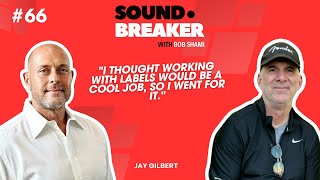
Jay Gilbert, a music industry consultant who worked at Universal, Warner, and Sanctuary Records, shares how he launched one of the first digital-only labels during the iTunes era. He emphasizes goal-setting and tailored marketing across radio, touring, and sync deals, and predicts listeners will increasingly become creators through platforms like BandLab.
Chapters
Welcome to Sound Breaker. In today's episode, we're talking to Jay Gilbert, who is the music industry consultant and curator of the Your Morning Coffee newsletter and podcast. Jay, thank you for joining us today. And for our listeners who might not be familiar with you, could you please introduce yourself?
Sure. Well, first, Bob, thanks for having me on. I really appreciate it. Yeah, I've been working in the music industry for, for decades. I used to tour as a musician. Worked at record stores, started working at Universal first. I was there 18 years, worked at Warner Music Group for 5 years. I've been doing my own thing. I have my own company and private consulting, which I've done for about 9 and a half years, working with primarily artist managers, but some artists and a couple of labels and a couple of data platforms, that sort of thing. So I've been doing that for about 9 and a half years. And as you mentioned, I have this newsletter called Your Morning Coffee. And a companion podcast. I also do a podcast with Billboard magazine called Behind the Setlist with Glenn Peoples, which is just a lot of fun. You'd be surprised how many artists have never been asked about the songs they perform live. And then I do one other podcast with Mike Branville called Music Biz Weekly, and we just passed our millionth download and our 600th episode. So we've been doing it a while.
Wow. Congratulations. Amazing. You know, let's start. You said you worked at record stores. I want to start with that, Jay. What stores you worked at?
Oh, I worked at two different record stores when I was fresh out of high school. I worked at Rising Sun Records and Tapes in Salem, Oregon, and then I worked at Tower Records for nearly 5 years in Portland, Oregon. And it was so much fun.
Tower Records. It's funny, you'll ask anybody right now, 18 years old, or maybe even 20-year-olds say, hey, have you heard of Tower Records? I'll say, what is that? Is that a new—
you know, there's still 90 Tower Records stores in Japan.
Where?
Well, okay, 90 different locations. Yeah, in Japan.
You're kidding me. And they're working live and kicking?
Yeah, well, it's a different company now, but you know, Japan is the number one market in the world for physical, uh, goods.
I thought India.
No, it's Japan. I thought according to the latest IFPI report, it's Japan.
Oh wow, okay, I didn't know that. Honestly, this is new. Well, something new on Sound Breaker. Okay, Japan is the number one for physical good. So they sell what, tapes, CDs, vinyl?
Vinyl, yeah.
Wow, okay. And, and what about CDs?
Oh no, yeah, vinyl and CDs mainly.
Amazing, unbelievable. Okay, Japan, we love Japan. We definitely love Japan. Um, Jay, You've been in the business for decades, and I don't want to say that again, you know, makes me feel old because I have been in it for over— for almost 30 years. Yeah. Um, what really got you into the music business? Was it, uh, you know, say, hey, this is the path I want to take? Influence from home, your mom, your dad, friends? You were part of a band? What really started that journey?
Yeah, all of the above. I grew up in a very musical household, you know. My mom played classical piano, my grandfather played played saxophone in big bands. My brother Jeff was a guitar player. We were immersed in music. Um, but back then, amazing, we didn't know about genres and moods and things like that. I would listen to the radio and songs like— well, artists like Poco and Pure Prairie League would be played alongside of Wild Cherry and Earth, Wind Fire. We didn't know what color those people were. We didn't care. It was just music. It was just great music. So I was always immersed in music. I played music, like you mentioned. I played in bands, and that was a lot of fun. And working in record stores. So I've always been just immersed in music and everything I do.
Wow. Every breath you take, it was all music when you were a kid, so there's no way out of it. So you worked at record stores, which kind of helped you a lot, I'm sure, gained knowledge and a lot of inside info. And from there you started— how did that— you just went and worked for Universal immediately, or how did that happen?
You know, working at record stores was so much fun, and it's a learning experience like you mentioned. You know, people would come in and say, uh, I need the new, uh, record by so-and-so, and you'd need to know where that would be in the store. But you could also sort of become that recommendation engine. You'd come in and say, oh, I bought that John Coltrane, that Edith Piaf record, what else do you have that I would like. So it was sort of like the movie High Fidelity. You know, we were the recommendation engine, which was really cool. And I noticed working at Tower that we had these reps from all of the different major labels would come in and they'd set up promotions and they'd have display materials and they'd bring promo copies to play in the store. And we struck up friendships over the years and we went to a lot of events together. And I thought that would be sort of a cool job., and I, uh, applied for and interviewed for a job with then MCA, which became Universal. Yes. Excuse me. And I got the job and, uh, I moved from Portland, Oregon to Seattle to take that job. And then after about a year of that, they moved me down to, uh, San Francisco, uh, to work there. And eventually I ended up in Los Angeles, but it was 18 years with Universal because I had a new or different job every 3 or 4 years. I didn't do the same thing for 18 years.
Wow. Okay. Interesting. Jay, what were some of the key lessons you learned starting at Universal Music Group?
Oh my gosh, there were so many. I was very fortunate that I had a mentor, this guy named Bob Schnieders, and he would— well, he really took me under his wing and he taught me things like, for example, when you give a report don't just give somebody a ton of facts and figures. Summarize it in what he called the executive summary. So at the top of the report, there were like 2 or 3 sentences. So if you weren't going to read the entire report, at least you would understand what it meant by that executive summary. He also explained to me and made me learn that this business is all about relationships and follow-through. If you can develop good relationships and there's some integrity and you do what you say you're going to do, you'll go far in the music business.
It's a good one. That's a good lesson. Absolutely. Follow up. Absolutely. Yes, it really is. And do what you said you wanted to do. Yeah. Jay, let's talk about Sanctuary Records Group. How did that work in there influence you handling artist marketing?
Yeah, that was a big change for me. I handled Sanctuary basically for the western half of the United States. And Sanctuary was a very interesting company back then. They were a record company. They were publishing. They were book publishing as well as music publishing. They did producer management, which is interesting, and they did artist management. So, excuse me, they did a lot of different things at Sanctuary. So you could learn a lot of different verticals. And by handling everything, from advertising— excuse me, I can't seem to clear my throat this morning—
from handling everything. You run quite a few podcasts, my friend.
Yeah, I know. I guess, you know, with, with Sanctuary, I had to run all of the advertising, all of, you know, the in-stores, bringing artists to record stores for performances and to radio stations. So there was a lot of interaction with artist managers and with artists. And then as the label, you see things a little bit differently than you do if you're the distributor or the manager, right? So I learned so much from that time with, with Sanctuary about artist relations and manager relations and, and how to, you know, develop those relationships and get the things done that they needed to get done.
Jay, what inspired you to move to Universal Music Enterprise, UME, and how did you bring some of the new ideas into digital marketing?
Yeah, I went to UME, Universal Music Enterprises, which is their catalog division, when I went back to Universal. And it was great because we were working with Bob Marley's, you know, his music, his estate, Jimi Hendrix, Elton John, John Coltrane. I mean, it was just an embarrassment of riches. But that was right at the time that iTunes started to take off. So downloads started to become a thing, right? And so did Napster on the illegal download side. Yeah. But I remember going to meetings and we would talk about sales and marketing, and I noticed that my numbers kept growing and growing and growing. And it would surprise people to learn that the first things to really take off from digital downloads was comedy. It was one of the very first genres. And we had Larry the Cable Guy and Ron White, and I kept coming to these meetings, these sales meetings going, we did— first it was hundreds of downloads, then thousands of downloads, then tens of thousands of downloads. And pretty soon we started taking this whole download thing pretty seriously because you'll remember right around that same time we had ringtones and ringtones were a big thing for a hot minute. And I remember Marvin Gaye's Let's Get It On when it passed a million ringtone sales. It was an exciting time to be in the business.
Very different.
Absolutely.
Yeah.
And it was also a time when I was allowed to start my own label at Universal, and it was a digital-only label. And it was, it was new at the time. We were one of the first to do it, and they did some, uh, really great publicity on, in the New York Times and NPR. And I got to actually sign artists and run a label. And one of them was iTunes Pick of the Week, which was a thing back then. You know, if you got your song to be the sort of this Pick of the Week, you got some publicity and some placements. And it was just a really exciting time to be in the music industry as we were sort of fighting the, you know, illegal downloads and then trying to build our own download business.
It was a very crazy time. So you would say that was one of the biggest challenges you faced when you launched the first major digital label. It was the illegal download.
Yeah, that and the fact that no two people could really get along. Like, we had two groups. We had Press Play and MusicNet, and some of the majors were on one, some of the majors were on another. We couldn't agree on a codec. And a codec is basically compression, decompression, you know, like an MP3 or, you know, something that protects that download from being pirated. So it wasn't that the majors didn't know what they were doing. It was just uncharted territory. And we were all sort of building the plane while we were trying to fly it.
Interesting. Jay, from working at Music Universal Group, you went and you also worked at Fox Entertainment or Home Entertainment, which really handles more on the film side. How did that happen? By working, you know, on film campaigns at Fox Home Entertainment impacted your approach also for music marketing?
Well, Fox was movies, so it was so new for me in two ways. One, it was movies, which was not my expertise. And number two, it was all ex-US. You know, it was all international. So I got that international digital experience that I needed. And businesses run differently in UK, France, Germany, Italy, Spain. Than it is in the United States. And so I really quickly got to learn the different personalities of these territories and the different needs, and the ways that they market are different territory by territory. So it was like being paid to go to school. Excuse me. And my favorite part was when I first joined Fox, they do this thing called immersion, where for the first week or so you're required to go meet with other executives and spend a little time with them and learn what they do, what their path was, and how that interacts with what you do. And I learned so much in that week because you could go meet with the head of the studio, you can meet with whoever you want. And I did. And it was very educational. And you find that we're all pretty similar. You know, we all have similar paths like you and I were talking before we hit record. You and I have similar paths in our careers in the music business. And in movies. Correct. I learned that it wasn't my passion, but I learned a lot about digital strategy and marketing and all these other territories. It was just a fantastic time at Fox.
Amazing. I mean, yes, this is pretty much from you, but I feel there's a big connection between the music world and the film world, the really big connection. I mean, if we go back to the retail store, you walk into any— was it Barnes Noble or Coconuts or Goodies or Tower Records or Virgin or HMV, any of these big chainsaws or the small stores, what do you find on the same shelf space? Yeah, CDs, cassettes, DVDs, and books. They were always together.
Absolutely.
Uh, Jay, can you share memorable moment or effective strategy, uh, from your time when you were managing projects like, you know, Coldplay, Bruno Mars, Josh Gorbun, Green Day, Black Keys, and etc., you know, at Warner Music Group?
Every plan is different. Every marketing plan is different. It'd be nice if it was a cookie-cutter approach and you could use one plan and it just worked on every artist. But every single project was different. And when I was with Warner Music Group, I managed the Amazon account for We Are ADA. So that's Warner Music Group, all of their labels. And so I was sort of the point person for those labels when they wanted to set up advertising with Amazon or marketing campaigns, or let's say they had a tour that was happening, whatever it was. I was doing presentations for Amazon on all of our new releases and showing them what all the drivers are. And if you don't know about drivers, it's things like, you know, do you have a tour? Do you have some, you know, press hits that are coming up? Are they going to be be on CBS Sunday Morning or NPR. You know, why is this release special? And the challenging part was also the fun part, was you had to go in there— why, why should they care about this release? You needed to make them care about the release. You need to play the music for them, show them how amazing it is first. And that's always the first song. I always use this quote from Jonathan Daniel, who runs Crush Management. He said If you give me a great song, my job is easy. If you give me a good song, my job is impossible. And that's the world today is you have to start with great music. So let's assume that, you know, some of those artists that you mentioned, it was great music, but you also need to have a plan at radio and touring and merch and sync licensing and all of these different things as well as that retail plan. And the last thing I'll say on it is that Amazon is different than any other retailer, and they were then and they are now, in that they're a powerhouse when it comes to physical, especially on the adult side. But they also have digital, right? So back then it was downloads and then it moved into streaming. And so you had two different teams that you were talking to when you were setting up, you know, all of these campaigns. It was absolutely a joy to do. Because like I said, every single campaign is completely different. You know, the audience is different. And really, it sounds pedantic, but our job is to reach those core fans, reach sort of the dormant fans, and then reach people who have never heard that album or that artist. And that's a different plan for everyone.
Um, what are your top, you know, your top advice for any upcoming artist that, you know, looking to build their own digital presence with Label Logic?
Yeah, the first thing we ask any potential client, whether it's an artist manager or an artist, is, um, after we listen to the music, is number one, what are your goals? Because everybody has different goals. If you ask of a jazz artist They want, they want a tour, they want to play live, they want accolades, you know, they want to play the Village Vanguard, they want to be on the COVID of DownBeat, they want a Grammy. That's on the jazz side. Well, let's take some new developing, you know, rock artists. They care a lot more about streaming, even though there's not a ton of revenue in streaming. They focus so much on playlists and streaming. So every genre, every mood, everybody has different goals. So we start with that. Number 1, what are your goals and are those realistic? Are you aiming too low? Are you aiming too high? And then that way, when we do a campaign, we can see here's— here are your goals at the beginning. Excuse me. Did we overperform or underperform? Number 2 is what is the narrative? Why should anybody care? Is it aspirational? Is it, you know, somebody— is it based on who you're playing with? Is it just overcoming adversity? What, what is that narrative? What is the story not only for you as an artist, but for that album or song? Right. So that's, those are the first two things that we, we start with when we sit down with an artist or manager.
So pretty much I would call it, you know, you develop personalized marketing strategies for different artists, for each artist, I would say.
Yes.
Yeah. Okay. Yeah. And Jay, how do podcasts influence conversations in the music industry today? Sure, there's always involvement and growth, and technology cannot be stopped. Technology gonna keep going forward, it's going to keep evolving, and more and more and more things going to change with time.
Absolutely. Yeah. Yeah, it's evolving and changing. I mean, we've gone from a business of ownership to access. And with that comes a lot of new learnings. So let me back up. About 9 and a half years ago, um, a friend of mine sent me an email. Um, he was out of work, and the email had 10 albums that he had discovered, uh, that month. And I thought, oh, this is great. He's a good friend. Um, his name is Sean Murkowski, used to work for ADA, part of Warner Music Group., and I noticed he had copied, like, hundreds of people on the email. I thought, interesting. So I called him and I said, this is really great because he and I have similar taste in music, but why are you copying so many people? And he said, well, I'm between jobs right now and I don't want people to forget me. And so when I left Warner Music Group and I was trying to decide whether I wanted to start my own company, I didn't know what I wanted to do. I took that advice and I started this little newsletter called Your Morning Coffee.. And I sent it to, you know, a couple hundred people in my contacts. And I noticed that it started growing each week. Today it's over 15,000 people that subscribe to the newsletter. And about 4 years ago, in fact, almost 4 years ago to the day, we started the podcast version of that Your Morning Coffee newsletter, which was all curating music news.. And it's just, we're over, what are we, about 220 episodes in. It's just been a joy to do that. And the guests that we get to have on the podcast, you know, you understand. I mean, when you get to sit down with people that are interesting or smart or have an opposing viewpoint, it's just absolutely fun to do every week. And so that's been sort of my baby. And I do those other two podcasts I was telling you about. But your morning coffee in the last 9 and a half years that I've been doing the newsletter haven't missed one week. It comes out every Friday morning. But the part that I wasn't expecting is now I get these crazy emails from some of the top executives in the country or in the world, in the business. And they want to be on the podcast. Well, either they want to be on the podcast or they'll say to me, I read that story. Here's something else you should consider. And that happened with Ticketmaster, Live Nation. We came on and we had only really reported on one side of that story., and by talking to them, we got the other side. We have very smart attorneys like Dina Lapolt and, you know, Chris Castle and all these people who come on and explain the legal implications of some of these things, like, you know, ethical generative AI and, you know, these things that are evolving and changing. They're a little bit ahead of the law in some places. So long story short, So, the podcast has really allowed me to have some really amazing conversations on the record and off the record. And I got to tell you, it's been the highlight of my entire career.
I could say the same. Yes, it is pretty intriguing, you know, doing a podcast and doing it constantly and you start to become visible. You know, people know who you are. And on top of that, just the people that you talk to, the people you meet, and the subjects that you interact in, into that conversation. Yeah, pretty intriguing. And you get to know people like you'll be amazed. I'm always like a lot of times after each interview, I'm like, wow, wow. I didn't even know. Me too. I'm— yes, I was blown away, taken away, you know? Yeah. You get to know certain characters and what drove people to be in the music business and how they done it. And you're like, you know, there's no excuse. It's got to be also you get to that level of mentality. It's like unbelievable. You know? Yeah.
Jay, what recent industry trend or topic on your Morning Coffee podcast excited you the most? Yeah, we've had so many fun guests on. We had Merk Mercuriadis from Hypnosis, and regardless of what's been successful or unsuccessful at Hypnosis, he's a force of nature. He's, he's a music freak and artist manager, and I've worked with him off and on for years and He's one of those guys that you could just sit and talk about his massive record collection for hours. And whenever I hook up with someone, you know, to talk about music, it can, it can go off the rails really quickly in a good way. One of the things that's really exciting for me is if your listeners are familiar with Luminate, used to be MRC Data, SoundScan, it's really the point of reference the music industry uses for our data on sales and downloads, etc. They do a lot of other things, but we have, we've had Jamie Marconette on the last, every 6 months or so for their, their Luminate report, and he'll break it all down for us, which is really great. One of the most exciting parts for me is I follow Music Business Worldwide and Midia and some of these great outlets very, very closely.
Billboard.
Well, now they, they come on the podcast and we have conversations. We recently had Tatiana Sirisano from Midia on. We've had Mark Mulligan on. They're just— they do these amazing reports and they're so smart. But at the bottom of it, they're just hardcore music geeks like us, you know, that they can't wait to tell you about that album they discovered or that show that they saw. And I was so humbled to find out that Tim Ingham and Murray Stassen and all those cool people over at Music Business Worldwide were even aware of the podcast and newsletter. And to get to work with, you know, the fine folks at Billboard, You know, I do a podcast with Glenn Peoples, the lead analyst over at Billboard, called Behind the Setlist, which we really love doing. But there are other people— Steve Knopper, I get to talk to from time to time, and he'll pop on the podcast. And, you know, they have so many smart people who are— Elias Leitte, who, you know, they're writing these pieces that are really important about some of those topics you and I mentioned, like generative AI is such a big deal right now. You know, you're looking at the fairness for, you know, songwriters getting paid, the Copyright Royalty Board and the Music Modernization Act and Mechanical Licensing Collective. And all of these things are evolving so quickly. So if you're like most people working in the music industry, you don't have time to read all that stuff and you need someone to sort of give you a recap, to curate it every week. And that's sort of what we do with Your Morning Coffee. If you look at the newsletter, It's maybe a dozen stories each week, but there's like a paragraph on each one. It's that executive summary that I told you about at the beginning of this interview. Yes. That if you're not going to read this story, this is what you need to know about that story so you can stay informed. And then if you want to dig in and, and learn a little bit more, you can certainly do that.
But that's sort of the background on that. You know, before we talk about you being a photographer and your photography, how did it influence your digital marketing in the music world? Uh, before we answer that, oh, you know what, what is the future of the music business? You've been through it all, you've seen it all, from the record stores, physical, to major labels, the digital, to your own marketing. You have a podcast, you meet a lot of people, you hear a lot of things, and certain things Hmm. It gives you that aha moment when you, when you listen to it. So what do you think is the future of the music business?
That's a great question. At the beginning of every year, I publish predictions. And this year, I think there were maybe 10 of them and 5 of them have already come true. And it's not because I'm the smartest guy in the room. It's because I listen to the smartest guys in the room and I watch what they're doing. And I can tell you that I was never big on the whole Web3, NFT, DAO, you know, all of that. As far as I love the underlying technology, but I never thought it was going to be the thing that a lot of people thought it was going to be. I'll tell you what my predictions are. I think that the music industry is quickly moving to the listeners becoming the creator. Watch what's happening at BandLab, what Meng Quoak and the team over at BandLab are doing. They've got 100 million monthly active users. And sometimes I talk to people and they go, oh no, I've never heard of BandLab. What is that? It is where these creators and they're this new wave of creators. Some of them are gifted musicians and songwriters and lyricists. Some of them can't play an instrument. But with the technology today, the fans aren't— they don't want to just listen like I did growing up. They want to participate. They want to speed up the track, they want to slow it down, they want to reverb it. Then on another level, they want to take those stems and remix it and reimagine it. Then on another level, they may want to take that body of work and generate new works from it. I believe that in the next couple of years, you're going to see a lot more of the listeners become the creators. Right now, according to Luminate, there's about 184 million ISRC codes, roughly tracks that are up available, right? Well, 86% of those have been streamed 1,000 or less times. Uh, 25% of them have never been played once. There's this firehose of music that's being uploaded to the DSPs, roughly 100-some-odd thousand on average every day. It's too much. It's absolutely too much. That's only gonna get worse. And when these users, these listeners, these fans, when they become the creators, which I, I promise you, that's where it's going. It's gonna be, you know, not just millions, but it's gonna be billions. And, and the last thing I'll say on it, I, I just read this really great book by Glen McDonald. He used to be the, uh, data alchemist at Spotify. He came from Echo Nest and helped them come up with their, Spotify algorithms, and he wrote a new book called You Have Not Yet Heard Your Favorite Song. And in the book, he explains a lot of what I'm talking about, where there's so much great music out there that you would absolutely love if you only heard it. So the second part of this prediction is I think we're finally going to get to the point where you'll be able to be recommended music better. Right now, there are ways, you know, there are recommendations. Let's say you go into Spotify, you know, they have Release Radar, Discover Weekly, and Radio, and some of those are really, really good at serving up music that you would probably like. But I think we're going to cross a new line with artificial intelligence and with other new platforms where they're going to listen to what, you know, is in my music library, and they're going to go, oh, well, you like you know, Neil Finn, you like The Accidentals, you like, you know, The Beatles, you'll probably like these 6 artists. And that's going to be exciting for us. So to sort of recap, I think the users are going to become the creators.
And I think the road to discovery is going to make exponential leaps and bounds. Yes, I 100% agree. And exactly what I think, just the information I gathered from a lot of the people I speak to. On my podcast also. Amazing. Yes, I'm same, same, same way. You know what is that tells me also, as you said, the fans and the users become the creators. Yeah. The same thing happened with social media, with YouTube channels. The fans of celebrities, they became the celebrities themselves. They started creating their own content. And the same thing when TikTok came in. It wasn't enough for them, YouTube and all of— they wanted something else. They wanted the experience. So they started creating their own experience. Become also, you know, the fans became the creators and they became the celebrities themselves by use. And, you know, just listening to music wasn't enough. They wanted to have a different experience. So they take certain parts of the music, as you said, sped it up. Sometimes they take— so it's music you never heard of and it became all of a sudden became a big hit. There's a lot of new TikTok artists were born with just— they weren't— they weren't— nobody listened to them on Spotify or Apple or none of that. It just— that's right. You know, there were a lot of tracks were made in somebody's home bedroom studio on their laptop. Yeah. And yes, and a lot of new artists were born and a lot of new celebrities, a lot of new creators and interesting creators obviously came out of it. And now, as you said, they want a new, different experience. And so they want to be— get involved with that, take a song that they like and recreate it in the way they feel it should and create their own experience. As you said, their own immersion. Immersion or immersive or immersion. That's the new word that they use in immersion. Yeah, experience or experiential, actually. I'm sorry, that's the new word, experiential.
Yeah, amazing. Let's talk about your photography. Yeah, I've always shot photos since I was a little kid. I always had a camera around my neck since I was, uh, well, as far as I can remember. And because of my love of music, I would sneak my camera into shows. Back in the day, you weren't allowed to bring your iPhone, you know, which— you weren't allowed to bring your camera to shows. So I would sneak it in and take photos. And I'm so glad I did because I have these really great images of, you know, Van Halen on their very first tour opening up for Black Sabbath in 1978. You know, things like Alice Cooper, David Bowie, Cheap Trick, Elton John. I was just in love with taking photos. And back then I had my own darkroom and I developed the pictures and it was this very romantic thing. So sort of fast forward over the years, because of the fact that I love photography and I've been doing it for a long time, as I work with some of these labels, sometimes they need press photos or they'll need photos for social media or maybe even for an album shoot. I started off slowly doing some press shots for certain artists and being a photographer, it's really all word of mouth. Advertising doesn't really work. It's like you know, a real estate agent. It really— it's that word of mouth that keeps people going. So, um, I shot several albums, maybe 6 or 7, for Rick Springfield, for John Waite. I shot the Temptations' last album. But it's just been such a joy. I work with a guy named Chris Schmidt. Um, he has a studio here in Los Angeles, and we do a lot of album shoots together. You may not know Chris's name, but his dad was Al Schmidt, the producer, 25 Grammys, worked with with, you know, everybody. Um, and Chris and I have probably done 50 or 60 shoots, uh, together. And that's sort of a side hustle, you know. We go into the studio on the weekends and we lock the doors and we turn off the phones and we just create. And one of the most fun shoots we did was Ace Frehley from KISS. We shot his last album, but we did so many different sets that they did 5 different album covers from that one shoot. And it was— we rented props and, you know, smoke machines and spacesuit outfits and all that stuff. And man, it was— it's just been so much, so much fun. And it's different. You, you connect with an artist differently when you're working with them like you're their label. When you're their photographer, it's a whole different thing. You can give them direction. You can show them the images on the big screen and go, this is what I'm trying trying to accomplish. I had a shoot a few weeks ago with legendary guitar player Skunk Baxter. Um, Skunk Baxter, as you probably know, was in the Doobie Brothers and Steely Dan, and he's just one of the iconic guitar players in rock history. And there I am, you know, Chris and I are having a photo shoot with him, and we're making him look like the badass that he is. And once they sort of see that you know what you're doing, they start to relax, because nobody really likes having their picture taken.
Yes.
But if you like, we put up a big monitor. So instead of me taking a photo of you and then showing you the back of the camera and that little tiny thing, we take a photo and it goes up on this big screen and they go, oh, that actually looks pretty good. And then they start to relax. And what I love about photography is you never know what you're going to get. Every shoot is different. Just turning a light a certain way can change things dramatically. And so we're always experimenting and trying different things, and sometimes it doesn't work, but sometimes it's magic.
What tips you have for the next wave of music professionals? After watching this episode, a lot of people are going to be intrigued and say, hey, you know what, Jay did it. I still have a chance for me to do it. I'm going to carve my own path and make my own mark in this music industry.
Oh, now it's called the music tech industry. Yeah, I have some advice that, um, I think could be really helpful for a lot of people who are trying to get into the music industry, either as a worker or a marketer, or they want to, you know, perform live or be in the recording studio. Whatever it is, you can reach out to people today that I couldn't do when I was in high school or college. You can reach out to people who are doing what you want to do. I'll use an example. Let's say you want to be a sound engineer at some of these big music festivals. Well, you can go online and find out who runs the sound at all of these different festivals and for all these bands. And what I tell college kids all the time is reach out to them and say, you know, my name's Joe, I'm a college student. Can I get 15 minutes of your time and get some guidance or some advice? 9 times out of 10, they'll say sure. You hop on a Zoom and you find out what their path is. And I learned this sort of— I stumbled into it when I'm doing the podcast. And I know you know this as well. Sometimes just reaching out to somebody, and this could be somebody really famous or somebody very successful, you know, you reach out to them and say, hey, I'd love to get your advice on something. They'll give it to you a lot of times. I always say that everybody wants to give you advice, but nobody wants to give you a job. And what I mean by that is don't ask them for something. Don't say, hey, can you send me a thing, or can you do a thing for me? Say, I just want your advice and your guidance. And it could be over Zoom, virtual coffee, 10, 15 minutes. You'd be shocked at how many people will actually get on and do that with you. And I've had so many guests on the podcast that I just reached out to and said, hey, would you like to come on and talk about this thing? And again, they do it. So let's say you want to be an artist manager. There are a lot of artist managers out there, and they're pretty easy to find on social media, on LinkedIn. You know, Pollstar has guides, you know, these, these directories. If Pollstar, P-O-L-L-S-T-A-R, you can purchase a record company guide, a touring guide, artist manager guide. And we use those to reach out to gain contacts. And that would be my advice is you need to work hard, right? You need to have integrity. You need to build great relationships. But at the end of the day, you got to get your foot in the door somewhere. Reach out, ask people for advice. If you can do an internship, Do it. I know it's challenging because a lot of those internships are not paid. Some of them are, but it's a matter of getting in, get your foot in the door and developing those relationships.
You heard it here on Sound Breaker. Get your foot in the door. Absolutely. Very important. And coming out of an expert who's been through it all, been through it all. Definitely. You're an entrepreneur of the music business, my friend. Definitely, Jay. Absolutely, man. Congrats on all the work. Before we wrap it up, I love this interview. Very intriguing, extremely insightful and educational and informative. Anything you're working on besides, you know, your Morning Coffee podcast and newsletter and your consulting services? Anything else upcoming you would like to talk about, you'd like to mention for the viewers to kind of go check it out in the next month or so this year?
You? Yeah, working on some really exciting projects with some really smart people. I can tell you that on, on the podcast side, um, this week will be our 4-year anniversary episode, and we're going to do a special bonus episode with Glenn McDonald, who wrote— from Spotify, who wrote that book. Uh, really smart guy, really great insights. Everybody thinks they know what's in the Spotify algorithm, but, you know, skips are bad, you know, ads to personal libraries are good. But Glenn helped build it, and it's really great listening to how the sausage is made there. So that's really exciting for us. I've got some really great artists that I'm working with right now that I'm super excited about. One is this band, they've moved to Nashville. They've been together, I think, around 10 years. They're called The Accidentals, and it's this, you know, female-fronted band that are super talented musicians, songwriters. There's probably, I don't know, 10 people on on the planet who can write lyrics like Bernie Taupin, Neil Finn, Bob Dylan, Elvis Costello. Savannah can do that. And not only is Savannah in The Accidentals, who I absolutely love, but she tours as Lainey Wilson's multi-instrumentalist. So you'll see her on stage with, uh, Lainey, uh, playing violin, you know, mandolin, guitar, everything. So that's, that's sort of my newer developing, uh— I just, I love those guys so much. But I'm very fortunate that I get to work with, you know, gosh, some of my favorite artists growing up. I sometimes I pinch myself, you know, when I get a phone call from one of my favorite artists growing up and they're asking for advice. And the last thing I'll say is with, with the Billboard Behind the Setlist podcast, we, we've had some really, really great interviews. You know, we just did Perry Farrell from Jane's Addiction. We've had Shania Twain, we've had Black Keys. But we just recorded one last week with Lindsey Sterling, the violinist. And man, if you haven't seen this woman, she is ridiculously talented. She's not singing, she's playing violin. And she's played, you know, heavy metal festivals and, you know, more like Americana festivals. And she's toured the world. She's amazing. And we have upcoming episodes with Daryl Hall. He's got a new album out. D, which is really great. And Paul Stanley from KISS, who I— that was my first concert, 1977, Cheap Trick opening for KISS. And it's sort of funny, it's coming full circle where, you know, I've got to see them, fall in love with them, follow them, later on work with them, which has been great. And now I get to interview Paul for the podcast, and, and it's pretty exciting. So follow your dreams, kids, because I'm telling you, if it can happen to a knucklehead like me, it can happen to you.
So you're pretty much living your bucket list life. Yeah, you're really living it. Absolutely. That's it. You live once, enjoy life, do what you want to do, and just don't let nothing stop you. Absolutely. 100%. Well, Jay, I want to say thank you for joining us today. It was definitely a pleasure having you on Soundbreaker, sir. Great talking to you, Bob. Absolutely, man. Same here. And this concludes today's episode of Soundbreaker. Please make sure to follow us on socials and stay tuned for our new episodes That's it. Thank you and see ya. If you enjoyed today's episode, make sure to share the Sound Breaker podcast. And if you are joining us on YouTube, please like this video and subscribe to the channel. Until next time.
More from Jay
Inside the Future of Music Marketing with Jay Gilbert (Your Morning Coffee Podcast Co-Host)
Episode #303 – Ghosted Songs, Illegal Tribute Bands, And Music Consultant Jay Gilbert
Let's Get Real About Marketing in 2024 with Jay Gilbert | Music Industry 360 Podcast