Inside the Future of Music Marketing with Jay Gilbert (Your Morning Coffee Podcast Co-Host)
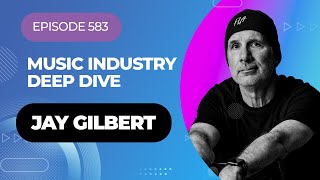
Jay Gilbert, Your Morning Coffee co-host, tells Bobby Owsinski why breaking through as a musician is now exponentially harder: cheap production tools and AI flooded the market, forcing artists to handle songwriting, recording, video, social media, and fan engagement alone. Labels once spent years developing artists; now A&R scouts live shows and watches streaming data. Gilbert warns that AI-generated vocals raise copyright concerns but sees promise in reviving legacy artists' voices.
Chapters
If you're writing, recording, whatever you're doing, make sure that you're doing it for yourself first and that it makes you happy. If you're doing that consistently, I think you get better. I would tell young people, be yourself and be consistent. Music to me isn't what you do, it's who you are. You've chosen this life because the life chose you. So if music is part of who you are, it's part of your DNA, man, you got to respect that. Keep writing, keep recording, keep collaborating, be consistent, keep doing it.
My guest today is label consultant, music photographer, and co-host of the Your Morning Coffee podcast, Jay Gilbert. Jay has always been on the cutting edge of digital music marketing during his time with Universal Music, Sony Music, and Warner Music Groups. In fact, he was VP of new media and online marketing for Universal Music Enterprises. During his time there, Jay launched the first digital-only label, created the industry's first sheet music plus album download, and created unique online marketing plans for Nirvana, The Police, KISS, Mötley Crüe, Bob Marley, Elton John, Guns N' Roses, and many others. After he struck out on his own in 2015, he began curating a weekly newsletter called Your Morning Coffee with a list that eventually grew to 15,000 readers. It's now one of the most influential newsletters in the music industry. During the interview, we talked about the role of record labels today, the rise of solo artists versus bands, attribution and intellectual property and AI, Jay's advice for aspiring musicians, and much more. I spoke with Jay from his studio in Los Angeles. Do you think it's easier or more difficult for an artist to, um, be successful in the music business today?
So we'll start with the small questions. I think it is exponentially more difficult. I think that years ago, um, when I played in bands and toured around It was fairly easy, Bobby. Like, you would get— let's just say you had a good band and you had good songs. Let's start with that and put that aside for a second. You would play live in your city and develop a following. Maybe if you played in your state, you could play other cities, your, you know, your region, and you could stay there and you could make a decent living and, you know, you could do pretty well. Um, record companies back then gave artists a lot of time to develop. You know, you look at a lot of these artists had 2, 3, 4 albums, um, that a label would give them time to develop. You know, the Cheap Tricks and REO Speedwagon and whoever of the world, they didn't typically pop on their first album. Um, today, man, there's just— the barrier to entry is so low, as you know. It's so challenging. You know, there's just— seems like everybody is creating music, whether they're doing it with their laptop or with AI or learning an instrument. It just seems like there's just this barrage of— and some of it's really good, and it's so hard to rise above the clutter. So that's a long-winded way of saying I think it's in some ways it's really much more challenging than it ever was to rise above that clutter. Plus, there's so much more you have to do. Like, if you're an artist today, it's not just writing, recording great songs, playing good live shows. It should be all about that. But you have to do short-form video, right? And you have to do social media and maybe TikTok and YouTube and Twitch. And oh my gosh, your email list and meet and greets. It just seems like there's so much more that artists have to do today, um, to be successful. Now, having said all of that, there's always exceptions to the rules, right? There's always people who pop, um, for whatever the reason, the timing. There's a little bit of luck, you know, in our business as well.
Yeah, you kind of described my life in the beginning there, my early life anyway, you know, starting in a band and, uh, making it locally and then regionally and then statewide and then East Coast-wise. And you could do it because another reason you had support of the radio stations too, local radio stations, which don't even matter anymore.
And it is, it is a shame because I grew up on radio. I just spoke yesterday with a friend of mine named Tim Patterson, and when I was in high school, I used to hang out at the radio station there in Salem, Oregon, KBZY, and we knew one of the DJs and they were rock stars to us. You know, like we would just hang out and, can we watch you, you know, do your thing? And later I got to know the DJs at my favorite FM station in high school, KGON. And again, those— they became lifelong friends, but at the time they were bigger than life. The radio was, as you mentioned, I mean, it was substantial. It was a big, big deal.
And nobody— well, I can't say nobody listens, but they don't listen the same way. And it's funny because So much of radio now has become either a talk radio or sports rather than music. It's not the music repository that it used to be in discovery.
No, but I do like some of the things that I've been seeing online, and I know it's not the same, but first of all, I think SiriusXM has some really cool channels, but I was listening to Elton John's radio show on Apple Music, and man, that brings you back to those days where the DJ had an opinion and said, you know, Bobby, you need to listen to this new track by so-and-so. Hold on tight, here we go. And you almost felt like you had a relationship, you know, with that DJ. Yeah, I miss those days. It was really romantic. It was really cool.
Let's talk about record labels for a second. And yeah, labels don't develop artists like they used to. And I wonder— I know it's a conscious decision not to do that, But it also makes me wonder why that happens if they feel they don't need to anymore. And now obviously there's no other infrastructure that you can get from going from a star to a superstar than with the record label. But before that, you just don't find the artist development like you used to.
Yeah.
So, and you come from a time when your time in the label where that was a big deal. When do you think that started to change?
I think it started to change when artists could build that fire on their own, meaning that back in the day, '60s, '70s, '80s, you know, you really needed a label to take you to another level. And then I think what sort of happened is some of these things came about, like social media, YouTube. Some of these tools came around where you could actually build an audience, an engaged audience, sort of on your own. You could tour, you could play festivals, you could use these tools. And there was a shift. Because I remember talking to Travis Tritt about his first deal was 3 songs. It wasn't an album, it's 3 songs. Well, guess what? I think all 3 of them went to number 1. So he did okay. But that's similar, Bobby, to today where they want to throw gasoline on your fire. They're not going to build your fire like those days that we love so much where someone would sign a band because they believed in it, like you know, I'm signing James Taylor and we're gonna, you know, put some money behind it. He's gonna play live, we're gonna get him on television, and we're gonna grow this audience, get him on the radio. Um, I think what happened was all of a sudden now these labels are saying, okay, well, I want to look at your social footprint, I want to look at your YouTube video views, I want to look at these metrics. And I did this, um, panel, it's really interesting, at Music Tectonics a few years ago, and it was on A&R and data. And I spoke to a lot of different labels about how they sign artists. All of them have internal dashboards, you know, where they look at, you know, what's, what's happening with all these little data points. You know, not only do you have a growing trending social media, short-form video, whatever, but how engaged are the audiences? And then I asked this one gentleman With all this data, how do you sign artists today? He said, well, I, I go out to see somebody play on a Tuesday night and I look for a lineup around the block to see him play. And I thought, wow, that's, that's old school, you know?
Yeah, yeah, right. That actually happens today.
Yeah.
Wow.
I think it does, Bobby. I thought that was over, but I also think that it's just a different world now because at their fingertips they have You know, they can press a button and say, show me every unsigned band that has over 100,000 monthly listeners. I mean, there's a little bit of laziness to some of that stuff. And there's also the part where you— and you've heard this too— where someone sends you a song and you're like, oh my God, this is so good. And then you look and you see they don't really have an audience yet. That's the toughest lane in the music industry is going from 0 to 60. And there are some people who are working on that, and there's some good platforms, and there's some tools and tactics and all of that. But that's the toughest lane because today a label wants to start with someone, an artist who's already playing certain cap rooms, that's already stage ready. You know, they've played live shows. This isn't the days of, you know, you get a TikTok video and somebody signs you and you haven't even finished a song. Let alone played a live show, that pendulum swung the other way, right? So now it's really about how can we throw some gasoline on your fire and blow it up? And to your point earlier, these labels, they're not stupid and they're not lazy. And I've worked for a bunch of them. Some of them are better than others, but they have a global network of people who know sync licensing and publicity and brand partnerships and all these things. And when they decide to get behind something because it's got, you know, that drive, they can move mountains. So I don't ever put down major labels, but as a developing or middle-class artist, I think you want to be a priority at a small indie until you get to a point where, you know, you're taking those phone calls. And the last thing I'll say on this rant is that I was talking to a friend of mine who's an artist manager, because a lot of my clients are artist managers, and we're talking about when, when is it right for you to go get an artist manager. And he was telling me that he tells artists all the time, all of us artist managers and booking agents and all of us, we know what's going on out there. We know who you are. If you're making some noise, meaning you're, you're playing bigger rooms each tour and you're getting your streaming and your socials and all the silly stuff is growing, you're on their radar. And I remember calling Nonesuch because I love the label Nonesuch. I just love the music on that label. And I just think they're, they're so good at getting artists on CBS Sunday Morning and NPR. And anyway, big fan. And I called them up because I had a friend who was working there in A&R, and I said, hey, I'm working with this band called The Accidentals and I really love them. I think they'd be perfect for you guys. And he's like, yeah, Jay, we know, we know all of you. They, you know, and he sort of recited sort of the festivals they were playing and the co-writes they were getting and that sort of thing. So I don't think the labels are asleep at the wheel. I just think that they're looking for a business that's already a business that they can invest in.
Yeah, that's, that's a completely different approach from the way it used to be. But then again, you had labels that were run by music entrepreneurs, 100%, as compared to corporations. So I mean, there's the, there's a difference, right?
The Moe Austins of the world. And, uh, yeah, yeah, yeah.
And the good part about that back then was that, you know, if they liked the music, then they're behind you. And even if the first 3 albums failed, they would hang in there. That doesn't happen.
No, in fact, you would have artists— I'm a big fan of MCA Nashville, and back in the day, the late '80s, early '90s, they were untouchable. I mean, with Reba and Vince and the Mavericks, I mean, they were just— Tony Brown was the president. Who used to play with Elvis. I mean, legendary stuff, right? But they would sign artists that they— some of them weren't going to sell, like Joe Ely, just because they were good. And, you know, the— they didn't sign Rodney Crowell, but, you know, artists like that that maybe aren't going to have that big, you know, radio single. But I love those labels. I don't know, they have that personality and that integrity to sign artists that maybe aren't going to be massive. But to your point, you know, some of these legends that you and I grew up on, you know, like we talked about, you know, the— all of those people, they would sign artists, and not all of them would be super popular, but they would have album after album, you know, of these artists and, and stay with them. I don't think anybody has a stomach for that today. If you don't you know, hit with your first few songs, let alone an album or an EP, I, I think they, they move on.
What I find interesting is there are fewer bands and more solo artists, and there seems to be fewer and fewer bands all the time. I get it, because if I grew up in the same era, I'd probably want to be a solo artist doing my own music rather than getting together with a bunch of people, which it feels good when it works, but it takes a long time until it does. So there's a lot of work involved.
Yeah.
That being said, do you think there's going to be a comeback for bands, shall we say, at some point?
I think everything's cyclical. If, if history has taught me anything, it's that what comes around goes around. And, and I do think that that'll come back around. The, the problem, I think, in some of, some of these situations is it's easy to be a solo artist. I mean, the lockdown proved that to us. We had all of these sort of bedroom artists who would write some incredible songs, or they would got really proficient at their instruments, and you would see these videos of some kid playing piano or guitar or whatever, and you're like, wow, this is amazing. And they weren't doing it with a band. And then we have these things today, as you know as well as anyone, the software that makes it easy for someone to create loops and beats and bass lines and whatever to sort of accompany you whereas when I was in high school playing in bands, we needed each other to sort of develop those relationships and those sounds and learn how a bass is played with a drum set. And today they sort of stand on the shoulders of giants. Um, I have a friend of mine who plays keyboards on tons of records, and he collected keyboards all his life. So he has this studio with all these classic keyboards. And he was telling me one day that there's software packages now that you can buy that have those sounds in them, you know, and same with guitar amps. And you know all about this stuff. But I think to answer your question, I just think it's so easy to stay insulated today. But you've played live, you played with other musicians, and there's— it's not the same, you know. It's like you can sit at home with your and do your recordings and make some decent recordings. I've heard some incredible home recordings, and, and that's fine. But there's a different personality when you have different people adding those parts. And yeah, it's hard. We've played in bands. It's like being married to 3 or 4 other people, and it's hard to get along and stay together. And you know, there's egos involved and money and Yeah, that's— but when it happens, it's unbeatable. It's magic.
You know, I have a story that illustrates that. So I hadn't played live in years. I can't tell you how long. And a drummer that I used to work with called me up, and this was before COVID so it was 5 or 6 years ago. And he said, um, my band is playing a festival in Florida. I'd love for you to come and play with us. And I said, nah, you know, I don't have chops anymore, blah blah blah. And he insisted. So there's like 3 months in advance, and I really hit the woodshed. I played every single day. I, I played hard. And yet when I finally got on stage, I realized how different it was playing with people and how my chops weren't still up to it, even though I, you know, playing against loops and playing against, you know, tracks No problem. So it was like, boy, this is a different world. And I begged him, I begged him to not release the, uh, video to YouTube, and thankfully he hasn't.
But it's the same part, right? You're playing the same guitar part, solo, whatever it is. And you would think that if you're playing along to a record or playing along to a cassette or whatever it is, okay, I've got that part down. But you're right, there's the whole vibe of live, and maybe it's at a different tempo, maybe somebody's improvising a spot, or there's a crowd involved, or there's adrenaline. It's apples and chainsaws. It's a whole different ball game, right?
Yeah, that's for sure. Let's switch gears for a second into a subject that I know is on your mind a lot lately, and that's AI and music. And it's something that we're all dealing with on one level or another. I find it very interesting in that there are certain things that are very helpful on the production side that really make a lot of sense. On the creation side, less so. And having done it on various platforms, I realize that it's not as easy as pushing a button and having it spit something out. It takes some skill and time to really do it. That being said, now we're starting to see, uh, the growth of AI artists. And the funny part is there's not as much pushback as I expected.
Yeah.
Do you feel that as well?
At least initially. In fact, there's a new Illuminate report that's coming out tomorrow, and I got a sneak peek at it because we interviewed Jamie Marconet today for the podcast, and we broke down the report, and there's a whole slide on people's views and opinions on AI in music. And I think there's two different buckets here. One, let's look at functional music for a second. So that's lo-fi hip-hop to study by, or music to sleep by, or chill music to calm down after a busy day. Most people don't care if that's generated with AI. But I think where it gets a little challenging is when you go to the other side and it's people singing. And its songs, then that percentage sort of drops of people who think that that's okay. But, but you know this area better than most. And I think some of the conversations we've had surrounding this, you know, have educated me on a couple of things. One, a lot of these tools have been around a little while, right? A lot of them you use in your workflow all the time and there's no nefarious thing there. But then if you look at AI, which is generating, let's say, someone's voice, even 18 months ago, some of that technology, you could tell. You could hear the artifacting or the wonkiness or the bleed or whatever it is. You could kind of tell that. And, you know, there's the fake Drakes of the world and some of that stuff, which is fun to listen to. Or you can go and find, you know, Freddie Mercury singing, you know, some Beatles song or something. And it's a novelty. But something weird has happened over the last couple years, and that is that the quality is getting better and better and better. And it's become a really interesting tool for, let's say, songwriters. I have a songwriter friend of mine who uploaded his song, his guitar track, and then had the AI put in the drums and the bass and the keyboards and the strings, and he made this amazing-sounding demo and he's not going to release that, but he's going to send it, you know, to his publishing peeps and all of that. The other part of it I think about is like synthesizers and drum machines.
They—
it was all doom and gloom when they came out, and people were like, oh, there won't be any drummers anymore, and all of that. And I feel like AI is much bigger than all of that. Um, I, I love your Musician's AI Handbook. I've, you know, I've sold that to as many people as, as I could. I think it's a really great resource. All of this stuff is changing so fast. Um, I'm taking a course right now, an MIT course on AI, and it's really opening my eyes because a lot of the folks in that particular class— I think there's like 75— I think, you know, I'm the only one from music. And people are coming about this in so many different ways. And it's— this isn't Web3, this isn't NFTs, this isn't a fad, right? And I think that quality is going to get better. I think a great song is a great song. But I'll tell you the thing, and we talked about this a little bit the other day, one of the things that excites me the most is when you see Randy Travis releasing new music, because even though he's had a stroke and he can't sing, the AI is trained off of his voice and he can release new music. To me, I love that. The Brenda Lee Rocking Around the Christmas Tree in Spanish. You know, she was 13 when she recorded that song. There's no Spanish version of that, but they train on her body of work and there it is. Oh my gosh, the— you and I are just right today touching on the tip of the iceberg, but there's so much potential here and so much good. Yeah, there, there are always going to be people who are going to, you know, use somebody else's intellectual property, for example, and there needs to be rules and guardrails. And yeah, I agree with all of that. But I am so optimistic and excited about the capabilities of this. And the last thing I'll say is I saw this video that it turned everything upside down for me. I don't know if you've seen this, Bobby. Um, there's a— her name is Holly Herndon, and she— oh, she has that TED Talk, right? And she has her Holly Plus software, and she worked with this company called Never Before Heard Sounds. For those who haven't heard this story, But it's a 9-minute TED Talk, and she used this AI that's trained on her body of work. So you can use her voice, you can sing, and it'll come out her voice. But the thing that blew my mind was that she can translate her songs into Japanese or Chinese or Russian or whatever. Yeah, to me, those are some of the things in the coming years— how cool would it be? And I know this sounds like it's sacrilegious, but How cool would it be to create a new John Coltrane record only based on his body of work? How cool would it be to have, you know, the Beatles release their— all their albums in Japanese for the Japanese market? And I know there are people who would yell and scream, that's not what they wanted. That's okay. But just the possibility is, is super exciting.
I think Holly has her PhD in computer science from Stanford. She's smart. Yeah, you know, definitely she's one up on everybody on that. And I I took the same MIT course, by the way.
Good, good.
Yeah, it was pretty awesome. One of the things that's kind of interesting, and you know this now having read my book and going through the course, machine learning versus a large language model is way different. And one of the things in music production is there's a lot of machine learning. So that's such a small slice of AI, but it's trained to do basically one thing and it does it really well. So one of the things you never have to worry about is any hallucinations or anything like that. Whether you like the result or not is one thing or another, but it's very good at what it does in that one little slice of the world. When we get into things that are using large language models or the equivalent, it's a little different. One of the problems with music creation, for instance, is so you create something that you like, Udio Tsunami, any of those. And then you say, um, oh, it's really good. Now, um, let's do it again but, uh, add a bridge. And you don't get the same thing back with the bridge. Now it's slightly different.
Yeah.
And this keeps on happening where you go, I want it like this, just give it me, give it to me back like this with a little extra. And you have to fight it. Yeah. So it doesn't actually happen like that. So that's one of the frustrating things about working in an environment that's a little wider than machine learning. Machine learning is very helpful in so many ways, and we use it every day, just on your phone, for instance, the recognition, the voice recognition, facial recognition, all that. So I look at that and I think, we've been using this for a long time. It's worked for a long time for us. But it worries me with something critical that it might get wrong, which happens a lot. I have a good friend who used it for the first time and he needed some critical numbers for a presentation he was doing to a venture capitalist. He asked it for these numbers and ChatGPT shot out these numbers and he put it in the presentation and went and gave the presentation and the VC looked at it and said, "Those numbers can't be right." And my friend looked at it and thought, "Oh yeah, they can't. That's off by at least a factor of 100." Wow. And it made up the numbers.
Yeah.
So there's a part of me that thinks, "How can I trust something that might be off?" Yeah.
But you have to double-check all of that stuff. Everything that I've ever done with AI, and it's so good at doing certain things. I did a keynote at the Japanese version of the RIAA a few years ago, and it was basically on the history of A&R, and I just wanted an outline to sort of start, just some scaffolding. And it was so good at that. And then you, you double-check those things. I mean, you have to, you know, and it's also only as good as what it's trained on, right? So there's this company called Astral that I worked with a little bit. And they did something really cool. So the background of it is they, they sort of started off by taking, you know, a marriage therapist and taking all of his, his book and his papers and just his stuff and trained on just that. So he offered that to his patients. So if you were in a relationship and you were having trouble, you, you were going to him, but it's on a Sunday and you're having some spat with your significant other, you could type that in and it would say, based on his body of work, here's some exercises you can do, here are some things. So they took my Your Morning Coffee podcast and they took 100 episodes and they uploaded it in, and it was so much fun because you could type in, what is the Music Modernization Act, uh, what is such and such, and it's not all-encompassing. And, you know, we typically are talking about stories that are in Billboard or Music Business Worldwide or whatever. And it's to some degree it's someone's opinion, but it's sort of, you know, loosely based on fact. And I wonder if, yes, we have these large language models and we have all these things. I wonder if the future is maybe a little bit more bespoke. Maybe it's you get the software just for Bobby that says, Okay, these are the things that you do. Here's your body of work. Here are all of your books that you've written. We're not going to let this model go out on the web. We're only sticking with what you do. Um, and then maybe you— people subscribe to that, or if they go to your webinars or they buy your book, maybe they get access to it. I, I see some areas like that where it's a little bit more niche than these giant things that suck in every bit of data everywhere and make sense of it.
I've gone down that road actually, uh, a few years ago. There was a marketing company that I worked with at the time who suggested this and took a few chapters of my book and ingested it into whatever AI they were using. I don't know. And, um, the results were less than stellar. Let's put it like that. It was giving incomplete answers. Now, that was a few years ago, and technology has certainly come a long way since then, so I would expect it to be better. But, um, like I say, it was not encouraging at the time.
I would love to get your thoughts on this, Bobby, because so much today is you know, when you, you mentioned Suno and Udio and, you know, uh, drawing off someone else's IP. There are— they're not the only ones. There's a lot of these have drawn off of Hollywood films, or they've drawn off of all the artwork. And, you know, I'm a photographer, so there's a lot of photography that they're drawing from. Um, so attribution is such a big thing now. I'm wondering, how in the world are we going to you know, go to this— let's say it's, you know, ChatGPT. Well, it's, it's learned off of all of your books. So how can we pay you, you know, for the fact that it's trained off of your books? And how do we identify that? I think that's, that's going to be such a challenge going forward. What do you think as a creator?
Well, you know what just happened with Cloudflare, right?
Yes. Yeah.
Yeah. So Cloudflare, for those listening that don't know, Cloudflare is a, uh, what they call a CDN, a content, uh, delivery network. And it kind of sits in between, uh, your website and the, and whoever's downloading it, whoever's looking at your website and the ISP. And, uh, what it does is it makes sure that there's a fast transfer. Well, there's also a lot of privacy features that it has. And one of the big privacy features that it just instituted was to say, we're no longer going to allow AI bots to scrape any of our clients unless they want that to happen and unless they get paid. So I think that's pretty fantastic. The downside is if they don't get scraped, they also won't be in any search engines either. So it's going to be harder for someone to search for you. So there's, you know, it's 50% of one, 50% of the other. And so that's, that's a tough one.
Yeah, I wonder what's going to happen with Google. I was talking to a friend of mine the other day and he said they're doing— they're done. Like, as people get into AI, especially when it becomes voice and I can just say, hey device, you know, what are 20 things I need to know about this thing, or can you summarize this doctor report, or whatever it is. His hypothesis was that, you know, with all of these great platforms, they have their time. None of them are forever. I mean, you remember Friendster and MySpace, and they're on top of the world until they're not. And I'm wondering, you know, if that's going to happen with the AI side versus say a Google.
Yeah, you would think. And it's also all the ancillary businesses as well that do SEO.
Oh my gosh.
Search engine optimization where now that no longer matters. I think they're calling it— then it was search engine marketing and now I think it's AI engine marketing, something like that. There's a different acronym for it now.
They move pretty fast, didn't they?
Yeah, that's for sure. All right, um, Jay, what's one thing about you that you— the people don't know that you wish they did?
Hmm, well, most people know, you know, that I work with know that I'm highly caffeinated, and I, you know, I'm just like you, I'm a lifelong learner. I'm very curious. I'm constantly, you know, trying to learn more about things. And, you know, the music industry, as my grandfather would say, An idiot is someone who doesn't know what you just found out, right? And, you know, for me, I think I do a lot of things outside of the typical consulting for management and tech startups and things like that. I love that stuff with a passion, but I think the thing they wouldn't know is that I have a photo studio and I've shot, you know, 30, 40 different album covers. I shot the Temptations' last album, you know, 7 or 8 Rick Springfield albums. I just put out a coffee table book, um, recently on 20 years of photographing Rick Springfield on the road and in the studio. Not just in the photo studio, but like in the recording studio as well. And as you know, you don't typically have photographers in a recording studio. Number one, you don't want any noise when you're doing something. And of course, I wouldn't take photos when they're recording, only when they're rehearsing those parts and when it didn't matter. But there's certain artists, you know, I shot a lot of photos in KISS's tour program for their final tour. And I grew up on these artists, you know, the John Waites of the world and the Cheap Tricks and, you know, all these. And, and to be trusted to do photos for them has just been, you know, a career highlight. Although most people don't know I do it, and it's, it's surprising sometimes when I'm working with a client and they'll say, oh, I saw this, uh, this photo, you know, and it had your, your photo credit, you know, is that, is that you? Or, um, I do this podcast with Glenn Peoples at Billboard called Behind the Set List, and I remember we were on with an artist that I had worked with, and after the podcast he called his manager and he goes, yeah, the interview went really well, but why was Jay on there? Because they don't, they don't know that, you know, I do those other things. But it's sort of a fun, uh, creative outlet. And photography is a lot like music in that you take your 10,000 hours to get good at your instrument. And, uh, you know, Ansel Adams used to say, you don't take a photograph, you make a photograph. And the greats, you know, the guys that I follow, you know, the David Baileys of the world and you know, the Lynn Goldsmiths and those folks there, they created these great images that you and I have lived with our entire lives, whether they're album covers or iconic images of, you know, I could name a few and you'd go, oh, I know that photo, you know, Hendrix with his guitar on fire. They're just these iconic images. So that, that's a long-winded way of saying the photography side is not my primary business. It's just something that no matter what I do, I'll sort of always have that, um, weekend, um, creative outlet where I can go and close the doors, you know, lock the doors, turn on some music. And it's like, um, recording in that— let's use Al Schmidt, for example. His son is my photography partner. And so the reason I bring him up is, and you know better than most, he didn't do things the way a lot of people did. He would change the sound by moving a microphone a certain angle and a certain distance from whatever. And there was an art form to that. That's old school. And that's how photography is, is that you feather a light, meaning I have a light directly at you and I turn it slightly to a side. And so light does weird things. It wraps around your head and it does— it's like sound in so many different ways. It's magic. And just like when you go into the recording studio to record someone, You can't replicate that with the next artist. They sing different, they play different, their attack is different, they're louder, softer, whatever. You're starting from scratch, a blank canvas, right? Every single time you record. And it's the same thing with going into the photo studio, is you try things and it's like, oh, that's not working, and oh, that light's too hard. Oh, and then all of a sudden, wait, wait, wait, do that thing again, right? And it's magic. And that, to me, that's a lot like music.
I don't think I ever appreciated photography so much, uh, until I have a friend who's a very good photographer on the East Coast, and she took a picture of a puddle, a mud puddle, and showed it to me, and it was so beautiful. And at that point, I realized what an art form it was, because it was just a simple puddle, and yet it was art.
And today, you know, everybody's got one of these in their pockets, and these things take amazing photos and videos. In fact, if you look at Ace Frehley's last album and you pull it, the vinyl out, there's a photo of his Les Paul sitting on a drum stool. I shot that with my iPhone, right? And it's 12 by 12. It's, it's there. Brett James has a single cover.
He—
we were in Malibu shooting a video. He was sitting on a rock, and I go, Brett, hold still. And I took a picture with my iPhone, and that ended up being the COVID photo, people ask me like, you know, what is the best camera to get? The best camera is the one you have with you, you know what I mean? Yeah. And it's, it's all about composition and lighting and those types of things, just like music. Like, I can play guitar, but I'm, I'm not a player. I'm not— I can't express myself like Jeff Beck, you know. I remember the guitar player for, uh, Def Leppard went to a Jeff Beck show once, and he said he went to the show as a guitar player He left the show as a guitar owner.
Yeah, I get it. Sure. All right, Jay, last question. What advice would you give to somebody that was just starting in the music business today?
Today, it's that famous Jonathan Daniel quote. You give me a great song, my job is easy. You give me a good song, my job is impossible. So I think what I tell young people, like when I speak at colleges and stuff, is that if you're writing, recording, whatever you're doing, make sure that you're doing it for yourself first and that it makes you happy. You want something that's you, that's authentic and genuine and makes people laugh, makes people cry, whatever. So let's, let's put that aside for a second. Once you have that great thing, then I think it's about consistency. I feel like those people who show up, you know, like you do a podcast regularly, I do a newsletter and podcast regularly, I don't miss it. There's something to be said for consistency in— number one, you get better as a musician, as a singer, as a producer, as an engineer, whatever you get. If you're doing that consistently, I think you get better. But I think it's also you grow your audience with that consistency. And then, and the last thing I'll say on it is I don't look at vanity numbers. I don't care that you have X amount of numbers on your social media. I look at how it's trending, but more importantly, engagement. I'd rather have a video with 1,000 views and 1,000 comments than 1 million views and 1,000 comments, because I want people to be— whether they laugh, cry, they get upset, they love you, they hate you. You know, some people say the key to success is to— is offending the greatest number of people possible. You know, like if you're David Bowie or Alice Cooper or KISS or whatever, there is some truth to that, you know, sort of shocking. And, you know, but at the end of the day, they also had great, great songs that stripped down— if you take away all the magic in the studio or whatever, those songs were just great on a piano or an acoustic guitar, and they still hold up today. So I would tell young people, be yourself and be consistent. You know, music to me isn't what you do, it's who you are. You don't have a choice. It's like with you, with your business. Could you do something else? Sure. But you're not going to. You've chosen this life because the life chose you, you know, in some ways. So if music is part of who you are, it's part of your DNA. Man, you got to respect that. And you— yeah, you can still sell insurance, you can still, you know, do something to put food on the table, but keep writing, keep recording, keep collaborating, be consistent, keep doing it.
Thanks for listening and being in my inner circle. Remember, if you have any questions or comments, you can send them to questions@bobbyosinski.com. You can also learn all about the latest in music, audio, and production news, and find out about openings for my latest online classes at BobbyOscinski.com. This is Bobby Osinski. I will see you next time.
More from Jay
Episode #303 – Ghosted Songs, Illegal Tribute Bands, And Music Consultant Jay Gilbert
Let's Get Real About Marketing in 2024 with Jay Gilbert | Music Industry 360 Podcast