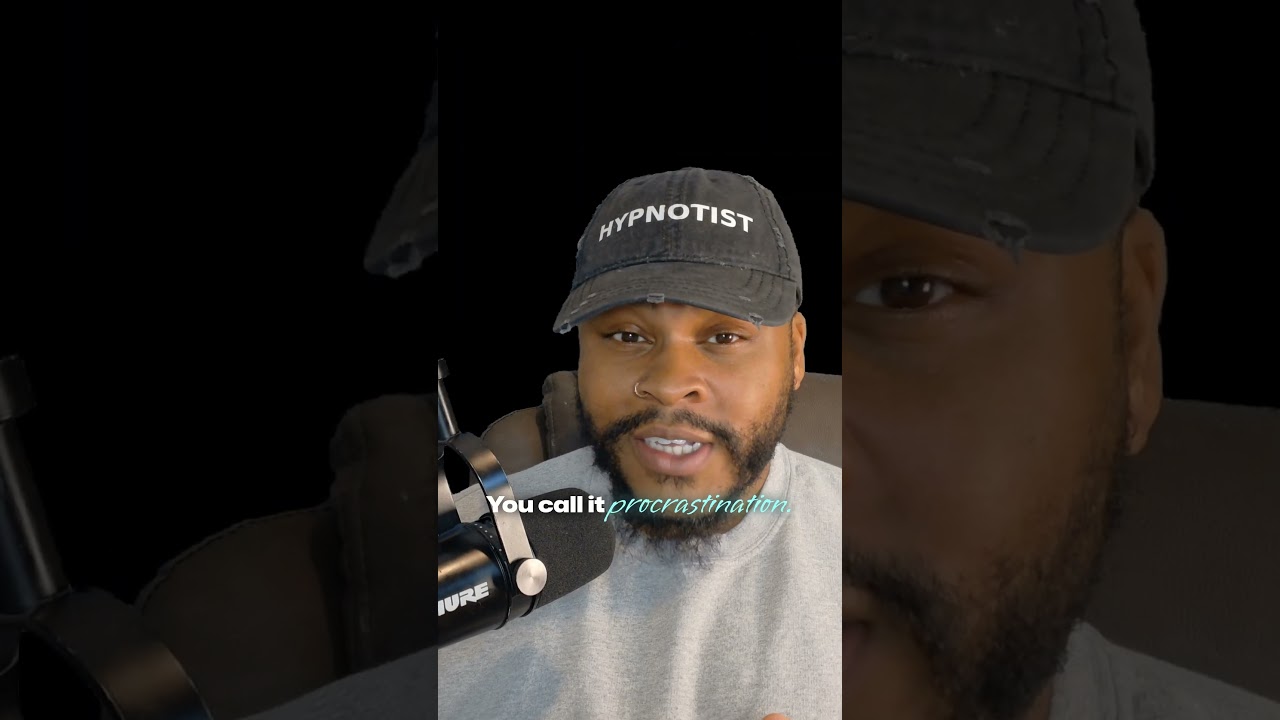
Coach Jay Shaw argues affirmations fail because they don't change your identity. His Identity 2.0 system examines 12 dimensions like attention, belief, and self-talk. Real change comes from engineering your identity so confident statements emerge naturally, not from forcing positive words.
Chapters
Fuck affirmations. Y'all really gotta chill with this shit, at least the way that you've been taught to do them. Because think about what you're actually doing. You stand in the mirror and say, I am confident, I am wealthy, I am successful. But if you really believed that, why would you need to keep convincing yourself? That's the part I think that we've got backwards. And before we go any further, let me tell you where I'm coming from. I'm Coach Jay. I'm a high-performance hypnotist, and the work that I do is all about identity— how the way you see yourself, think, imagine, expect, and respond ultimately shapes the way that you show up in your life. I work with entrepreneurs, athletes, executives, and everyday people who know what they want but keep finding themselves fighting the same patterns as they try to get there. And what I've learned through doing this work is that most people don't have a motivation problem, they have an identity problem. That's why I created Identity 2.0, and it's also why I don't think the most powerful affirmations are the ones that you have to remind yourself to say. I'm more interested in what comes out of your mouth when you're not trying. Let's say something goes wrong, and normally that would have sent you in a spiral, but this time, before you even really think about it, you hear yourself say, man, I'll figure it out. That's interesting to me. Because you didn't practice that. Nobody told you to say it. You didn't write it on an index card. It just came out. And to me, that's when an affirmation actually means something, because the words aren't trying to convince you of who you are anymore. They're reporting who you've become. That's the difference. I don't think affirmations are the gas pedal. I think they're the speedometer. Think about it. If you're sitting in your car and you want to go 60 miles an hour, you don't stare at the speedometer and start saying, 60, 60, I'm going 60 miles an hour. No, that's not how a car works. What do you do? You press the gas, the car accelerates, and then you look down and the speedometer says 60. The speedometer didn't create the speed. It reported what the car was already doing. And I think that's a much better way to understand affirmations because you're already saying things all day long. That tell me exactly what's going on underneath the surface. Something goes wrong, you say something like, see, I knew this was gonna happen. An opportunity comes up, man, they're probably not gonna pick me. Somebody compliments you and you say, yeah, but you didn't practice those, those just came out. So the question isn't, what new affirmation should I start saying? The better question is, what is it about my identity that's making this the natural thing for me to say, because that's where I like to work. I don't want to teach you how to say, I am confident, with more enthusiasm. I want to change what's happening underneath the surface until confidence starts showing up naturally in how you respond to life. And once you look at affirmations this way, they become a measuring device for your self-development instead of a giant waste of time. People often bring up Muhammad Ali when I talk about affirmations. Well, Muhammad Ali said, I am the greatest. He absolutely did. But go watch Muhammad Ali. Watch the way the man walked in a room. Watch the way he moved. Watch the way he competed. Listen to the way that he talked about himself. Do you really think Muhammad Ali was walking around saying, I am the greatest, because he was desperately trying to convince himself that he was? Or was that just what came out of Muhammad Ali? Because I think there's a huge difference between those 2 things. If I wake up tomorrow morning and start saying, I am the greatest, I am the greatest, I am the greatest, I'm copying the words, but I'm not necessarily copying the identity that produced the words. And that's the mistake. We're copying the speedometer reading, but we're not building the car. When Ali said, I am the greatest, it sounded like Ali. It matched the way that he carried himself. It matched his expectations. It matched the way that he trained. It matched the way that he competed. It matched what he imagined being capable of. The statement matched the identity. So I'm not nearly as interested in copying Muhammad Ali's affirmations. I'm interested in studying what kind of identity makes a statement like that feel natural. Because now we're working on something completely different. And this is where I think people misunderstand identity work in general. They think we're just changing the way that you think about yourself. And that's part of it, but identity is much bigger than that. Let me give you another example. Let's say that I've got a cup of water sitting here and I want the water to become ice. I can stand over this water all day saying, you are ice, you are ice, you're getting colder, you deserve to be frozen, and nothing is going to happen. Because the problem isn't that the water hasn't heard the right words yet. The problem is the conditions. So what do I do? I put the water in the freezer and I leave it alone. I don't have to motivate the water. I don't have to keep reminding it of what it's supposed to become. I changed the conditions around it, and because the conditions changed, the result eventually became inevitable. That's how I want you to think of identity. The goal is the ice, you're the water, and your identity is the freezer. So instead of constantly trying to force the result, I want to ask, what are the conditions that would naturally produce the result? Because if I can change those, now I don't have to spend the rest of my life fighting myself. And that's really what this entire conversation is about. I don't want you to have to constantly force yourself to sound confident. I want you to build conditions where confidence becomes the natural response. I don't want you to constantly force yourself to behave like a disciplined person. I want to build the conditions where discipline starts making sense to you. I don't want you waking up every morning trying to convince yourself that you are successful. I want to look at the identity that keeps producing the life that you're currently living, and I want to start working there. And I want to be clear, when I say identity, I'm not talking about some vague idea of how you feel about yourself. No, in Identity 2.0, I break identity down across 12 different dimensions. We got attentional focus, expectation patterns, belief architecture. All 12 of them are listed here, and we even have the playbook at icoachbosses.com. Grab that. But you got to think, if I have all of these different parts of my If I have my identity operating in one direction, but every morning I'm standing in the mirror trying to say something in the opposite direction, which one do you think is going to win? Let's say I'm telling myself I am successful. Okay, but what am I expecting? What am I imagining? Where does my attention automatically go? What are my standards? What decisions am I making? How do I interpret setbacks? What behaviors do I keep repeating? What do I say to myself when nobody else is around? Because if all of that is saying one thing and the affirmation is saying something else, the affirmation can't be the identity. It's just a sentence. And that's why I don't work on the sentence. I work on the entire system that's producing the sentence. That's what the 12 dimensions allow me to look at. Because now we can actually start asking, where are you aligned? Where are you fighting yourself? Where are you trying to create one result while some other part of your identity keeps pulling you in another direction? That's a much more interesting conversation to me than, Coach Jay, what affirmations should I be doing? And here is something that you can actually start doing today. Listen to yourself. Not just when you're intentionally talking about yourself. Listen to little things that come out automatically, because those are the clues. When something doesn't go your way, what do you say? Something takes longer than you expected. What do you say? You make a mistake. What's the first thing that comes out? Somebody offers you an opportunity. What's your immediate response? You look at your bank account. What do you say? You look in the mirror. What do you say? You think about something that you really want to do. What's the next sentence? Because I can learn a lot about somebody's identity just by listening to those moments. And I don't want you judging yourself for any of it. We're just collecting data. That's the speedometer. Remember, if I look down at my speedometer and I'm going 25, getting angry at the speedometer isn't going to make the car go faster. It's just giving me information. So when you catch yourself saying, I can't do that, I don't want you to immediately try to cover it up with, yes, I can. Yes, I can. Yes, I can. No, get curious. Why was I can't do that the natural response? What expectation is underneath that? What belief is underneath that? What are you imagining happening? Where did your attention go? How are you interpreting the situation? Now we're getting somewhere, because instead of arguing with the speedometer, we're starting to look underneath the hood. Now, somebody is probably thinking, okay, Coach Jay, if I'm not supposed to force the behavior and I'm not supposed to force the affirmation, what am I supposed to do? This is where discipline and willpower actually become useful. Because believe it or not, I'm not against willpower, but I am against using willpower for the wrong job. I don't think that the best use of your willpower is spending your entire day fighting your own identity. Think about how exhausting that is. Every morning, I need to make myself do this, I need to stop myself from doing that, I need to make myself think this, and I need to make myself say this. And then you wonder why eventually you get tired and fall back into the same patterns. You're fighting yourself all day. I want you to use willpower differently. Use willpower to direct your attention, because your attention is going to want to go where it's always gone, so redirect it. Use willpower to direct your imagination, because if you've spent years automatically imagining everything going wrong, your imagination isn't suddenly going to start working differently because you made a vision board. Direct it. Use willpower to interrupt the old pattern. When you catch it happening, use it to rehearse something different. Use it to intentionally work on those dimensions of your identity. That's what it looks like when you're pressing the gas. And if you keep pressing the gas, eventually something interesting happens. You look down and the speedometer has moved. And this is actually one of my favorite parts of doing this work with people, because eventually they'll come back. And tell me about something that happened. Maybe somebody said something to them. Maybe something went wrong at work. Maybe a deal fell apart. Maybe they had to have a difficult conversation. Something that would have completely thrown them off before. And they'll tell me this story and they'll casually say something like, yeah, I wasn't worried about it. I knew I'd figure it out. And sometimes I'll stop them and I say, wait, say that again. And they say, I knew I'd figure it out. And I say, do you hear yourself? Because 6 weeks ago, that wasn't the sentence. 6 weeks ago, it might have been, why does this always happen to me? What if this doesn't work? I knew something was going to go wrong. Now something happens and the natural response is, I'll figure it out. That's what I'm looking for. Because nobody handed you that sentence. You didn't wake up that morning and rehearse it. It just came out. That's the speedometer moving. That's evidence that the internal conditions are starting to change enough that you're producing a different response. And this is where I think personal development gets really interesting, because now you don't have to keep telling yourself you've changed. You start catching yourself being different. That's a completely different experience. You notice yourself making a decision that you would have avoided before. You notice yourself setting a boundary that you wouldn't have set before. You notice yourself staying calm in a situation that would have sent the old you spiraling. You notice what you're imagining has changed. You notice what you're expecting has changed. And eventually, you notice your language has changed too. Not because somebody gave you a better affirmation, but because you're getting a different reading from the speedometer. And I also want to make this clear. When I say fuck affirmations, I'm not saying that words don't matter. Words matter tremendously. Self-talk matters. It's literally one of the 12 dimensions that I work with. What I am saying is stop confusing the report with the mechanism. Your language can influence you. Of course it can. What you repeatedly say matters. But I don't want you thinking that changing one sentence while leaving the rest of the system untouched is the same thing as changing your identity, because it's not. And I especially don't want you beating yourself up because you've been saying, I am confident, for 6 months and some part of you still doesn't believe it. Maybe the solution isn't saying it louder. Maybe we need to figure out why the rest of your identity keeps disagreeing with you. That's where the real work starts. And if you're watching this thinking, okay, Coach Jay, so what is my identity actually producing? That's exactly why I created the Identity 2.0 Diagnostic, because before I start telling somebody what they need to change. I want to map out what's already there. I want to look across all 12 of those dimensions and see what's happening. What's working for you? What's working against you? Where are you aligned with the results you say you want? And where are you unintentionally rehearsing something completely different? Because a lot of times the problem isn't that you don't want it badly enough, or it's not that you're not motivated enough, and it's definitely not that you haven't been doing the right affirmations. There are parts of the identity that are simply organized around a different result. And until you can see that, you're going to keep trying to fix the symptom instead of working on what's producing it. So if you want to see what your identity is currently producing, go to icoachbosses.com. Take the Identity 2.0 diagnostic. It's $99. You'll take the diagnostic, and then you and I will get on Zoom together and actually break down your results. We're going to look at what's working. We're going to look at what's working against you. And we're going to talk specifically about what needs to change. And if you decide that you want to work with me after, the $99 that you spent on the diagnostic gets applied directly toward the cost of your first session. So I'm not going to give you another affirmation. I want to show you what's producing the ones that you're already saying, and then we work from there. So yeah, fuck affirmations, at least the way that you've been taught to use them. Stop trying to use the speedometer as the gas pedal. Change the identity, and eventually you won't have to convince yourself, I am confident. Something will happen and you'll just hear yourself say, I'm good, I'll figure it out. And that's the affirmation I'm interested in, not the one that you're trying to believe, the one that you can't help but say because of who you've become. That's Identity 2.0, and I'll see you next time.