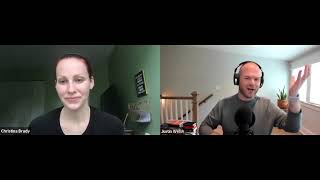
Justin Welsh, former VP of Sales at PatientPop, identifies two discovery killers: reps either dig too shallow or uncover pain but then ignore it in a generic, feature-heavy demo. He says discovery should stay conversational throughout the call, with reps mapping pain points to solutions in real time instead of defaulting to script.
Chapters
All right. Hello everyone. I am Christina Brady, President of Sales Assembly. I want to give a quick shout out to Vidyard, our sponsor. And I am lucky enough today to be here with Justin Welsh. Justin, tell us a little bit about who you are and what you do.
Sure. Thanks for having me, Christina. I appreciate it. My name is Justin Welsh and I am the founder of my own consulting and advising firm. I work mainly with SMB SaaS businesses, and I help founders who are between usually 1 and 10 million in recurring revenue grow their revenue toward 50 million. And before that, a lot of folks might know me. I spent about five years at a company called Patient Pop in Los Angeles, and I was the VP of sales. Yes, VP of Sales. And then I came back for a second stint as the Chief Revenue Officer there. And before I was at Patient Pop, I held several leadership roles over the course of five years at a New York City based company called Zocdoc, where I was a sub 10 employee.
Awesome. So needless to say, you've been working with sales reps, sales leadership for a really, really long time. And a big part of your role right now is helping companies grow and helping especially those account executives be really, really successful. And one thing that I know you and I talked a lot about before we started recording was just this idea around discovery and how it becomes a thing that everyone does, but in so many instances when it's not properly coached to and not properly implemented, it becomes this shallow discovery that isn't used and can actually hurt the sales cycle. So when you think about discovery, where does your mind go?
Yeah. So I think I see generally two areas of concern when I'm coaching people around discovery. And this goes back to my days just, you know, being a sales manager at a company like zocdoc, which is Discovery, is either too shallow, as you talked about, where you're not actually sussing out enough information, you're not pulling enough information from your prospective buyer to actually have a truly meaningful conversation and map your solution to their challenges and to their pain. That is sort of one area that I generally see as being very problematic. But the one that I see more frequently is actually really good discovery. So going through the levels of pain when understanding the priorities, understanding the cost, quantifying the different business challenges they have, I see that a lot. And then they don't use it. So they go from having really, really excellent discovery into really generic sales presentation, the same presentation they give to the three other customers or prospects that they demonstrated that day. And it's always the Same. And so they don't actually use what they learned. They go in and they show every feature, every piece of functionality of the entire platform, and they don't map it back to what they actually learned in discovery. And that, to me, is because in sales, we get taught that discovery is this part of the sales process. That is in the beginning of the call, it's like agenda, you know, introduction, agenda, discovery, demo, close. And that's not how a sales call goes. To me, discovery is continual. It is constant. It is throughout the entire conversation. It should be like talking to a good friend and asking great questions as you uncover information. So don't jam it in the beginning. Use it throughout the course of the entire call so that you can continue to learn more. And when you learn something, show the customer how you'll solve that challenge. Don't give them that generic presentation.
Do you think that sales reps don't use it throughout the rest of the process because they don't know how or because they don't feel it's important? What do you think is the core reason why they get all this information? And then they're like, okay, it's my turn to sell. Like, why are they not using it?
Two reasons. The first reason is because they're really uncomfortable. I think what happens is they get really used to doing the same demonstration three times a day for two years, and by the time they're done, they've done it 50, 1500 times. And so they're really, really comfortable in that. The second thing is fear. And it's the fear of, like, if I don't talk about each individual feature or piece of functionality that my platform does, I will lose. Right? They will find another platform that does one or two things more than we do, and I will lose the deal. And I think what people don't understand or tend to maybe forget is that customers buy when you solve their very specific challenges. And in the end of the demonstration, if you've solved their challenges and there are three to five things that you haven't covered that your software or platform does, you can always go back to the customer and say, sounds like we've solved your challenges here. By the way, here are three or five other things that we do. Not sure if that's interesting to you. Not sure if those are also pain points that I haven't discovered. Not sure if that's something you even care about. Yes. No. If not, great. Close the deal. If so, you have an opportunity at the end of the call to go back in and go do those things.
Awesome. Going back to the fundamentals and why we do what we do and why these things actually work when you do them the right way and use them the right way. So, Justin, thank you so much for sharing your tips. Once again, I'm Christina Brady with sales assembly. And thank you to Vidyard. We will see you again next week for another sales assembly study break. Thanks so much, everyone.