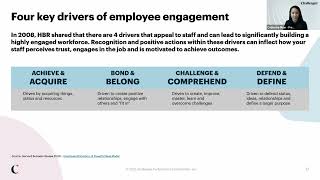
In this presentation Jeff Rosset outlines a four‑driver framework for employee engagement that is intended for use by learning‑and‑development (L&D) teams and managers. The drivers – Achieve & Acquire, Bond & Belong, Challenge & Comprehend, and Defend & Define – each tap into a distinct human motivation. Rosset explains how organizations often over‑focus on the financial aspects of the Achieve driver and instead should design paced up‑skilling programs that let employees acquire new skills over a year‑long development path. The Bond driver is linked to the innate desire for close relationships and belonging; managers can boost engagement by fostering team culture, leading events, and building strong one‑to‑one connections. The Challenge driver reflects a need for learning, purpose, and avoidance of boredom; stretch goals, non‑technical training, and special projects satisfy this drive. The Defend driver connects employees to the company’s mission, values, and purpose, giving them a sense of moral alignment. By aligning L&D initiatives and managerial behaviors with these four drivers, organizations can improve trust, accountability, on‑the‑job development, and ultimately achieve higher retention, productivity, and performance, not just engagement.
Chapters
HBR shared that there were these four drivers that appealed to staff and they essentially can lead to significantly building a higher engaged workforce. The recognition and positive actions within these drivers basically inflect how your staff perceives trust, engages in the job, and is motivated to achieve outcomes. This framework that I'm going to share with you today is best utilized in your organization's learning and development function. But it can also help us as managers and leaders to improve outcomes such as trust, accountability and on the job development that will lead to even more tangible outcomes like retention, productivity and performance, not just engagement. So let's start on the left here. Right, so we have Achieve and Acquire. This is typically the drive that most organizations focus on when they're trying to find a lever to influence employee motivation. However, a lot of companies often get too caught up in the big financial aspects of this drive. For example, how much can we give a raise? What does target incentive and bonus payouts look like? But this isn't what we're going to talk about today. A good example is introducing an internal upskilling program. The levels and development stair steps that are part of the program should strategically put these people who have this drive in place to achieve more, to be engaged and to be motivated to get to that next step. It's also a reason for us as leaders to not rush people through levels or classes before they're ready. It's meant to help them acquire and achieve those skills in a paced way to keep them engaged over time. If you want to keep them for a year, have that development program be a year long. The second one is the Bond and Belong driver. This is defined by our innate desire to form close, positive relationships with people around us. The image of the lone wolf is super atypical with this. Most people want to bond with others and they feel like they belong to a group. So if you're thinking of someone who has a driver here, they may be involved with the team culture. They're the one leading the team event, strong one to one relationships across the organization. So being a connector manager to these individuals will drive high engagement without a doubt. The third one we have here is Challenge and Comprehend. This driver focuses on the innate desire to learn more about the world around us, the organization around us, what are our mission values and to not be bored essentially. Right? So things stretch goals, think training that is not super technical or provide them special projects to enhance and improve their skills. And lastly, we have Defend and Define. The Defend and Defined driver has individuals attached to the aims and morals of the company. And they feel a sense of purpose in what they do.