8/26/20 - Sales Assembly Study Break with Liam Crooks
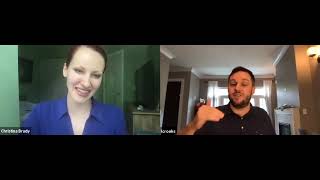
Liam Crooks, VP of Sales at Yelp's Chicago office, says top performers belong to the top 5-10% of their cohort and get there through habits most people won't adopt. He points to three pillars: skill set, attitude, and day-to-day organization. Organization is fully controllable and prevents opportunities from slipping through the cracks.
Chapters
Hello everyone. Welcome again to a sales assembly study break. I am Christina Brady, president of Sales assembly and I am here with Liam. Liam, tell us a little bit about who you are and what you do.
Oh, hi. Yeah, good to be with you, Christina. So I'm VP of sales at Yelp here in Chicago. I've worked in ad sales, online ad sales, my entire career, which is 13 years plus now. Started in the UK, as you can probably tell from the accent, have spent the last eight years with Yelp here in Chicago. Well, not always in Chicago. Started in London, moved to Hamburg, then Berlin, then Phoenix and now here, Chicago. So I'm VP of Sales for the Chicago office. It's about 1000 person org. Obviously we sell Yelp ads to small businesses all over the US and yeah, big part of the tech scene here in Chicago. And delighted to be with you here today.
Yeah, we are delighted as well. What I think is great about Yelp is they are a big presence in tech, not just in the world, but also in Chicago. And it's a tight knit community that continues to grow and sort of maintain that familial feel. So it's great to have you here too. And the question that I have for you today is as you're thinking about sales reps and their mindset, how would you encourage sales reps today to think about things like their quota and hitting their quota, or time management or the way they frame their mind as they're going into their work every day?
Yeah, absolutely. It's such an important question. I think it's a question that hopefully everybody works in sales has been asking for their entire career. Right. Essentially, what is success? What does success look like? And the reality is that the answer to that question may have changed somewhat over the last two or three months. And when you try and drill down and say to yourself, what is success? I think you have to start by saying that it changes.
Right?
When you were a new sales rep, what might have been success in your first year on the job hopefully looks very different to what success looks like in your fifth year on the job. What was maybe success for you in January or February of this year might look very different in the environment today. Success is always changing, it's always moving. And it's probably moved more in the last couple of months than at any time, certainly in my career. And so I think you have to say to yourself, well, if it's always moving, how do we kind of drill it down? How do we acknowledge what success is? And I think you have to say that Success is defined partly by what you've done historically, but partly by the world around you and what's going on around you, including, you know, external factors like the economy and all these kind of things, but also what are your colleagues doing, right? If you do 100 grand in a quarter, but everybody else does 200, then you're probably not a success. If the following month you do 100 and everyone else does 50, you're a big success. You've done the same quarter over quarter. But the perception of that and the definition of is that success or not is probably very different. And so if we accept that success is always changing, the easiest way I think to define it is by saying success is something that is only achieved by the top 5 or 10% of people. And so then you have to ask the question of like, well, how do you get into that top 10%? And maybe that's in comparison to your peer group, or maybe it's just in comparison to what you've historically done. How do you have one of the best quarters you've ever had, or how do you have a top 10% month, or however you kind of define it. And so in asking that question, the easiest answer often that you hear from sales reps is you just got to work hard. Certainly you hear it from sales managers, they just work harder. If you just make more dials, you'll get there. But here's the thing about sales. I bet everyone who's listening to this knows a sales rep that works super hard. They make more dials than everybody else, set more demos, and yet they never really seem to have a breakout success. Equally and definitely more. Annoyingly, I bet you all know someone who never seems to work that hard. But every month, every quarter is at the top of the stack rank and it's always taking these big commission checks out. So you're like, man, well, maybe it isn't hard work, maybe that's not the defining factor. It certainly helps, right? So for all the sales managers in this world, yet you can still ask your rep to work, but it's not the defining factor. There's something a little bit deeper there. And I read something by a guy called Albert Gray called the Common Denominator of Success. Highly recommend Searching for it after this. Written in the 40s, so kind of old fashioned at this stage, but I think it's still true today. And he says if you want to get into that top 10%, if you want to be considered a success against yourself or against your peers, you have to form the habits of doing things that regular people, everybody else, are not prepared to do. So there's two really important parts of that form the habits. It can't be something you choose to turn off and on in a given day of doing the things that other people are not prepared to do. Sometimes that will be hard work, sometimes it might be working smart. Maybe you've got to be a little bit more diligent with your prospecting or your qualifying or your organization or your email cadence. Or you could list things forever. Right. And I think this is such an important message for people in the current climate. Number one, are you forming the right habits? Number two, are you doing the things that either you were not prepared to do previously or that your colleagues around you or your peer group or your competitors or other companies are not to do? And so we're talking a lot about that at Yelp at the moment. And I think this is true and helpful advice at the best of times, but man, it just seems to be so much more relevant in the current market today.
Yeah, you listed off a lot of good tactical things. If I'm a sales rep and I'm thinking to myself, I want to feel more successful, I like that you release the pressure on just working hard because everybody is working hard right now. And off of the things that you listed off of things that I can do to truly feel like I'm being more successful, whether that's making more dials or working on my email cadence or investing in some training for myself, what do you feel like is the first place that you can start with to try to be more successful? If you're a sales rep right now.
Yeah. So I think if you look at any sales job or quite frankly any job, I think ultimately there are three factors that go into defining whether you're good at it or not. Number one, you've got to have the right skill set. Number two, you've got to have the right attitude. And I think if you ask most people, they give you those two answers. But I think there's a third thing that often gets overlooked is actually the more easy to control, which is you have to be organized. You can have a great attitude, you can have really high level skills, but if you're not really organized with the day to day job of what you do, then actually a lot of real big opportunity can kind of slip through the cracks. Right. And so, yes, upskill yourself. Go to trainings, read, listen to podcasts, whatever it is, attitude, that's all on you. You've got to make sure that's strong, but that kind of the non sexy answer. The organization piece, man, that's so important. So many reps slip up I think on things like pipeline management, organization outreach and there's a ton of great tools out there that help a lot with this stuff now. But still, you've got to be driven to work hard and to focus on that. And the cool thing about it, that organization piece, it's the one thing that you can control perfectly. Everything else is kind of like up in the air and you can influence. You can't really control it. That organization piece is completely within your control. And the advice I often give to reps is like you can find some really easy wins by just becoming extremely diligent in your day to day organization. I know that's a boring answer. I know that that's not the answer that most people like to hear, man. It's effective and I've seen some reps that don't have great skill be extremely good producers because they are able to drill down and nail that organization piece. And again, in the current market when sellable opportunities are not as prevalent as they were at the beginning of the year, man, I think that organization piece and not letting opportunities slip through the cracks is probably more important than ever.
Yeah, I love that. I mean it sounds really buzzy until you're put in a position where you realize how important it actually is to success and there's no one way to get organized. It's one of those things where you just have to do it and figure out what it means and how it works for you and do something that is simple and repeatable day to day that you can live with whether you're at home or in the office. Your way to organize should have the same framework depending not on where you are by on the job that you're doing and how you can find find success. So thank you for sharing these insights. It has been wonderful. Once again, I'm Christina Brady with Sales Assembly. Thank you again to Vidyard and thank you to Liam for sharing some knowledge today. We will see you next time at the next study break. Bye bye.










