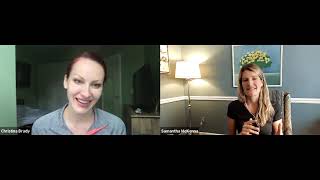
In this Sales Assembly study‑break episode, host Christina Brady (President of Sales Assembly) interviews Samantha McKenna, CEO and founder of Samsales Consulting. The conversation centers on the broader role of sales leaders in shaping the memories and experiences of their teams. McKenna shares concrete practices for building meaningful employee moments—such as never forgetting birthdays, tracking personal milestones (marathons, home purchases, pet adoptions), and celebrating wins with tangible tokens like framed contracts or champagne. She recounts a memorable promotion announcement delivered via a surprise Zoom call with the employee’s spouse, illustrating how creative recognition can become a lasting memory. The dialogue then shifts to vulnerability: McKenna emphasizes that leaders must model openness—sharing bad days, candid feedback, or personal stories—to set a cultural tone that encourages team members to be vulnerable in return. Christina adds the concept of the “first follower,” suggesting leaders can also support others’ initiatives rather than always being the first to act. The episode closes with thanks to sponsor Vidyard and a reminder of the next study‑break session.
Chapters
All right. Hello everyone. Welcome to Sales assembly's study break. I am Christina Brady, president of Sales Assembly. Want to give a quick shout out to Vidyard, our sponsor and I am here Today with Samantha McKenna. Samantha, tell us a little bit about who you are and what you do.
Hi Christina. It's so great to meet you. And again, welcome aboard a sales assembly. I'm Sam McKenna. I'm the CEO and founder of Samsales Consulting. We're, we're a sales consultancy and BDR shop that helps you refine all of your sales and operational processes and gives you a strong team for BDR processes to teach your teams about how to do things the right way. Awesome.
And for today, one thing that has been really, really top of mind is when we think back to this time and all of our lives. Life, if anything, is just a series and a collection of different memories. And every person that you interact with, you have a meaningful part. Who they are and who they turn into and what memories they have. And so when you think about the role of a sales leader in the day to day lives of their peoples, how do you think about the responsibilities of just holistically, the working environment and lives that we're helping our people create?
Great question. So I think if you think about it, we remember all of our bosses that we've had, right? For better or for worse, sometimes for worse. But we remember all the bosses that we've had. They've played a role in our lives. And I think one of the things that I've always tried to hold true to my own mantra is to set my bar higher than what I think I can achieve. And this is a great lesson that comes from my mom just in terms of client service, in terms of how we engage with our customers, but also how we engage with the people that report to us. And what I mean by that is to think about your role as a leader, you know, not to just show up for one on ones and say how's it going? Not to just say what's your forecast and did you hit your number? It's not to do those things from a sales perspective. It's also to create these incredible memories for them as they go along the way through the losses that they have in their career to the wins. And, and so one of the things that I would say is to think about how you can elevate your own bar, think about how you can do things really uniquely for your employees. And I'll give you a few examples of things that I've done in my own career 1. As silly as it may seem, I never forget a birthday. So when somebody either tells me what their birthday is, I'll write it down, or I'll just go to HR and I'll say, hey, what's the birthday of my entire team? I'll write that down. I always do something. It's a silly little thing, right? But it's so great because you show the person that you remember. I also write down special occasions. So somebody's telling me that they're running a marathon, that they're buying a house, that they're adopting a pet, that they're celebrating their parents 50th wedding anniversary. I write that stuff down. I calendar, and I think about ways that I can just show that it was important to me because it was important to them. And then I think about other things. How can you repair a loss that a rep has had and try to make that better? Or how can you make a win even more monumental? So if your rep wins a massive deal, how can you build something to maybe commemorate that? Frame the contract. Think about a little plaque that you can create. Send an expensive bottle of champagne so they can toast to it. Or if they get promoted, get really creative, out of the box.
Right.
One of the things that I did for one of my teammates is really gutting for promotion and have worked so hard for one, is I called her husband before I called her to tell her about the promotion. And I said, let's keep this under wraps. I'm going to tell her about the promotion, but I'm going to have you come in on Zoom. We're still in person, but he was obviously on Zoom in our meeting. He popped up on camera, and she was like, what's going on? And then he was like, I'm really excited to tell you you're getting prom today. What an amazing memory that was for them. And something that she tells me, I think seven years later, that still really is impactful to her. So as a leader, just think about that. You have the opportunity to shape and kind of puppeteer these experiences that your teams have, and what can you do to make it really exceptional versus just status quo?
Oh, that is wonderful. And I think, too, that the. The basis of human relationships starts with vulnerability, and we connect with people when they're vulnerable. And I think it's hard to be vulnerable right now because so many things feel so much more threatening than they always have been. So whether you're a sales rep or a sales leader or director or even CEO, what do you think are some ways that we can let our walls down and be vulnerable with our people. And not just do it, but also show it. How do I show my people? I'm a vulnerable human being, just like you, and I want to connect with you through this computer screen that we're all stu behind.
Yeah. You know, I think that that's one of the great lessons that LinkedIn really teaches its leaders, from when my time when I was a leader at LinkedIn is the idea of taking your mask off and being vulnerable. Right. So it's so important for us to do that as a leader. But I think when we're vulnerable, it also sets an example for how we hope that our reports and our peers can also react and engage with us how to get somebody to be vulnerable. In fact, I just had this conversation with someone last night. It starts with us. So it's our opportunity and our responsibility as leaders to show that vulnerability first. Right. So maybe if we are having a bad day to say we're having a bad day or to say that we're frustrated about something or to even say, like, hey, I've got some candid feedback I need to give you. But I'm going to tell you about a time when I got this feedback that maybe I wasn't expecting or maybe I didn't agree with. It's our chance and again, our responsibility to do those things, because it sets the pace and it sets the environment for that other person to match that and then to say, well, they're telling me something open and vulnerable about them, so I can do it. I think the other thing that I would say, if this is kind of your first foray into being vulnerable, is to know that it's probably not always going to happen in the first shot. So if you're being vulnerable and you share and you think, okay, if I share, then they're going to share. It might not work out that way the first time, so continue to do that. Set the example and let a person either share immediately, because that's their nature, or to slowly crawl into that and eventually start to be vulnerable. Back with you. Yeah.
This makes me think of the concept of the first follower, which is so many leaders think that they have to be the first person to do something, the wacky person dancing at the concert. But if you're not that person, if you're not the person that's like, I'm gonna be the first person to do something radical, then you can aim to be the first follower and just support someone else. And so whether you're a leader by title or just a leader as a person. Look for when I'm going to start something brand new or when I can support somebody and lift them up. And I think it goes for reps on phone calls, too. A lot of times when I listen to a sales rep for the first time on a call or when their first year of doing the job, they're afraid to admit when they don't know how to do something or when they don't know the answer to something because vulnerability is so threatening. And so the idea is like we're all human beings and it's okay to say, hey, you know what, I'm three
weeks in the job and I haven't
gotten that question yet. I promise I will get back to you. And that vulnerability, it's disarming and so learning how to do it. Well, this was a wonderful reminder. Thank you so much.
My pleasure. Thank you so much for having me.
Yeah, absolutely. And thank you everyone for joining us for another study break. Once again, thanks for Vidyard for sponsoring the content. And we will see you next week. Bye, everyone.