9/25/20 Fridays Are For Closers, Season 2 Episode 5 - Personal Origin Story
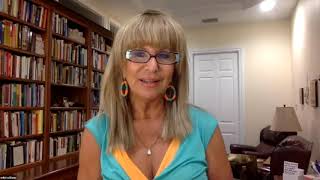
Andrew Sykes, Tia Pappas, and Mickey Williams teach a three-part framework for personal origin stories: establish credibility with humble highlights, reveal the pivotal moment that sparked passion, then articulate your current purpose. Participants practice writing their own stories and get live coaching on adapting them for different audiences.
Chapters
Perfect. All right, thank you everyone again for joining us. For Fridays or for Closers? This is the fifth and last session, I'm sorry to say, in our second season with Andrew Sykes and the Habits at Work team. Really quickly, before we kick off, we do want to dive right into it. I just want to thank our partners at Showpad Vidyard and Lesson Leaf for making today possible. What we're going to hear today is really the culmination of everything that we've learned through Andrew and Tia over the past two months. We're going to be focusing on two really big things today. Taking all the learnings that we've collected over the past couple months to craft our own origin story, but just as importantly, making sure that we know how to craft and adjust that origin story, depending on the audience that we're sitting in front of. We have a lot to cover today, so I'm not going to waste any more time talking. I just want to thank everyone again for joining us for our last session. I will turn it over to Andrew and Tia and our special guest, Miki today. So. So, Andrew, feel free to take it away.
Welcome to episode five, season two. We're hoping to finish with a bang. And we'll be talking about, as Matt said, personal origin stories. What they are, how to construct them, when to use them, and how to make them match the audience to whom you're introducing yourself, such that you show up in a particular way. You own those first 180 seconds after someone says, pleased to meet you. Tell me a little bit about yourself. Let's all introduce ourselves. So we are going to today attempt to achieve the following purpose, which is to review the journey that we've come on over the last four weeks in this adventure of what it means to write, tell, choose and then adopt and adapt the right story for the right reason at the right time. And we're going to do that review through the means of story. So taking our own teaching and bringing it to life. And that's one of the reasons I have one of my special guests here today who I'll introduce in a moment. And the second thing that we hope to work on and achieve for you is to construct or help you begin to construct the first version of your personal origin story. So our commitment to you is that today you will leave with that V1. Maybe one of you having the opportunity to polish one of those as an exercise that we'll do as the group, if we have time. But certainly you will know the art of introducing yourself such that when someone puts you into a box as they're certain to do, because as humans we are prone to judge each other, that you get to choose the wrapping for that box so that when they undo that and they get to know you, your first impression is not only a wonderful impression, but it lasts through time. And they consider it to be a gift to know you and have you in their life. It's the price we pay to earn the right to be fantastic and effective sellers over time. And I also hope that we will leave you today on a high note. I'm confident, given who I have joining us today, that we'll do exactly that and we'll have a lot of fun while we're doing so. So to some introductions, I would like you to meet two people who will be helping me today, the first of which is my friend, colleague and co founder of Habits of Work, Tia Pappas, who many of you have met on our previous sessions. I know you know her and so I'll keep, Tia, your introduction very short for today. And then the second person is Mickey Williams, who is a Hall of Fame speaker as well as a TEDx speaker. And she was chosen as one of the best speakers in the country by a meeting and convention magazine along with some people whose names you might have heard of, people like Tony Robbins, Bill Gates, Jay Leno. She's based in Naples as well as has a home in Chicago. And she is an award winning speaker for Vistage International. If you're not aware of what Vistage is, it's one of the world's leading executive organizations and she's a master chair for two of their peer advisory groups here in Chicago. I was a member of one of those. She is in addition a global celebrity speaker, a transformational storyteller, and she's been noted in Forbes as one of the most sought after executive speaking coaches. And I'm happy to say she is my own speaking coach. So she is either the credit for or the blame for how I show up. She's also the creator of Speaker School Keynote Camp, the Mickey Mouth Club and her one woman show, she Came, she Wore, she Conquered, that's been performed at the Second City here in Chicago. She has spoken in every state in the U.S. in every province in Canada and on almost every continent except Antarctica. Why? Because she can't wear her stilettos. Please welcome Mickey Williams. Thank you for being with us, Mickey. So we are now getting into Team Season 2. It's ending and we will be doing work here in our personal origin stories. But I want to Very quickly retrace our steps and what we've covered over our last four weeks. We began this series looking at this idea of how to craft or create a moving story. What are the elements that get people right into the story by setting context? How do we create conflicts, build it to a climax and then bring it to closure and resolution, perhaps bringing people to a call to action. Then we explored the craft of telling a wonderful story, how to be a good storyteller, the use of our voice, devices and techniques for bringing emotion into the story to move people into action. Then we explore this idea of picking the right story at the right time for the right reason. And started to think about, with our guest, Craig Wortman, how we discover these stories in our lives. Where do we find them, how do we tag them and store them so that they're there as we need to choose one so that we have that right story to go. And then last time we talked about how to take an existing story that you maybe get from someone else or you have from your own life and adopt it and then adapt it so that it can do the work that you need for this particular meeting, speaking to this particular customer right now. And we covered that in four hours that I hope you enjoyed that. One of the points that I made during that time was that a story is not only a way to deliver facts and figures safely from one brain to another, it can often do the job in less time than it takes you to make a facts and figured, well reasoned business case for something. And to prove that point, I'm going to invite Mickey to share some stories with us. And for those of you who were with us on the journey, I challenge you to listen to and see if you can see in or feel in what Mickey is about. To share the essential lessons from our previous sessions. If you weren't with us, this will be a quick 10 to 15 minutes catch up of everything that we've done that we've discovered or explored together, but delivered through the medium of storytelling. Mickey
it was 2009. It was the Vistage Executive Summit in Chicago where about 800 CEOs would gather for the meeting. I understood the keynoter was going to be a gentleman named Brian Bolio. Brian eventually became my member as Andrew was my member, but he was also a good friend. But at that point I didn't know him. I didn't know of him. I just heard the keynote speaker was going to be an economist. In the spirit of transparency. I was not excited to hear an economist. My judge immediately Thought, oh, this is going to be boring and old data. And so I kind of entered with that feeling. I sat down in the audience, not being overexcited to hear the keynote. When Brian opened his keynote this way, my daughter just bought her first home. And when he uttered that line, I didn't immediately think, why did this economist say that? I'm sure no one thought that because I probably knowingly went to. Well, yeah, I remember buying my first home. And the person to my right probably went, oh, I hated my first home. And the person to my left is thinking, you know, I'm building a home. And the person in the front of me is thinking, oh, my kid's building a home. Because we all got invested in that one line, which. That line itself is a story. So now I'm intently listening to this, not knowing why I'm just engaged in the story, because stories do engage us. And when Brian finished, he seamlessly segued into all the data surrounding the housing industry, which was hardest hit during the 2009 recession. The point was really clear. Invest me through story to care about your data. Stories sell facts. Just tell. Invest me through story to care about your data. You know, I work with a lot of people who are accountants and actuaries, as Andrew was, and engineers and people who deal in data all the time. And the immediate pushback is, no, you don't understand. I have to present data. I do understand. I understand that the data by itself is not relevant to me in any way, because every one of you is not in the business you have under your title on your business card. Every one of you is what I've coined the emotional transportation business. That's what you're in. That's when you're in selling. That's what you're in. Every time you are meeting someone that you want them to buy into your idea, your product, your service, your initiative, you're all in sales of some kind. You're selling yourself. You're in the emotional transportation business. So we move people emotionally to get them to do what we want. Stories become the vehicle for that action. I was speaking to a group just a couple of weeks ago, and one of the members of the group, an engineer, relayed a story that he took action on immediately after my presentation. He said he went back to his team and he opened his next presentation by saying, my grandmother makes the best coleslaw. And he paused, because that's another technique I want you to pause because I want people to have enough time to anchor to your message to that one line rather than just going right on. And they do know what it is. I want to give people time to feel. Everybody in the audience again had a grandmother thinking about their grandmother, good, bad or ugly, thinking about coleslaw, thinking about food. Because we listen to stories through the lens of our own experience. We listen to stories through the lens of our own experience. So now, again, we're completely engaged. He's engaged. He's telling his team of engineers, and they're listening intently. And again, brain science, neuroscientists, cultural anthropologists tell us the brain lights up when we tell a story. And they know, because they've measured the brain activity, that the engagement level is there, that people are not trying to figure out why someone's telling a story if they're doing it well. They're just engaged in the story. So he proceeds to finish the whole story. And at the end of it, he's talking about how the grandmother used to make this for the barbecues in the annual summer picnic. And every holiday, grandma made this. But sadly, nobody ever wrote down grandma's recipe. And grandma just passed away. He then said to his engineering team, this is why it's so important for you to document your processes, for the people who follow you, for the generations to come, for the other people who need to use them at some point. So he didn't start with a bullet of list. There's three reasons I want you all to use your documented processes. Number one, you should use who cares? Bullets don't work, folks. Let go of those. Stories sell facts. Tell. He moved them emotionally. You're in the emotional transportation business. And because he did, he was invested in the story. He then cared about the situation, the data, the environment that he was now wanting them to do. It's that simple. And we all have these stories that move people to action. I would offer you or invite you to watch a video, a YouTube video. It's called the Power of Words. And it's a video of a blind man sitting on a blanket holding a tin cup with a sign on his chest, a cardboard sign that says, please help me, I'm blind. You see the passerbys, mostly the legs of the passerbys. And occasionally someone drops a coin in the cup, not very often, until a woman comes by. She stops, she reads his sign. She takes it from him. She scratches out, please help me, I'm blind. She writes something else, she hands it back to him, and she walks away. Now, every single person who walks by drops a coin in the cup. She changed his sign from please help me unblind to it's a beautiful day and I can't see it. Come on, folks. What's going to move you to action? Please help me. I'm blind. As a fact, you're not. Maybe you feel moved enough, and that's the occasional coin that dropped in the cup. But it's a beautiful day and I can't see it. Every single one of you listening and watching right now can put yourself in that story. What if I couldn't see today? And just that subliminal message that we all store from all our messages, all our stories, all our lives, all our lenses from our own experience activate in that moment. And that's what caused the action. I was checking into my national speakers Association, Washington, D.C. to the Marriott Hotel. I was going to be first up delivering my program on the art and heart of storytelling. So I was kind of in a rush. There were about 3,000 speakers milling about the lobby. I walk up to the front desk and I see a gentleman wearing a name tag. It says Bashir. Bashir, I need to get a room very quickly because I'm the first speaker and I've got to drop off my luggage before I do that. And I'm very hurried as talking to him. And Bashir goes, oh, yes, ma', am, I am happy to help you. He hands me a room key. I run down to my room with my luggage, and all of a sudden I see my room. It's in the bowels of the hotel. It has no windows. I quickly run back to the front desk. I find my Bashir. I said, bashir, you gave me a room. I'm very thankful, but I cannot stay in that room. I'm going to be here for an entire week. And there's no window. Oh, I'm sorry, ma'. Am. We are very, very full. No, no, Bashir, you don't understand. And I'm in quite a hurry. I got to go give a speech, and I need a new room before I do. I'm sorry, ma'. Am. We are very, very full. Well, then my New York came out. Just look. I must have scared the poor guy. He looks down, he's not looking at me, and he's typing away as he's looking down. He's not looking at me anymore, but I am continuing to make eye contact or try to, or at least be able to say to him or have a conversation. Bashir, have you worked here for a long time? Oh, yes, ma', am, very long. I've been here 20 years. Oh, Bashir, that's so lovely. And I hear an accent. Bashir, are you from another country? Yes, ma'. Am. I am from Pakistan. Oh, Bashir, that's lovely, too. And your name is quite interesting. Does it mean something in your native language? Oh, yes, ma'. Am. It means bearer of good news. He stopped, I stopped. We locked eyes, we laughed. I got a new room key and I went to deliver my speech. And I opened with that story. I opened with the story that happened five minutes before the speech. Why? Because stories happen in the moment. That's what they do. They happen to you all the time. Start paying attention to them. I love when people come to my speaker school and they say, I came to speaker school because I have no stories. Really? The day you were born was a story, and every day after that. And shame on you if everybody in your company doesn't know your company story. Talk about Andrew's point about an origin story. How about the company's origin? How about your origin story to what your title is in your company? How about your personal origin story? These are all stories that we all have stored up and we continue to get them on a daily basis. I share those four points with you. Brian. Invest me through story to care about your data. Bob, with his grandmother's coleslaw. He wanted them to document processes. He talked about losing her recipe forever. The power of words using emotions, not facts. And Bashir, stories happen in the moment. Hope I have inspired some of you with those stories, with the messages. And Andrew, I hope that aligns with the wonderful work you've been doing for this time with all these people.
It certainly does. And I hope for those who have joined us for the last four episodes or sessions, you were able to see those lessons that we took an hour to talk about come to life through the medium of a story, transporting us emotionally from point A to point B. And we're now at the end of this season, going into point C. And as Mickey said, our origins are in and of themselves a story. Perhaps the most important story we have to share with somebody. Here's why. Although stories can do wonderful work for us in the sales process to change someone's mind. If they were thinking about working with Company X, we need to change their mind to work with us. If they were planning to implement in a certain way, we need to change their mind in a way that will serve them. If we see them going down the wrong path, a failure story might move them to avoid that action. When we are presented with a negotiation challenge, stories help us enhance the value of what we have to offer. When objections pop up, stories are often the vehicle that allow us and our customers to safely go around those objections. So they do wonderful work for us in the sales process. But before we even get to do that, it's my view that we have to earn the right to be the trusted advisors to our customers, to be people that they like to work with and want to work with, that they view as credible, coachable, and humble. And I said earlier that when we meet someone, the research suggests that it takes around about 180 seconds, if we're lucky, just three minutes for someone to judge us as being a certain way. And whether that's fair or not, whether that's biased or not, whether it's based on racial or gender or other prejudices. And we can rail against that, and we should. The reality is that all humans do that, and they do that at the level of the subconscious. So that provides us with a choice. And that choice is, how do we respond in that moment when Matt says, why don't we go around and all introduce ourselves? The first person starts and says, name, rank, and serial number. And maybe they mumble, thank you for having me. I'm so excited to be here. And the next person does an equally bad job. And then it gets to you, and this is your moment. How do you do this? How do you introduce yourself such that you own the room in the best possible way? You leave an impression that is extraordinary, that lasts through time, that buys you the right to have reconnaissance and discovery conversations and to partner with your customers in exploring whether or not your solutions may or may not work for them. Well, the best way to do that, we think, is to construct, then practice and polish your origin story so that when that happens, and it will, perhaps 10,000 times in your professional life, you'll be asked to, or given the opportunity to introduce yourself, Be ready. How do we do that? Well, we recommend using the structure of an origin story that is very simple and is comprised of simply three parts. The first part is intended to establish your credibility. Now, we don't want to brag by offering a long list of all of our credentials, all of our degrees, all of the things that we've done, especially if you've had a long and successful career, it turns out that if you have 50 wonderful things about you and you were to rank, order them from most impressive to least impressive, and then share that list with somebody, the last thing they'll remember are the three least impressive things. So the art of introducing yourself with credibility begins by choosing at most three things that are perhaps the three most interesting or most credible things about you and explaining them in a very humble and almost self deprecating way. Humor can be your friend here. It is what gets people into the context of the story that is you. So if you've been in a career that has lasted 40 or 50 years and it has spanned 30 or 40 jobs and all sorts of experiences, you may need to use all encompassing language. Like for the first half of my career I spent it as an executive in publishing, but in the second half of my career I had the privilege of working for one of the largest technology companies. Just very briefly describing either your educational background, your experiential background, you are there establishing credibility. But because you do it both succinctly and humbly, people listening will be drawn in. They can sense it's a story, they'll be impressed, but they will also be inspired and ready to listen to what comes next. So what comes next is this point in your career that is the point that allows you to demonstrate to others that you have passion. Passion is the action that follows the mindset of agency. Said differently, if I said to you, well, I do what I do at habits at work today, because, you know, about five or 10 years ago, I was very happy in the job that I had. And then along came Tia and Bri and my other co founders and they said, hey Andrew, you want a job here? And I guess I had nothing better to do, so I took it and here I am today. Or if you were about to undergo a surgical procedure and there were two surgeons vying for the opportunity to do this procedure and the first said, I became a surgeon because I was studying biology. I found that a little boring and so I changed track to pre med. And then that was kind of interesting and said, today I'm a surgeon and I'm looking forward to doing your procedure. Second surgeon comes in and says, when I was nine years old, I lost my father to what was now what I now know to have been a preventable disease that surgery may have cured. And in that moment I promised myself I would dedicate my life to making sure that no other 9 year old ever had to suffer that kind of tragedy. And I'm looking forward to doing your procedure today. Who would you rather have operate on you? Now you may say, well, I can't judge their skill by that, but we conflate passion with perfection, confidence with competence. And this is the part of the story where you bring all of that to life. How do you do that, you search inside yourself for that moment. And it may have been two years that it took you to come to a conclusion. But that point where you decided to change jobs, change careers or pursue what it is you do today, and you'll find it often living in that part of your history in the month to year before you changed jobs or roles. It often sounds like I was doing X. And what I realized was what I'm really passionate about is why. Or I had this amazing career where I was making a lot of money selling all sorts of products. But what was missing in my life was this ability to spend time with people on a one on one basis every single day. And so I chose to pursue a career in coaching. And this is the connective tissue, this middle piece where something extraordinary happened that allows you to bring your passion to the fore. Now, I am not suggesting that you should ever lie or make up anything about your origin story. I am though suggesting that how you choose to talk about this moment of conflict and how you made a decision or what you realized will either land for people as passionate or accidental. So if it is true that it took you three years to come to the conclusion, it doesn't make it untrue to say over a period of time, what I realized was X. So this is where we craft and polish the stories. And so now we have hopefully established both credibility and passion. What's next is to bring home for people what it is that you do, but not in a way that explains again your title, your rank, and perhaps how you came to have your job. But that shows that you are someone who really deeply appreciates and is honored by and is present to the privilege of how you get to serve others in life. That's part three of your story. You talk about this new world that emerged after you had this realization, pursued this new job, won this new opportunity. And this is a time where you should be excited and exuberant, but humble. So you may say, what I now get to do is the job. I can't believe I'm paid for. Spending time with amazing sellers and a Friday after Closer series. Who could have a better job or the privilege I have today is to serve patients in hospice, giving them and their family comfort in those last weeks of life. Remember, in this part we're talking about what I get to do for the world and why that's a privilege and an honor. Now this sounds like a lot. When well constructed, it's something that you can do in as little as three sentences. In a moment, I'M going to give you an opportunity to do exactly that and take some time. But before I do that, I would love TIA for you to share your own origin story. And while TIA is doing that, see if you can see the pieces of this and how it's constructed. When done well, the mechanics fall into the background and what you're left with is just a great origin story. Tia,
my educational background is in biology and genetics and my first job was in a hospital serving patients. But what I quickly realized is that while my life purpose is to serve people, I'm naturally a happy, bubbly, high energy person and that state was really hard to maintain in a hospital environment. What I realized is that I wanted to focus on people's performance improvement rather than their healing. So in a triumph of courage over wisdom, I quit my job and booked a one way ticket to Chicago where today I have the privilege of helping leaders, sales and customer success teams master conversation skills and the 12 high impact habits that create magnetic and highly effective human beings.
Wonderful. Thank you. Tia. I was giving people there a short giving people there a short moment to reflect on what you said, maybe map it back to that structure. And now what I'd like you to do is take a couple of moments to build your own origin story. And I think we have time tier for one of our volunteers, John Mullins. I see that you have your hand up, but everyone else I would love you to do the exercise so that you're ready to practice it with a friend, a colleague, a family member later today. So if you have pen and paper handy or if you're in front of a computer, do the prepare your two minute or less origin story. How do you do that? Well, write down, if you can, just a single sentence that summarizes what I know is a wonderful and long and rich career that you've had to the point where this inflection happened, where this crisis or this realization happened. So what were you doing? What is your educational background? What is your career history? What are some of the achievements you have? And if you think it's sounding a little braggy, you maybe add some self deprecating humor in there. I often say my educational background is in actuarial science, which is why no one talks to me at parties. Take a moment to fill out that first sentence or write that down. For those of you who are a little ahead the game and you feel like you've got your first sentence. And remember, we're just working for a V1 today. TIA has gone through 10 or 20 versions of this, I perhaps have constructed a hundred versions of my origin story and you'll do the same as you think about who's the audience I'm talking to and how might I change it slightly for them. So here's the hardest part often, which is what's that point that made me realize that what I was doing wasn't fulfilling me, or the role I had wasn't in alignment with my hopes and dreams for my career, or it didn't match my skills in that particular way. What did you decide? What did you realize? What happened to you? And be careful here, because I know that there are many of us who had a serendipitous and lucky event when a friend or a colleague said, there's an opening here, why don't you take it? But that doesn't leave people feeling like you had agency. So tell the story through your own lens of how you decided to pursue the job, because I know you did. You had an interview. You convinced someone, you made a sale for them to hire you. So think about that and write that down now, please. And last but not least, a new world, your new world in your story emerges what was different as a result of taking this new job, changing your career, taking some bold move or acting on this realization. And really, this is an opportunity to explain what you do now, but the feel of it is not. My name is Andrew Sykes, and I am the head of sales for Habits at Work. And so I'm really happy to be here to sell you something today. Again, think about what it is that you get to do for people. Link it back to your company's origin story. What difference do you make in the world? Why should anyone care that you're in the room? It's a time to be humble, to be present to the privilege that you have in the job that is yours today. Take a moment to write that down, please
it.
While you continue to work on your story. And I'm hoping that you will refine it. As you see now, John and I play with this. So, John, I'm hoping you have a V1 ready to go. Emily, if you can take John off mute and allow him to play with me. John, are you able to put your video on?
Go ahead, John, you should be able to talk now.
John, we have you off mute, but we're not hearing you at all. While we wait for John. Did we have any other volunteers? You're also on mute.
How about Anna Bauman? Would you be willing to do this exercise?
Anna, if you're able to take Yourself off video. That would be wonderful. Emily's going to take you off mute in a moment, if that's possible.
Yep. Anna, you should be able to unmute yourself now and talk.
There we go.
Hello, can you guys hear me?
Can I love your photo, Anna. You can stay off video or put it on. Whatever is your preference.
You know, it's not my best looking day today, so I think I'm just gonna keep the photo, if that's okay.
It's totally okay. Anna, while you're speaking, with your permission, may I take some notes and I may ask you a couple of follow up questions.
Sure.
I mean, feel free, I guess.
Okay, go ahead.
So my origin story is I actually ended up changing jobs at the beginning of this year. So I started off in a position where I wasn't feeling very inspired. And being new to the corporate world. I decided that I needed to find a change in something that inspired. Inspired me and something that I could help people. And so in my current position now I'm able to do that by providing market research to companies to help them with their strategies. So coming from a place where I was scared, I didn't know what to do. I looked to a lot of people around me for that type of. That type of guidance and understanding. With lots of love that they were giving me, and decided it was time to make a change. I was happy to do that. And now here I am today.
Got it. May I ask, Anna, what were you doing before this job? What's your educational background?
Yeah, so I graduated from UW Madison. And then I started a position with Frito Lay as a district sales leader. So it was still in sales, but not necessarily the type of sales that I was looking to be in for the long term.
Got it. So Frito Lay for sales. What did you say your degree, your undergrad was in?
Consumer behavior.
Wow. Yeah.
So it was at UW Madison within the School of Human Ecology. There's a major within that studies consumer behavior.
How long were you at Frito lifel?
7 months. So for someone who I guess I really envisioned that my career, at least my first position, I would be there for at least one to two years. It was hard. It was hard to admit that I didn't see my career going in that path and then figuring out how to make that change.
Yeah. What had you realized? This is not right for me.
I looked at the positions that were ahead of me. And I looked where my career would go within that particular company. And nothing excited me. It didn't want to make me get out of bed in the morning and put my best foot forward and put in the work that I needed to do to get to that place.
Got it. May I ask what's so about your new job that lights you up every day?
I genuinely feel that in my new position that I'm helping people. I'm so confident in the product that we have and the validity that's behind the research that we're giving to these companies that it just makes me feel like I'm contributing to the bigger picture
of these companies and really making them successful as a business.
Exactly.
Yeah.
Okay. Anna, I love your origin story. One of my favorite things to do is to listen to people and notice the greatness in them that sometimes we don't see in ourselves. May I have the privilege of playing back to you what I heard as a V1.0 with no claims that it'll be wonderful, but just so you can hear your own origin story in someone else's words.
Oh, please. I would love that.
Okay.
If I were asked to introduce myself, I may say my name is Anna Bowman. I had that wonderful opportunity to study consumer behavior and then take that educational background into one of the world's leading companies, Frito Lay. But despite that amazing opportunity, what I realized about myself that scared me is I really wanted a position in which I could help individuals and people to build amazing strategies that drive the success of companies. And what I now get to do today is market research that supports these wonderful strategies that I get to see brought to life in some of the world's leading companies. How did that sound?
I mean, I would love to copy and paste everything that you just said and put it into my. My brain.
Anna, what always happens in these conversations is people feel like, wait a minute. That was a lot better than my version. And the truth is not that there's skill in constructing it. It's that I'm present to how extraordinary you are, and sometimes we're not present to that in ourselves.
Well, I appreciate you seeing that and saying those very, very kind words.
I appreciate the privilege of being able to share your story and the courage that it took to come on in a group like this and do exactly what you just did.
Thank you.
I appreciate that.
Thank you. Thanks, Anna. Thanks for letting us put you on the spot today.
Please go into the chat, everyone, and give Anna your feedback, your applause, your gratitude for her leading by example. And I hope in seeing how we crafted her story, you were able to see what it looks like to improve your own V1 origin story. And My challenge to you is that each of you take your origin story today, that you share it with someone in your life, you test it on them, you get some reaction to see what it feels like to hear your origin story. Maybe have them play it back to you and you can hear it in your own ear. And next week to take it to a colleague, a manager, try it out. As you get good with it, what you'll discover is that you have a standard origin story. And as you begin to master that, you can start to think, how might I adopt and adapt the story so that if I'm speaking to the next consumer products business, I double down on the Frito lay part of my experience. If I'm speaking to a market research person at a customer, I emphasize what I now do a little bit more. So you have a rich history. Our story is always much, much bigger than it. I think about it like as we discussed last week, the six or seven books in the Harry Potter series, it's thousands of pages of a story, but within there are little stories. You can pick out a sentence here, a defining moment over there. And the same is true for our origin stories. You can mix and match the pieces such that your origin story isn't just the story about you, it's the story about you that someone else is likely to connect with, be moved by, and be inspired by you. Such that when you leave the room, they don't say Anna was really impressive. They say Anna was really inspiring. Now that is what we call a classic short form introduction story. When's it used? The scenario I just gave you. We go around the room, we introduce ourselves, ideally in the post Covid world or the pre Covid world where we're in a room together. You also stand up and deliver that story, holding a power prose and literally owning that space. And do the same on a virtual meeting. We always encourage people to stand up, not only when you deliver your story, but indeed for the whole meeting, if you can. Despite our back to back meeting lives, there is though another form of origin story. And some of you, as I was, may become inspired to be a professional speaker by seeing people like Mickey and others in action. And there are occasions when your origin story does more than simply introduce you. It does the job of telling much richer, more vivid parts of your whole journey as an inspiration for other people about what they might do in their own career. I did promise today that one of our benefits would be that we end today with a bang. And to give you some picture of what a long form origin Story looks like I would like to end with my friend, my colleague, my mentor and my speaking coach, Mickey Williams, sharing her long form origin story. Nikki.
Thank you, Andrew. I went to college back in the 1960s. All right, I'll give you a minute. Some of you going, wow, how old is she? I went to college back in the 1960s. I wasn't quite sure what I was going to major in. I was doing some professional theater dance at the time and I thought I'd major in the arts, but I was very good in sports, so I thought I'd major in physical education. Then I couldn't decide the arts. Phys. Ed. Arts. Phys. Ed. Finally one day I said, what do I really want to go to college for? Well, it was the 1960s. I was a woman. Don't get ahead of me. I aspired to that degree that many women aspired to in the 1960s. Yes, that was called an Mrs. Degree. I wanted to move to the suburbs, get married, raise 1.2 children and live happily ever after. Lo and behold, I went to Ithaca College in upstate New York. I met a young man who went to Cornell University. Ithaca's on one hill, Cornell's on the other hill. He came from a tiny, tiny little village in Pennsylvania called Trescow, outside of Hazleton in the Allentown area. And I came from New York City. You couldn't tell that though, could you? As Tavyon said in Fiddler on the Roof, a bird may love a fish, but where will they build a home together? I knew if I was too far from Bloomingdale's in New York, I'd have withdrawal symptoms. So we settled in Fairfield County, Connecticut, and life was blissful. Gabe was recruited out of Cornell by every major name brand corporation you could possibly think of. Why? Well, he majored in metallurgical engineering. There weren't that many of them at the time. He was captain of the football team, homecoming king, president of his class. He had offers from General Electric, Alcoa, dupont, major companies all over the country. But he knew I didn't want to live too far from my native New York City. So we accepted a job with Sikorsky Aircraft in Stratford, Connecticut, and we moved into our very first home in Fairfield County. And life was blissful. Gabe had the job that he'd worked all his college years to get. And I was on my way to achieve my life goal, to become a wife and mother. Truly my only goal. Here's why. At the age of four, my dad left. I was an only child. Don't get me wrong, I had a wonderful childhood. I look back on a childhood filled with ice skating at Rockefeller center, dance classes at the New York City Ballet, trips to the Broadway theater. I mean, mom made sure my life was full. Yet I do remember thinking, someday when I grow up, I'm going to have that family unit that I never had as a young child. So my goal truly was to become a wife and mother. Well, I was well on my way to this goal. Because Gabe had a great job. I was able to give up mine as a professional dancer, physical education instructor, to be become the homemaker that I always aspired to be. I was enjoying that role tremendously when one day Gabe came home from work looking very depressed. I said, what's the matter? He says, I think I'm in the wrong career. I said, why would you say that? He says, well, I'm an engineer. I sit at a desk all day long. I'm a people person. I'm thinking I should be in sales. I said, well, that's a great idea. Go for it. He said, well, I have been watching this company. It's growing exponentially. They keep asking for salespeople to apply. I said, and he says, well, you know, I got job security at Sikorsky. We're going to start a family someday. I said, please follow your heart, follow your dream. I support you. So he left the security of Sikorsky to work for this new fledgling company called IBM. He's now in sales, and IBM, he's doing quite well. And we decide it's time to start a family. And sure enough, I get pregnant. I give birth to our son Jason, and life is perfect. Gabe has the job that he loves. I have achieved my goal of being a wife and mother. Life is perfect. One day Gabe comes home from work and he looks at me and he says, now you look depressed. What is it? I said, I don't know. Maybe it's postpartum blues. Two years delayed. He said, well, you used to be into active and you were into dance, and you're into the community and you're into volunteers and maybe staying home and being this wife and mother, maybe it's just not enough for you for now. He says, why don't you go out and take a dance class? You love to dance. Oh, that little voice. You know that voice. We all have it. That little chatter saying, a dance class, you're too old, you're out of shape, you're a mother, you have no time. Isn't that great? That stuff we store up there and Just kind of pops out when we need an excuse. Well, he encouraged me, so. And being the type A personality that I am, I didn't go out the next day and take one dance class. I took five. Come on. One is good, five is better. Look at me. I love excess. I danced all day. Oh, I had a wonderful time. I dragged my body back home. About 6 o' clock at night, Gabe called from work. He said, how was your day? I said, my day was absolutely wonderful and I can't wait to tell you about it. He said, oh, I can't wait to hear about it. But they just promoted my boss and it's kind of company protocol. We all have to go out to celebrate. Wait up for me. I said, fine. I hung up the phone. I looked over at the clock. It was only 7 o' clock at night. I figure I'll put Jason to bed and I'm going to take a long hot bath because every muscle in my body was aching. I'm relaxing in the tub for a while. I get out and I do some things around the house to pass the time. I look over at the clock. It's 10 o' clock at night, still not home. But I'm really excited to tell him about my day. So I'm just going to lay down and take a little nap until he comes home and I fall into a coma like sleep from all that exercise all day long. All of a sudden I'm awakened by a strange noise. I'm not quite sure what the noise is because I'm in this very heavy sleep and I kind of squint over at the alarm clock to see what it says. It looks like it's two in the morning. Two in the morning. What's the noise? What's the noise? Oh, I think Gabe probably forgot his keys because he's pounding at the front door. So I jump out of bed with all my excitement from my day. I get down to the front door and I open it. I was faced by a state trooper holding my husband's wallet and his wedding band and telling me at the age of 29 he was killed in a car accident. I was a 29 year old widow with a 2 year old child, no job, a mortgage and very little life insurance because nobody ever told me you could die at 29. You died when you got old, you died when you got sick. You didn't die when you had your whole life ahead of you. State trooper stood in front of me with the coroner. He said, is there someone we could bring over to be with you. I don't know why God always calls at 2 in the morning. I said, well my mom and my stepdad live in this condominium development but my stepdad's got a heart condition. I'd be afraid to share this news with him in the middle of the night. Well how about your husband's parents? Certainly we should notify them about the loss of their son. My mother in law lost Gabe's dad last month to a sudden unexpected heart attack. How do I now tell her she's also lost her son? Well how about your brothers and sisters? We don't want to leave you alone like this in the middle of the night. No, I'm an only child. There must be someone. Well, our best friends Kathy and Tony live a couple doors down. And so they left me to go get Kathy and Tony. Tony couldn't handle the news. He buried his head under his pillow. Kathy came over and they left. Kathy and I stood there in the middle of my living room at 2 in the morning with this horrific news, not knowing who to call, what to do. I mean we were so young and for whatever reason to this day, I still don't know why but Kathy and I sat down in my living room and we started reminiscing. Reminiscing about the fact that we were all having our firstborns at the same time. We're all saving our money for our first homes. Kathy and I reminisce through the night and I only remember one particular thing about that night. And I was actually contemplating suicide. I was always brought up to believe that I was going to be a wife and mother. For the second time in my life that dream was stolen from me. Suicide. I guess God had other plans for me. At 6am a little miracle happened. My 2 year old woke up. It was my reality staring me in my face. I really didn't have any more time for self pity. The news broke. It was big news in Connecticut. It happened on a major parkway. He was an executive with IBM at the this point and it hit newspaper, radio, television, headlines. People started streaming in my house one after another and everyone come in would ask the same question. What are you going to do now? What are you going to do now? I don't know. What can I do? I was a dancer. I was a gym teacher. Well you used to be a dancer. Why don't you go out and teach dance? Well I wasn't a teacher, I was a performer. I wouldn't know how to teach it. Oh come on, it can't be that Hard. I'll hire you. Oh, okay, I'll try. Someone else came over the house and said you're a great cook. You love to cook. Why don't you start a catering business? Ooh, business. I don't know anything about business or running a business. Oh, come on, it can't be that hard. I'll hire you. Okay, I'll try. Before you know it, the media picked up on it. Widow juggles four careers. Women in the 60s didn't have one. I had four careers. I was even belly dancing on the side. Oh, I hate to admit that. Wasn't really good at it. My son Jason used to stand behind me and jiggle the furniture to make it look like I was moving. But I became a media sensation. Everybody wanted to interview me. How did you do it? How did you do it? I had absolutely no idea how I did it. I did it by the seat of my pantyhose. Women's intuition, gut instinct, survival. You could give it whatever name you want, folks. But I'll tell you this. It's amazing what we can do when we are forced to find our potential, when we are forced to dig so deep within ourselves, to find every natural talent, hobby, interest, skill, just to survive. That's when you know you tapped into your potential. The businesses started doing well. The catering business was doing well. The dance business became a national sensation because it was a very unique model. At the same time my company opened, A Chorus Line opened on Broadway. And one of the dancers I trained, Wayne Cilento, who you would know, he's also the choreographer of Wicked. Well, he opened on Broadway. It was one of the originals in A Chorus Line. So I named my studio a dance class. And because I wanted to be happy, it wasn't about money, it was about happiness. I wanted to teach adults because I knew there were adults out there that hadn't danced since they were a little kid and didn't want to go to a kid's school. So I had a dance school for adults. But I wasn't teaching ballroom dance. I was teaching ballet and tap and the things that they took as kids. So it was a unique sensation across the the country. And then the catering business had a unique name, the Happy Cooker. All right, I'll give you a minute. Martha Stewart was one of my dance students. We started our catering businesses together back in 1978. She just went a little further than I did. So as the businesses thrived, people kept interviewing me like I had the answer for business success. Folks, I had no clue. I had no MBA in my briefcase. There were no KPIs in the boardroom. I had no clue. I did not have their answer until one day I heard a message in a very unlikely place. Now, I'm sure all of you here are quotes from lots of famous people in the course of your business life. But let me quote to you now from one of the greatest philosophers who ever lived, Whitney Houston, who said in a very poignant song, I decided long ago never to walk in anyone's shadow. See if I fail or if I succeed. At least I've lived as I believe because no matter what they take from me, they can't take away my dignity. I found the greatest love of all happening to me. And I found the greatest love of all inside of me. That's where your answers are, folks. All your untapped potential, all the success you have. We look outside of ourselves when the answers are totally in here. Thank you.
It reminds me always when I listen to Mickey of my favorite quote from Maya Angelou, if you remember what she said. I have learned that people will forget what you say and they'll forget what you did, but they will never forget how they make you feel or how you made them feel. Mickey, I'm always inspired, touched and moved by your stories. I've heard this story countless times and I never go on video when I do because I'm picking up a tissue, as I do. Thank you for allowing us to end on a bang. For those of you who have been with us today and indeed through the whole of season two, thank you for putting up with us, for playing with us, for being courageous and exploring what it means to create a moving story, what it means to pick the right story at the right time and what it looks like in action to be in the emotional transportation business. Vidyard Lessonle Chopad. Thank you so much for sponsoring our five session season and Matt and team at sales assembly. As always, we couldn't ask for better partners.
Matt, there's not much more I can say. Thank you, Mickey for sharing an amazing, compelling story. I mean, I lack the adjectives to do that story justice. I'll say that Andrew and Tia were lying. Speaking about going out on the bang, there's no way that I could follow that. So I think it's best that send it here. Thank you everyone again for being a part of of this entire season of season, I should say of Fridays are for closers. Thank you to Andrew and Tia for being great partners. Thank you to Showpad Vidyard and Lesson Leaf for making this possible. And Miki, again, thank you so much for joining us today. This was a great way to cap off our second season of this series. So thank you again. We appreciate it.
Happy Friday, everyone.
Goodbye, awesome weekend.
Best of luck finishing out the quarter, everybody. Thank you.
Bye, guys.










