9/30/20 - Sales Assembly Study Break featuring Steve Brown
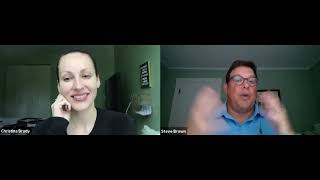
Steve Brown, Head of Sales at Envoy Global, argues that COVID forced changes but proven tactics like authentic prospecting still work. Don't implement multiple changes at once without measuring each one. Three core rep behaviors matter: authenticity, honesty, and directly asking for what you want.
Chapters
Hello, everyone. Welcome to another sales assembly study break. I am Christina Brady, president of sales Assembly. Also want to give a quick shout out to Vidyard, our sponsor for each of these. I am lucky enough today to be here with Steve Brown. Steve, tell us a little bit about who you are and what you do. Hi.
Thanks. Great to be here and talking to you and meeting you for the first time.
All good.
And I'm right now the head of sales at Envoy Global. We streamline the immigration process to make it easier for companies who sponsor foreign nationals for positions within their organization to process those work authorizations. We mix technology, a proprietary technology that we've developed with expert legal services to make that happen.
That is very, very meaningful work that you're doing and you're obviously someone who can help in multiple areas. And as you and I are kind of talking about what's been happening the last couple of months, and we're seeing a lot of companies and sales reps make these shifts and pivots really, really quickly and say, because the landscape is changing, we have to change everything and we have to do it really, really quickly. In your opinion, do you feel like that level of rapid, quick change is always the right thing to do, or is there potentially a different way to look at it?
And I think quick change is a great thing. And I think obviously coming the second week of November, the world changed. You couldn't do things exactly the way you did before, but I think the level of change is something that you have to manage, right? And to be able to do quick change and to be able to manage change, it is very important to do this right. And my concerns of a higher level of change are maybe two or threefold. Right. One, the world changed, but everything you were doing before, assuming you were having success is not wrong, Right? It's been proven over a long period of time. And while the world certainly changed, it didn't completely turn away. And a lot of the things you were doing being authentic, prospecting, activity level, things like that might still be working.
Right?
So you don't want to throw the baby out with the bathwater, as they say. Secondly, I get concerned when people throw a bunch of changes in at once. How do they measure that? Right. And assuming you had a. You were measuring everything before and you knew what your benchmarks were, you saw where they went down after Covid, and now you want to bring them back up. If you addressed a bunch of different change and they went down again, is that Covid, which change caused that? Also, if they went up which change caused that? So to have some kind of methodology
to change
is important. And also that's when you're changing everything you're doing. And third is more like philosophical. As a sales leader we've worked and I know this is a sales assembly mantra as well, but discipline is so important, right? And scalability is so important. So you have a way, you sell. And obviously I like to say we have a framework for the way we sell and within that framework is what the rep has a lot of leeway to prioritize things, personalize things and do that. But we have a framework and the rogue ref, while we do all have some, you can't scale on the row graph, you can't replicate a road graph. And most of the time a road graph is not successful. There are times when a rogue ref just has a way that they do it and it's successful. But I just worry that we took all that investment of intellectual capital to teach discipline and teach them this framework and now we're flipping it around, you know, again, we're not hitting them with that discipline. So you know, when I was talking to my board, I was saying like, look, we're going to look for things that we can change. We're not going to count just on economic recovery to come out of this. We're also going to look at things we're changing, but we're also keeping in. We've checked in on everything we've done before and some stuff doesn't work, some stuff is still working and we're keeping that to do that. So again it's I like rapid change. You have to be able to put in rapid change immediately when this doesn't work, I'm concerned with the level of change to make sure you're doing in a methodical manner that you can measure.
Right? Yeah. What do you think? As you know, if you were a frontline sales rep right now, what do you think would be one thing that might make more sense to remain constant? Like what should I try to dive in a little bit deeper and keep doing versus kind of go tribal and go rogue?
Well, so one of the things that, you know, we always talk about that we want to be authentic, be impeccably honest and ask for what you want. And I think that works today. Right. Like if you're not authentic in today's world, you're, you know, everyone's at their home. Like you look at my background, my kids clothes, if you could see they're packed for college. Right. You know, I'm my Guest bedroom here. So it's all open. So you got to be authentic. Two, you've got to be honest. People are going to have no time for that. And people have, you know, there's been a lot of stress, so they appreciate directness. So ask for what you want. It's like, hey, I want to show you this demo because I think this is something that I don't know if it's going to help you right away. I don't know if it's better than what you're doing, but it's different than what you're doing. So I think it will. You'll certainly be educated by that. Right. So they appreciate it. So those three things to me I've said, I think the thing that has to change was obviously the messaging, right? And the messaging had to change, and it continues to have to change. I know at the beginning of this in April, if there wasn't an introduction of empathy, like, I hope you're doing well, or I hope you're getting through this, or I hope you got your remote okay and all that stuff, it seemed a little inauthentic. To still be doing that now is a little bit. Seems also inauthentic, like, yeah, okay, I figured it out. Now it's six months in or five months in or whatever. Right?
Yeah. Yeah. Well, the idea of rooting in authenticity and. And the fact that what is authentic today may not have been yesterday and vice versa, and to always be making sure that you're flexing appropriately I think is a really, really healthy exercise. And just this idea in general.
Yeah. And I will tell you, those three rules came from a sales trainer I've used, Jeff Hoffman. So I don't want it. This is going out recording. I don't want to think I'm cribbing him. Those are things that we've blatantly stolen from him or he's taught us during sales training. Of those three things.
Well, we'll tag him. So that. Awesome. Well, Steve, thank you so much for being in our study break once again. I'm Christina Brady with sales Assembly. Thank you again to Vidyard. Thank you to Steve. And we will see you next week for another sales assembly study break.










