Fridays are for Closers: History Lesson: 140 Years of "Modern" Sales
This content was created by Jeff Rosset. This content was uploaded by Jeff Rosset. This is a YouTube webinar-style presentation titled "Fridays are for Closers: History Lesson: 140 Years of 'Modern' Sales" (recorded May 28, 2020). It is hosted by Matt Green with Todd Capone presenting a broad historical overview of the sales profession — from ancient barter and itinerant merchants through 19th-century drummers, snake-oil medicine shows, early sales methodologies (e.g., NCR/pyramid selling), the first sales conferences and training programs, the influence of psychology and Dale Carnegie, impacts of the Great Depression, door-to-door tactics, and the evolution of cold calling and phone technology. The talk mixes historical anecdotes, primary-source artifacts, and practical lessons intended for modern salespeople and was part of the "Fridays are for Closers" series.
Chapters
Get rolling. Thank you, everyone for joining us again today. Bittersweet as today is going to be the last session in our Fridays our foreclosure series with Todd Capone. And of course, leave it to us to have our last session of a series entitled Fridays are foreclosures on a Thursday. But that, of course, is what a short week followed by a holiday rub it up against the end of a month will. Will do to us. So I appreciate everyone jumping on board today. Really excited for Todd's discussion today as a way to close this out, mainly because I'm personally a big fan of history. I think history gives us as individuals in every regard, a whole lot of context. You know, the old saying goes, you know, you can't really know where you're going unless you understand where you've come from. And as it relates to sales specifically, I know that we've been spending a lot of time not only on these sessions, but just in general. All of us in our respective teams have been spending a lot of time talking about the future of sales, how sales is changing. And what Todd's going to be bringing to the table today are a number of stories that he's going to be able to share with you, tying back to a lot of consistencies that have been going on in sales throughout the course of the past 50, 100 years and maybe some lessons that we could draw on. Let's work on the past in order to implement to make ourselves successful in the future. So I think that this is going to be a great way to close out this entire series before I hand it over to Todd. So a couple housekeeping items. This session is being recorded. We are going to distribute a recording of today's session along with all the materials that Todd's going to walk through later on this afternoon. And I do want to thank our partners at Send that Cell, Vidyard and Showpad for making not only this event, but our entire Fridays are foreclosure series up until this point possible. Last thing, as always, we are going to budget some time at the end for a little bit of Q and A. So if you do have questions that pop up throughout Todd's presentation, feel free to drop them in the chat function down at the bottom. You could throw that up on the public channel or you could send me a private message directly with your question and I'll be sure to ask Todd these questions towards the end of today. And with that said, Todd, I will turn it over to you.
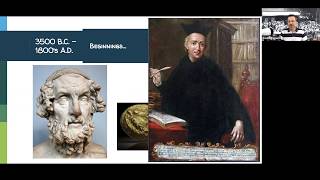
All right, so thank you for everybody who's jumped on here. This has been a labor of love. And it started I received. This is a book, it's called the Five Great Rules of Selling. Copyright 1947. I've read this one a few times, as you can see. And I started following references back and. And I discovered quite a bit about the history of this profession. And so in talking to Matt and talking to Jeff Rossett basically had to sell them on this idea that like Matt just said, if we don't know where we came from, how do we really know where we're going? And I just thought if we're professional salespeople, it would be super interesting to go back and know where this whole profession came from. So we are going to get real crazy nerdy here. We're going to go through some stuff that is really reasonable about the past in sales. We are going to get through a section that's three or four things that are going to be complete mind blowing, like people believe this crap. So we're going to talk about that. But essentially you're going to walk away with an understanding of the timeline of the sales profession. You're probably going to discover that a lot of the things that you read on your LinkedIn profile today are not very novel. You're going to see that we as a profession have gone through some hard times, but we've always come through stronger and we're kind of in that right now and hopefully you'll be entertained too. So with that, I wanted to start with, you know, imagine you're walking into a new job, you got a new sales job and the head of sales says, hey listen, there are nine qualities that I want you to have as a professional salesperson. And you look at these and you're like, you know what? Yeah, that's cool. And again, this is 2020 that you know, first of all, knowledge, like we want you to know our products or services so that you can be confident when you're presenting this stuff. And we want you to have a good appearance, right? Be respectful of the people that you're selling to always be sincere. So be yourself. We never argue with our customers, right? It's kind of that customers are always right type of methodology. We never exaggerate. And if you're representing something that won't sell on its own, then get a new job or sell something else. You know, make promises that you intend to keep. Be optimistic, confident, assure, use your words wisely in that, you know, brevity is a really important trait. And using big words really turn people off. And then the last one, don't knock, which is don't rip on the competitors. You sell your stuff, let them sell their stuff and you know, whatever is the best solution for the buyer. Well, let that win. So you see this today and you'd be like, yeah, I totally agree with that. That's cool. Well, the funny thing is these are actually pulled directly from Tractor World magazine. Yes, Tractor World magazine. And it was talking about are you a real salesman or a order taker? And again, they used the term salesman really up until basically the 1990s as it was a very heavily male dominated profession up until even the last 30 years. But it was amazing to me that these were pulled directly from this. And again, look at what the date is on this one. It's dated May of 1921. So it's exactly 99 years ago. They were talking about these same exact things that you probably see on your LinkedIn timelines today. So with that, what I want to do is I want to go through, we're going to go through a little bit of history here and we're going to start, I want to talk very briefly about how far back I was able to go and find stuff on sales. But then we're going to spend a bunch of our time here from the 1800s to really through the Great Depression. And then I want to take you through some stuff around what happened post Depression, but give you a little bit of a glimpse into the history of cold calling, because I know a lot of us still do that and have to do that and it still can be really, really effective if it's done well. And I then talk to you about today and where we're heading too. So with that, if you guys are ready, I'm so like, you can see I can't stop smiling. My face hurts because this is so much fun to pull together. And so when I went back into history and tried to figure out, all right, how far back could I go? I went back all the way to between 800 and 1200 BC. And so this is Homer, if you know Homer. Homer is famous for the Iliad and the Odyssey. And in his writings he actually talked about door to door salespeople at one point. So there was obviously salespeople and door to door salespeople way back then. But if we fast forward and talk about like what sales was like really in the kind of the B.C. era, what I was able to find is, you know, most of it was barter and barter based, but it was mainly these people that were, I mean, I guess you'd call them peddlers. But what they did is if you. If you made stuff, the peddlers would come by, they would negotiate with you on what their commission should be, and then they would go to these markets and they would swap. So if you had something, let's say you're a farmer and you had some excess livestock, maybe you would go to this market and swap it. And these peddlers, or what they called itinerant merchants, these itinerant merchants, you had to basically train them on your product. And in some cases they would go to these markets and there would be other people selling the same thing. So there was competition. And again, we talked about negotiating their own commissions on these things. So there was comp plans. And again, this was way back BC and money didn't really become a thing until there's a country of an ancient country called Lydia. And my understanding is Lydia is. Oh, gosh, where did it go? Yeah, Lydia is like 800 or 670 BC. So Lydia, 670 BC is the first known. These are actually two coins from 670 BC. So that was the first real understanding of a deployment of coins and currency to be used instead of people just going and bartering. All right, and then let's fast forward and we're talking about transparency. So obviously I wrote the book on transparency. I went back as far as I could go on that, and the furthest I could go on people talking about transparency was this dude. This dude's a Spanish philosopher, Baltasar Grassian, and he wrote about exaggeration in sales. And he wrote this quote that never exaggerate afterwards. When value doesn't measure up to price, disappointment turns against the fraud, takes revenge by cheapening both the appraised and the appraised, meaning when we exaggerate, eventually you get found out and it cheapens not only your product, but it cheapens you. And that, again, was the year 1647. So lots of the things that we talk about today were being talked about many, many years ago. But let's get into that and talk about what was really going on in the 1800s as we kind of progressed into the early 1900s, which is where the kind of the birth of real modern sales was. All right, so imagine in the 1800s, you're living in New York or Boston or anywhere on the east coast, which is really the only areas that were fully developed. And there was this promise of land and opportunity to the west, so people started to migrate west. But unfortunately there weren't Any goods out in the west, right? Your luxury items, your clothes, the kinds of equipment that you needed. And so as people started to move west, there was this requirement for sales professionals to be able to take those products west. So what happened? Well, first of all, there was this idea of something called drummers. And drummers were commercial salespeople, and they roamed the US Basically after the Civil War, and they represented large wholesalers. So if you know what a wholesaler is, you know, wholesaler is an organization that has product like, basically buys products from a number of people and then they take those and they sell it to retailers. Like that's what a wholesaler would do today. Well, back then it was the same thing. There was a number of people that were building, you know, hardware, tools, equipment, you know, other types of things. And these drummers would represent the wholesalers and then go to the retailers, which are the merchants, like the general stores, and they would sell now this thing called the Drummer's Latest Yarn. This is awesome. I thought this was super cool. I was able to dig through a couple of pages. I'm still trying to get my hands on an actual edition of this. But these drummers were known for telling funny stories. And their methodology, if you'd think that the drummers had a methodology back then, was for telling jokes to clients. Like, that's how they disarmed them. That's how they built relationships. In many cases, the drummers told very lewd and crude jokes. But there were a number of magazines that were out that were meant just for the drummers that told stories and basically armed them to be able to go out. And as they're selling to these merchants, they would be able to tell jokes. Now, part of the idea of the drummer is the drummer knocks a lot. But the drummers also would literally play the drums for the merchants. And they would be essentially entertainers. So drummers were the core of what sales was from the Civil War essentially until kind of the mid to late 1800s. Now, the one thing when you look at the history of. Or actually when you look at Gallup, in the Gallup, every year does a survey of the most to least trusted professions. And their last one came out in January. So it was four, 2019. And it talked about the idea that the four bottoms were car salespeople, insurance salespeople, members of Congress and members of the Senate. Like you knew politicians and salespeople. Well, where did salespeople get the negative reputation? Well, it really started back in the 1800s with the idea of snake oil and the medicine men. So if you've heard of snake oil salespeople, they were literally selling snake oil back then. What snake oil was essentially thought of as a cure all for everything, right? So they basically it cured like you had a venereal disease, you had hair loss, you wanted to get bigger biceps, you had tuberculosis for infants, like infant colic. Snake oil, let's do that, right? And so these snake oil salespeople, they were representing these chemists that would basically put these different solutions together. And supposedly there was snake oil in it, but oftentimes it was filled with alcohol, morphine, opium, cocaine. So like amazing stuff. And what they would do is they would compete against each other by their exotics. But at its core, there were some core medicines that actually helped with some of these things. But that was where the phrase accept no substitutes came. Because other chemists or pharmacists would say, gosh, I'm looking at this bottle and I see there's all kinds of crap in it. If I just put kind of the core medicines in, that'll work just great too. And we could sell it for less. So these snake oil guys would go, accept no substitutes, use ours. One of the things that they did is they had these things called medicine shows. And medicine shows, people would actually look forward to these because they were entertainment based, where there were themes and these medicine men who called themselves doctors but obviously they had no doctorate degree would get up and they would sell the different medicines and there was always a plant in the audience. So imagine somebody you're presenting on your great medicine that you're the snake oil that you're selling. And then imagine some guy gets up and starts limping away. And the medicine guy's like, hey, where are you going? And the limper is like, ah, this is a bunch of crap. I don't believe anything you're saying. And the medicine man says, well, hey, I've got one here that will actually cure your lymph. It's just one tablespoon. Just take one tablespoon. He takes the tablespoon and the next thing he knows, he's dancing and everybody's going crazy. People line up to buy this stuff. So they used to buy it, you know, they used to believe this stuff, but that was the medicine shows. And when I said that they had different ingredients in it. This Hosteters bitters actually had 34% alcohol in it. So it was like a 68 proof drink. So sure, it would cure some things, right? But at the time there were a lot of these things that are still around today. So things sold at medicine shows included, like Ex Lax, Milk of Magnesia, Vicks, like if you use Vicks, Vicks, it was called Richardson's back then, but then it became this Vicks Croup and Pneumonia Salve. But some of those things are still around today that were sold at medicine shows, but for the most part, those went away in 1906. And when I say 1906, I'll just hop ahead for a second. Do you know that the Food and Drug Administration was not actually enacted until then. It wasn't until 1906 that you had to list the ingredients that were on something that you were selling. And the thing that was amazing to me is 1938 was when they started making sure that you couldn't sell anything that not only didn't have the ingredients on it, but were you guaranteed that the ingredients in it were safe. So that wasn't until the 1930s. And then the amazing thing is in 1962 was when you actually had to be able to back up the claims that the products you're selling do what they say they will do. I can't believe it took that long, but apparently it did. So let's talk sales training for a second. So. And this is when the profession starts to mature a little bit. I found this to be a really interesting story in that many people call this, what I'm about to tell you, the most remarkable sales campaign of the 1800s. And so what was it? Well, Ulysses S. Grant, so obviously former president, I believe he was the 18th president, but he was also a Civil War hero. Well, he had gotten himself, after his presidency, gotten himself in trouble both financially and then health wise financially. He got himself stuck into a couple of Ponzi schemes and he had a wife and kids and was literally down to only having $80 left. And then he got diagnosed with throat cancer. And back then you get cancer. That's it. Well, he had met the acquaintance of Mark Twain, the famous author, many long before that. Mark Twain got word of this and was like, hey, I want to document your story and I want to help you. And so Mark Twain comes to the rescue, works with Ulysses S. Grant to write US Grant's personal memoirs. But here's the thing. When I talk about sales training, Mark Twain wrote an intense thing called how to Introduce personal Memoirs of Us grant. And they literally sold, or they literally enabled 10,000 book agents to go sell this as quickly as they could so that Ulysses S. Grant would have enough money to leave to his wife and kids. Before he passed away, which he did. But this is considered a masterpiece of a memoir. The stories from the Civil War apparently are fantastic, but it is showing, as in 1884. If anybody ever asks you in a trivia question, what was the first really documented widespread sales enablement program? Mark Twain with US Grant back in 1884. Then your next question might be, all right, we've got sales training. Let's talk sales methodology. Well, the first sales methodology I could find was from John Patterson at National Cash Register ncr, still around today. So back then, obviously, cash registers like that was tech. A lot of the people on the call here, you're selling technology. Well, they were selling technology in the form of hardware as a cash register back then. And so John Patterson recognized that there was an opportunity to optimize and make their sales organization more efficient. So what did he do? Well, he created a methodology. That methodology was pyramid selling. So, yeah, pyramid selling, not the greatest reputation today, but here's how it works With John Patterson and NCR back in the 1880s, what they did is they took the salespeople and said, all right, in your territory, I want you to find the most influential person in that territory, and then I want you to go talk to them about the cash registers. And then what you'll do is you will basically give kickbacks to that individual for helping to sell cash registers to the next tier of influential people in that town and so on. When you get to the bottom, obviously there's not a whole lot left to sell, but that highly influential person would go out and sell, and then they would get money from these next set that would be sold. And in the end, that most influential person would have a cash register that they didn't pay for and in some cases, made money off of. And NCR ends up with cash registers in every merchant in town. So pyramid selling. So if you're wondering, the first real sales methodology, pyramid selling, appears to be it. And this father of professional sales was John Patterson. So with that, we are up to the 1900s. So let's pop into that a little bit and talk about when sales really began to accelerate. All right, and so I'll take a look here. I don't know. Do we have any questions that need answering yet, Matt?
No, no, not yet. I think some of these are going to be best waiting till the end. So keep rolling with it, brother.
All right, so the 1900s come around, and there it was, 1916. So July of 1916. This is President Woodrow Wilson, and he, in this picture is speaking at Something called the World Salesmanship Congress. This was what I could find as the first sales conference that was attended by about 3,000 people at the Arcadia Auditorium in Detroit, Michigan. And one of the things that was the to kick off the event. The event was kicked off by this guy named D.M. barrett, who was the editor of a magazine called Salesmanship Magazine. But Barrett talked about the fact that the days of back slapping alcohol, like hard drinking, alcoholic drummers were over. In 1916, sales was seen as a very reputable profession in that the U.S. economy was looking to salespeople as the success or failure of their own industrial revolution. Meaning people like Woodrow Wilson would go keynote an event like this because he wanted salespeople inspired. He wanted them selling because the tools, the things that are being manufactured, needed salespeople to be able to get out into the market. And so the first documented sales conference was this one in 1916. And by the way, I was joking with Matt and Jeff about the fact that, like, if we all think sales assembly is this novel concept, there was something called the Detroit Sales Club, which was very similar, that was kicked off in 1915 by that same D.M. barrett who kicked off this giant sales conference. So I thought that was kind of funny. Their motto was business betterment through betterment and salesmanship. So sales assembly isn't even a novel concept. I'm sorry to say, guys, but the whole point of this was we're trying to make the profession of sales to be much more dignified. But before I go there, let's get a little crazy. All right, so here's some of the crazy things that I found along the path that were right around that same period of time. And so, first of all, Nate Blackburn, you're gonna love this. Actually, I shared the PDF with you on this one. But this was a book that was written by a guy named Albert e. Wright in 1916 that shared all of his stories about basically being a peddler, going from town to town, tribe to tribe, selling all the different things that he found along the way. But he had some lessons for salespeople too. And there was a couple of these that I was just like, oh my gosh, I can't even believe it. You can see at the top of the page here that he talks about going in and selling a husband, because husbands are pushovers. And then the husband says, hey, I'm going to buy this. And the woman jumps in and says, no, you're not. And there's a whole story about how to deal with that at the time. And I just like, wow, how far we've come. Then this comic was in it too, that I just thought was hilarious about, you know, if a man is. You can read it yourself. Bald headed, bandy legged, cross eyed, crooked shoulder. He had better not try selling to the ladies. So I just thought, I thought that was funny, but it was one of the many things that I saw along the path. Like this book. Again, the PDF link will be in the slides when they get shared out. If you wanted to go take a look at that. The next one was, I spent so much time in phrenology over the last week. Your mind would be blown by this. But there was a whole school of thought that said that you can judge a person's character by the shape of their head and especially the shape of their forehead. And this all fit into the category of phrenology. Phrenology was actually a. A science focused on the study of, you know, your head and your brain and all that. So, you know, here's a picture, like if you want a screenshot, front view of an honest head and face, and it says, it will pay to remember the shape of this head and face so you can sell to those people. But the reason I bring it up is this became the core of something called the science of selling. And it became such a core that Ford Motor Company, so not some piddly company, it's Ford Motor adopted the science of selling as their selling methodology for parts of the 1920s. And they would be based on forehead structure. So they focused Ford Motor Company's reps on analyzing the forehead of a salesperson or of a potential buyer. And the larger and more defined the forehead, the more likely they are to accept new ideas and new concepts. So this was as crazy as it sounds, companies like Ford were buying into it. And then the last piece here, kind of the crazy is there was psychologists and phrenologists that were getting a lot of the attention in this sales world where everybody was focused on salespeople. And the chemists would get mad. The chemists were like, hey, what about us? And so this is a quote from this book that I read a good chunk of what a salesman should know about his health. And it talked about the need for taking care of your ductless glands. So I had to look up what a ductless gland was. It's an endocrine gland, so it's like your thyroid. But these quotes here are hilarious. One salesman may be a howling success because his ductless glands are working just right, and then another is a failure because his ductless glands fall down. They couldn't stand up to the strain. So there was some really, really funny things. But in the end, what won was psychology. And psychology continues to be a prevalent part of what we teach today. And it's really understanding the mind of the buyer. Right, the mind of the buyer. It starts with just saying, any seller who wishes to be successful must study the mind of the buyer. And I still believe that to be true. Right. If we can understand how buyers act, how they think, how they prioritize, we should be better salespeople. Now, this one didn't really framed itself as a psychology book, but it really went through some of the core stuff back then, which Aida. Attention, Interest, Desire and action as a core sales process was really the kind of the standard forever. And this focused on that, but kind of dug into the psychology. But things really changed in 1936 when Dale Carnegie came out with the first edition of how to Win Friends and Influence People. This is still a bestseller today, right? It's sold 30 million copies. It's gone through a ton of different editions and updates since then, but it really shifted the focus around. Instead of it being about sellers, it was truly about the buyers. Now, this book, the book has changed quite a bit since 1936 is first edition. Apparently there was a whole chapter on marital satisfaction back in 1930s, which was removed in 1981. But again, it's a fantastic book and it continues to be, and it's kind of a timeless classic. So psychology wins. Let's keep going here, and let's talk about what happened next. So we're through the 1930s, and then we reach this period called the Great Depression. And so any of you, if you've studied history, you know that the Great Depression was obviously one of the most depressing times for our country. After the boom of the roaring 1920s, things started to really fall apart. Unemployment went way up. What was interesting to me is in 1900, the year 1900, there were 600,000 salespeople in the US by 1930. By the time the Great Depression was going on, it was up to 2 million. So the sales profession had gone from 600,000 to 2 million in a period of less than 30 years. And everything started to crash. But here's the thing that's amazing when you think about what's going on in our world today. There were certain industries that flourished, the ones that were focused on cutting costs, extending Runway and reducing risk. Right. They continue to do really well. Many companies shed unprofitable territories. There were layoffs Obviously, unemployment went way up, but they also were oftentimes focused on their most profitable customers. So here's a couple of interesting things that I found, though. There was a lot of organizations who. Salespeople at the time, salespeople. When they kept trying to sell and they weren't getting anywhere, there was a depression of salespeople. Like, salespeople were like, what am I doing? I'm not even going to bother today. And as a matter of fact, it ran rampant in whole organizations to where sales managers. What did sales managers do? They were putting words of encouragement on expense report forms, just like, in hopes that they could inspire the rep to make a couple of, like, go out and canvas. Go sell something. Right. Cause the salespeople were all like, oh, this sucks. There was two other things that popped out. One was this philosophy or methodology called mood selling. Now, mood selling, if you look this one up, you'll find that it was. Mood selling was based on trying to target people's emotions. And it was based on. It would be like a salesperson saying, going to a potential buyer and bringing their child and having the child dressed in drab clothes and saying, buy this or she's not going to eat. And so it was this whole idea of mood selling being tugging at emotions and being manipulative based on, if you don't buy from me, we're all going to die. So mood selling became a very prominent part of the Great Depression sales. And then the last piece here is when you read news, people were blaming salespeople for the Depression. So like I said before, from 1916 through the Depression, sales was the success or failure of US Business in the economy. If salespeople stopped selling, the economy fell. And if the economy fell, people lost jobs. And when people lost jobs, they blamed salespeople. Like, that sounds ridiculous, but that's exactly what was happening. So sales was always such an important part and there was no E commerce to fall back on like there is today. So we're through the Depression. I'm going to accelerate here through kind of the rest because I think that's the core that was modern sales. The first philosophies, the first conferences, the first formalized sales training. Now, there were a bunch of things that happened post the Depression, post World War II, door to door was still prevailing. I wanted to just quickly share with you a couple of door to door tips from this book, 1947, that I think are pretty funny and so you can be the judge of that. So if you sell door to door and there was 10 tips in there. One of them was, don't work up one side of the block and down the other, because there's watchers, and housewives are watchers, meaning they see you coming and they'll pretend like you're not home. So the advice was to work randomly around the block or pop in on different streets instead of going up and down because you'll have more people actually open the door for you. So I thought that was kind of funny. One of the things that also says is, if there's a watcher, walk up briskly like you mean business. Like, hey, I'm all about business. This is important. If you're slouching on your way in, nobody's going to open the door for you. Another one, you know, try to get, and always use the name of not only a woman you're talking on, but try to get their children. Apparently, that some kind of trick then. This one was the creepiest of all, where you ask for permission to step in, and you make a step as you say it, and reach for the door. So there was a number of other tips selling door to door back then, but this is another one of those things that I'm glad is almost gone. I keep looking at you, Nate, because I know, Nate, you were selling door to door for a while, and you were selling it in some pretty rough neighborhoods back in the day. And I can imagine you looking at these tips and going, you know what? I probably used a couple of these. So let's keep going. So let's talk about cold calling in the phone. All right, so a lot of you are in business development, and so I thought it might be interesting to give you a little flashback on the history of the phone and the history of cold calling. I did some digging on this just so, like, if you were ever in a trivia contest around cold calling, maybe you'd get a couple of answers, right? But obviously the phone invented in 1878, but did not become real pervasive until the 1960s. And that was when things started to switch to where salespeople, instead of just going door to door, knocking on business doors and trying to get in to see people, they started using the phone much more, much more often. I tried to go back and go, all right, how far back could I find stuff on the word cold calling? The first thing I found is back in 1875. This was a British entomologist who was writing a book on the collection of noctoid moths, if anybody knows what the heck that is. But he referred to Indians making a Cold call on him. And then if we go forward and try to look at the first references to sales as it relates to cold call. This was a story from the American magazine in 1925 talking about a cold call that resulted in an insurance sale. So this guy was talking about that. No introduction, no personal link, and he got the sale. So there was this effort to start encouraging people to start making more and more cold outreaches back in 1925. So that was a little bit on just the history of cold calling. But the phone became very prominent in the 1960s. Now, over time, there's been tons of articles that talk about the demise of cold calling. And you know why? Because every few years there's another block in the way, right? So things like, you know, administrators. So as office, you know, people working in offices started to get phones, administrators became the gatekeepers, right? So how are we going to deal with that? We move forward into the 1970s, and this did not become pervasive until the 1990s. But Dr. Shirley Ann Jackson, she invented caller ID and call waiting. Caller ID was a cold call killer back then, right? That, you know, we're not going to answer the phone if we don't know who it is. So we have Dr. Shirley Ann Jackson to thank for that in our own home and our personal lives. But she obviously made it a little bit harder for us in our sales lives to be able to make cold calls with the caller IDs, answering machines, voicemails, all of those things became blockers. Then smart salespeople, they always found a way around it. I mean, back then, what did you do with caller ID? I remember for me, so 1990s, I'm making cold calls. One of the things that we did is you call into maybe accounting, and then you'd pretend like, oh, gosh, I didn't mean to be here in accounting. Could you forward me to the head of manufacturing and, you know, say her name or his name? And when the call would come, internal caller ID would pop up from accounting. Those people always answered, right? So there was different crazy tricks that you used to have to do. I remember one deal I was working on in the mid-90s where the guy, it was Morton Salt in Chicago. The guy would not answer my calls, and I knew he was there. And so to get him to answer the call, I actually went and used the payphone in the lobby of Morton Salt's headquarters here in Chicago. So anything to get around caller id, but those things have always been super pervasive. But what, you know, as you Go forward. Sales was sales for a long time here. Just to take a step back for a second, if we look at, I guess this was 2018. HubSpot put out an article of the 30. It was like the 34 highest rated sales. Sorry, 32 most highly rated sales books of all time. So they had 32 of them. Me being the dork that I am, I took the first 25 and I looked at the dates, the copyright dates of when these books were published. As it turns out, out of 25, 21 of them were copyrighted in the last 10 years. And four of them were between 1980 and 1984. And I thought, why would that be right? So of the history of books and how highly rated they are, obviously ratings are a part of this, but what is it about those years that made such a difference? Oh, keep in mind that back in the 1980s, there was a expansion of information available. So that was really the beginning of libraries expanding and the ability for people to store digital information computation became really easy to be able to transmit information become a lot easier. So salespeople found themselves in the late 70s with their old feature benefit style going, holy crap, this doesn't work anymore. And so they glommed onto books like these that were meant to start selling solutions instead of selling products because buyers now had more information available to them and they didn't want just a listing of product features because they could get that on their own.
And.
And these books became really, really important and really, really prominent in those times to help salespeople to start creating solutions for customers instead of just being a product dump. And so there's books like these. There was Brian Tracy had a book called the Psychology of Selling that was really popular at the time. I don't know if anybody ever did Miller Hyman training. You gotta be at least my age for that. But these blue sheets probably make you want to burst into tears. But back in. I was trained on Miller Hyman in 1993, 1994, as my first sales training. And these blue sheets were these massive strategic analysis that you had to pick apart every deal with. And then you'd go to, you know, you'd cry yourself to sleep at night because these things were never filled in. Right. But that was the 1980s, so lots of new methodologies taking us from feature benefit to solution type selling. Then we got to the digital age, which is now. Right. So obviously the Internet changed everything and started to accelerate the evolution of sales really, really quickly. If you remember, for you that were around at Y2K time. There was this mass hysteria around the year 2000. And as clocks went from December 31, 1999 to January 1, 2000, the worry was those last two digits, the 99 were going to just go to 00 and systems were going to shut off. This was actually a screen from CNN where they warned that electric utilities would potentially shut down, planes might fall out of the sky. I think these other two, I can't even like prison gates are suddenly going to open, there would be terrorist attacks and wild, I don't know where they came up with wild dog packs, but I think that was pretty darn funny. I went and checked to see, like is this real? And I have not gotten anything to dispute that. CNN actually showed these as things they were worried about around year 2k. Now what does that have to do with sales? Well, the late 90s became an explosion. It created this massive tech bubble. So for most of you that are in the tech space, a lot of it started then. Internet companies were developing and as long as you could generate some revenue and you could go public, and as long as you could go public, you could all be millionaires. Like that was literally happening. I saw people that were selling crap, it was like vapor going public and making tons of money. And so the market had exploded. It kind of, it reached its peak actually this shows September 27th, but in March of 2000 was the peak. And it was when we all realized that year 2k didn't matter. But for me personally, I was selling for a company called SAP in the late 90s. And at SAP we were selling full like the back end systems for all your accounting and distribution and manufacturing and every company, if you were anybody, you needed to replace all your systems before January 1st of 2000. And so SAP was a rocket ship during that period of time. I did 830% of my target in 1999. And it wasn't because I was that good, it was because I was essentially working at a drive thru window. So when I talk about drive thru windows, let's talk about that. Because what happened was after 2000 the bubble burst, things slowed down. We then got into the mid 2000s where all of a sudden there's information available for everybody on everything. Like salespeople weren't even needed at all. And most salespeople were like drive thru attendance, right? They were like, buyers would come up and say, this is what I want. Salespeople would say, do you want some fries with that? Maybe I'd try to upsell you. Maybe I'd be Like a bartender and be your buddy. But that was selling through the 2000s. And all of a sudden we woke up as we hit the Great Recession of 2007-2009. And what happened then? Well, everything started to crash again. And the successor full salespeople were doing something that Harvard Business Review called provoke your customers. And so I wanted to call this out because the Challenger sale is obviously the outshoot of this article from March of 2008. I'm sorry, March of 2009, Harvard Business Review put out an article said in a downturn, provoke your customers. And essentially it was the Challenger Sale. It talked about leading with insights and understanding your customers and challenging them to achieve more than they thought they could. And then the Challenger Sale came out in 2011 as a way to really epitomize this. And it put some data and some science and some actual methods to it. But it all came from this HBR article and that changed things again. And so now we all became part of this kind of challenger insight driven era where salespeople couldn't just be drive thru attendants, we had to be more like personal trainers, more like doctors, where we're diagnosing, challenging people to think bigger and achieve more than they thought they could. And that kind of leads us to today. And so I'd be remiss if I didn't talk about the Transparency sale, but I won't bore you with that. But I will say that what has withstood the test of time, as you see these things I started with that 1921 article, is giving helping sincerity, being courteous, being an asset to say to buyers instead of an annoyance. There's been so many times where you see about cold calling's demise. What has made us resilient as a profession for all this time is that we focus on helping. We focus on giving our customers and we will continue to have phone calls picked up and we will continue to be a prominent part of the economy and driving what will be the rebound to what we're dealing with today. And so with that, I will say that if you're wondering about this picture, obviously that's a Photoshop job from the movie Glengarry Glen Ross where Glengarry Glen Ross talks about Aida, do I have your attention till you get their attention? Are you interested? Have you decided and take action? Where did Aida come from? Well, this is the 1992 Alec Baldwin talking about it. Glengarry Glen Ross. But as I went back, I found someone named Elias St. Elmo Lewis in 1898 is the first to talk about Aida. And it was specific to advertising, but it became the core methodology of sales for many, many years. And I'll leave you with this, a couple of my favorite quotes I found along the way. Number one is if the truth won't sell it, don't sell it from a book in 1919. So essentially, if the truth about your products and services aren't good enough, move on. And I love that. Like, I want to write that one on my wall. And this other one is from the Fuller Brush salespeople back in 1922, that when you became a Fuller Brush salesperson, you had to sign a pledge that said that you will be courteous, you will be kind, you'll be sincere, and you will always be helpful. And I thought that was pretty cool. Again, that's 98 years ago and it still holds. Completely true today. I'm telling you, I've got books, I've got tabs open. I could go on for another two hours. I'm serious. I found so much interesting stuff. I would love to keep going. I am happy to answer any questions. I will tell you that as we talk about we're going to be posting the recordings later on today. It'll be at ToddTalks online. It'll also be on SalesAssembly.com Fridays and the Sales assembly team will be also sending out the recording. Again, I'm so appreciative of our sponsors that made this possible and made all of these things free for you. I've had such a great time. And as Matt said, we'll answer some questions now, but if we don't get to some, follow me on LinkedIn or Twitter Capone and ask away. I am always happy to do that. And lastly, I'm doing these sessions for companies. That's what I do. So if you're interested, reach out. And finally, the paperback version of the book is out. So if you, for whatever reason, Amazon is selling it for more expensive than the hardcovers, but the hardcovers are almost gone anyway, so you might be stuck with the paperback soon, but get the book. I hope you enjoy it. And with that, Mr. Green, what you got?
Yeah, great stuff. Love the history lesson. Before we get into a couple questions because we have a couple doozies. So I hope you're ready, Todd. I do want to give a, you know, another plug to Todd. I know a number of companies here in Chicago and across country that have worked one on one with Todd. He's brought them in to coach their teams, to coach Their leadership always glowing feedback. And for those of you that have obviously been paying attention today or have been a part of the other Friday or foreclosure sessions over the past two months, you obviously have a good understanding why. So take the opportunity to engage with Todd afterwards. I'm gonna start with a really fantastic question that I got big fan of this just because I love controversy and counterfactual stuff. So we. So we spend a lot of time talking about all these things that are crazy like phrenology and all that good stuff that you were going through through. If you were to fast forward 50 years, what is one established rule of sales? It doesn't have to be one. What are some of the established rules of sales that we sort of take as gospel today that you think we're gonna look back on and say that was nonsense?
Wow. Do you have. That's a really good question. Do you have an opinion on that?
Me personally?
Yeah, I'm throw that question.
Yeah, nice try. Passing the buck. You're the expert here, you know.
Yeah. Gosh. Things. So ask that again. So things that we might think are nonsense today that we'll think.
Oh, no, no. Things.
Yeah.
Things that we take as gospel today. Just like how they took phrenology. It's like, hey, this is science, right? This, this works. It's proven. It's science that, you know, we're going to write books, we're going to create for. They're going to create a whole sales methodology based off phrenology. You know, what are we going to look at a few decades from now when were looking back at today and saying, hey, that stuff that they were doing in 2020, man, you know, they were. Salespeople were crazy back then.
Gosh, I don't know. I don't know. I mean, I'm not a futurist. I wish I was. I mean, cold calling is going to change so much I think again over the next 20 years. I mean, when you think about from the empathetic perspective of a sales executive or any executive in an organization that has 30 meetings a week and 100 emails in their inbox every day, to be able to be taking cold calls, I think is going to have to change. And instead of it being cold calls, I think that word cold is going to go away at some point and it's going to sales development. And those roles are going to be about enabling buyers. I think that's a term you use a lot. Buyer enablement. I just believe that sales development is going to be come more about Educating buyers and making them smarter and better at what they do, establishing relationships. And then when the ask comes for something in return, it is more likely to happen versus just cold. Hey, we're awesome. Meet with me. I just, I think that that world is probably going to go away at some point. Gosh, I don't know though, that's. I'm going to have to think about that. That might turn out a blog post at some point. Like, I'll be just sitting back after this and be like, I have a great answer, but right now I don't.
Well, we'll circulate an email to everybody here afterwards. You know, publication. I like, hey, Todd came up with it. Another question actually submitted through our mutual buddy Nate. And we appreciate that. Would love to hear your perspective. Doing all this research on everything that worked in the past. What are maybe some ideas that you came across that we may have forgotten today that we should, you know, that we should be reintroduced to, that we should re. Implement as part of our sales process?
Well, I think, you know, number one is, gosh, I just saw this one. It was, oh, yeah, like leading with your. How awesome you are. Like, leading with logic. So, you know, just like, hey, our products, do this and you'll get an X return. Like, leading with that. They knew that was polarizing 100 years ago, that instead it's about, you know, telling stories and building relationships. The things that those, those guys from, you know, way, way, way back when, what were they called? The, the drummers. The things the drummers did where they were building relationships and like, they were seen as slimy sales reps and partially because they weren't working for anybody, but they were just like manufacturers reps. But they would build relationships, they would tell stories, they would engage people. And that's something that I saw throughout history, that when I looked at my LinkedIn connections or the cold emails that I receive, I don't still see that. Like, I still see people leading with, we can't generate an ROI of 400% for this company. Like, they knew that didn't work back then. So there's things like that that I saw. There was periods during our history where reps were really, really aggressive. I think that there's a balance there between being aggressive and being a pushover. And there were years where they found that really, really well. And there was years when they don't. I think that the, you know, the 20 teens that we've been through was such a heyday for us that we forgot part of the balance between leading with insights and, you know, kind of being a personal trainer to a buyer versus, you know, just being their buddy. I think we're going to see going back to that a little bit because again, there were eras where supply and demand were out of whack and sellers had to be a little bit more aggressive and they would go too far and when they go too far, it would overcorrect based on what the economy was doing. I think those are really two things that I see. Don't lead with logic, tell stories, build relationships, and, you know, don't be a jerk, but don't be a pushover. There's a balance in between. And I think looking at how personal trainers manage their business and manage people is probably, you know, not like book biggest loser personal trainers where they're yelling at people, but it's more that in between of challenging people to do more than they thought they could.
Okay, great. And I'm actually. We just got a question in through the chat. I'm to going. Going to unfortunately ignore some of the other questions that I had selected because I think that this is the best way to close this particular session, given all the research that you've done. And I love the way this is phrased. Who would you put. Having read all the books that you have, who would you put on your Mount Rushmore of sales authors outside of Tacopony, of course. Biggest face up there on the mountain. Outside of that, who are the two or three folks that are up there with. With you?
Gosh. I mean, like, Dale Carnegie is brilliant. Like, he was a man ahead of his time. When you read how to Win Friends and Influence People and then some of the things that led to some of the sales training and some of the focus that we have today and our understanding of buyers, I just, I think that. That he was fascinating. Gosh. There's some other ones, like Brian Tracy. Like, I look at Brian Tracy's book. Oh, somebody has already answered. But like Brian Tracy, his book goals, like that changed my life back in the 1990s. I thought that was fantastic. The psychology of selling was really, really good. And then, yeah, Zig Ziglar, you've got on here too, Nate, which I would totally agree with too. He was brilliant. I mean, there's some other ones. Somebody wrote Sandler. Sandler was a little bit like off. I was not. Back in the early 2000s when I had my own sales training company. I didn't necessarily agree with all of that stuff. I thought that was interesting. And then like Brent Adamson and Matt Dixon. For a while with Challenger, I just thought. I thought that was brilliant and it was so needed. And it was such a great encapsulation of what insight and selling and in a downturn provoke your customers that I'd found from that HBR article. That HBR article, by the way, I was the VP of sales of a company in California in 2009, and that HBR article was one that I not only read, but we made copies of. We made sure every rep new. And then when Challenger came out, it really did such a great job of encapsulating that I thought that was really good. And then they've come out with the Challenger customer since then, too, which is really good too. So, yeah, I think that Dale Carnegie, Brian Tracy, Zig Ziglar, those are three good ones. I think Nate nailed it.
Awesome. I love it. Well, yeah, we're coming up on the hour of want to be respectful of everyone's time. I think that's a great place to leave it. Thank you again, Todd, for not only today, but for leading this entire Friday's are foreclosures series. Thank you, everyone for joining and being so engaged participants. Again, not only today, but over the past couple months, I have gotten a lot of questions. You know, we have been calling this season one of Friday's are foreclosures. And you know, that should give you a hint that this is not going to be the only season the Fridays are foreclosures. So be sure to keep an eye on your inbox for some upcoming news regarding season two of Fridays are foreclosures. But for now, again, just want to give a big thanks to the man, the myth, the legend, Todd Capone. Want to thank him for his involvement. I want to thank all the partners that made this series possible show, Pat Zendes, Cell and Vidyard. And again, if there's anything to Todd's point that he could do for you individually, if there's anything that Jeff, Emily, or myself here at sales assembly can do for you and your community, please don't hesitate to reach out and let us know. But we've really enjoyed having you all be a part of this, and we hope that you have a good rest of the week and a strong close to the month. Have a good one, everyone.
All right, thanks, everybody.
Thanks.










