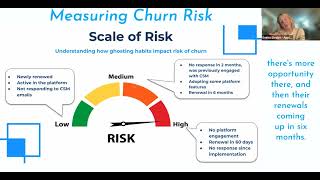
A framework for spotting which customers will churn, based on engagement and renewal timing. A recently renewed customer who uses the product but ignores emails is low-risk; a long-standing customer with no usage and a renewal coming up is high-risk and needs immediate attention. Focus your team on the accounts most likely to leave.
Chapters
Understanding risk and really what is a red flag versus what is something that we're not as worried about. I think this is really important for us to consider when we start to look at how we're going to resolve these types of engagements or disengaged customers, how we're going to resolve that relationship. Not all ghosting is created equal. So important to keep in mind, know the difference between a customer that is at risk and because of their disengagement and one that you're just going to keep an eye on. A lot of you have probably, you probably have some type of scale within your organization that talks about risk at a ploy. We talk about our risk profiles and understanding what those different profiles are that tell us that a customer might be at risk of churn. And disengagement is a very big piece of a lot of different risk, but it's not all the same. So, so when we look at the scale here, when you start looking at particular customers who are potentially at risk because they are disengaging, think about a lot of different factors that come into play when they're not engaging. And you can see them here, we'll walk through them. But when we talk about somebody who has just renewed their contract with you, right, they just agreed to continue using you all and you can actively see that the customer's in the platform or in the product engaging, but they're not responding to you, that's not a huge concern. As a leader, if my team came to me and said, I cannot get this person on the phone, I can't get them on a call, but they literally just signed a two year contract and they're in the platform all the time. I would say let's not stress about this one, keep an eye on it, but let's not freak out here. We'll move on to other bigger issues. Then we start moving down the line to more serious concerns and we talk about customers that maybe for a time had been engaging with us but now are a bit unresponsive. They're using some of the platform or some of the product, but we know that there's more opportunity there. And then their renewals coming up in six months. I'm a little bit worried about this one. I don't like that they're not engaging with me. That gives me a little bit of a concern, but it's still not on fire to me. So this is now one that I'll, I'll take an even longer look at or continue to try to reach out to a bit more. When we talk about high risk, we're talking about people who. They're not talking to me at all and they haven't for a long time. They're coming up on a renewal. They're about to have the opportunity to get out of the platform in general, and they've done no engagement. This is an on fire, disengaged customer. This is where I spend my time and this is where I really want to use a lot of these tactics. So I think it's important for you guys because you are always going to have customers who don't engage with you. It's always going to happen. You cannot get away from it. It doesn't always mean, though, that the customer is going to churn or that the customer is in a really bad place. And so it's important to think about this scale and where your priorities lie. Don't spin your wheels on customers who are at this low level of risk when you could be spending a lot more of that time on people who are engaged or are, excuse me, people who aren't engaged who are about to come up for renewal and we haven't been able to talk to them. Those are the ones that we really, we really want to hone in on and focus in on.