Sales Assembly's #ScaleSmarter Virtual Roadshow - Austin 6.26.20
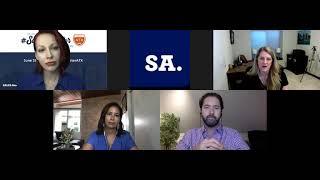
The recorded webinar opens with Matt Green, CRO of Sales Assembly, introducing the company’s membership platform for B2B revenue teams and the purpose of the virtual roadshow. President Christina Brady moderates a panel of four Austin‑area leaders – Dana Wright (MATH Venture Partners), Katie Bullard (A Cloud Guru), Niels Marchand (SecureLink) – followed by a keynote from sales‑consulting veteran Jake Dunlap. The discussion centers on “scaling smart”: avoiding premature sales hires, understanding the economics of a sale, founder‑led selling, balancing growth vs. efficiency, and building repeatable go‑to‑market engines. The panel then dives into talent acquisition in a remote world, how to assess grittiness and tenacity in candidates, and ways to maintain culture and empathy when teams are virtual. Katie shares how her company refined job descriptions, added mandatory presentations, and instituted collaborative interview debriefs to raise hiring quality. Niels talks about pulse surveys, personality profiling, and tailoring communication cadence. The conversation shifts to product‑market fit, the danger of trying to be everything for everyone, and the need to focus on a few core strengths before diversifying. Jake Dunlap’s keynote expands the conversation to post‑COVID outbound strategy: integrating LinkedIn (or other buyer‑where‑they‑are platforms) into daily prospecting, treating sales teams as content creators, and moving sales operations from static reporting to a real‑time performance organization. He stresses the importance of continuous sequence optimization, micro‑level sales‑cycle analysis, and leveraging external specialists for sales‑ops functions. The session ends with audience Q&A on social‑selling adoption and the timing of hiring dedicated sales‑ops resources. Throughout, the panel emphasizes data‑driven decision‑making, empathy‑focused leadership, and the need to re‑imagine traditional sales processes for a remote, hyper‑connected market.
Chapters
Why don't we go ahead and do so? Welcome everyone. My name is Matt Green. I'm the Chief Revenue Officer of Sales Assembly. I'm here in Chicago on this bright and sunny morning. Really excited for this. This is actually the sixth out of seven stops that we're making in a virtual roadshow this week across the country. And for those of you that might be on this call right now that aren't too familiar with Sales Assembly, I want to provide a little bit of context before we get into the discussion today. Sales assembly is the first all in one membership based platform for everything that B2B revenue organizations need as they scale from learning and development resources to peer communities to strategy, and the list goes on and on. And a little bit of context about us we were launched here in Chicago in 2017 and we spent the better part of the past three, three years building up a community of over 100 of Chicago's most prominent B2B technology companies. And then we decided a few months ago that we wanted to go ahead and expand this collaborative, excuse me, collaborative based learning platform and community that we built to other tech ecosystems across the country. That's a big part of what we're doing here today is we're making these virtual stops and a couple different prominent tech ecosystems across the US Making sure that we're providing some sense of value to those communities down there. Introducing the value that Sales assembly provides by partnering with some really fantastic speakers and thought leaders, some of which whom you're going to be hearing from today. Of course, if you're not yet a member of Sales assembly, we would naturally love to chat with you about that afterwards. But the first thing that we want to do today is provide you some really meaningful thought leadership through a rockstar panel that we have built up with Dana, Katie and Nils. And I'm gonna let Christina Brady, our president, introduce them formally in a moment. Then after the panel discussion, we're gonna be joined by the illustrious Jake Dunlap, a name that I'm sure many of you are familiar with if you are in the B2B tech ecosystem, especially if you live in Austin where Jake is based. Cause he's one of the most prominent thought leaders in the B2B sales ecosystem today. So just a couple housekeeping items, this conversation is being recorded and we're going to distribute a video recording of these conversations afterwards later on this afternoon. And we are going to be fielding questions for both the panel today along with Jake Dunlap later on in the program. So any questions that you would like us to ask this esteemed panel, after we're done with the discussion here, you can feel free to submit them to me directly through the chat function down at the bottom of your screen. And last but not least, I do want to thank our partners that made today possible, our friends over at Gong Showpad and connect and Sell, who we've been fortunate enough to partner with for pretty much the past few years of our existence. Now with that said, I'm going to turn it over to our esteemed president, Christina Brady to to go ahead and introduce the panel discussion and get the event started. So Christina, over to you.
Awesome, Matt, thank you. Very excited to be here. As Matt said, I'm the new president of Sales Assembly. A little bit about me. I've been in sales for 14 years, in tech leadership for the last 10, most recently at Glassdoor and how I first interacted with Sales Assembly. Glassdoor was a member of the Sales Assembly Network and I was able as a revenue leader to notice firsthand the lift in learning and ROI and confidence that I saw in my reps and in my org. And so when Covid gave me the opportunity to find a new home, it was a no brainer to join Sales assembly and just pour some rocket fuel on this thing and help them launch and continue to build and make sure that it's as valuable for everybody that it was for me personally as a revenue leader at Glassdoor. Have a wonderful panel here of people who can talk about themselves way better than I ever could. So I'm going to go round robin in the order that I see you. Please just tell us who you are, what you do, and a little bit about you. So Dana, I see you first, so please kick us off.
Yeah. Thanks for having me today. Dana Wright I'm a Managing Director with Math Venture Partners in Chicago. We actively look at deals across the US And I specifically kind of focus in the Austin area. So thanks for having me today. I'm an advisor with Sales assembly and part of that is just our entire focus is on customer acquisition and sales. The way that we screen for companies is actually understanding what we think the leverage points are in the sales process or in the business model that can supercharge customer acquisition. So that is our entire focus. We look at companies in the earliest stages, we start advising when companies are in their customer discovery side and then we'll make a small investment in those earliest companies once we have a thesis about their customer acquisition advantage. But we don't really dig in deep until we start to see some evidence that that is working and then we'll put a couple million dollars to work and then we reserve for follow on. So, again, thanks for having me. Excited to be here and part of the Austin roadshow.
Wonderful. Well, thank you for being here. I'm excited to hear some of your insight. Next up, Katie, please tell us about yourself.
Hi, I'm Katie Bullard. I'm the president at a cloud guru here in Austin. I actually just joined a few months ago. I've been at four, I think, different companies in Austin that have scaled really quickly from D and B Hoovers to accruent metrotech acg. In between those last two, I had this boring little stent as the president of DiscoverOrg Zoom Info now, which is pretty phenomenal. But my specialty really is scaling businesses between 20 and 40 million and getting them north of 100, 200, 300 million in some cases. It's a really interesting and pivotal point in a company's journey. And what I found is that it's not only the most complex, but quite frankly, it's the most fun.
So.
So I'm excited to be here. I worked with Sales assembly while I was at DiscoverOrg. We were great partners as well as Jake Dunlop. So looking forward to the session.
Awesome. Looking forward to it as well. I think your experience is going to lend very well to the conversation, especially when you use words like fun to describe it. I think a lot of people want to scale and they want to feel like they're at least enjoying the 40 hours a week plus that they're spending while they're doing that. So I'm excited to dig in further. And then, Niels, last but not least, please tell us about yourself.
Sure. Yeah. Thanks. Good morning. So my name is Niels Marchand. I'm the head of sales at SecureLink here in Austin. And my almost. Gosh, almost 20 years of various roles in sales. You know, for me, I love to learn, I love to teach. And I think that one of the things I strive to do is really to push and motivate reps. And I'm gonna steal a quote from a gentleman that I've learned a lot from John Kaplan, that our roles in management is really to help our reps to get to places they can't get to on their own. And so hopefully there's some things that I've learned along the way that can help some of the listeners.
I love that you dropped some really good insights about leadership and what it's really about, which I think is going to be fun to dig into. As well. So to kind of kick it off and do a little bit of an icebreaker and a softball question. Dana, I'm going to come to you first. When you think about the concept of scaling smart, what does that mean to you? And what are one to two tips that you would give companies that are either scaling right now or looking to scale quickly in the next couple of years, especially given the current landscape that we're in.
Yeah, well, I think when we look at companies, one of the number one things that happen is they scale sales too early. They scale before they have a true market fit, they over hire in sales, they throw a lot of resources at something and then they have to pull back. So what I think is the key at the earliest stages and starting to build that progression up to later stages is understanding the true economics of the sale. Not just of the product, but of the sale. So how does a customer, you know, how does a sales rep pay back? How quickly can folks ramp? Do we really have a repeatable process before you go hire a bunch of folks? And so I would say like that is understanding the economics of all of that is what I mean by scale smart. Don't scale before you're ready. The second thing I would say is that there's this really interesting dynamic of companies that scale that are just getting their traction. Right. And many times this is related to the first point. Many times founders tend to think that ahead of sales can sell better than the founder. And in the earliest stages, the founder has to be leading those sales and has to be addressing. So too often found founders, especially if they're technical founders, tend to want to hire the sales guy to go do that sales stuff. And what we have found is that when the founder is leading founder led sales in the beginning and they can't sell, they realize it's a product problem and they can go iterate on the product. But if they hire a salesperson to lead sales, then they end up going, oh, that salesperson's no good, I gotta fire that salesperson. Hire a new salesperson. And so at the earliest stages, those are some of the things that we see and that we work with our companies on.
That's incredibly insightful. I haven't heard that, especially that second tip before. And so my mind is reeling a little bit just in terms of even times where I have heard founders or heads of sales talk about those types of things and potentially be attacking the wrong problem and at least shows that we need to maybe be lifting up rocks a little bit more before we go and attack what seems like the problem is. So I think that's incredibly sage advice. Katie Ornels, any tips that you want to give everyone on how to scale?
Just going to add on to Dana's first point. You know, to me it's about finding that balance between the right growth profile and the right efficiency profile. And quite frankly that the right balance is different depending on a couple of factors. It's different depending on the stage of the company. It's also different depending on the dynamics of the market itself. There are some markets, for instance, based on their maturity and their growth curve that you want to focus on customer acquisition and getting as much of that and as fast to that and being the first to it. And as possible. There are other markets where you're going to focus more on customer retention, expansion, efficiency and at different points in the company cycle. So I think really understanding your market, really understanding the growth profile of the business and then to Dana's point, building a go to market engine that optimizes for the right economics is what's really key to scaling smarter.
Yeah, the engine is more important than people realize. Early on when that gets out of control, it's very, very hard to backpedal. And what I mean by that. Recently I was working with a newly series B company and they were talking about how they want to continue to hire more and more salespeople. But the other problem that they wanted our help solving was every salesperson kind of does their own thing. I was like, what do you mean they do their own thing? Like their work life balance or how they're doing their job? And they said, well, you know, they all have their own process and their own way of selling and their own way of getting it done. And I said, is any part of that a standard operating procedure? Is there any set sales process? Do they know the steps they need to be hitting? Like when you're bringing new people on board, what are you training them in terms of how to sell the product? And they were like, right, okay, so we actually have two things we have to do. We have to re enable the sales team and give a process and make sure that it's repeatable and scalable. And if companies do that from the start and think about that and to Dana's point, using some of the founder led sales techniques that got you there in the first place, you can sail a lot faster as you're continuing to hire. So these are amazing tips. Niels, anything to add?
I think you guys nailed all the key aspects. The only addition I would have is sometimes as salespeople, we rely too much on our gut or too much on our data, and individuals will balance between the two. I think finding that right balance is really important. Using your experience and what that tells you and then balancing that with the data of when to grow. How much process do you need right now? Or is it hindering the speed of the sales reps, things like that. So you guys gave some good tips. Thank you.
Yeah.
One other thing that came up while you were talking, Christina, I think it's interesting because, you know, what you talked about was not having a standard sales process, but it also is probably like, what is the profile of the seller? What are the processes that are working the best? Who are the stars in that? And can you repeat it? Or do you have the Superman syndrome or the super person syndrome in order to. That you're just trying to replicate that you can never replicate? And so those are, again, some of those things. It's just a matter of really making sure that it's repeatable and scalable before you start to continue to hire into something that is really luck of a draw.
Yeah. Yeah. We cannot grow if we cannot repeat. And sometimes repeating means we evolve, but there needs to be the ability to do that. And when everybody is doing their own thing or when we don't have a customer profile, it makes it actually impossible to do that. And so when we're thinking about our people and the importance that they play in a company's ability to grow, talent acquisition is front of mind for a lot of companies, especially right now. The way that we're hiring and onboarding our reps and our leaders and our ICs, is very different than it was three months ago. So what is the typical talent acquisition process? And in the last three months, how have you seen that change? Katie, I'm going to come to you for that one.
Well, I don't know if there's a typical talent acquisition process for anybody kind of across the board, but what I can say is I think what the last three months has really forced us to do is actually get a lot smarter about our hiring and really dial in the profile for each role that we're hiring for. You know, when I came on board about six months ago, we were just building out an outbound SDR team for the. For the first time. And I think we probably were a little more lax in who we brought in. We had the profile dialed in a little bit less. And as we started to see people succeed or not succeed, it became much easier to dial that in and now because everything is virtual, all of the hiring, obviously is virtual. All of the selling is virtual. We are forced to know exactly the kind of profile we're looking for, the kind of not only hard skills, but soft skills that are going to translate in this new world. And so while there's parts of this that are more difficult. Right. I hate that I have a team that is now twice the size as it was when we all left the office. And I haven't actually met them all in person, but I think the caliber of folks that we are getting is higher and we are doing a better job setting them up for success in their role because we're doing that diligence on the front end.
I love that.
I love that.
Any other thoughts on what talent acquisition is looking like right now, even from a strictly location standpoint? Are we hiring people in different places for different roles? Has this allowed you to find out that there are incredible engineers in a state where maybe you didn't realize there were Niels or Dana? Any thoughts on it?
Yeah, I'll let Dana take that one. We're looking for salespeople kind of in the back half of the year at this point. And so what I the hard, the difficult thing as part of a Vista portfolio company, there's quite a few processes that they have in place to help try and identify certain personality traits and certain acumen components. And so those are those, like, help to define a certain type of individual at times. And, you know, I think for me as a salesperson, like, how to define and identify grittiness can be very difficult. Right. In a virtual environment. And I think Katie said it really, really well, which is you have to kind of hone in in a very different way and understand how people sell in this environment. Right. What is the simplicity of the eye contact in a vert? Like, there's just simple things that change that make a difference. When everyone's now trying to sell virtually, which becomes a harder thing to gauge at times that you see how they are in an interview and it's very much going to be how they are with a client conversation. Virtually.
Yeah.
I'm going to pull you one level deeper and put you on the spot a little bit. So I'm sorry, but you mentioned something that I think every salesperson needs and everyone wants to interview for and they don't always know how, especially virtually. And that's that element of grittiness and tenacity. If I'm sitting in the audience, I'm thinking, yes, I want that, but how do I interview for that? So what are some tips that you have in terms of how tactically you actually uncover someone's grittiness and who they are and how they will sell? Well, I'm just looking at you through a computer lens.
Sure, sure. I have been interviewed quite a few times and interviewed quite a few people. And some of the strategies I've seen really pull the professional side out. They try and understand the person as an individual, understand what did they go through when they were growing up, what are some of the challenges they faced and really like keeping it free form and asking them how did they overcome that?
Right.
Like, was everything handed to them? And if it was, what did they do with that? Like, did they.
Because that's.
It's not a bad thing.
Right.
If you grew up in a, you know, in an environment where those things were provided to you, doesn't mean you don't have grit. Right. It just means you maybe had to display in different ways. It's much easier, I think, to see it if you had to kind of scrap your way through different things. Right. Whether that was paying your way through school, whether that was, you know, having a single parent, whether that was, you know, different environments that you dealt with an injury or an illness or things like that. I think those are, you know, within HR appropriate context. Understanding more about them as a person as opposed to them in a professional sense, I think gets more to the root of their grittiness.
I love that I would add a few things. So we, the venture capital world is going through this really interesting thing as well around, you know, are we going to fund entrepreneurs that we never meet in person and it's the same as hiring or any kind of funnel process, or am I going to buy a product from somebody that I can't sit across the room from it when it used to be relationship selling, it's the same thing. So I think Covid has accelerated the adoption of being. Of being remote, obviously. And I think people that, you know, find the ways and it's about adaptability, find the ways to continue to get to those things is really important. So I'll give you an example of somebody that didn't have grit and resilience recently. So we started this company and XYZ happened and we quit. And then I started this other company and XYZ happened and I quit, and then I started this company and now I want you to give me millions of dollars to go fund this company. Right. And that's a pretty clear pattern that they didn't either they didn't choose well, it's okay to fail. But I want to understand way more about what was it that led you to believe that it was to quit versus to pivot versus to continue on. And then you start uncovering, oh well, you know, my founder and I couldn't agree, or other components that give you more insight into that person working with others, that person's resilience, ability to kind of come up from other things. People conflate resilience and grit and kind of look at them as different resilience. When you keep getting knocked down and you can come back up, grit is sort of like, I am going to this goal and nothing is getting in my way. And so I think that continuing to ask the next level question and the next level question and the next level question about what Niels was saying about those experiences along the way can uncover. And then the other part of it for me is that when we're doing reference checks, you know, we're doing developed reference calls, we're calling the three to five people that they tell us to call, but we're uncovering other people in our networks that we trust and other people that they haven't talked to us about through those reference calls and cross referencing them and getting and asking some really next level questions.
Christina, can I speak to the Austin angle as well? So, you know, the last few months have obviously been tough for everybody. But what I've seen happen is there are companies that have been negatively, obviously more negatively impacted by the virus and other companies that to be honest, have had tailwinds because of what's happening. You know, I will say acg, we're online education and we're cloud computing. So we've been on the tailwind side of that. And so what has happened is we are hiring really aggressively. We're actually hiring more now than we were last year. And it was really difficult last year, year to hire enough people into the right roles, sales, product, everything. We're actually finding it to be an easier time to hire in Austin now because there are so many talented people who are looking for, you know, for companies that are, that are being successful right now. It's a fine line. It's a balance. In some ways it's actually making the recruiting process a little bit harder and in other ways it's more making it easier. But what we've actually found is that because of this dynamic, we're actually starting to hire different roles in Austin than we had hired previously. So we're a global company. We had Product and engineering based out of Australia, which is where the company was founded. We had like go to market and GNA based out of Austin and we're actually starting to hire more product and engineering in Austin now again because of the dynamic that has shifted and quite frankly the great talent that's in the market right now.
Yeah, I think it's a great point and there is a lot of new talent in Austin right now and I think that that's where we're seeing a little bit of the boom. And Dana, I love the points that you were making just around to me, when I think of those concepts I think of failure and the fact that failure should actually be a business plan and to go off of what we learned from boxing, it's when you think about agility and absorption, a lot of companies don't plan to fail and you should plan to fail. When my 2 year old was learning how to walk 6 months ago, we planned for him to fall down. We knew he was going to, he has to to learn how to do it. And so those concepts of agility and absorption are things that I keep coming back to which is if you can move quickly but you can't take the punch, you're going to be in trouble. And if you can take the punch but you can't get back up, you're going to be in trouble. And the only way to know how to do both of those things is to train yourself and your culture to be able to do both and to plan to fail as you grow and sort of leaning into that culture piece of it. Neils, how do you grow and scale something like culture? How do you determine what to build into it and where does it come from?
Yeah, great, great question. And certainly different today, right? The default go to is like oh let's go have happy hour. Right? Like those things aren't happening. I think to me there's probably three keys and they're not always easy, especially right now. The first, like you have to be present. If you are in an environment where you're on Zoom 80% of your day, you have kids running around, you have, you know, or not or dogs or
whatever it may be.
It's hard to be really present and to not on one of your screens, have your email open or your chat open in a one on one like you have to be present. I think second, showing like genuine empathy is even more important now in my opinion because we don't, we don't know what's going on in our team members homes. Right. We don't know, the pressures and the stresses that they're dealing with, whether it's them or their spouse and things like that. And to me, that empathy is really, really critical. And then I would say, you know, really increasing the, like, more direct communication. I see a lot of times I have a member of my team, I will fail at this. Sometimes I'll hit somebody up on chat, and then they'll instantly, like, video call me, like, yep, you're right. I should have done that. And so it's good reminders where, you know, don't default to just email, don't default to just chat. Like, it takes more time. But what used to be. Let me go down the hallway and have a conversation about how you're doing or something I need can, in a way be replaced by video conferencing. So being present, genuine empathy and more direct communication would be, I think, three keys to foster that.
Yeah, I would love to hear other thoughts on this one.
We're being creative about ways to have fun. Right. Yesterday, for instance, my team and I, we just did. We did virtual lunch. And the rule was like, no, no talking about work. We all talked about, like, new hobbies that we had been exploring, you know, the very short road trips that we were all taking this summer, things going on in each other's lives. And I think that I was reflecting on this last night. I think that the thing that has impacted our culture across the board as a company the most is just how much more empathetic, as Neil's mentioned, we all are and how much more we're tapping into EQ versus just iq. And I actually think that's making all of us better leaders, better teams, better people in some instances, and deepening a culture that was already there. So that's one of the things that I hope that. That in whatever sense of normalcy we return to at some point in time that we all keep tapping into as
part of our culture, had anybody found a really fun or interesting hobby?
I'm just. I'm just reading more, so I'll.
Yeah, yeah, yeah, yeah.
I'll add a couple of things. So from a hobby perspective, I am. I did buy, like, a ridiculously expensive camera and a few new lenses. And it's something I wanted to do for a long time. I just didn't take the time to do it. And I'm sort of in a. In not a remote, remote place, but someplace I can get outside and kind of play around with it. And I'm trying to make myself do that, at least for an hour every, every other day to just to use a different part of my brain and get away a little bit. But to come back to culture is something I feel really passionate about. And I think that people tend to think about culture in different ways. I believe culture is a set of behaviors and experiences and things that are acceptable for an organization and things that aren't. And so what is really important, I think when you're thinking about any kind of culture on sales teams or more broadly across the company, is being very intentional about what you want to reinforce through reward systems, through conversations, and then being incredibly consistent about that again and again. And so I remember talking to a CEO in our portfolio and I was talking about they had a really toxic culture. And his answer to my questions about culture is, well, I'm going to hire a new HR person. And I was like, no, no, no. What types of behaviors are you going to start to incentivize and reinforce consistently every single day to build a culture that is more focused on motivation and performance? And what are you going to do to dissuade the backstabbing that's going on in your organization? Blew his mind. That to me is about scaling. Culture is being very consistent about what you want to start to motivate and what you want to start to reinforce in your organization. And the hardest part is to be consistent every single time. It's sort of like training kids or teaching kids new things or how to be good people. You have to be so consistent. And I think that's something to think about in this situation as well.
Yeah. And I love the first step was just talking about it. What do we want the culture to be? It's an okay thing to ask. You don't have to say, well, you know, our culture is. You can say, well, actually, I don't really know how to define it. Let's talk about what we want our culture to be and then what's motivated are people to do that. So I love kind of the steps there that you laid out on the conversations that absolutely have to happen. And one of the things that you mentioned twice in there too was motivating your people and incenting the right way. And so Niels, coming to you, have there been any kind of new things, new innovations, new motivations or spiffs that you have rolled out for your people or seen done that are creative, that have incentivized not only the right front end revenue activity, but also the right cultural activities and what you want?
Yeah, it's a good question. I mean, I Think we know that generally as a blanket statement, like if a sales rep isn't motivated, you either have the wrong person or you've got the wrong comp plan to begin with. Right. Like, it's probably one of those two, you know, for those that have had to like, reforecast, right. Based on Covid depending on your business and things like that. I think, you know, be to me, it's like being really clear in your reasons and the changes that have been made. Because if there's ambiguity or uncertainty as to, like, why the decisions were made, you start to like, lose, I think, a little bit of that trust. And if you lose the trust, it's hard to motivate somebody. I think, like, you could potentially throw a bunch of money at it, but that might not be the right move for the business. Right. So that's always the tricky part, is if you just throw a lot of money at it, it's going to hurt the business and ultimately in the long term, hurt the reps as well. So finding that I think is really interesting. Like, there's been strategies of taking, you know, if your business can do it to shift quota, maybe backloading it a little bit to out quarters where you would expect to see business to pick back up. So your payout rates might be higher in earlier quarters and maybe a little bit lower. And then for us right now, like, we're also thinking about how do we incentivize not just individual performance, but the collective team being all virtual and certainly me being new to SecureLink as well. Katie, I'm a little bit like, you have not met all of my team. And so the challenge is like, where there's camaraderie and there's real unity on pushing each other. You know, when you're hearing somebody right behind you that's just had a great call, we don't have that right now. And so we're thinking through ways to incentivize not just individual but also team performance in different ways. So that, you know, there is a collective effort to support each other virtually.
That's one of the things we've really done as well. Christina. We're in an interesting situation that we acquired our biggest competitor in December, and we're in the process of bringing the platforms together and bringing the teams together, and that will happen in the second half of this year. But right now we have basically two sales teams that are still competing against each other in the market. And we've tried to reduce that friction as much as possible, but it is what it is. We were fortunate that we got to bring everyone together in January before everything hit. But the fact that since then we haven't had the ability to bring people together has created this new kind of cultural challenge for the teams. And so one of the things we've done is do more team based contests that are cross company and cross platform. So we're bringing together AES and RM's and SDRs from each of the two teams to create the one team feel as we head into the second half of the year. And actually that's been really effective. And I think in some ways the fact that we're all in the same boat and we're all struggling with the same sort of new environment has helped the team come together, made the teams come together maybe even faster than they would have before. But the team contests have been really popular.
Awesome. I have one final question for hopefully as many of you as we can get in to answer it because it's tactical and focused very much on the Austin market specifically. While we're going through that, if you're listening and you have some questions for our incredible panelists, please start to type those into the Q and A or the chat section in about five minutes or so. I'm going to invite Matt back into to go ahead and lead us as we start the Q and A portion. So the final kind of tactical Austin question that I have, and I'm actually going to stay with you on this one, Katie, is when you think about the various stages of growth for companies in Austin, there's sort of this sweet spot where a lot of them are sitting and it's that 5 to $20 million revenue range and it's tough to break that 20 million revenue ceiling. And so as you think about companies that are trying to do that and continue to be grow and get out of that five to 20, how do you do that? How do you break that barrier?
I want to go back to something that Dana actually mentioned earlier. So the thing that I see that trips companies up most frequently when they're trying to scale is that they haven't nailed product market fit early enough and they try to be too many things to too many people. And I saw this so especially when I was in the sales and Martech space at Discover Xuma Info, especially on the Martech side where you have all of these companies trying to kind of do everything in a marketing workflow and they don't do any of it really, really well. But when you look at the companies that were successful up to that, let's say 20, 30 million, they do one or two things better than literally anybody else.
Right.
So whether it was Discover. Org, it was Org charts and direct dials, like period done, like that's what they did. They did a lot of things worse than everybody else, but they did two things really, really well at ACG up until that point. They did cloud training for aws. Really, really, really well. And they built a brand, they built an engine. You know, you can scale efficiently, but you have to do one or two things well. Now once you get to that point, you then have to start thinking about the diversification and where else are we going to grow. But I think too many companies try to do that too early and then they end up never doing anything incredibly well or never doing anything in a way that is the best solution for specific market need. On the flip side, you get to the 20 million, let's say you've done that, then companies often fail if they don't figure out how to diversify and they don't figure out what the next growth priorities are. Stay focused on one or two of them and incrementally grow from there. And one thing I would caution sales teams to do especially is that oftentimes it's the sales team begging for all of the bells and whistles. Hey, we need more things to sell early on. And I would just caution everybody that until you do one or two things really well, you shouldn't keep asking to do everything.
Yeah, there's some research out there that talks about some of the early stage companies. 80% of their features are used by like 5% of their customers and it's to get that one sale. And so the feedback loops back to product really have to be thought through. And there has to be a really robust filter, filter system from sales back into product so that that doesn't continue to happen. I think that, you know, there's a whole push right now around product LED growth as well and how much that can help and facilitate. You still need the sales teams, but like how can that create more better qualified leads? And so I think there's a whole push right now too to take the technology side to, to reinforce what is happening on the sales side. And I'm seeing that really be something that can help people get through those different stages.
Yeah, Niels, anything to add to bring us home?
You know, I have been part of a few organizations where it's related to what Katie mentioned, this idea of like knowing your segmentation as well. So are you a transactionally focused business? Are you an Enterprise business. Are you all of them? You know, in my past, there's been organizations where, you know, we've had this like, massive, massive deal that is on the hook. And that deal by itself could take you to another trajectory of success and that other, you know, maybe over the 20 million mark. And sometimes that can turn the entire organization towards that singular opportunity in some cases. And, you know, if it hits, that's great. And if it doesn't, you might have really, like, let a lot of things go by you that instead of like trying to make one big leap, you could have taken 10 decent sized leaps and actually got into the same place, but potentially reduced your risk. So as a salesperson, that's hard to say because we all love chasing the really, really big deals. I think at the same time, it's really important for the executive leadership team to understand what would have to be done. And it kind of goes back to Dan and Katie's points around. Are you staying the focus? Are you building certain things just for one individual, knowing that the odds of that may not be there? So I just keep in mind that if you're a sales leader, if you're in a different environment and you have one of those on the hook, just think through, like, play it out right. And I think actually, Danny, you said, you said it best earlier, which was like, you got to plan for those failures. Like, what happens if you don't get that and you've had to make strategic decisions about your product or where you invest as a result of that.
Yeah, you got me with that one. I definitely remember moments on my team with a big deal where we're like, we'll do anything for the deal and then that's all it becomes about. So wonderful. Well, I'm going to go ahead and invite Matt back in. He's got a couple of great questions from the group. For all of you, this has been a wonderful, wonderful conversation. I appreciate it so much. And welcome back. Matt. Let's dive into some Q and A. Thank you, everybody.
Thank you.
No, that was.
Yeah, that was a great conversation. And you know, I love the fact that we really were able to drill deep into some of the nuances and idiosyncrasies of just operating or building a business, specifically in the. In the Austin market, which I know was extremely valuable to the crowd. And speaking of the crowd, we have a good amount of questions that were submitted. We'll see how many of them that we're going to be able to get to. First one for you. Dana, you spoke at the beginning of companies maybe investing a little bit too early in salespeople and their sales teams. In your experience, is there a specific metric or maybe perhaps a revenue number that you would recommend companies hit before maybe they bring in, let's say a director level sales leader?
Yeah, thanks for the question. I think it's really hard. I get it all the time. It's very dependent upon the business model. So if you're a B2B SMB focused mainly on marketing, it's going to be very different approach than if you're an enterprise sales that's got an ACV of $100,000 with an expansion opportunity to over a million. And so in some of those later, in some of those bigger B2B enterprise kind of deals, it actually takes the founder staying involved much longer because you're usually relationship selling at the highest levels they expect. It's harder to get. It's harder to get an enterprise to pull the trigger on putting a significant contract with a startup that is just there if they're not meeting the founders. And so it's very dependent upon business model. And there's no sort of rule of thumb that works across the different organizations that I have found yet, at least.
Yeah, I think that you made a great point early on in the discussion that the quicker that the founder CEO moves away from the sales process, the quicker they're not getting that market feedback. So to your point, they don't know if it is a problem with the product that maybe they have to fix or if it's a problem with the salespeople or the sales process. That's a great point. Katie, next question is directed at you. You spoke about how the caliber of new hires at a cloud guru has been higher over the past couple months in this virtual world. This is some that my company is nervous about really just maintaining the quality of new hires that we're bringing in. What steps are you taking the vet candidates now that maybe you weren't doing in the pre Covid world that's accounted for this increase in quality?
Yeah, I think I'll boil it down to probably three major differences in what we're doing now versus before. The first one, which I mentioned earlier, is just as a leadership team, we've really dialed in our job descriptions and the criteria for the interview process itself and what we're looking for. I think we've just gotten, we've gotten just a lot smarter about that. So I would encourage anybody, if you haven't gone back and relooked at your job descriptions at Your criteria, your scorecards. This is a really good time to go back and do that and make sure you're really dialed into what you now need in this new environment. That's one. Two is. I think we were a bit hit and miss on whether we required presentations previously. And to be fair, I was only at ACG about two months before we then went. We all went remote. We would sometimes ask for presentations or case studies and sometimes not. And we do it every time, whether it's an SDR or, you know, a Director of acquisition sales or, you know, director of partnerships. And that has been really, really helpful in helping us see how the person is really going to present in, you know, in this virtual environment. And then two is we've. We've just. I mean, three is just that we've been more diligent about as. As an interviewing committee being, you know, fully documenting our thoughts, having roundtable conversations about the pros and cons of each candidate. I think we. Previously, sometimes you just sort of send your notes over and then the hiring manager would ultimately make a decision. But this time, we always have at least three or four people who are having that conversation before making the final decision.
Great. And if nothing else, I mean, it's based on the timing of you joining a cloud guru. If nothing else, you're going to be able to say, well, hey, notes, great candidates are attracted to Katie, come on board. And the quality just shoots up. Perfect. Well, yeah, last. Yeah, we have time for one more, and I'm going to field this one to Neil's question for you. You were talking a lot about empathy and just general culture within your organization. We have a leader on the call. It sounds like he or she is worried a little bit about checking in too much on their team and sort of overstepping that boundary. And you spoke about visibility, making sure that you're maintaining visibility in front of your team. What sort of balance are you striking from a visibility perspective so that you're not overwhelming your team in this environment?
Yeah, good question. I would say Securelink, the people operations, HR group has done a really, really amazing job. I mean, one of the best that I've seen at trying to keep a pulse with pretty lightweight, you know, pulse surveys, engagement, little surveys on, like, how are. How are we communicating? Is it too much? Is it too little? And trying to be able to slice that by department a little bit. Like, we are all different, right? Like, I'm a big fan of whether it's Myers Briggs or some other, you know, personality indicator. Like, we have to know our people, we have to know if our people want to be on camera. We have to know, you know, how much is too much, how open do they want to be about things that are happening in their, you know, outside their office walls these days. And so I think the more that you can know the individual and the more that you can, in a pretty lightweight way, check in with maybe anonymous or non anonymized surveys to see, okay, is what we're doing too much or too little? And I think to remember the fact that like, you're never going to get 100% of the way, you're never going to get it 100% right. Like, there's always going to be people that think that the communication is spot on and others that are going to say not enough and others that are going to say, you know, it's too much. So you have to, as best you can, especially in larger group settings, find that balance and then where you can individually get to know your people better and have those conversations. Because there's nothing like good open discussion about, like, what do you need? What do you need? And remember it right, Like I have to take notes on everything. Otherwise, like, you know, I just, I don't remember enough. So I go back, yeah, I go back and just use those to reference, like, okay, this individual is more comfortable with this. Like, how do I change my style, right? How do I change the way that I'm communicating with somebody to adapt to their current situation?
I love it.
Yeah, that's, I think that that's a, that's a fantastic place to, to end this discussion just on that point. Thank you again, Niels, Dana and Katie, for your contributions, not only to the discussion today, but your contributions to the, to the tech scene down in Austin as a whole. We really appreciate you being involved and yeah, thanks again for, for being a part of our roadshow. We appreciate it.
Thanks, Matt.
Thank you.
Thank you, everybody.
Awesome. And that is going to be a perfect way to transition into our feature keynote for today, which is going to be Jake Dunlap. As I mentioned at the top of the session, I'm pretty sure that pretty much everybody on this call is going to be familiar with Jake's name. I struggle to think of a single individual that has built up more of a personal brand, and rightfully so within the B2B tech ecosystem. I mean, Jake, he'll obviously tell you a little bit about his backstory, his cv, but he provides a whole ton of value, not only directly to the clients that he works with, but Also just to the ecosystem in general through thought leadership that he puts out on a relatively consistent basis on LinkedIn and other social media media platforms. Jake is just a fantastic resource. So we're extremely happy and lucky to have him today. So, Jake Dunlap, we are going to turn it over to you.
All right, well, thank you everybody. I appreciate it. Fairly consistent basis. I mean, I think I'm pretty consistent, Matt. I mean, you can't escape me.
I was searching for an adjective and I came up with the wrong one. I should have said extremely consistent.
No, I'm just giving you a hard time. Well, look, thank you everyone. I really appreciate it. I had a chance to sit in on the panel before and it was a fantastic conversation. So I'm excited for this conversation, excited to be a part of the Austin community. We moved down here. I relocated the company headquarters here from SoHo about two years ago and have just found Austin to be amazing city, culturally an amazing city from a business and from a tech standpoint. I'm really pumped to be the keynote here headlining our Austin group. Amazing, amazing group from earlier as well. Today I'm going to talk a little bit about what we're seeing in the market and as a consulting firm, former head of sales, just a little bit of background. If you don't know me, I was been in sales for almost what, 17 years here, multiple different sales leadership roles. I think we've got another Glassdoor alumni as well here that you all poached where I was the first VP of sales operations and success at Glassdoor. I scaled that team from zero to a million in MRR in less than a year, went on to be VP of sales at a few different startups and then started a consulting firm with really this idea that what consulting firms sucked at was actually helping you to get anything done. And so I started scaled almost seven years ago to not just advise organizations on what they should do, but also to help them to pull off the execution which as we all know in sales is all that matters. And so today what I'm going to talk about is how do we move forward from here. I am actually fairly pleasantly surprised by how many CEOs and sales leaders that I talk to that tell me, Jake, look, we've actually had a pretty good quarter. Things aren't as bad as we think. And I think it's now time for all of us, whether you're on the front lines, whether you're in an executive seat or a leadership seat, to think about how are we going to do things differently Going forward. And I really appreciated some of the dialogue around interviewing. In particular, how are we going to change that process? So I'm going to walk you through my thoughts and again, what we're seeing in the market. Look, as you have questions for me, I want to make sure that I'm going to try to go deep for those of you who have joined here on very, very specific topics that are top of mind for you. If you have a question about this new go to market, if you have a question about what's working, what's not working, I want to make sure that we cover that. You should be able to see my screen here now and we'll make this a discussion.
Right.
We've got a few of you on the webinar here. So we should be able to walk through this pretty tactically. So again, as you have questions, feel free. Drop them in the Q and A, drop them in the chat. I'm going to be kind of monitoring that a little bit as well. But I'm going to talk about this concept of back to market and why we need to really imagine the way that we are both building sales and marketing organizations and how we're running and operating them in the day to day. So I talked a little bit about me. I talked about scaled already. I want to talk about what Covid exposed. What Covid exposed for many of us is that we were caught flat footed. That what I saw is that there was a massive shift that organizations were treating. And I think it was Katie Boehlert who talked about this. You know, we're treating everyone like they were ready to buy. You know, we're aggressively reaching out. Target, target, target. Let's set up a meeting. And what happened with COVID is we then were like, oh my God, what do we do? There's people that aren't ready to buy. How do we pivot? And so then we kind of went the opposite way. We went to like in a, I call it the turtle shell where we just recoiled and said, oh my gosh, nobody's buying right now. Oh my gosh, like we can't do anything. There's no outbound. And there's certainly markets where that's the case. But what I want us to think about is it's always been the case. It's always been the case that you have people that are ready to buy, people that are somewhere in the middle, that maybe we can create the need or help them understand that and then move them into that bucket of ready to buy. And there's also people that are in industries that aren't doing so well or in roles within companies or that particular division or group might not be doing well. And so for all of you, as we go back to market, I just want to set the stage with this that the complexity that we need to be running our inbound and outbound has just changed. It's all. It's actually, it hasn't changed. It's always been this way. But we have to, as we go back to market, think about things foundationally different. We need to think about making sure that our SDR team or our sales team is putting people in different buckets and not putting people in this. Everyone's ready to buy. It's kind of interesting as I talk to CEOs, as I talk to sales leaders, their mind is. It's almost like we can't get over this idea of all or nothing. Well, look, yeah, things are okay. You know, things are good. We're doing this. We're doing this. Like, no, things are really good for this group. They're okay, but could be good or could be bad for this group and they're bad for this group. We have to be more complex from a macro level in terms of how we're even thinking about our customers, how we're thinking about how we're going to interact, nurture and engage those folks. So I'm going to talk about two things today. I'm going to talk about outbound. Outbound is a hot topic for everybody, Jake. We need to figure out how to drive more leads. That's probably 50 to 60% of our clients are focused on how do we drive more demand, whether it's inbound or outbound. The rest are sales process, account grants, other things. But everyone's trying to figure out outbound. And I want to talk about what is required to be successful at outbound today and over the next six months, over the next 12 months.
Okay.
I'm also going to talk about sales performance and how we have to change our mindset and learn from our friends in marketing in particular to where this is the most critical mindset shift we have to make in sales. Sales operations, revenue ops, enablement has to be a performance organization. We've got to stop optimizing our sales process every six months, every three months, optimizing our demand gen process monthly. It has to be real time. Our consumers demand it. We have enough data, we can make changes in real time. So I'm going to talk about how do you start to shift your mindset to make Your sales organization. A performance organization. Which seems kind of ironic, right? That I'm saying a sales organization needs to be a performance organization, right? When so many of you are like, but Jake, it is. I know we have quotas, but I'm talking about how we iterate on the process right now. We do not run our sales organizations as an iterative organization. As an agile organization. We consistently continue to run our sales organization the same way that our dads and our dads dads and our mom and our mom's moms ran them. Which is like, we're up here, we make some changes, but pretty much we're just deal coaching. And that has to change. It's time to wake up. This is 2020, not 2005. Take that predictable revenue playbook, throw it out the window, light it on fire, whatever it is. This is a whole new world that we're into. So, all right, let's get into this. Alright, so when we think about kind of this idea of go to market, go back to market, I want you to. Let's just face some realities, my friends, of just where we are at right now. Okay? And this is Pre Covid. Okay. 128 million business emails sent every day, pre Covid. Now, I have to guess that number is like 150, 160. I know we like emails because we can track them. I get it. And as I talk about this, this isn't to tell you to completely throw out what you're doing. It's to integrate what you're doing. Calls, emails, LinkedIn, integrate direct mail, integrate. It's not about now. We got to change all of this. It's about integrating everything that we're doing. Okay, but you have to understand the plays that worked when outreach and sales law first came out in 2005. Sorry, 2015, 2016, my friends. There's a lot more email now, right? Marketing automation, crushing people's inbox.
Okay.
And so we've got to think about what comes next here. Okay? That we have new buyers. Okay? 70% of buying decisions have a millennial involved in them today. 70% doesn't mean they're the decision maker, but they're involved. How do Millennials want to interact? How is that different from the previous generations? We have new technology. Most of you are under investing at a enormous scale in technology. Why? Because you don't understand it? Because you didn't grow up with it. But there are almost 1300 sales technologies that exist today. Most companies are using three. So when you think about how do you increase the Effectiveness of our sales organization, that has to be a primary focus. Not just more. Right? More widgets, more and more and more emails, which is how we started to use sales engagement. Better widgets, better engagement, effectiveness over efficiency. But there's all this tech and your sales operations team has maybe implemented it once, so we're all ready. So as a VP of sales, if you're not versed in this, you're already behind. And finally there's LinkedIn or Twitter, whatever it is, depending on where you're at in this kind of B2B landscape. And when you think about LinkedIn and why it's important is LinkedIn now is, I believe the number, it was like two weeks ago, the number 16. Most visited website in the U.S. number 16. There are more people visiting LinkedIn than ever before. And they are B2B people. They're professionals.
Right?
And the big issue that I see is with organizations is most of them have no integration of LinkedIn into the strategy. And my friends, just so you know in mail, step four is not an integrated strategy. There's no strategy for how you're adding your buyers. I want you to think of LinkedIn like this. Imagine all your sales reps have territories and if I told you that I can, in their territory, in their target market, get them a five minute speaking spot at a networking breakfast every single day, would you say yes? You would say yes. I know you would say yes. Okay, I can't see you, but I hope you would say yes because it's logical. That's all LinkedIn is. Imagine your sales organization connecting with every single buyer in their territory, putting out content that's relevant to those buyers on a daily basis. That is, forget social selling the crap that people have been peddling around DMs, etc. Your sales organization has to become a content organization. This is the future, my friends. To cut through the noise of this, we've got reps setting 20 meetings a month, doing no calls and emails, only LinkedIn. Now I think that's a mistake. Cause I think if you integrate it, that could be 30 or 40. But I want all of you to realize that LinkedIn, you all know it. Actually, I don't even need you to realize it. I know I can't see you, but I can see you. I know that you know that this is important, but what are you doing about it? How are you integrating it into it? Your team needs to be connecting with all their buyers and taking that five minute speaking spot every single day and then engaging with people in a More human way, like they would at a networking event, as opposed to straight calls to action.
Right.
And this should hopefully just kind of put it into perspective. This is assuming everybody connected and everyone accepted your connection request. Okay. Is that if you just continue at the end of a year, I want you to have it in three months. If your sales team takes this approach in three months, on top of the calls and emails, that they then engage with people and connect with 50 people a day, 60 people a day. LinkedIn's not going to flag you for that.
There's no problems with that.
They're going to have thousands of connections in their territory. Thousands. I don't know how to say this any other way. Or they have zero and they're just calls and emails. You have to explain this to me why we're not integrating this.
Okay.
And then the content. So I get these thousands of people and you wonder why your reshares get zero engagement. Well, LinkedIn doesn't like reshares. There's a whole bunch of things. I can answer all your LinkedIn questions, questions at a later date. Okay. But LinkedIn doesn't like reshares. Okay. And so you have to train your sales organization how to become industry experts. You already are training them how to do that on the phone. This is just typing some stuff online. It's the same stuff that you train them to do on the phone. They just need to be able to share it. So Modern Outbound, my friends, is integrated. Okay. Integrated approach, when you think about this. All right, again, this number is now 6 million 73. Yeah. Or, sorry, yes, 673 million LinkedIn users. This is in this post. This. Just so you know, this is like a post. This stat is from like a month and a half ago. And They've added another 1, 3, 13 million users in a month and a half. And this site, guys, has been around for like, what, 12 years? And it's growing at that clip. LinkedIn is not. LinkedIn is not old news. It's new news. It's the most important platform for your sales organizations, and you're not doing anything about it. And modern organizations instead are figuring out, how do I use LinkedIn at the top of the funnel with my sales team to engage up front? And then if they're not active on LinkedIn, I switch to calls, emails and direct mail. Of course, why wouldn't you? Right? But if they are, why wouldn't you engage?
Right?
And so Modern Outbound has to have LinkedIn or Twitter wherever your buyers are. Again, I don't really care about LinkedIn. I'm talking about it because for most B2B companies, it's the most important platform. But maybe your buyers are on TikTok. If your buyers are on TikTok and you audit your buyers, then you guys need to be on TikTok. Your sales team should be on TikTok. You know, this is about guys, buying patterns and behaviors have changed, but we're still calls and emails because we can track it. Guys, we got. We have to move forward. We have to find a new way, okay? And LinkedIn is it for most of you. But if not, audit your buyers and learn new plays. Sales leaders, I do not. And salespeople, I do not want you to become obsolete. But I'm telling you, if you're not listening to what I'm telling you right now, in five years you're going to be obsolete. You cannot keep running. Call, email, email, call, call, call, email. And new strategies, old strategies that are proven, combined. Okay? That's step one. Step two is again, that concept that I introduced before and feel free, guys, start to drop your questions in the chat or in the Q and A. I will do my best to try to hop in and answer some of
those in real time.
If you have questions about LinkedIn, how to integrate it, I'm happy to go deep and make it tactical for you, but after the 15 or so of you who are on here, you can't ignore this anymore. I need you to know that this is one of the most important things that you're going to do for your business over the next few years is figure out how to integrate these things. The second most important thing, and they're not in order of operations. It's not one and then two is how we view performance in our sales organization marketing. And I just want to. I'm going to play this out for you. This is like very, very basic math. Marketing spends $200,000 on paid, and that might be astronomical on a monthly basis, but you'll follow me here. And they pay someone 20, $30,000 just to optimize that 200,000 in paid. Makes sense, right? You want to get the most for your output, for your investment, to get the best output. With our outbound team, you're investing $200,000 in people who are executing a process. Okay. And you know how much you're investing and optimizing in real time like they are nothing. You've got half of a sales ops guy who's implemented outreach twice or salesloft twice. Guys, that is not how you run a performance organization, it's lazy, it's old school, and you're pumping hundreds, thousands, tens of thousands of data points through a system on a weekly and monthly basis. And your rev ops team and your sales ops team is pumping out reports. But what are you doing about it? Same thing goes for your sales cycle. And this is where in particular sales leaders we are at some astronomical level of laziness. Okay. That has to almost immediately change. You know what your sale, I asked the sales leader, what's Your sales cycle? 48 days. Amazing. Where are deals getting stuck? Well, I think it's here. I think. Guys, do you know the amount of data that exists to know? You know the most important metrics as a sales leader is there's two, maybe I could toss in a three, a third. But if you just track this one metric, which is average age in Stage right, not 45 days. Understanding your sales cycle is 45 days is a complete waste of time. It doesn't tell me where to go fix things. It's 10 days here, 7 days here, 12 days here, 14 days here. That might equal 40. I don't know what that equals, but I need to optimize in the micro. And then your rev ops and sales ops teams need to be fixing that stuff in real time. So if you consistently see our sales cycle is 48 days, but stage three, if I look across the reps, you know, Suzy's better at it. Let's go talk to Susie. Why is Suzy doing so well here? Okay, well great. Let's go implement that everywhere. And it's changing this mindset for sales operations. And candidly, this mindset is the original reason for sales operations. But instead we've completely demoted this role to being dashboard creator and not making change in real time person. And that's okay. Like, that's why you bring in a performance agency.
Right.
It's the same reason marketing does it. Right. Is you bring in an outside firm to help you with this because your sales ops team can't do it. They haven't implemented the tools enough. They don't know they've gotten four at bats from the companies they've worked at, not 400. Right. And so we as a sales organization have to reshape the way we think about performance optimization. We can't keep just like, well, okay, after a year and a half, we're going to implement a new methodology. Sure, fine. But somebody needs to be in real time optimizing your outbound and your sales process. And then candidly, your account growth Process. When is the last time you mapped your buyer journey and revamped and optimized your account growth process? Oh, zero, probably once. Guys, we have to, we got to wake up. That's why we got caught so flat footed when Covid hit is we didn't have this mindset. Now I know some leaders did. Like I'll call out trip actions. How to make a ton of tough cuts. Think of what you want about trip actions. But I know what they did that when Covid hit. They had their entire leadership spend the entire weekend. They pulled out all 60 sequences, rewrote all of them. The SDR showed up on Monday. They had new sequences. Why isn't your team doing that every two weeks? Why isn't your team rewriting scripts and sales processes in real time? You already know where the bottlenecks are. You have the data. You don't need more data. You've got to change our mindset performance.
Right?
Same thing goes for content. Right? Right now you're being lazy. You're just producing one little piece of content that does not fly in B2C. B2C creates one and then like 72 micro variations. That is where we're headed. So you create one white paper and now you, you customize it to the eight different verticals that you sell into. Right. So this has to. We have to do this on the content side as well. So in recap. Okay. And again, my goal for today is to start the conversation for you and your organizations internally that things have got to be different. Everything that I'm talking about today is going to happen. Not that I'm Nostradamus, but the writing is already on the wall. Okay. That if you don't integrate LinkedIn and think about how to empower your sales team. Guys, calls and emails, we are in. The FCC is we're going to continue to move down this path. Google, Outlook, they're going to continue to get better at email filters. Okay. Calls the fcc, they're cracking down on robocalls. Next will be telemarketing. Okay. The writing's on the wall. And again, it's not that you shouldn't be using those tools, but if your team instead was growing their network, engaging with people and then DMing when the time is right, the amount of pipeline you're going to create is going to be. It's going to be an astronomical difference. So you have to completely reimagine the sdr. Org and outbound. And I'll even go more radical, which is I really believe that in the next five years, we won't have SDRs as they exist today. You'll have people that cold call because that's a skill. People that copyright and people that optimize. Just imagine what you're asking your SDR team to do. Be amazing at engaging people from a call standpoint and then go post on LinkedIn. Be an amazing copywriter at age 24. Okay. To know what to do. Right. And then be amazing at using technology to optimize behind the scenes. Sounds ridiculous, right? Well, that's what you're asking these people to do. We have to reimagine our outbound to reimagine that strategy. Okay. The second piece, performance. Just imagine how bad my sales organization is going to destroy yours. If I'm optimizing my strategies from a sales process and an outbound and inbound in real time, it's over. I'm going to destroy you. You have to bring that mindset. That's how you don't get caught flat footed. That's how you don't. When change happens, a new entrant happens. That is how you don't get caught flat footed. That is how you truly optimize performance where other people are making this and you're making arc style changes. So for all of you, I want to leave you with that, that we, as an organization here, we have to think about reimagining the way that we're going back to market. The old way is gone. There's no getting back to normal. There's only the future. Okay. And I hope that this helps all of you to start that dialogue internally with your company and maybe start that dialogue for the first time about thinking about throwing out the old and being more consistent about evaluating what's working. So thank you, everyone. We can move into some Q and A now. And I know we've got a few minutes to do that. So thank you everyone. And I hope, again, I hope this helps to spark a good conversation for you as you go back to work.
This is great, Jake. And as I mentioned at the top of the session, for those of you who don't already follow Jake on LinkedIn after you see him in action today, I don't think you're really going to have any excuse not to. So if you're not following him yet, I encourage you to do so. There is consistent thought leadership of the caliber that you just saw being pushed out daily. Jake, I actually have two questions that were sent to me by chat that I wanted to with these last couple minutes. Great. First one would Be how do you get the team comfortable with social selling if they haven't done it before, they're not used to it. I mean, this might be sort of a paradigm shift internally. How would you recommend getting a team comfortable with this approach?
It's a really great question. And I think step one is you as leaders have to recognize it first, right. That you need to learn what this platform is about. And what I want you to think about is this. And actually, I want to try to get very tactical, and maybe this will help some folks. It's only the whole thing we're talking about is you just need a consistent strategy for adding new people. That's LinkedIn Sales Navigator. I can add 82 people in 12 minutes on LinkedIn Sales Navigator. 82. All right, so adding people, that's a pretty easy process to implement. Let's just check that box. You can handle that. You're smart. You'll figure that out. In terms of producing content, I'm gonna give you two very tactical, very easy ways. One, your marketing department's already putting out white papers and ebooks. Really all we're talking about is how to pull out insights and share the insights without mentioning your company name 24 7. That's it. So imagine you just read the E book. You go, oh, that's interesting. It looks like sales operations leaders are 90% more likely to have a Salesforce admin degree than they are a Dynamics admin. Oh, okay. I'm going to share that on LinkedIn so you can use your company data. But to me, the best data is customer. You talk to clients all day long. Hey, I talked to Susan. I talked to three sales operations leaders today. They said these things. I just go share those three trends. So a lot of this is you just teeing up those two simple ways for them of how to just share original content that's relevant, customer conversations, repurposing marketing materials. That's the easy way to get started. And then the other piece is then baking that into their sequences with our clients. You know, step one in the sequence is build list and Sales Navigator. Step two is connect. Step three is when they connect, drop them into the sequence. Right? So they build stuff in Sales Navigator. Then step three is when we start to put sequence them. Step one in the sequence can be look at people who change jobs in the last 90 days. Okay, go through those. Step two in the sequence is look at people that are following your company. Look at people. And then step three, look at people that are posting. Actively comment on their posts. Then wait Four days. Comment again on their post. If they're not active on LinkedIn, skip to call email. That's it. That's what you can do as a leader. Help to build the sequence or hit us up. I'm not too ashamed to give a plug here if you want to do that. This is obviously part of what we do for companies. We do a lot of things but DM me, you can send me a private message here or find me on LinkedIn or emails right here. But that's the tactical stuff. Repurposed content. Set it up in their cadence or sequence system.
Awesome. Yeah. One last question for you. You know, ties in as interesting. We were speaking with Godard yesterday, the CEO of G2, and when we asked him Aquasha along these lines, he mentioned that one of his biggest regrets in building the businesses that he's had is not investing early enough in sales enablement. You spoke a lot about sales and revenue operations. Operations during the course of your discussion. How early would you recommend companies hire a dedicated sales ops professional?
Well, I think that there's actually a two part question in here, Matt. One is you should be hiring someone to help with this. Once you get to probably six to 10 people would be like, I'm just. This is like a rough estimate for you. But my other point is this. The chances that you're going to hire again, I want you. Let's just go. I'm going to parallel this with our marketing friends as marketing scales. They don't keep hiring full time people and expecting them to do 75 jobs. They hire a web development agency, a performance marketing agency, a PR agency, an event agency. Let me tell you why they do that. Because those people are experts and they have done it thousands of times. And so I also want us to rethink this concept of why are you guys. Every other department outside your accounting team hires outside auditors, outside bookkeepers, they hire specialists. Sales is the only organization, the only one that does not use outside agencies for performance optimization. The only one. So why I want to turn that question is go find experts. And I'm not saying that because that's what we do. Look, I've been preparing my company to do this for five years because I knew this was the future. Right? There are plenty of other people that are amazing at this stuff as well too. But also when you hire that sales ops person, supplement them with experts around the issues that you have today. And then if you need to, then you go and hire someone full time. Right? But I think that is. Matt, that is also what Godard's talking about. It's also part of the problem we have in sales is we keep trying to. It's why sales tenure is so low. Why sales leadership tenure is so low. We keep trying to find these people that are wizards or, you know, the next coming, and they don't exist. That's why other organizations have already figured this out in your company. And so I think it's a mix. It's bring them in early but supplement with experts around the problem that you have, whether it's salesforce, whether it's performance, et cetera. And that is the mindset shift that we've got to move to as well.
Perfect. Yeah, that's. Yeah, that's fantastic. Insightful answer and I think that's probably great place to lead this discussion. Thank you again, Jake, for. Thank you guys.
Appreciate it. This is great.
Yeah, no, thank you for always bringing some really great and tactical thought leadership to the community. Thank you for all that you do for not only the Austin tech EcoSystem, but the B2B tech ecosystem in general.
I appreciate it, Matt. If you come to Austin, hit me up. I'm a barbecue freak. So all of you make your way down to Austin. I'll show you around. Maybe I'll smoke some brisket. But I really appreciate all of you. Thank you for having me, guys.
No, thank you. And thank you, everyone for joining us on our Austin stop of this virtual roadshow. As I mentioned earlier, everyone's going to receive from later on this afternoon with a recording of this discussion along with a couple calls to action from our partners at Connect and Sell, Gone and Showpad. Thank you again. Have a good rest of the day. Good end of the month and a great end to the. To the quarter. Have a good day, everyone.










