Sales Assembly's #ScaleSmarter Virtual RoadShow - Boston 6.23.20
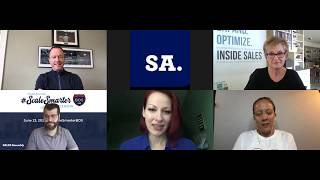
In this segment of the ScaleSmarter virtual roadshow, sales leader John Barrows shares how the COVID‑19 pandemic forced B2B tech sellers to abandon outdated priority‑based scripts and adopt a scientific, data‑driven approach. He explains the need to reset value propositions by directly asking customers about their evolving priorities, and he outlines a systematic process for tracking meetings, sources, and outcomes in Excel. Barrows emphasizes persona‑centric messaging, using LinkedIn engagement, personalized video, and multi‑channel cadences to increase response rates. He critiques the low ROI of cold calling, advocates for leveraging existing customers to uncover the "20%" of product value that matters most, and proposes a bottom‑up insight‑gathering model where SDRs interview frontline reps before pitching executives. He predicts virtual reality will become a key prospecting tool and forecasts a transformation of the SDR/BDR role into a data‑focused, marketing‑operations function rather than a pure lead‑generation funnel. The segment closes with a plug for his on‑demand sales training platform and a Q&A on future strategies.
Chapters
For those of you that are maybe joining a sales assembly program for the first time, the real quick 20 second spiel is we're an all in one membership based platform based here in Chicago for the revenue organizations of some of the best B2B technology and software companies throughout the country. Since Starting back in 2017, we've welcomed in close to 140 companies into our community, consisting of the likes of companies like Upwork, Glassdoor, Sprout, Social, G2, and the list goes on and on. And really what we've done is we've set out to create more or less a one stop shop for just about everything that sales and revenue teams are looking for as they continue to scale. So from over 120 learning and development events a year, to certification programs, to various peer communities for literally every Persona within the revenue organization, to access to talent for all the roles that you're hiring for, help with sales, enablement, strategy, resources and everything in between, it's a really neat model. And you know, over the past couple of months we've made the decision to take what we're doing traditionally that has been here in Chicago, and start to expand nationally. So we've begun to bring on companies now all over the country and we're excited to continue our growth and continue doing some cool and innovative things here in the space of B2B tech, sales and revenue growth. So that's just a little bit about us. Everyone will get a follow up email after the program today, not for a sales pitch, but for another offer to have a couple of your reps join us for a really great training session that we have coming up later in July. So because you're joining us for today's program, everybody will be given a couple of tickets for a program that we have coming up that is intended for account executives and senior BDRs and SDRs. So keep on the lookout for that after the event today. Again, just to kind of recap what today's program is about, the theme is scaling smarter. So really what we're going to be talking about is a whole bunch of different ideas from leadership to go, to market strategies, to sales enablement, to revenue operations and everything in between. But the common theme is going to be ideas, tactics and strategies around how B2B tech companies in today's environment can really do all the necessary things to build and scale in a smarter and more sustainable way. Obviously, with everything going on in the country and the world, and then how that's impacted the business environment, it's significantly changed the way the companies are going about building and scaling and there's different strategies that are being deployed here in Q2, 2020 and beyond. And those are the types of things that we're going to be discussing today. We're starting off with a panel discussion that'll last about 35 minutes. And then we're going to open it up for live Q and A, which you'll be able to participate in just by dropping questions into the chat or Q and A feature at the bottom of your screen. And then as soon as the panel is over, we're going to kick it over to John Barrows to wrap things up. So with that being said, I'd like to introduce Christina Brady, who's going to be moderating the panel discussion and then she'll get things rolling with our panelists. So Christina is our new president here at Sales Assembly. Been on the job for all of nine days. So we just texted her this morning about 20 minutes ago and let her know that she's moderating this discussion. Just kind of. No, just joking. We're throwing her in and Christina's great many years of sales leadership experience at some really great tech companies. Looking forward to the discussion. So, Christina, I'm gonna kick it right over to you so we can go ahead and get rolling.
Amazing. Thank you, Jeff. I'm really, really excited to be here. Even early on. This is just what I love doing. So happy to be here. Like Jeff said, I'm a former MetLife Groupon Glassdoorian and my previous company, Glassdoor was partnered with Sales assembly and I led an org there and saw the incredible impact that this company had on my team and on their performance. And Covid gave me the opportunity to come on board. It was a no brainer to help this scale knowing personally how much I was impacted by what we do. So I am pleased to be here today with these incredible panelists. We have John, Trish and Kate. I want to pass it over to each of you to talk a little bit about who you are, a little bit about your company, and then kind of a little bit of your secret sauce. So I'm just going to go in line of who I see. So, Trish, could you kick it off for us?
Sure.
My name is Trish Bertuzzi. I'm the CEO of the Bridge Group and author of the Sales Development Playbook. We are a services firm, been in business 22 years, focused on the B2B tech space. And our core competencies are around virtual selling, sales development, account management, inside sales, you name it, phone Web, social media revenue and pipeline. That be us.
I love it.
All that necessary bs. John, over to you.
Good morning.
So my name is John Judge. I run sales for a company called Crayon which is a competitive intelligence platform. So we do competitive intelligence in a way that no one else has ever done it before, where we take the manual and the difficult and add machine learning and AI smart analysts and get people and businesses competitive intelligence at scale and at the level of intelligence that they've never been able to get before. I am a three time customer of Trish Bertuzzi and the Bridge Group. So I can tell you that all of this stuff she's talking about is true. It works. And Kate's going to be up next. And I'm a two time customer at Drift as well as I feel real good about developing a couple of people who are now Drift leaders as well. So I'm happy to be here and shed a little bit of light for folks.
Well, it goes without saying. Kate, on to you.
Hey everybody. I am Kate Adams, VP of marketing over at, as John mentioned, at Drift specifically I am focused on demand generation, which for Drift counts as not only all inbound marketing, but also the sales development organization at Drift as well, where we're going through an exercise of scaling that team significantly year over year. So I'm excited to join this team and talk about that. For anybody who doesn't know Drift, we're a conversational marketing platform. We are changing the way businesses buy from businesses. So making it enabling real time engagement when people are at their point of highest intent and that's when they're on your website.
Wonderful.
Thank you so much. Let's dive right in. Trish, I'm going to throw a softball over to you first. That would be good.
I like softballs.
Just a light. I'm going to loft it over to you. We think about this concept of scaling smart and I think that can be subjective or objective. So when you think about what it means to scale smart, what are one to two things that come front of mind that you know are really, really important for early startup companies to really do this the right way.
So my answer is going to be different than it would have been four months ago or five months ago, because I think scaling smarter has dramatically changed by what's going on in the world now. What I think scaling smarter means is for companies that take a breath, look at their strategy, look at the markets they're selling to, the buyers they're selling to, the solution they're delivering, and begin to Understand, are we still relevant? Are these the markets we should be pursuing? Are these the buyers? Is our message relevant? I think people who take a breath and maybe either confirm their strategy or pivot their strategy are the ones that are going to scale smarter.
Great advice. Anybody else have something to add?
She's absolutely right. She's absolutely right. Subtle changes in messaging. Subtle changes in approach. Just think about how many times we've had to adjust our messaging since March 15 to the point where now I can't stand the, in these difficult times phrase where you had to lead with that six weeks ago in every conversation. And pivot and pivot and pivot. And I think Tris is spot on that you've got to really, really think long and hard about what is your ideal customer profile and pick it and drive at it real hard because you're not going to get a lot of chances these days to make a mistake.
Yeah, I think the one thing I would add to that is it's 100% correct. But I would add, and maybe it's just cause I'm the demand gen data geek in the room, but I would add that the secret to picking that icp, the secret to the trends of what's happened to your business over the last 100 days are in your data. Right. Understanding what is happening with where you're getting interest. Right. So for us at Drift, we saw industries that we had never seen before, that had never had a need or desire to talk about conversational marketing. All of a sudden look up and say, holy heck, I have to digitally transform my business here as quickly as I possibly can because otherwise this is sink or swim. Right. And if I, if we had not been looking at that data and understanding what was happening, then we would never have seen it. We'd never been able to make that pivot change. Our messaging, do all the good stuff that Trish had said and John said that you should do. But like that, I think that's super, super important. I think you got to look within the data and stay close to it on an ongoing basis. The other thing is we're seeing Personas that we've never seen before. But like all of that is in my data. But if I don't have access to, if I don't know where to look, if I don't know all those things, I'm going to miss out on these opportunities.
Yeah, such a good point.
Kate and John thinking a little bit about this idea of pivoting and diving a little bit deeper. Pivoting a business looked Very different four months ago than it does right now. And everyone had to make this radical pivot just to fit the landscape. And what was happening as you think about what it was like to adapt and scale as this pandemic has hit, talk about those shifts and those pivots and what was surprising that happened.
Sure. So as an organization crayon, you know, we were on zoom every day inside sales organizations. So the, the idea of closing your laptop and opening it up in another location was really not foreign to us. Taking your monitor and everything on your desk was, which. Remember the days when we all went home and we were only going to be there for two or three weeks? Well, that, that shift that happened real quick and then some of the things that we had to do were really more operationally. So we used to do sales stand ups once a week. We now do them every morning at 8:30. And it kind of gives everybody a chance to say hello to one another and get started. About two, three weeks into the pandemic, we recognized that we had three sort of occurrences going on. One we would call the witness protection program, which is the person who would show up with the bright lights behind them so you could only see the silhouette of their body and not see their face. We had the version of the I'm going to join the call, but I'm going to shut my camera off so you really can't see me. And then we had the folks who were coming to the meeting looking a little nicked up. Maybe they had just kind of rolled out meetings at 8:30am you got to get out of bed. And we realized we had to help people with habits. We had to help people with their health and their well being because we weren't with them every day. So we started a program of wellness. We have a peloton channel, we have a Golf channel, we got slack channels on wellness and everything like that. And we realized that the distancing part of social distancing really required us to lean in as an organization and be much more personal and caring because we weren't seeing folks, we weren't with them. And by doing that, people were very appreciative. And we always had the business engineered for this. So we didn't need to start up any new data or any new dashboards. We've refined some of them, but everybody always knew how many calls they're making, what turned into discos, what turned into demos, how they close in business. So we were well engineered from that perspective. It was more of a human thing for us. To the point now where I got a little shout out from some folks recently, but now begun having sales manager meetings in my backyard because it's a safe space. And I put the chair six or eight feet apart and we sit in the shade, but we get to physically see each other, and that's not easy to do in the city. So for us, it was the tech was there, the understanding was there. But we've got an organization like a lot of sales organizations, where people really dig each other and they want to be together and they want to get people fired up and they want to go out to lunch and they want to go do all that other stuff,
and they can't do that.
So we're trying to find the next best thing. And by the way, the Zoom cocktail hours, those didn't last either. So we're constantly pivoting. Trying, trying, trying. I hope that answers your question.
It's wonderful. And you kind of touched on something, too. There's a lot of trying, and there's trying things that really, really work, and then there's trying things that don't work. And Kate, as you're thinking about how you transitioned and your company transitioned to working from home, what kinds of things did you try that really, really worked, that maybe you'll continue even as things normalize? And what did you try that really didn't work?
Yeah, I think John just mentioned one of them on the didn't work thing, that the Zoom cocktail hours got tired very, very quickly. But you know, just like what John said, I think we're constantly having to innovate. And Trish mentioned it in their pre call pivot. And you know, you pivot so many times. It's like how many times until you get to a full circle here, but. And you make a complete 360. But I think one of the things that has been really successful for us is we've got two rituals. And these were rituals that we had when we were together in a physical space and not. And so those rituals are Monday metrics. We gather the entire company together every Monday to go over the metrics across all the departments of the business so that everybody has a complete understanding of where we are performing to our goals. And then we end the week together with Friday show and tell. And those are so, so, so important to us. And show and tell is when every discipline within the business gets to get up and present something that they worked on, that they're proud on, and then present the results as it relates to that thing, and so bring the whole Company together for those two things. We start the week together, we end the week together. And it's been incredibly important for drift. I'd say the other thing too on more. So those are macro level, company wide things. On the micro level thing, I think I've spent far more time than probably ever before in one on ones just talking about the person. So I kind of always encourage my employees to bring, I want everybody to bring their whole selves to work. But I spend a lot more time checking in on the personal, I think because like just what John had said, right? It's super easy to get lost in what day it is, what time it is. Rolling out of bed, you're clicking the zoom link and you're getting going, right? And so just making sure, just checking in, understanding how people are doing, talking about how things are affecting them more than ever before.
Hey Kate, quick, quick question for you. Are you finding that some of those, those rituals, those meetings that you're having are actually a little bit better sometimes on Zoom 100%.
So the game has definitely. So show and Tell is actually a competitive environment. So the company gets to vote on the presentation that they like most and that best fits the criterion of showed results, you know, showed the work, etc. And yes, like the game has gone up. And in fact, I'll tell you this. So it used to be you stood behind a podium in whatever respective office you were and we'd zoom in all the offices, but now it's, I'll tell you, I presented on Friday. I was the most popular presentation. Just not to brag or anything, but I went all out. I did a drift version of some good news and recorded a video for my presentation. Yes, the bar has been raised. People are getting more creative and trying to find, I think more creative outlets. I even got my kids involved in it. My daughter made the sign. It was great, right?
Dogs. Everybody's got the dogs too. Just bring the new puppies in. Similar for us, we have a Thursday. Every Thursday night, all company used to have dinner sometimes. But the attendance and the engagement is great. I mean the questions and just the content that we're sharing, people are present, I think more than when we were all sort of huddled upstairs and 100 of us standing around. Those were still good. But it's amazing that this pivot has actually improved communication in some ways.
Absolutely.
I love that the pivot also includes not only caring about the business and how we pivot the business, but also how we pivot, caring about our people, making sure that they feel Good. And that they feel safe. And I'm hearing a lot of themes around just caring and loving the people that we work with. And that's really important during a tough time, too. And so, Trish, for you, what has it looked like for you when you think about what's worked and what hasn't worked over the last couple of months?
Well, we've been a virtual business since day one, so this was kind of our normal operating procedure. Although I will tell you, it does feel just a tad bit more claustrophobic than it ever did before. But I think as a team, we have taken this slowdown because things have slowed down a little bit for us as a way to learn. So I spend a lot of time talking to other leaders and picking their brains about what they're saying, which is I never had the bandwidth to do that before. So I know I was teasing Barrows before and I always will. But I've probably talked to John more in the last couple months than I have in the last year, because picking his brain, what are you seeing? What pivots are you making? You know, whatever the case may be? So I talked to John, I talked to Keenan, I talked to Lori Richardson. I'm like. I talked to my clients. I am learning so much from my clients, it's insane. So I think that's one of the things we have seen, is that without that go, go, go, go, go, go, go, go, go mentality, you can take a moment and say, I'm going to take advantage of this and I'm going to learn as much as I can in a very compressed time frame. So I think myself and my team, we've very much done that and we're sharing amazing information. The ideas they're coming back with, I never would have thought of on my own. So I'm really appreciative on the one hand. Not appreciative of the down revenues, I might say, but on the one hand, I'm appreciative of the learning experience.
Yeah, I love that. And you talked a little bit too about urgency. And Boston's a big city. It has to feel like everything has just been on complete hold. And it's hard for that to not become ingrained. And we've seen a lot of salespeople, a lot of companies fight the urge to be taking their foot off the gas or have questions around, how do I create urgency with my prospects? Nobody wants. Wants to buy. Everyone is scared. And so, Kate, as you're thinking about these problems, how do you show up and help that front line feel confident selling and creating urgency right now.
Yeah, I think early days, a lot of our team had questions on this is like, how am I supposed to call these people in the middle of all this chaos and why does this even matter? And so we really thought about it as, listen, there's two things here. One is because of the nature of the product that we sell, we're selling Tylenol at a time when the world has a headache, right? People now, their websites are more important than ever. They have to get all of the non digital channels don't exist anymore. Field marketing's gone, trade shows, events are gone, all of these things are gone. So now we've got to go reinvest in digital and we can help them do that. But then the second thing was, more importantly, it was, but how are you? We need to do this because this is how we will protect one another. So look around, even in this Brady Bunch picture, if you want on Zoom, look at the faces of these folks. And we need to keep selling and keep working and keep growing this business because that is how we will protect one another and ensure that we come out of the other side of this situation a better, stronger, bigger company. And so that was really the narrative that we used internally of like, I understand it's difficult. We will help you craft your messaging and make sure that it doesn't sound tone deaf or insensitive. But we have to do this and we have to do this together because that is super important. That's how I'm going to protect Trish and John and Trish and John's family and all people around them. Right. And so that was how we, we communicated to the team. And when we did that, it made a lot of sense. I know that message really resonated.
So, Kate, I love one thing you said specifically. I love everything you say. But one thing specifically stuck out was you said, we're Tylenol in a time when everyone needs an aspirin. You know, and that's one thing we spend a lot of time talking to our clients about, is about are you viewed as a vitamin or as an aspirin? Because everybody knows they should take vitamins, right? You remember that conversation?
Oh, yeah.
That's part of the pivot. Like pivoting just doesn't mean just strategy, just message, just process. Sometimes pivot means solution. Like what value can you now bring to the solution you're offering that makes you more Tylenol? Like for lack of a better term. So that's part of the thought process that a lot of our clients have gone through?
Yeah, absolutely. Trish. I think you definitely get stuck when you think about only one of those things. If you're only going to change your messaging, you're only going to change. And that's what. When going back to the earlier conversation, you need to make sure that you are solving new problems for people you didn't solve 100 days ago. I know you are right. Like, because people are doing that with most solutions today. How are you communicating your ability to do that right? You are solving problems for new Personas you've never solved for today. How are you making sure? How are you equipping the team to tell those stories and to make sure that messaging resonates?
Yeah. John, anything you want to add to that?
I thoroughly, thoroughly loved listening to both of you. I think you hit it right. You hit it right on the head for, for crayon. A couple things that we realized is, and I think the over and under on the word pivot is now at about 15 and I think we're going to get to 30. But a subtle turn we made was people, businesses are wanting to break out. Like they don't want to be the business that's still sitting around in these difficult times rap. They want to break out and they see a breakout strategy. And we have turned our messaging to if you're going to break out, you better know what your competitors are doing. Every level of detail. So our breakout strategy conversation is really resonating. And that wasn't something we were talking about before except who was breaking out. We were all just chugging along, doing just fine. So that was an important message. Another one for us too was we needed to know what was working. So we paid attention to something we call leading indicators and everything from who's messaging what and is it converting to more discovery calls and more demos. And maybe it's not business, but are we filling up pipelines with certain types of positioning and messaging and that would tell us the business is going to come. Maybe it got to the CFO's desk or got to the CEO's desk and they were like, we're not spending any money this month or next month. But there was clearly a need. So we never let off on the gas attributed to what we knew was working because we knew a lot of people were just saying, I love your idea. Do business with you. I can't spend money right now. Cash is king, by the way. That's the way we're behaving. But it's understanding those Leading indicators. So when the switch flips, boom, off you go.
You can either plant in the spring or bag in the fall. I say that every day. Planting the sling.
I love it. What a good.
I didn't make that up. I think it's Jim Rohn. It's a quote from Jim Rohn. So yeah. But I love it.
Today. It's yours. Shifting gears a little bit to the types of things that people are looking for, guidance on how to scale. A lot of people assume that the number one reason that people want to stay at companies is because of compensation. They love their job because of comp. But leadership knows that it's actually the top two are culture and leadership. That's why people stay in a job even when times get tough. When you think about the idea of culture, how do you scale culture, especially in a virtual world and for newer companies, you have to implement culture in a world like this or continue the culture that you have built. So, Trish, when you're thinking about the ideas of culture, how do you scale culture in a virtual world like this?
So it's interesting because I think culture can be a really tricky term. So I think in the heyday when, you know, VCs were throwing money around and people were growing like crazy, culture meant like beer on Fridays, unlimited time off, which was always a lie, by the way. You know, it's crazy, like inconsequential things. So I think culture has shifted nowadays to become something more meaningful. And I think culture now means just what, you know, Kate and John have said. I care about you as a person. Like, that's culture. Like having supporting your management team and giving them the bandwidth and the tools and the training and the coaching so they know how to have on those one on ones, one on ones that show empathy and care about people. So I think culture has changed from being what crap is in my office that you might enjoy drinking, eating or whatever to I care about you.
Yeah. And people sitting. People are smart. They see through is it genuine or is it made up? I fell in love with developing people and watching them grow and keeping the list of how many millionaires. I had a tiny little piece of their career and growth. And I give that speech everywhere I go like, I'm going to be a millionaire, you're going to be a millionaire, and I'm going to have a tiny piece of that because you're going to be something special and I'm going to have small piece of you launching your career. My former company, we used to say no one's going to retire here. But we want you to look back on your experience here as one where you grew as an individual and grew as a professional. And we meant it. And at Crayon, we just finished a document outlining what our core values are. It was an exhaustive process because we cared so much about it. And literally, like every word we cared about. And the final document is genuine because it's us and we now talk to people about it. We reward that. There I go, pivoted. We've changed our whole sort of company meeting where we reward everybody to who are the people who demonstrate the core values of Crayon on a regular basis and are nominated by the employees? And it's a non management group that picks who the winners are. So we've just like leaned in really hard on the caring. But the important thing is we mean it because if we didn't, people would see through it and it'd be gone.
Yeah.
Yeah. And Kate, kind of digging into some of the themes that you've talked about too. A lot of people think of culture as, we have a ping pong table, we have snacks, but that's the body that it's in. That's not the soul. And so when you think about scaling culture and how we do that, what does it look like for you?
Yeah, I think, you know, Trish and Trish really nailed this one a ton. And John was talking about it earlier too, but the ping pong table doesn't do it anymore. And I think, I actually think, like, that is a big transformation that's happened over the last 100 days. Because I do think there was still some of that. Like, yeah, but their office isn't cool. Like, it's not a cool layout or they have cubes or they don't get free lunch there. And now it's like, yeah, lunch is upstairs in your kitchen. You can have it whatever time you like. And so, and I think really what's happened is people are starting to. Are really paying much more attention to do these. Does this company genuinely. A lot of what John talked about, do you. Do they genuinely care about me as a person? How am I going to grow my career here? Even if I'm stuck in my house for the next six months? How am I going to grow my skillset and become a better sales development representative, salesperson, marketer, et cetera, even though this is where I'm at, right. How am I getting coached and how are they investing in me? And so I think that is super, super important. And I think one of the things that our leadership team has done at Drift was be extraordinarily transparent, because I think in times of uncertainty, one of the biggest things that happens is obviously people start to get fear in them. And so our executive leadership team put everything on the table, told everybody exactly how it is. This is what's going on. It's our, like, our two top priorities are protecting you and families and protecting Drift, the business. That is what we're going to do. Every decision we make from here on out is going to be in service of those two things. And so that was super, super, super helpful. And I know it resonated a ton with our employees. Our cfo, Jim Kelleher, who's at Logmein for a long time and a bunch of other places, but he. Everybody. I mean, I don't. I don't know of another CFO that I've heard who's just, like, knocking it out of the park. I'm pretty sure that if they could, the employees would, like, go lift Jim up and carry them out on his shoulders and give him a parade around town. I mean, that's the level of transparency and trust that they have in the organization today. And I think that is the new culture I think that Trish has been talking about.
Spot on, Kate. And I'd throw Tom Huntington, our cfo, in that mix as well. I mean, every level of detail. Part of the beauty of being in a private company is every level of detail. You can share anytime you want. And how much cash do we have? What's our burn? When are we going to step on the gas? When we can invest? What are we going to invest in? I give a salesforce to the company nearly every week. I never used to do that. I would give a salesforce the same forecast, the CEO and cfo, and I'd be done with it. No, people want to know, how are we doing? Like, you know, what's the pipeline look like? And absolutely, it's comforting to people to feel like they know what the heck is going on, whether it's good news, bad news, or in between.
Yeah, we have a couple more minutes left, and we have some good questions popping up in Q and A. So the final one that I have for you before I pass it back over to Jeff to talk through some of the Q and A from our attendees. John, staying with you for a little bit. When you think about your talent acquisition process, so thinking about scaling and growing, acquiring incredible talent is a huge part of that. And the. One of the few benefits that we have of COVID is that there's amazing talent on the market that wouldn't normally be there. And so when you think about talent acquisition, what was your typical process and how has that potentially changed going forward?
So it's a great question. And there is unfortunately, a treasure trove of outstanding people out there in the marketplace right now, unemployed. And boy, oh boy, would I love to be able to open up the floodgates and hire some of them or underemployed. Probably the biggest shift for us is how do you onboard and train and get someone new to your organization into the culture and into the flow that we've talked so much about. I hired a wonderful BDR manager literally at the beginning of the coronavirus. Like, we went in, greeted her in the office, you know, gloves on, handed her computer and, like, stepped away because
she had cooties, maybe.
And she has managed the BDR team that we have expanded that BDR team. And she's never met anybody. The only time she ever met anybody was either during the interview process because we were still safe, or in my backyard. But what we've done is we've realized all the things that we've been talking about relative to staying in touch, leveraging meetings and being transparent. We're pouring all that into, but also very, very disciplined in our enablement process, very disciplined in our onboarding program, like schedules and teamwork. And, you know, because you can't say, oh, wander around the office for a couple hours and get to know people, that's not going to happen. So being very, very disciplined and structured in the, in the onboarding, and also because there's such phenomenal talent out there, we've been able to hire some people. And we recently hired three wonderful BDRs that literally just started Monday. They're smart and they're talented and they're picking things up very, very quickly. So that's making it a little bit easier as well. But it's the discipline and it's the approach and the consistently trying new things. And then the last thing I said to the, to the BDRs we hired, I spoke with them all last night. I said, you need to teach us in this process as well. I've never onboarded this way. I've never done this. You have. And you need to be telling us what's working and what's not working, because we've got a ready year to make the adjustment.
I think one opportunity that many companies miss is not doing an exit interview after the onboarding process. Right? It's when you get Such great information. And we only do it when people are leaving our organizations. What about if you did an exit interview, for lack of a better term, at different, you know, segments in their journey with your business? I think we've learned a lot. I don't think we all take advantage of that.
Yeah. Love it.
Pete, any additional thoughts on that piece?
I love it. We do an exit interview onboarding. The other thing we do is we look at people when they're different, when we see trends on like potentially when people get to our average tenure and we start to do interviews there, talk to folks proactively, understand how they're feeling, what they're thinking, like what those things are, and then put that feedback back into the business too. So identifying key measures, just as Trish said, key measures along the employee journey. Right. And making sure that we're always in close contact and that we're not reacting, we're being proactive about it to improve.
I am so liberating that idea from you at the average 10 year date.
Cut that one right down. Average tenure. Pull that one, Kate.
Thank you.
Yep.
Thank you.
I love it. Well, this has been a wonderful conversation amongst us, John. You were mentioning the idea of hiring new people like BDRs and how to onboard them and train them and you know, I should write you a check because that's exactly what sales assembly does. You're. I'm gonna send you a check in the mail for that mention for setting us up nicely for that. But I'm gonna pass it back over to Jeff. We have some great questions in the chat from the audience and let's pop into our Q and A portion. Here he is.
Jeff.
Awesome.
We can't hear you.
You're on mute there, Jeff.
You're talking head. No boy.
There you go.
You think after 8,000 Zoom meetings, not possible. No, that was, yeah, fantastic discussion. We had a bunch of questions submitted in and just hearing about like everyone being lifted up on their shoulders. I mean, it's been months since people have carried me around on their shoulders, so I'm just. Okay, so let's dive into a couple of questions here. First one was for you, John, from something that you had mentioned a little bit earlier when you were talking about people emailing and leading with, hey, hope you're doing well in these difficult times, etc. I get a lot of those emails too. At this point it just screams, hey, I'm a cold sales email. Go ahead and delete me. I'm curious, what are you telling your reps or what have you seen from others that have emailed you that maybe, you know, they're approaching it in a better way where it's not rinse and repeat, same sales BS line that, yeah, we get it. Of course you hope that we're doing well. Understandable. But, you know, that's no longer really an effective way to kind of get a conversation started. Have you seen anything different or more effective?
Yes. And it's. And it's back to really the basics of good outreach emailing. We used to, years ago, we used to call it show me, you know me. But it's this whole idea of do your homework, understand the person you're reaching out to, understand their business, understand their problems and speak to that and people will be appreciative of that. Yeah, we did have to have some sensitivity when this thing whole hit. We were not doing the hope you're well stuff and people were a little upset that we were just kind of plowing ahead. We had to do that shift, but that didn't last long. That was like a two or three week and then it was like, that's gone. But I think now more than ever, if you can speak to the how do you hang in there Story that some buyers are having or the how do you break out story, people are extremely appreciative that you've got it right. And then I was talking, we were chatting about this before the, before it all started. Subject lines matter. Like, write your outreach email, know the person you're talking to, save that subject line till you're done with the email. And then that subject, subject line has to rock their world in a way where they go, okay, this person knows me. I'll read. And then, yeah, maybe I'll take that call.
Awesome. So the subject line of John just following up. Oh, no, the one that works is.
I want to bump this to the top of your inbox.
Yeah, no, we don't. We don't do that. We literally have a list of what we call weak words, probably 50 of them. Follow up, help reaching out, all that stuff. Gonzo.
Love it. That's great, man. Thank you for sharing. So we had another question. Just I don't know if this was directed at anyone in particular, so I'll just throw it out to the group. Thinking about like a distributed work environment and the fact that I think a lot of companies moving forward, if they haven't begun doing so already, are going to be very much more open to hiring BDRs, AES, et cetera, that don't necessarily fit into a specific geo. Even if the company is headquartered in Boston, they might be open to hiring AES in Nebraska or Salt Lake City or something like that. So the question was, do you foresee a realignment in the variance of how employees that are doing a similar job with similar education would be compensated based on the geography in which they live? Being that this is going to become probably a much more common thing than previously. Curious if there's any thoughts on that.
Let me make sure we understand the question. So are you saying two people doing the same job, one in Boston, one in Podunk, Should I pay Podunk less?
Right.
I don't think it's legal, but just because the cost of living is less. I'm pretty sure, but I could be wrong, that if two people are doing the same job with the same quotas, they have to earn the same amount. Could be wrong, but pretty sure.
Yeah, I agree. I agree with Trish on that one. Sorry, I agree wholeheartedly with Trish on that one. And even if it isn't illegal, you're gonna run into a bunch of issues because if I know anything about, about our, especially our younger employees today, everything's out there. Everything's out there. They talk about it all. Nothing's private. And so like if you move into a model in that way, you're gonna have, whether it's illegal or not, whether you have legal issues, you go to court or not, you're gonna have a lot of issues. Your employees will take you to court within your business, I'll tell you that much.
Agreed.
Yeah, I don't think it's necessarily legal from a traditional legal standpoint. Just thinking of the example of when we hear stories about how some companies in San Francisco are paying entry level BDRs like 90 grand base salary. And that's not necessarily the case in every market.
But.
But I think if nothing else, what you said, Kate, just a moment ago, about you'll be prosecuted to the fullest extent of your internal culture, that's probably something to really consider and be careful of as well. Cool. One more question, Kate. Kind of going off of the example that you used about how you guys are selling Tylenol in the situation where everybody has a headache. A question came in. Has this provided you an opportunity to be testing any sort of like new go to market strategies that you might not have really tried under normal circumstances? And if so, is there something that maybe during a strategy meeting, people thought that was crazy and off the wall, but it actually proved to be somewhat successful?
I am encouraging begging, getting on my hands and knees, driving by their homes and honking with a sign that says exactly that to my entire team right now. Which is like, there are no crazy ideas. I need all of your ideas. Because everything we never thought would work is happening. So I'll tell you right now, Drift has our Hyper Growth conference. Huge conference. We did it last year. We had plans to do it in Boston, London, actually in Austin and in London this year we did it in Boston, San Francisco. In years past, huge in person conference. We do webinars. I don't think we ever would have said like, hey, you know what we should do a virtual event of a giant magnitude and we should get almost 9,000 people to sign up and register for it because we. Because our in person was working great and people loved it. And it was a real split between like the practical and the inspirational. But I think what we've seen is people that we were able to pull off in a giant virtual event that still had our brand ethos within it in terms of being both practical and inspirational as well as how to DJ wasn't just your. We think about them as virtual experiences. And it was the biggest event that we've ever had as a company. Right. And I think we're doing these and more and more of these where we have discussions like these, where we grab 30, 25 to 30 marketing sales leaders together to have a discussion and a panel. And I'll tell you, like, I could probably do them three times a week if I had the team to go support that. Right. Like people are dying for it because they want to have the discussions like these. I think one of the things you heard Trish and John mention earlier was like, people are hungry for information. Trisha, she's learning from her team more and more now than ever before and learning from her clients. Right. I think that's what's happening. People are hungry for hearing what their peers are doing. And so like getting together in scenarios like this is pretty good. So I don't know that that's something I ever would have done if everything was open and it was free. If I was free to pull people together in an in person experience either. And I think it's more and more and more stuff like that. And I think you'll see us go innovate a ton. A ton.
Well, I think that's a good place to wrap it. Thank you so much to John, Trish and Kate for the really thoughtful discussion. A bunch of really great ideas that were shared in just a really short half an hour. Here this morning, we have gone ahead and recorded the discussion so we could distribute it out to anybody that might want to share this with others on their team. Again, thank you so much for joining us. And with that, we're going to say goodbye to our expert panel and kick it over to the aforementioned John Barrows, who's gonna take us the rest of the way.
Let's go.
All right,
thanks, everybody.
Hey, what's up, everybody? Awesome discussion.
Here's John.
Hey, what's up?
I being that we're doing this event for the Boston folks, I don't think John needs much of an introduction, but I'm gonna let him give a little bit of his own background and just, you know, letting everyone know that based on the kind of the pre call discussion that John and I had a couple of weeks ago, definitely some really great insights that he's going to be able to share. And then just like the panel, we'll wrap up with some Q and A after is finished.
Cool. Jeff, can you hear me all right?
Yes, sir.
Could you do me a favor and give me over the control so I can share? Yep. All right, there we go. Cool. Thank you very much, Jeff, and yeah, thanks for joining. That was, I was listening in, hearing Trish give me shit about talking too much, blah, blah, blah. So good news is I have my own audience right now and nobody gets to interrupt me.
Right.
So let me do this. No, Trisha was right. Trish was right, actually, as we were talking about the Zoom situation and how I've actually had more conversations now than I have with people in a long time. And including Trish, I actually called her. We did a webinar recently on the future of SDR because I was actually nervous about what I was seeing in the SDR world, and we're going to tap into a little bit of that today. But I reached out to her. I was like, trish, I got to talk to you, because I'm getting a little worried about what I'm seeing right now. We work with SDRs and BDRs and AES, but Trish legitimately wrote the book on SDRs. And so we had a really good podcast discussion, which led to a webinar. So I think there's a silver lining to all of this that we're in right now, and it was touched on in that panel discussion as far as reinventing or pivoting, as John said. So I'm going to try to kind of summarize a lot of stuff that they talked about and talk about some actionable Things here for everybody. So this is all about stopping the guesswork. I've been doing a lot of thinking about what's happening right now and how we tend to guess a lot in sales. And I think there's some things that we need to be doing right now to take the guesswork because so many people are reaching out to me and saying, hey, John, you know what works and you know how to strike that right tone and all that other stuff. So we're gonna be diving into that. But for those of you who don't know me, as Jeff said, look, I do sales training. I'm actually a sales rep who happens to train. I run my own little company here. It's JB Sales. We got about seven employees. I actively prospect, though, into 25 accounts on a quarterly basis. I currently, I manage 10 to 20 deals in my pipeline at a given point in time. And I also cross sell upsell into existing accounts while doing trainings while running a company. So. And trying to pay attention and try to stay at least a half a step ahead of what's going on right now. Because I believe if you're not doing it right now, then you can't show people how to do it because things are just changing so rapidly at this point. So with that, and actually just kudos here to Sales Assembly. This is probably out of all the groups out there that we work with, Sales assembly is the highest value group that we work with as far as the quality of companies and people involved and everything else. I mean, a lot of our customers actually are part of Sales assembly, including Sprout and G2 and Upwork and LinkedIn. And so needless to say, you're in good company if you decide to join into Sales assembly now that they're going nationwide. So with that, let's dive right in. You know, look, I also want to make this. Just before, you know, we dive too much in. I want to make this as valuable and as relevant for everybody here as possible. So do me a favor. If you got questions, throw them in the chat. The more questions, the merrier here or, you know, whatever, whatever you want to talk about. I mean, I'll. I'll talk about anything. We talk about all aspects of sales. I do training on prospecting all the way through to negotiations and closing. And I'm going to share with you some of the stuff that we're doing right now with our customers to get in, you know, to figure out the hell is going on right now. So with that, you know, what's changed? Everything.
Every Day.
I don't know. I've been through three weird economies, right? And started two companies in the two worst economies out there. The first one was 2000 when I was first out of school. Buddy of mine, Chris, who actually now works with me as my CRO, you know, he started an IT services firm in 2000, which the economy was not that bad, not that great, but there was opportunity there. Right then 2007 is my second company, right? That's when I started the sales training or at least took over from a company that went belly up. And again, horrible economy, but it was my best year ever. This is something I've never seen before, and I don't think too many people have, have. That's why it drives me crazy when I see people on LinkedIn being like, this is what you should do during this pandemic and this is how you should act. It's like, excuse me, like, were you around during the Black Plague? I don't know. I wasn't. So anybody who pretends like they know what they're talking about right now is completely full of shit. And so, because things are literally changing. I mean, they talked about it on the panel where what happened, you know, what worked last week is not working anymore, right? Lead with empathy and oh, I hope you and your family are doing well, and all that other stuff. And now, you know, it's been overused or whatever it is, and the sentiment is changing not just in general, but by region. Right? So if you're calling into New York versus California versus Texas versus the uk, I mean, depending on where you're going right now, it's all. You got to take all of that into consideration because your ideal, I mean, Trish said this, right? I think it's time to take a breath right now. I agree with her wholeheartedly as far as taking a breath and reassessing. I go back to the silver lining here. You know, Morgan, who's on my team, I hired him a couple years ago. He's a 27 year old kid, right? And we were having this conversation, he said, you know what, John? My generation has grown up in a point and click world, right? Where anything we need is a click away. In the sense that you want to catch up on a series, you don't have to wait until next week and if you miss it, you're in trouble, right? You just binge watch it on Netflix over the weekend and you're all done. You want your favorite meal, you got Uber Eats. You just, you know, pops over your favorite restaurant, brings Your best food, right? If you want to hit your numbers, you have a cadence tool now that you can push play on. Then a billion emails go out and you get a few hits. So he's like, we've, we've grown up in this world and we've stopped really caring or we don't really care necessarily about the person that's on the other end of that phone number on the other end of that email. And I think this is an opportunity with where we are right now to kind of recenter and realize what's important. I mean, I'm going to go back to what Trish said is, you know, I've had more conversations now with people I actually care about than I have in a long time, you know, people I've reached out to proactively and said, you know what, I actually want to talk to you and I don't have the excuse now of I'm too busy and I can't see you. It's hey, we're doing this. And so, you know, there's friendships that are important, there's family who's important, there's business in what we think from our approach is important. And I think that's what is the silver lining here. And that's why I do think that, you know, your ideal, all of everybody's ideal customer has changed. And right now is an opportunity to reset that. Right? An easy way, I'll get to it a little bit later, but an easy way to do that is going back to science. I mean, Kate said this, right? The secret, I wrote some of these notes down. The secret is in your data and stay close to it. And right now I think we all got to be scientists. I talk a lot about sales being an art or a science. I fundamentally believe that sales should be way more scientific than artistic, especially right now. I mean, split testing is something when somebody asked me, John, what do you, you know, if you could go back and tell your 22 year old self, what would you do? I would split test everything I did. AB split test, right? So if you're going after CIOs in healthcare, come up with two different approaches to CIOs in healthcare. Make 20 phone calls with this approach, make 20 phone calls with that approach, see which one yields a higher response rate. Right. If dealing with objections, I'm sure you and your teams right now are dealing with crazy amount of objections that sound really harsh up front. Right. We're on COVID lockdown, you know, budget freeze, those type of things. Oh, call me in six Months. Well, like literally Google, I always say, with objection handling, it's not about rockets. Science, it's science, right? Just Google best objection handling techniques, right? And come up with two or three approaches. And then based on that objection, write down the objection you're getting hammered on, come up with two different approaches to that objection, and then the next 10 times it comes up, deal with it this way. The next 10 times, deal with it that way. See which one yields a higher response rate. Ideal customer profile. People are kind of figuring out, okay, you know, and you see the red, yellow, green. I mean, there's, there's, there's companies are in three buckets, and this is shifting all over the place and daily as well. Red is locked, still in lockdown mode. Because they're probably just getting smoked, right? They're in an industry right now, like travel or whatever that has just gotten obliterated, right? And they are in legitimate lockdown. So you say, all right, I'm gonna leave you guys alone. Good luck. The yellows, I think where a lot of companies are right now, which is kind of they've settled into this new norm, whatever the hell that means, and they're looking at it saying, okay, we need to evolve, we need to adjust here. We might not be making long term decisions, but we might have time to evaluate stuff. And we're looking more, we're putting more scrutiny on all the decisions that we have right now, but we're still making them, right? And then there's the green bucket. And the green bucket is. There's two sections of the green bucket. One is the ones who are legit on fire. Like they are just all of a sudden went from, you know, the, I think what Kate was saying or Trish was saying to. From a, you know, a nice to have to a must have. So they went to an aspirin, as opposed to vitamin, Vitamins and the app like Zoom. I got to imagine if you're the VP of sales over at Zoom right now, like making it rain right now. And if. And I'm not even gonna bother them, it's like, hey, good luck, go try to make as much money as you possibly can. I mean, there's our other industries that we're playing around with, for instance, that all of a sudden popped like, like security, right? Anything that has to do with security right now, endpoint security, screaming hot right now. You know, it's another weird one for us that I didn't realize was surveys. So employee engagement, you know, like Qualtrics and SurveyMonkey. These are clients of ours, all of a sudden they're super popular, right? They used to be kind of like employee engagement. Oh, that's nice. But you know, you know, hey, in an up economy, everything's going well. And so yeah, you know, I'm going to survey my employees and serve my employees, whatever. But now I'm. If I'm an executive at an organization, I got 500 people sitting out in their houses. I want to know what they are thinking about on a daily basis, right? So sending out surveys, so they became hot. So I think we need to relook at that. So every company that comes in right now, this is where sales, marketing and customer success need to align. And SDRs and AES and BDRs, you name it. Every deal that happens right now in your business, to me I would suggest an all hands meeting to have everybody come in and say do a zoom session and have that AE sit down and map out that, that entire sale. What was the use case? What was the approach? Who made the decision? What was the decision process? What did it look like? What aspects of our solution did they appreciate? Which ones did they not? Who did we beat out for competition? And extract as much of that data as you possibly can to then reprofile people that fit that new profile and then go tell that story to everybody else. Because again, I'm going to steal a lot of what Kate said. You're solving new problems for new Personas and how are you equipping your team to go out there and tell that story and that. And it's easy actually. And this is goes to engagement and a bunch of other stuff. Get that, get that AE on there, get that client on there and have them justify why they just made the investment in your organizations and tell that story so that all those reps can listen to that and then go out and reach out to people that fit that profile and have those conversations. Hey, the reason for my call is we just brought on XYZ company who said their main priorities these days are X, Y and Z. And you fit a very similar profile. I'd like to have a conversation with you about that. Like that's a genuine conversation you can have, right? It's the same thing with Personas. Look, your Persona might not have changed. You might have the same potential buyer. I would, I would reassess that. But I guarantee you their priorities have changed. Guarantee their priorities have changed. Like I'll give you an example. You know, come February, this is on me, this is my CEO hat on. You know, come you Know, in December, I sat down with my team and I was like, all right, what's 2020 look like for us? We put up, you know, what's the mark?
Right.
Four million. That was the mark that we were going for. And it was a 70, 30 split. 70% on site, 30% remote. And then everybody had their marching orders according to that. Right? And so. And then all of a sudden, march hit, and I mean, just Covid punches a square in the gut, and 70% of my revenues got ripped away from me. I mean, ripped away from me, right? So I had to reset everything. So we went from 4 million to 2.5 overnight. Right? But my. My main priority was not $2.5 million anymore. My main priority as a business owner and as the business leader here is to retain my employees, is to make sure that they still pay their bills and support their families. So something that came up in the previous panel discussion was urgency, right? How do you create urgency? Or, you know, I'm guessing a lot of you have people ghosted you at this point, right? Well, the reason is most. Most likely is if you qualified me back in January or February based on what my goals were. And you're still selling to that. I'm ghosting the shit out of you right now. Like, I don't care, because that stuff is just. That's not a priority for me anymore. I mean, we do this. We do this report every single year, right, Where I spend about three grand on these kids who are way smarter than me to go do a research project. And it's the top priorities of the top executives in the top industries, right? So these kids, like, work for Bain Capital and all sorts of crazy stuff. And so. And they're way smarter than I'll ever be. And we get this document that is just bananas value. And every time I do the training and I drop it, people like, oh, can I get a copy of that?
Right?
And it's tabbed out as far as every single, you know, retail manufacturing, oil and gas, SaaS, tech, hardware, whatever. CEO, priority 123, CFO, priority 123, CIO. And it is crazy. Like, we craft our messaging around that. We, you know, come up with questions based on those priorities so that we can have at least a little bit of context to our conversations, not say stuff like, tell me about your priorities. Right? And it's fantastic. Well, it was fantastic. Now it's a $3,000 virtual paperweight because none of those priorities are valid anymore. So we have to reset what those priorities are. So again, how do we find this out? Let's stop guessing. I'm jumping ahead of myself a little bit here. But you have customers right now that presumably get value out of what you do, all right? And so if you go out of business, they're gonna lose the value of what they get out of your solution. Why not bring them into the fold? If I was an executive at any one of my, any company, big company out there, I would be having weekly scrums, weekly meetings where I would pick a Persona. For instance. Our Personas are VPs of sales CROs and VPs of enablement, right? I would grab one of those Personas and do a zoom session with my team and as the leader, I would sit there and I would ask them, hey, how their decision processes changed. Who are the priority, what are the new priorities that you have right now? You know, who else is involved? What messaging would resonate right now if we reached out to you, what value do you get out of our solution and what are the parts you don't care about so that we can reset what those are and do some research to have REPs, literally Google VPs of enablement, priorities, challenges Covid 192020 and do some research and increase their business acumen so that we're not just regurgitating pitches or anything like that. Decision making processes have changed, everything has changed, urgency has changed, right? Because again, people, again, look at, from a business owner standpoint, I can't look out more than about six months at this point point. I mean, PPP is coming to the end. There's some inflection points coming up here for executives. PPP is coming to an end as of this month, right? So there's an inflection point right there. Now executives need to look at it and say, okay, can I afford to keep the rest of the employees here? Right? And then after that it's like, alright, now I can kind of look at the end of this year, I can kind of make some assumptions, safe assumptions about how the pipeline looks between now and the end of the year. But next year, I barely remember, I can barely predict what's going to happen in an hour. Forget about next year. So that's why we have to reset our value proposition. We have to reset, we have to re understand where our product fits. And as a leadership standpoint, you got to start doing some assessments of where your product does fit and what adjustments you need to make. Because if you're still selling in the old world based on the old value proposition that your solution has and you're doubling down on that right now. I guarantee your reps are struggling. I guarantee it. You need to lead from the front and say, okay, we've actually restructured our offering and this, you know, and this is how it goes now and this is new priorities. So therefore team go out and sell that.
Right?
So all that stuff has changed. And so what do we do about it? Right? I mean, I think the, there's a couple of things, right, because we're left guessing. And I always, always been somewhat frustrated with the fact that we guess too much in sales anyways. But I'd rather guess than pitch. And I say that because when I was first in sales, it wasn't about the client at all, right? It was about me. I had an elevator pitch that I would say I came up with it and I perfected it and I would say it over and over and over and over again and it was, people have heard it before. I used to be make $400 a week to get eight meetings a month to get four proposals to get two pieces of closed business with an average deal size of $3,500. Like, and I thought it was a volume game, same thing with presentations, you know, I thought it was about how great my solution was, right? And that's why like, you know, during, during a one hour I used to fly, you know, drive around Massachusetts here and do one hour meetings when I was selling outsourced IT services to that first company that I started. And you know, I was told I was 24 years old, so I had no idea what I was doing. And I was told earlier in my career, hey, you know, make sure you speak. You make sure the client speaks more than you, right? Two ears, one mouth, that whole thing. So I would legit ask 35 minutes worth of questions to make sure that the client talked more than me, right? And by the way, it did not matter what you said in those 25, in those 35 minutes, if you had computers, as long as you had computers, you would get my pay. So like I asked 35 minutes when I'd pretend that I was taking notes and real serious and then about 35 minutes into it I'd be like, thank you so much. Anyways. Well, we were founded in June of 2000 with three founders, one finance, one strategy and one technical guy. Which really puts us unique position as an IT services firm because most IT services firms are founded by engineers and they take very engineering focus to your
business, where we take a strategy of
finance and an engineering focus to your business and you get an account manager and that's why this is important to you. And you get three levels of engineers because you never pay for what you don't need. And I would go on and on and on and on and on about all the wonderful things. And at the end, and this is where I learned this at the end. And by the way, if you ever hear this word at the end of one of your demos or presentations, you know you've done a miserable job. I would get the word digest. You know what, Don, that sounds really good. You know, I need a little time to digest what you just told me right there. Why don't you circle back in a couple weeks, we'll take it from there. Does that sound fair? If you ever hear that word stop and apologize to the person that you just wasted their time, because it is our job to help them digest the information. If they walk out of the conversation more confused than they were walking in, we've done a terrible job. So that was all about us. That was all about me, right? Now, I evolved after learning, training and just getting my teeth kicked in too often that it's not about me, it's about them. So, alright, so specifically, when prospecting, I got to find something about them, right? I mean, John said, show me, you know me. There's the why you, why you now email that I represent with Jeff Hoffman came up with. And it's all about doing research, right? So you go on somebody's website, you, you, you do some homework on them and you find a trigger, right? Open up a new office, launch a new product, whatever that is, and then you make a connection to it. So you say, hey, I saw you open up the office. The reason I wanted to reach out to you is because we effectively help companies who open new offices.
This is how.
Which is cool, right? And it's way better than a templated email. Same thing with Personas. Like again, going back to that executive priority sheet that I was talking about earlier, that $3,000 paperweight I used, going back to urgency. Like, you can't create urgency, but you can drive it and you can uncover it. And the way you do that is by aligning with somebody's priorities, right? Because what I don't see is, I don't see how your solution is going to help me achieve what I want to achieve. And that's our goal right there. So if I can understand what these really are, then I can make the connection there. And that's how I can uncover urgency and get you to move faster. But unfortunately, for the majority of my career, the way I would go about that would by saying stuff like, tell me about your priorities. And by taking a very general approach or asking. Making a general statement like that, I would usually get very general answers like revenue. Okay, let me show you. Gonna impact your revenue.
Right?
But instead, now, with that sheet that I was telling you earlier, now I would walk in and say, hey, you know what? We're typically dealing with VPs of sales in the SaaS industry. And they're telling us right now that throughout COVID 19, some of their top priorities are X, Y, and Z. Are those yours? And that's better, right? That's better than me. Hey, we're the leading provider of. And then same thing with messaging. So we kind of guess based on those things. We guess on what messaging might connect. Those are all still guesses, the triggers. That's a hypothesis. Hey, that happened. I've seen that happen before. Let's talk.
Right.
Persona. But that's us in the best scenario. Us taking a guess about what. Where our solution can land. Okay, what I'm done is I'm done guessing. I want to know, all right? And who knows? Who knows better than I do? Plenty of people, but my customers and my employees. So when I said earlier, science over art.
All right,
when I tell you I genuinely believe that we need to be scientists, I'll give you an example. I've always tracked a lot of stuff, okay? I've never been a dashboard guy, for whatever reason. I just. I'm more of an Excel guy. And you know what? At the end of the day, when the economy's going well, I got off track with tracking because we were killing it. You know what I mean? I was like, yeah, it's important to track all this stuff, but I got a million other things to do. I got all these meetings that I got to go to and all that other stuff, so shame on me. So I got back to it, and I'm going to show you here real quick what we just did recently that opened up my eyes to what was working and what wasn't and becoming a scientist with data. So I had my team actually map out every single meeting that we've had since the beginning of the year. Not last year. I don't care about last year. You know, I care about what happened in the past, you know, since March, basically. But we did go back to January because that's. We do have some APAC and some AMIA sessions that were getting canceled, too. And I had them write down who set the meeting, who attended the meeting, who was the company with? What was the source? Where did it come from? And then looked at this data and come to find out, out of the 300 meetings that we had scheduled between the beginning of the year, now we have 300 meetings, right? So inbound represented 20%, which is fantastic. That means our inbound engine is going good. You know, I'm gonna look into that. Messaging about why and where and where those are coming from is. Are they ads? Are they whatever? Right, but that's a. That's a good sign. Then. Outbound.
Cold.
LinkedIn. And this was mostly video. So when we do LinkedIn videos, for those of you don't know how to do it, it's pretty easy. All you have to do is have the app. You can't do it on your laptop.
You can.
When you message somebody, you got to be one connected to them.
Right.
But when you message somebody, you can just do the video. And I know John said it's going to get a little cheesy, but that's if you're cheesy, but if you do it in a genuine way and you put it as part of a sequence or a cadence, that is where we can. We're seeing by far the highest response rates. Right. From a cold standpoint. And then existing connections, so people that we already knew. Okay, so what is this telling me as a business leader? Oh, and by the way, look at cold calling. 1.1% of our meetings are coming from pure cold calling. You know, James Buckley on my team, this kid loves the phone. I mean, loves it in almost an unhealthy way. He came to me a few weeks back and he said, john, you know, I've made like, in a thousand phone calls, and I've gotten, you know, almost nobody on the phone, and when they do get on the phone, they're pretty pissy, right? So we started digging into this, and I think Connect and Sell even has some data on this, which is bananas. It's. On average, it takes like 830 dials or something like that to get, like, 10 connects. So. Phone was struggling before COVID Right. But now with everybody working from home, I'm actually doing a soft survey, and I'm going out and asking every VP I know, VP of sales, specifically, and saying, hey, are you getting your phone forwarded to your cell phone, your work phone, your cell phone? No. Okay. Do you check your voicemails?
Yeah.
How often? Maybe once a week, usually on Fridays. So VPs of sales, who you think would be the number one to actually have their phone. I mean, just on the off chance that somebody might want to do some business, right, they're not having their phone.
So.
Okay, so whereas we used to lead with phone on our cadences and do kind of calls and then emails and then social, now we're flipping it over and saying, okay, let's do social, warm them up a little bit, hit them with a few, you know, emails, and then use phone in a different way. Not to expect the connect, but to actually leverage it to drive them back to something that we did earlier, like a video. Hey, you know, I'm leaving you a call on Friday because I'm guessing that's when you're gonna be checking your email, your voicemails here. I sent you an email On Tuesday, an InMail with a video. If you could take a look at it, I'd appreciate it. And get back to me one way or the other. Right, so this data is reshaping what our, what our approach is. On a weekly basis. We're looking, we're scrumming every, you know, so, you know, scrums, we do weekly scrums with the team where we're collecting data and we're analyzing. Where are the meetings come from, what are the trends looking like? Like those are the type of things that we got to be doing right now, right? And again, tapping into our existing customers, bring them in right now, they can tell you the value. Like I wrote a blog post a little while ago and this goes back to the digest point that I was making earlier. I wrote a blog post called sell to the 20%. Alright? Which means that pick any product or service you own. I almost guarantee you only use 10 to 20% of the functionality, whatever that product or service is. So close. 10% maybe, right? Your car right now it's zero. But you know, maybe you drive it in the office, leave it there, whatever, your iPhone. I mean that thing has more power than we used to. Send somebody the moon for crime out loud. But yet most people check their email, Snapchat, whatever. And I guarantee all your products, anybody who's listening to this right now, I guarantee you your customers only use 10 to 20% of the functionality, whatever you sell them. So. Because that's how I, that's how people, you know, use our stuff. That's how I believe people buy. They don't care about the, the whole thing, the slide deck. Nobody gives a shit about the entire presentation. They just care about the part that's most relevant to them, which is their priorities, which have changed. So we got to find out what that 20% is. And that's a great way to do that, is by asking our existing customers. So let's bring customer success in this fold. And now let's address SDRs, because this is what I called Trish about that. I was very concerned because I saw so many organizations just firing SDRs, like just slaughtering them. And I mean ones that have like successful SDRs too, like organic. Like I saw this one kid at Glassdoor who literally was the SDR of the year last year and he posted his trophy and he was like, you know, they just laid off the whole team basically. And so what, you know, what do I do? And that's why I was like, all right, well what's the deal here? And you know, kind of philosophy as well. In a growth economy, SDR role makes a lot of sense because it not only drives meetings, right, but it is a cost of sale, but it also produces future sales reps because it can help you scale and all that other stuff. Stuff, right? But in a down economy, now all of a sudden the CFO is asking questions, now all of a sudden, you know, the analytics matter, you know what I mean? And it's like we're looking at profitability going, alright, I don't see any profitability here, so let's shave that off. And AE is, hey, now you got to go prospect right now. You got these AES who have been fat, dumb and happy on SDRs and inbounds funneling their way through prospecting and it's almost embarrassing, right? So how can we leverage this crazy. How can we actually, we have a group of people who are trained to gather information, okay? And if you skip down there, the priorities right now for anybody, okay, priorities right now for anybody. Obviously revenue is number one. Number two is meetings that lead to revenue. So companies that are in the green, that new icp. And then number three, which I think is extremely important right now, and this is something that Kate said is data and insight. And we got a team that is trained to gather data and insights. I think we just need to shift them from going after quality meetings with tier one executives who don't want to talk to a 22, 23 year old kid right now. Right? Let's flip this upside down. And I learned this from Jeff. You know, I've been thinking about this for a while. But you know, Jeff Hoffman, he put this out there during one of his webinars and he talked about how in a growth economy normal rules apply, right? You go top down, right and you can go up, you can do some research, find a trigger, right? Look at somebody's 10k annual report, make some connections to that and say, hey, executive, I got the solution that'll help you achieve what you're trying to achieve. Let's have a conversation. Right? And executives in a regular growth economy are willing to make decisions that are not necessarily as popular to the entire organization. Because, look, I'm an executive. I understand. I have a vision for two to three years out, you know, and you might not have that insight. So therefore, I'm making this decision on behest of the company, and we're gonna go from there. Right? But people might not be thrilled. In a down economy, nobody's willing to make an unpopular decision. Right? And that's why you notice, like, a lot of our existing customer or a lot of our meetings right now are coming from existing people who already know us. Right. Cold right now is brutal. And so with that insights, right? Why not go bottom up? Why not? Why not? Instead of, like, going up here, why not start gaining insights here and going bottom up instead of top down? So from a popular decision standpoint, what we've shifted is we have Morgan and James. So James is the sdr, Morgan Zae. We're picking one account once a week. What James is doing is he's calling into the lower levels, like, literally frontline salespeople going back to who knows, right? We're calling into frontline salespeople not to sell them, to gain insights. And. Right. So we're stocking. So the goal is 10 to 20 individual rep calls every single week into one of our tier one accounts. And he's doing that. And he's also researching the account grabbing whatever triggers and information he can find. And at the end of the week, they get together, Morgan and James, and say, okay, what we learned. Now, the following week, Morgan then uses that information to go up top and have those conversations with the executives to say, hey, we've been talking to 10, 15, 20 of your reps. And what they're telling us is their main challenges are this. And what they're really. What wish they had was these. And we have a solution to address that. Would you be open to having that conversation? Now, the executive turns back to the employees and says, this is something you guys really need or want. Yes, we do. Popular decision, easier to make. And so while Morgan's like, you know, James is going. Gathering information, flips it to Morgan, Morgan then goes up here. Now, the following week, while Morgan's going up here, we're picking another account. James is gathering insights down here. Year same thing with unleashing your SDRs on your existing customers to do surveys about. What's that 20%. What's the 20% of your product that they really like and can't live without? Intae's world. Right, let's go find that out so that we can tell those stories to everybody else and go find out who those people are. So I know we're coming up on time and Jeff, I don't know how much time we have for Q and A here, but look, if you want some free consulting here, John M. Barrows on Instagram, that's where I'm doing all my free consulting. If you have any questions at all. I'm trying to do my best to stay at least, like I said, a half a step ahead here. So hit me up on Instagram. Also. We just launched our brand new on demand platform here. It's like Netflix for sales. So there's a ton of awesome. Everything that we do in there, everything that I do as far as training for Salesforce and LinkedIn and Slack and all those companies that's in there for 420 bucks a year full, you know, one license, 420 bucks. And for sales assembly here, if you go to ondemand.jbarrows.com and put in sales assembly, you'll get a 25% discount. So I think that's like 300 and something bucks, 380 bucks or something like that. And happy to answer any questions that anybody has here, Jeff, but how we doing? You're on mute, Jeff.
Romeo, listen, bro, that was great, man. Thank you, John. Really appreciate all the insights. Yeah, we definitely have some questions here that have gotten submitted that I'll kind of rattle off as we wrap things up. And I love how you're making the trend of away from the Uber for X to the now, the Netflix of X. So you're a trendsetter, my man.
I'm trying, man. Trying to, like I said, trying to stay half a century.
That's right. Cool. So a couple of questions here. You talked a little bit about video and some of the success that you guys are seeing with video. Could you. There was no specific question other than can you just explain or talk a little bit more about your overall strategy for using video primarily on LinkedIn or in emails?
Yeah. So we're using video actually all over the place right now. So prospecting, obviously. But a lot of this has to do with Personas too. Like you got to understand who your Persona is if you're going after it. And security video is probably not going to be that great for you, but if you're going after sales and marketing video, right, it's probably going to be a higher response rate. But I wouldn't do it as first because they got to get to know you first. So I would do. You know, it's all about your cadence, right? It's about the story that we tell these people and we got to get away from. You know, unfortunately, right now what's happening is, is people are either doing one thing, right? So they're sending one kick ass email or one video and then saying, oh, it didn't work, or they're putting together a piece of shit cadence that is just a templated, hey, did you get my first email bubble? And this one up to the top type of crap, right? There's a middle ground here of caring about your story and figuring out what that story needs to be to the person that you send it out to. So what we do is just to give you a sense here from a prospecting standpoint. The first thing that we do is I take my 25 accounts. I got, I got 25 accounts once a quarter that I go after tier one accounts and we go after three Personas. So it's VPs of sales CROs and VPs of enablement. So that's 75 people. First thing I do during the beginning of the quarter is I go look on LinkedIn to see how active are those 75 people and I comment or share on something that they did in the past month or so. Then as soon as I find somebody that I can comment or share on, then I immediately go LinkedIn request to them. And I usually say something like, hey, just saw your recent post on whatever it is, would love to get some more of your stuff in my feed. Something like that, right? And so out of the 75 people, usually 50 are pretty active. Of those 50, I send invites to about 30 of them, accept those, 30 go into one cadence, another, the other 45 go into a different one. But then what I do is I go on their website, I do some research, I fire off a, you know, tailored email, I make a phone call to support that and then I go back on LinkedIn and I try to find something to make a connection to and then I do the video. And the reason I go through that succession is because again, you have to be one connected to them. You can't do this to secondary tertiary ones. And so now I, hey, Jeff, what's up, man? You know, I've been learning a little bit more about what you guys are doing over at Sales assembly, and I noticed you're trying to expand your operations across the country right now, which is fantastic. And I was wanted to talk to you because we actually have a platform that you could use to help everybody collaborate in those different areas. And I was wondering if you'd be open to a brief conversation because we're also working with other, you know, organizations like blah, blah, blah. So, you know, give me a ping back, right? So very similar to what I would send on in an email or voice. Voicemail. I'm just using a video because people are asking, John, how do you show empathy? You show it, right? But you don't be cheesy about it. Like, don't, I'm begging you, don't use video and putting that stupid whiteboard that says Jeff superimposed. You know what I mean? And when Jeff opens up being like, hey, you, thanks for opening up my video. I really appreciate, you know, that that's bullshit. That's just like spam. But if you personalize it. So that's on the, on the application side for prospecting. Another application for video is dealing with objections, right? Somebody objects to you. Hey, take me off your list. Hey, I'm not interested. Fire up a quick video. Hey, I'm so sorry. I didn't mean to just, you know, spam you with a, with a message here. There is a reason I wanted to reach out to you. I did a little bit of homework and this is why. Or, John, you're too expensive. Hey, I just wanted to let you know, like, get a little bit of understanding what you mean by too expensive. Because you said, blah, blah, blah, and that to me was like a multi million dollar issue. And now I'm telling you I got a solution for 20 grand and you're telling me I'm too expensive. Like, what am I missing here? Right? And then the other way that we love it is we actually deliver proposals through video. So say, Jeff, you're. Say you're my point of contact and you're blocking me from getting to your, what, your CEO or whatever. I mean, I know you are, but you know what I mean? Like, you're blocking me from getting to power and I want to present to power. Well, instead of, you know, and I'll do everything I can to figure out, hey, Jeff, how can we work this together and can I present? What I'll do is I'll actually put together a video and we use Vidyard, where I'll have a little, my little bubble on the screen and I'll have your proposal up and I'll say, hey Jeff, you know, instead of just sending the PDF here, I just kind of want to walk you through some of the highlights of the proposal that we put together here for you. And by the way, if you want to send this to Sarah, CEO whatever, feel free because this kind of walks you through it. And Sarah, by the way, if you're watching this, I just want to let you know Jeff's been fantastic to work with. Oh man, he's such a great steward of your business. Kissing your ass a little bit and, and then you start and then you just highlight the real reason. You know, here are the priorities. You don't go into the details, you just, hey, you said the main priorities were X. And this is the components of our solution. 20% that align with that. Feel free to email me if you got any questions about this. This stuff that right there, we've gotten like five or six customers just by doing that. So there's a few use cases there that you can use on video.
Dude, I love it. That's, that's all great stuff, man. Really, really helpful. And for those of you that don't follow John, if you're not one of the 350 or thousand people or whatever that follow John on LinkedIn and Morgan and the others on his team, you should definitely do that. They're always posting really great stuff and you always pick up some nuggets just from whatever strategy they're deploying. So good stuff. I got another question here. Going to kind of put you on the spot to kind of do some prediction, but just based on the fact that you guys always seem to be kind of at the cutting edge and thinking innovative around go to market strategies and how companies really need to be focused on driving sales and revenue. Can you predict one strategy that you think B2B organizations aren't even thinking about right now that say six months from now might be a much more effective prospecting or go to market tool or strategy?
Virtual reality. I think that this has jump started virtual reality in a way of getting an experience. Everybody's looking for an experience when it comes to buying something, right? Nobody likes to click around a website. Nobody likes to, you know, read through PDFs and documents and stuff like that. That's why you so like I don't know about you, Jeff. Like when I go look at a product these days, the first thing that I look for is A video, right? I look for a video to show me how does this product work, right? When somebody gives me a demo, like, I literally, I feel rude because I'm your typical Jack CEO. If I don't see any value in the conversation that you're having with me to kick off this demo, I'm immediately going to say, could you just show it to me? Because I just need to see it myself. Right? So I think virtual reality is going to be huge. I'm actually starting to experiment, you know, Oculus and I have those at home just to kind of feel like what it's like in those. Not word, not. We're not investing in it right now at Jay Barrows. But I want to see what the possibilities are of virtual reality. And I think, for instance, like trade shows and those type of things, there's going to be virtual reality trade shows where you go, you create an avatar of yourself and you all of a sudden walk around and we are face to face meeting right now, or I can walk you through it. And I think that that's going to be an extremely unique way of like sending a client some gog, you know, Google goggles or something like that when they become cheap enough and saying, hey, put these things on and see how badass our stuff is. That would be my prediction. If outside of the regular stuff like videos and sending shit in the mail and going back to some of the basics and whatever else, but I think virtual reality is this. I think this whole Covid thing gave virtual reality a whole kick in the ass from a business perspective.
Interesting. Yeah. I mean, I personally think fax machines are to be making a strong comeback here later this year, but VR facts, We'll see who's right.
I did a training for a couple. I did a training for a company recently that literally does facts. I mean, it's for hospitals, like, like kind of an old school industry and stuff like that. But they have a fax solution. I'm like, are you shitting me? Like, do you really sell faxes? And they're like, yep. I'm like, wow, I am out of touch here with what is still around because I didn't think those things were still available even.
Yeah, don't even get me started about how many times I've reached out to my friends that are in the healthcare industry and asked them how they still operate on faxes and pagers. Okay, last question that we have here then, and then we'll call it a day. I know this is something that you have a lot of opinions on, but just you want to, you want to share a little bit about your views of the future of the SDR in a B2B tech environment.
Yeah. So I kind of, this is why again I go back to why I called Trish to help me figure this out. I think this, I've always said this, I've always said that the sd, SDR role as it stands today, you know, I start all my presentations off with death of the average sales rep. Right. And I mean that as far as the average sales reps, sales reps who are going through the motions, the ones who are just pushing play on cadences, asking Bant questions, press and play on demos and all that other stuff. We're getting replaced by technology. Right. And I, but I thought it was going to be a gradual replacement over the course of 10 years. Right. Covid comes, punches us all square in the mouth and I think it's, it's. Everybody's reassessing right now. Now my opinion is, and what I'm seeing is I think the SDR and BDR role are going to continuously move further and further over to sales and marketing and become more of a data role where it's using tools and, but analyzing, going back to being a scientist, open rates, click throughs, those type of things, right. And really roll up under sales and marketing, I'm sorry, marketing and operations. And we're going to move back to full inside sales. Right. So where it was inside sales supported by ABM light account based marketing that the SDRs and the BDRs are going to be part of. But it's not going to be a great, you know, it's not net, it's no longer to be looked at as the feeder system for sales. Yes, obviously some sales, you know, AES will flush out of that, but I actually think it's going to be far more administrative because look, the phone is going to get harder and harder and harder. Right. You know what I mean? So it's not going to be as nice necessary for people to just be hammering the phones anymore. You know, email and social and really. And playing to the strengths of the audience that's coming out of school right now. Right. I mean the audience that's coming out of school right now, they grew up on apps and looking at making connections and you know, whatever that is. So let's play to that strength.
Right?
So let's let them do that. But then let's graduate moreover to full inside sales where you take that lead or you know, you take it from, from beginning to end and close it out and get in leverage with your pod, if you will. So I just, I just think it's going to move in that direction and it's going to be less and less about being an SDR as an entry level role. It still will probably an entry level role, but it's not going to necessarily be the entry level role to sales. I think it's going to be the entry level role to business. And then that rep can then decide do they want to go into marketing, sales or operations. And I think most of them are probably going to go into marketing or operations because of it.
Interesting. Great stuff, man. Well, I think we'll call that a day. Thank you John for taking the time this morning and again thanks to our panel from earlier for participating. Just to wrap, we'll be sending out a recap email in about an hour with a recording of the video along with some other information with some calls to action for some of our partners from today's event. And then this was the first of seven of these that we're doing throughout the week. The next one is for the LA market coming up in about an hour. And then tomorrow we have New York and Seattle, Thursday we have San Francisco. And then we wrap things up on Friday with Austin and Denver. So if you enjoyed this morning and you want to participate some of the other programs, please feel free to sign up up for some of the other events coming up. There'll be a link in the follow up email that goes out here in a little bit directing you to how to do that. And again, thanks so much for joining us. Hope everyone has a great day.
Awesome. Thanks everybody. Have a good one.










