Sales Assembly's #ScaleSmarter Virtual Roadshow - Los Angeles 6.23.20
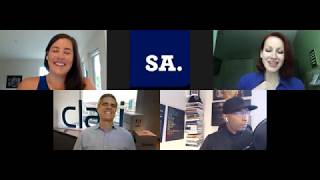
The recording captures a virtual panel hosted by Sales Assembly that explores how sales and revenue teams can scale effectively during the COVID‑19 pandemic. Jeff Rosset opens the session and hands off to panelists including Christina Brady, Nicole Wiley, Kevin Dorsey, Kevin Kanerium, and Mark Roberge. The discussion moves from high‑level leadership and culture challenges of remote selling to concrete tactics in revenue operations, sales enablement, and buyer‑centric personalization. Mark Roberge emphasizes a shift from traditional pitch‑heavy approaches to a consultative, doctor‑like model, and he outlines the emerging role of AI in augmenting sales conversations—real‑time insight, question generation, and semantic analysis across thousands of calls. Roberge also shares resources: the “Science of Scaling” ebook, Stage Two’s CRO‑backed VC fund, his Harvard Business School case work, and a book whose proceeds support Bill.org’s entrepreneurship program for high‑need high‑school students. The panel concludes with logistical notes about follow‑up emails, upcoming roadshow stops, and a Q&A. Throughout, the tone is conversational yet data‑driven, with optimism about technology’s potential while reaffirming the irreplaceable value of human rapport.
Chapters
Joining us today, I'm going to keep my portion super sweet so we can get on to the really thoughtful and smart people that you tuned in to hear from this morning. This is the second of seven of these roadshow events that we're doing throughout the course of this week. First one kicked off this morning with the Boston tech market and obviously right now we're focusing on la. For those of you that are not overly familiar with Sales assembly, we're an organization based out of Chicago. We are an all in one platform and resource for just about everything you could think of that sales and revenue leaders of high growth B2B tech companies need as they continue to scale. So between our 120 events a year, plus various certification programs, peer communities for every Persona within the revenue organization, help with finding talent for all the open sales positions that you're hiring for, strategy around revenue operation, sales enablement, channel partnerships, customer success, so on and so forth, we've built a really cool model where companies can get access to all the stuff they need all in one trusted place by joining as a member. So we started Sales assembly about three years ago here in Chicago. We've grown to about 140 members nationwide consisting of some of the best B2B tech companies around the country. Brands like G2 and Sprout, Social Upwork, Glassdoor, LinkedIn, the list goes on and on. So with that, we thought it would be fun to plan a series of events here this summer, just given everything that's been going on that has impacted the way that B2B tech organizations are going about. Sales, revenue, go to market, all sorts of different things. We thought it would be fun. And some geographically focused programs that talked about what companies need to be doing right now. So like end of Q2 2020 to be putting the pieces in place to continue to build and scale their organizations in a smart and thoughtful way. And a lot of things have been thrown at us as revenue leaders over the past three months and there's been a lot of reaction that has occurred. So today is going to be all about looking under the hood. What should we be doing from a leadership standpoint, Revenue operations, sales enablement, so on and so forth to really put those right pieces in place to set our organizations up for smart and successful growth not only in 2020, but beyond. So the run of show is we're going to be kicking things off with a really great panel which we'll move over to in a moment. And then after the panel has concluded, we'll do some Q and A and Then we'll move over to a keynote by Mark Roberge, who many of you are familiar with if you've spent any time in the, in the B2B tech world over the last decade or so. And with that, I just wanted to quickly thank our partners on today's program. Showpad, Built In, Set Sail and Gong. Four really great brands that are doing some great things for companies out in LA in the tech scene. So with that, I'm going to turn it over to my colleague Christina Brady, who is all but nine days into her new job as the President of Sales Assembly. She's forgotten more about sales leadership than I'll probably ever know in two lifetimes. She's going to be leading the panel this morning, so I'm going to turn it over to her and she'll give a quick intro of herself and then we'll introduce the panelists and we will be off and running. So Christina, I will turn it over to you.
Thanks Jeff. Thanks everybody. Yes, I am a former MetLife, former Groupon, former Glastorian and I recently joined the Sales assembly team as a partner of Sales Assemblies. When I was at Glassdoor, I firsthand saw the revenue and skill impact that Sales assembly had on my direct team of 45 sellers and meaningful change in our bottom line metrics. And I realized then how valuable of a tool and partnership Sales assembly was. And when Covid offered me the opportunity for a new path and Sales assembly was there, it was a no brainer for me having felt firsthand the value that it can provide and wanting to just add jet fuel to that. So that's why I am here and very, very excited. And we have this incredible panel of people today. So I am going to let each of you introduce yourselves because you will do far better than me and I'm going to go in the order that I see you. So Nicole, take us away. Who are you, who do you work for and what do you do?
Definitely. Hi everyone, my name is Nicole Wiley. I am VP of Sales at a company called Flash Parking and Park. Prior to this I was in the Chicago tech scene at both Groupon and Spot Hero and I moved to LA at the beginning of this year and been sheltering in place here since. And what has always drawn me we were very early join or adopters to Sales assembly when I was in Chicago and like Christina, I saw such benefits with my team. And this isn't a plug, the check's not in the mail. But it's. This has been a fantastic organization and you know, when they reached out and asked me to be on this panel. It was a no brainer.
Amazing. Kevin D, you are next. We've got two Kevin, so we're gonna have a Kevin D and a Kevin
K. All right, so we'll make this easy. So I'm Kevin Dorsey, but everyone calls me kd so hopefully that'll make it easy. So we'll have Kevin. We'll have kd. Unless he goes by kk. Like whatever, you know, we'll figure this out. But I'm Kevin Dorsey, VP of Inside Sales at Patient Pop in Santa Monica. I lead the SDR org and the inside closing. Org. The team's about 70, 75 right now. Just a lover and builder of startup sales teams. Have been doing it in LA now for almost 10 years and I love taking things from scratch and getting the systems and processes in place. But something that really means a lot to me is I talk about this a lot. Like I care about the person in salesperson because not just the sales and salesperson, so also really try to do a lot to take care of the people. Whether that's mindset, goal setting, meditation, visualization, things like that I ingrained in my team. So when sales assembly reached out, I'm a big believer in development and coaching and training and I was like, yep, this works. I'm all for it. So I'm excited to be here and dive in.
Awesome.
We're excited to have you. And then Kevin.
Yeah. Hey, Kevin Kanerium KD. I do go by KK @Clary. So
much easier for me now.
Thanks.
I think we've got three Kevin's now at Clary, so we're using initials. But anyway, I'm CEO of Clary. I've been with the company just over a year and a half. This is my second growth opportunity. Last company exited into Oracle. It's actually based in Culver City. Clary's based up in the Bay Area. Adjusting to the world and their travel, which I'll say has actually been fantastic for family life. For those of you that don't know Clary, we're a revenue operations platform and we apply AI machine learning to the revenue processes. Really excited to be on with all and prep meetings we've had have already learned a lot, so great panel.
Awesome. Well, to kick it off, let's start off with a little bit of a softball. Katie, I'm coming to you as somebody who has spent well over a decade building and scaling teams. What would you say that scaling smart means to you and what would be one to two tips that you would Give other leaders looking to scale their organizations.
So I think what scaling smart means to me I guess is having a long term mindset, not a short term mindset. A lot of startups especially early on are addicted to speed, right? Like they want to try to close things faster, build pipeline faster, hire faster, and they get addicted to that fast result, but they're not thinking long term. So scaling smarter to me means actually that it does scale. So I think we'll just go right. There is a lot of systems and processes that companies build out, don't scale and they never really dive into that. So I think my tips on that is one, make sure you have a system based team, not a superstar based team, right? Like if the only reason you're getting to your numbers because you got two, you know, MVPs that carry 80% of the bag, that doesn't scale, right. So it's do you have the systems in place, right that make it repeatable? So that'd be the first one is systems. And then I think second would be hiring for your company, not other companies. Right. Like what you're building is going to be relatively unique. And so just going out and trying to hire people that were at a point, certain startup or even where they go wrong often is in the industry. Oh they sold to this industry so clearly they'll be able to come here and sell from mine. It doesn't work that way. So I'd say systems is one, make sure actually build out systems to make you repeatable and second, make sure you're hiring properly for your systems and your processes.
Love that.
Super tactical. Nicole, popping the same question over to you. You have been a part of several companies and watched them grow over the course of years. So to you scale smart, what does that mean?
Yeah, I think Kevin, Katie hit on a lot of really great points. Especially I think it comes down to the people. Even if you have somebody who is a top producer, if they aren't a part of that culture or can be a cancer potentially, you need to cut bait because that actually in the long term can be even more negatively impactful for a company. But I think that staying true to your culture and your core is really important in, in being able to scale and staying true to whatever those core values are too for your company.
Love that. And then kk any sprinkles to put on this?
Yeah, I would say this. You know, the first thing, especially if you're coming into a new organization is you really need to understand its culture, its product, quite honestly, its ideal customer Profile, product market fit and where you are in the evolution. And we're not all at companies like Zoom today, where product market fit is just so necessary. And some of us, we're still in a, let's call it a missionary sale where we need to get in front of people who aren't educated yet in what we actually can deliver. So it's finding the right sales or revenue athlete for where you are in your stage as a company. And so we've all met amazing salespeople in our careers, but not all of them are going to play the best part of that team where that company is in its evolution. So it's really understanding what talent, what key profiles you need at each stage of your growth.
Yeah. Kk, you hit on a really interesting point just around culture and growth and what the merging of those two things looks like. How do you grow and scale culture, especially now virtually, when so much of culture is defined potentially incorrectly by whether or not you have snacks or a ping pong table or if you can get give someone a high five when you walk in. How do you scale culture in this world that we're in?
Yeah, I think obviously hiring the right profile at all levels is super important. Having a great leadership team who wants to be a coach, who wants to build team camaraderie, who really wants a collaborative environment is so important right now. Because look at if you're head of sales and you have a big organization, you can't do it all on your own.
Right.
You can do a lot, but you need help, you need constant communication where it's moving the ball forward, where it's not wasting people's time. And I think that's the big challenge we all have right now, is positive collaboration and encouragement versus meetings just to waste people's time. And I think what you'll find is you have really creative people in your organization at all levels. Give each of them an opportunity to bring something forward from their life experience, to help make it collaborative. And then what you'll find is that culture of people bringing what we like to call clarity, their superpowers forward and amplifying those super powers and getting collaborative around it. So it's a unique environment. And I'll say I've seen people get better and get stronger because of the, you know, the challenges of working today. And I think it's going to evolve us as we go forward.
Yeah. Kd, thoughts on culture and how you build and scale culture right now?
So the way I look at it, so, like, if you talk to my Team about culture. Like, we actually don't talk culture very often. We talk virtues. And this was actually something I learned from the book. What you do is who you are, actually. Yep, that's on my stack there. I grab it often. It's talked about like, you know, you have culture, which is like, fluffy. You have values, which is what people believe, and you have virtues, which is how people behave. Right? And so we defined our team behavior. How do we behave on our team? Right? So our virtues, right? Take care of the person and salesperson. Seek perpetual growth. Own your stuff. I don't know if I can swear on this, but own your stuff. Help YTP yourself. Team and prospect. Ecm. Every conversation matters. Plan and play to win. Celebrate the process. So because our behaviors are defined, it's actually, quote, unquote, relatively easy to scale the culture because this is how we behave. It doesn't matter if we're remote. It doesn't matter if we're in the office. It doesn't matter anything. This is how we behave as a team. This is how we make hiring decisions. We have interview questions based off these. This is how we make firing decisions. If you don't live up to these things, it's also what we base promotions off of, Right? Like, cool, you've been a superstar. You've been absolutely crushing your number. But you don't own your stuff and you don't help the team and you don't plan and play to win. You're not qualified yet for the promo. So I think more companies needed to find the behaviors of their team, right? To KK's point. Like, ping pong, table keg. Like, that's not culture. Like, no, it's not. In fact, those are things people have used to mask bad cultures for a long time. Like, we got great perks, but you got a crummy culture. Right? And that. That doesn't work.
That is a key distinction. And even digging further into that, Nicole, as you think about behavior and how that plays into culture, the way the KD is defining, how do you feel like in a virtual world you manage people based on their behavior or make sure that the behavior is where you want it when you can't be there in front of the person.
Yeah, I really, I really like that. Virtues that focus or shift to virtues and behavior. For me, it's all about communication. Like, you know, there are so many wonderful tools out there. Sometimes there's an overload of them, though, where you get into a bit of, you know, it's like, okay, I can slack I can email, I can Zoom, I can call, I can FaceTime. Like, where does it end? You know, just for me, it's always picking up the phone if we can do some sort of virtual so I can see reactions. That's really important for being able to understand where people are in their headspace and if they're not hitting their numbers or if there seems to be a funk, you know, trying to help uncover that because, you know, personal life and family life and work life all bleed into each other so much, especially now that we are all at home all the time. And, you know, sometimes that there can be a lot of head trash that happens because of it. So making sure that you're constantly communicating with your team in order to maintain that, you know, that culture and that, you know, that understanding of where everybody is from. Just a headspace.
Yeah. I think behavior also leads into accountability and having to trust people. And as you think about your teams right now, your reps, your managers, your leaders, how are they holding themselves and their teams accountable? How do you ensure right now that people are actually working and working hard and doing what they need to do to make sure that businesses are moving forward and scaling? KK I'll come over to you for that one.
Yeah, I think not going into clarity Advertisement here, but I'll agree with a little bit of what Katie said. And if you see my background, we have these values. It's really all about how we work, how we work with customers, how we work with each other, how we support each other, how we charge hard, and we celebrate these. And so I think we were fortunate when we went virtual because these things were ingrained. So I'd agree with Katie there. What I have as being a user of Clari, that I think is really fortunate for me is my solution allows me to have instrumentation of where my entire business is. And I can see where my team is spending their time. Are they making calls? Are they engaged with customers? Are customers responding to their emails, to their meetings? Are they meeting with the right folks? And I can bring all this signal together, apply it against the opportunity. So I have a really good another gauge of engagement. How engaged the customer with us and how engaged are we with them then? Obviously, I think we're all finding this as the buying committees that we're working with, our customers have gotten bigger because of stay at home. So you're finding when you're doing a presentation over Zoom, you might have more constituents from that company who are now participating, which means you've got to do a better job on your side of matching Persona. Right. So we might have rep, manager, vp, CRO, CFO to map to the folks that they have on the phone. So we're doing a lot more, I'd say we're all more engaged in every opportunity than we ever have been. And so you get to see the performance of the rep. Obviously there's other great tools out there that allow you to, to diagnose a call afterwards and understand what's working, what's not and then build enablement very quickly based off of that feedback. So I think modern technology is a huge way in working virtual and ensuring productivity and productivity going to the right efforts or efforts going to the right outcomes.
Yeah, I love that. I also love that you have, you're a dynamic panelist with these different backgrounds. You've up leveled all of us. Now, Nicole, same question to you. How do you keep people accountable and keep people wanting to work hard right now?
A really great question and I was really thinking about the, you know, the different tools that are out there and being able to, you know, make sure that your team is engaged and actually doing the work. And I think obviously the output comes to that, but you need to get ahead of that and understand where, you know, where. How are you filling the top of the funnel and staying much more focused on, on, on that information. Sorry, we've got a working household here and sorry, I just kind of lost my train of thought too. But going back to productivity and focusing on the like how we're filling the top of the funnel and so like looking at those activities. So you know, obviously you can run Salesforce reports, you can listen in on calls, you can use, you know, various tools to diagnose and assess how things went. But I think just also just checking in with your team and asking how things are going is again it goes back to that communication. But I think a lot of the time reps know where like know what's going on way ahead of the numbers, being able to tell that same story. So if you can have that, you know, that check in, you know, during the one on ones or you know, during, you know, your team meetings or your stand ups, however, you know, your organization does that, I think, I think that's really important.
Yeah, this is a meaty and very, very important topic. And as such, Katie, I would love to hear your insights on it as well. Talk to me about accountability.
I mean, I think it comes back to actually the first question that you asked and it's aligned with what both Nicole and KK said right like, you manage systems and processes. You develop people, right? Like, if you have system, you manage the system, you manage the process. I know. Like, that's all mapped out, right? And there's tools for it, or not tools, but, like, you know, you. I know what my reps are supposed to be doing. My reps know what they're supposed to be doing. I can measure all of it, right? Back to behaviors. You can measure behaviors, right? I can measure whether the conversations, if they're taking them seriously. I can measure pipeline, I can measure touches. I can measure activity. I can measure response. Like, I can measure behaviors, right? And so I can do that very well. But then back to hiring, when we went remote, I. I had no fear. No questions, no. Like, oh, is my team gonna work when they're remote? Like, not my biggest fear, honestly, when we remote is they're gonna miss each other, right? That we don't have the connection that we have, because how we run the team doesn't change when we go remote. And so that was actually, we had done remote days many a time, right? Like, we didn't have the, like, oh, I'm going to work from home. And it's, you know, not really working from home. Like, no, if you worked from home, you worked. Now, what we notice and a lot of reps notice is all sudden they were able to get their job done faster. And it was like, wait, what's. What's happening here? You know? But then again, different approaches in management here, hey, you can get your job done in six hours. God bless you. I don't care. Like, you've lost the three to four hours of distraction in the office. You already hit your dials by noon, you booked two meetings, you followed up on your pipeline like deuces. I don't care, right? You ran the system, you ran the process, get the results you're looking for. So I think that's why having systems in place, it's when you have to rely on all the reps to tell you what's going on, that's when you're in trouble. Because then it just becomes a massive game of telephone. Rep A tells Manager B, that tells Director C, that tells vp. By the time it makes it to me, that thing's been butchered so many times that, like, it gets ugly.
Then, yeah, you. You talked about connection and that your fear was never in whether or not my people are going to put in the work, because you've built a culture of behaviors where you can trust that, which I think is what everybody needs to do. That connection piece of it. And your fear of missing the other human beings, how has that turned out? The last four months?
You know, I wish I could say great. I think that's, that's the place that we're all as a species right now trying to figure out how to better connect when we can't. This will never be the same. I don't care what anybody says, right? This will never be the same as walking down the hallway and being like, yo, Christina, how'd that deal come through? That was amazing. That'll never be the same, right? Like we miss the proximity. So you know, we've done, we've tried a lot of things, right. We've done, you know, like the zoom happy hours. We've done like, you know, the one to one conversation roulette. We've done gratitude exercises, we've done visualization exercises. Like, we've done like, you know, ending the week with like, what are you grateful for? Like, we're trying, you know, but it's not the same. And I won't lie to anybody here and say like that the connection is the same now as it was when we were in the office. Because when we were in the office, we had the best of both worlds, right? Like we were there, we were taking care of our stuff, we were owning our stuff. But then you had those one off conversations you had. I could walk up to a rep and be like, yo, I just saw, like, I just heard like, yes. Right. Or I could be walking down and like here, over here, an sdr talking on a call and be like, your tone on that call was perfect. Keep it up like that. It's not the same. So we're trying. And you know, if anyone's on this panel has great ideas on how they are maintaining, I'm all for it because that's, that's what worries me the most. Because right now for my org specifically, we went from 100% in the office. Well, like 95% because we did remote days and stuff to 100% remote. Right. Selling to doctors in a pandemic. Like, so we're getting hit on all three sides, right. Like our industry is being hit very hard by this. Selling is harder during this. Now we're remote and we don't have that connection.
Right.
You don't have that support anymore. So it is a challenge. Like I'm not gonna say that it's not. And we're doing as much as we can to try to keep it where it needs to be.
Yeah.
And that's an open Question to Nicole and KK Connection. How do we do it?
Honestly, for me, like, my reps have taken it on themselves to, you know, some of my former reps in Chicago have just decided that they, because they all lived within a couple, you know, blocks from each other to do a socially distanced walk along the lakefront. Like, they, they are the ones reaching out to each other. They're, you know, using again, the myriad of ways to connect. But then it does come back down to that, trying to get that human interaction, even if it is six feet apart. So they're really, they're taking it on themselves not to lose that connection. And then they're doing their own, you know, happy hours that are, you know, including lots of different departments too, which I think is really cool like that. You know, I've been at companies where it's very siloed and it's like, okay, you're the sales team, you're the engineering team. But to see the reps getting together with analysts and marketing and HR and doing their own happy hours and meetings like before or after hours is pretty
cool, I would say. We're doing similar things at a company wide. Every Monday, my CEO does a 30 minute town hall. And then we all typically have a guest speaker, one of our investors. So at company wide, we address it. To your point, Nicole, each of my leaders has their own happy hour every week where, you know, we actually will pick a wine or pick a beer and everybody gets the same one. Certain teams, if there are local. So for instance, a week ago, the London team got together for a bike ride through London. I'm missing out on a lot of this stuff because I'm not, you know, close, but, you know, teams are going for hikes in the Bay Area, you know, and sharing pictures. But to Katie's point, we're all missing the high fives, we're all missing the hugs. There will be a point where, you know, I think we do find a way to come together in a little bit of a bigger fashion at some point in time. But I'd say right now everybody's doing their best and staying social, but still missing.
Are you a hugger, kk? Are you a hugger? I'm a hugger. I'm there. I'm there with you. Just wanted to double check.
I got two little girls, man. I'm all day hugging.
Same girl. Dad. Baby, let's go.
Aww.
I mean, if you all are anything like me, I used to have images of us returning to the office and like Chariots of Fire in the background and it's slow motion.
And we're like, hello.
Other hugs. You know, maybe one day.
One day, One day.
Flipping into a little bit of a tactical lens. One thing that all companies are feeling pain on is their front line is saying people don't want to buy. Everyone is holding off on budget. People want to delay, delay, delay. One thing that we as sales leaders and scalers of our business want is to continue to find a way to create urgency. And your buyers are getting that from absolutely everybody. So, kd, coming down to you, how are you encouraging your people to be able to creatively drive urgency right now?
This might be a controversial response, but I don't think that you can. So based. It depends on the product that you sell, right? And if you have a product where the cost of staying the same is greater than the cost of making the investment, that's how you can drive urgency. Right? Like, is the cost of staying the same worse than investing in something? And you can have those conversations and you can go through, but you one, you can't fake urgency. Right. So I'll use like my industry. We're selling into SMB doctors right now. A majority of them have not been able to practice for the past 60 to 90 days, meaning they have not had revenue or incomes coming in. What type of heartless salesperson would I be to try to convince them in any standard of like, this is more important than keeping your practice open right now? We do help them get new patients, and that's part of what we do. We made a pivot to telehealth right. As something. Okay, there's how you could see patients while you are on this lockdown.
Right?
Like, we're doing things, but urgency comes from them first of all. And sales reps need to do a better job of unselling the now. So many sales reps focus on selling a better future, but they don't unsell the now. To create urgency, you have to make what they have less desirable. But so many reps are trying to say, oh, the faster you move forward, the faster we'll start getting you results, the faster you'll see all these returns, and I'll discount it. And we'll give you this special thing if you sign up by Friday. But if what I have is okay, there's no urgency to move. Right? And like, I can't see all the panelists on here or the participants, I don't know how many people. But, like, quick show of hands. Anyone on this panel ever stay in a relationship? Maybe Longer than you should have, even though you knew it wasn't a good one. No, just me. Oh, okay.
There we go.
You liars.
Okay.
Right. It's. Until that actually becomes undesirable to make a change. You saw a whole bunch of other better options out there. You had all the social proof you needed. All your friends were telling you you should leave. But until it becomes undesirable, you don't. So that's where sales reps need to focus is. Can you unsell them on the now? Can you get them to say what they're doing now isn't getting them the results that they want? That's how you can speed up a sales cycle.
It's interesting because when you mentioned salespeople convincing. So many salespeople think my job is to convince somebody to do something, but the way that you're framing it, it's actually the opposite.
It's.
We need to unconvince them of what they were doing.
So what I tell my. Tell my closers and the people I consult with, the job of a closer, in my opinion, is not to close. It's to make them want it. If you approached every demo and every pipeline and every opportunity with the mindset of, I'm going to make this person want this more than what they have right now versus approaching trying to close the deal, the way you'd approach that deal would change. Your job is to make them want it first, make them want it by not wanting what they have. Then the close starts to take care of itself. You can't convince somebody to do this kind of stuff.
Yeah. Nicole, what are your thoughts on urgency and how it's created?
I don't think you're controversial at all, Katie. I think you've hit the nail on the head. So maybe it's just the two of us. Maybe it's the marine layer in the marina. But I think that the tactic that myself and my teams have done is just like, just checking in. How many disingenuous emails have you gotten from somebody trying to sell you something in the last three months where you're like, if I see unprecedented time once more, I'm going to throw up. You know, it's just. There's. There's no genuine.
Just.
If somebody knows me, they would pick up the phone and just check in and see how I'm doing. Hey, you know, I am. You know, are you okay? I just saw the riots going on, and I know that you're, you know, we sell. We sell equipment, parking equipment to companies all like, in the commercial real estate space. So during this looting, a lot of our clients were hit really hard. And so just checking in, saying, how are you doing? Are you guys safe? You know, how are the business? And just being there to lend an ear and it gives you that touch point. But it's, but it's genuine and it's not, it's not, hey, I'm trying to sell you something. It's. I really, we've built this relationship and I think when you become that trusted advisor, that's when you can be successful in the sale. But you really have to earn that trust. And I think that that just comes with building a foundation and a relationship.
I love that. Kk anything to add?
Yeah, I have a few thoughts I want to jump off first, something that KD said, right? And I appreciate the hard work he's having to do and taking all of his sellers and putting them at doctor's offices and positions that probably aren't working right now. And so how do you sell to someone who doesn't want to be sold to? And we thought about this a lot internally as well. And the first thing we did is we actually categorized our install base, our current quarter now quarter opportunities and quite honestly all of our ideal customer profiles into either they were a headwind, meaning Covid was going to really hurt them, or they were in a tailwind where they were going to thrive. Think of zoom. What we then did is we actually redeployed a big part of our inside sales team to focus on our customers just being helpful and not helpful at the executive level, but helpful at because we sell it to sales organizations. So helpful to the sales rep, helpful to the sales manager. We really focused on increased learnings and enablement that we got out of using our own solution. So that was a way to keep people productive, keep them focused and engaged on customers come first. And then that allowed us, as we categorized, to focus on which companies were going to be harder to sell to which which ones do we just not even touch at this point and be empathetic. But a big part of ours was understanding. My typical buyer has historically been the head of sales and head of sales operations. Well, budget has moved back to the CFO in a lot of cases. So how do we help our buyer educate the person who's basically controlling spend at this point, which is the cfo and make sure that they're now a part of the conversation. We're understanding what's important to them. So we definitely have had to adapt our emotions, bring in more intelligence Be more empathetic. And I think a common theme I heard across here was, you know, you're not selling. To sell, you need to be able to help this organization understand that, you know, there's nice to have and there's required equipment. And how do you go from nice to have to required equipment? It's really hard. You know, it's easy when you have someone that you've sold to before goes to a new company and calls you and says, I need you again. Right. But to bridge that gap and. Right. We're all in growth companies, right. We're not all in big established companies. We've got to help folks see that we are required. There is a real need to quote the head of revenue operations at a company called Alteryx. He goes, you got a smash windshield, you need a new windshield, you got a cracked windshield, you might just put some glue in it. So how do you find more smashed windshields?
I love it. I have one more kind of lightning round of questions, one for each of you. And if you are one of our participants, please go ahead and start filling out your Q and A in the chat right now because in a moment I'm going to kick it over to Jeff to run some Q and A. I already see some good ones in there, so please keep them coming. This is your chance to ask these phenomenal people some, some burning questions. But lightning round question, we'll start with KD and then head over to Nicole and then KK will bring us home. What innovation has been born in the last four months due to Covid? This can be a new tool that you rolled out, a new spiff that you thought of, a new way that you've been managing your team. But as you think about something that you maybe would have never done, that you actually put in place because of COVID that will ultimately help your business going forward. What would you say that that would be? And now I feel kind of banned from making Katie go first because that's a really hard question. And I'm like, think of it, go.
All right. So something, man, just coming at me here.
All right, somebody else has one. Okay.
Something that I've done recently that I'd wanted to do for a long time and just never either had or had basically had the guts to do so is I rolled out a self management plan. Plan for reps. Right where, okay, here, back to systems and processes. Right. Here's the, here's the KD way. This is the way mapped out. You do it this way, it'll work. We Know that do it, but it may not be for everyone, right? So what we gave them the option to is. Or you can create your plan and path to results. But this is. But you actually have to plan it, right? So we rolled out these self management docs of like you're reporting your numbers up, which we already do that in our one on ones anyway, where you're pacing, right, Your forecast commits. But then what is your plan for this week to achieve your commits? And it's your plan, right? So maybe this rep is world class at LinkedIn. Okay, then like map out your plan, right? And so we allowed the rest say, hey, you can do it your way or our way, but whatever it is, you have to commit to doing it no matter what. And we hold you accountable again to your plan. So that's something that we've done again, like with remote where it's like, okay, you're at home, you're waking up, like, okay, what's your plan then? Right? If you don't want to do it this way, you have to actually plan it another way. So that's an innovation that I hadn't really done in the office and decided to do it remote of all times. And so far it's working, right? The reps that are like, hey, all right, this is going to be my. Our demos went up on those reps. Performance and morale went up on those reps and I'm really proud of them. Of course we ran into hiccups, right? Like they get psyched the first week and then they forget they got to come up with a plan the next week. And it's like, okay, this is part of self management because you got to do it every week. But that's an innovation that I've done recently that I'm very happy with how it's going and I'm learning a lot as we go through it.
I love it. Nicole and Kevin, give us a quick header.
I am totally stumped right now, Kevin.
I think tough question I like, yeah,
it was a really good one.
I think virtual has changed a lot of things for organizations going forward. And I'll tell you a couple of things that I'm really proud about that we've done internally. So first you think about you can't thrive without demand gen, without on site demand gen, which is where we've all spent our money in the past. So we've been able to cut marketing budget drastically. But I also think we've been able to get better results by putting the entire company to work. Every employee of the company is responsible for outbound demand gen and content creation. And so what I've seen is because of this need to be completely digital and demand gen, the creativity that it spawned from folks has been tremendous. The more intimate panel conversations that we've been able to have in the way we've run them. So I think that's changed how companies will drive demand. I know it's going to change how we do, and I think it's going to free up dollars for me to do other things with. Second part is I do believe that we're going to spend less time traveling on planes and going to meetings and offices in the future. And so big thing that we've spent time on is how do you virtually sell? And if we're all going to be on these Zoom meetings all day with no breaks in between, we're going to be exhausted and it's hard to pay attention. So how do we ensure when we're going to have a customer on that, that we've sent them a very concise agenda beforehand, that we actually leave 15 minutes of that hour or five minutes of that half hour for that person or those individuals that are going to be on that virtual meeting to go do something in between their meetings.
Right.
Get something to eat out of the fridge, bio break, whatever it is, and that that meeting is super impactful, that we take notes that we're followed up immediately. So I think it's the evolution of selling and the evolution of also caring about people's time and sort of containerizing this. And then, you know, I'm seeing just the amazing creativity. You mentioned my Zoom background. I've got reps that can do a whole presentation by changing their Zoom backgrounds, looking at who they're talking to, and they're also presenting behind them. It'll be amazing to see how Zoom evolves as well to support us in this. So I think virtual creativity is going to continue to happen and it's going to change the entire way we all sell.
Amazing. Well, speaking of virtual creativity, Jeff is
back
to do a little bit of Q and A before, before we get to our main stage speaker. So thank you, everyone. This was a ton of fun. I appreciate it so much. And let's, let's get into some Q
and A. Yeah, this is great, guys. And we'll keep this part short. We got about six minutes before we're going to kick it over to Mark, so we'll ask for some really answers. And yeah, that discussion was great. And I'm just glad that my wife wasn't here in my office when you guys were talking about like making bad decisions with relationships and giving her some time to think about some of the bad choices that she's made in her life with me. So thank you for that. All right, so we're going to kick it over to some questions. We got a couple of that have come in here in the chat. The first one was over to kd. Just basically the idea is as you're onboarding younger sales reps that might not have a ton of professional experience and traditionally have relied on mentorship and the team environment to really get acclimated and up and running, but now they have to be onboarded and ramped remotely. What are some things, one or two things that you've done to really help to prevent a quick slide down the wrong path for somebody that's 22, 23, maybe first job out of college.
So back to one of the original questions around systems and processes. To me it's same, same, it's just where we're doing it. So like our onboarding is very structured, like very structured, like to the hour structured on what you're doing and with whom. They didn't change when we went remote. Right now they're just doing it over a zoom versus being in the room. I'm not a big believer in shadowing as part of onboarding, so I don't like, I don't have to worry about that. So we do something called tribal training. So we call it tribal training where the tribe trains the tribe. So I've got my designated tribal trainers that are responsible for two hours per week of like role play time. They're just doing it over zoom now. Right. So like my new reps get tons of like hands on attention from enablement, from their managers and from their peers. We just, we built it in, right. We didn't rely on anything else, just built into our onboarding so that I would get tribal trainers, designate time, teach them how to be good coaches and map it out so it's not ad hoc. That, that would be my suggestion there. Great.
And I know this was a, this was a topic that, you know, flashback to second half of March when companies had large cohorts of folks that had already been hired and coming on board. The whole process of virtual remote onboarding and ramp was very, very scary to a lot of companies. But interesting to hear your approach. Thank you for sharing. And then the last question, I'll kick it over to KK and I'll preface by saying the answer cannot be everybody just has to subscribe to Clari. Okay, but the question is like, what do you see as maybe new trends or a new strategy that's really going to take hold as it pertains to the world of revenue operations? Maybe in the second half of this year and beyond?
Yeah. I think the biggest thing that's changed is those of you that are more like my age. Right. Started selling on premise solutions as solutions went to the cloud and they went to subscription model and now obviously a lot of things are moving to consumption model. Your buyer's journey is continuous. The amount of touch points that happen over digital through demand gen are tremendous. By the time they hit an actual sales rep and we're on a zoom meeting, so much decision making has already taken place. And in this world of subscription, your customer success team is so engaged in that opportunity. Once you've got a customer right, it doesn't end. You don't turn it over to a third party. You've got to continue to nurture them, you've got to continue to get them to resubscribe to you. So I think the big revolution that's happened, and this is probably the last four years, is we've gone from salespeople to revenue people and the revenue team is made up of so many more folks.
Right?
Solution engineering, sales, customer success, account managers, product finance, everybody is now engaged in all parts of that customer journey and they have to be on the same page, they have to be equal partners and they're all accountable and they can't work in silos anymore. So they need to be able to make decisions off common data. And I think one of the things we've seen is where in the past, management, marketing had their own operations team, sales had their own operations team, customer success had their own operations team. They're now together under one common operations team with common metrics, common KPIs, common analytics. And it makes us just so much better when we're all on the same page in ultimate support of our customer. So for me, that's been the biggest change I've seen in the last few years.
That's great. That's great. Thank you so much for the insights and thank you to the entire panel. KK kd. Let's see. Nw, cb, imjj, Sales assembly sa. Thank you for the great discussion. This was fantastic. Again the session was recorded, so we'll be sending out a follow up email after Mark's presentation with all the knowledge bombs that were dropped this morning, but really great to have everyone take the time to share some Insights and participate. We're going to go ahead and say goodbye to our amazing panel. And everyone is probably given a nice golf club right now that you can't see or hear on Zoom. And we're going to bring in Mark Roberge. Mark is definitely somebody that's quite well known in our industry. Many of you have heard him speak, interacted with him over the years. Former revenue leader of a small little company on the east coast called HubSpot and most recently is doing a lot of cool things in the venture space. A lot of experience having built and grown B2B revenue organizations. And Mark's going to be taking some time here with us this morning talking about the topic of the science of reestablishing growth and focusing on things like when, where, and how. And then just like the panel, we'll open it up to some live Q and A when Mark is finished up. So with that, I'm going to hand it over to Mark, who's got the controls, and take it away, my friend.
All right, Jeff, you can hear me?
Yes, sir.
Awesome. See my screen?
We got it.
Good deal. Well, good stuff so far. I caught the last 20 minutes or so. Sounds like it's been a fun journey for everyone. And thank you for joining. Geez, it's been a crazy three months. I think we can all say that. I hope everyone's healthy and is perhaps gaining some sense of normalcy out there and we'll see how the summer progresses. But this is. I'm excited to spend some time with folks here in kind of going over a question that I'm seeing come up in the minds of leaders of companies of all sizes. Whether it's five people or a $5 billion revenue company, there's a lot of people asking, like, should we start. Should we start growing again? Should we get back on our scale mode? I think everyone went through sort of a similar journey in the last three months of, like, stabilizing financial positions. Like, whether that was staffing or salaries or budgets. You know, there's a lot of talk about the marketing budgets in the last session. Hopefully a lot of pivots, who we sell to and the messaging we sell to. I don't feel like we can lean enough in there, to be honest with you. Having been in an operating role both in 01 and 08 when similar economic uncertainty occurred, pretty much all the people I talked to a year after those moments regretted not being bolder in their. Their pivots of their business model, who they sell to and the message they sell. So hopefully You've done some self exploration on that. But I want to spend the 30 minutes we have here in talking about this question of like, should we start growing again? And so whenever I ask people like, well, just in general, like when should you scale? And that could be in an early stage context where like you know, a series, a startup, it could be like, you know, I've worked with plenty of the large companies, they're multi billion dollars and they're, they're introducing new products or they're going into new markets and they're wondering like when. We feel like we've learned it, we've got it going, but like when, when should we scale it? And you know, most of the time the answer I get is when we have product market fit. So that's cool. I think that's a good answer. I don't know if there's people on the phone that did new product development or launches or entrepreneurship pre Eric Reese's Lean Startup work, but we were not good at entrepreneurship then. Thankfully, the work of Eric Ries and Steve Blank taught us agile development and MVPs and prototyping and building products with the customers, not like selling vaporware like a year in advance of when the product comes out. And we've excelled, I think as an entrepreneur community because of that work. And we have this thing called product market fit. But what's interesting is you ask 10 entrepreneurs or 10 business leaders, what's product market fit? You get 10 different answers. That's perplexing that like we've got this critical decision, when should we scale and how fast? Like if we get that wrong, either if we go too fast, we're going to burn through capital and probably have to do a pivot and really risk bankruptcy. If we wait too long, we open up a window to a competition, to the opportunity that we had. So it's so critical to be like precise with this answer. And yet we have like very varied, sometimes qualitative responses to what is this product market fit that we're resting this decision on? And so like we have some folks who like a lot of people, more than half the people I say product market fit, they're like, oh, when I get a certain amount of sales or revenue, that concerns me. That concerns me. Like if you can sell something like that really is just you have like market message fit, not product market fit. It just means like, yes, someone believed in your message. You have a good sales process. The whole thing is like selling ice to Eskimos. Like, did the Eskimo really need the ice, you know what I mean? Like, I don't know if the sales is really a good measure of product market. Other folks lean on surveys like mps. I think NPS is pretty good. Others say, like, if 50% of people respond and say they couldn't live without your product, I feel a little better about that than sales for sure. But I mean, if you've ever, like you. We all kind of worry that surveys are riddled with false positives. You know, like customers just tell us what they want to be nice, they want to tell us what we want to hear. So it's not bad, but it just concerns me. So as I kind of reflect on and this is a multi year journey of like thinking about this decision as I invest in and advise and you know, be part of the operating rhythm for some of these companies in this decision. For me, like the metric I would lean into is customer attention. If someone experience, you know, they bought you, they experience your offering and now there's this decision point for them, like, do you want to renew or do you want to buy more? If we're not in a subscription business, like, maybe they could buy more from you. That is talent. I mean, the whole like, put your wallet where your mouth is, that type of thing. I don't know, whatever that saying is, that's the metric I would be psyched about in terms of like, wow, yeah, I think we have product market fit. Now the problem is retention can take a year to surface. It's a significant lagging indicator. Like, we sign up a bunch of customers this quarter, we really don't know their retention rate for like a year. Don't have that time. We don't have time to wait a year to know like, do we have product market fit? We have to seek out the leading indicator to customer attention. And this is like, gosh, yeah, if you think you're in like the stages of product market fit pursuit, you've got an MVP out there. You're talking to customers like, ooh, do we have product market fit? Geez. I cannot think of a more important founder CEO decision than defining with your organization what your leading indicator to customer attention is. What is your leading indicator to customer attention? And rally the whole organization around it. And I don't know, I just hope we think more about that. I don't really meet a lot of entrepreneurs who like, know what their lead indicator of customer retention is. So let me, let me kind of propose to you a format on how to think about it that I think is useful. And I'll bring it to life with some examples. So your lead indicator is P percent of customers achieving E events in tee time. So basically they isolated down to three variables. P percent achieving E events in T time. Okay, so like let's, let's get away from the programmatic, like weird algebraic codification. Just talk about this like Slack. Okay, 70. If we have product market fit, if 70% of customers send 2,000 team messages in the first 30 days, I do like that a lot more than revenue. I do that. And I know pretty quickly, like I know I sign up some customers in May, I'll know in two weeks if we have product market fit. That's pretty sweet. And if we don't, if we have 40% of them are sending it, I can do a bunch of things and know in another 30 days if it got better. Right. And this is, this is pretty close. If you do some reading online or talk to the Slack folks, pretty close to sort of what they were rallying around. For Dropbox, 85 of customers upload one file and one fold on one device within an hour. For HubSpot, I know this is true because they live through it. 80% of customers use five or more features in the 25 feature platform within 60 days. Okay, so I wonder what it is for you. I wonder what your leading indicator of customer retention is. But this gives you hopefully like a format for in which to think it. Think about it now. So let me give some like ideas around these variables. P percent. I don't know. I usually see between 60 and 80% of customers hit it, but honestly, I'll show you later. It's not that important to get it precisely right because we're going to show momentum. And as long as that momentum continues to grow, whether we chose 60 or 70 or 80, I don't think it really matters. But usually that's the range, that is the tea time that is correlated to your sales cycle and the complexity of products. Or Dropbox. Look at that. One hour, very transactional. Slack HubSpot, 30, 60 days. That's very common. One or two months workday. You're selling workday to friggin Fortune 100. Like you're selling literally like HR software to the Fortune 100. That's like six months. I mean that's gonna take a long time unfortunately. So it hurts our ability to learn fast. But it's the reality of how long it takes to like set up and start using this stuff. So it's usually like a correlation to the transaction side. Now E event that's the critical One, what is your event couple guidance there? Number one, it's, it's factual and by, you know, it's not like the CSM says, they're in good shape. That's not really resting our foundation on something that's like rigorous and data driven. It's instrumentable. Meaning like we don't have to rely on people to gather the information. Because we are going to want to continue to, to monitor this as we scale to know if we're going too fast. You know, it's, it's typically highly correlated to your unique differentiation, your sustainable defensibility. That becomes really exciting when you can come up with one like that because you're going to rely, you're going to evolve the whole organization around this. So HubSpot's a great example. Like HubSpot was the all in one player in a marketplace of niche solutions, point solutions. So if you wanted the best social media tool, you might buy Hootsuite, a blog. You buy WordPress analytics, you use Google Analytics, you know email, you might use mailchimp. But if you wanted something that like talked to each other and created one cohesive experience, then you would use HubSpot. So if someone was just using one of the 25 features, not good, not leaning into our defensibility. So it made total sense that the selection of RE event of 5 out of 25 features in the platform is strongly correlated with our unique defensibility of the all in one player. And aligning our entire organization around that became externally powerful. So suddenly the reps were comped when that occurred. The CSMs were not measured by churn but by this number. MQLs were not defined by close rate but by their ability to create this. And product was obsessed with why people weren't achieving this wonderful alignment. To accelerate us to product market fit. Okay. And then to get even quicker visibility. The way we lay out our, our customer traction helps us see product market fit as early as possible. Remember, this is the pursuit of leading indicators. So in this case, this company acquired 24 customers in January and unfortunately only 3% hit the lead indicator after a month, 27% after two months, 40% after five months, 44% after seven months. That's not good. I mean if you have this leading indicator that represents some sort of like setup or usage or value outcome of your software, and only 44% of people in seven months, like you're not, that's not a real business. Right. But they made a bunch of changes. Like they updated their onboarding process, they sold to different Customers in a different way. They made some product enhancements and look what happened. By September, they signed up 50 customers. Within two months, 68% had achieved that early indicator. You look down the column here, that's remarkable. I mean compared to 27% in an apples to apples comparison from the generic class. Kudos to you. We have product market fit. So again, that's why I'm saying like choose 60 or 70 or 80. I don't know, like, I don't think it matters that much. But like you can just see directionally what's happening here. And this is very good stuff. Okay. And then like, it would be useful if you're gonna like rest a lot like such critical decisions of like when to scale and how fast on this, it would be nice to know that it actually does correlate over time to retention. So after a year or so you can actually run that analysis just to make sure. Here's one way to do it. This particular company signed up 68 customers between 12 and 18 months ago. Right. So between like May and whatever, December of 2018, 19, they signed up 68 customers. And the retention rate on those customers is 82%. Now 55 of those customers had hit the lead indicator of retention and 13 did not within whatever, 30 days or whatever we define it. And it turns out that for the ones that did, 93% retained and the ones that didn't, 39% retained. So beautiful. We've learned something wonderful about our business. You got it right. Turns out that those customers that achieve this lead indicator within 30 days or whatever we said, actually correlate with long term retention very nicely. And the ones that don't actually turn at a pretty high rate. So we're doing our business justice by focus on it. We're versus the bottom example. Did it? Same data set, 68 customers signed up between May and December of last year with an 82% retention rate. But the retention rates of the two cohorts, whether they hit the lead indicator or didn't, are very similar. Okay, so we didn't figure it out. Now we probably didn't hurt our business if we had chosen like, hey, let's try to get all of our customers to sign up and activate like one user within 30 days. Believe me, by focusing on that metric, we didn't hurt our business. It's just like, it just doesn't correlate. So we just. Now we've got a data set that hopefully we can study and try to find what, what actually does. Okay, so here's just like for the founder, the product founders out there. Here's sort of a programmatic way to think about it is yeah, I mean, I don't think product market fit is a workable product in a big market. I don't think product market fit is when 40% of your customers say they die without your product. I think product market fit is when your leading indicator is true and it correlates with retention and your leading indicator is p percent of customers achieve an E events in t time. Okay, so there's some thoughts there on bringing more data and rigor into this really critical like sort of do or die decision on when do you re establish growth. Now is a great time to set this up because like all of our data, I mean, I don't know, I just don't really put a lot of like faith or weight in any data collected before March of this year. Like in terms of my funnel, in terms of my churn performance, like all funnels and forecasts and all this stuff has to be redone in this post Covid context. So now's a great time to do it in like maybe a more rigorous way that's going to drive more predictability to your business. All right, so. So are you ready to scale now? I don't think so. I think you need to have go to market fit now. Okay. And so product market fit on average, like I see people get through this in about like a year. And I think that's, you know, that I hope this speech doesn't really change that. I just think like most people do pursue product market fit and most people does take a year. It's just that the sort of graduation metric that we rest our hat on, I'd encourage to be a little different. That's all I'm saying here. Then there's like what can sometimes be a little bit of a more rapid piece, which is go to market fit. So if product market fit was, I'm now confident that if I sign up 20 customers this month or this quarter, that most of them are going to see the value we promised them. That's pretty sweet. Consistent customer value creation. Go to market fit says we can do that scalably. I don't really care about scale during the product market fit journey. In fact, I encourage doing unscalable things. If I could quote Paul Graham from Y Combinator, I think that's great advice. The story often tells my friend David Cancel, who was our chief product officer at HubSpot and now is the founder of Drift. I mean, if you talk to his early days at Drift, he was jumping on an airplane to onboard personally customers that were paying him $50 a month. Kudos. The founder personally onboarding customers, paying them $50 a month. I mean that's, you know how hard it is to come up with a business idea and to actually get 70% of people to like not just buy, but realize the results you promised them. Do you know how hard that is? So do everything like throw everything in the kitchen sink at that problem to see if you can make it happen and then we can step back and see if we can do it scalably. But, but geez, if you can get 70% or whatever to realize the value, you've built a foundation for a business that very, very few entrepreneurs have ever achieved. Making it scalable, I mean not a layup, but I think slightly easier. But that's our pursuit here. And the way we measure scalability, maybe profitability we can talk about is in unit economics in our world of SaaS. Okay, so you folks know the numbers here like LTCAQ greater than 3, payback greater than less than 12 months, magic number greater than 1. You can a lot of literature on those numbers. You can kind of google them and find out if you not sure of them. But again we have the problem here is like it's a lagging indicator. I sign up a bunch of customers this quarter, I'm not going to know for a few quarters probably what the unit economics on those efforts are. I just can't wait that long. So again I need to find my leading indicators to unit economics. And so that's like, I think it's a little easier. I don't think there, it's more, there's more of a universal answer to that. There is no universal answer. As I showed in the product market fit one. That's where the some, some creative innovation in entrepreneurship still needs to really occur. This one's a little more just algebraic. So all we're basically saying here is like, like we want an LTV to cat greater than three. So what do we have to see today in terms of our sales performance and marketing performance to yield that result? That's just basically like extrapolating each of these metrics back into like shorter term activities. Right? So most people measure lifetime value is like how much is your customer paying you a year, ACV times your gross margin divided by churn. And most people define CAC as like the marketing demand gen CAC plus the sales cac, how much to find the appointment and how much to sell the appointment and Marketing CAC could be like, how much does a lead cost divided by the close rate of the lead? So if I pay $100 a lead and I close all of them, my marketing cost per customer is $100. If it cost me $100 a lead and I close 10% of them, my marketing cost per customer is $1,000. Right? And salesperson CAC, like, how much do I pay my reps divided by how many customers do they bring in? How many customers they bring in is how many leads do I give them times the close rate. So now I've been able to extragulate this lifetime value over CAC ratio of 3 back to numbers and inputs that I can get visibility into pretty quickly here. And I'm in a position to be able to dashboard those. I mean, you're all operating dashboards. It's just make sure that you're operating. Some of the dashboards give visibility into the ultimate unit economics output of your business. As long as I keep my blue line above the red, we're gonna have a good, unique, good unit economics. I don't have to wait for six months to know. I just have to perform above the red line. Okay, so now we're sitting here and hopefully we have a more rigorous definition of like, should we reestablish growth? Because I've been in these board meetings, I think they're using the P and L to decide that. But, like, the P and L is the output of the work we did six months ago. So I just get really worried that we're like making decisions on whether to scale right now based on the work that we did six months ago. Okay. So hopefully we now have, you know, we're going to scale if we have sustained product market and go to market fit, and we have leading indicators. And so now we can scale. Okay, now the other, the other thing I see as an issue with the scale approach. Whether, again, it's like a 12 person, you know, Series A company that just raised money, or it's like, you know, Microsoft that is, you know, introducing a new product. They just add tons of reps all at once. Let's just talk about the seed. The seed funded example. I don't know why. It's almost like 50 out of 50 conversations for me. It's like, yeah, we have product market fit. We have like 12 people at the company. We've got two reps. We just raised an $8 million Series A and we're gonna hire 10 reps next month. Like, I don't know why we do that I've seen it done 50 times and all. 50 times. Like, there's one rep left at the end of the year. I'm sure someone has succeeded with it, but it's just. I don't think I could. I mean, just to bring in 10 reps in a month, that. That's like. Do you how many phone screens that is? Like, how many interviews that is? How many. Is there even an onboarding process? Like, who's gonna manage these people? Do we have demand gen to feed them? Like, I don't see how that could work, but everyone does that. So hopefully we can just think of scale as a pace of hiring as opposed to lump sum at the beginning of the fiscal year. And then cross our fingers. I know why they do it. The founder promised the Series A investor this huge number to get a good valuation, and they'll have to execute on it. But just run the numbers through. If you add one rep a month for five months, that's really what we have to talk about. Let's add one rep a month for five months and watch the. This. This essentially becomes like our speedometer, right? These two. These two numbers. As long as the lead indicator of customer attention, lead indicator unit economics, stays green, then we're good. And we go to two reps a month and watch it for five months. And if it's good, we go to four reps a month. Now we're cooking. You execute that. I can see you. I can see you doing one rep a month for five months, two reps a month for five months, four reps a month for five months, and sustain maybe getting the rep hires right eight out of 10 times. So essentially sustaining a 20% turnover rate annually, getting those people the productivity and just kind of model that out for two years and see where you are, and then compare that to hiring a bunch of reps on the first month of every fiscal year. And even just like say 50% workout, which I don't think you'll be able to achieve, but let's just say half will work out. I don't know, you end up with different numbers. I think it's just a healthier business, right? So that's what I'd encourage on the pace of scale is to set up our speedometer and then establish that pace. And then there's the last part, like, where should we scale? So this is like this particular example is a $30 million business. In this case, averages become really concerning because every business has sort of a segmented function of segments that are established of product Market channel combinations. This business has two products, a new one and a current one. Selling a two markets mid market enterprise selling through two channels, a direct channel and a partnership channel. They really only have two boxes that are cooking the direct channel selling the current product to mid market enterprise. Those numbers look good, the others do not. However, if you don't segment this to establish where to scale, then you could be misled and scale all these boxes proportionately and end up with a pretty really declining business. And so this assessment allows us to separate our segments, our product market channel segments into scale versus experiment versus ignore decisions for the organization and to feed the scale one. So if we're going to hire one rep a month for the next five months, we'll obviously only hire them into the product market channel combinations that we know. And our job also in parallel is to unlock some of these other growth channels so we can add reps into them soon because these are going to hit some ceilings. So I'm going to keep these experiment buckets very cross functional and small and really put them through the same product market fit, go to market fit journey to see if I can unlock them for growth as well. So now that we've got this framework that's sequential and please don't think that I'm trying to convince people to grow slower, it's more just like grow healthier. I just think, yeah, if you follow something like this, next quarter's number arguably might be lower, but I would say most of the time after a year you're in better spot from a growth standpoint. It's more predictable, sustainable, you burn through less cash. Now that we've got a very data driven, rigorous definition of each of these sequential phases, we can actually align our go to market decisions to accelerate ourselves through each phase. So as an example, the rep you want at each one of these phases is different. So in the product market fit stage, the rep I do not want that coin operated. Give me the comp plan and the pitch deck and let me go. That's the wrong rep at this stage. That's a better rep for phase three, totally run rep for phase one. I need someone that is a combination of product manager and account executive. They've got the account executive skills to progress a deal, to handle objections to the comfort of asking for money, of getting rejected like 80% of the time they need that. But they also need the product management skills of talking to 30 customers a week and seeing seen between the lines to do some sense making on where the market opportunity is and communicating that to the product and engineering team. In fact a lot of these first hires I the optimal first hire here actually would struggle to make quota in the scale stage. It's kind of interesting, right? So at this first phase it's like focus on early adopters, win at all costs. What we talked about and this particular hire, if we're talking about scalable demand gen and pricing and complaint, it's the wrong discussion. Like we don't need those right now. Like work your referrals, price for commitment. Don't worry about the maximum price. I love just telling someone we're going to price this at $50,000 at scale but we're just looking for 10 customers to give a 90% discount to for the first year.
Are you in?
It's enough for commitment. Like free is not good. There's a little commitment but it doesn't put price a friction while I'm learning. Okay, now that changes of course when we get to go to market fit our goal. Our North Star is uneconomic. So guess what, demand gen price and comp is like everything. We need one demand gen like channel to be working for us to like start adding one rep a month. Otherwise we're just gonna waste money. Right. We need to get our pricing, our comp plan correct. We need reps now. A small team, probably like three or four that will codify and build the playbook. We need a playbook now so that when I get to the growth and mo phase, not only have I segmented, you know, I have good like direction on my segments but I've got a management later that's reinforcing the playbook. I've got that coin operated rep as famously the sales learning curve from 20 years ago you know, articulated. Right. So hopefully not only do we have a sense of you know, like what stage we're at in the past, more of a data driven approach to these critical questions like when should we scale and how fast. But we have an opportunity to align our entire go to market decision matrix with that framework. So Jeff, I don't know, do you want, I don't know if we're doing questions or. That's kind of where I'm at for folks. I got a couple closing resources for people but.
Hey Mark, that was great. Now we definitely have some time for Q and A. If you had a couple of last things that you wanted to wrap up on before we. I got some questions.
Yeah, just do Q and A and then I'll take 30 seconds to the end and just give some people some links. And I'll send you these slides so you can send them out to the group.
Yeah, that's great, man. Well, this is awesome. A lot of really insightful stuff obviously that you shared. So some questions here that were submitted over the last 20 or so minutes. You had mentioned early on in your talk about the Lean Startup, which I'm sure most if not all of us have probably read at one point or another over the last decade. Curious if there is another framework or methodology or something that was kind of really hot at some point that everyone seems seem to really be trying to do or implement that in today's world, 2020, you're like, yeah, if you're still trying to follow this path, it's no longer really the way to go. Is there anything that kind of.
A lot of things. I mean I think just like the predecessor of the Lean Startup was the waterfall development methodology, you know, where you, you know, you, you basically spent a lot of time defining clearly what product requirements were, a lot of documentation. You had like parallel processes of like writing code as well as testing, writing QA scripts to test things. Like the Lean Startup disrupted all that. And yeah, I mean there's arguments that old school waterfall approach is still necessary in certain contexts like say the iPhone and hardware. Like you can't really do Lean in that case you can't like release a little bit of it. It's like kind of a one hit thing but like especially in software that that's dead now. Is Lean Startup go starting to see some of that? I mean Elon Musk did say so. John McNeil is a pretty good buddy. He worked for Musk and at Tesla and he, Musk was like pretty against like I don't want to put words in his mouth, but it was like experimentation kind of like I guess what he was saying if I recall was like rapid test, learn iterate experiments, yield iterative innovations and you have to like really blow it up and like go crazy to just have a breakthrough moment. So I don't know, he's a pretty smart guy, so that's the only taste I've heard. But like, hey, we still teach Lean Startup at Harvard Business School. And like I'm caught every year I like mentor like a handful of entrepreneurial students coming out of it under that methodology and they have success. So I'm still pretty bullish on it. And I think this framework is just sort of, I think like almost an extension to it where the Lean Startup gave us a lot of guidelines on like the product development stage, like 0 to 1. But hopefully this, you see, this framework is giving a little more rigor to like when we graduate from that point, understanding, like, what aspects of the go to market should be in place before we take on reps and then what needs to be built as we take them on.
Awesome. Another question here. You didn't really go too much into this, but with your involvement of stage two and working and evaluating and partnering with early stage companies, what's the most important thing that you look for as a key indicator of potential success from like an early stage company on the revenue side of things, outside of like, revenue?
Oh, yeah, no, it's retention. It's not revenue. Like, when I gave this speech in Saster last year, that's how I kind of started the speech was, you know, here's a matrix of great, you know, mediocre retention and great retention and then mediocre revenue growth and great revenue growth. Like, of course we all want to be out here. Like, unbelievable revenue growth, unbelievable retention. But if you had to choose an alternative box, would you rather have unbelievable revenue growth with mediocre retention or would you rather have unbelievable retention with mediocre growth? And like, everyone raised their hand for like, you know, great retention and mediocre growth, but I kind of call BS
on that,
you know, I mean, like, I don't know. When I talk to entrepreneurs, the first thing they brag about is how fast they grow in revenue. It takes me like five minutes to get them to talk about their attention. And I also think a lot of investors, I mean, triple, triple, double, double. That's what everyone's talking about out there. Triple, triple, double, double. That's everything about, like, revenue. And I think it's really hurting the ecosystem, you know, I mean, yeah, I believe in the blitzscaling model to some extent. Like, certainly those who go fastest, raise most money, hire best talent, create category. Like, there's definitely something to that. But there's also like, there's a pace where it's too fast, you know, and there can just be a little more like rigor to understanding. Are we ready for it? So, yeah, that's it for stage two is we asked first about retention. And that's like, this is after like many years of myself parachuting into a bunch of series A companies to study the capabilities and help them, set them up to see who becomes the unicorn who doesn't. Half did, half didn't of the 15 companies I worked with. And that was really the missing piece was like, if you had awesome retention, then you're Good. So that's my first question. If you have 90% customer attention and you're approaching a million in revenue at any pace, 50%, 100%, 120%, 200%, I don't care, like, I'm super interested. But if you have 200% growth rate and it's 60% customer retention, that's like a redo. That's a pivot, in my opinion.
Yeah, yeah, no, it's really interesting and I'm, and I'm trying to think back to what podcast I was listening to. It's been a while the theme of it stuck in my mind. I can't remember who it was that I was listening to. But you know, just talking about, you know, in some situations, a lot more now than in years past in SaaS businesses, you know, a lot of companies are making their first really key leadership hire within the revenue organization on like the CS side of things versus the traditional.
Yeah, I love that.
VP of sales. Right. And it's because if we have a great product and it's sticky, we want to make sure that we're focusing on CS not only for retention, but land and expand opportunities and we're going to be able to grow organization organically through different mechanisms. But if they're not nailing their retention and their CS strategy, they know that a year or two out, they're going to be in a lot of trouble.
Yeah, I love that, Jeff. I read an article like a year ago and if the person's listening, send me a LinkedIn so I can properly quote you. Like start with the end. You know what I mean? It's like when you're. I've seen some great product founders who actually know how to sell and generate demand hire a CS person before a rep. And to your point, Jeff, like I haven't seen the hire of the CS leader before the sales leader, but it makes sense.
Yeah.
Last question that I have here that I'll turn it back to you to wrap it up, Mark, is in all of your years of being on, you know, the revenue leadership side of B2B tech companies, what has changed the most in terms of, of effective go to market strategies or what do you see as what will be changed most in the months and years to come?
Yeah, I think looking back, personalization moving forward, sort of like deeper data science and AI. So like looking back, I mean the last generation has really been like catching up to the empowerment that the Internet has given the buyer. And you know, I think even to this day most sales professionals still Run like a throw up and show up and throw up pitch oriented model. That's just the type of sales that in my opinion will become extinct very quickly. So just like an acute like buyer driven approach to sales and almost like as a salesperson, like almost working for your customer more for your than your own company. You know, it's less about understanding your product and its features and how to describe it, and it's more about acting as like, you know, a personal consultant to your buyer and how they view the world and help them view it in a, in a way that makes sense for their business, whether or not it fits in with your, what you're selling or not. Okay, so very much like a doctor, right? Like at the end of the day, doctor, a salesperson. There's a selling component. I don't know, just we can learn a lot from the doctor of good doctors, right? Like, good doctors are not like, hey Jeff, like I got this, you got to check out this new drug I got, man. You know, like, they're like, you know, what's going on? Your knee hurts? Okay, tell me more about that. I mean, it's like, it's great, you know, and that's what we have to think about. So going forward, like, I'm still trying to figure out all the potential for AI, but like, it's pretty high. I mean, it'll be a long time, if ever, that it completely eliminates sales because like, there's just something magical to that, like rapport that we build and the understanding, the trust and the tailored discovery with the pitch, etc. But like everything around us. I mean, if you think about what's happening in a salesperson's head, even when they're in a first meeting, they're like, that is an. That's like one of the most intense moments that I have is I'm like listening to this buyer as deeply as I can, remembering the words that he or she's using to describe their problems while thinking of the next question. You know what I mean? It's like, that's such an intense moment. I could use some help with that. Like, I could use some like, I mean, I think we're getting pretty close to some AI running in parallel that might be interpreting some of that, suggesting sort of like questions or word streams or content that I could share an AI that might be studying. If we're doing that across like 100 salespeople and a thousand conversations a month, studying what responses to certain, like semantic, you know, that were stated, worked and didn't like we're close to that and that's really powerful. I mean to some degree we already do it in like a B testing and digital advertising. That's great. And AI, you know, obviously AI starts to like do that for us, but I think we can, that's. That can like start bleeding into. It's almost like, I don't know, is there like a partially robotic driven salesperson that just has these like tools behind them to help?
Right.
Well, I'm sure, I'm sure by the time, you know, by the time you and I talk next is somebody like Gong or. Yeah, or I Outreach will have already developed that and it will market the rate of the sales stack.
Yeah, we've looked at three this week, you know, that are early coming out of places like Israel and Silicon Valley. So I think it's coming along cool. You want me to wrap it up, Jeff? Yeah, yeah.
Any last thoughts before we.
Yeah, I just got some. Just here's some stuff I'm working on. Just resources for people. So we've been pretty active the last two months blogging on Stage two's blog if you want to check that stuff out. I'm going to actually launch a blog this week on this topic that we just talked about. But behind that is a 40 page ebook that sort of crystallized my multi year thinking on this called the Science of Scaling. If you want to download that, we also have like a bottoms up funnel on how to align your top line revenue goals with hiring targets and marketing targets if you want to check that out. So there's a couple resources here that you can check out. If you don't know about Stage two, we started about two years ago. We're the first VC fund that's running back by sales, marketing and customer success executives. So I was really humbled by the peers that got behind me. Jay Simon is the president Atlassian. Leslie Yun was running Facebook for business. Now she's over at Segment. Leila is the CMO at SurveyMonkey. John McNeil is the President at Tesla. We just got 97 of these CROs behind us in fund one and currently raising fund too and have another 70 already that have joined us. So just making you aware that that's out there at Harvard Business School. I'm going on my 5th year teaching. I've written like 11 cases in sales if you want to check out my page and some of the cases, you can use those in your own development. And then most importantly my book, the proceeds go to bill.org 100% of the book Proceeds are donated to my friend Ayala Shakur. If you don't know, Bill, check them out. I think they're operating in 12 cities now. Very large organization that partners with the three worst performing high schools in each major city, which happen to be a lot of, you know, unfortunately, African American populations that, you know, I think this day and age, of course, like this is an important message. And the organization teaches them entrepreneurship in their freshman year of high school. Put them through a four year program with the intent to get them through high school, and they're extraordinarily successful. 99% of the kids that engage in the program do graduate from high school, which is leaps and bounds ahead of these high schools averages. And roughly 85% matriculate in college. So if you do end up supporting the book, just know that you are supporting a wonderful organization. I thank you for that.
That's great, man. Well, between HubSpot and stage two and Harvard and supporting great nonprofits, it's too bad that your parents have nothing to be proud of you about. It was awesome to have you. It's always great catching up. I know there was a lot of really great engagement kind of offline. And we're excited to have you here today. And for everyone that was on the call, thank you so much for joining us. And we'll be sending out a follow up email after with a little bit more information.
Information.
And yeah, with that, have a great morning and appreciate you joining us.
Yeah, thanks, Jeff. Thanks for organizing.
Take care. See you at the next stop of the roadshow tomorrow. New York, bright and early.










