Sales & Stuff & Things: Creating & Converting Cold Pipeline
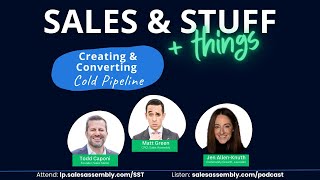
Jen Allen Knuth, Todd Capone, and Matt Green discuss building pipeline through warm referrals, community signals, and stakeholder involvement. Key tactics: use the "show us your inbox" approach to involve finance and marketing early, map all decision-makers from the first call, and make "deposits" of useful content before asking for meetings.
Chapters
Hello and welcome to your monthly session of sales and stuff and things. Every single month we gather to talk about sales and stuff and things. We would like to thank our sponsor, real quick, Insightly, for sponsoring this month's session of sales and stuff and things. Some fun quick facts. Did you know that 79% of B2B leaders are unsatisfied with their CRMs? And when you think about it, it's because legacy CRMs are often clunky, very hard to customize, and they cost a ton. But good news, your CRM doesn't have to suck. That's where you can meet Insightly, the modern CRM that teams love. It's simple to use and customize and easy to fit into your budget. And it can scale with you as you grow. So you can get an on demand demo or you can actually get a personalized demo today by going to Insightly. And if you go back to that landing page where you register for sales and stuff and things, there's actually a link on there and if you go through that link, we they will waive the 1500 dollars onboarding fee as a part of being in the sales and stuff and things community. So with that, go to insightly.com stuff. You heard that right, insightly.com stuff. And you can actually go ahead and schedule a demo, get a free onboarding and have a CRM that doesn't suck. With that, I'm going to pass it over to our panelists to introduce themselves. So Jim, will you introduce yourself?
Yes. My name is Jen Allen Knuth, my new last name. And I head up community growth over at a company called Lavender and I am Todd Capone.
For anybody who does not know, I've written a couple of books, I'm a nerd about sales history and now I just speak and teach companies on all things decision science all the way through leadership.
I'm Matt Green, Chief Revenue Officer of Sales Assembly. I listen to Todd Capone speak about stuff, transparency and leadership. And I watched Jen write more impactful emails with that.
We are here today to talk about how you can create and convert cold pipelines. We've got some great tips from Jen on specifically outbound prospecting, great tips from Matt around pipeline acceleration. And then I think something that is not talked about often enough is actually having empathy for executives and recognizing how do you actually reach them and where they are today. Because again, if you think about it, they're probably getting hit with tons of cold outbound. So before we dive into all of that, yes, we are going to Spend most of our time today. But there is a quick section that we want to do which is how do you generate warm pipeline? Because the reality is most people have great opportunities that are warm that they just, they don't know how to activate. So we're going to start there before we move into some more cold outbound and cold pipeline. So with that, Matt, I'm going to pass it to you. Like, what are your recommendations around plays that people can use to generate some warm pipeline?
Yeah. So over the past six years, Sales assembly has been predominantly a warm pipeline type of shop. I mean, we haven't had dedicated cold outbound or anything like that. And what has always worked for us. And I know that's going to come to no surprise to pretty much any sales professional on the call. Leveraging existing relationships in the form of your champions, your current clients, basically. That is Latin in a fancy way of saying asking for referrals.
Right.
That has been a really big, we have entire structure built around that at Sales Assembly. Who do you ask for referrals? How do you continually add to that list of champions? How often you ask for referrals from this roster of champions and clients and advocates that you've built rather than being reactive. Right. You know what a lot of sales professionals do? If and when a deal is closed, maybe they'll ask for a referral one time. What we don't see a lot of organizations do is actually building a whole lot of structure and repeatable processes around it. So I could obviously wax poetic on that all day long, but we only have limited time here. So long story short, build a process around asking for referrals in a scalable and repeatable manner.
Love it. Now I'm going to pass it on to Jen to talk really about how you can start to activate more of your community.
Yeah. So I think the number one question I got asked, I joined Lavender in January after spending 18 years as a salesperson at Challenger and CEB. And everyone is always asking me, like, what does that job title even mean? Are you just like a Slack administrator? Which I'm not. I'm terrible at Slack. So the way I think about community, not as a full time community person, but as someone who did a lot of this type of work as an ae. I think one of the biggest missed opportunities is we live in this world where there's so much access to advice and peer, you know, conversations, whether it's the form of a Slack community or it's a LinkedIn post, or it's a event or a Dinner or what have you. People are out there hungry to learn and they're learning about problems that they have. As a salesperson, I think where I've missed the mark for many, many years was mirroring the learning journey that my buyers, my influencers of those purchase decisions and my end users were having. So what I mean specifically is putting myself in the shoes of a buyer to say, let me learn like they learn. What are the conferences that they're going to? If I scroll, like this is creepy. But if I go to a Target account and I look at their activity in LinkedIn, if you're selling to a C level executive, you're not going to see a ton of activity. Right. They're not like me. We spend all day long on LinkedIn. But you will see who they like, who they engage, what topics they're into. And I think one of the things that I learned when I got better about being a student of how my buyers are learning and what they're learning about is it gave me an ability to talk about more than just my niche. So I was selling sales training. I was terrible at understanding what people were using sales tech for or making a reorg decision, what goes into that. And when I started studying how my buyers were learning in different communities, what I started to pick up on is questions that I could then map back to me. So instead of trying to force training or force cold email support down people's throat right now, a perfect example is lots of people have questions about ChatGPT and how should we be using it, should we be using it for messaging? And so the smarter I get about those topics, the more credibility I earn, the more, the more effective I am as a, I think, more helpful partner to speak about more than just my own category. So very long way of saying study not just how your buyers are learning, but how other folks in that buying decision committee are learning what they're learning about. Because it's just going to make you more interesting in your ability to speak to it.
Awesome.
Yeah.
Follow a question on that. Would you recommend, given the times that we're living in, how much time or how little time do you think any rep, regardless of what they sell or who they sell it to, should spend learning about finance.
Right.
Learning CFO ish speak. Yeah. What are your thoughts there?
I mean, if I'm being honest, I didn't spend a lot of time learning about CFO speak. I probably should have, but I'm not going to sit up here and act like I did what I did learn about was what were the things that a CRO is pulled in on? So, for example, like, I knew nothing about EBITDA or profitability or anything. I always thought sales was just about, like growing the business. And it was a big slap in the face to me, I think, to understand and realize that, hey, growth is wonderful and we all want it, but you can't have growth at all costs. And so I think if I reflect on a lesson that I learned, you know, a couple years ago back in 2020, it was, I have to be just as educated about thinking about how do we reduce costs as I am about thinking about how do we increase growth. So conversation I was having with a CRO, they were going to go and have to talk to their CFO about what they were going to cut in order to add. And so if I had no perspective or point of view on the other things, all I could do is just sit there and chirp and say, well, buy this, buy this, buy this because it will help with the top line growth piece.
It's actually piling on a little bit. But like my tip, and this isn't like Mardi Gras, but show us your inbox. And what I mean by that is like, who are you selling to? Are you selling to sales? To your question, Matt, like, are we selling to finance or are they just involved? Are we selling to marketing? HR product? Here's the idea is like two companies ago, we were selling to marketing. Right down the hallway there was a CMO and then there was a whole group of marketers. And so what we would do on a pretty regular basis is we bring them into our sales meeting and we would ask them a couple of questions. One of them was, show us your inbox. Like, what does your inbox look like? What is garbage and what stands out? Like a beacon in the night, right? Teach us what's standing out. Teach us about what's top of mind for you right now, what makes you smarter about your business, not ours. And then to that point, if you've got to learn about finance, I bet you're right down the hall over there, you got a CFO and you got a whole finance team. Why don't you bring them into a sales meeting and go, hey, how would you look at something like this? How would you justify it? What language is going to resonate? You've got all of those again, if you're selling the hr, bet you got HR team. If you're selling the sales and you haven't asked your CRO to come in and show you, their, their inbox you're missing out on and like do it on a regular basis. A month later. Hey, now that you've been in that first meeting, I bet you things have jumped out to you. These resources are all over the place to help you stand out and, and they're right down the hallway. And again, to your point about CFOs, every one of your companies has a finance team. Have you asked them, have you brought them in your sales meetings, your controller, your cost accountants, bring them in like they're right there.
Yeah. One of the things that we did earlier this year at Sales assembly was, yeah, we did exactly that, Todd. We reached out to the CFOs of our member companies and we said like, hey, you know, tell us basically, long story short, tell us what to do here, right? You know, how do we make the case, you know what Sales assembly is, how do we make the compelling case to you? And more importantly, how do we make the compelling case to you when we're not actually talking to you via your champion? You know, what do you want to see when the VP of Sales or head of Sales Enablement brings you the proposal for Sales Assembly? Do you want, you know, a well written out use case? Do you want like a slide? Right. You know, how would you want to see ROI quantified? We went and we asked these series of questions, send them a brief Google form, ask seven, eight questions. And we use that, the answers that they gave us to help inform us like, okay, here's going to be a big part of our sales process going forward, especially once we get past the proposal stage, we actually start digging into the nitty gritty. Extremely useful.
Yeah. And you can just peel off when you're, if you're in a, as a service economy, right. So you're selling subscriptions, which I'm assuming most everybody on here is. When a renewal happens and you've got a good relationship with that customer, why not ask them questions like, hey, I know we're awesome, but why did you renew? With all the challenges and the macroeconomic issues like why did you renew and what's something that you didn't expect to get from us that you're getting? And if the answer is nothing cool, but if the answer is something unique you can use to cultivate and build warm pipeline, do it right. Those assets are right there. Not only internal, but your customers that renewed, they want to see you be successful. And again, show us your inbox. It's like one of my favorite questions, actually.
One thing that I remember so when I was in ae, I would always build these like massively elaborate, you know, renewal proposals or buying proposals. And I just would spend so much time being like, this is so pretty, like they're going to take this in and they're going to share it. I remember the first time a buyer said, do you want to, to see what I actually use to pitch this to my executive team? And I was like, yeah, sure. And it was like three pages long, none of my stuff was in there. And it gave me a really so much better of an understanding of how they talked about the value, how they talked about the trade offs, how they talked about the cost of inaction. So that's another thing. Like, I couldn't agree more, Todd, with your point. Ask your buyers, what are you using to sell this internally? Because I'll tell you, I switched like overnight to the template they had and I saw so much more success and it was candidly, a lot less work for me too.
Yeah, yeah. I think that leads to the power of the economy of words, right? You know, a lot of sales are like, oh my God, I gotta create this video, gotta put together this 20 slide deck. But then again, when it comes to the finish line, to your point, Jen, and again, some of the data that we collected helps validate this. What do people that want, they want like four or five bullets, right? Just, you know, tell me the high level, tell me what I need to know and that's going to be it.
Right.
And just to pile on on that. And I know this isn't like about developing a warm pipeline, but you know, we always say that consensus selling is hard. Well, it's clear that consensus buying is harder. And it's even clear that consensus buying, when most of your buyers are remote and don't get to run into each other in the parking lot, getting coffee, the bathroom, whatever weird places they build consensus that our responsibility of making it as easy as possible for them to consume what we propose. And then like, remember when we send them a proposal, they gotta create a sales pitch from it. Like they're in an enablement class, right? Instead, like the thing that I started doing that changed my conversion rate overnight was when I'd send a proposal, I would go half screen proposal in me and I would do a three minute video just giving it context and acting as though I was you and that I was going to have to take this and socialize it and do the work for him. The first time I did it, they see it was to a CEO the next day I saw that it had been viewed 56 times. And I was like, like, do I have underwear? Like, is there some reason this is going viral? Like, did I do something embarrassing? He had everybody look at it. Not only it was to build consensus to bring me in, but he was like, all of our salespeople viewed it and now they're going to start doing that. So again, remove that unnecessary friction and communicate in the way that they're going to be able to build consensus because they don't do it as often as you do. And anything you can do to make that process easier and you're going to learn that from talking to your internal resources and your customers.
Agreed. And they almost always have to defend why current state is not sufficient. That's the thing. I think we can to tie it back to warm pipeline. Like that language that is probably the single most helpful thing is being able to speak like your buyers speak. We speak how we're taught to speak in our sales training, which is rarely how our buyers speak. So notice the way that they talk about the words that they use, the simplicity of it. I think that's the big thing for building one pipeline is talking like your buyer helps you sound like
genuinely like, as we think about building a list of people to actually generate referrals for us, as we think about like how do we actually get really ingrained in our community so we can start to use that language and then asking our internal teams what is actually resonating with you. And Todd, the one other point I want to pull out that you had mentioned, and I've been talking about this a lot also is like the referral. Sorry, the renewal based referral. So when somebody renews are just saying you delivered. I'd like to keep you around. And especially in this market, like people are cutting budgets. So I think all of those are incredible, honestly. Relatively simple to imp. Not easy, but simple to implement tactics. The one that I also want to throw out for my time selling as a social seller is just prospecting on my own content and prospecting on my team's content. So I One of the best things that I did is created a ton of content that was highly tactical for a year and then I ended up getting a promotion at my job and I had like 350 people like it, which was awesome. It was a great pat on the back for me. What I then did to actually take kind of the dopamine hit of likes and try to convert it into actual pipeline is I looked at everybody that liked my post and I just said thank you so much for engaging and like supporting me as I grow in my own career. I now actually help people build ABM programs and I'm selling these programs. If you know anybody that's struggling with HubSpot or account based marketing, that's what I specialize in and I really appreciate it. If you'd send somebody my way sent that message to a hundred people. I got 30 meetings. So I don't know what else you're doing that can generate 30 meetings from a single post. But like if you think about it from that perspective of if you have executives that are constantly posting, they are warm, they are aware, they know what you do, they know that you exist. Those are great opportunities to go an outbound prospect and actually ask them, hey, this is what we do. If you know anybody that's struggling with this, we can help. So that's just one other quick tip with that. Those people that are warm that know that you exist, that maybe some low hanging fruit now in the rare situation that you have done everything you can to capture that warm pipeline, we probably need to go cold. And that's where we're going to focus the rest of our time today. So I want to pass over to Jen. You know, one of the main problems that a lot of people are talking about is the self sourcing of pipeline is actually getting responses to anything outbound. It's, I mean essentially when I asked what's the greatest challenge people are experiencing, it is I can't get enough meetings. So Jen, I want to pass over to you like as you're thinking through getting meetings booked today, what are things that you're seeing are working?
Yeah, so I, first of all, I relate to this. I think we came off of a couple years where demand was plentiful. Right. And we didn't have to worry about this. And now you're seeing all sorts of sales organizations rationalizing do we have the right structure? Do we need as many SDRs as we have? Should we have full cycle AES? And I think it's all good questions to ask. As an ae, I would get really frustrated with marketing. I mean I was is like when I was a challenger, Challenger was a big name, but on average a month I was getting maybe like three leads and your girl can't eat off of three leads a month. So in many ways I think the environment that we're in today only breeds better selling if we just don't allow ourselves to get frustrated. And so I remember sitting back then and saying, you know, marketing should be giving Me more leads. Leads. And the quality of the leads I'm getting isn't good. And I had a manager who was one of those great managers who just sit me down and say, like, I'm going to give you the tough love that you need to hear. He was like, you're not wrong. Marketing should be giving you more leads, but they're not. And that problem's not going to fix itself overnight. So you've got to decide, are you going to sit here and bitch and moan and whine about the fact that you're not getting something you should, or are you going to do something about it because it's your W2 at the end of the day? And that was like a hard pill to swallow because you want to hear, it's not my fault, it's someone else's. But that's what set me off on this journey to figure out what could I, as an individual, forget everybody else, be doing differently to actually feed myself? And that's where when I talked about mirroring your buyer's learning journey, what it allowed me to do. And granted, I sell to salespeople. I know not everybody on this call probably sells to salespeople, but your buyers live somewhere and learn. Find out where your buyers learn and then take those things that you see them learning about and talk about them with the added perspective that you have from working with organizations that have those problems. And so my LinkedIn went from like,
here's a research study and like, do
you think it's interesting to then saying, hey, this thing is really, really frustrating and this is how I screwed it up before. And here's how I would look at it differently. And I think the goal or the intention and the reason I was able to self source a lot of pipeline is because I would get a croissant who never once commented or liked a damn thing I wrote. He would come in my inbox and say, this is literally the same conversation we just had in our leadership meeting the other day. We can't figure out this problem. You seem to know a bit about it. Can you come in and talk to us about that problem? And that I think is the other big lesson here is when we're self serving sourcing pipeline, it's not the 3 to 5% of buyers who are ready to buy something. It is the other percentage who are like, I don't even know if we want to buy something. Maybe we DIY something, maybe we do nothing at all. And so if we are only as salespeople wired to talk about here's our thing, here's how you buy it, here's why it's the best. We're going to have a really hard time self sourcing pipeline because that pipeline is largely demand that we are creating. And so in those instances we have to sit on our hands a bit and say even if they say those beautiful words like I want to train my team or I want to write better cold emails, I have to sit there and force them through thinking about what else might you do and how do you even know that everybody on the team thinks this is the right problem to solve? Maybe you should be looking at this. And I think that when I figured that out and I got my content very consistent about talking about problems instead of solutions and I became better at being more patient and talking about problems, not solutions, that's when I saw there was a reversal in my kind of my interactions with buyers. Instead of me pulling them, they started pulling me because I wasn't pushing, right? I wasn't desperate and I wasn't just trying to find any sort of way to get them to buy what I have to sell. So I think like there's all sorts of motions and we'll talk about it today of things you can do to self source pipeline, but I don't think any of them matter if you don't approach it with that mindset.
Love that. How do you convince somebody that doesn't know that they have a problem, that they have a problem in a way that is, you know, bite size consumable, that is not going to take dissertation length paper to convince them as much.
Yeah, this is an awesome question. I think what we do is we introduce new information and give them a formula that allows them to figure it out on their own. So this is the other dynamic I wish I had learned earlier as a seller is if you tell someone to do something, if you tell someone their baby is ugly, what are we going to do? We're like, no, they're not. I'm good, I'm fine. I get defensive. But if I give you a new way of looking at your world, then all of a sudden it's your idea, not mine. But you do remember that I was the one that brought it to you. So an example, like at lavender, right, I could go and tell everybody that their SDR and a email suck and I would probably not be very liked or be very successful. But if I give them an ability to say, hey, industry average 1 to 3% reply rate, right? I don't know if you've looked at your reply rate or not, it's okay if you haven't, it's probably a good idea to take a look at it. But now let's look at how much time your sellers are spending writing emails just to get a 1 to 3% reply rate. Right. And so I'm not telling you your emails are good or bad. I'm simply giving you a way to look at your world to say, my goodness, we're having all these people that we're paying spend all this time on this activity that's yielding almost next to nothing. And that's going to beget this question of, like, so what do we do? Do we just abandon emails or do we do something different? And that's where I would, like old Jen would be like, no, you don't abandon emails. You write, use them with lavender. Like, that's where I'm talking about patience. I have to go down that path to say, maybe you do. Right? Let's play it out. Let's look at all the other channels. And so that in my mind is. Is working right alongside that person and helping them figure it out on their own versus me coming in and saying, no, you've got to, you know, buy this and all your problems go away.
Reminds me of what Ryan Barretto, the president of Sprout Social, said at our event that you all were at last month. Someone asked him, you know, the point of question, like, hey, how do we sell to you?
Right?
When he was up on stage and his answer was, teach me something new, right? You know, would you say that that is like just the perfect summation. Just teach me something new for sure.
And Grant, you know, like, my history of selling, I was obviously very shaped by Challenger, but I believe it, right? I believe that if you've got someone that is that senior and has that much responsibility, they are not going to be interested in your show and tell session. But if you say something interesting, that's like, wow, that is. Not sure if I believe it, but it's so different. I want to lean in and learn about it. I think that's how you spark a conversation that is not vendor prospect, but rather like more, you know, consultative or whatever we want to call it.
I just have one other quick thought and I want to pass it over to really Matt to talk through some pipeline acceleration. I mean, most sellers have a deck that gives some level of information. Are you repurposing the content that you have available to post publicly and actually help your buyers understand the problem that they're experiencing? So, like When I was selling, we would do a lot of education on the challenges that they would experience if they tried to implement account based marketing on their own. And then just took that information, copied and pasted it, started posting it on LinkedIn. And I did that for two years. And suddenly people think I'm an expert in account based marketing. But like, the reality is you probably have content that exists. Just copy and paste it and post it on LinkedIn and do that a lot every day.
I mean, if you've got a mason, sometimes, let's be real, marketing's content ain't that good. So I think you've got. And if it's not, that again, goes back to the beginning of the conversation. It's like, yeah, you could sit around and wait for marketing to write better content, or you could say, I'm going to be a student of my customers. I talk to customers and prospects all day long. I can start to assemble the pieces. And that, I think is the thing that particularly right now, it's work, it's hard, but we have to do this. Like, that is where the best insight comes from, is your salespeople and your CS folks and the people that are interacting, your engineers, like they're interacting with people. They hear problems all day long. So don't wait for your business to do it because you're the one that suffers if you sit when you're thinking
about, like taking notes in meetings. By the way, salespeople make a star by something that maybe you said or the customer said that was like, you know, you get like, wow, all right. And then like, I've got an app that I use that like every time that happens I'm in there, right? But you know, like, I've got a collection. And then, you know, every morning I'm either doing research and, or writing. I think I've got like 14 unfinished articles I've started now that, like, they're all percolating. That, like, I'm going to finish them, but I'm noodling on them. And then that turns into content, that turns into multiple pieces of content. And then now it's weird. Like somebody talks about a light bulb and they're like, it's transparent. Tag Todd Capone. Like, I'm somehow associated with all things transparent now, which is weird. But like, you will establish a brand for yourself once you get to a point where you're talking about that consistent theme. And now people view me as the expert of all things transparent, which is weird.
And I have to agree, anytime I say anything about transparency. I tag you so convicted right there.
Everybody does that. Like, hey, look at my glass. Todd Capone. Yeah, I love it.
So again, we're educating our buyers. And again, to Jen's point, like I actually had this happen two weeks ago where somebody was like, hey, can you come speak to my team on abm? So like if I was selling account based marketing services still, like they've asked me, I got in front of the entire C suite just through that. So again, if you're looking at how do I start to actually generate some cold pipeline, yes, you can send emails and yes, emails are great. But educating your buyers and actually walking through the same education process that they are going through and actually becoming the source through which they learn when you shape the way that people think they buy from you. So that's point one. Fantastic. We've got them in the pipeline. So Matt, again I keep coming back to the data that we saw at the beginning of the year that was dealing to take four to six months longer on average to close in 2023. So I think that a lot of people are experiencing some stalled pipeline. So Matt, from your experience, how are we able to start accelerating some pipeline to maybe move somebody to the next stage?
Yeah, there's, there's a couple things there. I mean, first of all, let's start with table stakes, right? Being intentional about from the very beginning, or at least as soon as possible, getting every single stakeholder as humanly possible involved in the conversation that, that you're having with, with the prospect from the very first call. You should be asking again, that there are different variations of asking the question like who else is going to find interest and what we're talking about today, sales assembly, we're in a position where we have, you know, two, three, maybe four stakeholders. But we know that a lot of sellers out, out there right now are dealing with over a dozen different stakeholders, right? So number one, table stakes, making sure that you're getting all of these people involved. How do you do this in a relatively scalable manner? AI ChatGPT being all the rage these days. This is something especially if you're selling to an enterprise or a publicly traded company going on a ChatGPT typing in like, hey, here's a product that I sell, here's who I sell it to. Who from XYZ company would have an interest in this? And chances are it's going to spit out relatively decent prompt of like, okay, you're going to want to make sure that you talk with these people, these people and these People. Right. So starting there, once you actually start getting involved and meaningful conversations with a prospect, this is where, again, something that people don't do as much of is proactively finding a way to leverage their champions and their advocates. You know, people that look on paper to be similar to the buyer that you're selling to. And I don't mind sharing this as an example. I hope that she doesn't mind me sharing it. I enlisted Jen for one of these plays just a couple weeks ago. You know, Jen, you know, we're fortunate enough here at Sales assembly, where Lavender is a great partner of ours. We were looking to secure another partner at a different company. After the proposal was sent, what did I do? I went to Jen and I said, hey, Jen, I see that you're connected to this person. You both do the exact same job. Right. This person is just at another company. We're looking to do business with them. Would you mind proactively reaching out to them and saying like, hey, little bird tells me that you're chatting with Sales Assembly. It's wanting to tell you that they're awesome right now. We all know the, the importance of social proof throughout the sales process, but we struggle about where and how to insert it. Right. Especially in a way that's going to be consumable for the prospect. Having one of their peers reach out to them cold saying, like, hey, by the way, we do business with this organization. Let me tell you all these really great things about them. That is a play that we don't see people using nearly enough. Again, just another way to leverage the champions that you already have in your corner.
And I'll just say, like, that being me on the receiving end of that as a salesperson, I was always so hesitant to do it because I thought I would be bothering them. And when you asked me, I was like, why didn't I think of that? Yeah, of course I'm happy to. So I think like, our perceived level of nuisance that we are is here, when in reality it's just like our buyers aren't going to think about that for us. We have to be the ones to broker that conversation. And at worst, I say no. And it opens the door for you to be like, is there something we're getting wrong in our relationship? And you pull that conversation forward. So I couldn't agree more. It's something I think I wish, looking back, I had done more as a salesperson.
Yeah. And that's just on that point. Yeah. Of course we self consciously, you know, kind of struggled with the same hesitation, like, oh my God, you know, is Jen going to be annoyed? And you know, what is the prospect and the thing. But you know, just taking Jen in that example, and I presume it's going to be true for most sales reps that are selling most products out there, you're going to have some really great champions that already do business with you, that when you ask them, their response is going to be, why don't you ask them to do this more often? Right. And you know, it might sound just like me saying that, but trust me, if you actually start engaging in dialogue with people that use you, that know you, that love you, I'd be really shocked if you don't get some version of that response more often than you might think.
Do you want to throw out one point that actually Amy volas made on LinkedIn yesterday, which is somebody had constantly been asking her over and over and over and over again and there came a point where she actually responded back. This feels like a one sided relationship where I give a lot to you, but I don't receive. So I am curious, like, how do you combat that so that you aren't just somebody that's always asking, but how do you ensure that you are balancing that relationship?
It's a great point. I saw that post as well. That is worthy of, I think, a much larger conversation around relationship management in general. Right. But you know, there always is going to be a line as far as like, okay, what is going to be or how many is going to be too many asks right. Before you need to return some component of value in exchange and what is that value? Right. For a lot of people. And this goes back to the conversation that we had at the top of this, of this conversation about referrals. Right. That's one of the things that we built some structure around here at Sales Assembly. What is the value that we're going to be able to show back to somebody like Jen Allen, Right. Or Tacopone if they continue to do a solid. For some people it is, you know, occasional gift of their favorite drink. Right. And keeping diligent notes about like, okay, what does Todd like to drink? Right. On a Friday or Saturday night so that we can make sure that we're actually sending him or her something that they're actually going to enjoy. Some people don't like alcohol. What causes are they passionate about? Look on their LinkedIn profile, see where they volunteer. Like, hey, I'm going to make a donation in your name to this cause that you're obviously really passionate about. You see where I'm going with this? It's making sure, again, going back to the. Just to the concept of billing structure around referrals and how you manage relationships. It is making sure that, number one, you're being mindful about, like, okay, how many asses? Too many asks. But number two, you're reciprocating in some sort of way that at least shows some level of appreciation for the person who's doing you to solid. I think that was probably the crux. I don't want to speak for her. The crux of Amy's point. It wasn't about trading introductions for introductions. It was probably more about trading introductions in exchange for what? I'm not getting, you know, not getting any. I'm not getting anything out of this, you know, I'm not getting any sort of. Of appreciation, at least from my perspective. That's what you have to find as far as, okay, what is this person going to appreciate and make sure that you deliver that in exchange.
And the analogy that's been shared a build like a bazillion times is the bank analogy. Right. And it goes for references and referrals. It goes for prospecting.
Right.
That you would never go to a bank and keep asking for withdrawals if you've never made deposits. And so a lot of it starts with making the deposits up front and establishing that relationship. And I mean, that's why every time Matt or somebody reaches out to me, I'm always going to say yes. And I'm not brown nosing, but like, you guys have made so many deposits to me and my career that I feel like I will always be there to help you guys out whenever you ask. But it's, you know, it didn't start the other way. It wasn't a constant. Todd, give me this. Can you do this? Can you connect me? It was like, todd, here, here, here, here, here's some things we care about you. I feel it. But I mean, that's the way that we've got to think about all the relationships we have. And in my opinion, it's the way we've got to think about prospecting too.
So let's dive a little bit deeper into that when you talk about prospecting because again, when we typically think about people that are primarily prospecting, we think most frequently of the SDR that is 22, 23, 24 years old. That hasn't existed long enough to make all of those deposits that they would need.
Right.
So I am curious from your perspective, like, as we think about some of the practical playbooks. And then this is open to anybody. But like practical playbooks for somebody that is still relatively new in the industry, how can they start to develop those relationships so that they end up being able to make a withdrawal eventually?
Well, so I'll go on my little mini rant here because I know when I talked to people that were early in their career, they just couldn't fathom the idea that when I was a CRO, I had an hour 20 minute commute downtown every day from I'm in the burbs of Chicago commute downtown. I would have my day each week had 30 to 35 meetings in it. So, you know, five, six, seven meetings a day each day had 100 to 150 emails. So that when I got on that train ride back home, I was going through and sifting through 100 to 150 emails and so many early in their career. Just can't fathom that because they get like two, right? And so like 100, 150 and they all look the same. And I know Thomas had just posted this, so just for fun, I'm going to show you. But like my inbox would look like this. And I know it's hard to see, but what you're going to see is you're going to see all the subject lines. I skated right by the subject lines. I had to because the subject lines are all gimmicks. And the thing that's really disturbing is every one of these emails starts with I just wanted to. All right, so with that in mind, this is my inbox. What do I do when I see. I just wanted to. Well, I do select all delete, right? Even if you said I just wanted to give you a million dollars, I would never see it because I saw the. I just wanted to.
Now why?
Why am I such a jerk? Well, let's talk about CRO priorities and executive priorities. So when you think about a CRO, here's my list of priorities. When I'm going in between meetings, I'm looking at my phone, right? To see what's going on and my priorities. The top three, number one, are my team, right? Care about my team, number one, number two, my customers, number three, my prospects. And then we keep going. Things like my peers, my boss, my investors, my board, my partners, my current vendors. You got a whole list. There's 13 in that list. Guess what number 14 is on the list of priorities? Unknown potential vendors. You. All right, so you start at 14 and then 15 is everybody else, right? So that's my 15. When you send me an email and it starts with, I just wanted to. Who is that about out of the first 13? None of them. It's about you, number 14. So you're trying to move up, but the message is screaming to me that it's about you and it's number 14. And as a result, you get a select all delete. I love you. I'm sure you're trying to help. I'm sure there's an ROI out there, otherwise you wouldn't be in business. But I just couldn't do it. Do it right. And so when you think about that inbox, right? When you think about what that looks like, what would stand out to you? Well, what would stand out? And Dean, this goes to your question that you put in the chat about picking up the phone. Like, how do you get a boomer? I know I'm aging like guacamole over here, but I don't think I'm a boomer. But I still like Jen. I don't. I couldn't guide my day by interruptions. Just couldn't. But if the phone rang and I wasn't expecting it, it just did not get answered, ever. However, there were companies that made deposits. And I remember one time we were hiring. So I was the CRO of power reviews here in Chicago. We were hiring SDRs. And so we put it on the website. Like, two days later, a company sent me a email. And so there's all the. I just wanted. And then there's this beacon in the night, and it says, todd, here's an SDR salary study of what SDRS in the Chicago market are making. And then I'm like, wait, I just. We're hiring. What? What is this? Right? It just, like, suddenly catches your attention, like, you know, punch in the face. And so I opened it, and it's two sentences, right? Very simple, Todd. Notice you're hiring SDRS in Chicago. Thought this might be helpful. Here's a link like, wow, that is. I clicked on it, right? I didn't call them. They didn't call me. There was nothing. Two weeks later, my quarter ends. Another email pops up like a beacon in the night from them and says, todd, hope the quarter ended well. Here is a CRO board deck template that'll hopefully make your board prep a little easier. And, like, I burst into tears. Who are these people? And, like, in their email signature, I clicked on the link. I was like, who is this? I don't even know who this is. I did that. Guess what? They've got tracking technology to see when I'm engaging. And guess who called them. I see it in the caller id. That's the one cold call I picked up. Right. They made deposits. They made me smarter about my business, not theirs. Out of the two, only one had to do with them. They were a recruiting firm. However, the point being that like the second one, the board deck template had nothing to do with them, but it showed me that they knew me. It was unique, it was valuable, it was personalized. They made deposits, they saved me time. And just like that Matt conversation about they made so many deposits to me. I will always be there to help in the prospect vendor type of relationship. That's a great place to start because what did they do? They went from number 14 to number 1, 2 and 3 in the way that they were sending emails to me. And that's the lesson here, just from an empathetic perspective, is I just wanted to talk to you about how we'll save you a bazillion. Sure, that would be great. But I just wanted to help my team, my prospects and my customers. And I just don't have time. All right, so that's kind of my rant for today that hopefully addresses the question there.
Well, for starters, I want to pull out really tactical things that people can run with. So one what I loved about the example is it had nothing to do actually with the individual personal brand. What the sales leaders of that organization did is actually equipped them to make those deposits on behalf of the brand. So if you're a sales leader listening in, have you equipped your team to actually make deposits or are you only equipping them to make withdrawals? So I think that's the first thing. The other thing, and then this is my marketer coming out. But there was clear alignment between marketing and sales so that it wasn't entirely just on go be a hero SDR and generate a ton of pipeline. It was a coordinated effort of how do we make sure that everybody wins. So I just. Those are two very tactical things that admittedly, like if a 22 year old SDR tries to go to the CMO and say, hey, we should do a coordinate, like that's not going to work. So that falls on leadership to equip their teams to actually effectively make those kinds of deposits on behalf of the brand.
And just one other point to sum that up. There was no sales pitch in any email. Like I don't. I seriously, I read both. I had no idea what they did and I love them for it like that Was they. Because their email signatures got a link. There's a banner like they were using Terminus or whatever. Like they, it was down there. And you bet after the second one I was clicking, I wanted to learn. Like, they sucked me in.
Yeah.
And I guess that that ties into a question that I have and million dollar question, literally and figuratively. And there might not be a good answer to this. We may not know the answer. How many deposits would that, would that person have needed to make in that example before asking you for a withdrawal? Right. I'm not sure if you have like a gut reaction, you know, when would it have been appropriate if they kept, you know, every month it's like, hey, Todd, here's value, here's value. When would it have been appropriate or not appropriate? Appropriate. Effective, I think would be a better word for them to say. Like, hey, Todd, why don't we hop on a call?
Yeah. I mean, I think everybody that's watching this probably has technology where they can see when emails are open and when people are engaging with it. Right. Like that's kind of standard fare for tech stacks today. Like I do and just me and one other person here. So, like, that has a lot to do with it. When you see that engagement and you see that it's being shared and you see that other people are engaging with it, that lets you know that your brand is somehow resonating in there. Unless it's something like. I mean, there's the creepy ones too. I had a company that did one of the weirdest outreaches of all time and it was open so many times because they're idiots, but it was, they sent me a, like a dummy phone and then once we opened the box, the phone started to ring. Have you ever seen that before? And so we like answered it and it was an sdr and we're like. And like they were sending us email. It was the freakiest. Like, take it easy, right? Like your gimmicks. Save the magic tricks for your middle school child's birthday party. Right. Just make deposits, make your customer smarter and you'll see that engagement and you'll know, you'll know when it's time to give them a call.
I was just going to add, I like, some salesloft came out with some data recently that said 4% of emails are personalized. Right. And like you, I'm not, I mean, for me, I'm not some like C level executive, but the one email I remember when I joined Lavender was someone. It was super short. It just said, notice you took on the role of community growth. Didn't see that title in your back in your LinkedIn profile before. Thought this might be helpful as you set your agenda. And then it was a link to basically a guide on how to think about building community. And I was like, who is this person? This is awesome. Yeah, so awesome. And I think what we as salespeople don't see a lot of times is just how many asks that people get. So just sheerly by showing up and not taking is a differentiated move. And you, and when you do it like that, this wasn't a novel. It didn't take that person 20 minutes. It took them probably two minutes to look at my LinkedIn history and say, she's never done this job before. Maybe this is hard for her. And so I could not agree more. Just simply slowing down and putting, putting yourself in the shoes of your buyer and saying, how can I be empathetic to their unique circumstance if it's a market change, if it's a new competitor that has come on, if they've lost a leader, like, there's so many little cues we can use to be helpful.
And that content helps with reinvigorating, invigorating, ghosted deals, cold deals, like, that's I don't sell. I don't go, hey, what's the update like? If I see something that's interesting, I'll send, I'll be, hey, I was just thinking about you. Here's something that maybe will help you kind of inspire your pipeline, right? And, and then always they'll be like, oh, Todd, I'm sorry, I know I owed you a response. Like the deposits, man, it's like that's where the magic is.
And to add on to that, that ties back directly to what Janet said earlier on Community, like the ways in which you're actually able to know what to send your buyer when news comes out is because you're actively ingrained in the community that they're a part of. So again, if you're actively investing in those communities where your buyers live, you know what they're thinking about, you know what information is coming out so you don't have to have like a 17 step nurture sequence process that's all evergreen content. You can know, I saw this thing. This would be relevant for this person and you're actively investing in those relationships. So I love that last point.
And can I just answer, Mark just put a comment in the chat saying, is there a concern when you get a cold outreach with a link? You know, one school said you should never include them once you've established a bit of a relationship. I think my take on that is that when I read an email, is it personalized and is it valuable? And when I say personalized, I don't mean like, I went to Indiana University and when I get an email, it's like, todd, go Hoosiers. Hey. And then they go like, you know how many people graduated with me the year I freaking. 30,000. Right. Like, you could have sent that to a bazillion people. But to Jen's point, hey, congratulations on the promotion. You just got to communicate, like, and I don't see that in your background thought this would be valuable. That could have only been sent to her. Like, of the bazillion people on earth, that one was only sent to her. And that builds trust. Right? Like, those are the types of things that I would versus the, you know, like, Todd, you live in Palatine. It's beautiful this time of year. No, it's not. And there's 56,000 people that live here.
Oh, my goodness, I love it.
No, it's. That's why we're here.
So we've got just a couple more minutes and there are a couple questions that we have been answering in the chat, but I think it would be good to just go ahead and talk through those with a little bit more depth. So again, one of the questions was how do you get non boomers to answer the phone? So I would be interested to hear. Really? I'm going to pass this one to Jen. Like, again, as we think about, I saw Sam post something yesterday or the day before of like, we're seeing people that, you know, started as young in their career and they're rapidly accelerating. They're getting into leadership roles. So we're seeing a lot of non boomers hold C suite and VP level titles and have big budgets. So the question is, how do we get them to answer the phone?
Yeah. So I put this in the chat to Dean, but like, my house could be on fire and I wouldn't answer my phone to an unknown number. I accidentally picked up one in my entire time of being like an adult. And I was more nervous, I think, than the person cold calling me because I was like, what do you do? How do you receive this? So my take on this is the same take I have on community. It's not like, how do you bring people to you? It's how do you better understand what you're doing your. Your target audience wants and reflect to them. Like, I am not representative of Every buyer, there are some buyers that love getting cold calls. So you're not doing it for me. You're. You're understanding that it's a game where you have to be balanced across lots of different channels. But what I would say from my own point of view today is there's clearly, and you can tell this by who I comment on and who I engage with. There's clearly a set of people that I trust and I learn from. If I hear something from them that ties back to you, and that is going to make me trust you. And so if you are not again playing in these spaces where your buyers are going to learn understanding who they're learning from and adding to that conversation and try to, instead of trying to pull away and bring back to you, it's very unlikely that I will pay any attention at all. And as that's coming out of my mouth, I know that sounds gross, but it's just the reality of you've got to be where your buyers are instead of trying to force your buyers to behave like you want them. Want them to.
Exactly. The answer could have started with like, do you want them to pick up the phone? Like, because not all of them are interested in picking up the phone and they're not going to be helpful. Their guard is going to be up, like, maybe figure out where they like to communicate and be there.
The only thought I want to add is I'm now about four months into my role and I have a director level title. And I can almost tell you the exact week that Zoom info or sales intel updated.
Yes, exactly.
I mean, it was suddenly I was getting 10 to 15 calls a week from unknown numbers. And there's two things that every single one of them do. They don't leave a voicemail. And I'm the psychopath that calls back. And it goes to a dead dial tone every time. So even if I want, like, I'm not going to answer the phone the first time because I don't know who you are or what you're trying to do. And I know that there's controversy around this, but, like, leave a voicemail.
Exactly.
Just do something that helps you make a deposit.
Make a deposit in the voicemail, just anything.
Because I can't even Google to figure out who's calling me. Yeah, so that's my soapbox for the day.
That is such a good point too, because most of us like when in my last role, if you left me a voicemail, it converted the words speech to text and I got an email, you know, how many of those I got a day? Less than one. Maybe I got two a week. And I normally would look at those. Those. I always open those. Like, oh, who's leaving me a voicemail? And a lot of times it's like, this is why we're great. This is why we're getting, like, all right, the lead. But if it's somebody making a deposit, just like you would via the SDR salary study or the board, like, whatever, make a deposit in there. Like, hey, Todd, I saw something I thought you might get some value from. Go to this URL point here, and there's an article that I think you might get some value from. Like, oh, cool, that's a deposit. Love it. Do that in voicemail, too. And you will get opened.
Yeah. And, you know, leverage the voicemail email combination sort of along those lines. I mean, I'll get those periodically, and I have a lot of respect for it. Hey, Matt, I'm gonna send you some via email. I think you'll like. No need to give me a call back.
Yeah.
But, you know, you know, if you're interested, you know, would love to hear your thoughts, like, something like that. Like, at the very least, I'm gonna refresh my email. Like, okay, well, yeah, well, what does this person have in mind? But yeah, I mean, to Jen's point, other than that, when I get a phone call, I'm like, just email me like a normal person. Right. You know, who's. Who's calling me. Right. Yeah.
One, one final thought on this, and then we'll probably need to wrap it up. But just if you're looking for a really tactical playbook, I sold print ads in 2018 in a parenting magazine in Mississippi. So I had no marketing support, and I was a full AM and ae. So this is exactly what I did that generated a $300,000 in sales and print ads in a year. It was the ABC method. I had 30 accounts. I would call down my list of 30, I'd leave them a voicemail every time I'd send them an email, and I'd send them an email that said, I left you a voicemail. From there, I had my A group, my B group, and my C group. And over the course of three weeks, they would get five calls and five emails from me every single time. And then I started our marketing newsletter that I sent on a weekly basis to our entire database. Is that the best way? No, I didn't know better. But I created a variety of touch points that were actually valuable to the state of Mississippi. So again, just thinking through what are your repeatable playbooks for outbounding, and then actually personalizing it. I finally had a guy that just finally answered the phone and said, you've been calling me for a year. What do you sell? And I sent him an audit of how we actually add value. He bought. Like, if you just actually say to people, I'm not just cold calling you for no reason, I'm cold calling you because I have these specific reasons that I think would be valuable for you. They may actually just buy. So tactical playbook for some cold outbounding. Thank you all for being here. We will be back next month with a topic of your choosing. This has been sales and seven things. Thank you so much.










