Age 24. 300 Deals. Here's How He Did It. | Outliers
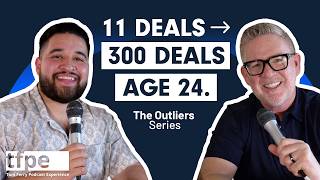
Houston realtor Elio closed 300 deals by age 24, starting from high school with no real estate background. He built his business on new-construction inventory, daily Instagram posts, and a text-capture system that fed first-time homebuyer seminars. His team grew from solo to 12 people in five years.
Chapters
Have you ever asked yourself, why is it that some people seem to constantly outperform their potential? Call them an outlier. While other people with the best of intentions fall dramatically below or just below their expectations. And listen, they're not bad people. They set big goals, but they don't align their behaviors with what it is they want to accomplish. The next 7 shows, this quick little series I'm doing where I'm interviewing the outliers. What's the psychology? What's the mindset? What do they do that cause them to outperform their potential? Enjoy the show. So next up, 24 years old from Houston, Texas. This guy's at 125 closed and pending as we sit here on March 23rd. And last year he and his small team did 30— 300 transactions. Elio, welcome to the show.
Thank you for having me, Tom.
It's about time, man. How long have you been trying to do this now?
Over a year.
Right, where I'm like, man, just come up to Dallas. You're like, I'll come anytime.
We're 3 hours away from each other.
Right, and here we are in Miami. Yeah. We finally made it happen.
Even better.
So I think just 'cause I have so much like context for you, would you take a minute and maybe give us just a little bit of the origin story, like your parents, you know, what you were doing when you made the jump into real estate? I think 'cause I think it'll give the listener more context.
Yes, okay. So I was born and raised in Charlotte, North Carolina. My parents are from, uh, from Mexico. They came to the United States and started their very own small business, a restaurant. And they've been in a restaurant industry— my parents themselves been in a restaurant industry since I was born in 2001. Yeah, but my grandpa started it all in Mexico, and I mean, he's been in it since 1950, 1960.
Yes.
And, um, while I was raised in North Carolina, we were always in this one shopping center So that was like my childhood neighborhood.
Yes.
Because my friends were all of the business owners' kids.
Yes.
You know, there was at least 15 units in a shopping strip and I grew up with all of them. So growing up, I was pretty much raised in the restaurant like they had, they had a little room in the back inside the, like the, the work field of the kitchen. And that's where I would stay at. Yes. Whenever I got tired of working, but Every day after school, every vacation. We've already had vacations. Vacation was just, hey, you're working 5 days a week this, uh, this week. Weekends you go to, uh, soccer tournaments, you know?
Yes.
Um, so growing up, from what age? I had pictures of myself when I was little. When I— I don't even remember.
Yeah.
Uh, but what age I started getting paid, I was— that was in middle school. In middle school, that's when they started paying me $100 a day.
Wow.
Yeah, and that was on the weekends. Yeah, yeah. So I was on the weekends and I was making— was that $200, $400, $800 a month?
Yeah.
And I would save that to my savings account.
Yes.
High school, that's when I got a bit more freedom and I started tacking on more days. And during summer, my dad would give me about 2,000 to 3,000 flyers and he would map up like a 5-mile radius from the restaurant He'll make me drop off business cards, flyers, to every corporate business. Yes. And he told me, hey, in this industry, every corporate job has their Friday team lunches, team meetings. I want you to advertise us and, and see who's, who's, uh, who's trying to pick us for their Friday lunch. So I started doing that, and I just had a full schedule, a full calendar, and I was in high school. And I was like, hey, this week, this week we have this, this this job, this corporate job, this corporate job, and I will get the full tip. And they would tip $200, $300, $400. Yeah.
So, so were you used to prospecting, knocking on doors?
No, no.
You didn't see the no solicitation sign that every one of these businesses have?
I mean, I just think of my little kid going in with business cards saying, hey, we're the newest restaurant around the block, you know, let us serve you for Fridays, for Friday team meetings. And I mean, they, they called in.
That's awesome. Now, when did your family, or did your family, move from Charlotte to Houston?
We moved, uh, it was 2014.
Okay.
So I started, I started 8th grade in Houston, and then I finished all the high school in Houston.
Okay.
Until now. Um, and it was until high school where, you know, all my friends were, were already seeing what they were gonna do after school. A lot of them went to college, a lot of them went to blue-collar jobs, and it was just me like, okay, what am I gonna do? Am I gonna follow the restaurant legacy, but I wasn't passionate about it. I was in love with it. Yeah, because that was the only thing I knew, grew up doing. But I mean, I was there my whole life, you know. So my plan was to go to college, get my business and marketing degree, help my parents expand. And then I, I signed up for my first mini semester in summer after high school. I graduated. I hated it. Yeah, I hated it. It was— I was a— it was a room full of people that like the first week they're like, hey, stand up, what's your name, introduce yourself, and then tell us a little bit about yourself. I kid you not, about 70% of that room had like the same, uh, maybe not mindset, but the same statement. Hey, I took a break, uh, now I'm back in college, I'm chasing a degree. And I'm thinking to myself, I was 18, like, took a break, dude, you're like 30, 40. Like, I'm like, oh my God. Like, I just didn't like who I was surrounded with. I just didn't see myself growing And so my parents were already a little upset that I chose, choose the restaurant industry. And then after I gave them the news—
they were mad that you chose the restaurant industry?
No, that I didn't, that I didn't go through.
Yeah, you're like the family business.
Yeah, your grandfather, third generation.
Yeah, exactly.
So they were already kind of not, not mad, but a little like disappointed that I didn't go that route. And then they were even more upset when I told them that I dropped all 5 classes of college.
Sure.
All of a sudden, hey, I'm not doing this.
Yeah.
So they were like, well, if you're not going to help us and if you're not going to go to college, what are you going to do? Um, I was like, I don't know. I mean, I'm gonna just go work a blue-collar job and get paid money. And that's what my dad told me. If you're gonna go work 7 days a week out of town, night shifts, whatever, then you have to find somewhere else to live. You have to find your own property, your house. Wow. Yeah, uh, because is that a nice way of saying I'm kicking you out? Yeah, it was a nice way to kick me out. Yeah, um, because my dad has 10 siblings. Every— every— every— all my uncles has their own business, either it's restaurant, concrete, barbershops. They're all self-entrepreneurs, you know.
It's beautiful.
So that's the same mindset he had for me. So he recommended me, hey, get your real estate license, help me buy more properties. You know, let's start investing, maybe open up a couple other restaurants, flipping. So I got my real estate license with the mindset of, okay, I'm gonna help my parents out. It was always about fam. So I got my license that same summer after high school. I went quick. I got, I got all my hours in 2 months.
We're only talking 5 years ago here. Yeah, right. 18, 18.
Yeah, yeah. 5 years, 5 years ago. Yeah.
So give the listener, like, walk us through year 1, 2, 3, 4, 5. So we— and we're kind of in year 5.
Yeah, one year, 5. Yeah. So I got my license first year.
Is that 2020?
2020. I got licensed in March. Wow. I didn't even get to have a full week in my, my brokerage. Yeah, I shut down. So from that, my dad was just laughing in my face like, look, look, your, your plan failed. Like, come work with me. Because the restaurant was actually doing very good during COVID I mean, there were low expense and a lot of profit. Um, so I told him, no, I mean, I can't. I just posted my headshots, my business cards, everything on, on social media. My biggest thing was like posting all of this stuff about me changing careers and then saying I quit. I was like, I can't do that. I just told everybody in the world, right? I just replied back to all the comments saying, you know, thank you so much for the support. I couldn't just say like, oh, I'm back at the restaurant, right?
So you took your South Park photo.
I did, yeah.
You're talking South Park off camera, so So you take your photo and you say, no, I'm going all in, but your brokerage is closed.
Everything's closed.
You're 18 years old.
I have nobody in real estate that I know. No open houses, no networking events. I don't know what cold calling was. A lot of these real estate terms— over lead generation— I don't know what I meant, right? The only thing I had was my phone. The only thing open to me during that time was new construction homes.
Yep.
And my phone. So because with resale, yeah, I mean, if you don't have a pre-approval, if you don't have a COVID test, they're not opening the door, right? I didn't have a COVID test, right? And I had no pre-approvals.
Yes. Yeah, we didn't have any buyers. I didn't have any buyer leads.
Yeah.
So what did you do? Walk us through the kind of, you know, what did you know?
I honestly, I think everything happened for a reason. And Houston is one of the best markets. Uh, I mean, Texas itself, so much new development, but Houston, right, in 2020, 2021, to this day so many new developments and I was surrounded. Like, in order for me to get home, I would pass at least 4 or 5 new communities.
Yes.
So I just started stopping by and like, okay, is there people here? Is there people alive here working? And there were. And there were model— there were sales reps and model homes working. So I just started stopping by every single day and just being a fly. Hey, how can I help?
Yeah.
You know, tell me about your inventory. Tell me about what do you see going on? Are people still buying homes? And then slowly I just started knowing the area, knowing the market, knowing the builders. But not only that, but I started posting that every single day on my, on my Instagram.
That's the key.
I just started branding myself like, okay, look, I'm showing you homes, even if I wasn't. I'm helping these sales reps, you know, view homes, put sold signs. And I just made myself look busy, but at the same time learned about the market. So skip 2020, 2021, it's my full first year in real estate. And then I sold 50 homes and made— basically all of them were new construction.
That's crazy. What did you do the first year? I mean, you kind of started March, but it sounds like you failed.
I, uh, I did 11 transactions.
Okay, I mean, you should be very proud of that.
Yeah, right?
I mean, anyone watching, 11 transactions first year in the business starting out in COVID, right? So, but then the next year you did 50. So walk us through— the person that's listening right now is like, clearly he's an outlier, right? I mean, that's, that's what we're talking about, like people that are out outliers. They do some pretty outlandish stuff. They're very disciplined, very focused. They take fast action, right? Smart people. So, so what did you do on Instagram that worked so well in that first year? And then did you do anything else outside of Instagram?
You know, it wasn't nothing crazy. Like, it wasn't posting every single day, 2 or 3 times a day. It was just posting a minimum of 4 to 5 times a week.
Yeah.
Posting about new construction, posting about myself being new in the industry.
Yeah.
Things I was doing and just making myself look busy. Posting videos and stories and just highlighting the promotions of the communities. Yes. Because during those years, I mean, everybody wanted to sell. A lot of people were upside down because the rates weren't low as, uh, as they were. Yeah, 2021. So people were just trying to get ahead of the market. So I was just promoting those promotions basically.
So you became a marketing sales engine for the new construction.
I think of myself as the marketing discount person. Like, I market discounts.
Yeah.
You know, so like if you follow somebody on your Instagram or Facebook that as a dealership, all they're posting is the, you know, the, the marketing of the discounts of their products.
Yes. Buy this car, you know, zero APR, blah, blah, blah, blah, right? So, so you were doing that on product even before, or did it already start with like Dinar, uh, D.R. Horton and Lennar?
Were they already like, yeah, not like right now, but there were— I mean, they were promoting a lot of the— maybe not the interest rates because interest were low either way, but closing costs paid.
Yeah.
You know, $100 to secure a house, things like that.
So give us like a sample script. What would you say on Instagram? You're standing in front of a 3-bedroom.
I have this beautiful 3-bedroom behind me. With $100, you can make this home yours. Payments under $2,000. Located in this area of Houston. If you're interested, give me a call.
Do that one more time because I think he's done that a few times. What do you guys think?
I did?
Yeah.
Okay. I got you on the spot. I'm, um, so you're on Instagram, can't go on down. I have this beautiful 3-bedroom, 2-bath behind me. With $100, you can make this home yours. Earnest money locked in. These homes are under $200,000, low interest rates, closing costs paid, and the mortgage payment under $2,000.
And that's it.
So why rent if you can buy this house, right?
Right. So you basically took the sort of advantage of the, of the time, right? The opportunity of the time. And you just film that over and over and over and over and over What happened? Did they start calling you? Did they start DMing you?
You know, at the beginning, at the beginning, yeah, at the beginning it wasn't really working as well because I just graduated high school. I only had 1,000 followers. Yeah, they were all my friends from North Carolina.
You look like you're 12.
There are my friends who were already in college, 18, 19. I looked like I was 12. Yeah, so like I didn't have the right audience.
Yeah, so how did you fix that?
I started following people that we had mutuals, like my best friends from high school, I started following their older siblings that were probably in their mid-20s, 30s. Then I just started following people to grow my audience. At the same time, I was just posting, posting, posting, wishing that somebody was going to look at my content and then buy a home, buy a home with me someday later.
Hey, I know I'm interrupting the show, but check this out. You know, when I built my business back in 2004, I was very clear. Whoever gives away the most high-value content for free is going to win the game. And I think it's one of the big reasons why my company and my 193 coaches have been named the number one coaching and training company in real estate for 12 years going. But my question is, like, we do all this stuff on content and, you know, video, podcast. But have you ever been to tomferry.com/tools? tomferry.com/tools, T-O-O-L-S. If you've never been, you should check that out today because there is so many playbooks, systems, strategies, marketing hacks, tactics from top agents, from coaches. There's so much there. If you thought the podcast is good, tomferry.com/tools, check it out and then send me a DM on your favorite social channel and let me know what you think. All right, let's get back to the show.
Yes.
Yes. So how did you do 50? It just feels like such a, like a crazy number because the way you're describing it very humbly is It didn't work well in the beginning.
It didn't. No, no.
So when did it pop?
It was like quarter 1 of 2021. I mean, I probably did 5 transactions. It was really the spring and summertime of 2021 where— I mean, that's when rates really hit down low.
Yeah, yeah.
And everyone that was seeing me on Instagram for the past year and a half started, well, let's hit this guy up. I mean, he looks super busy. Yeah, he's posting all the time. He's posting all these sold homes. And he's posting the best incentives.
Yes.
And where you will see other realtors not post any incentives, they weren't really working. They're probably working another job.
Yeah.
So it just made me— it made me look, uh, different from other realtors.
We talked about differentiation this morning. Like, that's a perfect example. So what'd you do in '22? What'd you do in '23? Just—
so in 2022, I had a goal like, hey, if I did 50, I can do 100. But I had a big ego and I didn't want to I don't want to make a team. Like, I wanted to do it all by myself. Yeah. So 2022, the goal was 100, but I did 65.
Yeah.
That's when I learned—
hey, loser.
Yeah, that's when I learned, like, okay, if I keep doing this solo stuff, maybe I can do 70, 80 in a good year, but it's not going to be like record-breaking numbers.
Yeah.
So 2023, I hired 2 showing agents, so I went from 65 to 150.
Yeah.
And then I was like, hey, I'm liking this. Like, as I grow my team, I can do more.
Yes.
So 2024, I added 2 admin, 2 more agents, and I went from 150 to 250. So I was like, okay, now I'm really getting a hang of this. It's all about growing and getting more leverage. So last year, 2025, which is funny, I had the most amount of people on my team. I had like 4 admin, 6 agents, and we did the same, um, no, we did, uh, 30 more transactions than the year before when we were supposed to do like 400 or 500. So I was like, the math is not mathing. How do I— like, how was I doubling my numbers every single year? And now with more people on my team, we've only grew 10% at most.
The answer is maturation of your team. Yeah, I was just talking to Kyle about it. You got team— like, individual— you and I, we took time to mature, right? Like, you, you certainly are an outlier in terms of how fast you matured in the industry, but people, you know, progress at their own pace. And, and when you start adding all those people, you also have like, how many people can you touch and be, you know, you're kind of the circle of the truth and like getting everybody on board. And when you expand quickly, the old line is you go from like a family to a tribe, you know, to a city. Yeah, you kind of went right to city and now you're like, who are these people that are on my team?
Yeah.
So back up, when did you meet Jeff?
I was—
Jeff, your first coach?
My first coach was, uh, his name was Dean.
Dean Harris. Yes, yes, legend.
Yes, he was my first coach.
When was that?
That was— I've been, I've been with Tom Ferry for, I want to say, 3 years and a half. Okay, so I think I was with him in 2022.
It sounds weird when you say that and I'm— you're looking—
yeah, I know, right? I've been in that ecosystem for 3 years and a half.
So 3 and a half years and you're 5 years into your career. Okay, so that's just for context because I thought it was like 3 or 4 years, right? So So, so then last year you do 300.
Mm-hmm.
Now you're sitting at 125-ish closed and pending. You're, you're pacing, if you can maintain this pace, you can end up doing 500 transactions.
Yes.
Right? Which is, you know, again, that maturation side. So, so I wanna ask you a bunch of questions and you gave, you, you did such a wonderful job. And by the way, make sure you follow this guy on Instagram. What's your Instagram handle?
@ellior realtor.
Right. And, and, and before I even— actually, before I go into the— I gotta ask you, these are all the questions that I've always wanted to ask you on the podcast. Uh, first-time homebuyer seminars.
Yes.
And text me. Those two things, you got to unpack it. So, so what's your take on first-time homebuyers? What did you learn? How often do you do them? Do you recommend the person watching if they, if they're in a community where there's a lot of first-time buyers, if they're a newer agent or they're a veteran, they want to just get more business? This. How do you do it?
This— the first-time buyer seminars is such a good way to attract consumers and people that are looking to buy a home in the next 3, 6, 9 months. Yes, we, we've done it a couple times last year. We haven't done one this year, but we are planning on doing our first one this year, probably after Easter, maybe around May, Maytime. Yeah, and the way we plan these seminars, we, we used to book a and a venue, you know, 100 to 300 spots. We get all our vendors to sponsor it. Title, mortgage, credit, and inspectors. Right. And basically what we do, we give them a timeline.
Everybody that wants a transaction.
Yes. Well, all of my preferred vendors. Yes.
Yes.
So we basically break down the homebuyer seminar as a timeline. So I speak first, then the lender, then the credit, then the inspector, then title company at the end. And then we basically break them down the whole process of buying a home.
Yes.
But before getting into that, the way we promote this, I mean, we do it on a weekend, 2 hours. We have food. We don't have alcohol. We have drinks. We have a DJ. We have booths. We have— we make it pretty exciting. Right. And then our goal is to at least get 100 people in there.
Yes.
The last time we did it, we got 150.
So, so your coach, uh, Jeff at the time, right? Jeff pings me and he's like, he is killing. And I go, tell me. And he goes, because picture he's up there and he's like, this is what you got to do. And it's like the American dream and like buy your house and look at all these opportunities. Then the lender comes up and says, hit this QR code and they apply and you can apply and get your app set up now and you can start shopping tomorrow.
Tomorrow. Yes.
And then the next one comes up and says, but if your credit's bad, Yes, here's what we can do to help you get your credit. I mean, when he started to tell me the thematic nature of what you were doing, I was like, it's genius. Yeah, I mean, a lot of people have done a lot of—
a lot of people will pay, yeah, for like a one-stop shop where they can go ahead, apply, get their credit fixed. And I had my accountant there too, a tax professional, smart, that if they need to file taxes, they can file taxes. So I had everything one-stop shop. Yes. And I tell them, hey, a lot of people pay for all of this. Like, I have all of this for here for you. If you want to take advantage of it, do it now.
Yeah.
So we didn't get a lot of buyers the next 30 days, but we got a lot of people that's— I mean, even to this day, we have a family closing on their home this month that was from the seminar last year.
That's beautiful.
So it's just building the pipeline.
So do you recommend it for people?
If you want— if you're focused on first-time buyers, you have that audience, yes. Yeah. And if you don't focus on that, then do a seminar based on your audience.
Yeah. And I would also say if you product to sell them to.
Yes, right.
The product being— that's a big part of like, hey, we can take you shopping tomorrow. I, I had, uh, clients that used to take like those really luxury buses and they would go into communities and go, okay, we're gonna go like, who wants to buy one of these and buy one of those?
So one of my agents, one of my agents in my team, he's my top producer. Last month he got 13 contracts.
Wow.
He has it. Yes. Yeah, yeah. So he has his own bus. We have all of our faces wrapped on the face on the bus.
Yeah.
And then once a month I make a story, hey, we're going to be in this area of Houston. If you're looking to shop, if you want to know about the builders, let us know. We have 15 spots. I think we fill that bus in. That is to this day.
Yeah.
I want to say if 15 people go, we get 10 of them under contract.
That's so good. So what percent— okay, and I'm going to come back to you because I want to get to the texting part, which is just genius. What percentage of your clients are first-time homebuyers, only speak Spanish, or speak Spanish and English? Like, are you dealing with everybody?
I deal— honestly, uh, I'm 90% buyers heavy, so I'm very buyer heavy. I know new construction, out of that 90%, probably 70/30. Okay, 70% buyer, uh, new construction and 30% resale. Um, and then honestly, all of them are first-time buyers. Yeah, you know, out of 10 people, probably maybe 9. Yeah, first-time buyers.
What, what percentage then would you say speak Spanish first?
I would say, uh, 50/50. Yeah. Yeah. Half and half.
That sounds like Houston. That sounds like the Houston marketplace. So I'm just curious, like, was it, you know, was it an outlier? Like, oh, it's like 100% or, you know, or like one of my guys who's Vietnamese, he's like, I don't deal with anybody who's Vietnamese. What? Hey, I'm interrupting my own show with a little PSA. What are you doing August 3rd through the 5th? Well, it's gonna be my 23rd, maybe my 24th. I should probably know that. Annual Success Summit, where thousands of the best agents from around the world gather for networking, idea exchange, and making strong commitments so September through December are better than they were the year before. So I'd love for you to write down those dates. And if you're interested, check out tomferry.com/success. That's tomferry.com/success to find out the best ticket rate, because I can't wait to see you face to face in August. Do not miss this. Mark your calendars, get it in there, and I'll see you at the summit. Now back to the show. So, all right, let me, let me go back to the texting thing. Yeah, describe what you were thinking, what the strategy was, and what it's become.
So the, the whole text home, I honestly, I think I was the very first person to do this. I started doing in 2022, um, and then when I started speaking at the Tom Ferry, uh, uh, stage, everybody was, everybody was like stealing that. Yeah, which is good. I mean, you know, yeah. Um, but what I was thinking at that time is a lot of people I would see that were interested in buying a home, but they were just very hesitant on what to say, what to ask.
Yes.
And like, how, how to even start the conversation with me. So I, I am at that time, like, maybe if I give them something to do first, um, they could text me a word and that way I can reply back was scheduling a call with him and like pretty much taking control of the conversation.
Yes.
You know, because a lot of people back then will call me, hey, I've been meaning to call you for the past 3 months, but I just don't know what to say. Yeah. So I was like, man, well, 3 months is a long time. I could have got you in a home by, by, right, right, by that 30-day mark.
So, um, how do you promote, or how do you not promote, because you seem to promote it everywhere, the text home to this number?
You know, right now I haven't— it's, it's everywhere. It's on my bio, it's on my captions, on my videos, on my pictures, car, to my car. Yeah, and my CarPlay just takes home, right? But I mean, sometimes I don't promote it as much, just put my number. Yeah. And then if they want to text me the word home, they can. If not, just reach out to me. Because at the same time, there's so many agents doing it that, I mean, I think I overthink it, but I think it's kind of cheesy now, you know?
Like, I just, uh, man, don't stop.
But it's the main thing working for me. So yeah, right. But here and there, I just throw my number. Like, hey, just text me at my number if you have any questions. Another thing that's been working for us a lot is our website. You know, just go in, put your name, when are you looking to buy, and the number, and then we'll call you. Right, right.
That— but like, that's the dream. That's Zillow, that's Realtor.com, that's Redfin, but it's also your website.
Yes.
And is a lot of that coming from the TextHome model, the marketing model that's driving all that traffic?
Yeah, so we just started— this is the first year we started doing paid ads. Before then, we wouldn't do paid ads, but, um, I, I started my own, my own marketing company in-house of my team because Keller Williams had a, um, a family reunion a couple months ago and Gary Vee spoke there. And Gary Vee said, yeah, 50% of your time as a modern agent now should be marketing and doing social media, and those are the ones who are going to make it. So that really stuck to me because like you said, he posted 400 pieces of content in one day. Yeah, which is where I'm not even, you know, maybe 2, 3, 5 times, right, of stories and Facebook posts. So I started digging down more, and, you know, I want to make my own marketing company because honestly, to be a successful agent in this industry, a lot of it has to do with marketing, right? Social media, AI. And I feel like if you're not there yet, you can outsource it, but the main goal is to keep it in-house. Right. Where you can control the ads, where you can control the spending, where you can control the metrics and, you know, change buttons pretty quick.
Sounds like our conversation this morning.
Yeah, yeah.
All right, so, all right, couple questions. First of all, I wrote down the following, ready? Walk me through the last time your team missed a goal, right? What did you personally adjust? What did you personally change? Was it a system thing? Was it a people thing? So walk us through that.
So like, perfect example, last year we didn't hit our annual goals, right? The year before that we did, and I took them all to a vacation trip. We went to Tulum. Yeah, I got a nice Airbnb. We had chefs, we had chauffeurs. Good time, right?
Yeah.
Last year we didn't hit our goals, so we didn't go to our trip, you know? And that was like, hey, the trip was very fun. Yeah, it's all paid for.
Yeah.
Um, this year, walking into this year I, I made some adjustments with like, in my head I was thinking the more heads on my team, the more production I can do. But I started tracking numbers with my coach and like some agents weren't even producing the minimum standard, right? And I had a— I had the minimum standards, but I, I never really put them into effect. Yeah, so your standards aren't your standards if you're not holding them accountable. Something I just learned today. While you were doing podcasts. Um, so, you know, I started rearranging the team, my splits of the admin, different roles, more responsibilities. Yeah. And now with this, with less people on my team, we're doing more production than last year. So we— I, I'm 100% sure we're gonna hit our numbers this year. I do need to start recruiting, uh, quarter 2. Yeah, that's my next thing.
So I love that adjustment and I love that insight. Uh, let me go a different direction. I actually, so one of the, one of the questions was, as you grow your team, uh, what was hard for you to let go of? You're a control freak.
I see. I am. Yeah.
Right. So, but as you grow, you gotta let go. So what was one thing you let go of and it turned out to be a positive for you?
You know, at very first, when I first got my assistant, it was letting go of checking my computer. Yeah, because like, what if she misses an email from Tom Ferry saying, hey, let's do a podcast? Like, I'll be super upset.
Yeah.
So like, back then, like, email control was a very big thing for me. Now I don't even— I probably don't have the email app downloaded on my app, on my phone, right?
Yeah.
Um, after that, agent-wise, was showing homes because you're kind of at a very blind spot. Like, you don't know what's happening until after the showing, and if they like the home, they didn't, they didn't like the service. So that was a very hard thing for me to let go. But as we were getting so many leads for new construction, it was just hard to be there all at the same time with my face.
Yeah.
So now the way I structure it is like, hey, you know, any member of my team can show you the home, but I'm the one negotiating the best deal. We have straight connections with the builders and they'll tell us what's your lowest, what's the max we can give you. And then we'll make the deal work. But for now, just go look at the home with my agents and you'll be in good hands.
So it's almost like going to a doctor's office. Someone's going to check you in.
Yes.
You're going to do this. You're going to meet with the doctor. The doctor is going to do the surgery. I just seal the deal and not do everything else. Yeah, right. So that's, that's a big one because that's— it's hard, like when you're a founder, right, to give up control.
Yes.
Right. I know the person listening right now, I guarantee the person listening or watching is be like, oh, that's—
I would do the most work like at the beginning. I will give my clients and my showing agents, I will go in a different car and spy at what showing they're going. I would just want to see if they got there on time, how, how would they dress.
Yeah.
And then just seeing that, you know, just little things from my car. I just feel like a little spy at the beginning.
For sure.
Yeah, for sure.
But you got to monitor, right? Yeah, you got to monitor. So, uh, so last, last question, two parts. Uh, what has coaching done for you that you couldn't do on your own?
Thinking bigger. You know, coaching not only has it hold me accountable on metrics, on goals, but to think bigger. Like when I was a solo agent, like, hey, why do I only want to do 100 transactions by myself if I can do 400 or 500 as a team? So thinking big, thinking bigger, and just showing how to put my ego to the side. I think that's priceless.
Unpack that. What does that mean?
I mean, there was many times where, you know, I mean, we're males, we're dominant, we're alphas.
Yeah.
And sometimes it's kind of hard to put your ego to the side just for the title, right? And then think about the bigger picture.
Yeah.
Um, like, I wanted to start my brokerage last year. I wanted to be the youngest broker in Houston, 23, CEO, broker, everything. And then I started to get the financials with my coach, and he was like, hey, you're like the last log.
There's a reason they call them broke. Yeah, you're not going to want to do that.
Uh, and like, hey, do you, do you want to get out of production? Like, no, why would I get out of production? Like, well then how do you want to serve as 100 agents and still be in production, right? So like, you know, I'm not ready for that. He's like, there's nothing wrong with you being a broker in your 30s.
Yeah.
And we're like, you can be a broker in your 30s and living from another country, right? And not to worry about nothing, you know, buy more real estate, buy more real estate, more vacation homes.
Yeah, exactly, right?
So to me, it's just the big— the letting the big ego go away and just look at the bigger vision. Now doing expansion teams, my goal is to be in you know, every major city in Texas and doing that.
Yeah. And even that, that's, that's a big endeavor, right?
Yes.
That's a big, big, big endeavor. So getting the ego out of the way, thinking bigger. What about the ecosystem? Like, you— ecosystem, ecosystem, right? Like, you know, like, so, so connecting to me, like, connect—
connecting me to people that have already dealt with— I've dealt with, you know, on social media, on scaling, on team, um, Like Jeff, Jeff Mays also coaches Carolyn Young. Yes, I got connected with her because she has her deals. Yeah.
You're like, what?
And she also has a couple of vertical businesses, if I'm not mistaken, like title and mortgage. Yeah, that's one of my goals. So just having that, you know, hey, coach, I need you to connect me with somebody knows this. Boom. Yeah, you're on a Zoom within the next week. Yeah, I think that's also priceless.
It is.
It is.
And I mean, you know, the agent-agent connection, the referrals, referrals, the relationships. It, you know, every, every person I've asked the same question and everybody says, I mean, everyone says the same thing. It's like, I mean, you're a part of Keller Williams. Keller Williams, like, I know Gary Keller since I got in the business, right? Like, he has an incredible community, right? So it's not like you're not without a community. So why this community? Why, like, why this one versus all the other communities out there?
I feel like this community is so, uh, what's the word I'm looking for? Diverse. I'm sorry, this community is so diverse in the real estate world because yes, I am also a part of Keller Williams, one of the biggest, right, real estate companies, but they're all Keller Williams members. Yeah, you know. Yeah, but Tom Ferry, like, I have so many other friends from different brokerages or broker owners that I can talk to, communicate with, and maybe they don't have the same you know, opinions for me because they're not in Keller, but I can see like they're— I can tap into the mindset, if that makes sense. Like they're different perspective.
My, uh, my mentor always called it the arc of perspective.
Yeah, right.
That if you stay like too narrow in, you miss all the opportunity. The magic is to step back and get a much broader, more diverse perspective.
Yes.
I mean, we see it even here today. Like there's, uh, two guys I should introduce you downstairs. They're one of the top teams from like Costa Bravo, like the southern part of Spain along the ocean, right? And they're like, they're gonna do like $2 million in gross commission, or $2.5 million this year, and they're selling properties in Spain. Like, what can we learn from them about how they do it, right? That's the— that to me is the fun.
Like, when I was walking out of here, I got introduced to Sonny, who was speaking today. Yes, he has 600 agents, 1,500 transactions. These are real. So just being like introduced to different people, right, in real estate. That to me is priceless as well.
Yeah. All right, so somebody's going to want to reach out to you. They're going to probably hit you up on Instagram, right? Is that the best way for people to reach you?
Yeah, Instagram has my business phone. Um, I have a sales team behind—
Elio the Realtor.
Yeah, Elio Realtor.
Okay, just know the— just—
yeah, Realtor.
All right, Elio Realtor. It is about time we finally did this, man. Like, I'm so pumped. And I like— I— for, for my friend listening and watching, like, I have been watching him for years His coaches would like text me and go, you gotta get this guy in the show, like he's so special. The thing I acknowledge, though, man, is when I follow you, like I see, I see your family. Yeah, the origin story of your parents. I see the heart, and that's really what I want to acknowledge. Like, yeah, you're wildly successful and you bought cars that I wish you wouldn't have, but you know, but that's just me being a, you know, an old guy. Um, but I'm just so proud of you, man. I just, I'm grateful for you. I appreciate you. And I know someone right now is watching this, there could be like 16 years old and they just somehow got onto a Tom Ferry YouTube channel. They're like, hey, that guy can do it, I can do it too. So any, any closing thoughts for your friend listening right now or watching?
You know, uh, don't let your, your age, where you come from, show you who you are. You know, I was 18, no college degree, uh, nobody in my family in real estate. Yeah, but I had a heart. I kept everything authentic and I had a very big hustle.
Yeah.
So now here we are.
Yeah, I'm proud of you, brother. All right, so hey, this is the last of these shows, so I hope you enjoy. Keep watching. Make sure you follow this guy on Instagram. Text home at— right, all that good stuff. All right, we'll see you on the next show. Thank you so much. Hey, if you're listening to this in a podcast and you're saying to yourself, I might be underperforming my potential and I want to become an outlier, go back to the the show notes, click that link, schedule a session with one of my teams. Let us help you become the outlier you deserve to be.










